US EPA Draft Rulemaking on Waters of the U.S. 
resourceful. naturally. 
September 4, 2014 
Ed Galbraith 
Barr Engineering
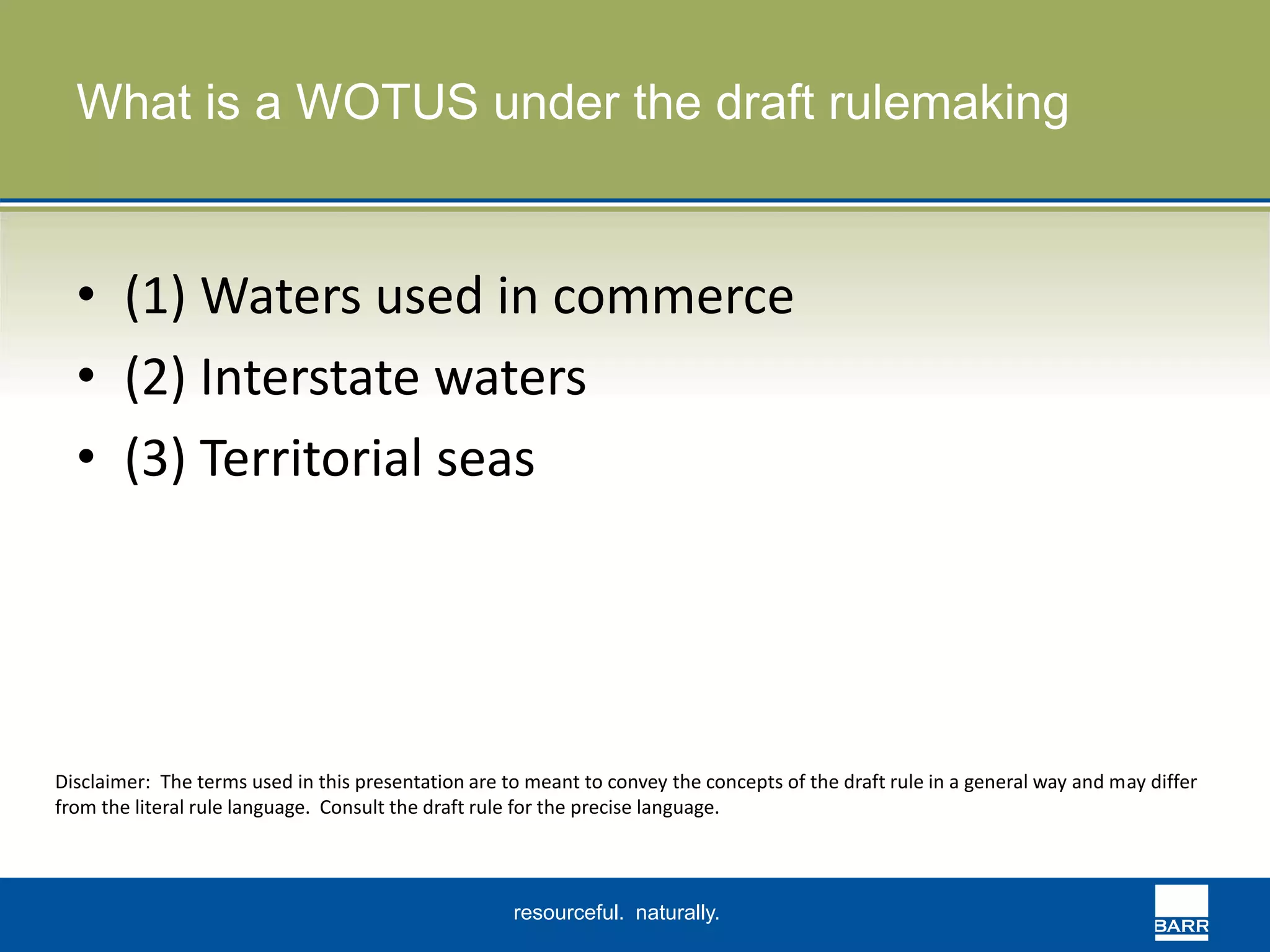
What is a WOTUS under the draft rulemaking 
• (1) Waters used in commerce 
• (2) Interstate waters 
• (3) Territorial seas 
Disclaimer: The terms used in this presentation are to meant to convey the concepts of the draft rule in a general way and may differ 
from the literal rule language. Consult the draft rule for the precise language. 
resourceful. naturally.
resourceful. naturally. 
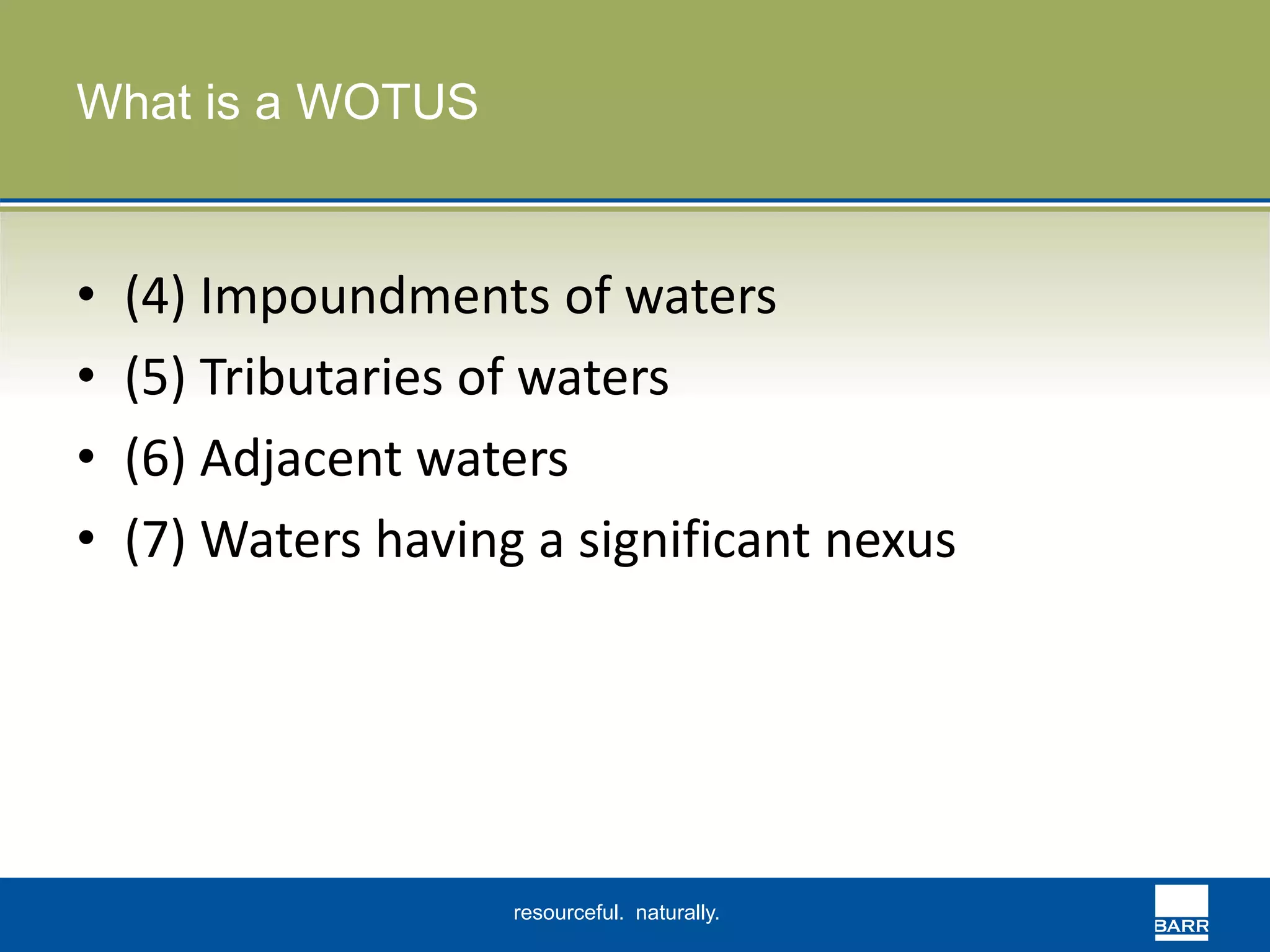
What is a WOTUS 
• (4) Impoundments of waters 
• (5) Tributaries of waters 
• (6) Adjacent waters 
• (7) Waters having a significant nexus
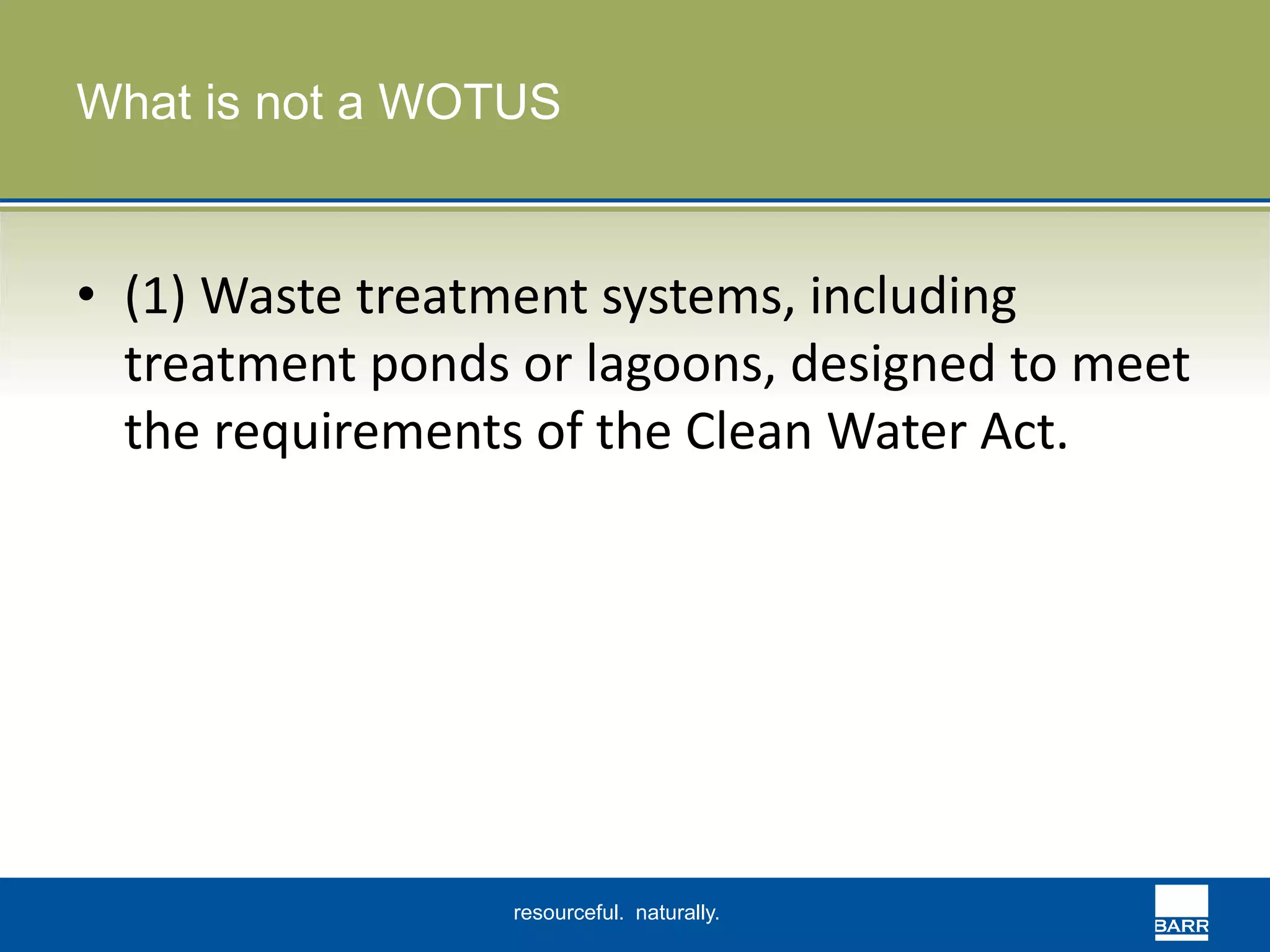
What is not a WOTUS 
• (1) Waste treatment systems, including 
treatment ponds or lagoons, designed to meet 
the requirements of the Clean Water Act. 
resourceful. naturally.
What is not a WOTUS 
• (2) Prior converted cropland. 
resourceful. naturally.
What is not a WOTUS 
• (3) Ditches that are excavated wholly in 
uplands, drain only uplands, and have less 
than perennial flow. 
resourceful. naturally.
What is not a WOTUS 
• (4) Ditches that do not contribute flow, either 
directly or through another water, to a water 
(of the U.S.) 
resourceful. naturally.
What is not a WOTUS 
• (5) The following features 
– Artificially irrigated areas that would revert 
to upland; 
resourceful. naturally.
What is not a WOTUS 
• (5) The following features 
– Artificial lakes or ponds in uplands used in 
farming 
resourceful. naturally.
What is not a WOTUS 
• (5) The following features 
– Reflecting pools or swimming pools created 
in dry land; 
resourceful. naturally.
What is not a WOTUS 
• (5) The following features 
– Construction voids; 
resourceful. naturally.
What is not a WOTUS 
• (5) The following features 
resourceful. naturally. 
– Groundwater
What is not a WOTUS 
• (5) The following features 
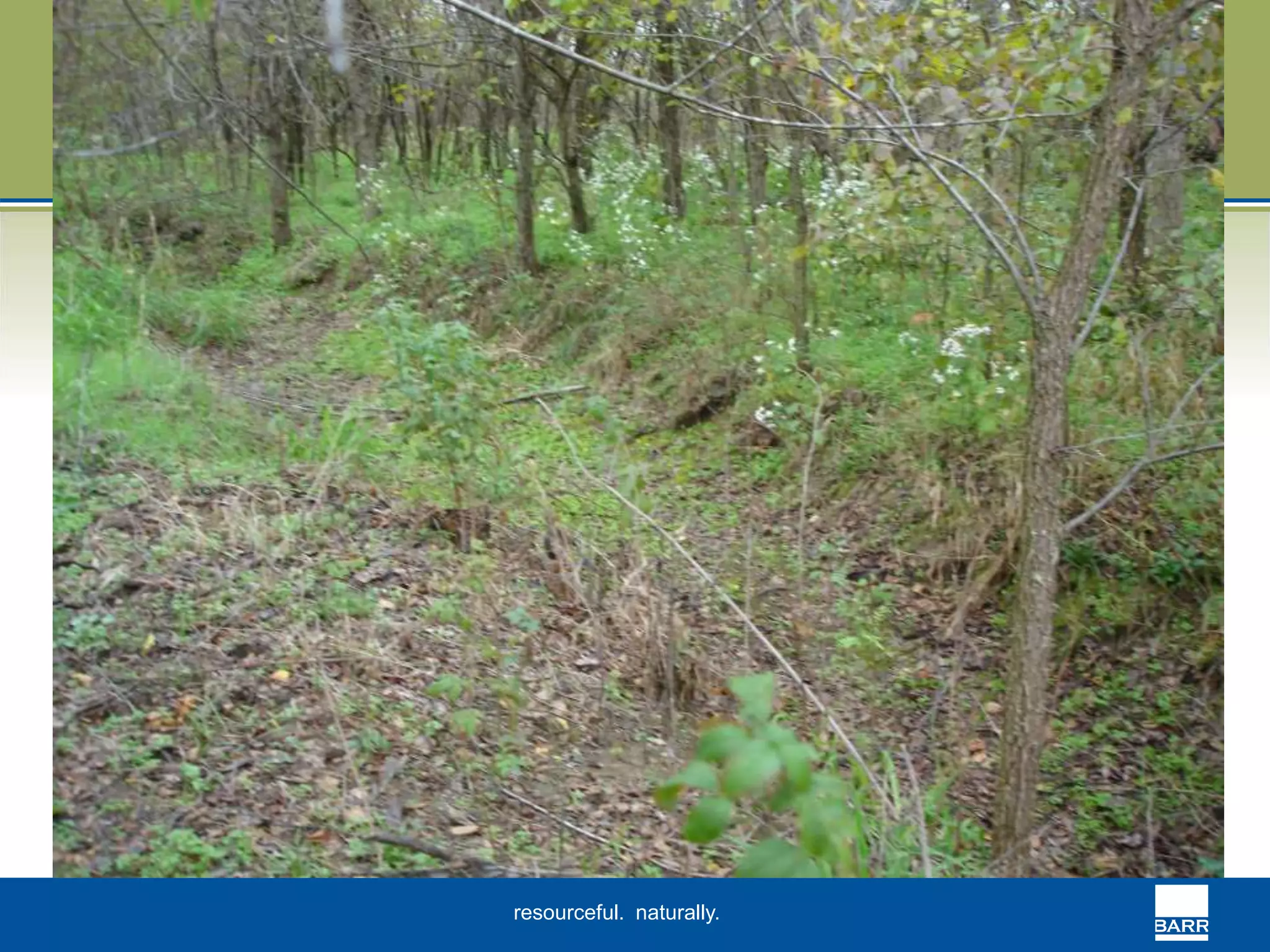
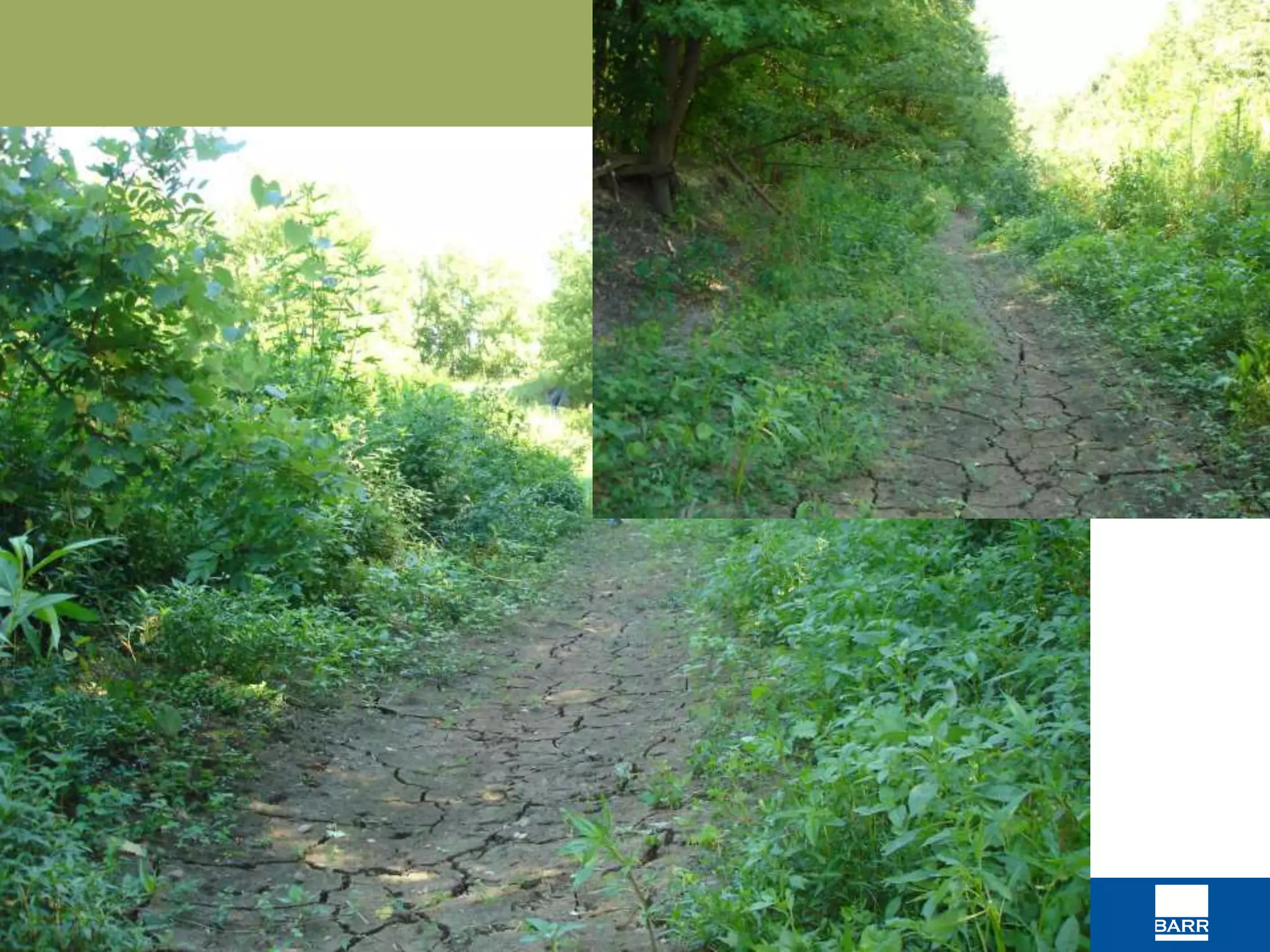
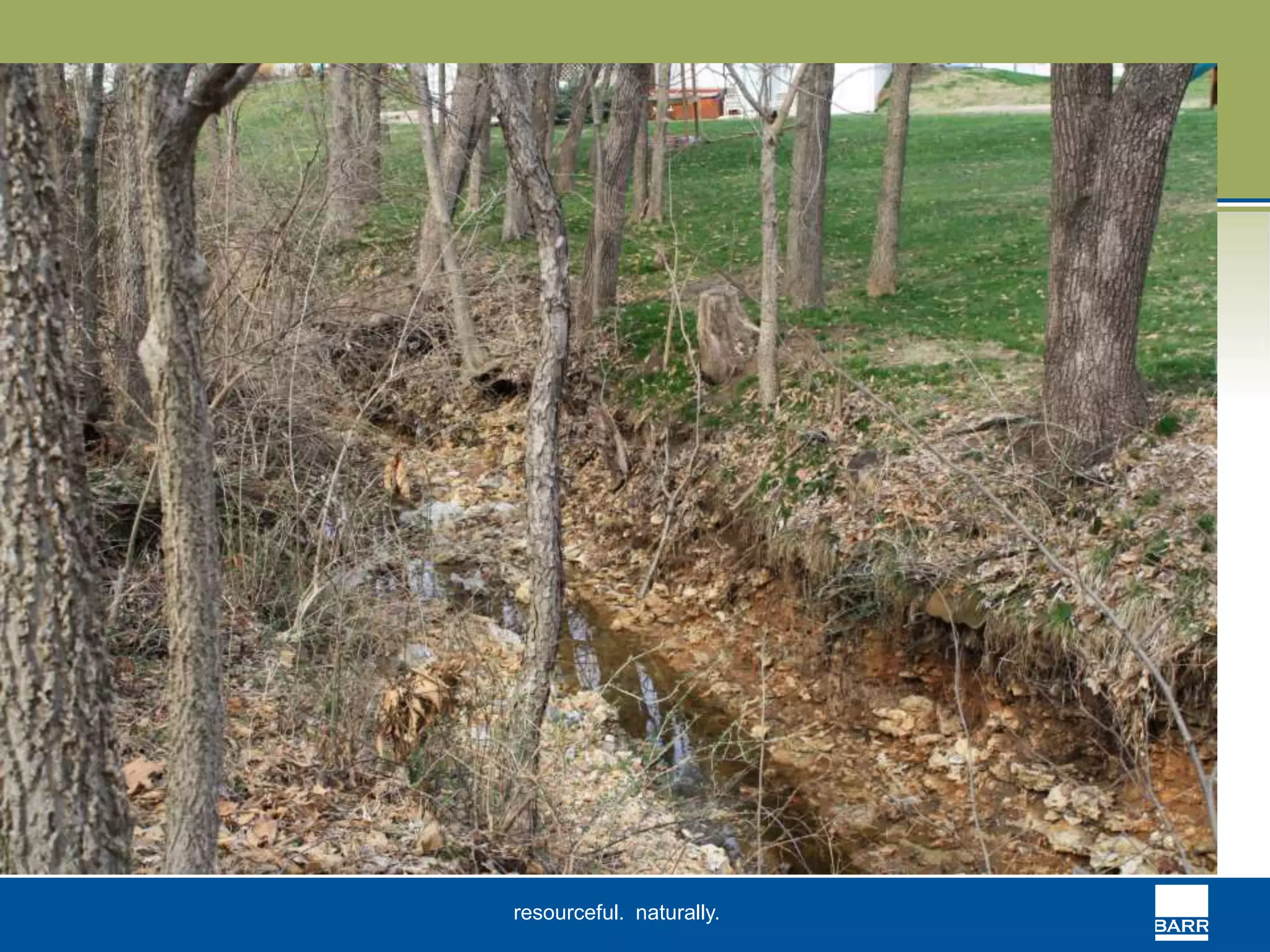
–Gullies and rills and non-wetland swales. 
resourceful. naturally.
Tributaries - The Big Questions 
Does this rule go beyond current federal 
jurisdictional reach? 
resourceful. naturally.
Tributaries - The Big Questions 
Does this rule go beyond current federal 
jurisdictional reach? 
resourceful. naturally. 
Answer…Yes.
Tributaries - The Big Questions 
Does this rule go beyond current federal 
jurisdictional reach? 
Answer…Yes. 
So….why does EPA say it doesn’t? 
resourceful. naturally.
Tributaries - The Big Questions 
Does this rule go beyond current federal 
jurisdictional reach? 
The draft rule is very similar to the 2007 Post- 
Rapanos guidance used by the Corps. 
resourceful. naturally.
Tributaries - The Big Questions 
Does this rule go beyond current federal 
jurisdictional reach? 
When it comes to Section 404 (dredge and fill), the 
Corps exerts its reach quite far into the 
watershed - to the end of the tributary. 
resourceful. naturally.
Tributaries - The Big Questions 
Does this rule go beyond current federal 
jurisdictional reach? 
When it comes to Section 404 (dredge and fill), the 
Corps exerts its reach quite far into the 
watershed - to the end of the tributary. But… 
Its not on a map, 
It hasn’t been a WQS issue in most states! 
resourceful. naturally.
Tributaries - The Big Questions 
Does this rule go beyond current federal 
jurisdictional reach? 
When it comes to water quality (standards, criteria 
permitting, antidgradation and impairment)- 
This is a Big Change. 
resourceful. naturally.
Tributaries - The Big Questions 
Does this rule go beyond current federal 
jurisdictional reach? 
Most states do not apply presumed uses 
(aquatic life, recreation) this extent or even 
close. 
resourceful. naturally.
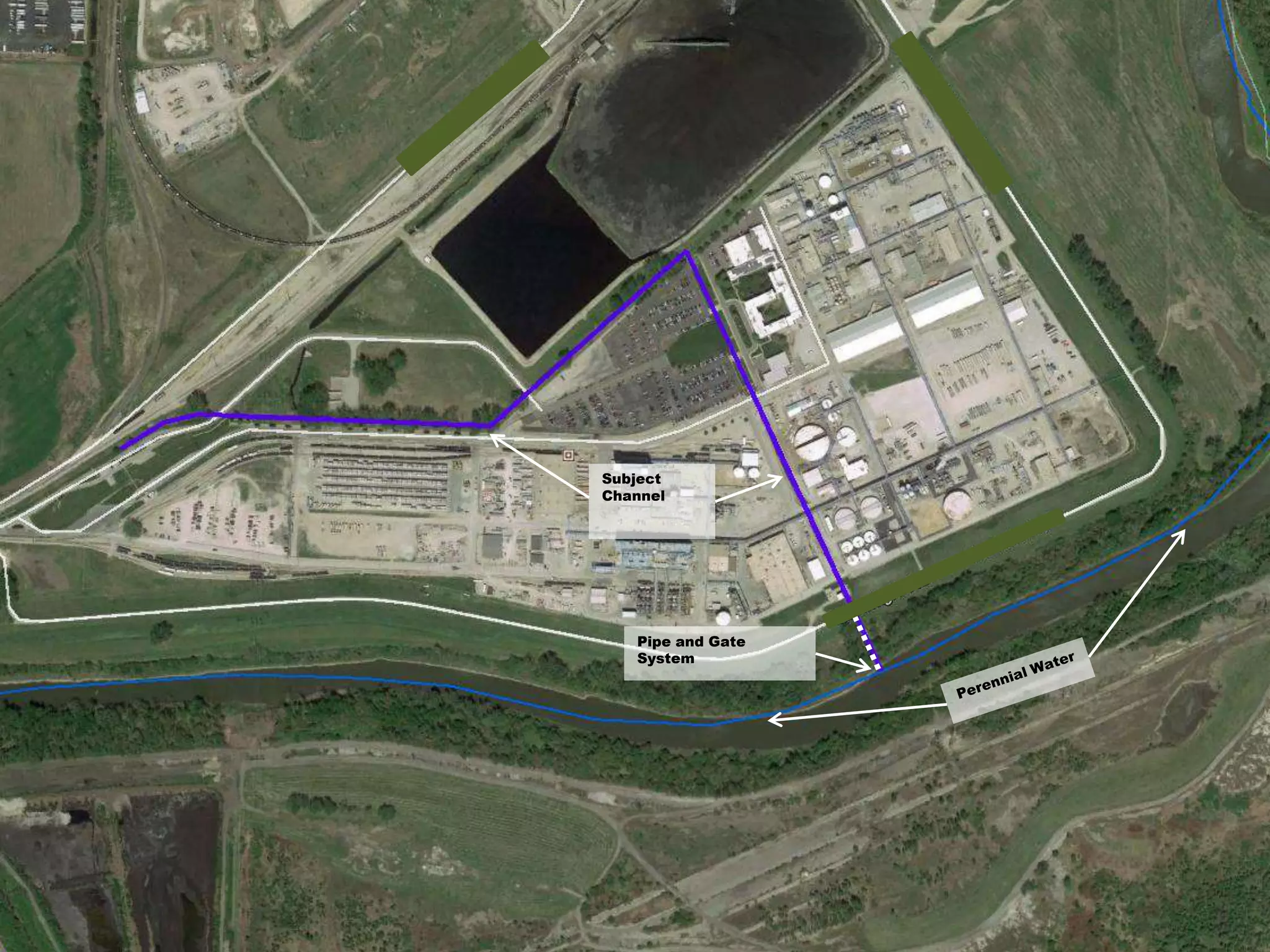
EPA/Corps of Engineers Waters of the U.S. 
Subject 
Channel 
Pipe and Gate 
System 
resourceful. naturally.
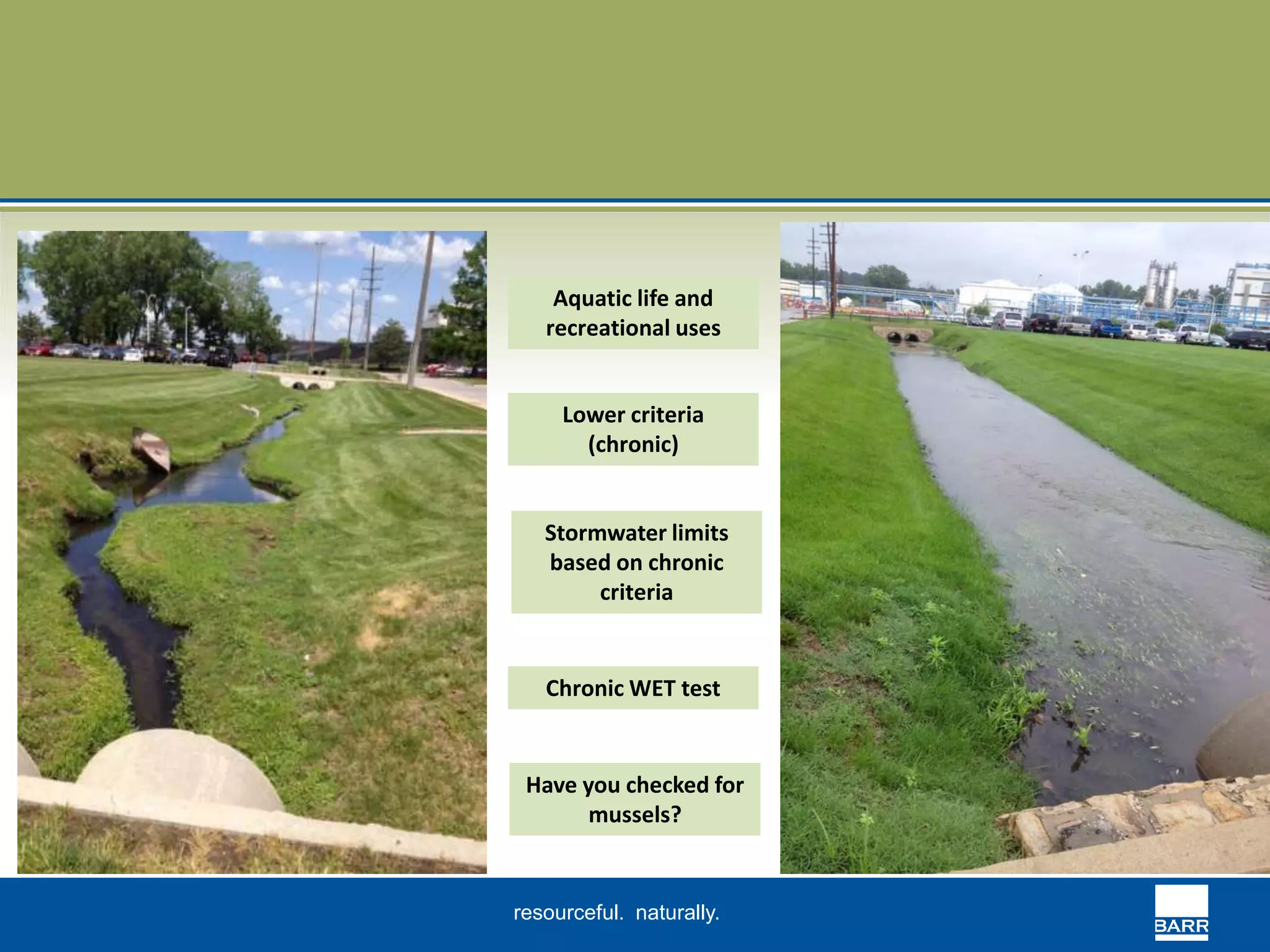
Aquatic life and 
recreational uses 
Lower criteria 
(chronic) 
Stormwater limits 
based on chronic 
criteria 
Chronic WET test 
Have you checked for 
mussels? 
resourceful. naturally.
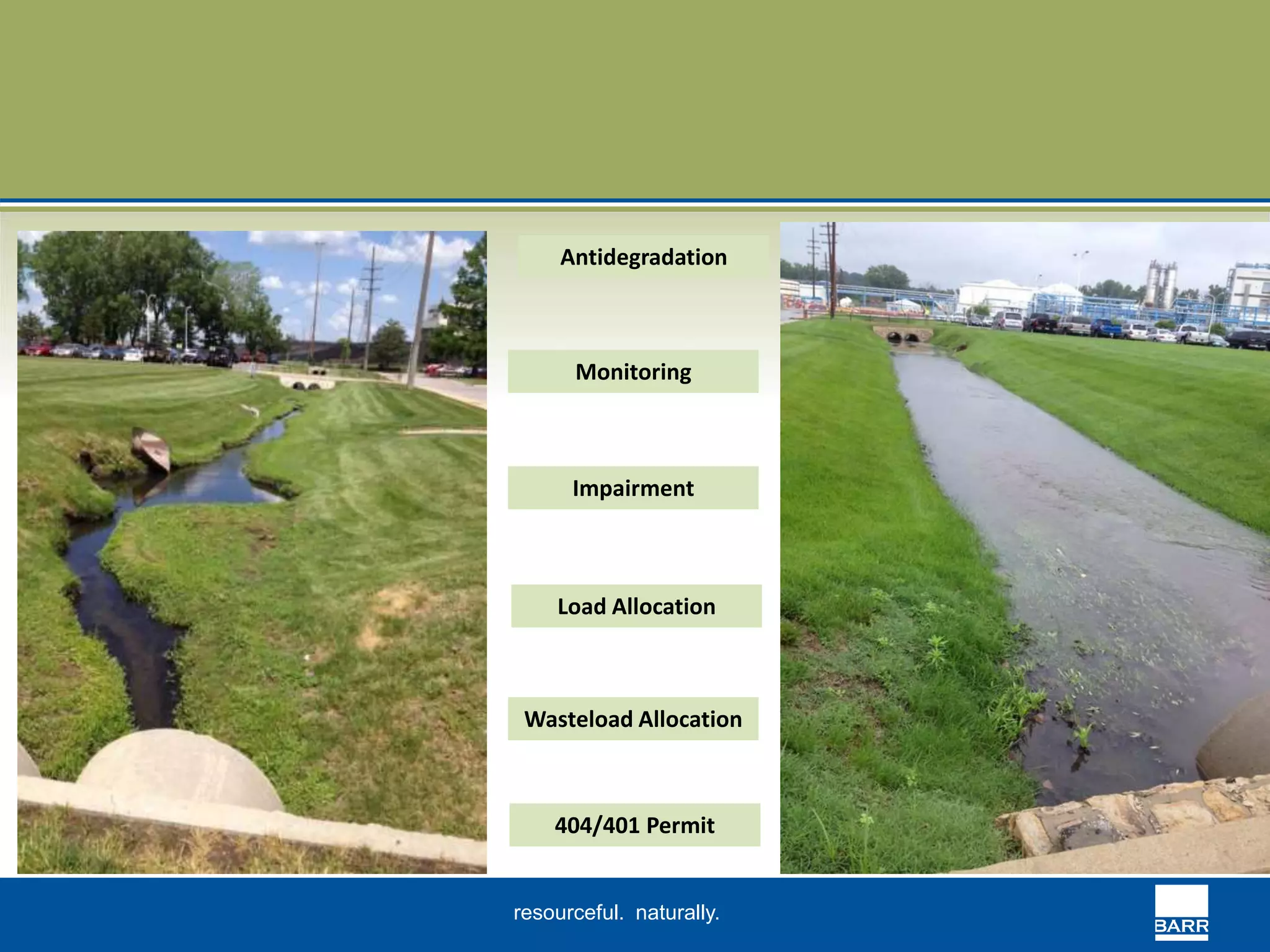
Antidegradation 
Monitoring 
Impairment 
Load Allocation 
Wasteload Allocation 
404/401 Permit 
resourceful. naturally.
resourceful. naturally. 
Definitions 
• (1) Adjacent: The term adjacent means 
bordering, contiguous or neighboring. Waters, 
including wetlands, separated from other 
waters of the United States by man-made 
dikes or barriers, natural river berms, beach 
dunes and the like are “adjacent waters.”
resourceful. naturally. 
Definitions 
• (2) Neighboring: The term neighboring, 
includes waters located within the riparian 
area or floodplain of a water [of the US] or 
waters with a shallow subsurface hydrologic 
connection or confined surface hydrologic 
connection to such a jurisdictional water.
resourceful. naturally. 
Definitions 
• (3) Riparian area: The term riparian area means 
an area bordering a water where surface or 
subsurface hydrology directly influence the 
ecological processes and plant and animal 
community structure in that area. Riparian areas 
are transitional areas between aquatic and 
terrestrial ecosystems that influence the 
exchange of energy and materials between those 
ecosystems.
resourceful. naturally. 
Definitions 
• (4) Floodplain: The term floodplain means an 
area bordering inland or coastal waters that 
was formed by sediment deposition from such 
water under present climatic conditions and is 
inundated during periods of moderate to high 
water flows.
resourceful. naturally. 
Waste Treatment 
40 CFR 122.2 Definitions 
• Waste treatment systems, including treatment ponds or 
lagoons … are not waters of the United States. This 
exclusion applies only to manmade bodies of water which 
neither were originally created in waters of the United 
States …nor resulted from the impoundment of waters of 
the United States. [See Note 1 of this section.] 
• NOTE: At 45 FR 48620, July 21, 1980, the Environmental 
Protection Agency suspended until further notice in §122.2, 
the last sentence, beginning “This exclusion applies . . .” in 
the definition of “Waters of the United States.” This revision 
continues that suspension.1
resourceful. naturally. 
Waste Treatment 
New Definition 
• The following are not “waters of the United 
States” 
• (1) Waste treatment systems, including 
treatment ponds or lagoons, designed to meet 
the requirements of the Clean Water Act.
resourceful. naturally. 
Definitions 
• (5) Tributary: The term tributary means a water physically characterized by the 
presence of a bed and banks and ordinary high water mark, as defined at 33 CFR § 
328.3(e), which contributes flow, either directly or through another water, to a 
water identified in paragraphs (a)(1) through (4) of this section. In addition, 
wetlands, lakes, and ponds are tributaries (even if they lack a bed Page 328 of 370 
and banks or ordinary high water mark) if they contribute flow, either directly or 
through another water to a water identified in paragraphs (a)(1) through (3) of this 
section. A water that otherwise qualifies as a tributary under this definition does 
not lose its status as a tributary if, for any length, there are one or more man-made 
breaks (such as bridges, culverts, pipes, or dams), or one or more natural breaks 
(such as wetlands at the head of or along the run of a stream, debris piles, boulder 
fields, or a stream that flows underground) so long as a bed and banks and an 
ordinary high water mark can be identified upstream of the break. A tributary, 
including wetlands, can be a natural, man-altered, or man-made water and 
includes waters such as rivers, streams, lakes, ponds, impoundments, canals, and 
ditches not excluded in paragraphs (b)(3) or (4) of this section.
resourceful. naturally. 
Definitions 
(5) Tributary: The term tributary means a water 
physically 
– characterized by the presence of a bed and 
banks and ordinary high water mark, 
– which contributes flow, either directly or 
through another water, to a water (of the 
U.S.).
resourceful. naturally. 
Definitions 
• (5) Tributary: 
• Wetlands, lakes, and ponds are tributaries 
– (even if they lack a bed and banks or 
ordinary high water mark) if they 
– contribute flow, either directly or through 
another water to a water (of the U.S.)
resourceful. naturally. 
Definitions 
• (5) Tributary: 
• A water that otherwise qualifies as a tributary does not 
lose its status as a tributary if, 
– for any length, there are one or more man-made 
breaks (such as bridges, culverts, pipes, or dams), 
– or one or more natural breaks (such as wetlands at 
the head of or along the run of a stream, debris 
piles, boulder fields, or a stream that flows 
underground) 
– so long as a bed and banks and an ordinary high 
water mark can be identified upstream of the break.
resourceful. naturally. 
Definitions 
• (5) Tributary: 
• A tributary, including wetlands, can be a 
natural, man-altered, or man-made water and 
includes waters such as rivers, streams, lakes, 
ponds, impoundments, canals, and ditches 
not excluded in this rule.
resourceful. naturally. 
Definitions 
(7) Significant nexus: The term significant nexus 
means that a water, including wetlands, either 
alone or in combination with other similarly 
situated waters in the region (i.e., the watershed 
that drains to the nearest water [of the U.S.] 
significantly affects the chemical, physical, or 
biological integrity of a water [of the U.S.].
resourceful. naturally. 
Definitions 
(7) Significant nexus (cont’d) For an effect to be 
significant, it must be more than speculative or 
insubstantial. Other waters, including wetlands, are 
similarly situated when they perform similar 
functions and are located sufficiently close together 
or sufficiently close to a “water of the United 
States” so that they can be evaluated as a single 
landscape unit with regard to their effect on the 
chemical, physical, or biological integrity of a water 
[of the U.S.].

Galbraith, Ed, Barr Engineering, US EPA Draft Rulemaking on Waters of the US, at Missouri Water Seminar, Sept.4-5, 2014, Columbia, MO

  • 1.
    US EPA DraftRulemaking on Waters of the U.S. resourceful. naturally. September 4, 2014 Ed Galbraith Barr Engineering
  • 2.
    What is aWOTUS under the draft rulemaking • (1) Waters used in commerce • (2) Interstate waters • (3) Territorial seas Disclaimer: The terms used in this presentation are to meant to convey the concepts of the draft rule in a general way and may differ from the literal rule language. Consult the draft rule for the precise language. resourceful. naturally.
  • 3.
    resourceful. naturally. Whatis a WOTUS • (4) Impoundments of waters • (5) Tributaries of waters • (6) Adjacent waters • (7) Waters having a significant nexus
  • 4.
    What is nota WOTUS • (1) Waste treatment systems, including treatment ponds or lagoons, designed to meet the requirements of the Clean Water Act. resourceful. naturally.
  • 5.
    What is nota WOTUS • (2) Prior converted cropland. resourceful. naturally.
  • 6.
    What is nota WOTUS • (3) Ditches that are excavated wholly in uplands, drain only uplands, and have less than perennial flow. resourceful. naturally.
  • 7.
    What is nota WOTUS • (4) Ditches that do not contribute flow, either directly or through another water, to a water (of the U.S.) resourceful. naturally.
  • 8.
    What is nota WOTUS • (5) The following features – Artificially irrigated areas that would revert to upland; resourceful. naturally.
  • 9.
    What is nota WOTUS • (5) The following features – Artificial lakes or ponds in uplands used in farming resourceful. naturally.
  • 10.
    What is nota WOTUS • (5) The following features – Reflecting pools or swimming pools created in dry land; resourceful. naturally.
  • 11.
    What is nota WOTUS • (5) The following features – Construction voids; resourceful. naturally.
  • 12.
    What is nota WOTUS • (5) The following features resourceful. naturally. – Groundwater
  • 13.
    What is nota WOTUS • (5) The following features –Gullies and rills and non-wetland swales. resourceful. naturally.
  • 14.
  • 15.
  • 16.
  • 17.
    Tributaries - TheBig Questions Does this rule go beyond current federal jurisdictional reach? resourceful. naturally.
  • 18.
    Tributaries - TheBig Questions Does this rule go beyond current federal jurisdictional reach? resourceful. naturally. Answer…Yes.
  • 19.
    Tributaries - TheBig Questions Does this rule go beyond current federal jurisdictional reach? Answer…Yes. So….why does EPA say it doesn’t? resourceful. naturally.
  • 20.
  • 21.
  • 22.
  • 23.
    Tributaries - TheBig Questions Does this rule go beyond current federal jurisdictional reach? The draft rule is very similar to the 2007 Post- Rapanos guidance used by the Corps. resourceful. naturally.
  • 24.
    Tributaries - TheBig Questions Does this rule go beyond current federal jurisdictional reach? When it comes to Section 404 (dredge and fill), the Corps exerts its reach quite far into the watershed - to the end of the tributary. resourceful. naturally.
  • 25.
    Tributaries - TheBig Questions Does this rule go beyond current federal jurisdictional reach? When it comes to Section 404 (dredge and fill), the Corps exerts its reach quite far into the watershed - to the end of the tributary. But… Its not on a map, It hasn’t been a WQS issue in most states! resourceful. naturally.
  • 26.
    Tributaries - TheBig Questions Does this rule go beyond current federal jurisdictional reach? When it comes to water quality (standards, criteria permitting, antidgradation and impairment)- This is a Big Change. resourceful. naturally.
  • 27.
    Tributaries - TheBig Questions Does this rule go beyond current federal jurisdictional reach? Most states do not apply presumed uses (aquatic life, recreation) this extent or even close. resourceful. naturally.
  • 28.
    EPA/Corps of EngineersWaters of the U.S. Subject Channel Pipe and Gate System resourceful. naturally.
  • 29.
    Aquatic life and recreational uses Lower criteria (chronic) Stormwater limits based on chronic criteria Chronic WET test Have you checked for mussels? resourceful. naturally.
  • 30.
    Antidegradation Monitoring Impairment Load Allocation Wasteload Allocation 404/401 Permit resourceful. naturally.
  • 31.
    resourceful. naturally. Definitions • (1) Adjacent: The term adjacent means bordering, contiguous or neighboring. Waters, including wetlands, separated from other waters of the United States by man-made dikes or barriers, natural river berms, beach dunes and the like are “adjacent waters.”
  • 32.
    resourceful. naturally. Definitions • (2) Neighboring: The term neighboring, includes waters located within the riparian area or floodplain of a water [of the US] or waters with a shallow subsurface hydrologic connection or confined surface hydrologic connection to such a jurisdictional water.
  • 33.
    resourceful. naturally. Definitions • (3) Riparian area: The term riparian area means an area bordering a water where surface or subsurface hydrology directly influence the ecological processes and plant and animal community structure in that area. Riparian areas are transitional areas between aquatic and terrestrial ecosystems that influence the exchange of energy and materials between those ecosystems.
  • 34.
    resourceful. naturally. Definitions • (4) Floodplain: The term floodplain means an area bordering inland or coastal waters that was formed by sediment deposition from such water under present climatic conditions and is inundated during periods of moderate to high water flows.
  • 35.
    resourceful. naturally. WasteTreatment 40 CFR 122.2 Definitions • Waste treatment systems, including treatment ponds or lagoons … are not waters of the United States. This exclusion applies only to manmade bodies of water which neither were originally created in waters of the United States …nor resulted from the impoundment of waters of the United States. [See Note 1 of this section.] • NOTE: At 45 FR 48620, July 21, 1980, the Environmental Protection Agency suspended until further notice in §122.2, the last sentence, beginning “This exclusion applies . . .” in the definition of “Waters of the United States.” This revision continues that suspension.1
  • 36.
    resourceful. naturally. WasteTreatment New Definition • The following are not “waters of the United States” • (1) Waste treatment systems, including treatment ponds or lagoons, designed to meet the requirements of the Clean Water Act.
  • 37.
    resourceful. naturally. Definitions • (5) Tributary: The term tributary means a water physically characterized by the presence of a bed and banks and ordinary high water mark, as defined at 33 CFR § 328.3(e), which contributes flow, either directly or through another water, to a water identified in paragraphs (a)(1) through (4) of this section. In addition, wetlands, lakes, and ponds are tributaries (even if they lack a bed Page 328 of 370 and banks or ordinary high water mark) if they contribute flow, either directly or through another water to a water identified in paragraphs (a)(1) through (3) of this section. A water that otherwise qualifies as a tributary under this definition does not lose its status as a tributary if, for any length, there are one or more man-made breaks (such as bridges, culverts, pipes, or dams), or one or more natural breaks (such as wetlands at the head of or along the run of a stream, debris piles, boulder fields, or a stream that flows underground) so long as a bed and banks and an ordinary high water mark can be identified upstream of the break. A tributary, including wetlands, can be a natural, man-altered, or man-made water and includes waters such as rivers, streams, lakes, ponds, impoundments, canals, and ditches not excluded in paragraphs (b)(3) or (4) of this section.
  • 38.
    resourceful. naturally. Definitions (5) Tributary: The term tributary means a water physically – characterized by the presence of a bed and banks and ordinary high water mark, – which contributes flow, either directly or through another water, to a water (of the U.S.).
  • 39.
    resourceful. naturally. Definitions • (5) Tributary: • Wetlands, lakes, and ponds are tributaries – (even if they lack a bed and banks or ordinary high water mark) if they – contribute flow, either directly or through another water to a water (of the U.S.)
  • 40.
    resourceful. naturally. Definitions • (5) Tributary: • A water that otherwise qualifies as a tributary does not lose its status as a tributary if, – for any length, there are one or more man-made breaks (such as bridges, culverts, pipes, or dams), – or one or more natural breaks (such as wetlands at the head of or along the run of a stream, debris piles, boulder fields, or a stream that flows underground) – so long as a bed and banks and an ordinary high water mark can be identified upstream of the break.
  • 41.
    resourceful. naturally. Definitions • (5) Tributary: • A tributary, including wetlands, can be a natural, man-altered, or man-made water and includes waters such as rivers, streams, lakes, ponds, impoundments, canals, and ditches not excluded in this rule.
  • 42.
    resourceful. naturally. Definitions (7) Significant nexus: The term significant nexus means that a water, including wetlands, either alone or in combination with other similarly situated waters in the region (i.e., the watershed that drains to the nearest water [of the U.S.] significantly affects the chemical, physical, or biological integrity of a water [of the U.S.].
  • 43.
    resourceful. naturally. Definitions (7) Significant nexus (cont’d) For an effect to be significant, it must be more than speculative or insubstantial. Other waters, including wetlands, are similarly situated when they perform similar functions and are located sufficiently close together or sufficiently close to a “water of the United States” so that they can be evaluated as a single landscape unit with regard to their effect on the chemical, physical, or biological integrity of a water [of the U.S.].