David Sprinkle
ED 505
Dr. Hocutt
Assistive Technology
“Helping Students Overcome Educational Challenges”
Assistive Technology
● What is Assistive technology- is any device or service that helps a
student with a disability to meet his or her individualized education
program goals, and to participate in the general education setting to the
greatest possible extent.
● Assistive technology improves the functional performance of an
individual with a disability.
Assistive Technology
Students can use assistive technology to:
1. Communicate
2. Perform Academic task
3. Read
4. Reach for things
5. Motor skills
6. Be active in the class
Assistive Technology
In order to choose the appropriate Assistive Technology for the student,
the teacher must understand the student’s disability.
● Some schools create an AT team
● The team may consist of: family doctors, regular teacher, special education
teacher, and sometimes speech pathologists
● Together the team will analyze the student’s needs and provide the
appropriate assistive technology
Assistive Technology in Education
Laws Pertaining to Assistive Technology
The Assistive Technology Act of 1998 Section 508
● The purpose of this Act was to provide financial assistance to States to
undertake activities that assist each State in maintaining and strengthening
a permanent comprehensive statewide program of technology related
assistance, for individuals of disabilities of all ages.
http://www.section508.gov/assistive-technology-act-1998
Laws Pertaining to Assistive Technology
The Individuals with Disabilities Act
(IDEA)
● One of the main purposes of this act was to ensure that individuals with a
disability receive free appropriate education.
http://idea.ed.gov/
Assistive Technology for the Hearing Impaired
● A student with a hearing disability may use headphones to increase sound.
Assistive Technology for Blind Students
● Students with vision problems could use a cane to help maneuver around
the class
● Students with vision disabilities may have to use braille to communicate
Assistive Technologies for Learning Disabilities
● Students with learning disabilities could use an Ipad to play lower level
educational games.
Assistive Technology for the Physically Disabled
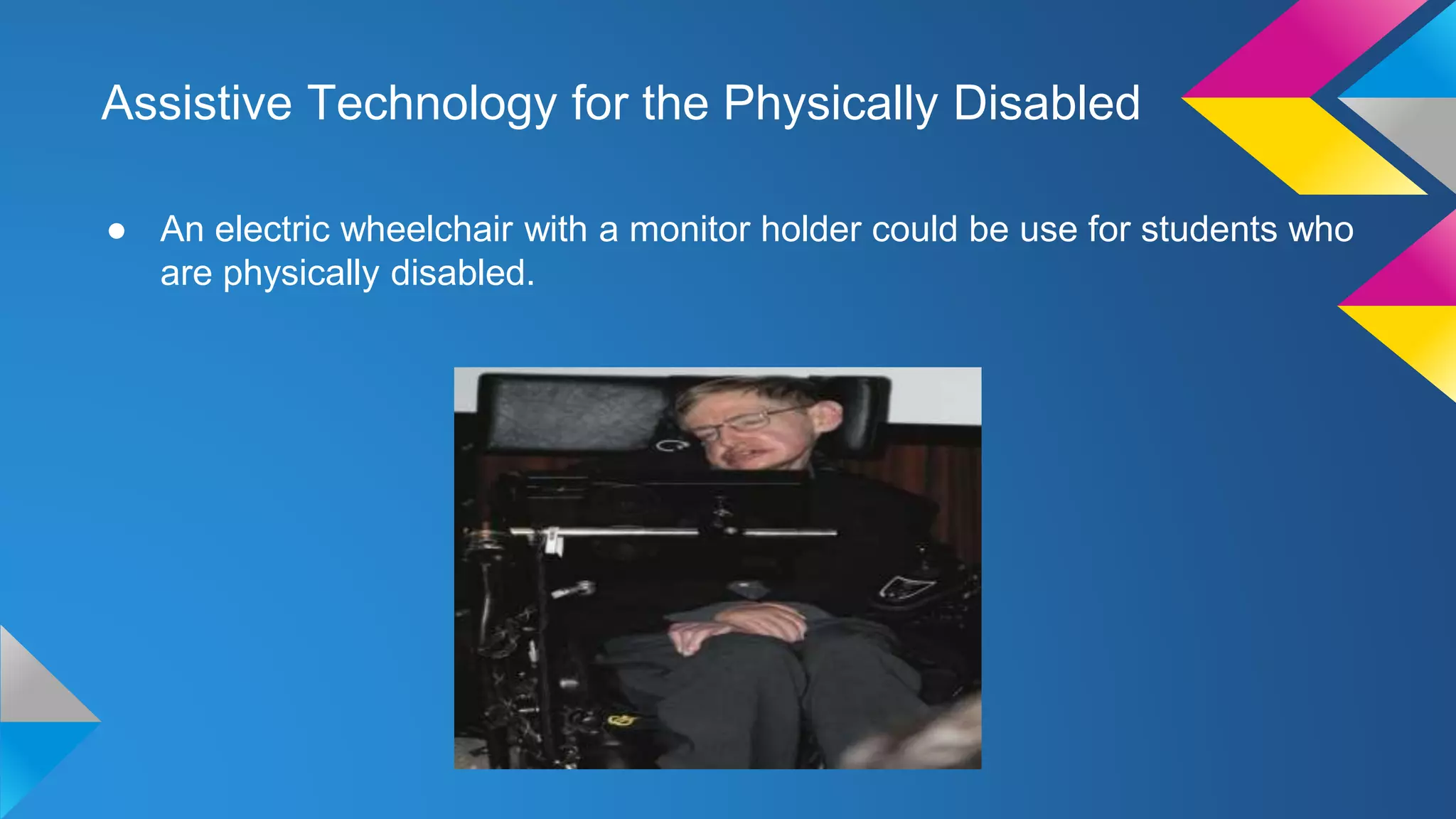
● An electric wheelchair with a monitor holder could be use for students who
are physically disabled.
References
1. Section 508.gov. Assistive Technology Act of 1998. Retrieved March 25,
2015 from http://www.section508.gov/assistive-technology-act-1998
2. Assistive Technology Industry Association. Assistive Technology.
Retrieved March 25, 2015 from http://www.atia.org/
3. The Iris Center. Assistive Technology. Retrieved March 25, 2015 from
http://iris.peabody.vanderbilt.edu/module/at/cresource/what-should-ms-
adelaide-know-about-assistive-technology-and-how-it-is-used-by-students-
with-disabilities/at_01/#content
4. The Individuals with Disabilities Act. Retrieved March 25. 2015 from
http://idea.ed.gov/

Ed 505 assistive technology

  • 1.
    David Sprinkle ED 505 Dr.Hocutt Assistive Technology “Helping Students Overcome Educational Challenges”
  • 2.
    Assistive Technology ● Whatis Assistive technology- is any device or service that helps a student with a disability to meet his or her individualized education program goals, and to participate in the general education setting to the greatest possible extent. ● Assistive technology improves the functional performance of an individual with a disability.
  • 3.
    Assistive Technology Students canuse assistive technology to: 1. Communicate 2. Perform Academic task 3. Read 4. Reach for things 5. Motor skills 6. Be active in the class
  • 4.
    Assistive Technology In orderto choose the appropriate Assistive Technology for the student, the teacher must understand the student’s disability. ● Some schools create an AT team ● The team may consist of: family doctors, regular teacher, special education teacher, and sometimes speech pathologists ● Together the team will analyze the student’s needs and provide the appropriate assistive technology Assistive Technology in Education
  • 5.
    Laws Pertaining toAssistive Technology The Assistive Technology Act of 1998 Section 508 ● The purpose of this Act was to provide financial assistance to States to undertake activities that assist each State in maintaining and strengthening a permanent comprehensive statewide program of technology related assistance, for individuals of disabilities of all ages. http://www.section508.gov/assistive-technology-act-1998
  • 6.
    Laws Pertaining toAssistive Technology The Individuals with Disabilities Act (IDEA) ● One of the main purposes of this act was to ensure that individuals with a disability receive free appropriate education. http://idea.ed.gov/
  • 7.
    Assistive Technology forthe Hearing Impaired ● A student with a hearing disability may use headphones to increase sound.
  • 8.
    Assistive Technology forBlind Students ● Students with vision problems could use a cane to help maneuver around the class ● Students with vision disabilities may have to use braille to communicate
  • 9.
    Assistive Technologies forLearning Disabilities ● Students with learning disabilities could use an Ipad to play lower level educational games.
  • 10.
    Assistive Technology forthe Physically Disabled ● An electric wheelchair with a monitor holder could be use for students who are physically disabled.
  • 11.
    References 1. Section 508.gov.Assistive Technology Act of 1998. Retrieved March 25, 2015 from http://www.section508.gov/assistive-technology-act-1998 2. Assistive Technology Industry Association. Assistive Technology. Retrieved March 25, 2015 from http://www.atia.org/ 3. The Iris Center. Assistive Technology. Retrieved March 25, 2015 from http://iris.peabody.vanderbilt.edu/module/at/cresource/what-should-ms- adelaide-know-about-assistive-technology-and-how-it-is-used-by-students- with-disabilities/at_01/#content 4. The Individuals with Disabilities Act. Retrieved March 25. 2015 from http://idea.ed.gov/