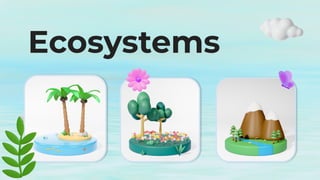
Ecosystems
Table of contents
01.
04.
02.
03.
What is an
ecosystem?
Components of
ecosystem
Types of
ecosystem
Interactions
between
components
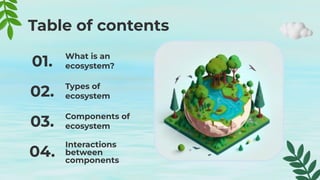
What is an
ecosystem?
An ecosystem is a system formed by a set of organisms, the
physical environment in which they live (habitat) and the
relationships between living organisms and the physical space
established between them. The species of living beings that
inhabit a given ecosystem interact with each other and with
the environment, determining the flow of energy and matter
that occurs in that environment.
01.
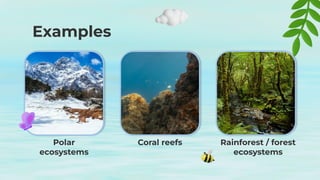
Examples
Polar
ecosystems
Coral reefs Rainforest / forest
ecosystems
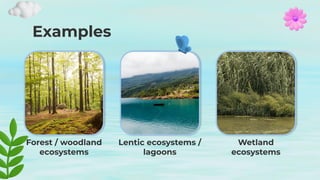
Examples
Forest / woodland
ecosystems
Lentic ecosystems /
lagoons
Wetland
ecosystems
Types of
ecosystems
02.
Terrestrial ecosystem
They occur on the earth's crust and out of water
in various types of relief: mountains, plains,
valleys, deserts. There are important differences
between them in temperature, oxygen
concentration and climate, so the biodiversity of
these ecosystems is large and varied. For
example: Forests, deserts or jungles.
Types of
ecosystems
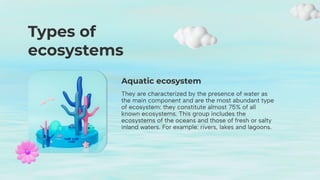
Aquatic ecosystem
They are characterized by the presence of water as
the main component and are the most abundant type
of ecosystem: they constitute almost 75% of all
known ecosystems. This group includes the
ecosystems of the oceans and those of fresh or salty
inland waters. For example: rivers, lakes and lagoons.
Types of
ecosystems
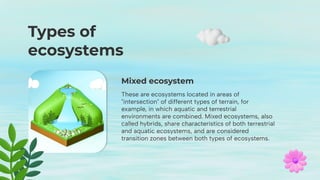
Mixed ecosystem
These are ecosystems located in areas of
"intersection" of different types of terrain, for
example, in which aquatic and terrestrial
environments are combined. Mixed ecosystems, also
called hybrids, share characteristics of both terrestrial
and aquatic ecosystems, and are considered
transition zones between both types of ecosystems.
Types of
ecosystems
Components of
ecosystem
03.
Introduction:
Ecosystems are dynamic systems composed
of living and non-living components that
interact to form a balanced and
interconnected web of life.
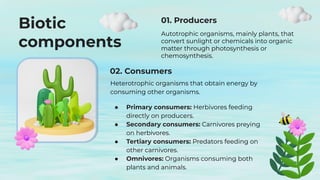
01. Producers
Autotrophic organisms, mainly plants, that
convert sunlight or chemicals into organic
matter through photosynthesis or
chemosynthesis.
Biotic
components
02. Consumers
Heterotrophic organisms that obtain energy by
consuming other organisms.
● Primary consumers: Herbivores feeding
directly on producers.
● Secondary consumers: Carnivores preying
on herbivores.
● Tertiary consumers: Predators feeding on
other carnivores.
● Omnivores: Organisms consuming both
plants and animals.
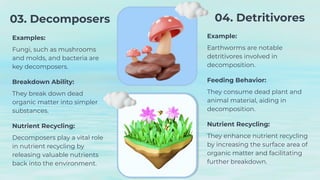
03. Decomposers
Examples:
Fungi, such as mushrooms
and molds, and bacteria are
key decomposers.
Breakdown Ability:
They break down dead
organic matter into simpler
substances.
Nutrient Recycling:
Decomposers play a vital role
in nutrient recycling by
releasing valuable nutrients
back into the environment.
04. Detritivores
Example:
Earthworms are notable
detritivores involved in
decomposition.
Feeding Behavior:
They consume dead plant and
animal material, aiding in
decomposition.
Nutrient Recycling:
They enhance nutrient recycling
by increasing the surface area of
organic matter and facilitating
further breakdown.
Abiotic Components
● Atmosphere:
The layer of gases surrounding the Earth,
regulating climate and providing essential
gases for life.
● Water:
Bodies of water, including oceans, lakes,
and rivers, serving as habitats and
supporting various ecological processes.
● Soil:
The upper layer of the Earth's crust,
containing minerals, organic matter, and
microorganisms, providing nutrients and
support for plant growth.
● Sunlight:
The primary source of energy for most
ecosystems, captured by producers
through photosynthesis.
● Temperature:
The average weather conditions
influencing the distribution and behavior
of organisms.
● Climate:
The long-term patterns of weather,
including temperature, precipitation, and
wind, shaping the overall characteristics of
an ecosystem.
Interaction between
components
04.
- Biotic and abiotic components interact and
depend on each other within an ecosystem.
● Producers use sunlight, water, and nutrients
from the soil to produce energy-rich organic
compounds.
● Consumers rely on producers as a food source,
and decomposers and detritivores recycle
nutrients from dead organic matter.
● Abiotic factors such as water availability,
temperature, and sunlight intensity influence
the distribution and behavior of organisms.
● The interactions between biotic and abiotic
components contribute to the stability of an
ecosystem. The balance and harmony among
these components allow for the efficient flow of
energy and cycling of nutrients, ultimately
maintaining the overall health and
sustainability of the ecosystem.
ECOSYSTEM

ECOSYSTEM

  • 1.
  • 2.
    Table of contents 01. 04. 02. 03. Whatis an ecosystem? Components of ecosystem Types of ecosystem Interactions between components
  • 3.
    What is an ecosystem? Anecosystem is a system formed by a set of organisms, the physical environment in which they live (habitat) and the relationships between living organisms and the physical space established between them. The species of living beings that inhabit a given ecosystem interact with each other and with the environment, determining the flow of energy and matter that occurs in that environment. 01.
  • 4.
  • 5.
    Examples Forest / woodland ecosystems Lenticecosystems / lagoons Wetland ecosystems
  • 6.
  • 7.
    Terrestrial ecosystem They occuron the earth's crust and out of water in various types of relief: mountains, plains, valleys, deserts. There are important differences between them in temperature, oxygen concentration and climate, so the biodiversity of these ecosystems is large and varied. For example: Forests, deserts or jungles. Types of ecosystems
  • 8.
    Aquatic ecosystem They arecharacterized by the presence of water as the main component and are the most abundant type of ecosystem: they constitute almost 75% of all known ecosystems. This group includes the ecosystems of the oceans and those of fresh or salty inland waters. For example: rivers, lakes and lagoons. Types of ecosystems
  • 9.
    Mixed ecosystem These areecosystems located in areas of "intersection" of different types of terrain, for example, in which aquatic and terrestrial environments are combined. Mixed ecosystems, also called hybrids, share characteristics of both terrestrial and aquatic ecosystems, and are considered transition zones between both types of ecosystems. Types of ecosystems
  • 10.
    Components of ecosystem 03. Introduction: Ecosystems aredynamic systems composed of living and non-living components that interact to form a balanced and interconnected web of life.
  • 11.
    01. Producers Autotrophic organisms,mainly plants, that convert sunlight or chemicals into organic matter through photosynthesis or chemosynthesis. Biotic components 02. Consumers Heterotrophic organisms that obtain energy by consuming other organisms. ● Primary consumers: Herbivores feeding directly on producers. ● Secondary consumers: Carnivores preying on herbivores. ● Tertiary consumers: Predators feeding on other carnivores. ● Omnivores: Organisms consuming both plants and animals.
  • 12.
    03. Decomposers Examples: Fungi, suchas mushrooms and molds, and bacteria are key decomposers. Breakdown Ability: They break down dead organic matter into simpler substances. Nutrient Recycling: Decomposers play a vital role in nutrient recycling by releasing valuable nutrients back into the environment. 04. Detritivores Example: Earthworms are notable detritivores involved in decomposition. Feeding Behavior: They consume dead plant and animal material, aiding in decomposition. Nutrient Recycling: They enhance nutrient recycling by increasing the surface area of organic matter and facilitating further breakdown.
  • 13.
    Abiotic Components ● Atmosphere: Thelayer of gases surrounding the Earth, regulating climate and providing essential gases for life. ● Water: Bodies of water, including oceans, lakes, and rivers, serving as habitats and supporting various ecological processes. ● Soil: The upper layer of the Earth's crust, containing minerals, organic matter, and microorganisms, providing nutrients and support for plant growth.
  • 14.
    ● Sunlight: The primarysource of energy for most ecosystems, captured by producers through photosynthesis. ● Temperature: The average weather conditions influencing the distribution and behavior of organisms. ● Climate: The long-term patterns of weather, including temperature, precipitation, and wind, shaping the overall characteristics of an ecosystem.
  • 15.
    Interaction between components 04. - Bioticand abiotic components interact and depend on each other within an ecosystem.
  • 16.
    ● Producers usesunlight, water, and nutrients from the soil to produce energy-rich organic compounds. ● Consumers rely on producers as a food source, and decomposers and detritivores recycle nutrients from dead organic matter. ● Abiotic factors such as water availability, temperature, and sunlight intensity influence the distribution and behavior of organisms. ● The interactions between biotic and abiotic components contribute to the stability of an ecosystem. The balance and harmony among these components allow for the efficient flow of energy and cycling of nutrients, ultimately maintaining the overall health and sustainability of the ecosystem.