Economic Development Survival Metrics
Presented by
Your Hosts
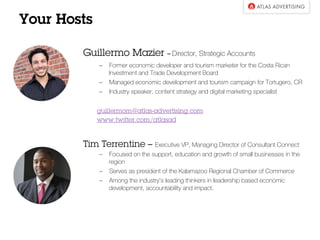
Guillermo Mazier – Director, Strategic Accounts
–  Former economic developer and tourism marketer for the Costa Rican
Investment and Trade Development Board
–  Managed economic development and tourism campaign for Tortugero, CR
–  Industry speaker, content strategy and digital marketing specialist
guillermom@atlas-advertising.com
www.twitter.com/atlasad
Tim Terrentine – Executive VP, Managing Director of Consultant Connect
–  Focused on the support, education and growth of small businesses in the
region
–  Serves as President of the Kalamazoo Regional Chamber of Commerce
–  Among the industry’s leading thinkers in leadership based economic
development, accountability and impact.
Introducing Atlas
1.  Denver-based marketing services company, specializing in economic development
2.  Founded in 2001, with 27 employees 
3.  Has worked with more communities than any other economic development marketing
services firm in the past 10 years: 160+ economic development clients in 43 states and 6
countries
4.  Specialize in providing branding, marketing planning, digital marketing, and GIS enabled
websites, all for economic development
5.  Pioneered the industry’s first metrics based benchmarking approach for marketing, business
attraction, and business retention: High Performance Economic Development Marketing
6.  IEDC’s High Performance Economic Development Marketing Partner
7.  Frequent public speaker and lead speaker on benchmarking marketing, business attraction,
and business retention programs, as well as on branding, research, digital marketing,
websites, and GIS.
Presenting from Phoenix, AZ
View the slides, continue the dialogue
•  Continue the Conversation: 
–  Follow us on Twitter:
www.twitter.com/AtlasAd
–  Tweet questions using hashtag
#ASKATLAS
–  Join High Performance Economic
Development LinkedIn Group
•  View and share the slides with your
colleagues (available now): 
www.slideshare.com/wright0405
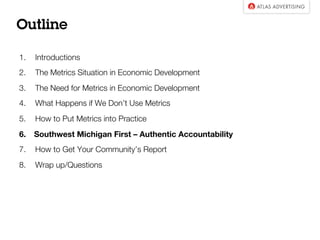
Outline

1.  Introductions
2.  The Metrics Situation in Economic Development
3.  The Need for Metrics in Economic Development
4.  What Happens if We Don’t Use Metrics
5.  How to Put Metrics into Practice
6.  Southwest Michigan First – Authentic Accountability 
7.  How to Get Your Community’s Report
8.  Wrap up/Questions
Poll Question:
What is your primary function in your organization?
Poll Question:
As a practitioner, how much do you think you impact the
overall economic activity in your area?
The Metrics Situation in
Economic Development
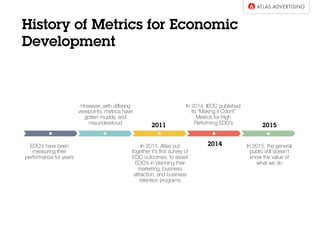
History of Metrics for Economic
Development
In 2015, the general
public still doesn’t
know the value of
what we do
EDOs have been
measuring their
performance for years
However, with differing
viewpoints, metrics have
gotten muddy and
misunderstood
In 2011, Atlas put
together its first survey of
EDO outcomes, to assist
EDOs in planning their
marketing, business
attraction, and business
retention programs
2011
In 2014, IEDC published
its “Making it Count”
Metrics for High
Performing EDOs
2014
2015
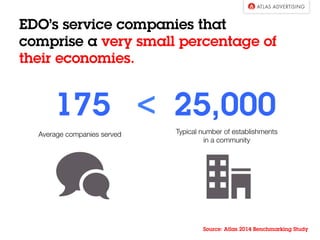
175 < 25,000
Average companies served 

Typical number of establishments 
in a community

Source: Atlas 2014 Benchmarking Study
EDOs service companies that
comprise a very small percentage of
their economies.
Why We Need Metrics for Economic
Development
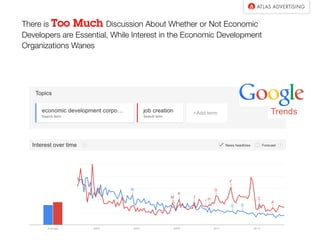
There is Too Much Discussion About Whether or Not Economic
Developers are Essential, While Interest in Economic Development
Organizations Wanes
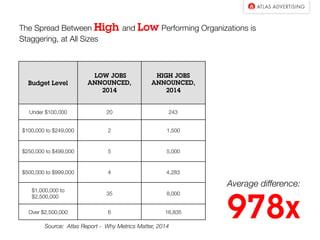
Implications if we don’t use Metrics
Budget Level
LOW JOBS
ANNOUNCED,
2014
HIGH JOBS
ANNOUNCED,
2014
Under $100,000
 20
 243
$100,000 to $249,000
 2
 1,500
$250,000 to $499,000
 5
 5,000
$500,000 to $999,000
 4
 4,283
$1,000,000 to
$2,500,000
35
 8,000
Over $2,500,000
 6
 16,835
Source: Atlas Report - Why Metrics Matter, 2014 
Average difference: 
978x
The Spread Between High and Low Performing Organizations is
Staggering, at All Sizes
How to Put Metrics Into Practice
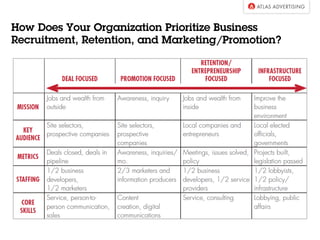
How Does Your Organization Prioritize Business
Recruitment, Retention, and Marketing/Promotion?
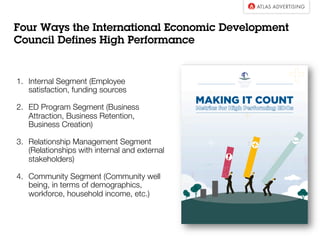
Four Ways the International Economic Development
Council Defines High Performance

1.  Internal Segment (Employee
satisfaction, funding sources)
2.  ED Program Segment (Business
Attraction, Business Retention,
Business Creation)
3.  Relationship Management Segment
(Relationships with internal and external
stakeholders)

4.  Community Segment (Community well
being, in terms of demographics,
workforce, household income, etc.)
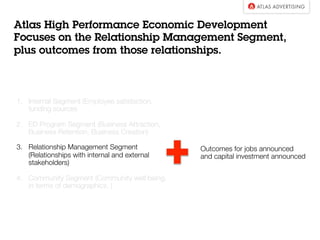
Atlas High Performance Economic Development
Focuses on the Relationship Management Segment,
plus Outcomes from those Relationships
1.  Internal Segment (Employee satisfaction,
funding sources

2.  ED Program Segment (Business Attraction,
Business Retention, Business Creation)
3.  Relationship Management Segment
(Relationships with internal and external
stakeholders)

4.  Community Segment (Community well being,
in terms of demographics, )


Outcomes for jobs announced
and capital investment announced
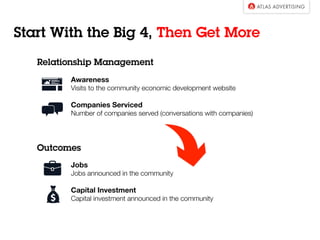
Start With the Big 4, Then Get More
Poll Question:
Should we use outcomes to measure ourselves?
Poll Question:
Did your organization set measurable goals for your
marketing, business development, and business retention
programs this year (2015)?
Poll Question:
What is stopping you from implementing metrics for your
role within the organization?
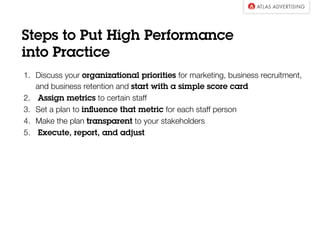
Steps to Put High Performance
into Practice
1.  Discuss your organizational priorities for marketing, business recruitment,
and business retention, and start with a simple score card
2. Assign metrics to certain staff
3.  Set a plan to influence that metric for each staff person
4.  Make the plan transparent to your stakeholders 
5. Execute, report, and adjust
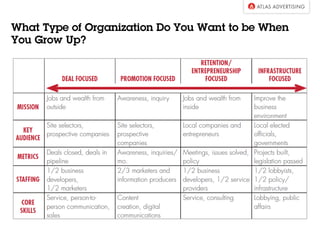
What Type of Organization Do You Want to be When
You Grow Up?
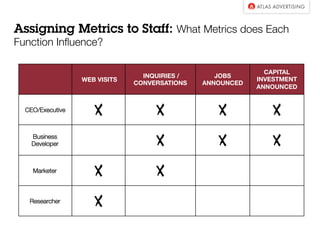
Assigning Metrics to Staff: What Metrics Does Each
Function Influence? 
WEB VISITS 
INQUIRIES /
CONVERSATIONS
JOBS
ANNOUNCED
CAPITAL
INVESTMENT
ANNOUNCED
CEO/Executive
X X X X
Business
Developer
 X X X
Marketer
X X
Researcher
X
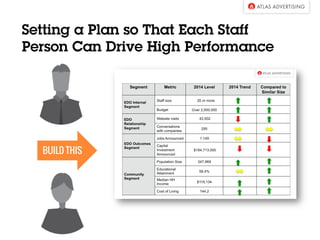
Setting a Plan so That Each Staff
Person Can Drive High Performance
BUILD THIS
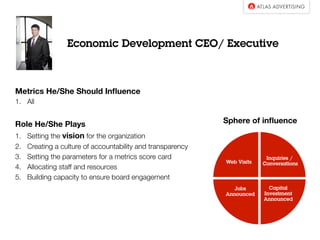
Economic Development CEO / Executive
Metrics He/She Should Influence
1.  All

Role He/She Plays
1.  Setting the vision for the organization
2.  Creating a culture of accountability and transparency
3.  Setting the parameters for a metrics score card
4.  Allocating staff and resources
5.  Building capacity to ensure board engagement
Sphere of Influence
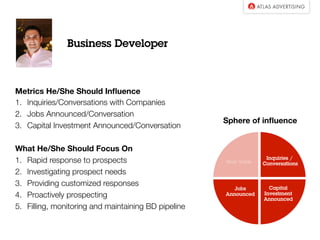
Business Developer
Metrics He/She Should Influence
1.  Inquiries/Conversations with Companies
2.  Jobs Announced/Conversations
3.  Capital Investment Announced/Conversations

What He/She Should Focus On
1.  Rapid response to prospects
2.  Investigating prospect needs
3.  Providing customized responses
4.  Proactively prospecting 
5.  Filling, monitoring and maintaining BD pipeline
Sphere of Influence
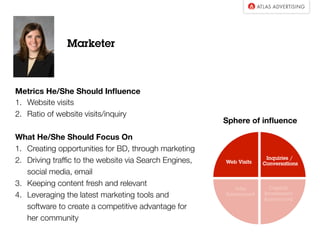
Marketer
Metrics He/She Should Influence
1.  Website visits
2.  Ratio of website visits/inquiries 

What He/She Should Focus On
1.  Creating opportunities for BD, through marketing
2.  Driving traffic to the website via search engines,
social media, email
3.  Keeping content fresh and relevant
4.  Leveraging the latest marketing tools and
software to create a competitive advantage for
her community 
Sphere of Influence
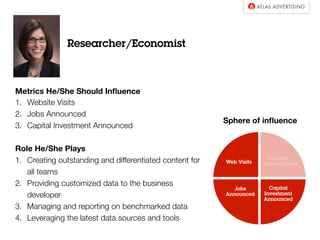
Researcher/Economist
Metrics He/She Should Influence
1.  Website Visits
2.  Jobs Announced
3.  Capital Investment Announced

Role He/She Plays
1.  Creating outstanding and differentiated content for
all teams
2.  Providing customized data to the business
developer 
3.  Managing and reporting on benchmarked data
4.  Leveraging the latest data sources and tools 
Sphere of Influence
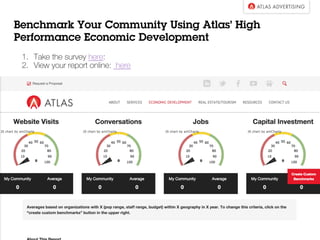
Benchmark Your Community Using Atlas’ High
Performance Economic Development
1.  Take the survey here:
2.  View your report online: here
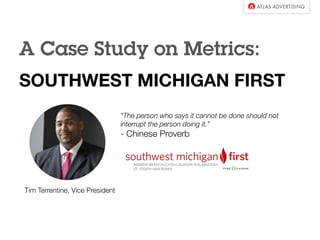
A Case Study on Metrics:
SOUTHWEST MICHIGAN FIRST 
"The person who says it cannot be done should not
interrupt the person doing it.”
- Chinese Proverb
Tim Terrentine, Vice President
AUTHENTIC	
  
TIM	
  TERRENTINE	
  
execu0ve	
  vice	
  president	
  |	
  Southwest	
  Michigan	
  First	
  
managing	
  director	
  |	
  Consultant	
  Connect	


@#mterren#ne	
  
www.catalystconnect.org	


Atlas	
  Adver#sing	
  Metrics	
  Webinar	
  (2015)	
  
ACCOUNTABILITY	
  	
  
The	
  Economic	
  Development	
  Profession	
  
Source:	
  U.S.	
  Census,	
  Southwest	
  Michigan	
  First	
  
ECONOMIC	
  	
  
DEVELOPMENT	
  
Customers	
  Genera0ons	
  Expecta0ons	
  
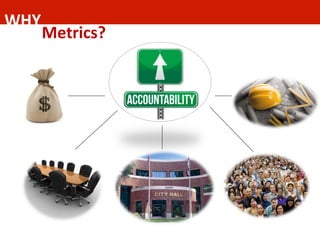
WHY	
  	
  
Metrics?	
  	
  
NO	
  	
  
Metrics?	
  	
  
Your	
  story	
  will	
  be	
  told…
Hopefully	
  by	
  YOU!	
  	
  
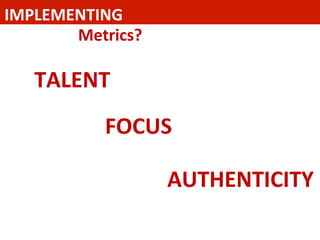
IMPLEMENTING	
  	
  
Metrics?	
  	
  
TALENT	
  
FOCUS	
  
AUTHENTICITY	
  	
  
AUTHENTIC	
  
ACCOUNTABILITY	
  	
  
HOW	
  WE	
  GOT	
  HERE	
  
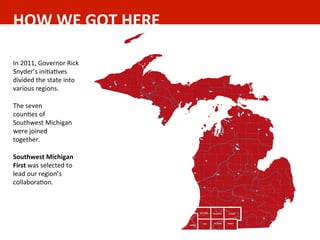
In	
  2011,	
  Governor	
  Rick	
  
Snyder’s	
  ini#a#ves	
  
divided	
  the	
  state	
  into	
  
various	
  regions.	


The	
  seven	
  	
  
coun#es	
  of	
  	
  
Southwest	
  Michigan	
  
were	
  joined	
  
together.	


Southwest	
  Michigan	
  
First	
  was	
  selected	
  to	
  
lead	
  our	
  region’s	
  
collabora#on.	
  
HOW	
  WE	
  GOT	
  HERE	
  
THE	
  IMPORTANCE	
  
OF	
  DIVERSITY	
  
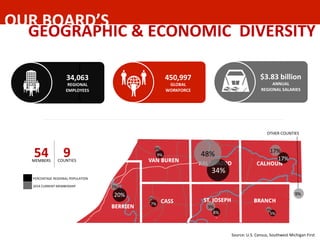
54	
  MEMBERS	
  
9	
  COUNTIES	


   PERCENTAGE	
  REGIONAL	
  POPULATION	


   2014	
  CURRENT	
  MEMBERSHIP	
  
Source:	
  U.S.	
  Census,	
  Southwest	
  Michigan	
  First	
  
48%	
  
34%	
  
17%	
  
20%	
  
7%	
  
9%	
  
4%	
  
7%	
  
2%	
  
5%	
  4%	
  
.	
  
9%	
  
8%	
  
17%	
  
9%	
  
OTHER	
  COUNTIES	
  
OUR	
  BOARD’S	
  
GEOGRAPHIC	
  &	
  ECONOMIC	
  	
  DIVERSITY	
  
$3.83	
  billion	
  
ANNUAL	
  
REGIONAL	
  SALARIES	
  
450,997	
  
GLOBAL	
  	
  
WORKFORCE	
  
34,063	
  
REGIONAL	
  	
  
EMPLOYEES	
  
BUILDING	
  A	
  CULTURE	
  
OF	
  RESPONSIBILITY	
  
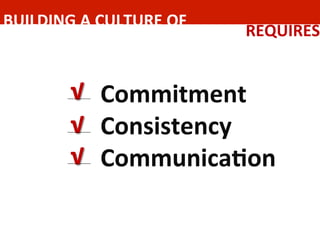
BUILDING	
  A	
  CULTURE	
  OF	
  
RESPONSIBILITY	
  
REQUIRES	
  
Commitment	
  
Consistency	
  	
  
Communica0on	
  
√	
  
√	
  
√	
  
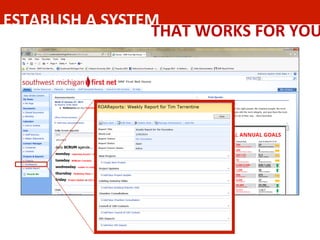
ESTABLISH	
  A	
  SYSTEM	
  
THAT	
  WORKS	
  FOR	
  YOU
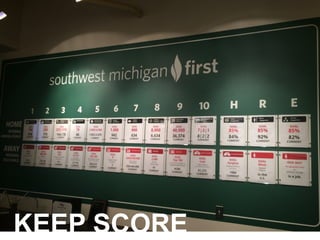
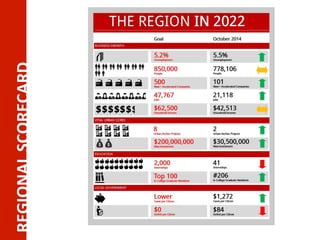
KEEP SCORE
REGIONAL	
  SCORECARD	
  
MEASURING	
  
THE	
  REGION	
  
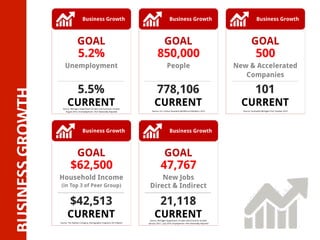
BUSINESS	
  GROWTH	
  
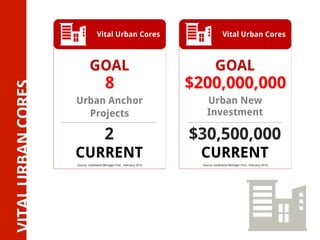
VITAL	
  URBAN	
  CORES	
  
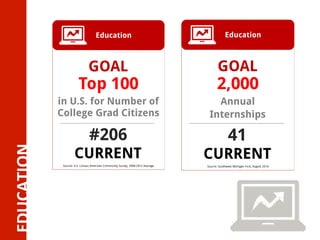
EDUCATION	
  
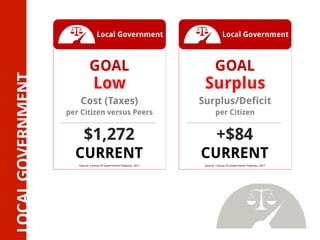
LOCAL	
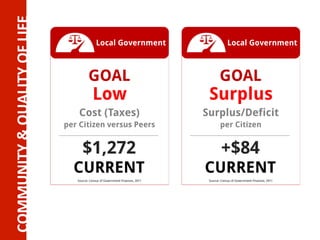
  GOVERNMENT	
  
MEASURING	
  
RELATIONSHIPS	
  
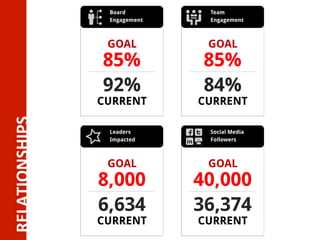
RELATIONSHIPS	
  
COMMUNITY	
  &	
  QUALITY	
  OF	
  LIFE	
  
MEASURING	
  
COMMUNITY	
  &	
  QUALITY	
  OF	
  LIFE	
  
Tim	
  Terren0ne	
  
#m@consultantconnect.org	
  
269.553.9588	
  
@#mterren#ne	


www.consultantconnect.org	
  
www.southwestmichiganfirst.com	


HOW	
  TO	
  CONTACT	
  ME	
  
Question for Tim:
What's the conversation like with your board when you are
behind with your metrics?
Question for Tim:
Why did you initiate a metrics program in the first place?
Get the report:
http://atlas-advertising.com/Home/Download-our-white-
paper.aspx
Take the survey
to participate:
http://atlas-advertising.com/Community-Benchmarking-
Study.aspx "
Questions
Thank you!

Contact information: 

Guillermo Mazier
303.292.3300 x 232
929 Broadway
Denver, CO 80203

Guillermom@Atlas-Advertising.com
www.Atlas-Advertising.com
LinkedIn Profile | LinkedIn Group | Twitter | Blog | Slideshare

Economic Development Survival Metrics

  • 1.
    Economic Development SurvivalMetrics Presented by
  • 2.
    Your Hosts Guillermo Mazier– Director, Strategic Accounts –  Former economic developer and tourism marketer for the Costa Rican Investment and Trade Development Board –  Managed economic development and tourism campaign for Tortugero, CR –  Industry speaker, content strategy and digital marketing specialist guillermom@atlas-advertising.com www.twitter.com/atlasad Tim Terrentine – Executive VP, Managing Director of Consultant Connect –  Focused on the support, education and growth of small businesses in the region –  Serves as President of the Kalamazoo Regional Chamber of Commerce –  Among the industry’s leading thinkers in leadership based economic development, accountability and impact.
  • 3.
    Introducing Atlas 1.  Denver-basedmarketing services company, specializing in economic development 2.  Founded in 2001, with 27 employees 3.  Has worked with more communities than any other economic development marketing services firm in the past 10 years: 160+ economic development clients in 43 states and 6 countries 4.  Specialize in providing branding, marketing planning, digital marketing, and GIS enabled websites, all for economic development 5.  Pioneered the industry’s first metrics based benchmarking approach for marketing, business attraction, and business retention: High Performance Economic Development Marketing 6.  IEDC’s High Performance Economic Development Marketing Partner 7.  Frequent public speaker and lead speaker on benchmarking marketing, business attraction, and business retention programs, as well as on branding, research, digital marketing, websites, and GIS.
  • 4.
  • 5.
    View the slides,continue the dialogue •  Continue the Conversation: –  Follow us on Twitter: www.twitter.com/AtlasAd –  Tweet questions using hashtag #ASKATLAS –  Join High Performance Economic Development LinkedIn Group •  View and share the slides with your colleagues (available now): www.slideshare.com/wright0405
  • 6.
    Outline 1.  Introductions 2.  TheMetrics Situation in Economic Development 3.  The Need for Metrics in Economic Development 4.  What Happens if We Don’t Use Metrics 5.  How to Put Metrics into Practice 6.  Southwest Michigan First – Authentic Accountability 7.  How to Get Your Community’s Report 8.  Wrap up/Questions
  • 7.
    Poll Question: What isyour primary function in your organization?
  • 8.
    Poll Question: As apractitioner, how much do you think you impact the overall economic activity in your area?
  • 9.
    The Metrics Situationin Economic Development
  • 10.
    History of Metricsfor Economic Development In 2015, the general public still doesn’t know the value of what we do EDOs have been measuring their performance for years However, with differing viewpoints, metrics have gotten muddy and misunderstood In 2011, Atlas put together its first survey of EDO outcomes, to assist EDOs in planning their marketing, business attraction, and business retention programs 2011 In 2014, IEDC published its “Making it Count” Metrics for High Performing EDOs 2014 2015
  • 11.
    175 < 25,000 Averagecompanies served Typical number of establishments in a community Source: Atlas 2014 Benchmarking Study EDOs service companies that comprise a very small percentage of their economies.
  • 12.
    Why We NeedMetrics for Economic Development
  • 13.
    There is TooMuch Discussion About Whether or Not Economic Developers are Essential, While Interest in Economic Development Organizations Wanes
  • 14.
    Implications if wedon’t use Metrics
  • 15.
    Budget Level LOW JOBS ANNOUNCED, 2014 HIGHJOBS ANNOUNCED, 2014 Under $100,000 20 243 $100,000 to $249,000 2 1,500 $250,000 to $499,000 5 5,000 $500,000 to $999,000 4 4,283 $1,000,000 to $2,500,000 35 8,000 Over $2,500,000 6 16,835 Source: Atlas Report - Why Metrics Matter, 2014 Average difference: 978x The Spread Between High and Low Performing Organizations is Staggering, at All Sizes
  • 16.
    How to PutMetrics Into Practice
  • 17.
    How Does YourOrganization Prioritize Business Recruitment, Retention, and Marketing/Promotion?
  • 18.
    Four Ways theInternational Economic Development Council Defines High Performance 1.  Internal Segment (Employee satisfaction, funding sources) 2.  ED Program Segment (Business Attraction, Business Retention, Business Creation) 3.  Relationship Management Segment (Relationships with internal and external stakeholders) 4.  Community Segment (Community well being, in terms of demographics, workforce, household income, etc.)
  • 19.
    Atlas High PerformanceEconomic Development Focuses on the Relationship Management Segment, plus Outcomes from those Relationships 1.  Internal Segment (Employee satisfaction, funding sources 2.  ED Program Segment (Business Attraction, Business Retention, Business Creation) 3.  Relationship Management Segment (Relationships with internal and external stakeholders) 4.  Community Segment (Community well being, in terms of demographics, ) Outcomes for jobs announced and capital investment announced
  • 20.
    Start With theBig 4, Then Get More
  • 21.
    Poll Question: Should weuse outcomes to measure ourselves?
  • 22.
    Poll Question: Did yourorganization set measurable goals for your marketing, business development, and business retention programs this year (2015)?
  • 23.
    Poll Question: What isstopping you from implementing metrics for your role within the organization?
  • 24.
    Steps to PutHigh Performance into Practice 1.  Discuss your organizational priorities for marketing, business recruitment, and business retention, and start with a simple score card 2. Assign metrics to certain staff 3.  Set a plan to influence that metric for each staff person 4.  Make the plan transparent to your stakeholders 5. Execute, report, and adjust
  • 25.
    What Type ofOrganization Do You Want to be When You Grow Up?
  • 26.
    Assigning Metrics toStaff: What Metrics Does Each Function Influence? WEB VISITS INQUIRIES / CONVERSATIONS JOBS ANNOUNCED CAPITAL INVESTMENT ANNOUNCED CEO/Executive X X X X Business Developer X X X Marketer X X Researcher X
  • 27.
    Setting a Planso That Each Staff Person Can Drive High Performance BUILD THIS
  • 28.
    Economic Development CEO/ Executive Metrics He/She Should Influence 1.  All Role He/She Plays 1.  Setting the vision for the organization 2.  Creating a culture of accountability and transparency 3.  Setting the parameters for a metrics score card 4.  Allocating staff and resources 5.  Building capacity to ensure board engagement Sphere of Influence
  • 29.
    Business Developer Metrics He/SheShould Influence 1.  Inquiries/Conversations with Companies 2.  Jobs Announced/Conversations 3.  Capital Investment Announced/Conversations What He/She Should Focus On 1.  Rapid response to prospects 2.  Investigating prospect needs 3.  Providing customized responses 4.  Proactively prospecting 5.  Filling, monitoring and maintaining BD pipeline Sphere of Influence
  • 30.
    Marketer Metrics He/She ShouldInfluence 1.  Website visits 2.  Ratio of website visits/inquiries What He/She Should Focus On 1.  Creating opportunities for BD, through marketing 2.  Driving traffic to the website via search engines, social media, email 3.  Keeping content fresh and relevant 4.  Leveraging the latest marketing tools and software to create a competitive advantage for her community Sphere of Influence
  • 31.
    Researcher/Economist Metrics He/She ShouldInfluence 1.  Website Visits 2.  Jobs Announced 3.  Capital Investment Announced Role He/She Plays 1.  Creating outstanding and differentiated content for all teams 2.  Providing customized data to the business developer 3.  Managing and reporting on benchmarked data 4.  Leveraging the latest data sources and tools Sphere of Influence
  • 32.
    Benchmark Your CommunityUsing Atlas’ High Performance Economic Development 1.  Take the survey here: 2.  View your report online: here
  • 33.
    A Case Studyon Metrics: SOUTHWEST MICHIGAN FIRST "The person who says it cannot be done should not interrupt the person doing it.” - Chinese Proverb Tim Terrentine, Vice President
  • 34.
    AUTHENTIC   TIM  TERRENTINE   execu0ve  vice  president  |  Southwest  Michigan  First   managing  director  |  Consultant  Connect     @#mterren#ne   www.catalystconnect.org     Atlas  Adver#sing  Metrics  Webinar  (2015)   ACCOUNTABILITY    
  • 35.
  • 36.
    Source:  U.S.  Census,  Southwest  Michigan  First   ECONOMIC     DEVELOPMENT   Customers  Genera0ons  Expecta0ons  
  • 37.
  • 38.
    NO     Metrics?     Your  story  will  be  told… Hopefully  by  YOU!    
  • 39.
    IMPLEMENTING     Metrics?     TALENT   FOCUS   AUTHENTICITY    
  • 40.
  • 41.
    HOW  WE  GOT  HERE  
  • 42.
    In  2011,  Governor  Rick   Snyder’s  ini#a#ves   divided  the  state  into   various  regions.       The  seven     coun#es  of     Southwest  Michigan   were  joined   together.       Southwest  Michigan   First  was  selected  to   lead  our  region’s   collabora#on.   HOW  WE  GOT  HERE  
  • 43.
  • 44.
    54  MEMBERS   9  COUNTIES       PERCENTAGE  REGIONAL  POPULATION       2014  CURRENT  MEMBERSHIP   Source:  U.S.  Census,  Southwest  Michigan  First   48%   34%   17%   20%   7%   9%   4%   7%   2%   5%  4%   .   9%   8%   17%   9%   OTHER  COUNTIES   OUR  BOARD’S   GEOGRAPHIC  &  ECONOMIC    DIVERSITY   $3.83  billion   ANNUAL   REGIONAL  SALARIES   450,997   GLOBAL     WORKFORCE   34,063   REGIONAL     EMPLOYEES  
  • 46.
    BUILDING  A  CULTURE   OF  RESPONSIBILITY  
  • 47.
    BUILDING  A  CULTURE  OF   RESPONSIBILITY   REQUIRES   Commitment   Consistency     Communica0on   √   √   √  
  • 48.
    ESTABLISH  A  SYSTEM   THAT  WORKS  FOR  YOU
  • 49.
  • 50.
  • 51.
  • 52.
  • 53.
  • 54.
  • 55.
  • 56.
  • 57.
  • 58.
    COMMUNITY  &  QUALITY  OF  LIFE   MEASURING  
  • 59.
  • 60.
    Tim  Terren0ne   #m@consultantconnect.org   269.553.9588   @#mterren#ne     www.consultantconnect.org   www.southwestmichiganfirst.com       HOW  TO  CONTACT  ME  
  • 61.
    Question for Tim: What'sthe conversation like with your board when you are behind with your metrics?
  • 62.
    Question for Tim: Whydid you initiate a metrics program in the first place?
  • 63.
    Get the report: http://atlas-advertising.com/Home/Download-our-white- paper.aspx Takethe survey to participate: http://atlas-advertising.com/Community-Benchmarking- Study.aspx "
  • 64.
  • 65.
    Thank you! Contact information: Guillermo Mazier 303.292.3300 x 232 929 Broadway Denver, CO 80203 Guillermom@Atlas-Advertising.com www.Atlas-Advertising.com LinkedIn Profile | LinkedIn Group | Twitter | Blog | Slideshare