Chairman’s View
How to shift
YOUR Company
into High Gear!
Bruce Fischer, MBA, CMC, Chairman
Fischer Group Inc.
1
Agenda
•

•

Top 5 Red Flags
5. Quantifiable Advantage
4. Financial Management
3. Talent Management
2. Strategic Direction
1. “Do it All” Business Owner
Panel Discussion

2
Chairman’s View
Value challenge
Performance challenge
Get Owners to:
• View their businesses as assets
• Think like an Owner
• Build your business to last decades, but prepare to sell it
tomorrow
3
Quantifiable Advantage
Margins that are very low, or lower
than average in your industry means
your operating business doesn't
efficiently make money and may not
be well positioned in the market

Jeffrey Dale, Chairman
CEO, Odawa Group Inc.
4
What sets you apart in the Marketplace?





Product/Service Differentiation
Innovation
Corporate Culture
Cost/Operational Leadership

5
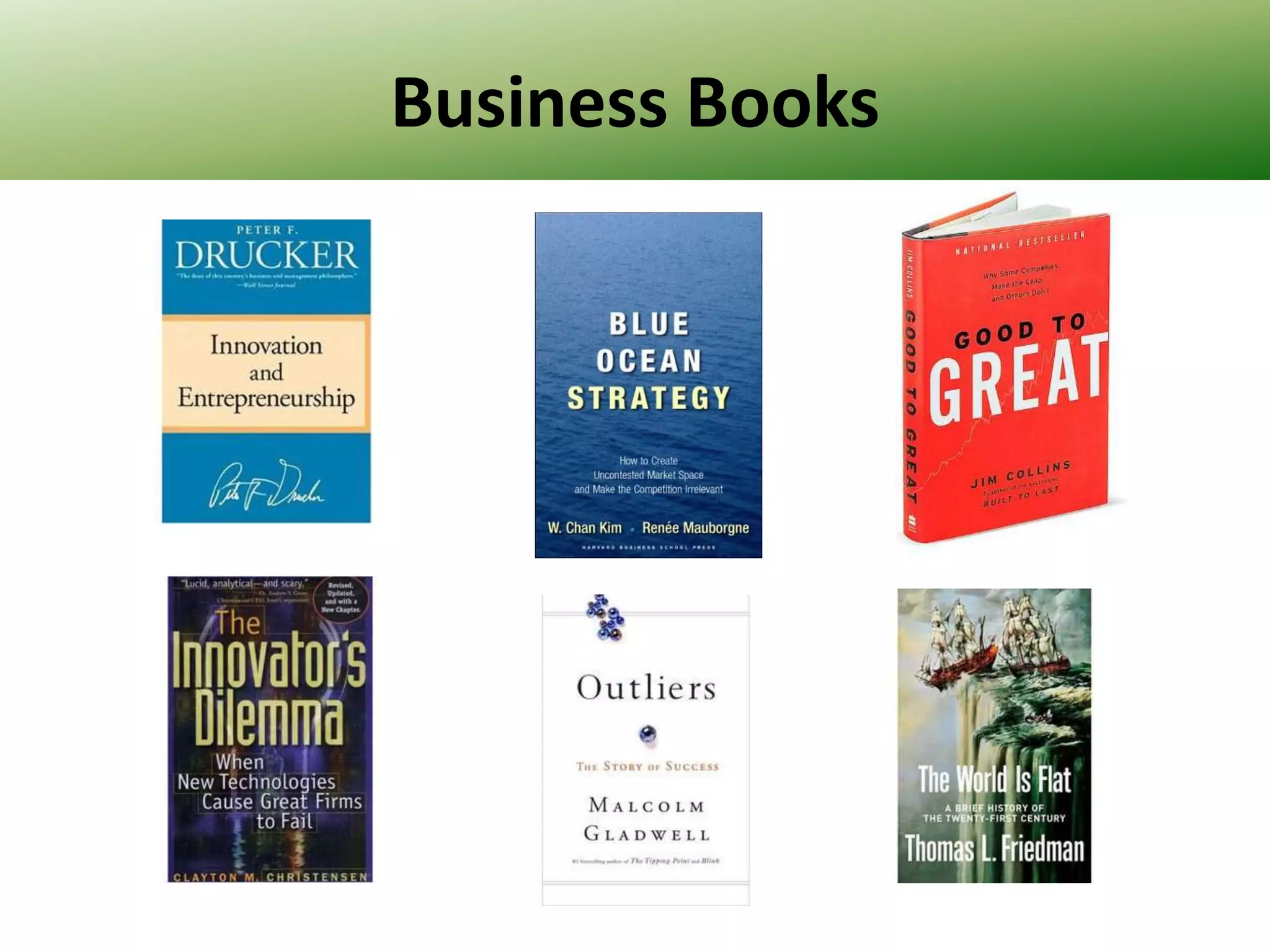
Business Books
Blue Ocean - Framework
• What needs to be eliminated
• What needs to be reduced
below industry standards
• What should be raised well
above industry standards
• What should be created that
the industry has never
offered
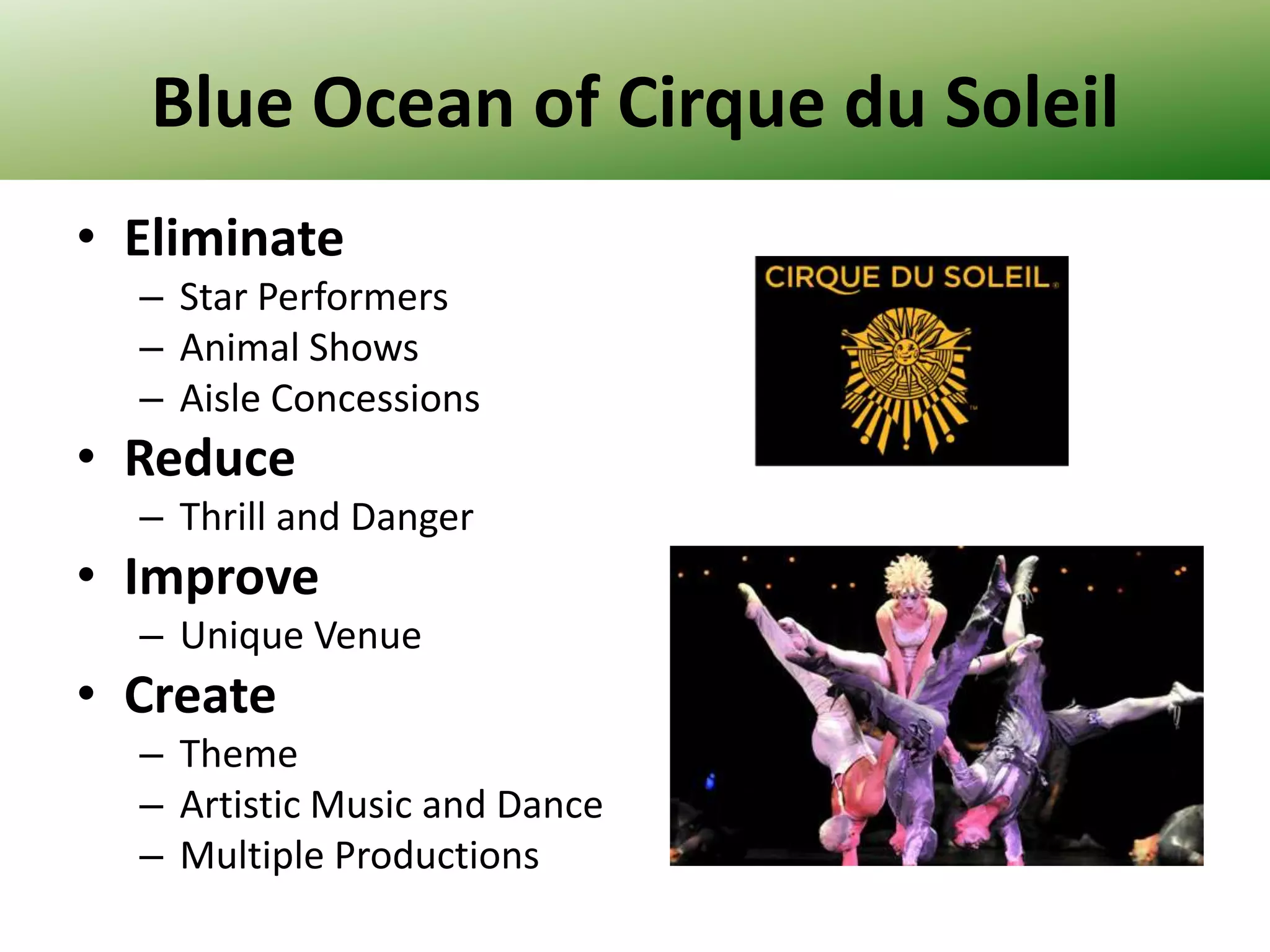
Blue Ocean of Cirque du Soleil
• Eliminate
– Star Performers
– Animal Shows
– Aisle Concessions

• Reduce
– Thrill and Danger

• Improve
– Unique Venue

• Create
– Theme
– Artistic Music and Dance
– Multiple Productions
Local Quantifiable Advantage
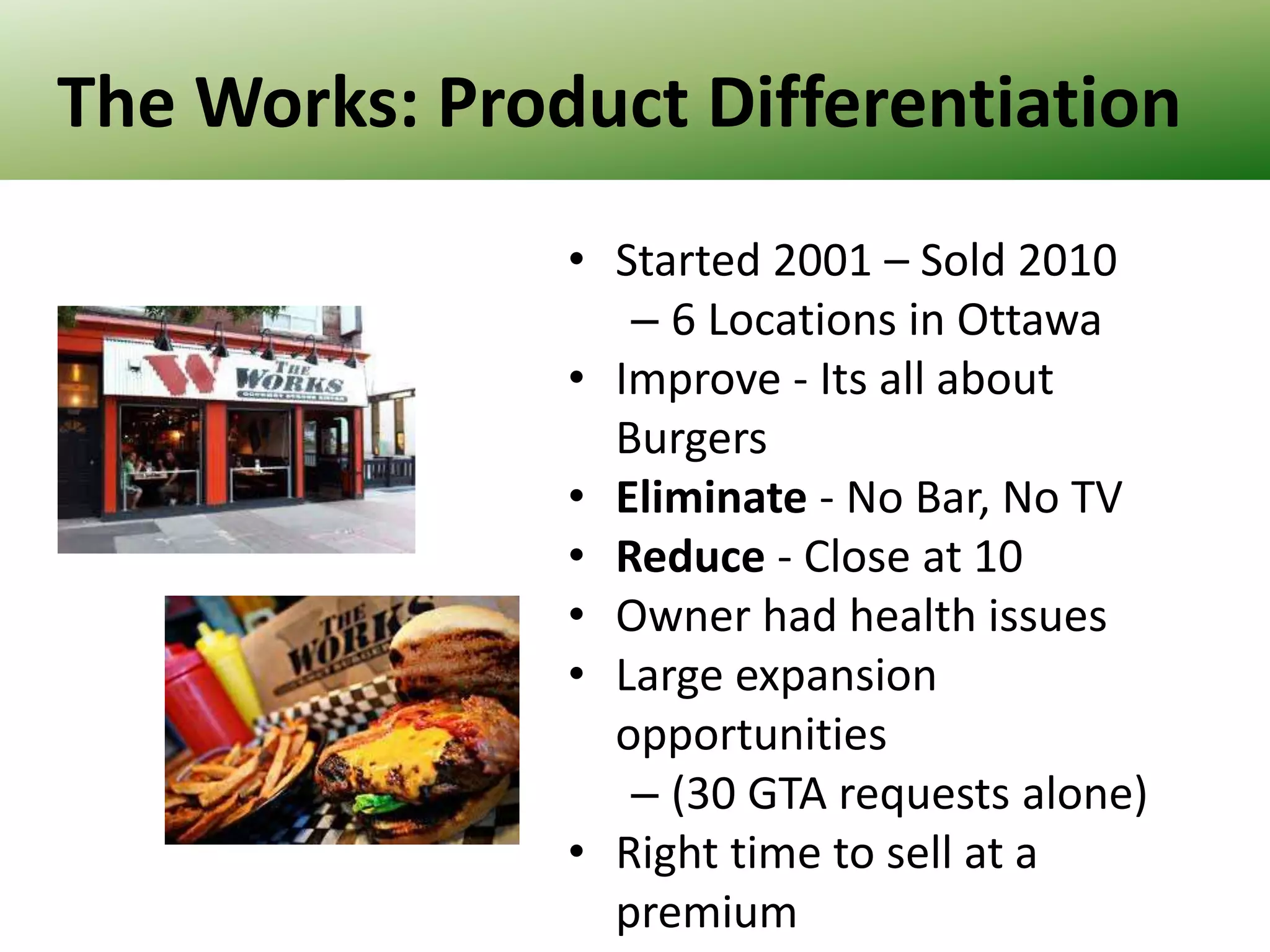
The Works: Product Differentiation
• Started 2001 – Sold 2010
– 6 Locations in Ottawa
• Improve - Its all about
Burgers
• Eliminate - No Bar, No TV
• Reduce - Close at 10
• Owner had health issues
• Large expansion
opportunities
– (30 GTA requests alone)
• Right time to sell at a
premium
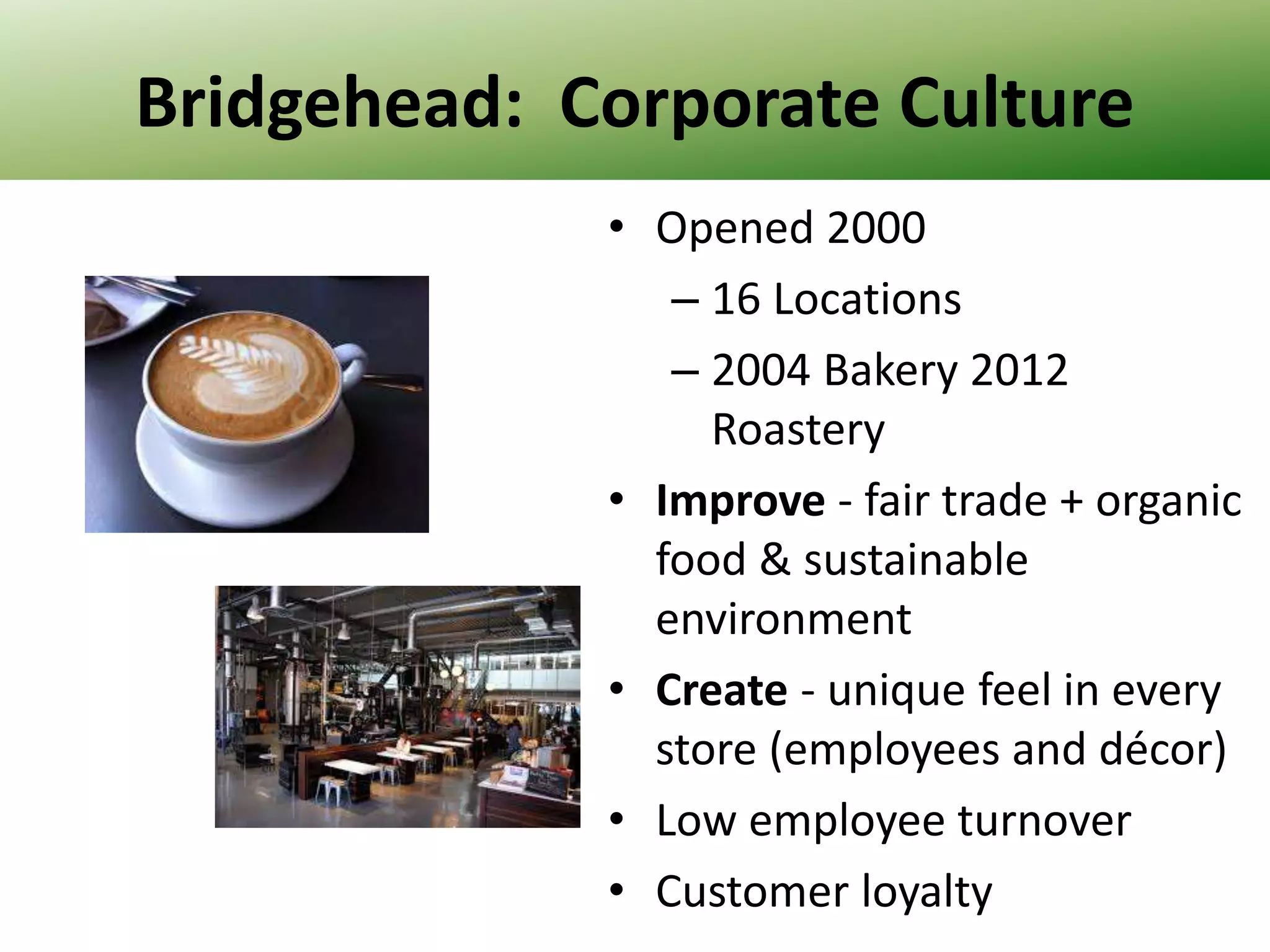
Bridgehead: Corporate Culture
• Opened 2000
– 16 Locations
– 2004 Bakery 2012
Roastery
• Improve - fair trade + organic
food & sustainable
environment
• Create - unique feel in every
store (employees and décor)
• Low employee turnover
• Customer loyalty
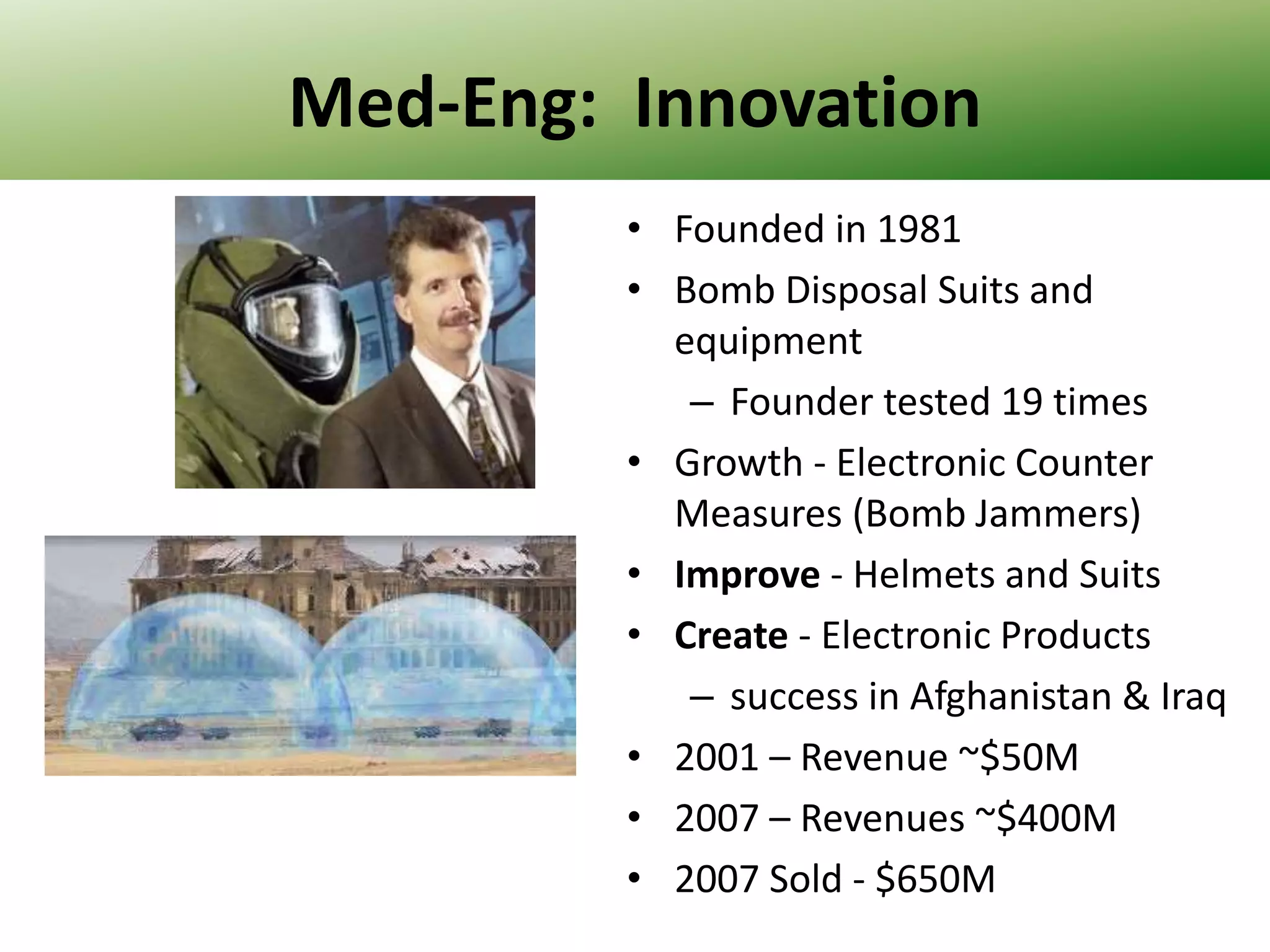
Med-Eng: Innovation
• Founded in 1981
• Bomb Disposal Suits and
equipment
– Founder tested 19 times
• Growth - Electronic Counter
Measures (Bomb Jammers)
• Improve - Helmets and Suits
• Create - Electronic Products
– success in Afghanistan & Iraq
• 2001 – Revenue ~$50M
• 2007 – Revenues ~$400M
• 2007 Sold - $650M
Advantage of Quantifiable Advantage
VALUE TO BUSINESS
•
•
•
•

VALUE TO OWNER

Attract new customers
• Increase value of the
business
Retain existing customers
• Options for owner
Faster revenue growth
– Grow the business
Maintain/improve
– Transition or sell
margins
business
Polling Question #1:
How well do you know your company’s quantifiable advantage?
1. Very well

2. Better than your competitors
3. Have a solid understanding
4. Somewhat

5. Don’t know it

14
Financial Management
Strong governance, transparency
and financial & operational reports
will strengthen the business and its
ability to make effective decisions,
AND make it bullet proof for a due
diligence
Candace Enman, CA, CPA
President, WelchGroup Consulting
15
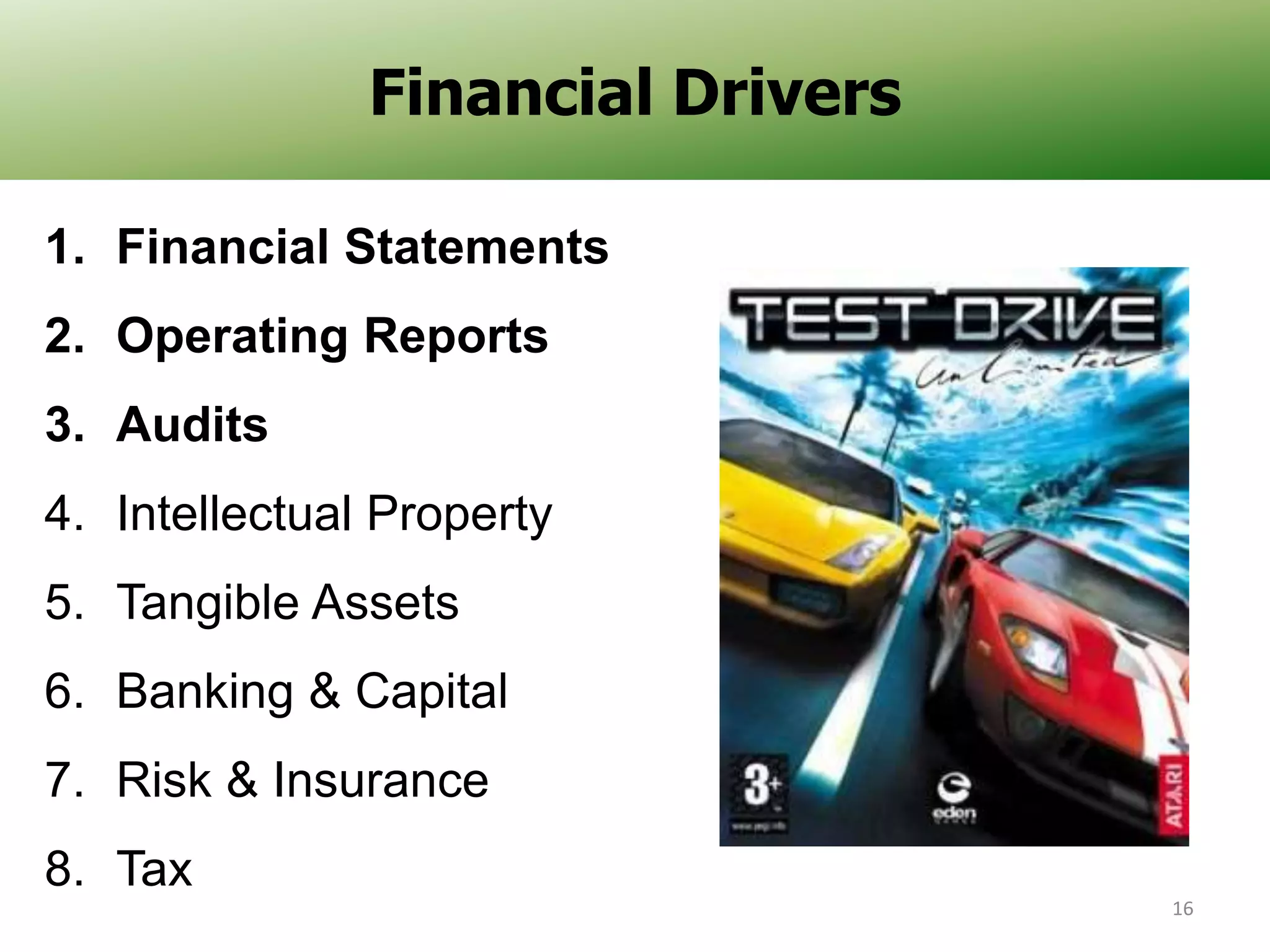
Financial Drivers
1. Financial Statements
2. Operating Reports
3. Audits

4. Intellectual Property
5. Tangible Assets
6. Banking & Capital
7. Risk & Insurance
8. Tax
16
1st Gear
1st Gear: Financial Statements
1. Spreadsheets
2. “Box Jobs”
3. Computerized financial reporting package
• Balance sheet
• Profit & loss

Doing compliance reporting alone will not add
value to your business.
17
2nd Gear
2nd Gear: Operational Reporting
“management reports that are routinely generated
and used by management to review the company’s
performance and make operational decisions”
1. Operational reporting
• Do they tell the
company story?
• Key Performance
Indicators (KPI’s)
2. Transparency
18
2nd Gear
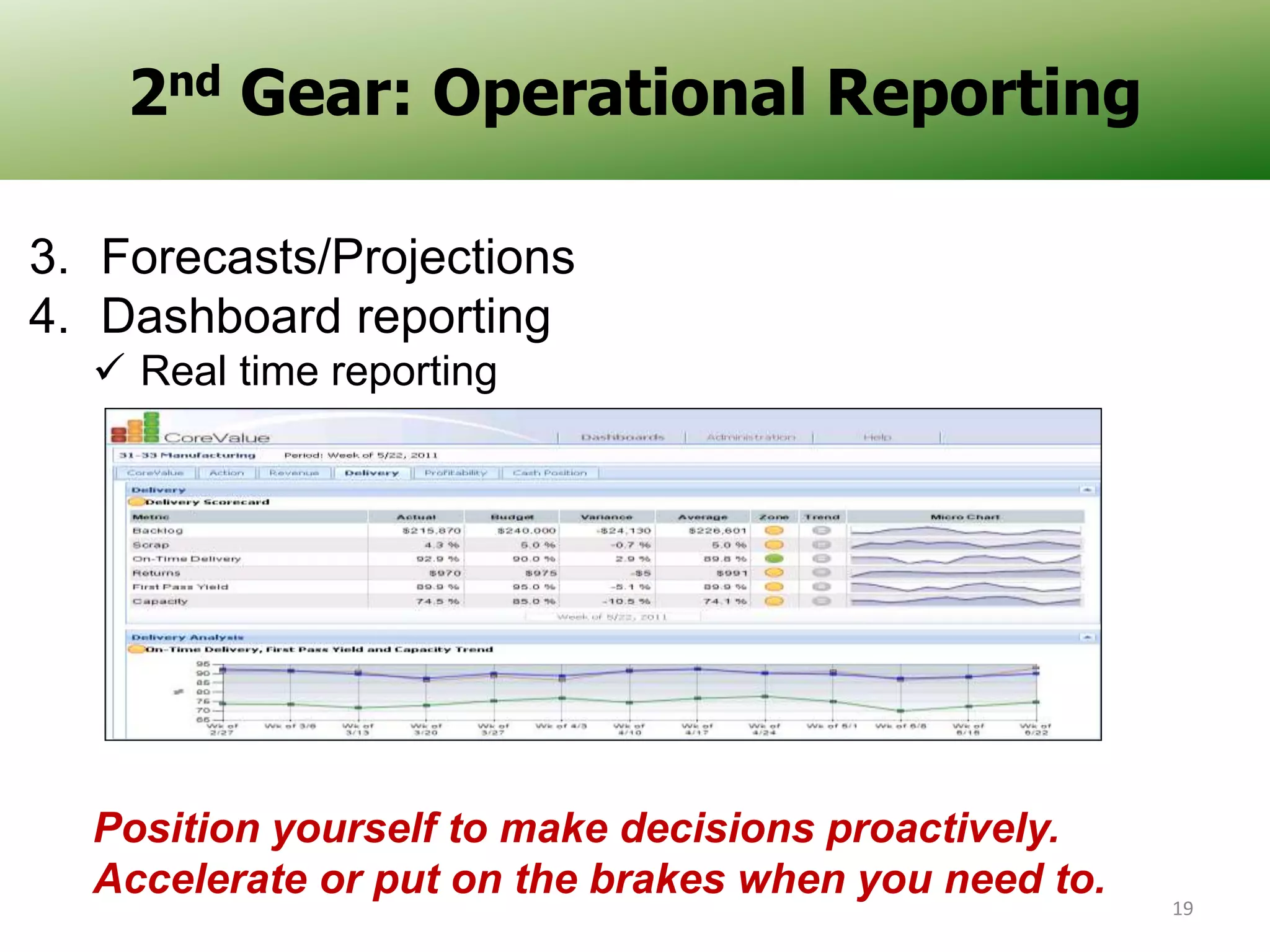
2nd Gear: Operational Reporting
3. Forecasts/Projections
4. Dashboard reporting
 Real time reporting

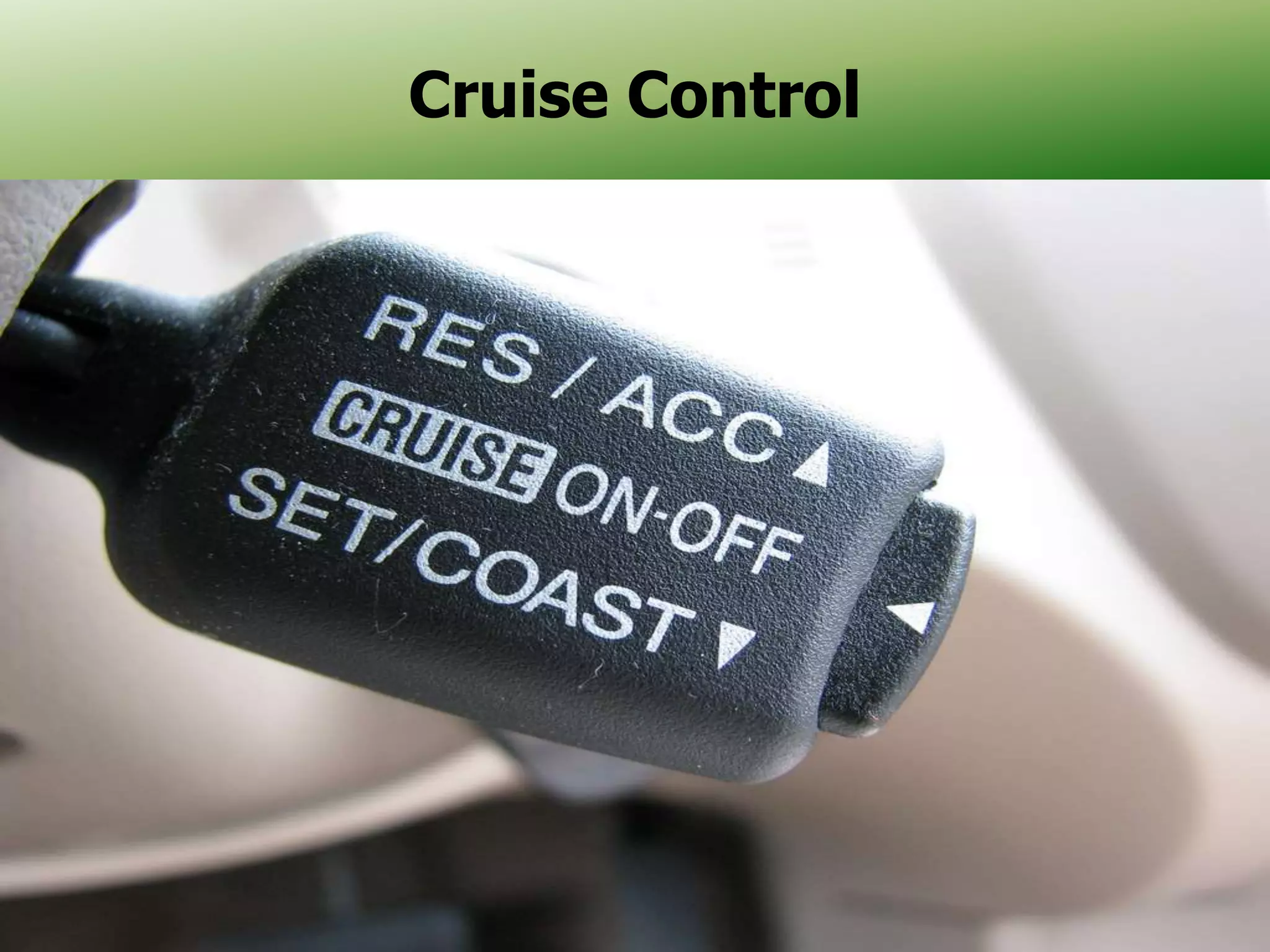
Position yourself to make decisions proactively.
Accelerate or put on the brakes when you need to.

19
3rd Gear: Audit
1. Numbers are audit-ready & “bulletproof”
• Clean records, business processes, internal
controls
If you performed a due diligence on yourself would
you like the results?
2. Documentation
• Business continuity
Greater Confidence = Lower Risk for Buyer

= More Value!

20
Cruise Control

21
Polling Question #2:
Do your Operational Reports identify the activities & health of
your business to help with “proactive” management decisions?
1. Yes – very helpful
2. Yes – but needs improvement
3. No – I don’t think we’re focused on the right things
4. Don’t have operational reports

22
Talent Management
A company that has the ability to find,
develop and retain quality individuals in the
right positions, at the right time, will enable
success in all aspects of the business

Margo Crawford, President
Business Sherpa Group
23
3 Major HR Themes that can Depress Value
1. Having the right team at the right time through business
changes and for long term success
2. Having a team that is performing at its full potential to
drive business value.
3. Having the right structures and processes in place to
Financial
Measures sustainable and repeatable performance
ensure
Revenue, EBITDA

24
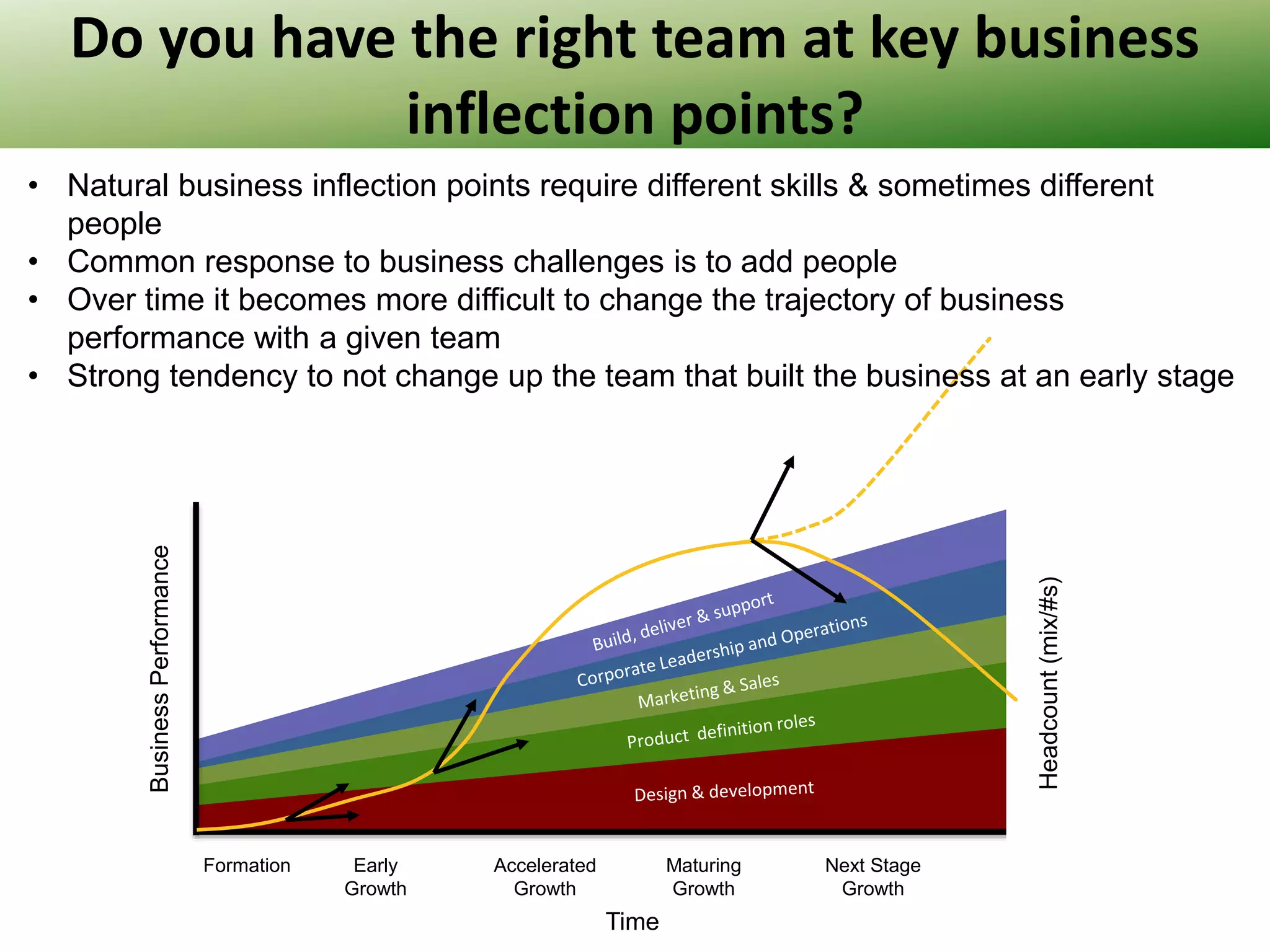
Do you have the right team at key business
inflection points?

Headcount (mix/#s)
Headcount

Business Performance

• Natural business inflection points require different skills & sometimes different
people
• Common response to business challenges is to add people
• Over time it becomes more difficult to change the trajectory of business
performance with a given team
• Strong tendency to not change up the team that built the business at an early stage

Formation

Early
Growth

Accelerated
Growth

Maturing
Growth

Time

Next Stage
Growth
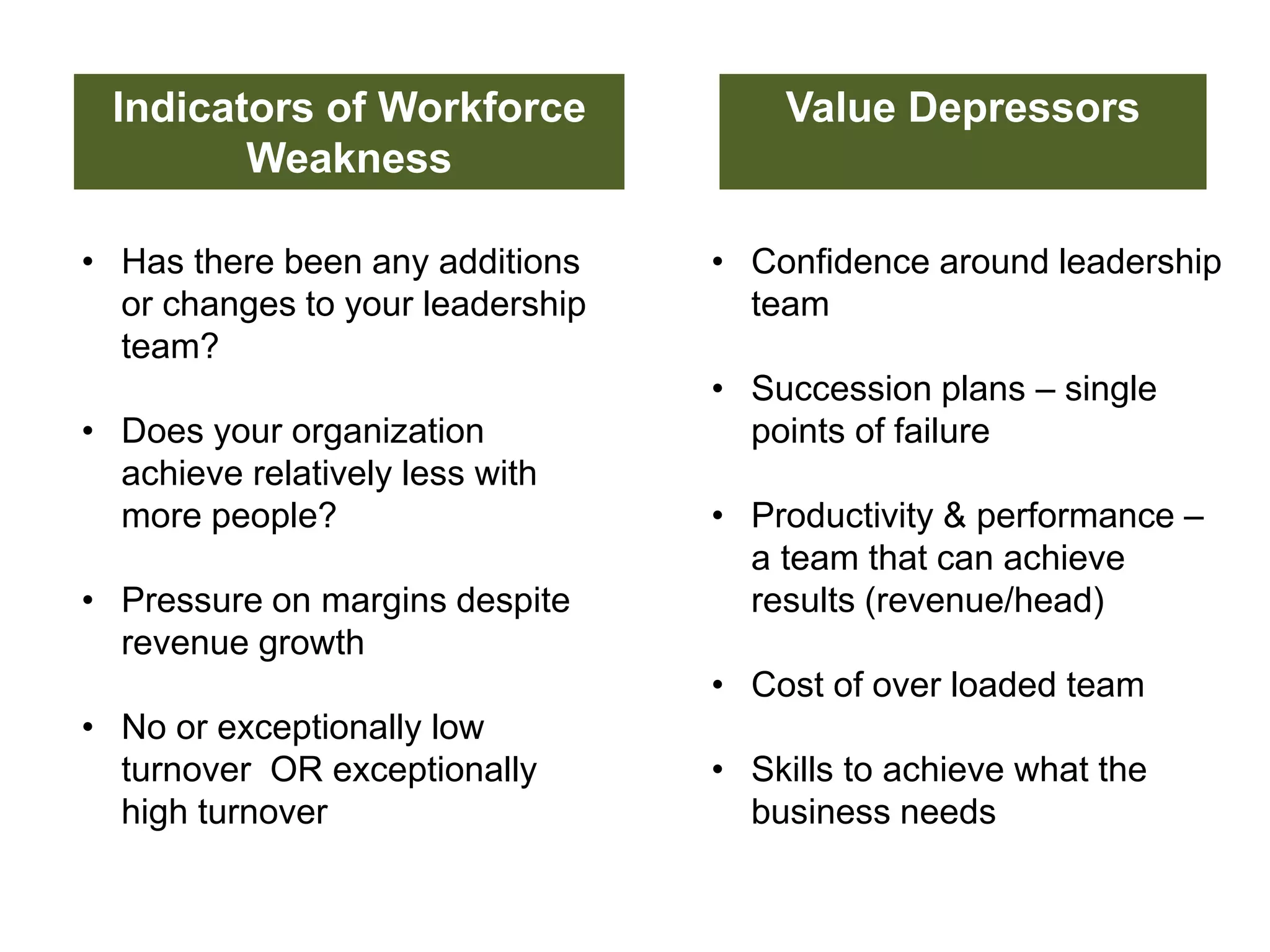
Indicators of Workforce
Weakness
• Has there been any additions
or changes to your leadership
team?
• Does your organization
achieve relatively less with
more people?
• Pressure on margins despite
revenue growth

Value Depressors

• Confidence around leadership
team
• Succession plans – single
points of failure

• Productivity & performance –
a team that can achieve
results (revenue/head)
• Cost of over loaded team

• No or exceptionally low
turnover OR exceptionally
high turnover

• Skills to achieve what the
business needs
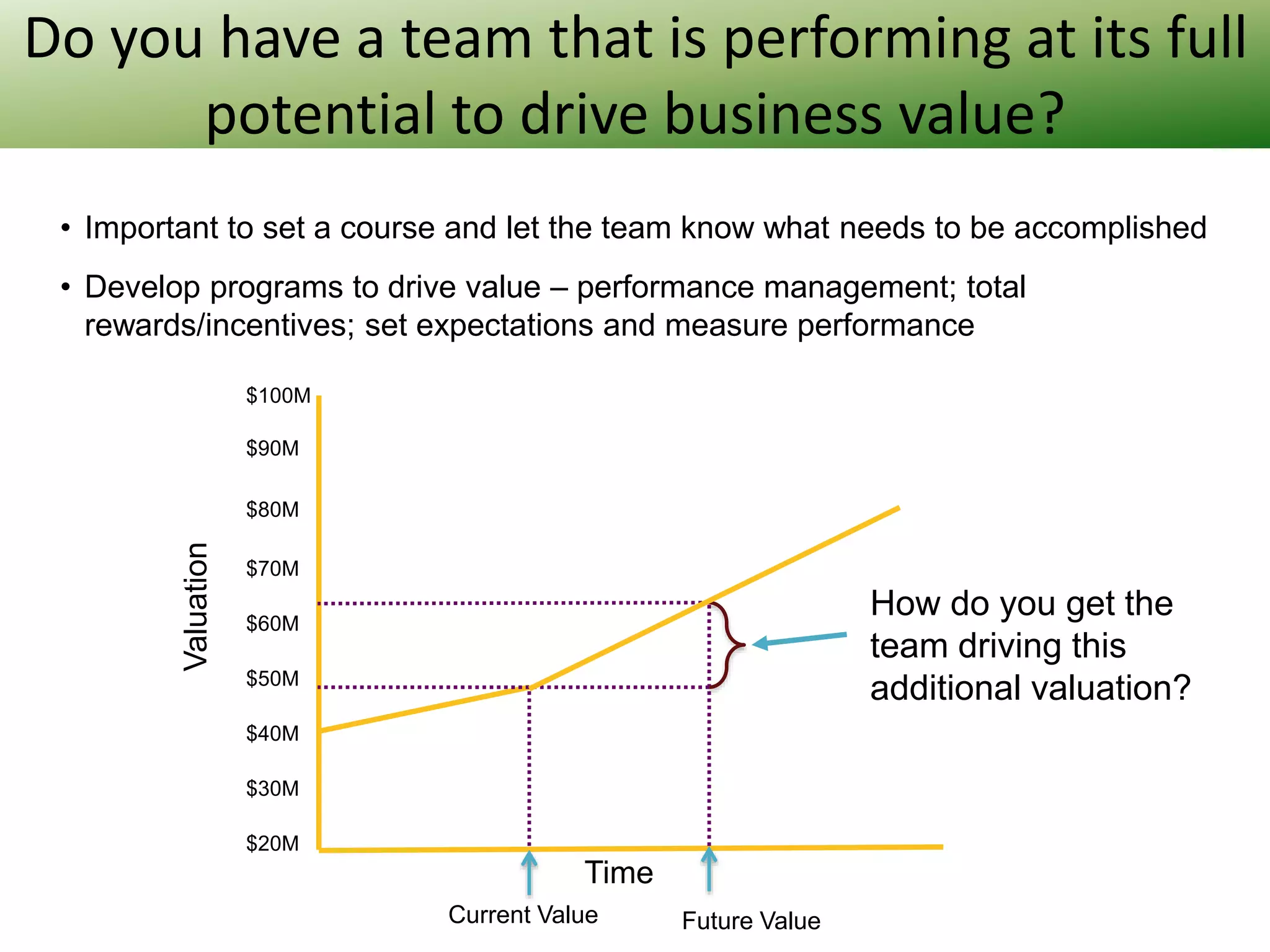
Do you have a team that is performing at its full
potential to drive business value?
• Important to set a course and let the team know what needs to be accomplished

• Develop programs to drive value – performance management; total
rewards/incentives; set expectations and measure performance
$100M
$90M

Valuation

$80M
$70M

How do you get the
team driving this
additional valuation?

$60M
$50M
$40M
$30M
$20M

Time
Current Value

Future Value
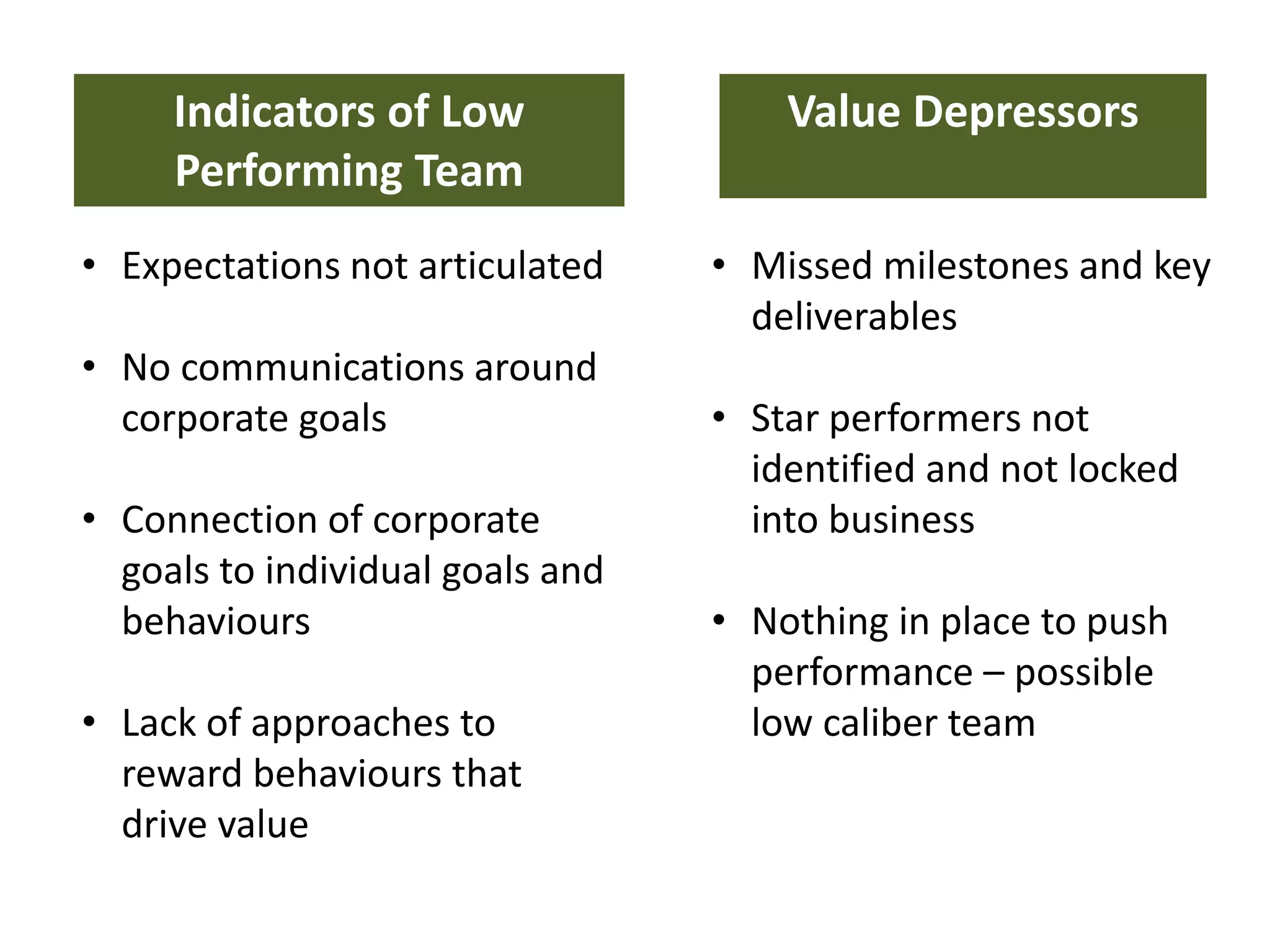
Indicators of Low
Performing Team

Value Depressors

• Expectations not articulated

• Missed milestones and key
deliverables

• No communications around
corporate goals

• Connection of corporate
goals to individual goals and
behaviours
• Lack of approaches to
reward behaviours that
drive value

• Star performers not
identified and not locked
into business
• Nothing in place to push
performance – possible
low caliber team
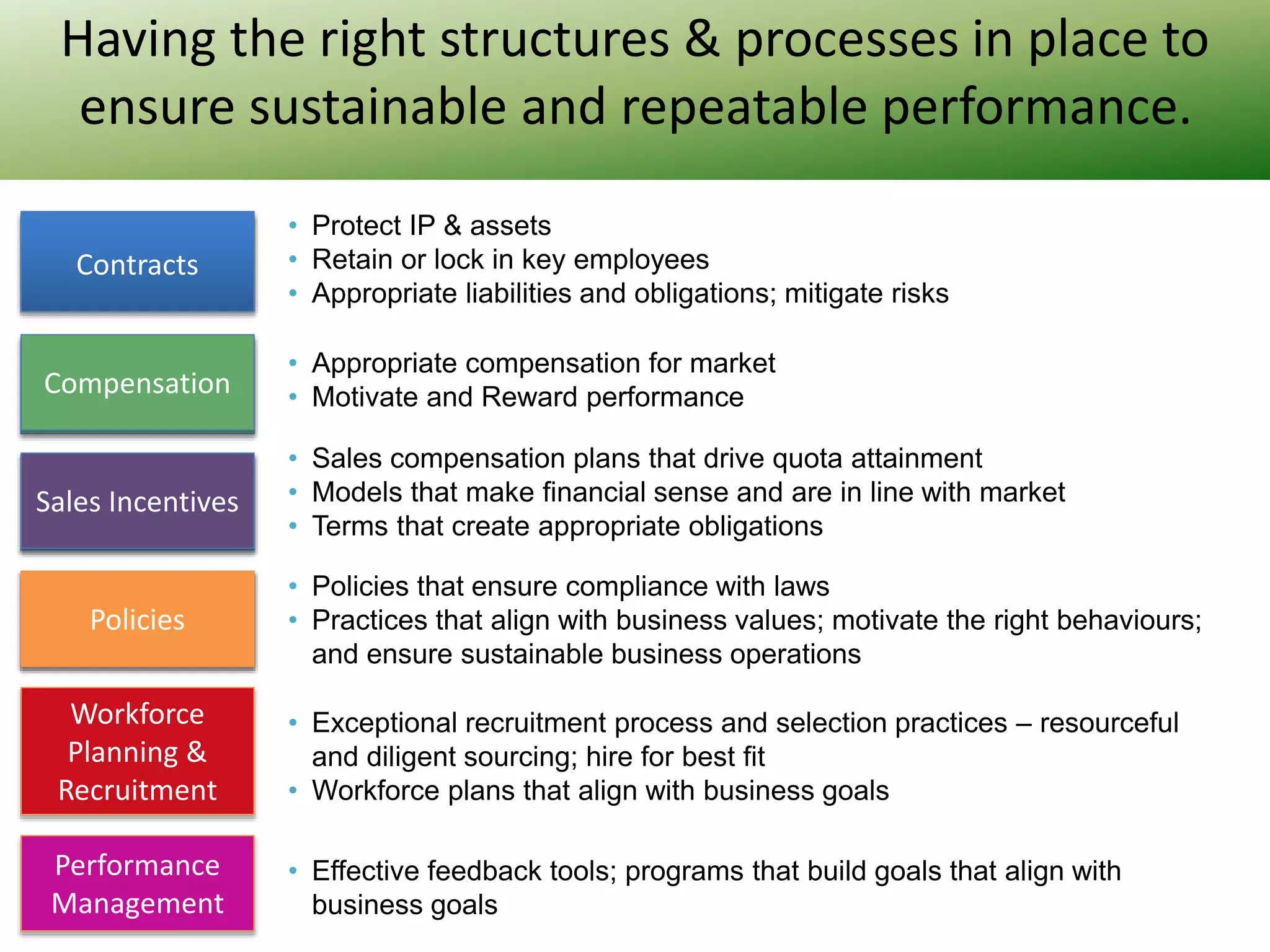
Having the right structures & processes in place to
ensure sustainable and repeatable performance.
Contracts

• Protect IP & assets
• Retain or lock in key employees
• Appropriate liabilities and obligations; mitigate risks

Compensation

• Appropriate compensation for market
• Motivate and Reward performance

Sales Incentives

• Sales compensation plans that drive quota attainment
• Models that make financial sense and are in line with market
• Terms that create appropriate obligations

Policies

• Policies that ensure compliance with laws
• Practices that align with business values; motivate the right behaviours;
and ensure sustainable business operations

Workforce
Planning &
Recruitment

• Exceptional recruitment process and selection practices – resourceful
and diligent sourcing; hire for best fit
• Workforce plans that align with business goals

Performance
Management

• Effective feedback tools; programs that build goals that align with
business goals
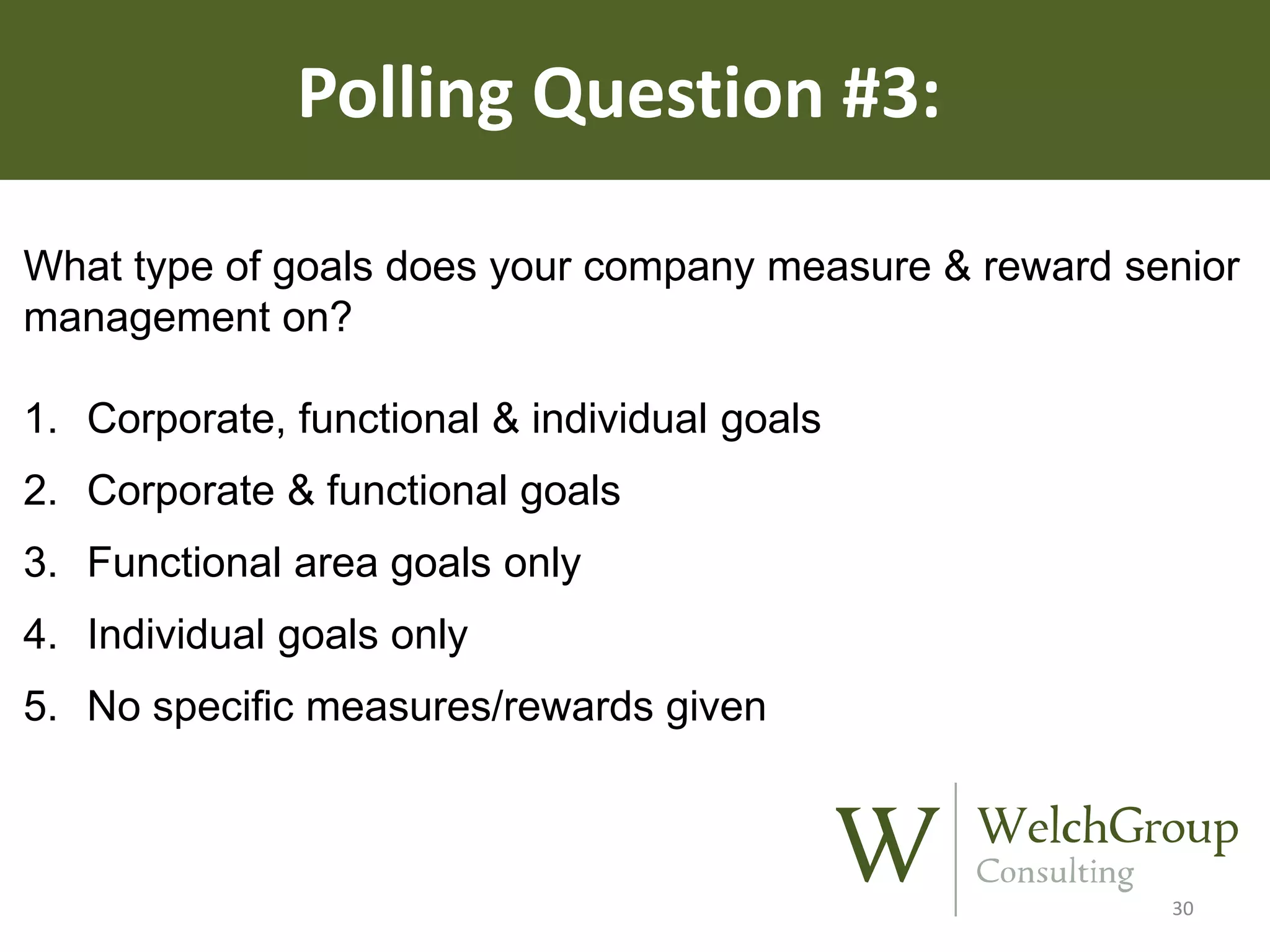
Polling Question #3:
What type of goals does your company measure & reward senior
management on?
1. Corporate, functional & individual goals

2. Corporate & functional goals
3. Functional area goals only
4. Individual goals only

5. No specific measures/rewards given

30
Strategic Direction
A business without a strategic plan is like
a ship without a compass. Your
business may float just fine today, but
chances are it will eventually get lost.
Valuable businesses have a strong
sense of direction.
Bron Vasic, CA, CMC, Chairman
President, B Vasic & Associates Inc.
31
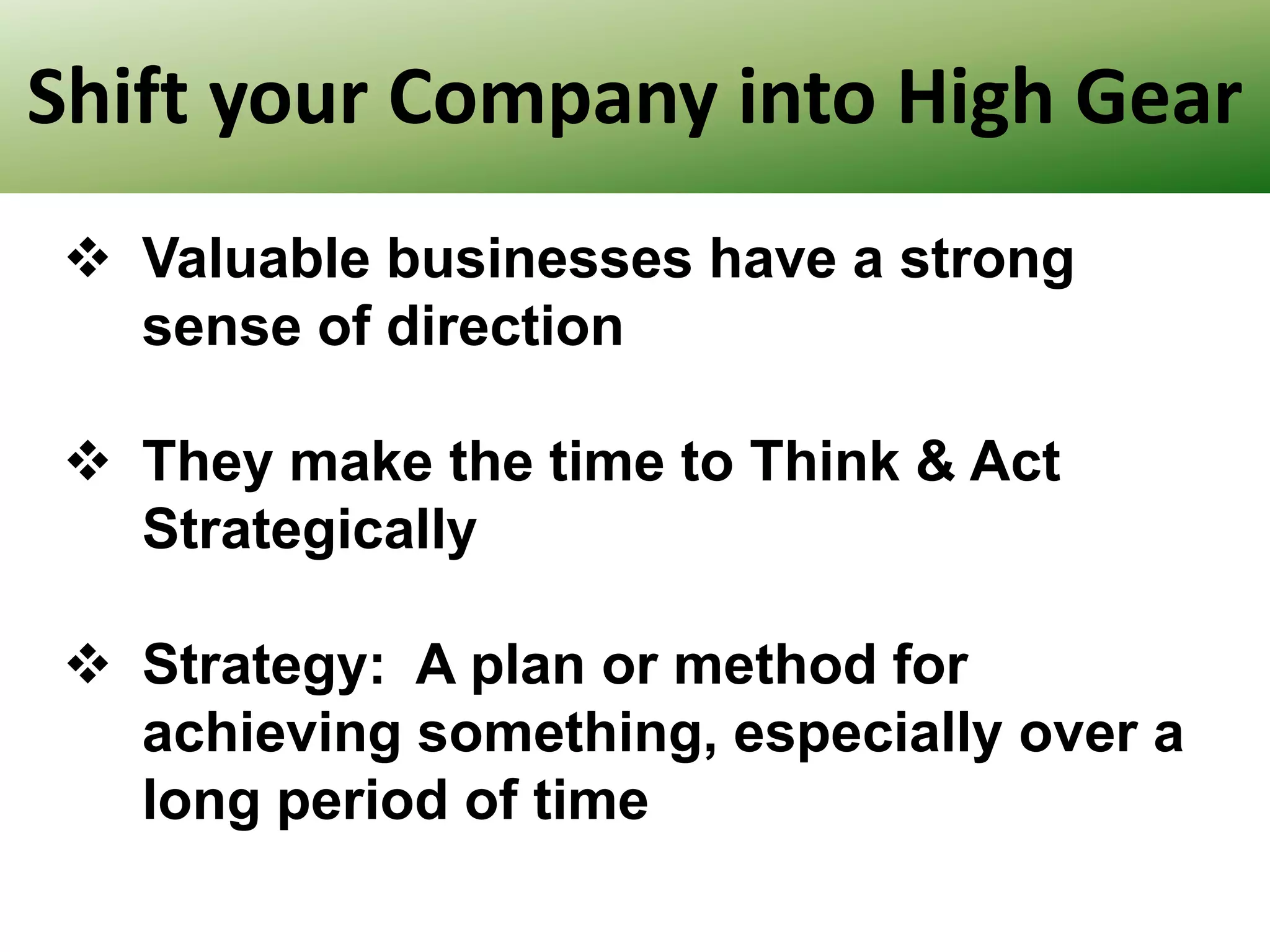
Shift your Company into High Gear
 Valuable businesses have a strong
sense of direction
 They make the time to Think & Act
Strategically
 Strategy: A plan or method for
achieving something, especially over a
long period of time
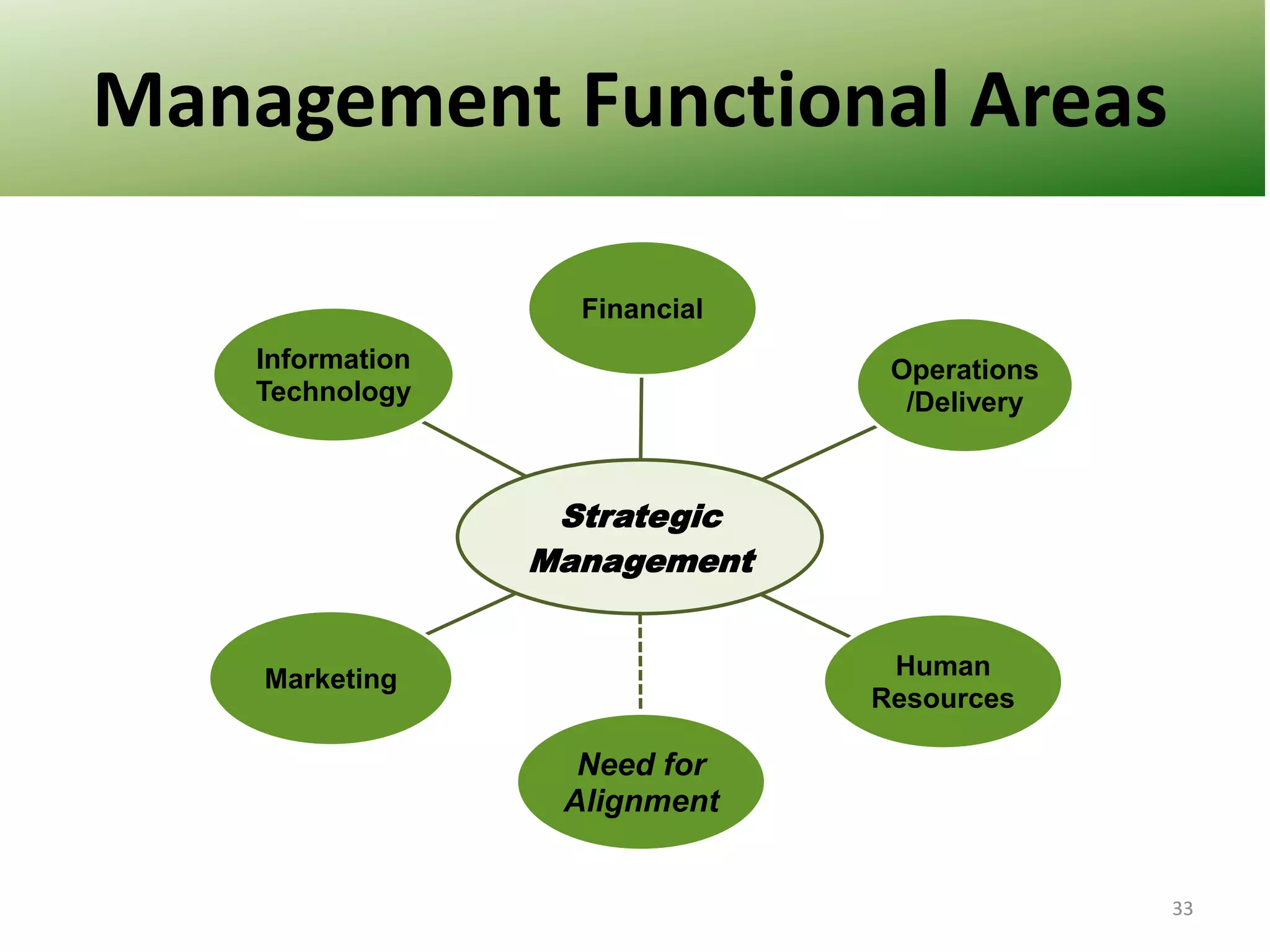
Management Functional Areas
Financial
Information
Technology

Operations
/Delivery

Strategic
Management
Human
Resources

Marketing

Need for
Alignment

33
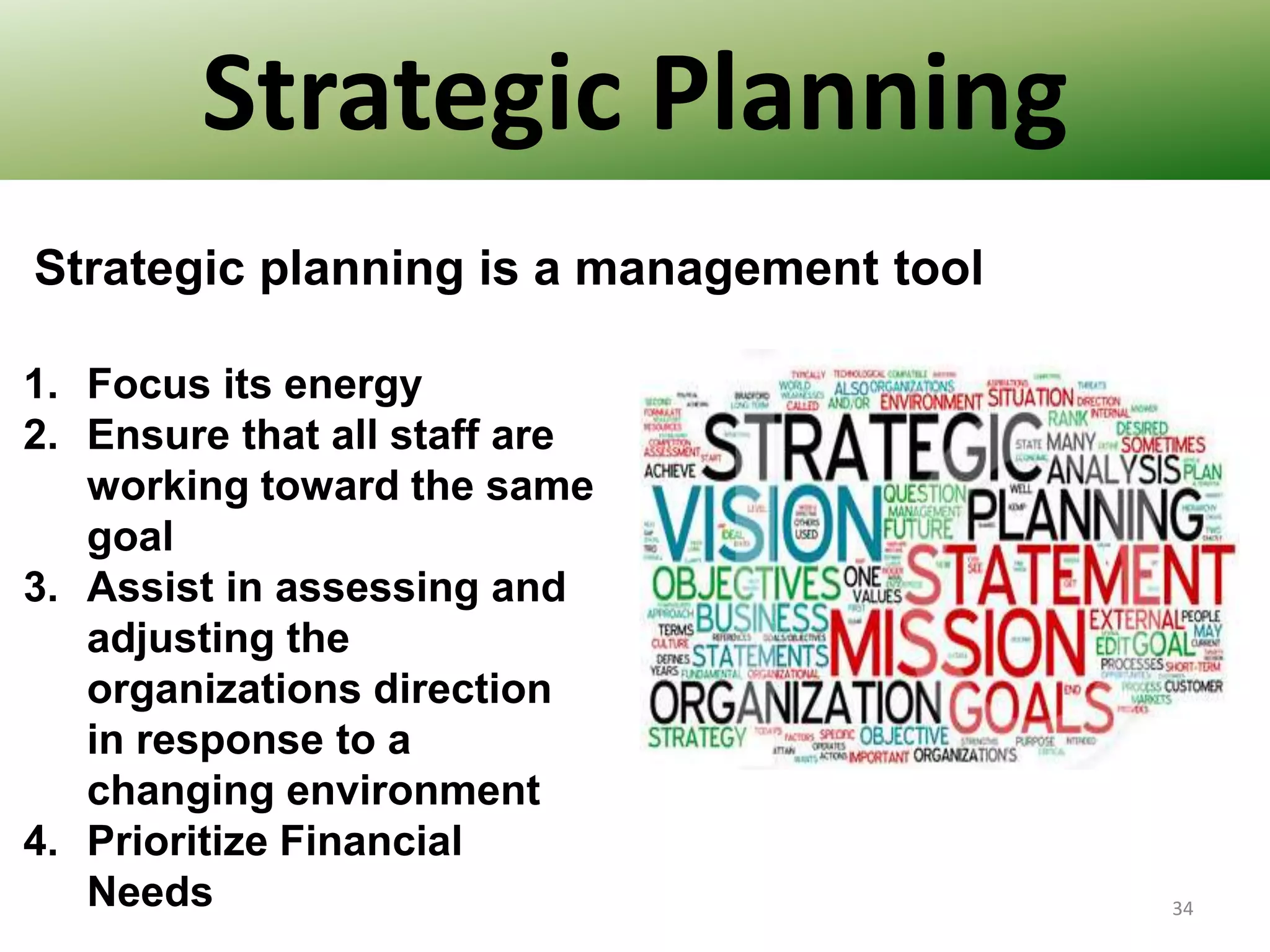
Strategic Planning
Strategic planning is a management tool
1. Focus its energy
2. Ensure that all staff are
working toward the same
goal
3. Assist in assessing and
adjusting the
organizations direction
in response to a
changing environment
4. Prioritize Financial
Needs

34
Excuses to Think or Act Strategically
1. Lack of understanding and focus in the process of
planning
2. Mentally fatigued
3. Partial commitment
4. Lack of understanding
5. Lack of accountability.
6. Lack of follow-up
7. Lack of flexibility

35
5 Strategic Questions to Ask
1. What business are we in and how
are we doing now?
2. What’s happening around us?
• Are there any serious dangers
in staying where we are – i.e.
sticking with the same business
and strategy?
3. If so, is there a better place for us to
be?
4. How do we get there?
5. How will we know we have arrived?
36
Strategic Direction
• Run at peak performance
• Make sure that the business is in the right gear
• Bigger is not better
• Running leaner has many advantages and efficiencies
• Get out of crisis mode, get aligned, get things meshing well
• People are starved for leadership – take charge, be proud of what you
have and make decisions based on what you know
• Procrastination for a day can be good, even a couple of days but
beyond a week you are in analysis paralysis
• Don’t grind your gears
• Have the necessary tune ups that will allow for a smooth ride (perform
better, save gas)
• Getting all on the same page and not doing business alone
• Simplicity in planning and words that everyone will understand
37
Polling Question #4:
Does your company have a strategic plan?
1. Yes we have a plan
2. We have a plan, but it’s not updated
3. No plan on paper, but we meet regularly about it
4. No plan on paper, but we have a common vision
5. No plan

38
Polling Question #5:
We have a private jet waiting for you at the airport that can take
you anywhere you want to go. You only have 1 hour to prepare.
Would you be able to pack up and leave your company and
have it continue to operate smoothly without you?

1. Yes
2. Yes, but only for a month
3. Yes, but only for a week

4. Yes, but I would need my smartphone
5. No
39
Do it All Business Owner
A "do it all" business owner means the
value of the business is in the business
owner versus the actual operating
business

Chuck Richards, CEO
Chairman’s View/CoreValue
40
Owner’s Role
The fundamental responsibility
of the CEO is to build
enterprise value.
Enterprise Value is:
If Enterprise Value is the measure of business
success, questions every CEO needs to ask and
answer:

What is my business really worth?
Why?
How do I make it more valuable?
Polling Question #6:
Do you know the value of your Company today?
1. Yes
2. I have a general idea
3. No

43
Polling Question #7:
If your business sold today, could your business survive
due diligence (i.e. is the value transferable)?
1. 100% confident

2. Greater than 75% confident
3. Greater than 50% confident
4. There’s some work I’d have to do to get it ready

44
Polling Question #8:
Do you know how to improve the performance and value
of your business?
1. Yes and I have a plan that will help me execute it
2. Yes but I don’t have a plan
3. I’m not sure where to start

45
Enterprise Value is not:

1. Profit

2. Revenue
3. Captured on the Balance Sheet
Enterprise Value is:

A company’s ability to generate
future revenue and profit,
without the current business
owner(s) in charge
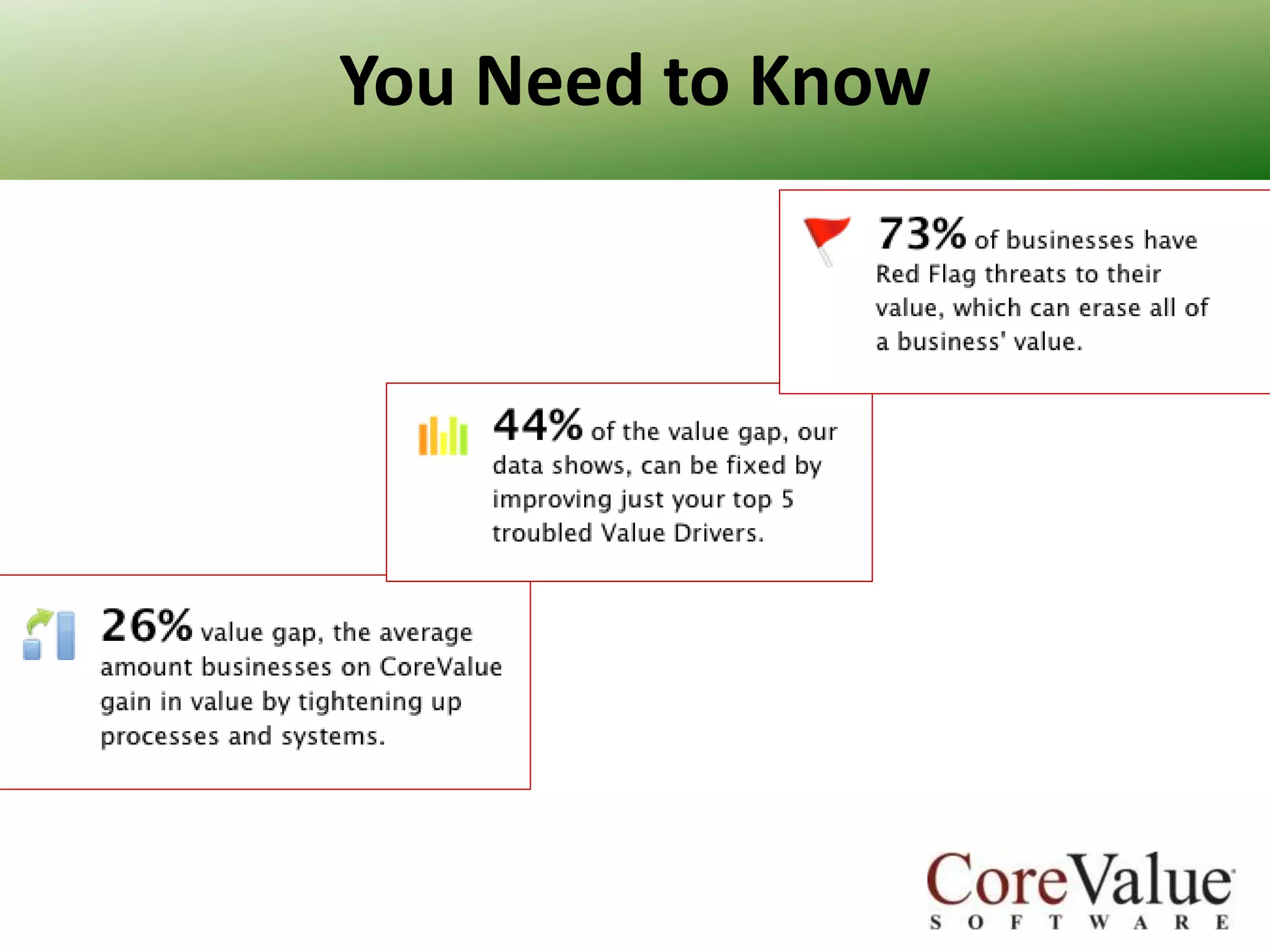
You Need to Know
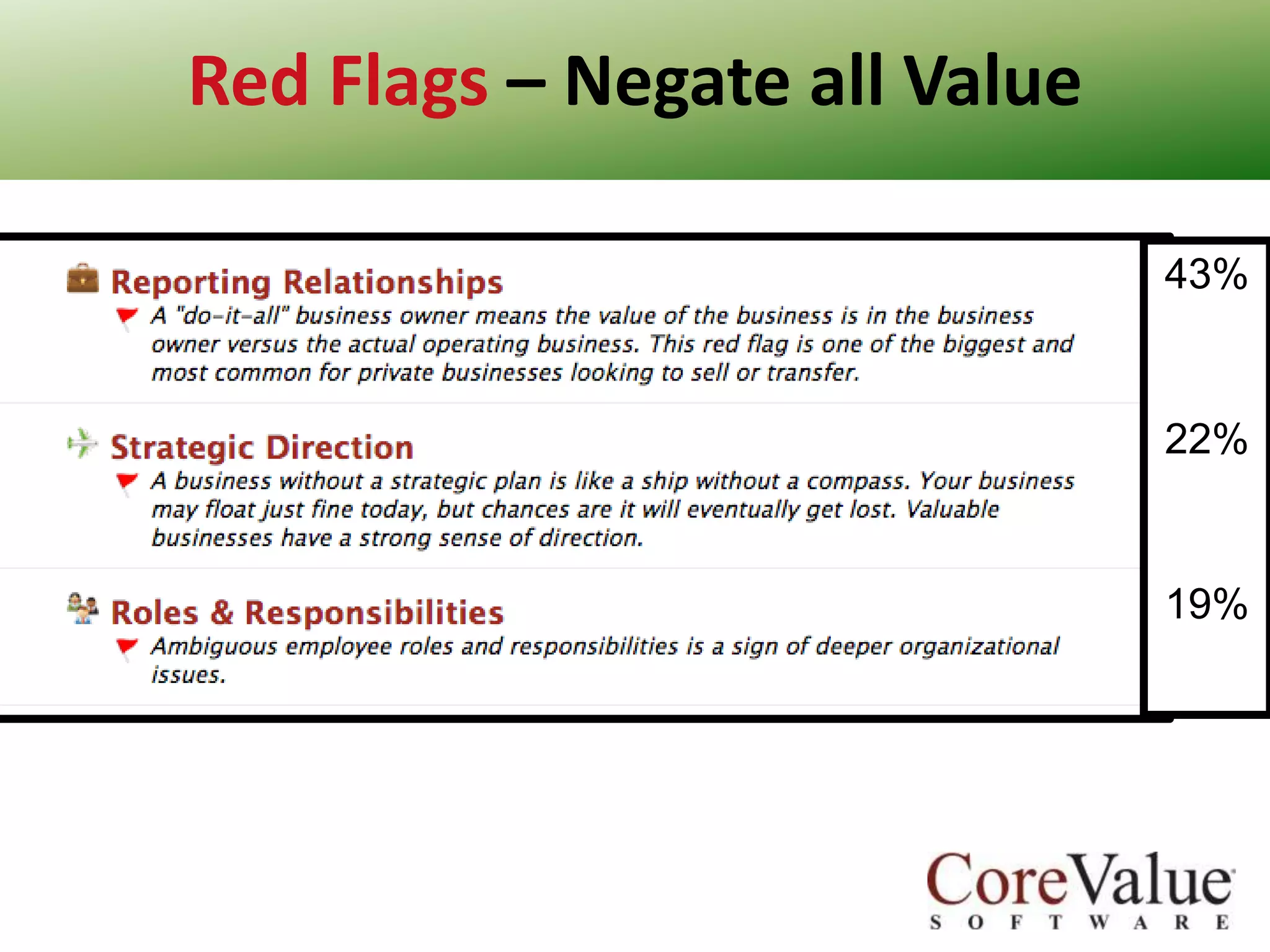
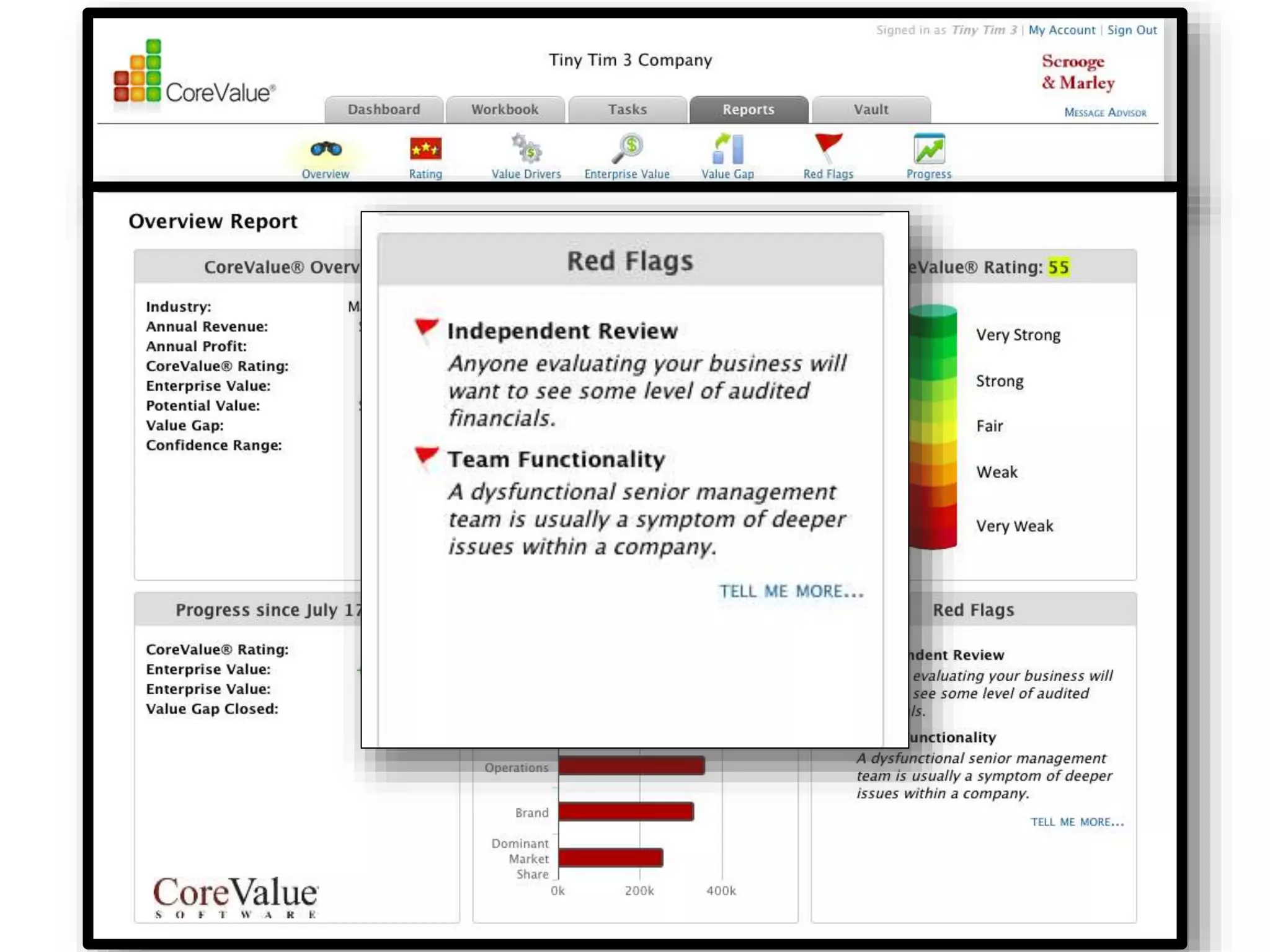
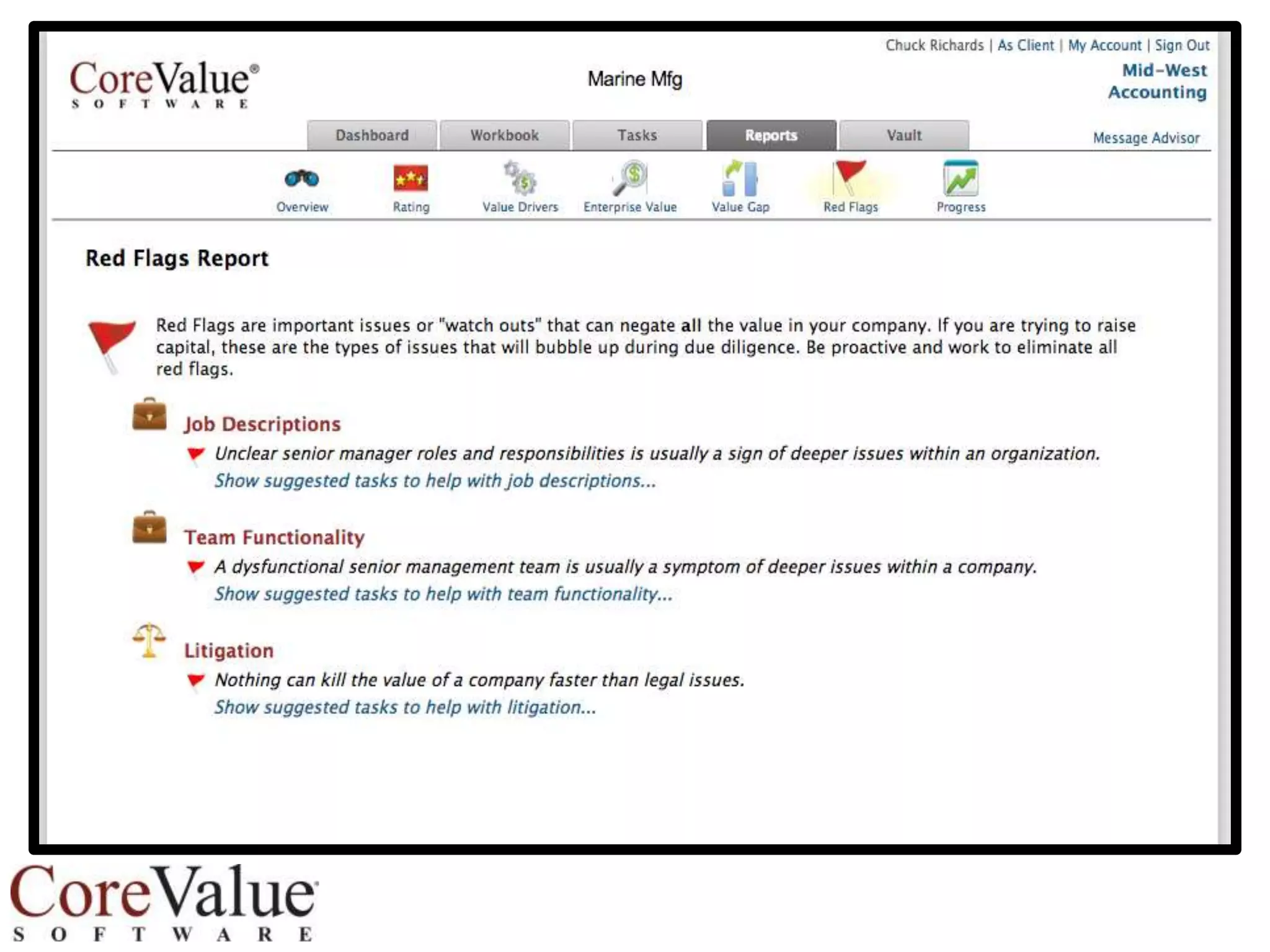
Red Flags – Negate all Value
43%

22%

19%
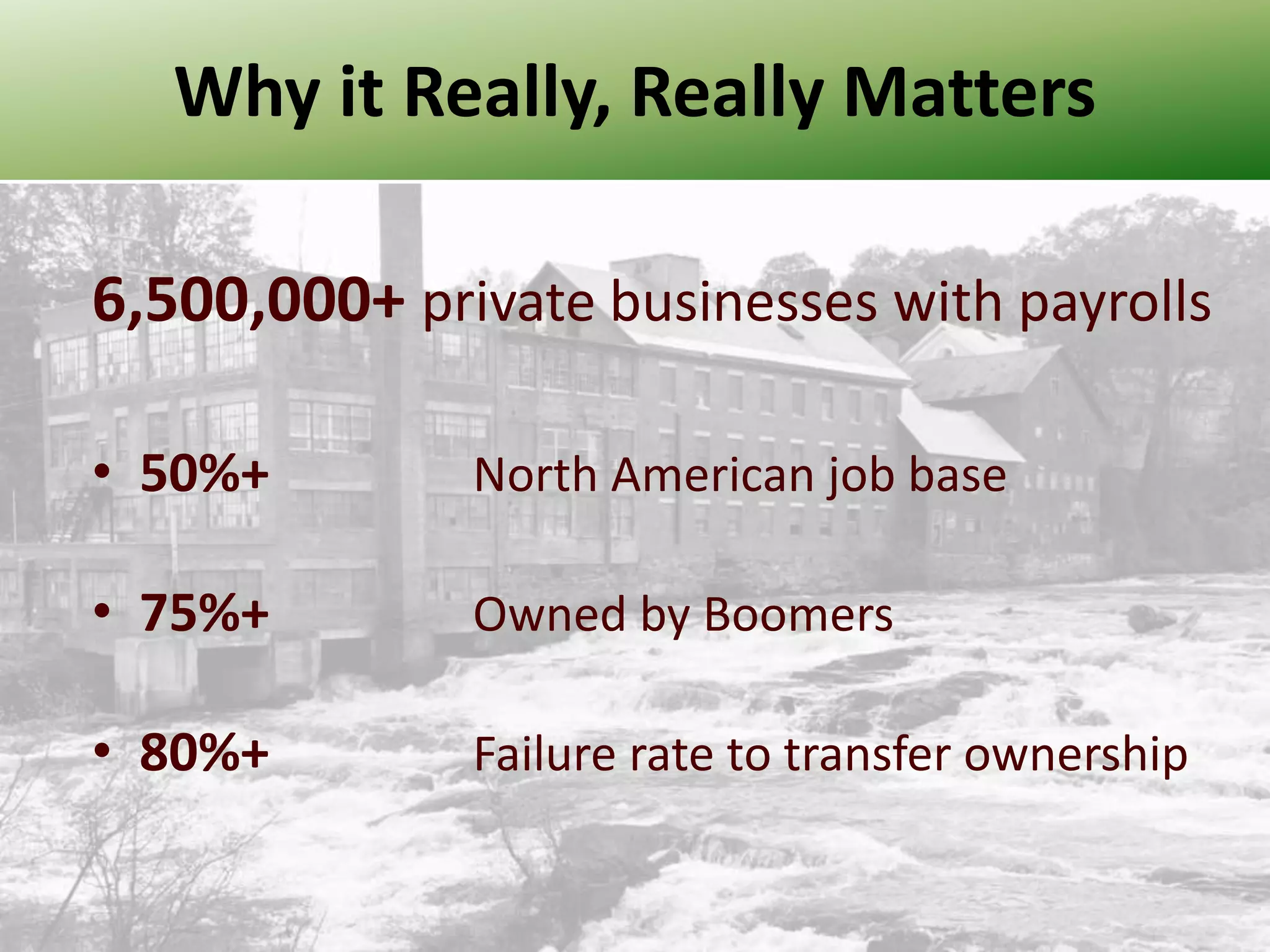
Why it Really, Really Matters
6,500,000+ private businesses with payrolls
• 50%+

North American job base

• 75%+

Owned by Boomers

• 80%+

Failure rate to transfer ownership
Business is An Engine
Finance Measures the Outputs of the Engine
Revenue and Profit
Value = Ability of the Engine to Dependably
Generate Revenue and Profit into the Future
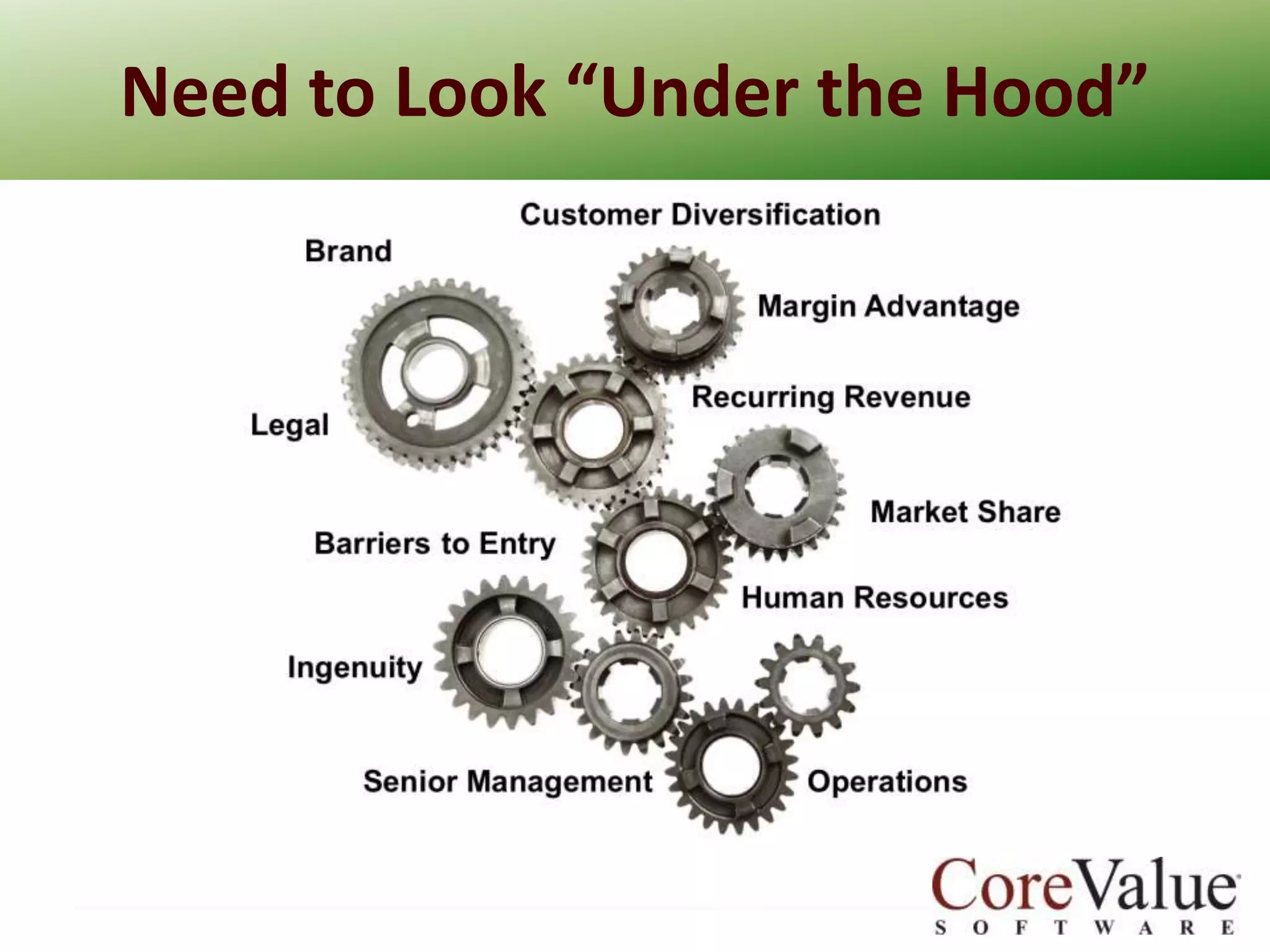
Need to Look “Under the Hood”
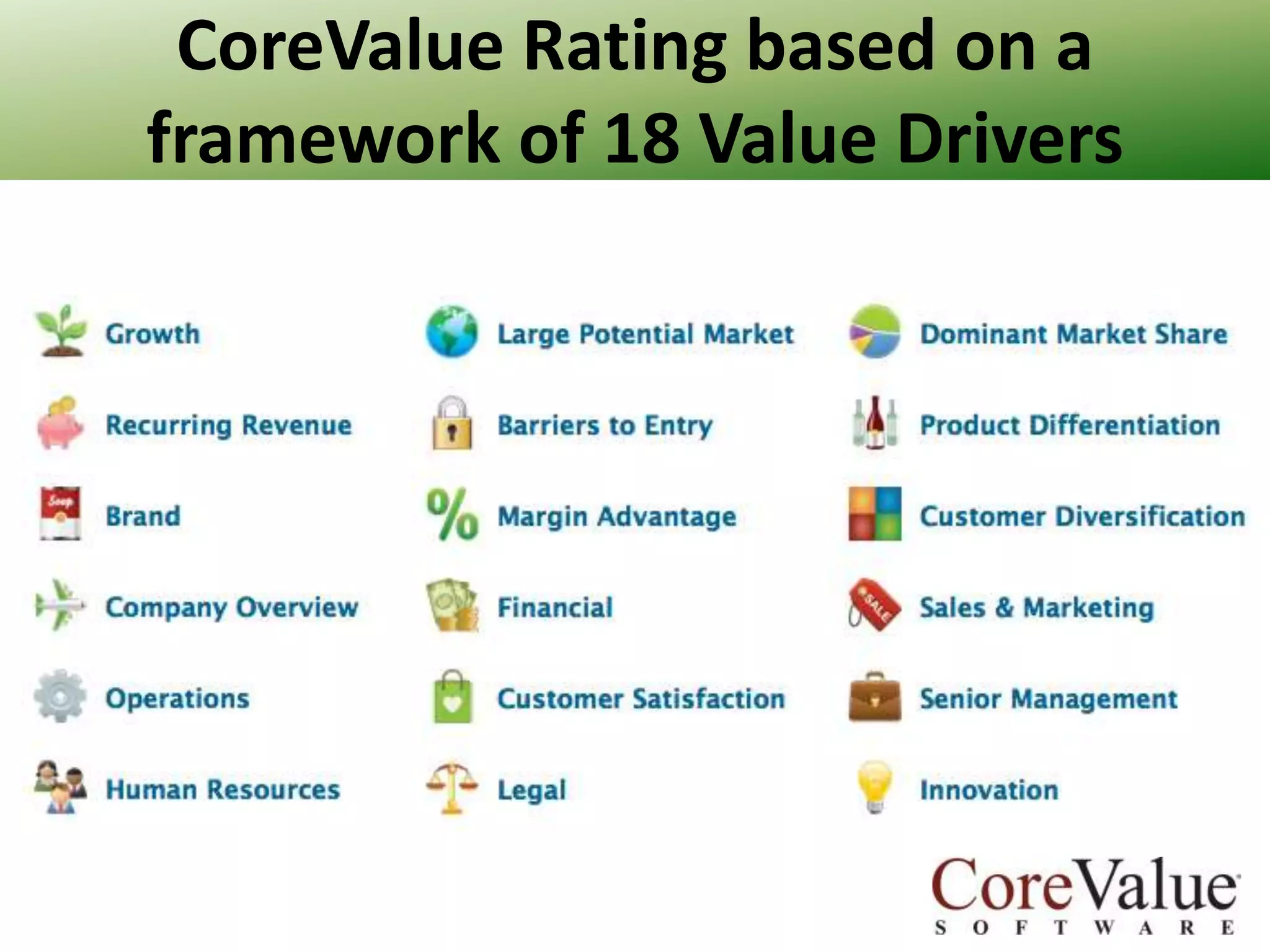
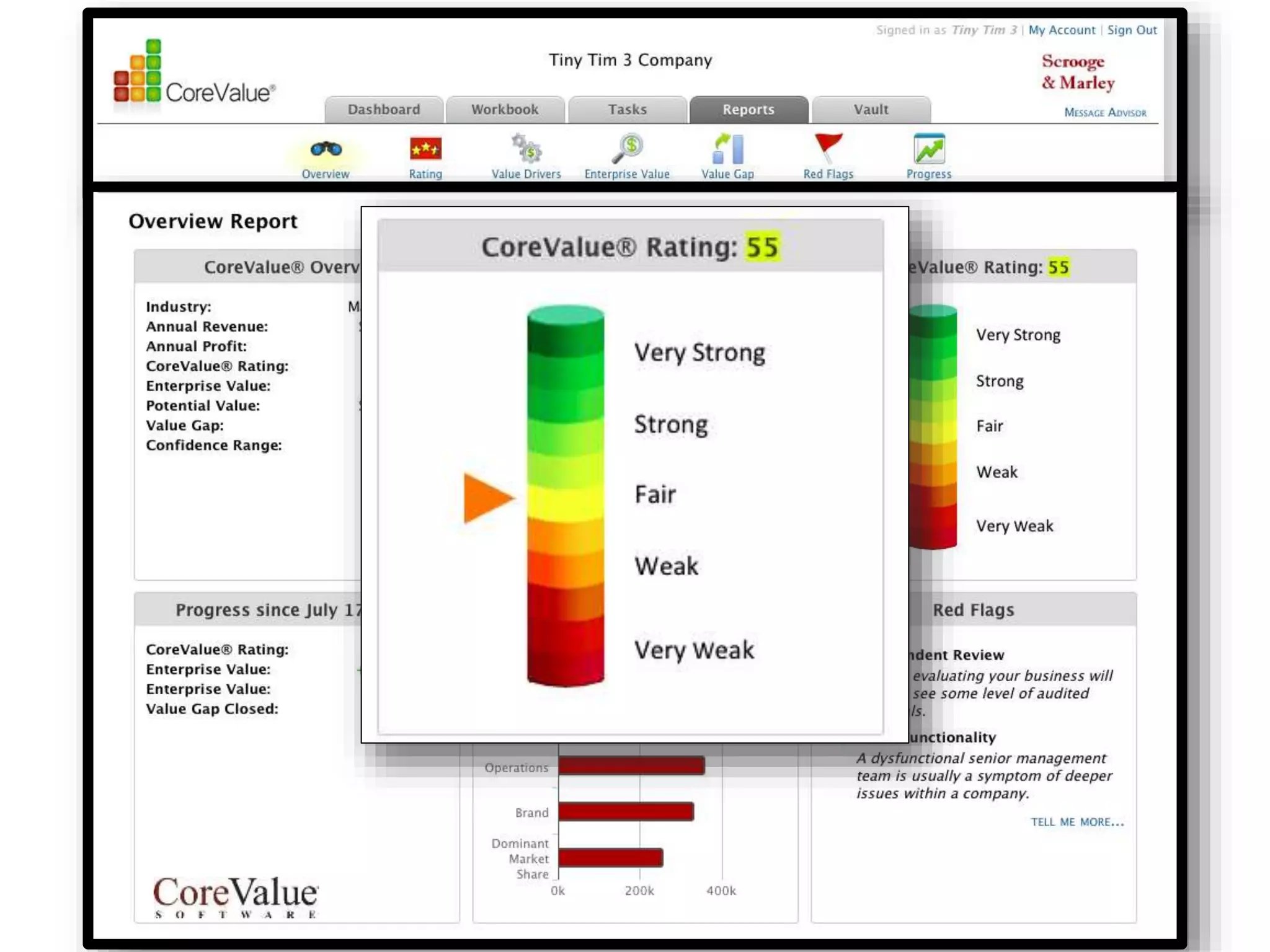
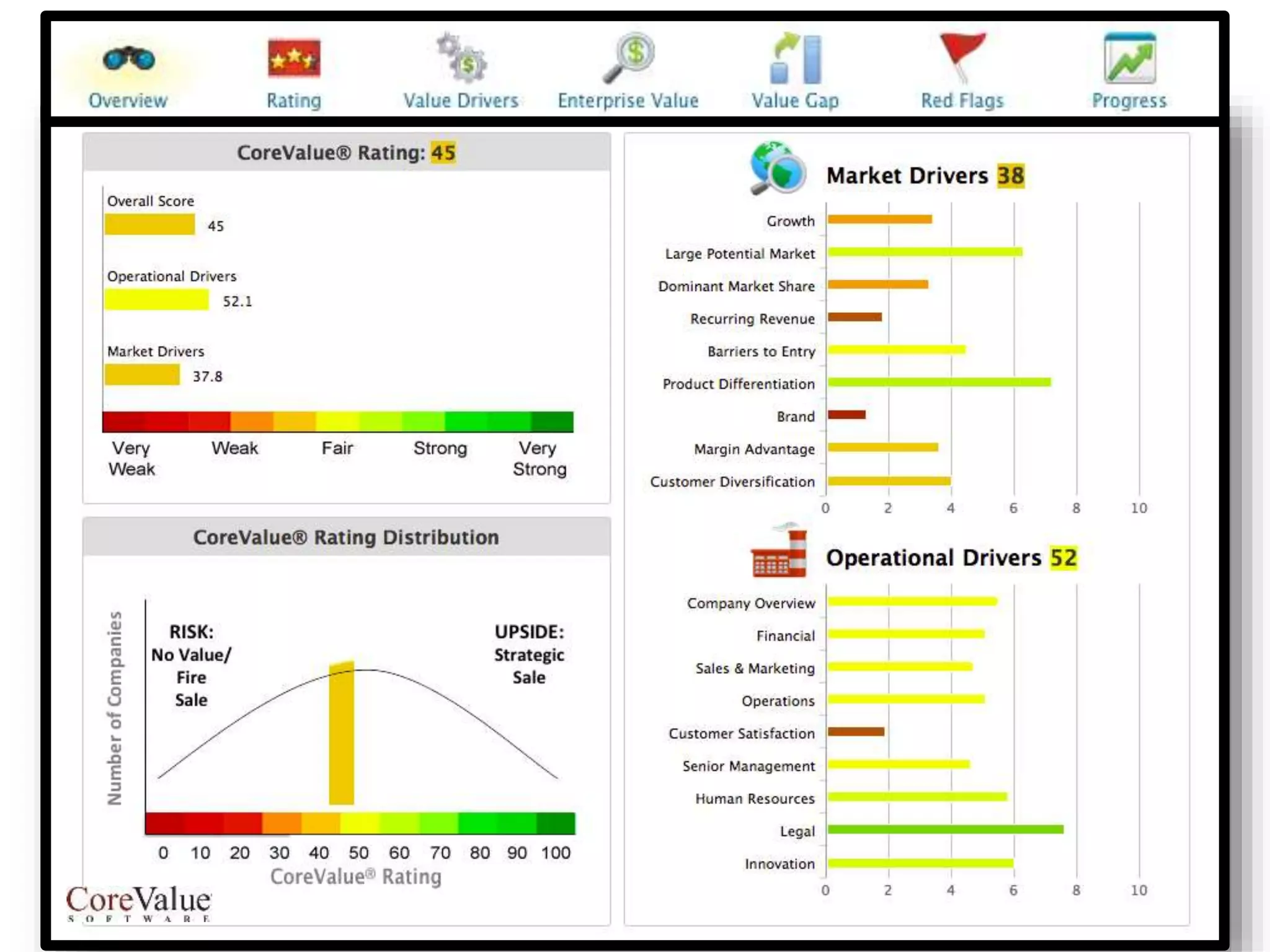
CoreValue Rating based on a
framework of 18 Value Drivers
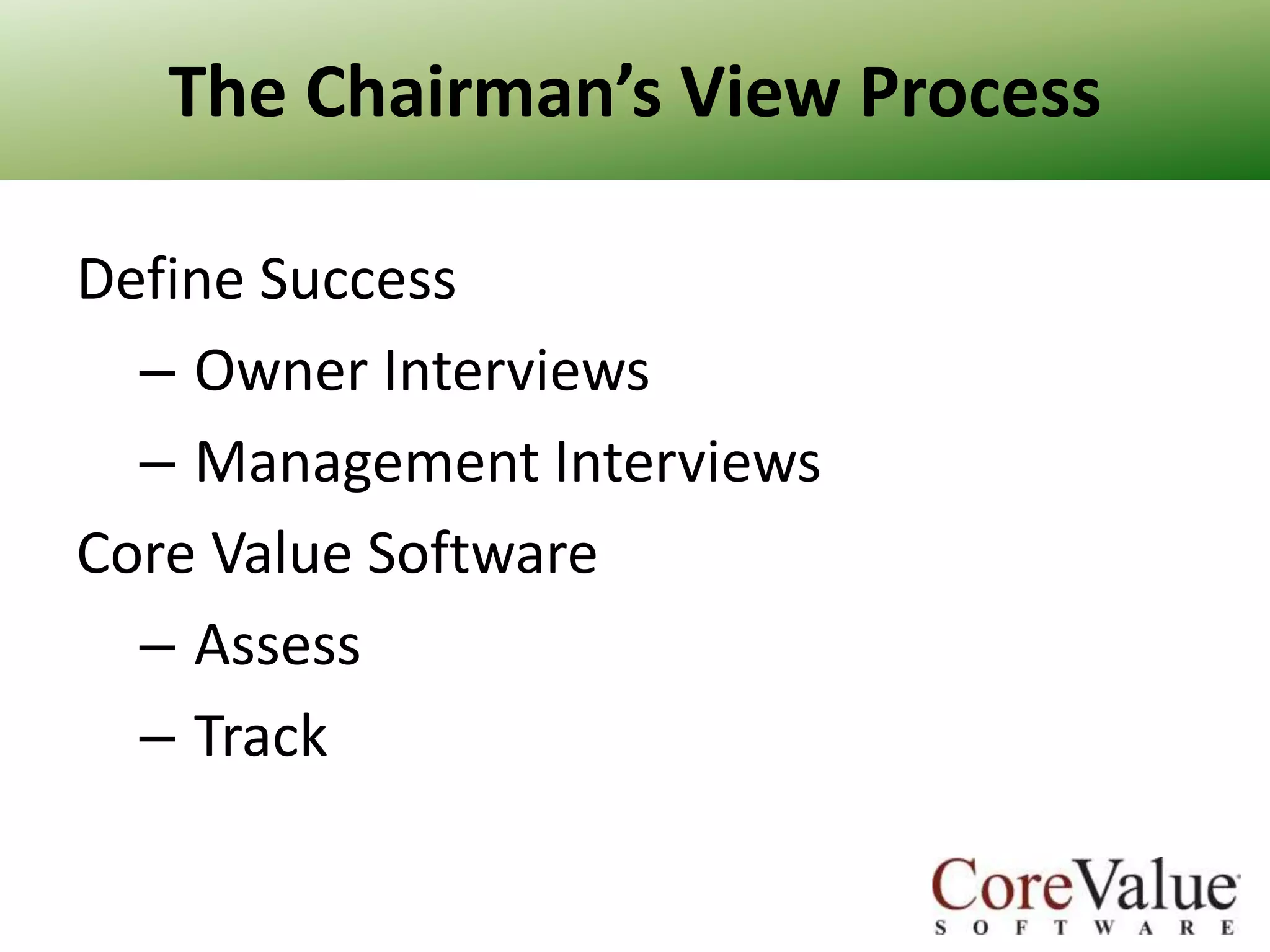
The Chairman’s View Process
Define Success
– Owner Interviews
– Management Interviews
Core Value Software
– Assess
– Track
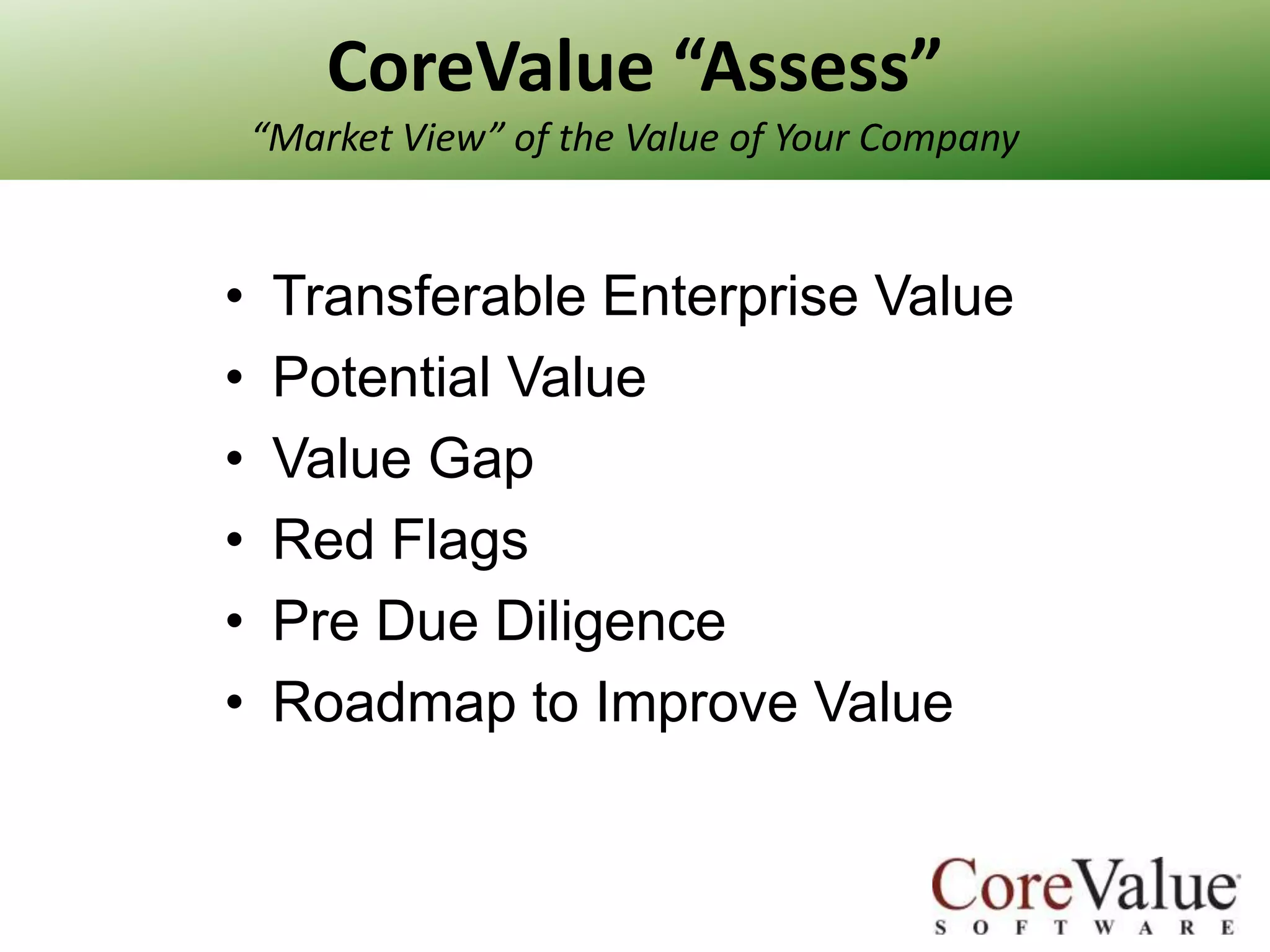
CoreValue “Assess”
“Market View” of the Value of Your Company

•
•
•
•
•
•

Transferable Enterprise Value
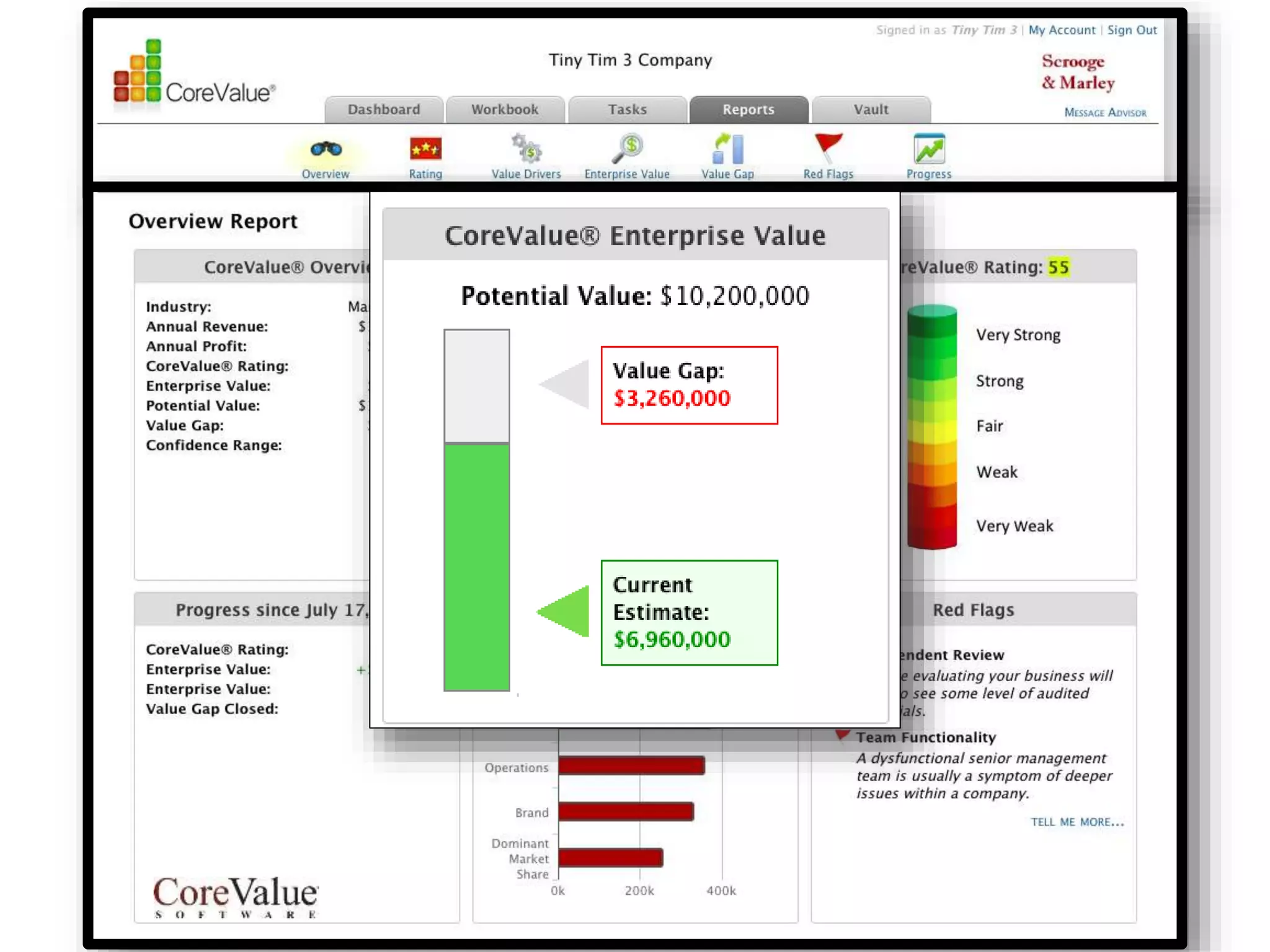
Potential Value
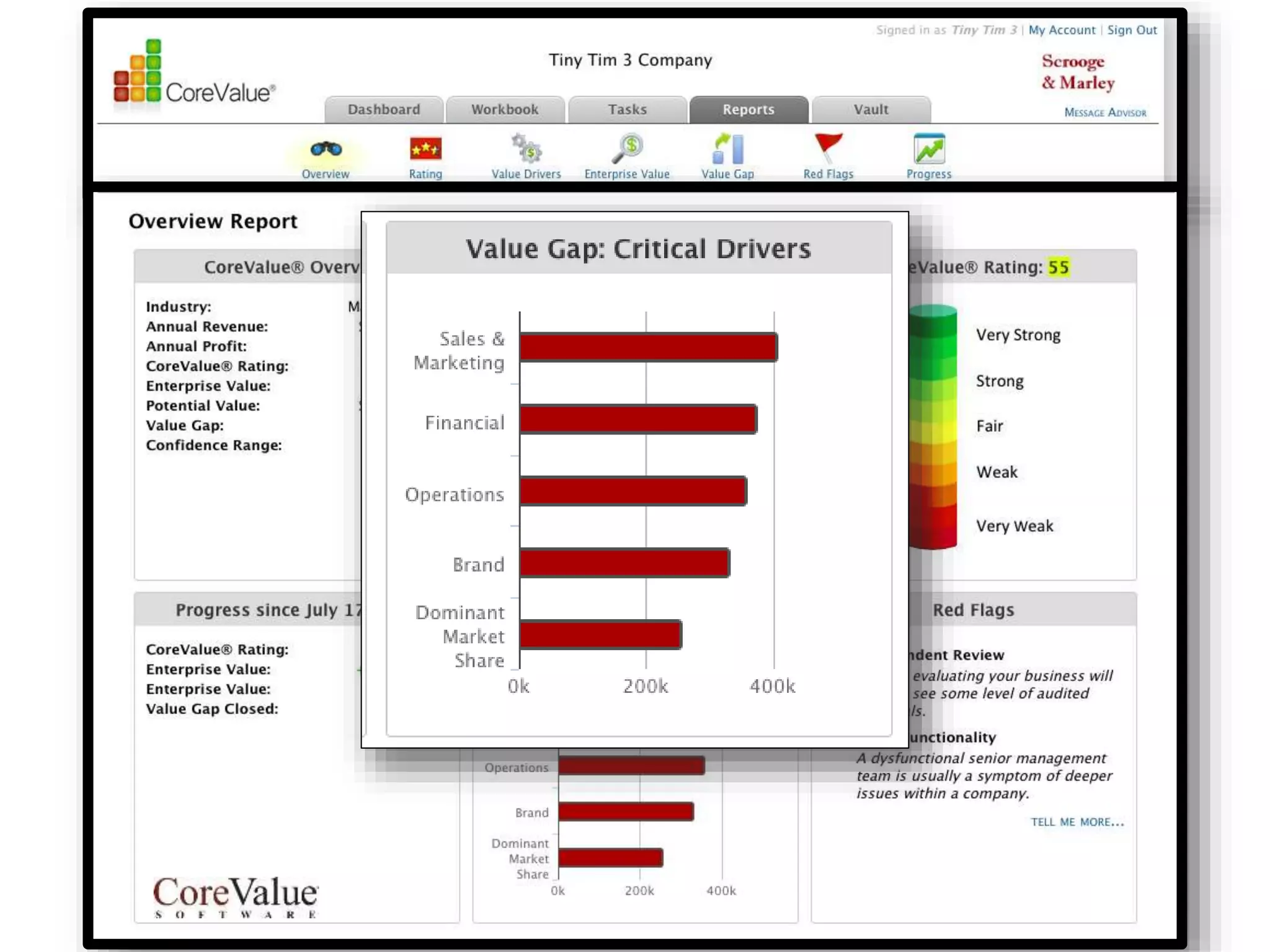
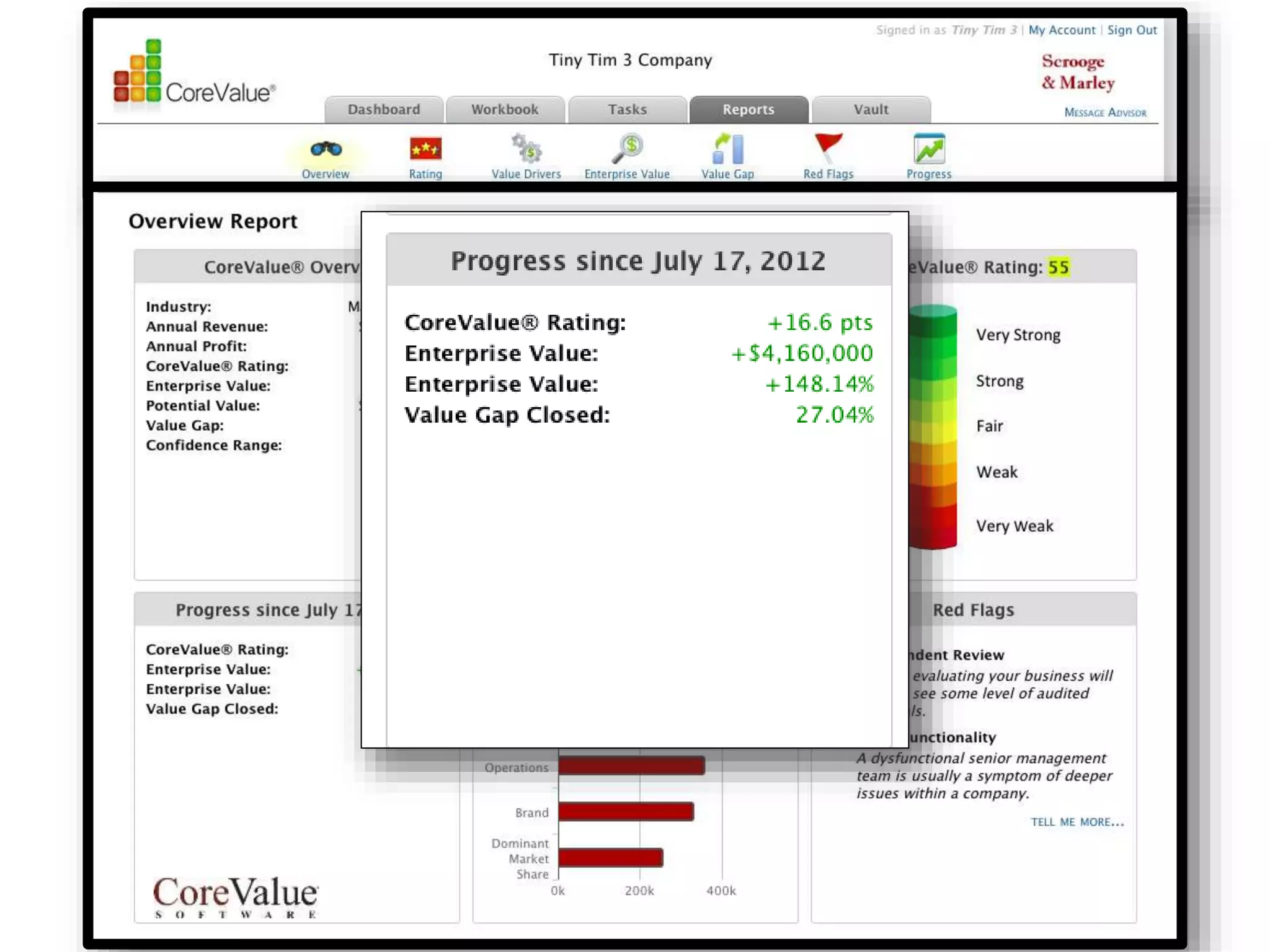
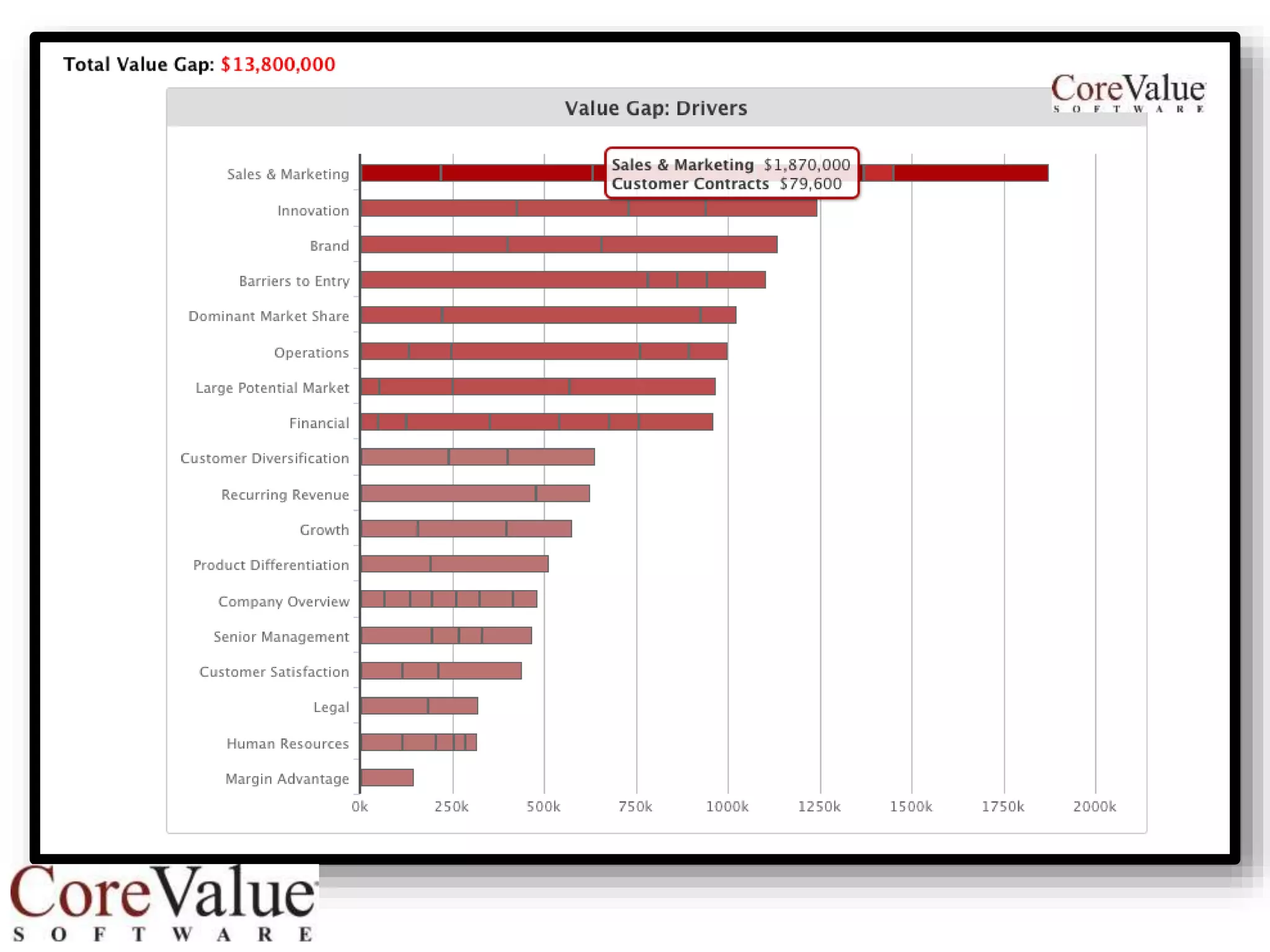
Value Gap
Red Flags
Pre Due Diligence
Roadmap to Improve Value
CoreValue “Track”:
Building real Transferable Enterprise Value

•
•
•
•
•

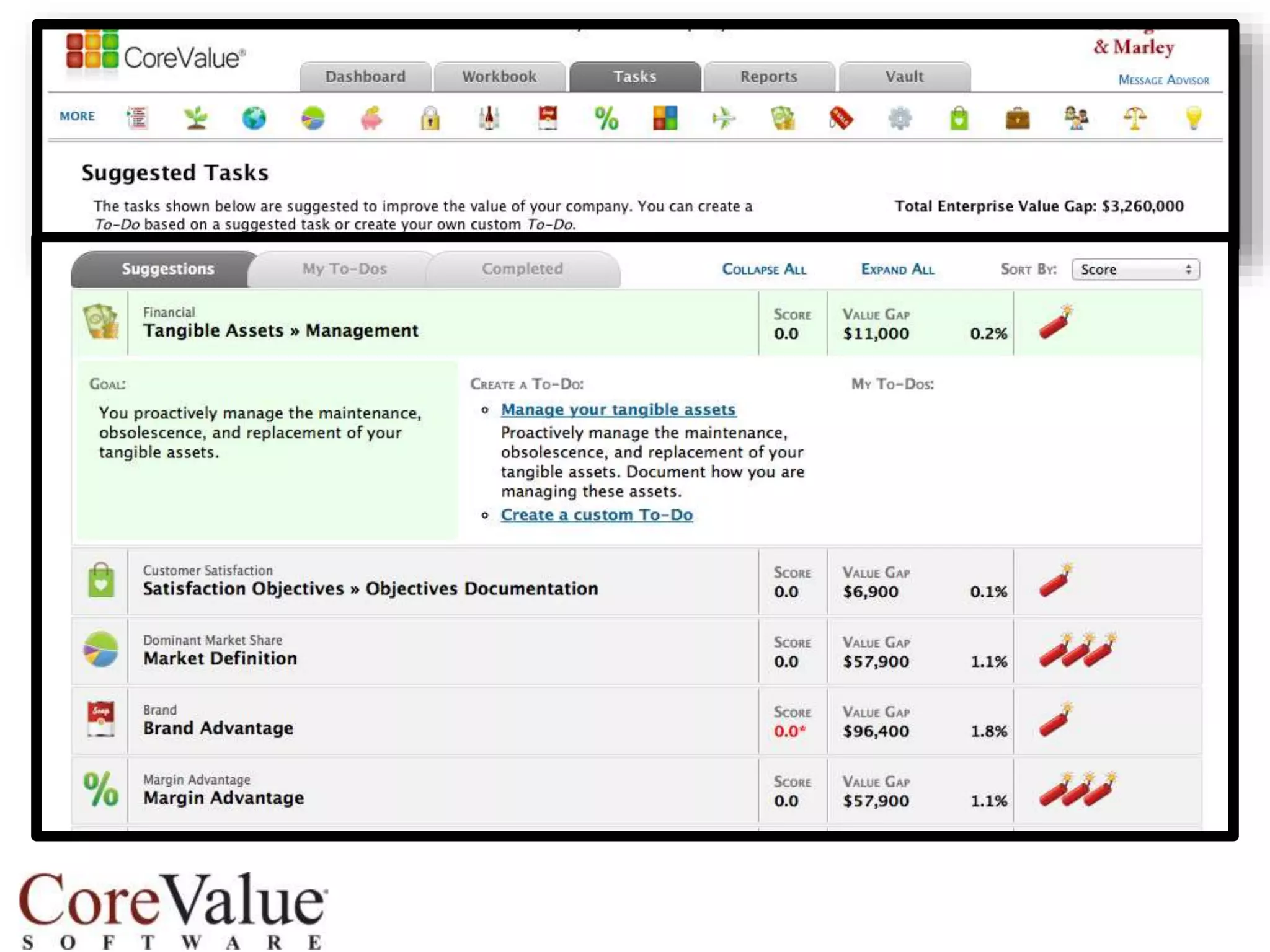
Quantified list of Actions
Prioritize Actions by $$ / ROI
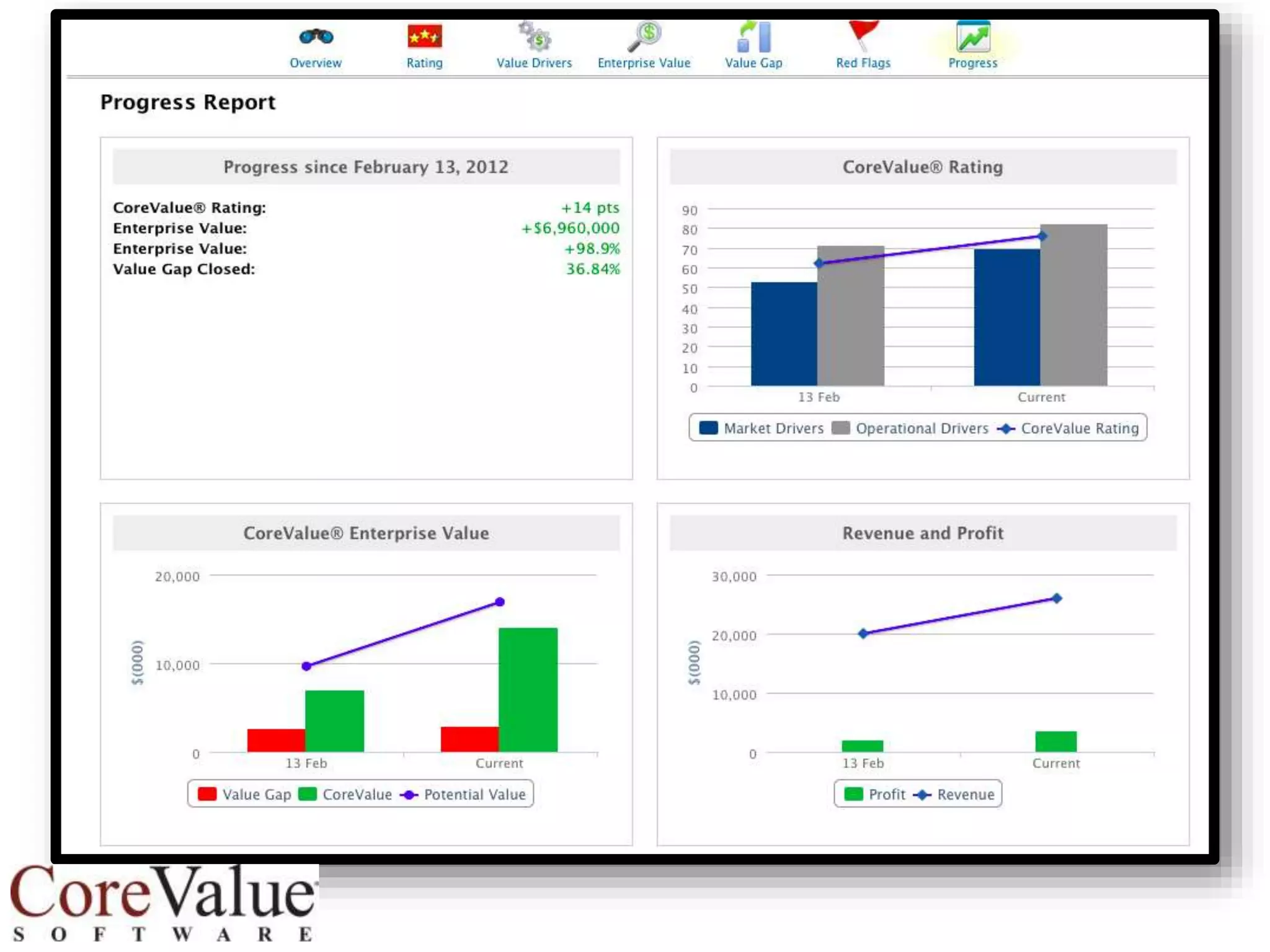
Regular CoreValue Rating reviews
Track how Enterprise Value increases
Complete Due Diligence as needed
Next Step: simple
ENGAGE
CoreValue “Engage”:
Begin the conversation of a Lifetime

•
•
•
•

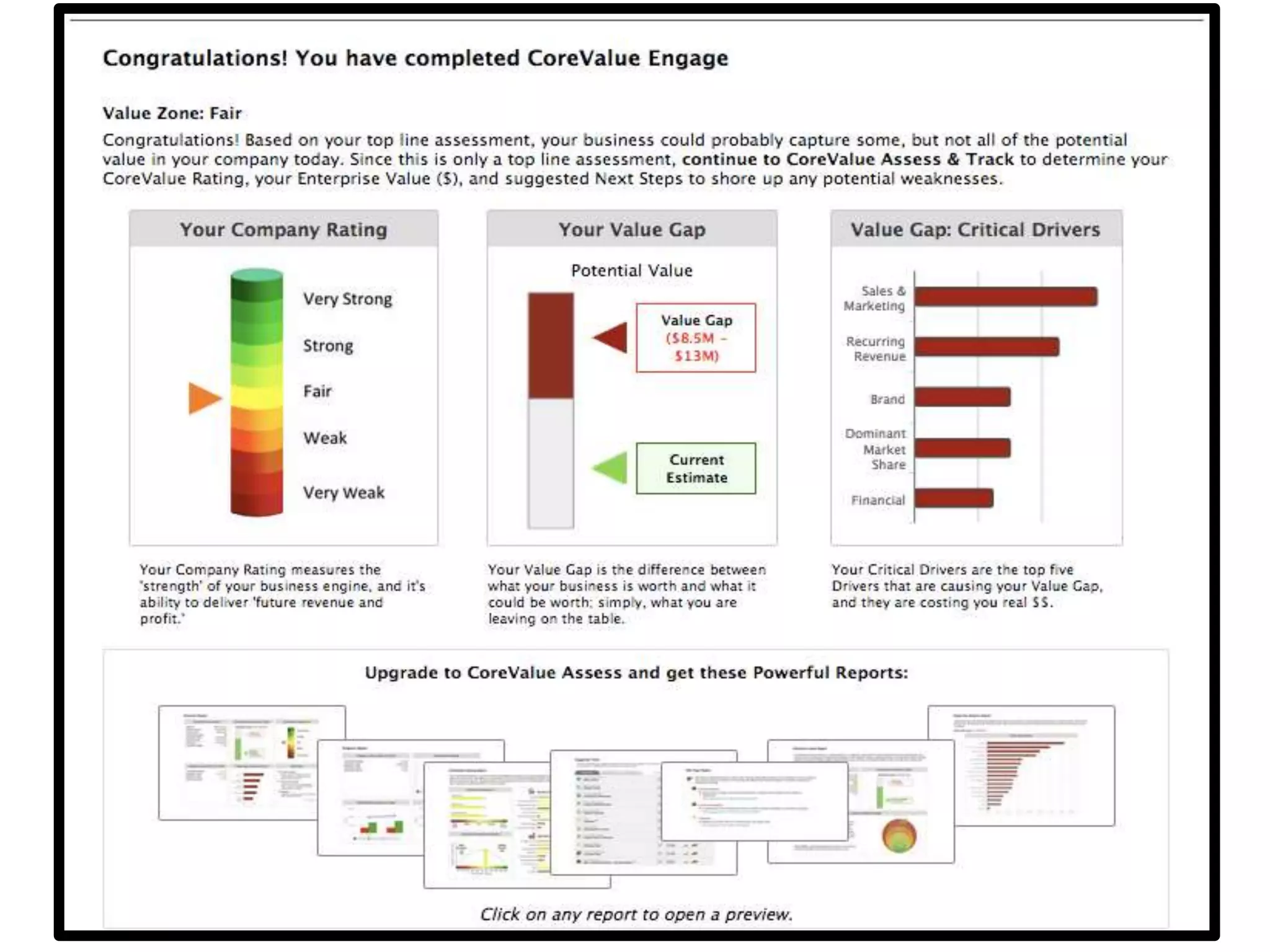
Structured Conversation
Strength of your Business Engine
Estimate of your Value Gap
Identify 5 Value Drivers that need your
time
Panel Q&A
•

Bruce Fischer

•

Jeffrey Dale

•

Candace Enman

•

Margo Crawford

•

Bron Vasic

•

Chuck Richards

72
Contact Us
Candace Enman
President, WelchGroup Consulting
cenman@w-group.com
www.w-group.com

Bron Vasic
Chairman, WelchGroup Consulting
bron@bvasic.com
www.w-group.com

Bruce Fischer
Chairman, WelchGroup Consulting
bfischer57@magma.ca
www.w-group.com

Chuck Richards
CEO, Chairman’s View/CoreValue
crichards@corevaluesoftware.com
www.corevaluesoftware.com

Jeffrey Dale
Chairman, CEO, Odawa Group Inc.
JDALE@w-group.com
www.w-group.com

Margo Crawford
President, Business Sherpa Group Inc.
margo@businesssherpagroup.com
www.businesssherpagroup.com

73

How to Shift Your Company into High Gear! - WelchGroup Consulting

  • 1.
    Chairman’s View How toshift YOUR Company into High Gear! Bruce Fischer, MBA, CMC, Chairman Fischer Group Inc. 1
  • 2.
    Agenda • • Top 5 RedFlags 5. Quantifiable Advantage 4. Financial Management 3. Talent Management 2. Strategic Direction 1. “Do it All” Business Owner Panel Discussion 2
  • 3.
    Chairman’s View Value challenge Performancechallenge Get Owners to: • View their businesses as assets • Think like an Owner • Build your business to last decades, but prepare to sell it tomorrow 3
  • 4.
    Quantifiable Advantage Margins thatare very low, or lower than average in your industry means your operating business doesn't efficiently make money and may not be well positioned in the market Jeffrey Dale, Chairman CEO, Odawa Group Inc. 4
  • 5.
    What sets youapart in the Marketplace?     Product/Service Differentiation Innovation Corporate Culture Cost/Operational Leadership 5
  • 6.
  • 7.
    Blue Ocean -Framework • What needs to be eliminated • What needs to be reduced below industry standards • What should be raised well above industry standards • What should be created that the industry has never offered
  • 8.
    Blue Ocean ofCirque du Soleil • Eliminate – Star Performers – Animal Shows – Aisle Concessions • Reduce – Thrill and Danger • Improve – Unique Venue • Create – Theme – Artistic Music and Dance – Multiple Productions
  • 9.
  • 10.
    The Works: ProductDifferentiation • Started 2001 – Sold 2010 – 6 Locations in Ottawa • Improve - Its all about Burgers • Eliminate - No Bar, No TV • Reduce - Close at 10 • Owner had health issues • Large expansion opportunities – (30 GTA requests alone) • Right time to sell at a premium
  • 11.
    Bridgehead: Corporate Culture •Opened 2000 – 16 Locations – 2004 Bakery 2012 Roastery • Improve - fair trade + organic food & sustainable environment • Create - unique feel in every store (employees and décor) • Low employee turnover • Customer loyalty
  • 12.
    Med-Eng: Innovation • Foundedin 1981 • Bomb Disposal Suits and equipment – Founder tested 19 times • Growth - Electronic Counter Measures (Bomb Jammers) • Improve - Helmets and Suits • Create - Electronic Products – success in Afghanistan & Iraq • 2001 – Revenue ~$50M • 2007 – Revenues ~$400M • 2007 Sold - $650M
  • 13.
    Advantage of QuantifiableAdvantage VALUE TO BUSINESS • • • • VALUE TO OWNER Attract new customers • Increase value of the business Retain existing customers • Options for owner Faster revenue growth – Grow the business Maintain/improve – Transition or sell margins business
  • 14.
    Polling Question #1: Howwell do you know your company’s quantifiable advantage? 1. Very well 2. Better than your competitors 3. Have a solid understanding 4. Somewhat 5. Don’t know it 14
  • 15.
    Financial Management Strong governance,transparency and financial & operational reports will strengthen the business and its ability to make effective decisions, AND make it bullet proof for a due diligence Candace Enman, CA, CPA President, WelchGroup Consulting 15
  • 16.
    Financial Drivers 1. FinancialStatements 2. Operating Reports 3. Audits 4. Intellectual Property 5. Tangible Assets 6. Banking & Capital 7. Risk & Insurance 8. Tax 16
  • 17.
    1st Gear 1st Gear:Financial Statements 1. Spreadsheets 2. “Box Jobs” 3. Computerized financial reporting package • Balance sheet • Profit & loss Doing compliance reporting alone will not add value to your business. 17
  • 18.
    2nd Gear 2nd Gear:Operational Reporting “management reports that are routinely generated and used by management to review the company’s performance and make operational decisions” 1. Operational reporting • Do they tell the company story? • Key Performance Indicators (KPI’s) 2. Transparency 18
  • 19.
    2nd Gear 2nd Gear:Operational Reporting 3. Forecasts/Projections 4. Dashboard reporting  Real time reporting Position yourself to make decisions proactively. Accelerate or put on the brakes when you need to. 19
  • 20.
    3rd Gear: Audit 1.Numbers are audit-ready & “bulletproof” • Clean records, business processes, internal controls If you performed a due diligence on yourself would you like the results? 2. Documentation • Business continuity Greater Confidence = Lower Risk for Buyer = More Value! 20
  • 21.
  • 22.
    Polling Question #2: Doyour Operational Reports identify the activities & health of your business to help with “proactive” management decisions? 1. Yes – very helpful 2. Yes – but needs improvement 3. No – I don’t think we’re focused on the right things 4. Don’t have operational reports 22
  • 23.
    Talent Management A companythat has the ability to find, develop and retain quality individuals in the right positions, at the right time, will enable success in all aspects of the business Margo Crawford, President Business Sherpa Group 23
  • 24.
    3 Major HRThemes that can Depress Value 1. Having the right team at the right time through business changes and for long term success 2. Having a team that is performing at its full potential to drive business value. 3. Having the right structures and processes in place to Financial Measures sustainable and repeatable performance ensure Revenue, EBITDA 24
  • 25.
    Do you havethe right team at key business inflection points? Headcount (mix/#s) Headcount Business Performance • Natural business inflection points require different skills & sometimes different people • Common response to business challenges is to add people • Over time it becomes more difficult to change the trajectory of business performance with a given team • Strong tendency to not change up the team that built the business at an early stage Formation Early Growth Accelerated Growth Maturing Growth Time Next Stage Growth
  • 26.
    Indicators of Workforce Weakness •Has there been any additions or changes to your leadership team? • Does your organization achieve relatively less with more people? • Pressure on margins despite revenue growth Value Depressors • Confidence around leadership team • Succession plans – single points of failure • Productivity & performance – a team that can achieve results (revenue/head) • Cost of over loaded team • No or exceptionally low turnover OR exceptionally high turnover • Skills to achieve what the business needs
  • 27.
    Do you havea team that is performing at its full potential to drive business value? • Important to set a course and let the team know what needs to be accomplished • Develop programs to drive value – performance management; total rewards/incentives; set expectations and measure performance $100M $90M Valuation $80M $70M How do you get the team driving this additional valuation? $60M $50M $40M $30M $20M Time Current Value Future Value
  • 28.
    Indicators of Low PerformingTeam Value Depressors • Expectations not articulated • Missed milestones and key deliverables • No communications around corporate goals • Connection of corporate goals to individual goals and behaviours • Lack of approaches to reward behaviours that drive value • Star performers not identified and not locked into business • Nothing in place to push performance – possible low caliber team
  • 29.
    Having the rightstructures & processes in place to ensure sustainable and repeatable performance. Contracts • Protect IP & assets • Retain or lock in key employees • Appropriate liabilities and obligations; mitigate risks Compensation • Appropriate compensation for market • Motivate and Reward performance Sales Incentives • Sales compensation plans that drive quota attainment • Models that make financial sense and are in line with market • Terms that create appropriate obligations Policies • Policies that ensure compliance with laws • Practices that align with business values; motivate the right behaviours; and ensure sustainable business operations Workforce Planning & Recruitment • Exceptional recruitment process and selection practices – resourceful and diligent sourcing; hire for best fit • Workforce plans that align with business goals Performance Management • Effective feedback tools; programs that build goals that align with business goals
  • 30.
    Polling Question #3: Whattype of goals does your company measure & reward senior management on? 1. Corporate, functional & individual goals 2. Corporate & functional goals 3. Functional area goals only 4. Individual goals only 5. No specific measures/rewards given 30
  • 31.
    Strategic Direction A businesswithout a strategic plan is like a ship without a compass. Your business may float just fine today, but chances are it will eventually get lost. Valuable businesses have a strong sense of direction. Bron Vasic, CA, CMC, Chairman President, B Vasic & Associates Inc. 31
  • 32.
    Shift your Companyinto High Gear  Valuable businesses have a strong sense of direction  They make the time to Think & Act Strategically  Strategy: A plan or method for achieving something, especially over a long period of time
  • 33.
  • 34.
    Strategic Planning Strategic planningis a management tool 1. Focus its energy 2. Ensure that all staff are working toward the same goal 3. Assist in assessing and adjusting the organizations direction in response to a changing environment 4. Prioritize Financial Needs 34
  • 35.
    Excuses to Thinkor Act Strategically 1. Lack of understanding and focus in the process of planning 2. Mentally fatigued 3. Partial commitment 4. Lack of understanding 5. Lack of accountability. 6. Lack of follow-up 7. Lack of flexibility 35
  • 36.
    5 Strategic Questionsto Ask 1. What business are we in and how are we doing now? 2. What’s happening around us? • Are there any serious dangers in staying where we are – i.e. sticking with the same business and strategy? 3. If so, is there a better place for us to be? 4. How do we get there? 5. How will we know we have arrived? 36
  • 37.
    Strategic Direction • Runat peak performance • Make sure that the business is in the right gear • Bigger is not better • Running leaner has many advantages and efficiencies • Get out of crisis mode, get aligned, get things meshing well • People are starved for leadership – take charge, be proud of what you have and make decisions based on what you know • Procrastination for a day can be good, even a couple of days but beyond a week you are in analysis paralysis • Don’t grind your gears • Have the necessary tune ups that will allow for a smooth ride (perform better, save gas) • Getting all on the same page and not doing business alone • Simplicity in planning and words that everyone will understand 37
  • 38.
    Polling Question #4: Doesyour company have a strategic plan? 1. Yes we have a plan 2. We have a plan, but it’s not updated 3. No plan on paper, but we meet regularly about it 4. No plan on paper, but we have a common vision 5. No plan 38
  • 39.
    Polling Question #5: Wehave a private jet waiting for you at the airport that can take you anywhere you want to go. You only have 1 hour to prepare. Would you be able to pack up and leave your company and have it continue to operate smoothly without you? 1. Yes 2. Yes, but only for a month 3. Yes, but only for a week 4. Yes, but I would need my smartphone 5. No 39
  • 40.
    Do it AllBusiness Owner A "do it all" business owner means the value of the business is in the business owner versus the actual operating business Chuck Richards, CEO Chairman’s View/CoreValue 40
  • 41.
    Owner’s Role The fundamentalresponsibility of the CEO is to build enterprise value.
  • 42.
    Enterprise Value is: IfEnterprise Value is the measure of business success, questions every CEO needs to ask and answer: What is my business really worth? Why? How do I make it more valuable?
  • 43.
    Polling Question #6: Doyou know the value of your Company today? 1. Yes 2. I have a general idea 3. No 43
  • 44.
    Polling Question #7: Ifyour business sold today, could your business survive due diligence (i.e. is the value transferable)? 1. 100% confident 2. Greater than 75% confident 3. Greater than 50% confident 4. There’s some work I’d have to do to get it ready 44
  • 45.
    Polling Question #8: Doyou know how to improve the performance and value of your business? 1. Yes and I have a plan that will help me execute it 2. Yes but I don’t have a plan 3. I’m not sure where to start 45
  • 46.
    Enterprise Value isnot: 1. Profit 2. Revenue 3. Captured on the Balance Sheet
  • 47.
    Enterprise Value is: Acompany’s ability to generate future revenue and profit, without the current business owner(s) in charge
  • 48.
  • 49.
    Red Flags –Negate all Value 43% 22% 19%
  • 50.
    Why it Really,Really Matters 6,500,000+ private businesses with payrolls • 50%+ North American job base • 75%+ Owned by Boomers • 80%+ Failure rate to transfer ownership
  • 51.
  • 52.
    Finance Measures theOutputs of the Engine Revenue and Profit
  • 53.
    Value = Abilityof the Engine to Dependably Generate Revenue and Profit into the Future
  • 54.
    Need to Look“Under the Hood”
  • 55.
    CoreValue Rating basedon a framework of 18 Value Drivers
  • 56.
    The Chairman’s ViewProcess Define Success – Owner Interviews – Management Interviews Core Value Software – Assess – Track
  • 57.
    CoreValue “Assess” “Market View”of the Value of Your Company • • • • • • Transferable Enterprise Value Potential Value Value Gap Red Flags Pre Due Diligence Roadmap to Improve Value
  • 64.
    CoreValue “Track”: Building realTransferable Enterprise Value • • • • • Quantified list of Actions Prioritize Actions by $$ / ROI Regular CoreValue Rating reviews Track how Enterprise Value increases Complete Due Diligence as needed
  • 69.
  • 70.
    CoreValue “Engage”: Begin theconversation of a Lifetime • • • • Structured Conversation Strength of your Business Engine Estimate of your Value Gap Identify 5 Value Drivers that need your time
  • 72.
    Panel Q&A • Bruce Fischer • JeffreyDale • Candace Enman • Margo Crawford • Bron Vasic • Chuck Richards 72
  • 73.
    Contact Us Candace Enman President,WelchGroup Consulting cenman@w-group.com www.w-group.com Bron Vasic Chairman, WelchGroup Consulting bron@bvasic.com www.w-group.com Bruce Fischer Chairman, WelchGroup Consulting bfischer57@magma.ca www.w-group.com Chuck Richards CEO, Chairman’s View/CoreValue crichards@corevaluesoftware.com www.corevaluesoftware.com Jeffrey Dale Chairman, CEO, Odawa Group Inc. JDALE@w-group.com www.w-group.com Margo Crawford President, Business Sherpa Group Inc. margo@businesssherpagroup.com www.businesssherpagroup.com 73