Knowing Me,
Knowing You
Creating a simple roadmap for
ecommerce personalisation
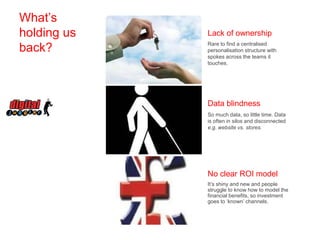
What’s
holding us
back?

Lack of ownership
Rare to find a centralised
personalisation structure with
spokes across the teams it
touches.

Data blindness
So much data, so little time. Data
is often in silos and disconnected
e.g. website vs. stores.

No clear ROI model
It’s shiny and new and people
struggle to know how to model the
financial benefits, so investment
goes to ‘known’ channels.
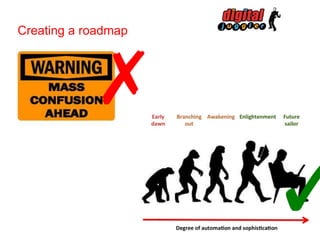
Creating a roadmap

✗

✓
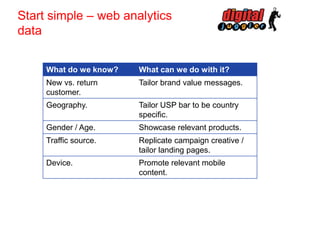
Start simple – web analytics
data
What do we know?

What can we do with it?

New vs. return
customer.

Tailor brand value messages.

Geography.

Tailor USP bar to be country
specific.

Gender / Age.

Showcase relevant products.

Traffic source.

Replicate campaign creative /
tailor landing pages.

Device.

Promote relevant mobile
content.
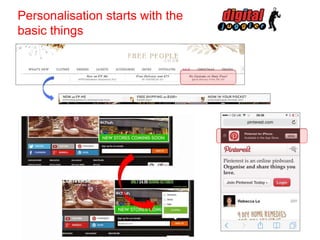
Personalisation starts with the
basic things
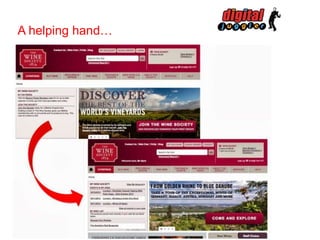
A helping hand…
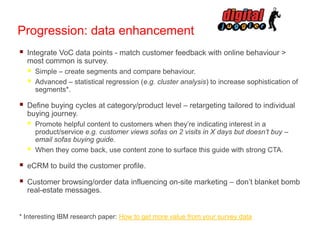
Progression: data enhancement


Integrate VoC data points - match customer feedback with online behaviour >
most common is survey.






Simple – create segments and compare behaviour.
Advanced – statistical regression (e.g. cluster analysis) to increase sophistication of
segments*.

Define buying cycles at category/product level – retargeting tailored to individual
buying journey.




Promote helpful content to customers when they’re indicating interest in a
product/service e.g. customer views sofas on 2 visits in X days but doesn’t buy –
email sofas buying guide.
When they come back, use content zone to surface this guide with strong CTA.



eCRM to build the customer profile.



Customer browsing/order data influencing on-site marketing – don’t blanket bomb
real-estate messages.

* Interesting IBM research paper: How to get more value from your survey data
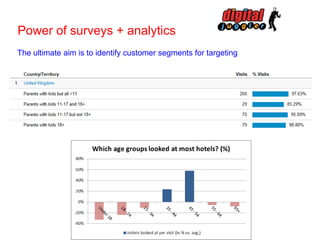
Power of surveys + analytics
The ultimate aim is to identify customer segments for targeting
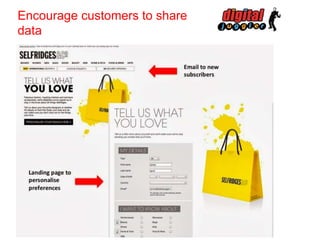
Encourage customers to share
data
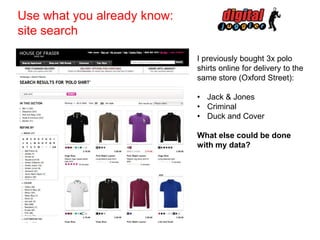
Use what you already know:
site search
I previously bought 3x polo
shirts online for delivery to the
same store (Oxford Street):

• Jack & Jones
• Criminal
• Duck and Cover
What else could be done
with my data?
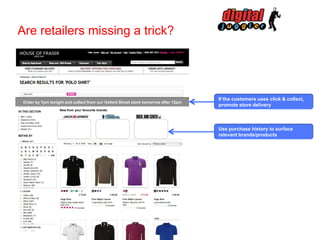
Are retailers missing a trick?

Order by 7pm tonight and collect from our Oxford Street store tomorrow after 12pm

If the customers uses click & collect,
promote store delivery

New from your favourite brands:

Use purchase history to surface
relevant brands/products
The end game: tying up loose
ends

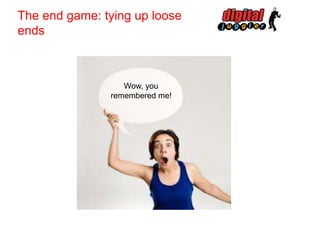
Wow, you
remembered me!
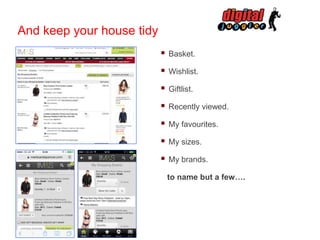
And keep your house tidy


Basket.



Wishlist.



Giftlist.



Recently viewed.



My favourites.



My sizes.



My brands.
to name but a few….
Multi-channel: why not this?
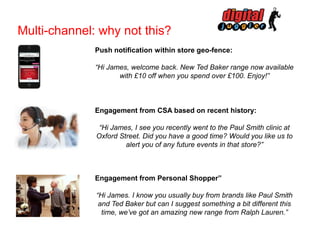
Push notification within store geo-fence:
“Hi James, welcome back. New Ted Baker range now available
with £10 off when you spend over £100. Enjoy!”

Engagement from CSA based on recent history:
“Hi James, I see you recently went to the Paul Smith clinic at
Oxford Street. Did you have a good time? Would you like us to
alert you of any future events in that store?”

Engagement from Personal Shopper”
“Hi James. I know you usually buy from brands like Paul Smith
and Ted Baker but can I suggest something a bit different this
time, we’ve got an amazing new range from Ralph Lauren.”
Case study: member
organisation


The challenge:
 Online and offline data not connected for the utopian ‘single customer view’.



The brief:
 Identify a low cost way of increasing the connectivity to enable cross channel data to be
used to improve targeted marketing.



The approach:
 Focus on 1 offline activity to connect dots with online behaviour – events.
 Tag all browsing activity to member ID captured via analytics.
 Use analytics browsing data to identify user journeys relevant to events.
 Export data and run queries to identify event prospects based on closely defined criteria:
 Purchase activity.
 On-site content activity.
 In-app content activity.
 Match against demographics of core event audience.
 Targeted email campaign with personalised message in ‘My Account’.
The results


Increase in open rate of event email campaigns.



Increased response rate from members.



Increased number of attendees.

Long term goal:



Increase overall member satisfaction for this segment – measured via biannual satisfaction survey.
Thank you!
@jamesgurd

Ecommerce Personalisation Roadmap

  • 1.
    Knowing Me, Knowing You Creatinga simple roadmap for ecommerce personalisation
  • 2.
    What’s holding us back? Lack ofownership Rare to find a centralised personalisation structure with spokes across the teams it touches. Data blindness So much data, so little time. Data is often in silos and disconnected e.g. website vs. stores. No clear ROI model It’s shiny and new and people struggle to know how to model the financial benefits, so investment goes to ‘known’ channels.
  • 3.
  • 4.
    Start simple –web analytics data What do we know? What can we do with it? New vs. return customer. Tailor brand value messages. Geography. Tailor USP bar to be country specific. Gender / Age. Showcase relevant products. Traffic source. Replicate campaign creative / tailor landing pages. Device. Promote relevant mobile content.
  • 5.
  • 6.
  • 7.
    Progression: data enhancement  IntegrateVoC data points - match customer feedback with online behaviour > most common is survey.    Simple – create segments and compare behaviour. Advanced – statistical regression (e.g. cluster analysis) to increase sophistication of segments*. Define buying cycles at category/product level – retargeting tailored to individual buying journey.   Promote helpful content to customers when they’re indicating interest in a product/service e.g. customer views sofas on 2 visits in X days but doesn’t buy – email sofas buying guide. When they come back, use content zone to surface this guide with strong CTA.  eCRM to build the customer profile.  Customer browsing/order data influencing on-site marketing – don’t blanket bomb real-estate messages. * Interesting IBM research paper: How to get more value from your survey data
  • 8.
    Power of surveys+ analytics The ultimate aim is to identify customer segments for targeting
  • 9.
  • 10.
    Use what youalready know: site search I previously bought 3x polo shirts online for delivery to the same store (Oxford Street): • Jack & Jones • Criminal • Duck and Cover What else could be done with my data?
  • 11.
    Are retailers missinga trick? Order by 7pm tonight and collect from our Oxford Street store tomorrow after 12pm If the customers uses click & collect, promote store delivery New from your favourite brands: Use purchase history to surface relevant brands/products
  • 12.
    The end game:tying up loose ends Wow, you remembered me!
  • 13.
    And keep yourhouse tidy  Basket.  Wishlist.  Giftlist.  Recently viewed.  My favourites.  My sizes.  My brands. to name but a few….
  • 14.
    Multi-channel: why notthis? Push notification within store geo-fence: “Hi James, welcome back. New Ted Baker range now available with £10 off when you spend over £100. Enjoy!” Engagement from CSA based on recent history: “Hi James, I see you recently went to the Paul Smith clinic at Oxford Street. Did you have a good time? Would you like us to alert you of any future events in that store?” Engagement from Personal Shopper” “Hi James. I know you usually buy from brands like Paul Smith and Ted Baker but can I suggest something a bit different this time, we’ve got an amazing new range from Ralph Lauren.”
  • 15.
    Case study: member organisation  Thechallenge:  Online and offline data not connected for the utopian ‘single customer view’.  The brief:  Identify a low cost way of increasing the connectivity to enable cross channel data to be used to improve targeted marketing.  The approach:  Focus on 1 offline activity to connect dots with online behaviour – events.  Tag all browsing activity to member ID captured via analytics.  Use analytics browsing data to identify user journeys relevant to events.  Export data and run queries to identify event prospects based on closely defined criteria:  Purchase activity.  On-site content activity.  In-app content activity.  Match against demographics of core event audience.  Targeted email campaign with personalised message in ‘My Account’.
  • 16.
    The results  Increase inopen rate of event email campaigns.  Increased response rate from members.  Increased number of attendees. Long term goal:  Increase overall member satisfaction for this segment – measured via biannual satisfaction survey.
  • 17.