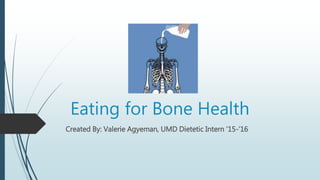
Eating for Bone Health
Created By: Valerie Agyeman, UMD Dietetic Intern ‘15-’16
What’s the deal with bone disease?
 Bone disease can have a devastating impact on individuals,
causing pain, deformity, and a downward spiral into physical
problems, such as the inability to dress oneself or walk.
 It is called a “silent” condition because many people don’t
know they have bone disease until they suffer a fracture.
Calcium
 Calcium is a mineral essential for both building bones and keeping them
healthy.
 The body uses bone tissue as a reservoir and source of calcium to maintain
constant concentrations of calcium in the blood, muscles, and intercellular
fluids.
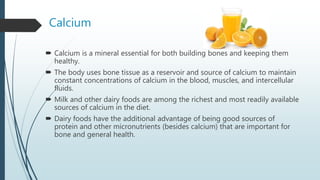
 Milk and other dairy foods are among the richest and most readily available
sources of calcium in the diet.
 Dairy foods have the additional advantage of being good sources of
protein and other micronutrients (besides calcium) that are important for
bone and general health.
Non Dairy Calcium Food Sources
 Dark leafy greens vegetables (e.g. broccoli, curly kale, bok
choy, collard greens, spinach)
 Whole canned fish with bones such as sardines, salmon, trout
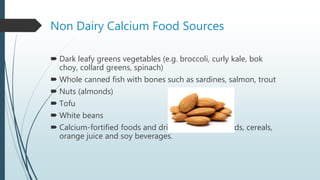
 Nuts (almonds)
 Tofu
 White beans
 Calcium-fortified foods and drinks, including breads, cereals,
orange juice and soy beverages.
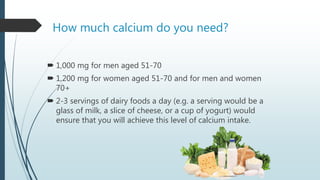
How much calcium do you need?
 1,000 mg for men aged 51-70
 1,200 mg for women aged 51-70 and for men and women
70+
 2-3 servings of dairy foods a day (e.g. a serving would be a
glass of milk, a slice of cheese, or a cup of yogurt) would
ensure that you will achieve this level of calcium intake.
Vitamin D
 Vitamin D is also essential for the development and maintenance of
bone, both for its role in assisting calcium absorption from the gut,
and for ensuring the correct renewal and mineralization of bone
tissue.
 Vitamin D deficiency in older adults can increase the risk for
osteoporosis, falls and fractures.
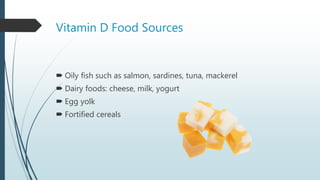
Vitamin D Food Sources
 Oily fish such as salmon, sardines, tuna, mackerel
 Dairy foods: cheese, milk, yogurt
 Egg yolk
 Fortified cereals
How much vitamin D do you need?
 600 IU of vitamin D every day for people aged 1 to 70
 800 IU for individuals over 70
 3 servings of vitamin D natural food sources/fortified foods
can help you meet your goal.
Are supplements okay to take?
 Try to meet your daily calcium recommendations through
foods first.
 If you do not reach your goal with food, then fill in the deficit
amount with a supplement, with your Doctor’s approval.
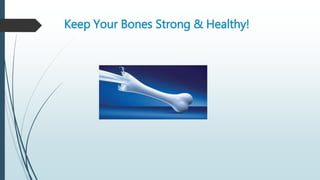
Keep Your Bones Strong & Healthy!
REFERENCES
 National Osteoporosis Foundation. Retrieved on 6/2/16 from https://www.nof.org/.

Eating for bone health

  • 1.
    Eating for BoneHealth Created By: Valerie Agyeman, UMD Dietetic Intern ‘15-’16
  • 2.
    What’s the dealwith bone disease?  Bone disease can have a devastating impact on individuals, causing pain, deformity, and a downward spiral into physical problems, such as the inability to dress oneself or walk.  It is called a “silent” condition because many people don’t know they have bone disease until they suffer a fracture.
  • 3.
    Calcium  Calcium isa mineral essential for both building bones and keeping them healthy.  The body uses bone tissue as a reservoir and source of calcium to maintain constant concentrations of calcium in the blood, muscles, and intercellular fluids.  Milk and other dairy foods are among the richest and most readily available sources of calcium in the diet.  Dairy foods have the additional advantage of being good sources of protein and other micronutrients (besides calcium) that are important for bone and general health.
  • 4.
    Non Dairy CalciumFood Sources  Dark leafy greens vegetables (e.g. broccoli, curly kale, bok choy, collard greens, spinach)  Whole canned fish with bones such as sardines, salmon, trout  Nuts (almonds)  Tofu  White beans  Calcium-fortified foods and drinks, including breads, cereals, orange juice and soy beverages.
  • 5.
    How much calciumdo you need?  1,000 mg for men aged 51-70  1,200 mg for women aged 51-70 and for men and women 70+  2-3 servings of dairy foods a day (e.g. a serving would be a glass of milk, a slice of cheese, or a cup of yogurt) would ensure that you will achieve this level of calcium intake.
  • 6.
    Vitamin D  VitaminD is also essential for the development and maintenance of bone, both for its role in assisting calcium absorption from the gut, and for ensuring the correct renewal and mineralization of bone tissue.  Vitamin D deficiency in older adults can increase the risk for osteoporosis, falls and fractures.
  • 7.
    Vitamin D FoodSources  Oily fish such as salmon, sardines, tuna, mackerel  Dairy foods: cheese, milk, yogurt  Egg yolk  Fortified cereals
  • 8.
    How much vitaminD do you need?  600 IU of vitamin D every day for people aged 1 to 70  800 IU for individuals over 70  3 servings of vitamin D natural food sources/fortified foods can help you meet your goal.
  • 9.
    Are supplements okayto take?  Try to meet your daily calcium recommendations through foods first.  If you do not reach your goal with food, then fill in the deficit amount with a supplement, with your Doctor’s approval.
  • 10.
    Keep Your BonesStrong & Healthy!
  • 11.
    REFERENCES  National OsteoporosisFoundation. Retrieved on 6/2/16 from https://www.nof.org/.