Getting Enough Calcium Page 1 of 2


Marilyn Corbin, Ph. D.
Penn State Cooperative Extension
814-863-6109
mcorbin@psu.edu


FOR IMMEDIATE RELEASE

                              Calcium a Must for StrongWomen

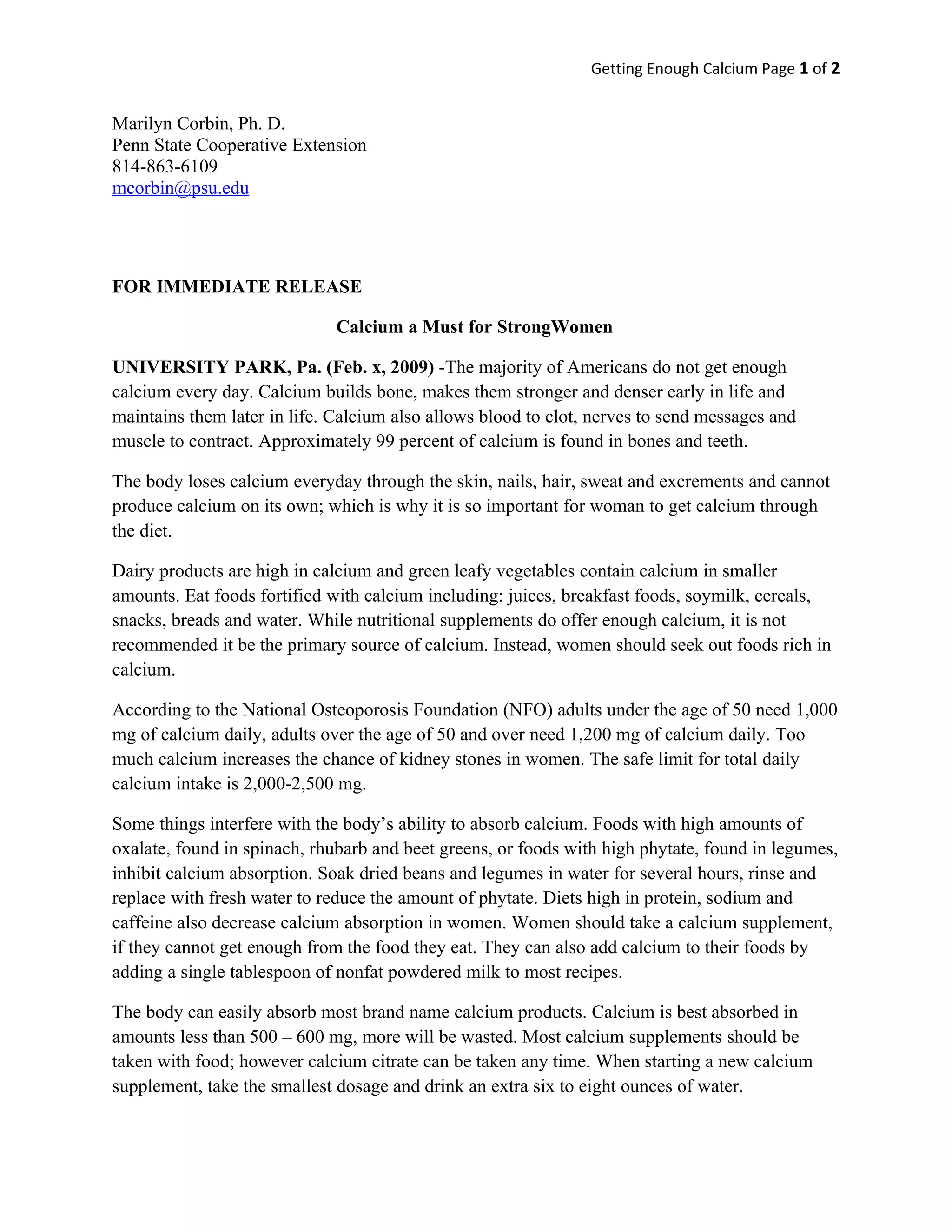
UNIVERSITY PARK, Pa. (Feb. x, 2009) -The majority of Americans do not get enough
calcium every day. Calcium builds bone, makes them stronger and denser early in life and
maintains them later in life. Calcium also allows blood to clot, nerves to send messages and
muscle to contract. Approximately 99 percent of calcium is found in bones and teeth.

The body loses calcium everyday through the skin, nails, hair, sweat and excrements and cannot
produce calcium on its own; which is why it is so important for woman to get calcium through
the diet.

Dairy products are high in calcium and green leafy vegetables contain calcium in smaller
amounts. Eat foods fortified with calcium including: juices, breakfast foods, soymilk, cereals,
snacks, breads and water. While nutritional supplements do offer enough calcium, it is not
recommended it be the primary source of calcium. Instead, women should seek out foods rich in
calcium.

According to the National Osteoporosis Foundation (NFO) adults under the age of 50 need 1,000
mg of calcium daily, adults over the age of 50 and over need 1,200 mg of calcium daily. Too
much calcium increases the chance of kidney stones in women. The safe limit for total daily
calcium intake is 2,000-2,500 mg.

Some things interfere with the body’s ability to absorb calcium. Foods with high amounts of
oxalate, found in spinach, rhubarb and beet greens, or foods with high phytate, found in legumes,
inhibit calcium absorption. Soak dried beans and legumes in water for several hours, rinse and
replace with fresh water to reduce the amount of phytate. Diets high in protein, sodium and
caffeine also decrease calcium absorption in women. Women should take a calcium supplement,
if they cannot get enough from the food they eat. They can also add calcium to their foods by
adding a single tablespoon of nonfat powdered milk to most recipes.

The body can easily absorb most brand name calcium products. Calcium is best absorbed in
amounts less than 500 – 600 mg, more will be wasted. Most calcium supplements should be
taken with food; however calcium citrate can be taken any time. When starting a new calcium
supplement, take the smallest dosage and drink an extra six to eight ounces of water.
Getting Enough Calcium Page 2 of 2


Penn State Cooperative Extension offers the “StrongWomen” program to offer women the
opportunity to learn about calcium intake and how to reduce their risk of osteoporosis through
diet and exercise.

“StrongWomen is one of the most successful programs I have been involved with from the 10
years that I have been involved with Extension,” said Nancy Wiker, Extension Educator and
StrongWomen Program Coordinator in Lancaster County. “It offers physical, emotional and
psychological benefits and is has a focus in nutrition.”

For more information on the StrongWomen program, contact a county Extension office by
visiting http://extension.psu.edu/extmap.html and clicking on the respective county or visit http://
extension.psu.edu/strongwomen/.

Penn State Cooperative Extension is an educational network that gives people in Pennsylvania's
67 counties access to Penn State's resources and expertise. Extension provides educational
programs to enable the Commonwealth to maintain a competitive, environmentally sound food
and fiber system, as well as to prepare youth, adults, and families to participate more fully in
community decisions.


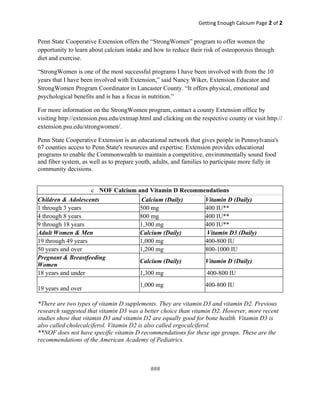
                    c NOF Calcium and Vitamin D Recommendations
Children & Adolescents              Calcium (Daily)    Vitamin D (Daily)
1 through 3 years                  500 mg              400 IU**
4 through 8 years                  800 mg              400 IU**
9 through 18 years                 1,300 mg            400 IU**
Adult Women & Men                  Calcium (Daily)      Vitamin D3 (Daily)
19 through 49 years                1,000 mg            400-800 IU
50 years and over                  1,200 mg            800-1000 IU
Pregnant & Breastfeeding
                                   Calcium (Daily)     Vitamin D (Daily)
Women
18 years and under                 1,300 mg             400-800 IU
                                         1,000 mg                   400-800 IU
19 years and over

*There are two types of vitamin D supplements. They are vitamin D3 and vitamin D2. Previous
research suggested that vitamin D3 was a better choice than vitamin D2. However, more recent
studies show that vitamin D3 and vitamin D2 are equally good for bone health. Vitamin D3 is
also called cholecalciferol. Vitamin D2 is also called ergocalciferol.
**NOF does not have specific vitamin D recommendations for these age groups. These are the
recommendations of the American Academy of Pediatrics.


                                              ###

Calcium Press Release

  • 1.
    Getting Enough CalciumPage 1 of 2 Marilyn Corbin, Ph. D. Penn State Cooperative Extension 814-863-6109 mcorbin@psu.edu FOR IMMEDIATE RELEASE Calcium a Must for StrongWomen UNIVERSITY PARK, Pa. (Feb. x, 2009) -The majority of Americans do not get enough calcium every day. Calcium builds bone, makes them stronger and denser early in life and maintains them later in life. Calcium also allows blood to clot, nerves to send messages and muscle to contract. Approximately 99 percent of calcium is found in bones and teeth. The body loses calcium everyday through the skin, nails, hair, sweat and excrements and cannot produce calcium on its own; which is why it is so important for woman to get calcium through the diet. Dairy products are high in calcium and green leafy vegetables contain calcium in smaller amounts. Eat foods fortified with calcium including: juices, breakfast foods, soymilk, cereals, snacks, breads and water. While nutritional supplements do offer enough calcium, it is not recommended it be the primary source of calcium. Instead, women should seek out foods rich in calcium. According to the National Osteoporosis Foundation (NFO) adults under the age of 50 need 1,000 mg of calcium daily, adults over the age of 50 and over need 1,200 mg of calcium daily. Too much calcium increases the chance of kidney stones in women. The safe limit for total daily calcium intake is 2,000-2,500 mg. Some things interfere with the body’s ability to absorb calcium. Foods with high amounts of oxalate, found in spinach, rhubarb and beet greens, or foods with high phytate, found in legumes, inhibit calcium absorption. Soak dried beans and legumes in water for several hours, rinse and replace with fresh water to reduce the amount of phytate. Diets high in protein, sodium and caffeine also decrease calcium absorption in women. Women should take a calcium supplement, if they cannot get enough from the food they eat. They can also add calcium to their foods by adding a single tablespoon of nonfat powdered milk to most recipes. The body can easily absorb most brand name calcium products. Calcium is best absorbed in amounts less than 500 – 600 mg, more will be wasted. Most calcium supplements should be taken with food; however calcium citrate can be taken any time. When starting a new calcium supplement, take the smallest dosage and drink an extra six to eight ounces of water.
  • 2.
    Getting Enough CalciumPage 2 of 2 Penn State Cooperative Extension offers the “StrongWomen” program to offer women the opportunity to learn about calcium intake and how to reduce their risk of osteoporosis through diet and exercise. “StrongWomen is one of the most successful programs I have been involved with from the 10 years that I have been involved with Extension,” said Nancy Wiker, Extension Educator and StrongWomen Program Coordinator in Lancaster County. “It offers physical, emotional and psychological benefits and is has a focus in nutrition.” For more information on the StrongWomen program, contact a county Extension office by visiting http://extension.psu.edu/extmap.html and clicking on the respective county or visit http:// extension.psu.edu/strongwomen/. Penn State Cooperative Extension is an educational network that gives people in Pennsylvania's 67 counties access to Penn State's resources and expertise. Extension provides educational programs to enable the Commonwealth to maintain a competitive, environmentally sound food and fiber system, as well as to prepare youth, adults, and families to participate more fully in community decisions. c NOF Calcium and Vitamin D Recommendations Children & Adolescents Calcium (Daily) Vitamin D (Daily) 1 through 3 years 500 mg 400 IU** 4 through 8 years 800 mg 400 IU** 9 through 18 years 1,300 mg 400 IU** Adult Women & Men Calcium (Daily) Vitamin D3 (Daily) 19 through 49 years 1,000 mg 400-800 IU 50 years and over 1,200 mg 800-1000 IU Pregnant & Breastfeeding Calcium (Daily) Vitamin D (Daily) Women 18 years and under 1,300 mg 400-800 IU 1,000 mg 400-800 IU 19 years and over *There are two types of vitamin D supplements. They are vitamin D3 and vitamin D2. Previous research suggested that vitamin D3 was a better choice than vitamin D2. However, more recent studies show that vitamin D3 and vitamin D2 are equally good for bone health. Vitamin D3 is also called cholecalciferol. Vitamin D2 is also called ergocalciferol. **NOF does not have specific vitamin D recommendations for these age groups. These are the recommendations of the American Academy of Pediatrics. ###