EARTHQUAKES
AND FAULTS
What is an Earthquake?
Earthquake is a weak to violent shaking of the
ground produced by the sudden movement of
rock materials below the earth’s surface.
2. Volcanic earthquakes - earthquakes induced by rising
lava or magma beneath active volcanoes.
Types of Earthquake
1. Tectonic earthquake - produced by sudden
movement along faults and plate boundaries.
What causes Earthquakes?
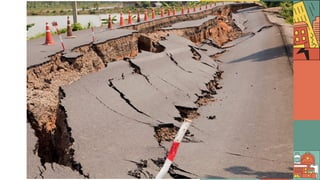
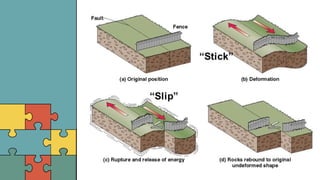
An Earthquake is a sudden
movement of the earth's crust caused
by the release of stress accumulated
along geologic faults or by volcanic
activity.
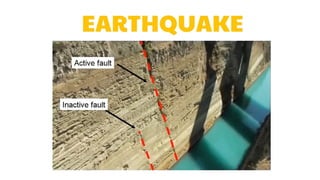
What is a FAULT?
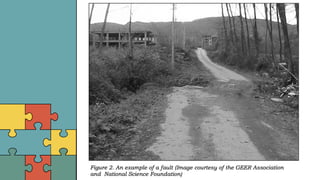
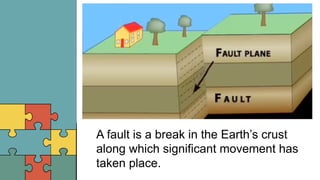
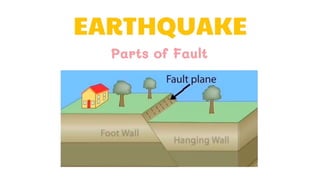
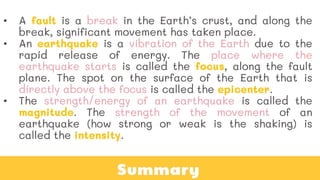
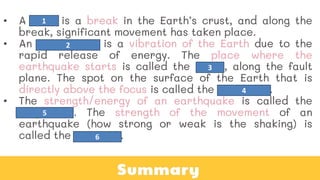
A fault is a break in the Earth’s crust
along which significant movement has
taken place.
Types of Faults
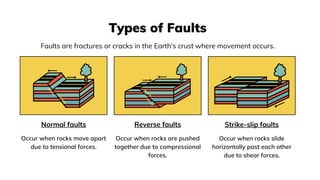
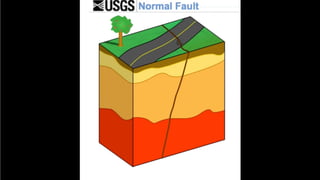
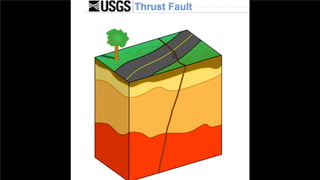
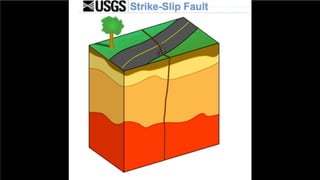
Faults are fractures or cracks in the Earth's crust where movement occurs.
Normal faults
Occur when rocks move apart
due to tensional forces.
Reverse faults
Occur when rocks are pushed
together due to compressional
forces.
Strike-slip faults
Occur when rocks slide
horizontally past each other
due to shear forces.
Seismograph
• A seismograph is an instrument used to record and measure the
motion of the ground during an earthquake.
• It consists of a stationary base and a suspended weight or mass
that remains stationary during an earthquake but records the
motion of the ground.
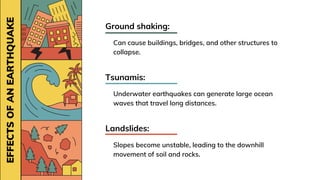
EFFECTS
OF
AN
EARTHQUAKE
Ground shaking:
Can cause buildings, bridges, and other structures to
collapse.
Tsunamis:
Underwater earthquakes can generate large ocean
waves that travel long distances.
Landslides:
Slopes become unstable, leading to the downhill
movement of soil and rocks.
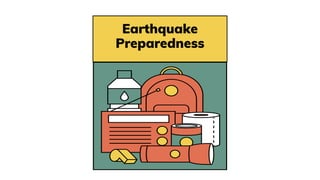
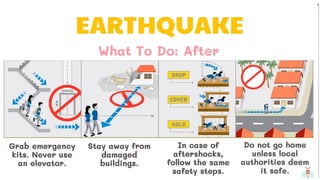
Earthquake
Preparedness
1
2
3
4
5
6

Earthquake-Science.pdf Grade 8 Science power point

  • 1.
  • 4.
    What is anEarthquake? Earthquake is a weak to violent shaking of the ground produced by the sudden movement of rock materials below the earth’s surface. 2. Volcanic earthquakes - earthquakes induced by rising lava or magma beneath active volcanoes. Types of Earthquake 1. Tectonic earthquake - produced by sudden movement along faults and plate boundaries.
  • 5.
    What causes Earthquakes? AnEarthquake is a sudden movement of the earth's crust caused by the release of stress accumulated along geologic faults or by volcanic activity.
  • 6.
    What is aFAULT?
  • 10.
    A fault isa break in the Earth’s crust along which significant movement has taken place.
  • 12.
    Types of Faults Faultsare fractures or cracks in the Earth's crust where movement occurs. Normal faults Occur when rocks move apart due to tensional forces. Reverse faults Occur when rocks are pushed together due to compressional forces. Strike-slip faults Occur when rocks slide horizontally past each other due to shear forces.
  • 22.
    Seismograph • A seismographis an instrument used to record and measure the motion of the ground during an earthquake. • It consists of a stationary base and a suspended weight or mass that remains stationary during an earthquake but records the motion of the ground.
  • 26.
    EFFECTS OF AN EARTHQUAKE Ground shaking: Can causebuildings, bridges, and other structures to collapse. Tsunamis: Underwater earthquakes can generate large ocean waves that travel long distances. Landslides: Slopes become unstable, leading to the downhill movement of soil and rocks.
  • 27.
  • 32.