EARTH-
QUAKE
EARTH-
QUAKE
7.2
7.2
Today, we embark on an exciting journey into the
fascinating world of earthquakes. We will explore
what causes earthquakes, the different types of
faults, how earthquakes are measured, the science
behind seismic waves and Earth's interior, the role
of seismographs, the effects of earthquakes, and
finally, earthquake preparedness
Welcome, classmate!
What is an Earthquake?
A weak to violent shaking of the ground
produced by the sudden movement of
rock materials below the earth's surface.
What causes Earthquakes?
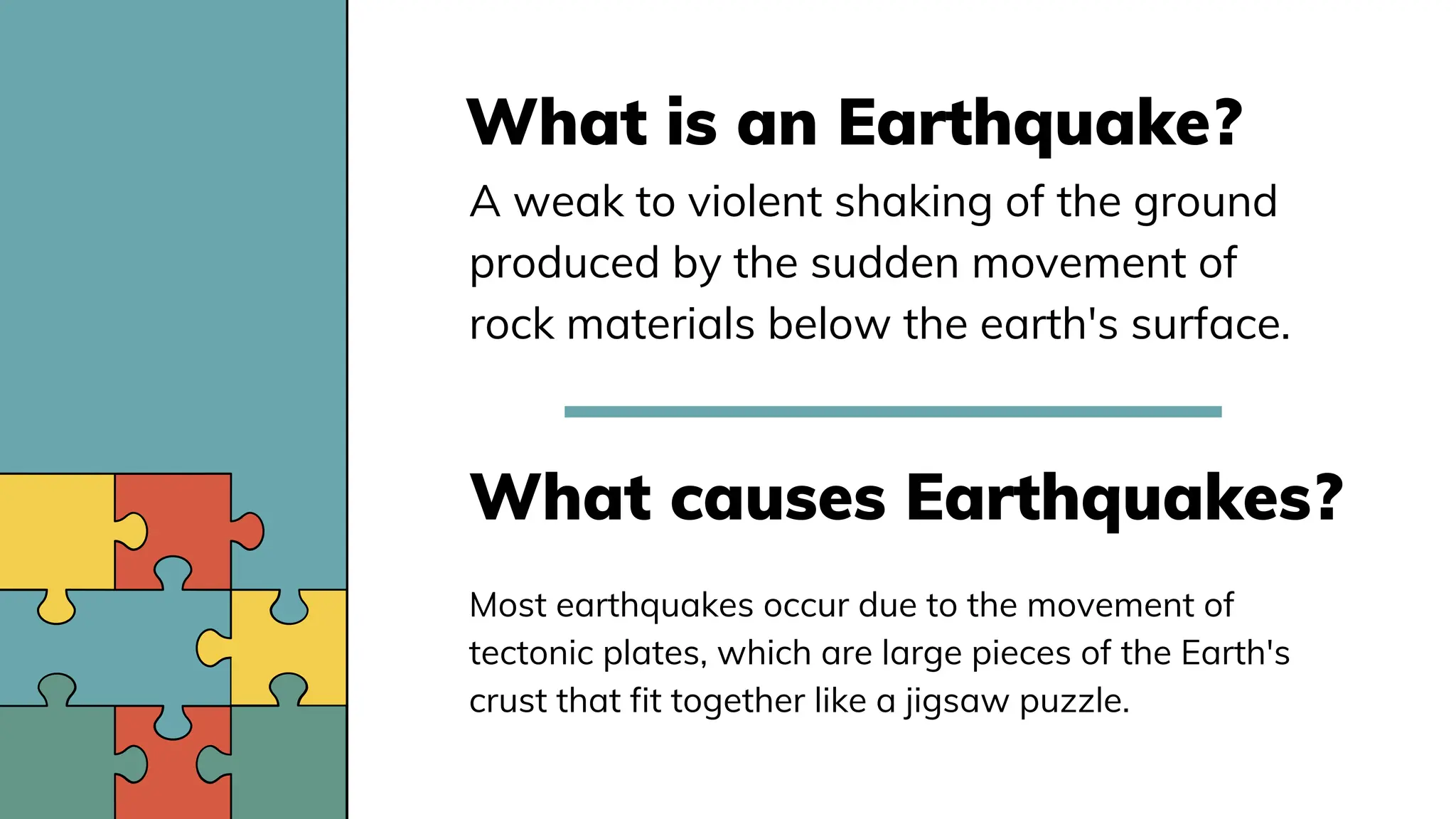
Most earthquakes occur due to the movement of
tectonic plates, which are large pieces of the Earth's
crust that fit together like a jigsaw puzzle.
Types of Faults
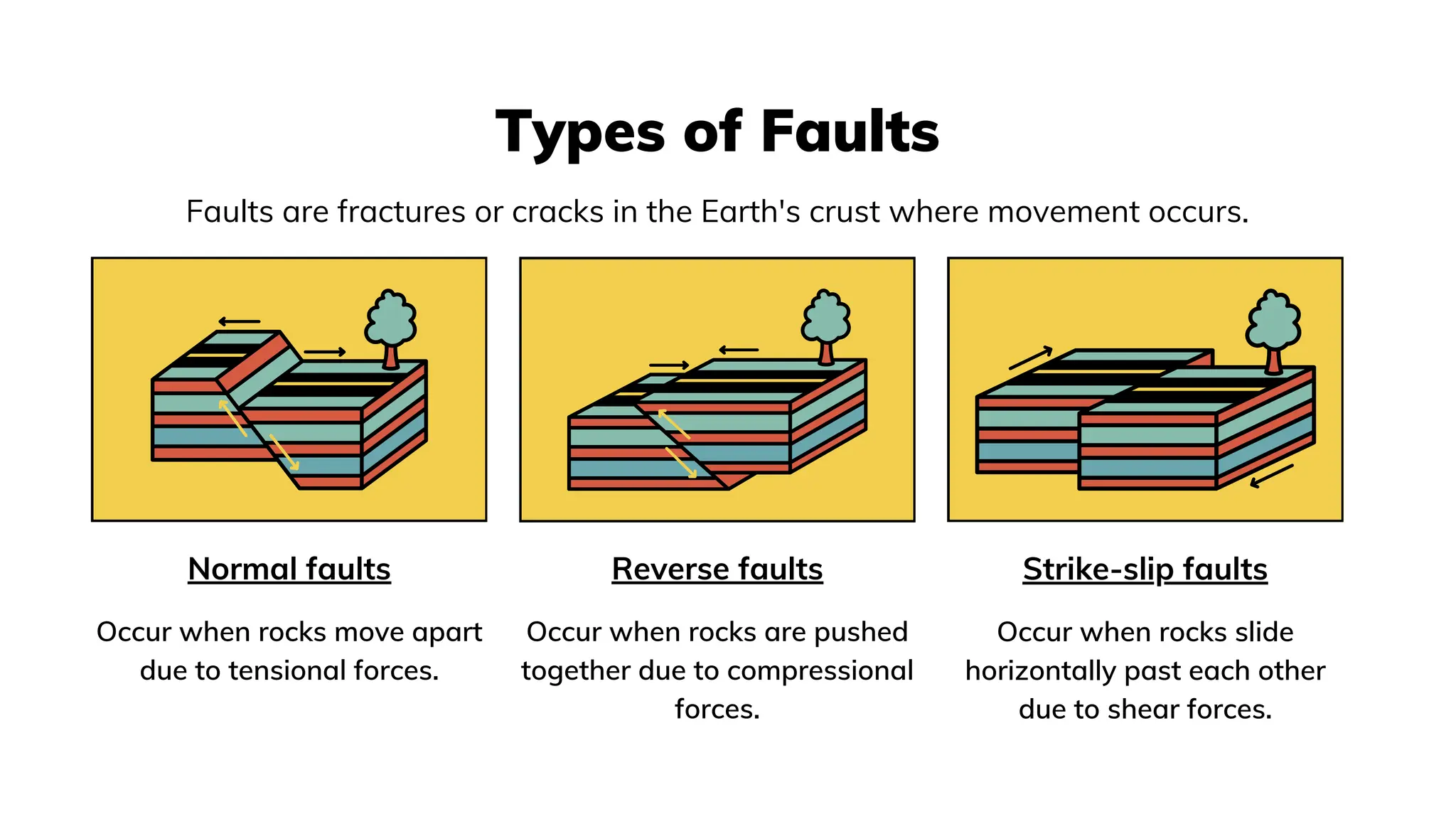
Faults are fractures or cracks in the Earth's crust where movement occurs.
Normal faults
Occur when rocks move apart
due to tensional forces.
Reverse faults
Occur when rocks are pushed
together due to compressional
forces.
Strike-slip faults
Occur when rocks slide
horizontally past each other
due to shear forces.
Magnitude of
an Earthquake
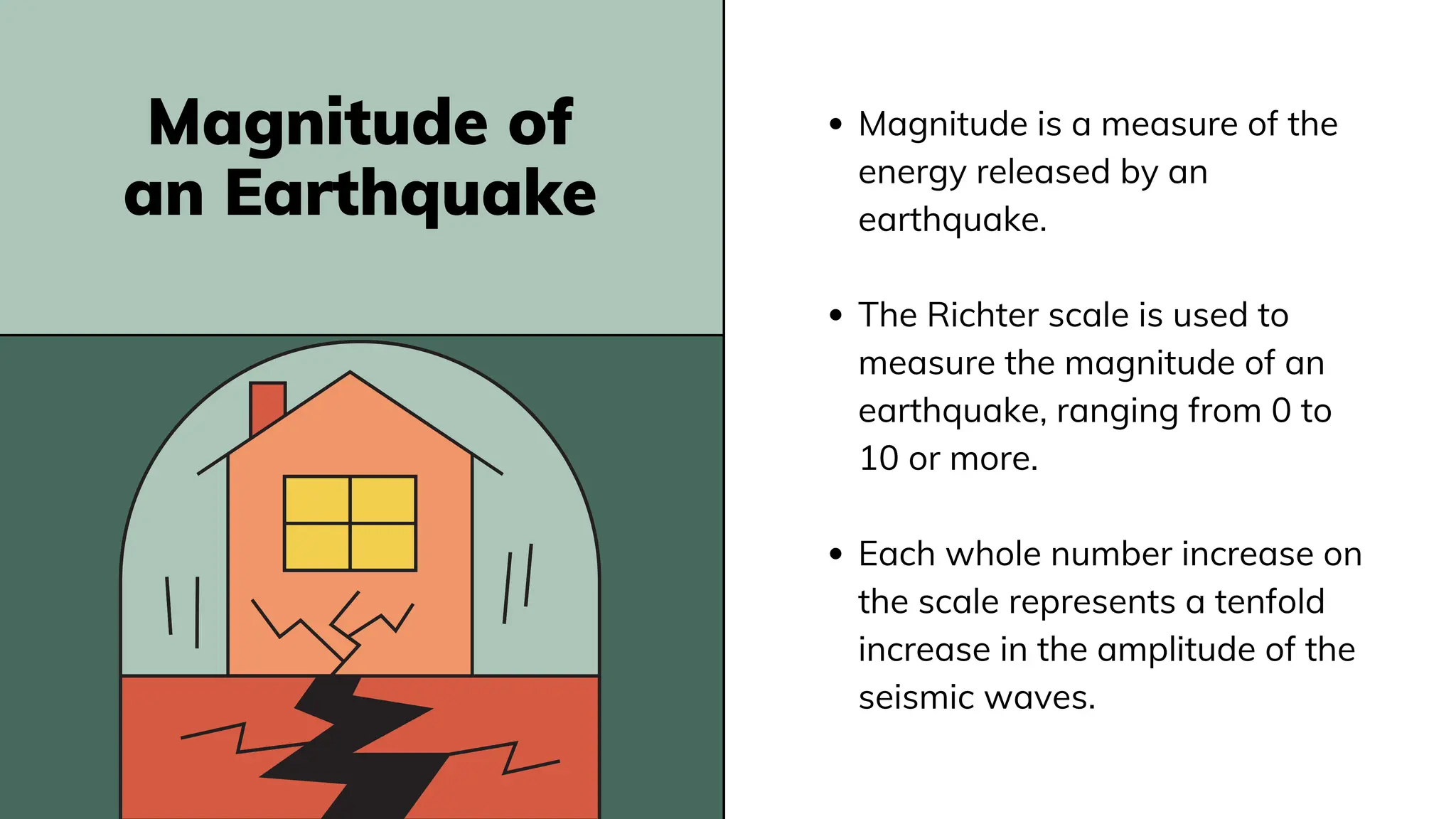
Magnitude is a measure of the
energy released by an
earthquake.
The Richter scale is used to
measure the magnitude of an
earthquake, ranging from 0 to
10 or more.
Each whole number increase on
the scale represents a tenfold
increase in the amplitude of the
seismic waves.
Seismic Waves
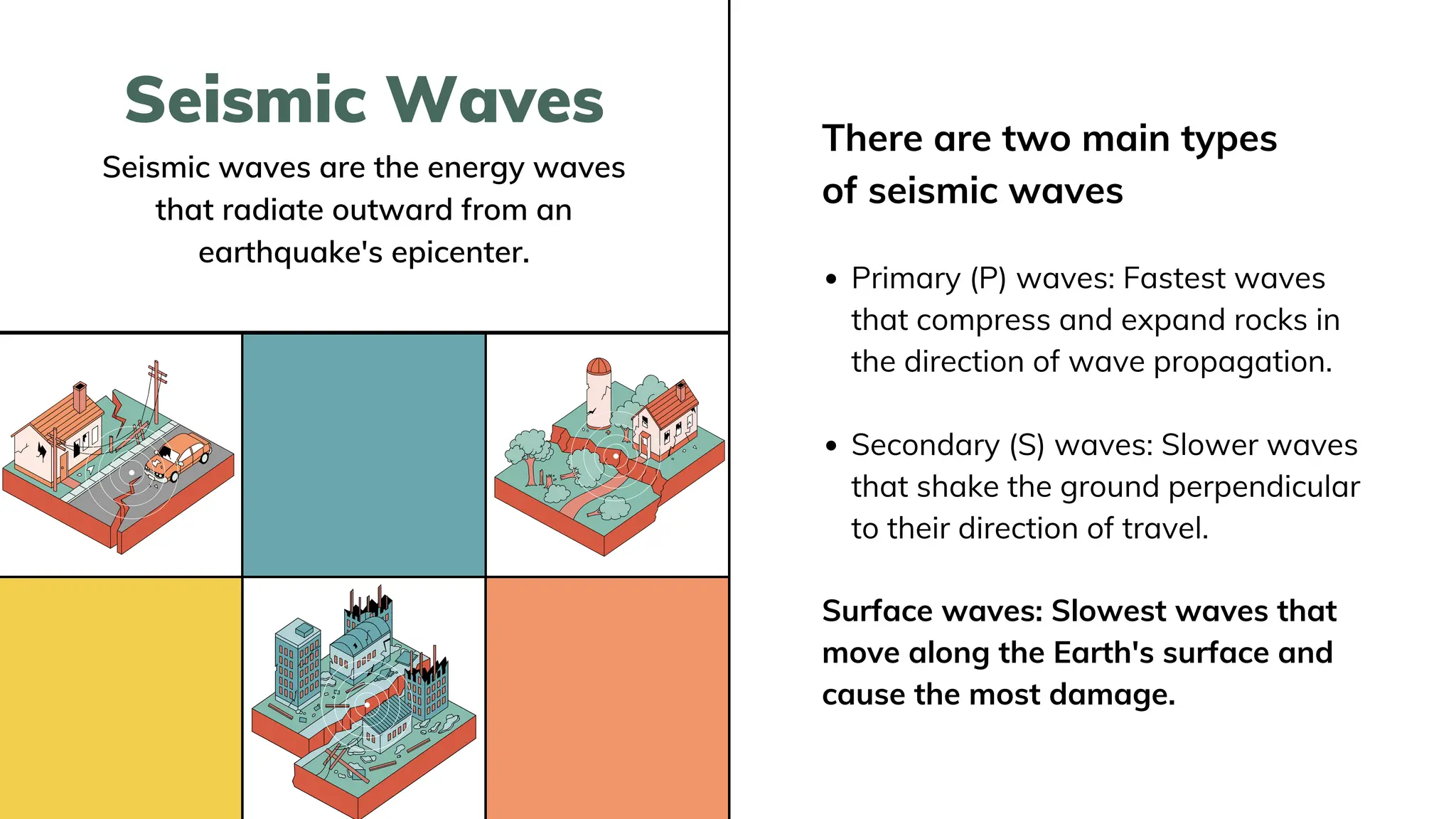
Seismic waves are the energy waves
that radiate outward from an
earthquake's epicenter.
Primary (P) waves: Fastest waves
that compress and expand rocks in
the direction of wave propagation.
Secondary (S) waves: Slower waves
that shake the ground perpendicular
to their direction of travel.
There are two main types
of seismic waves
Surface waves: Slowest waves that
move along the Earth's surface and
cause the most damage.
Seismograph
A seismograph is an instrument used to record and measure the
motion of the ground during an earthquake.
It consists of a stationary base and a suspended weight or mass
that remains stationary during an earthquake but records the
motion of the ground.
EFFECTS
OF
AN
EARTHQUAKE
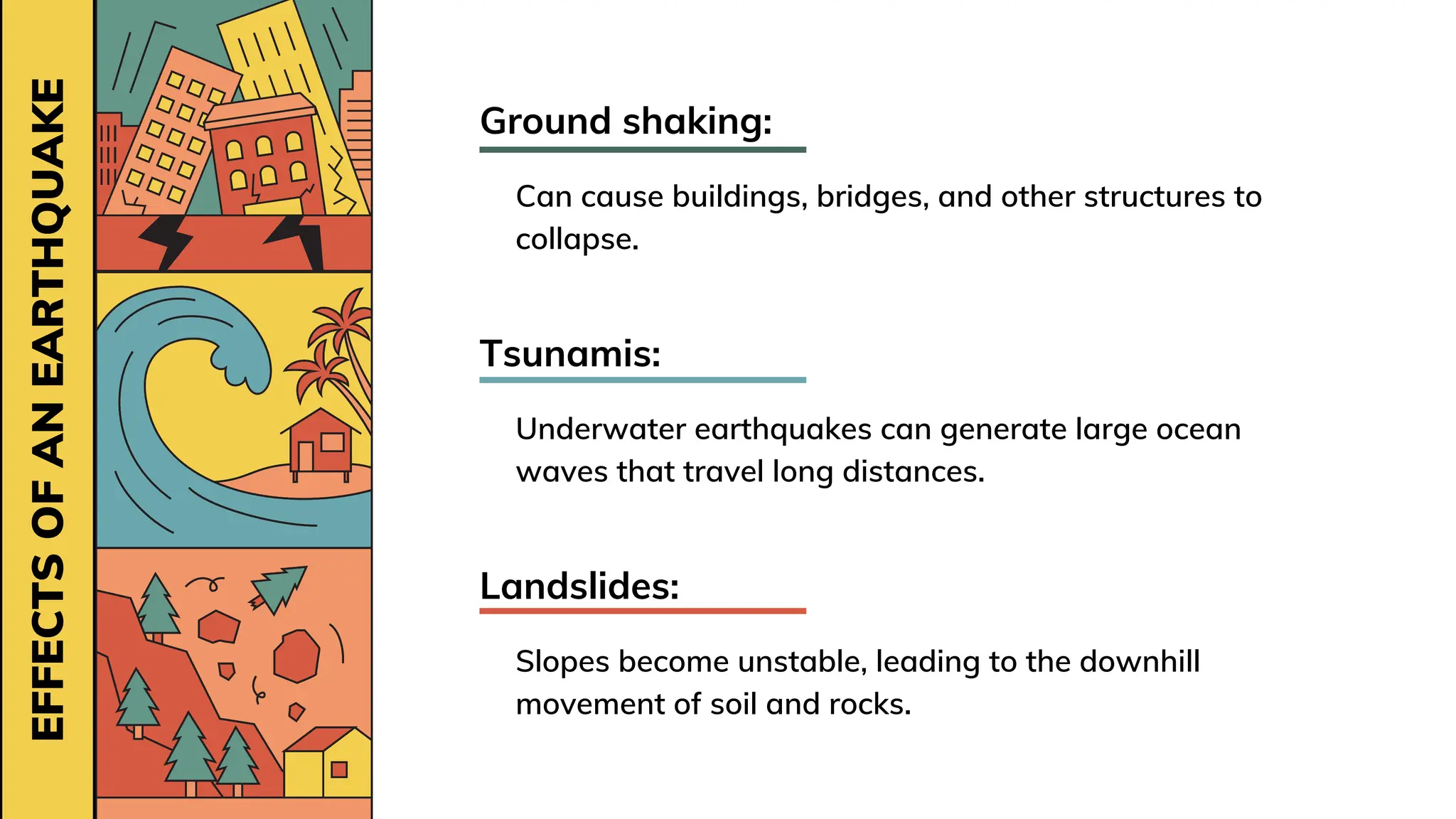
Ground shaking:
Can cause buildings, bridges, and other structures to
collapse.
Tsunamis:
Underwater earthquakes can generate large ocean
waves that travel long distances.
Landslides:
Slopes become unstable, leading to the downhill
movement of soil and rocks.
Earthquake
Preparedness
While we cannot predict when or where an
earthquake will occur, being prepared can save
lives and reduce damage.
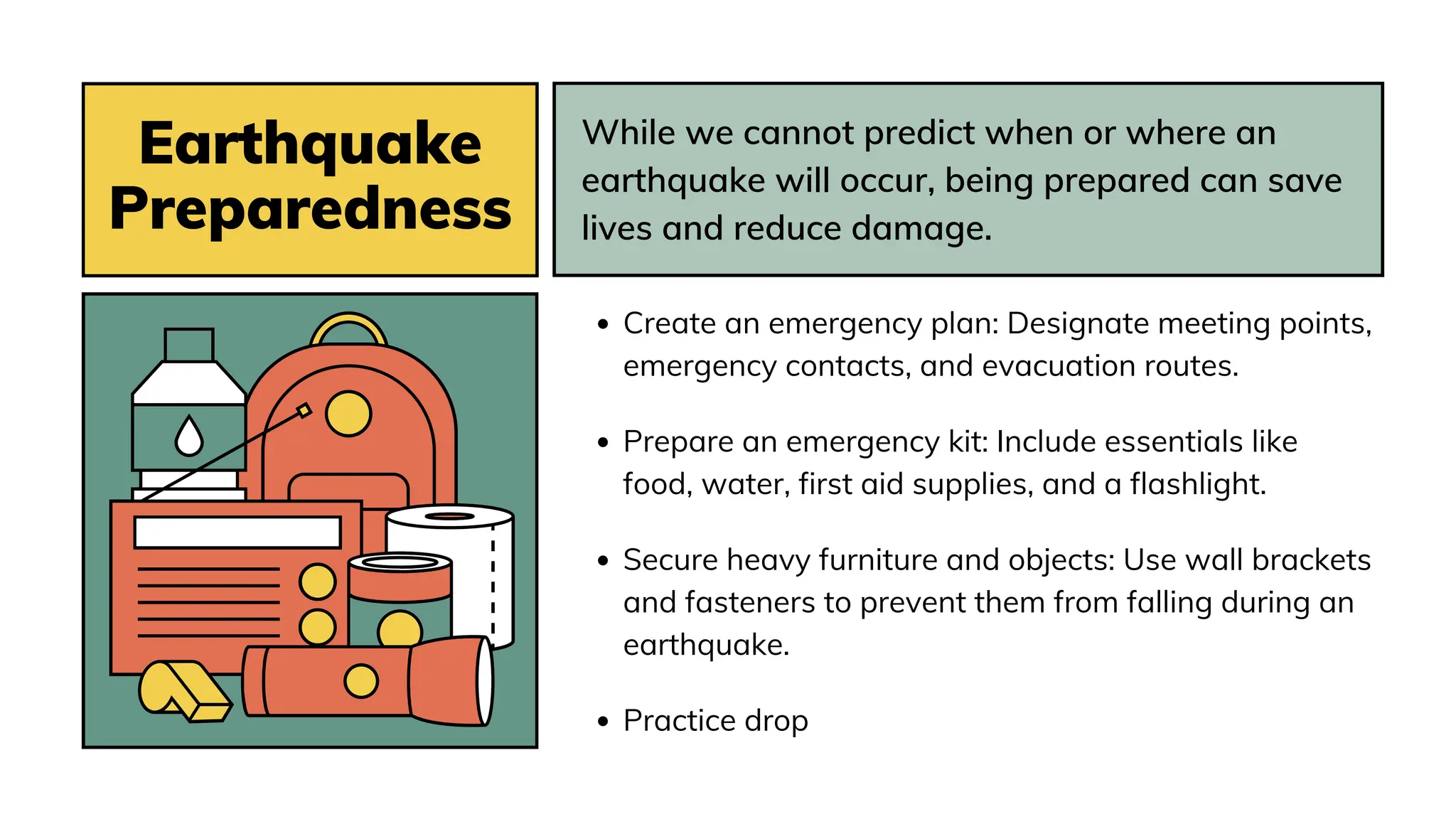
Create an emergency plan: Designate meeting points,
emergency contacts, and evacuation routes.
Prepare an emergency kit: Include essentials like
food, water, first aid supplies, and a flashlight.
Secure heavy furniture and objects: Use wall brackets
and fasteners to prevent them from falling during an
earthquake.
Practice drop
Earthquake PowerPoint Presentation (for grade 7)

  • 1.
  • 2.
    Today, we embarkon an exciting journey into the fascinating world of earthquakes. We will explore what causes earthquakes, the different types of faults, how earthquakes are measured, the science behind seismic waves and Earth's interior, the role of seismographs, the effects of earthquakes, and finally, earthquake preparedness Welcome, classmate!
  • 3.
    What is anEarthquake? A weak to violent shaking of the ground produced by the sudden movement of rock materials below the earth's surface. What causes Earthquakes? Most earthquakes occur due to the movement of tectonic plates, which are large pieces of the Earth's crust that fit together like a jigsaw puzzle.
  • 4.
    Types of Faults Faultsare fractures or cracks in the Earth's crust where movement occurs. Normal faults Occur when rocks move apart due to tensional forces. Reverse faults Occur when rocks are pushed together due to compressional forces. Strike-slip faults Occur when rocks slide horizontally past each other due to shear forces.
  • 5.
    Magnitude of an Earthquake Magnitudeis a measure of the energy released by an earthquake. The Richter scale is used to measure the magnitude of an earthquake, ranging from 0 to 10 or more. Each whole number increase on the scale represents a tenfold increase in the amplitude of the seismic waves.
  • 6.
    Seismic Waves Seismic wavesare the energy waves that radiate outward from an earthquake's epicenter. Primary (P) waves: Fastest waves that compress and expand rocks in the direction of wave propagation. Secondary (S) waves: Slower waves that shake the ground perpendicular to their direction of travel. There are two main types of seismic waves Surface waves: Slowest waves that move along the Earth's surface and cause the most damage.
  • 7.
    Seismograph A seismograph isan instrument used to record and measure the motion of the ground during an earthquake. It consists of a stationary base and a suspended weight or mass that remains stationary during an earthquake but records the motion of the ground.
  • 8.
    EFFECTS OF AN EARTHQUAKE Ground shaking: Can causebuildings, bridges, and other structures to collapse. Tsunamis: Underwater earthquakes can generate large ocean waves that travel long distances. Landslides: Slopes become unstable, leading to the downhill movement of soil and rocks.
  • 9.
    Earthquake Preparedness While we cannotpredict when or where an earthquake will occur, being prepared can save lives and reduce damage. Create an emergency plan: Designate meeting points, emergency contacts, and evacuation routes. Prepare an emergency kit: Include essentials like food, water, first aid supplies, and a flashlight. Secure heavy furniture and objects: Use wall brackets and fasteners to prevent them from falling during an earthquake. Practice drop