EARTHQUAKE
SA Tragedy to Life and Property
Created by..
A.SAITEJA
GUIDE ..
ANJANEYA BABU SIR
INTRODUCTION
 Earthquakes constitute one of the worst natural hazards
which often turn into disaster causing widespread
destruction and loss to human life.
 The effects of earthquake vary upon the magnitude and
intensity. Earthquakes occur every now and then all round
the world, except in some places where earthquakes occur
rarely. The devastation of cities and towns is one of the
effects of earthquake.
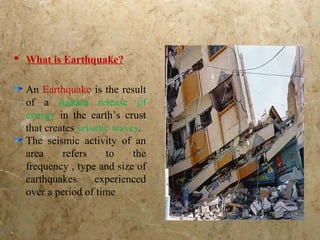
 What is Earthquake?
An Earthquake is the result
of a sudden release of
energy in the earth’s crust
that creates seismic waves.
The seismic activity of an
area refers to the
frequency , type and size of
earthquakes experienced
over a period of time
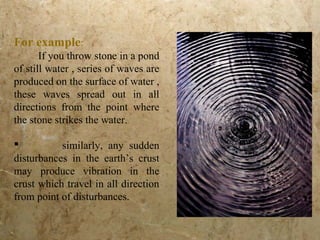
For example:
If you throw stone in a pond
of still water , series of waves are
produced on the surface of water ,
these waves spread out in all
directions from the point where
the stone strikes the water.
 similarly, any sudden
disturbances in the earth’s crust
may produce vibration in the
crust which travel in all direction
from point of disturbances.
The primary cause of an earthquake is faults on
the crust of the earth.
“A Fault is a break or fracture b/w two blocks of rocks in
response to stress.”
This movement may occur rapidly, in the form of an
earthquake or may occur slowly, in the form of creep.
Earth scientists use the angle of the fault with respect to the
surface (known as the dip) and the direction of slip along the
fault to classify faults.
KOBE EARTHQUAKEKOBE EARTHQUAKE
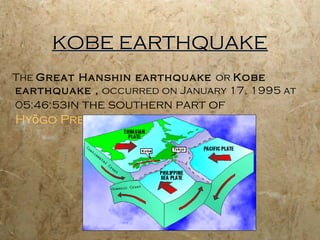
The Great Hanshin earthquake or Kobe
earthquake , occurred on January 17, 1995 at
05:46:53in the southern part of
Hy go Prefectureō , Japan.
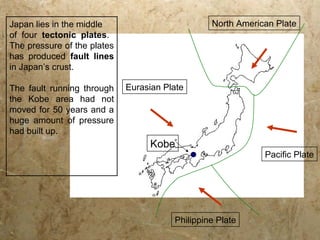
Eurasian Plate
Philippine Plate
Pacific Plate
North American Plate
Kobe
Japan lies in the middle
of four tectonic plates.
The pressure of the plates
has produced fault lines
in Japan’s crust.
The fault running through
the Kobe area had not
moved for 50 years and a
huge amount of pressure
had built up.
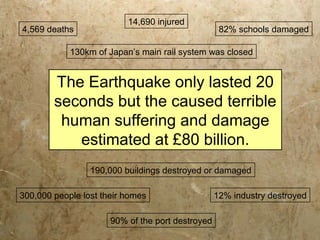
The Earthquake only lasted 20
seconds but the caused terrible
human suffering and damage
estimated at £80 billion.
190,000 buildings destroyed or damaged
90% of the port destroyed
14,690 injured
4,569 deaths 82% schools damaged
12% industry destroyed300,000 people lost their homes
130km of Japan’s main rail system was closed
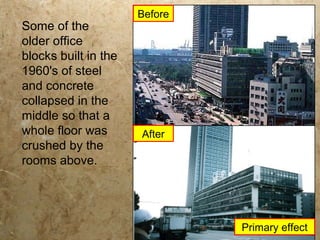
Some of the
older office
blocks built in the
1960's of steel
and concrete
collapsed in the
middle so that a
whole floor was
crushed by the
rooms above.
Before
After
Primary effect
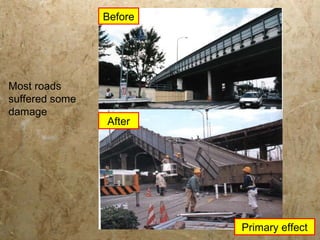
Before
After
Most roads
suffered some
damage
Primary effect
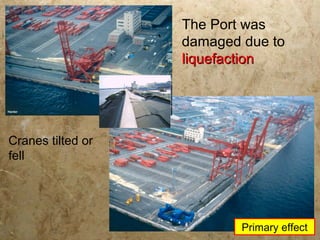
The Port was
damaged due to
liquefactionliquefaction
Cranes tilted or
fell
Primary effect
`
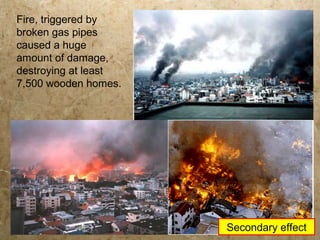
Fire, triggered by
broken gas pipes
caused a huge
amount of damage,
destroying at least
7,500 wooden homes.
Secondary effect
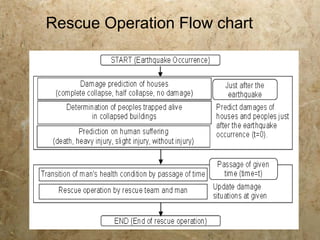
Rescue Operation Flow chart
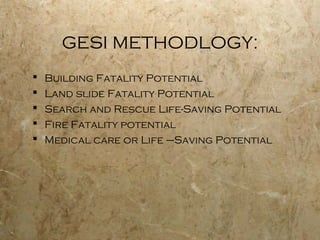
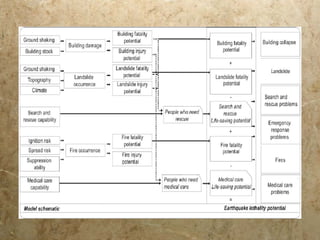
GESI METHODLOGY:
 Building Fatality Potential
 Land slide Fatality Potential
 Search and Rescue Life-Saving Potential
 Fire Fatality potential
 Medical care or Life –Saving Potential
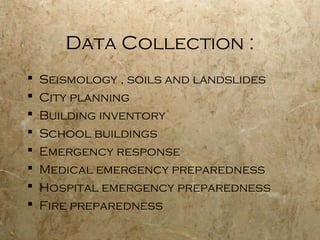
Data Collection :
 Seismology , soils and landslides
 City planning
 Building inventory
 School buildings
 Emergency response
 Medical emergency preparedness
 Hospital emergency preparedness
 Fire preparedness
GESI Results :
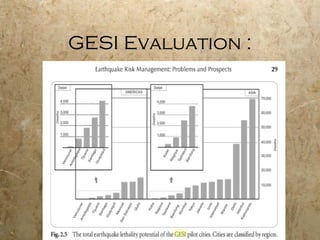
1. Compare communities risk of
loss of life caused by
earthquakes (fig 2.5)
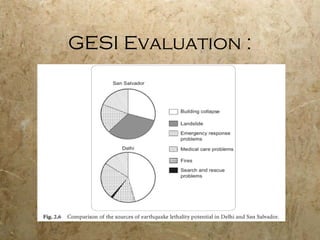
2. Identify the sources of each
city’s risk (fig 2.6) and.
3. Evaluate the various means of
reducing that risk
GESI Evaluation :
GESI Evaluation :
GESI Conclusions :
From the experience of kobe earth quake it is
evident that among different concerns of
reconstructions of the earth quakes in
urban areas a few critical issues are :
1. Focusing on community needs
2. Bringing communities In the decision
making process for reconstruction.
3. Reaching the collective opinion from the
communities
4. Keep pace with the speed of
reconstruction
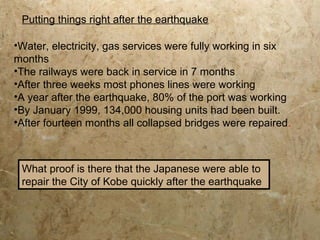
•Water, electricity, gas services were fully working in six
months
•The railways were back in service in 7 months
•After three weeks most phones lines were working
•A year after the earthquake, 80% of the port was working
•By January 1999, 134,000 housing units had been built.
•After fourteen months all collapsed bridges were repaired.
What proof is there that the Japanese were able to
repair the City of Kobe quickly after the earthquake
Putting things right after the earthquake
Questions To Us ?
 In what ways are earthquakes
predictable?
 To what other hazards are
earthquakes linked?
 What are the potentially disastrous
consequences of earthquakes?
 In what ways has human activity made
earthquake hazards catastrophic?
 How can the hazardous
consequences of earthquakes be
minimized?

Earthquakes [autosaved]

Earthquakes [autosaved]

  • 1.
    EARTHQUAKE SA Tragedy toLife and Property Created by.. A.SAITEJA GUIDE .. ANJANEYA BABU SIR
  • 2.
    INTRODUCTION  Earthquakes constituteone of the worst natural hazards which often turn into disaster causing widespread destruction and loss to human life.  The effects of earthquake vary upon the magnitude and intensity. Earthquakes occur every now and then all round the world, except in some places where earthquakes occur rarely. The devastation of cities and towns is one of the effects of earthquake.
  • 3.
     What isEarthquake? An Earthquake is the result of a sudden release of energy in the earth’s crust that creates seismic waves. The seismic activity of an area refers to the frequency , type and size of earthquakes experienced over a period of time
  • 4.
    For example: If youthrow stone in a pond of still water , series of waves are produced on the surface of water , these waves spread out in all directions from the point where the stone strikes the water.  similarly, any sudden disturbances in the earth’s crust may produce vibration in the crust which travel in all direction from point of disturbances.
  • 5.
    The primary causeof an earthquake is faults on the crust of the earth. “A Fault is a break or fracture b/w two blocks of rocks in response to stress.” This movement may occur rapidly, in the form of an earthquake or may occur slowly, in the form of creep. Earth scientists use the angle of the fault with respect to the surface (known as the dip) and the direction of slip along the fault to classify faults.
  • 6.
    KOBE EARTHQUAKEKOBE EARTHQUAKE TheGreat Hanshin earthquake or Kobe earthquake , occurred on January 17, 1995 at 05:46:53in the southern part of Hy go Prefectureō , Japan.
  • 7.
    Eurasian Plate Philippine Plate PacificPlate North American Plate Kobe Japan lies in the middle of four tectonic plates. The pressure of the plates has produced fault lines in Japan’s crust. The fault running through the Kobe area had not moved for 50 years and a huge amount of pressure had built up.
  • 8.
    The Earthquake onlylasted 20 seconds but the caused terrible human suffering and damage estimated at £80 billion. 190,000 buildings destroyed or damaged 90% of the port destroyed 14,690 injured 4,569 deaths 82% schools damaged 12% industry destroyed300,000 people lost their homes 130km of Japan’s main rail system was closed
  • 9.
    Some of the olderoffice blocks built in the 1960's of steel and concrete collapsed in the middle so that a whole floor was crushed by the rooms above. Before After Primary effect
  • 10.
  • 11.
    The Port was damageddue to liquefactionliquefaction Cranes tilted or fell Primary effect `
  • 12.
    Fire, triggered by brokengas pipes caused a huge amount of damage, destroying at least 7,500 wooden homes. Secondary effect
  • 13.
  • 14.
    GESI METHODLOGY:  BuildingFatality Potential  Land slide Fatality Potential  Search and Rescue Life-Saving Potential  Fire Fatality potential  Medical care or Life –Saving Potential
  • 16.
    Data Collection : Seismology , soils and landslides  City planning  Building inventory  School buildings  Emergency response  Medical emergency preparedness  Hospital emergency preparedness  Fire preparedness
  • 17.
    GESI Results : 1.Compare communities risk of loss of life caused by earthquakes (fig 2.5) 2. Identify the sources of each city’s risk (fig 2.6) and. 3. Evaluate the various means of reducing that risk
  • 18.
  • 19.
  • 20.
    GESI Conclusions : Fromthe experience of kobe earth quake it is evident that among different concerns of reconstructions of the earth quakes in urban areas a few critical issues are : 1. Focusing on community needs 2. Bringing communities In the decision making process for reconstruction. 3. Reaching the collective opinion from the communities 4. Keep pace with the speed of reconstruction
  • 21.
    •Water, electricity, gasservices were fully working in six months •The railways were back in service in 7 months •After three weeks most phones lines were working •A year after the earthquake, 80% of the port was working •By January 1999, 134,000 housing units had been built. •After fourteen months all collapsed bridges were repaired. What proof is there that the Japanese were able to repair the City of Kobe quickly after the earthquake Putting things right after the earthquake
  • 22.
    Questions To Us?  In what ways are earthquakes predictable?  To what other hazards are earthquakes linked?  What are the potentially disastrous consequences of earthquakes?  In what ways has human activity made earthquake hazards catastrophic?  How can the hazardous consequences of earthquakes be minimized? 