• What does the inside of the
  Earth look like?
How do we determine the composition of the
 Earth?

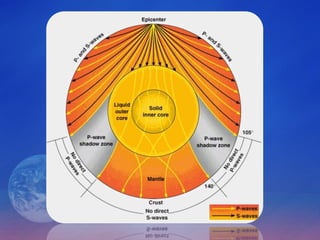
• Scientists cannot see the interior so they must
  use other ways to figure it out!
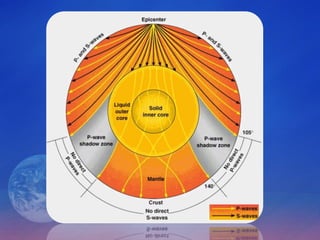
• Earthquakes have many different types of waves
   • These waves travel at different speeds
     through solids and liquids
   • Some waves don’t travel at all through liquids.
• Measuring these waves tells us what is in the
  Earth’s core and where the materials change.
Earth Layers

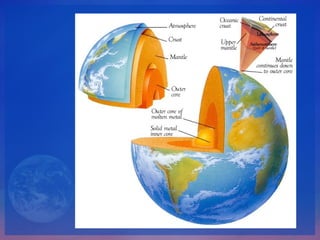
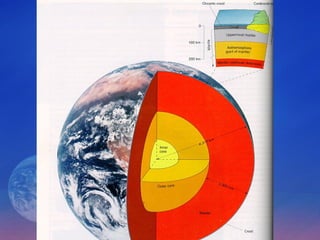
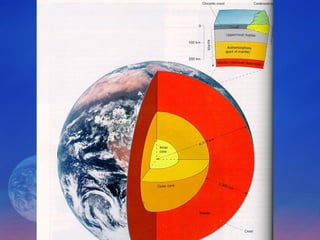
• The Earth is divided into four main
  layers.

  *Inner Core
  *Outer Core
  *Mantle
  *Crust
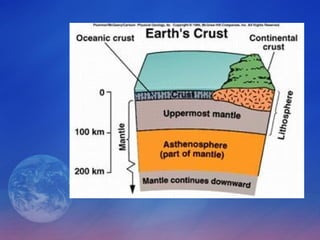
The Earth’s Crust
• The crust is the thinnest layer on Earth

• There are two types of crust

      • Oceanic crust – made mostly of the igneous rock
        basalt. Found under the ocean. Relatively thin.
      • Continental crust – made mostly of granite. Found
        under the continents. Relatively thick.
Special parts of the Crust
• Lithosphere
   • Crust is the upper part of the lithosphere
   • Broken up into large plates
• Asthenosphere
   • Upper part of mantle, below lithosphere
   • 130 – 160 km thick
   • Cooler part of the mantle that the
     lithospheric plates slide on top of.
The Earth’s Mantle
• Located directly above the outer core

• Starts below the crust

• Is the largest layer

• 80% of the Earth’s volume & 68% of Earth’s mass
The Earth’s Mantle
• Composed of more iron than the crust.

• Density, pressure, and temperature all increase
  the deeper you go in the mantle

• Temperature ranges from 870 C – 2200 C
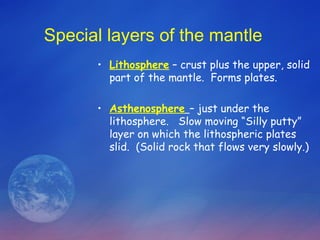
Special layers of the mantle
      • Lithosphere – crust plus the upper, solid
        part of the mantle. Forms plates.

      • Asthenosphere – just under the
        lithosphere. Slow moving “Silly putty”
        layer on which the lithospheric plates
        slid. (Solid rock that flows very slowly.)
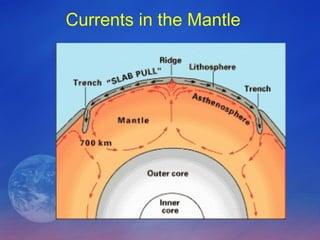
Currents in the Mantle
The Earth’s Core
The Earth’s Core
• Composed of the inner and outer core
• Both are made of iron and nickel
• How do scientists know that
  there is a solid inner core?
The Earth’s Outer Core
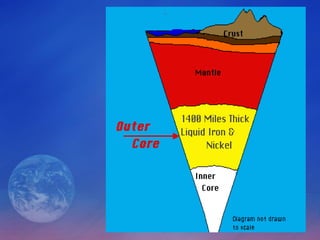
The Outer Core - Liquid
• Surrounds the inner core

• Temperature ranges from 2200 C – 5000 C
  near inner core

• Molten (liquid) iron and nickel
The Earth’s Inner Core
The Inner Core - Solid
• Temperature reaches 5000 C

• Solid iron and nickel
  • Usually both would be liquid but are solid in the
    core because of the incredible pressure

• The solid core is the source of Earth’s magnetic
  field
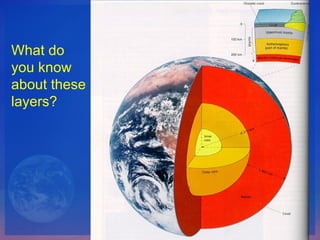
What do
you know
about these
layers?

Earthquake Measurement Questions Dteston

  • 1.
    • What doesthe inside of the Earth look like?
  • 2.
    How do wedetermine the composition of the Earth? • Scientists cannot see the interior so they must use other ways to figure it out! • Earthquakes have many different types of waves • These waves travel at different speeds through solids and liquids • Some waves don’t travel at all through liquids. • Measuring these waves tells us what is in the Earth’s core and where the materials change.
  • 4.
    Earth Layers • TheEarth is divided into four main layers. *Inner Core *Outer Core *Mantle *Crust
  • 5.
    The Earth’s Crust •The crust is the thinnest layer on Earth • There are two types of crust • Oceanic crust – made mostly of the igneous rock basalt. Found under the ocean. Relatively thin. • Continental crust – made mostly of granite. Found under the continents. Relatively thick.
  • 6.
    Special parts ofthe Crust • Lithosphere • Crust is the upper part of the lithosphere • Broken up into large plates • Asthenosphere • Upper part of mantle, below lithosphere • 130 – 160 km thick • Cooler part of the mantle that the lithospheric plates slide on top of.
  • 9.
    The Earth’s Mantle •Located directly above the outer core • Starts below the crust • Is the largest layer • 80% of the Earth’s volume & 68% of Earth’s mass
  • 10.
    The Earth’s Mantle •Composed of more iron than the crust. • Density, pressure, and temperature all increase the deeper you go in the mantle • Temperature ranges from 870 C – 2200 C
  • 12.
    Special layers ofthe mantle • Lithosphere – crust plus the upper, solid part of the mantle. Forms plates. • Asthenosphere – just under the lithosphere. Slow moving “Silly putty” layer on which the lithospheric plates slid. (Solid rock that flows very slowly.)
  • 14.
  • 15.
    The Earth’s Core TheEarth’s Core • Composed of the inner and outer core • Both are made of iron and nickel
  • 16.
    • How doscientists know that there is a solid inner core?
  • 18.
    The Earth’s OuterCore The Outer Core - Liquid • Surrounds the inner core • Temperature ranges from 2200 C – 5000 C near inner core • Molten (liquid) iron and nickel
  • 20.
    The Earth’s InnerCore The Inner Core - Solid • Temperature reaches 5000 C • Solid iron and nickel • Usually both would be liquid but are solid in the core because of the incredible pressure • The solid core is the source of Earth’s magnetic field
  • 21.