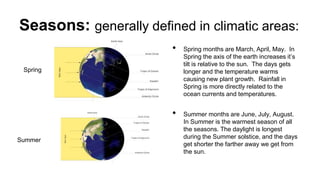
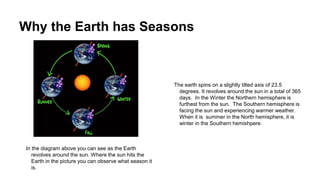
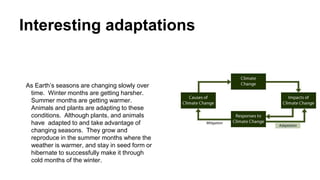
The Earth has seasons due to its tilted axis and yearly revolution around the sun. Spring occurs when the Northern hemisphere tilts toward the sun, bringing longer days and warmer temperatures. Summer is the warmest season with the longest days. Fall follows as temperatures cool and days shorten. Winter is the coldest season when the Northern hemisphere tilts furthest from the sun. Plants and animals have adapted to these seasonal changes through growth, reproduction, dormancy, and hibernation.