EAL

Some advice for classroom practice
Immersion and inclusion
• The learning of English for pupils learning EAL takes place
  as much in science, mathematics, ICT and the foundation
  subjects as it does in English or literacy lessons.
• It also takes place within the ‘hidden curriculum’, and
  beyond the school and is affected by attitudes to race
  and culture in the wider society.
• If EAL were a separate subject (like a modern foreign
  language) the point for learners would clearly become
  learning a language but for pupils learning EAL in
  mainstream classrooms in England this is not the case.
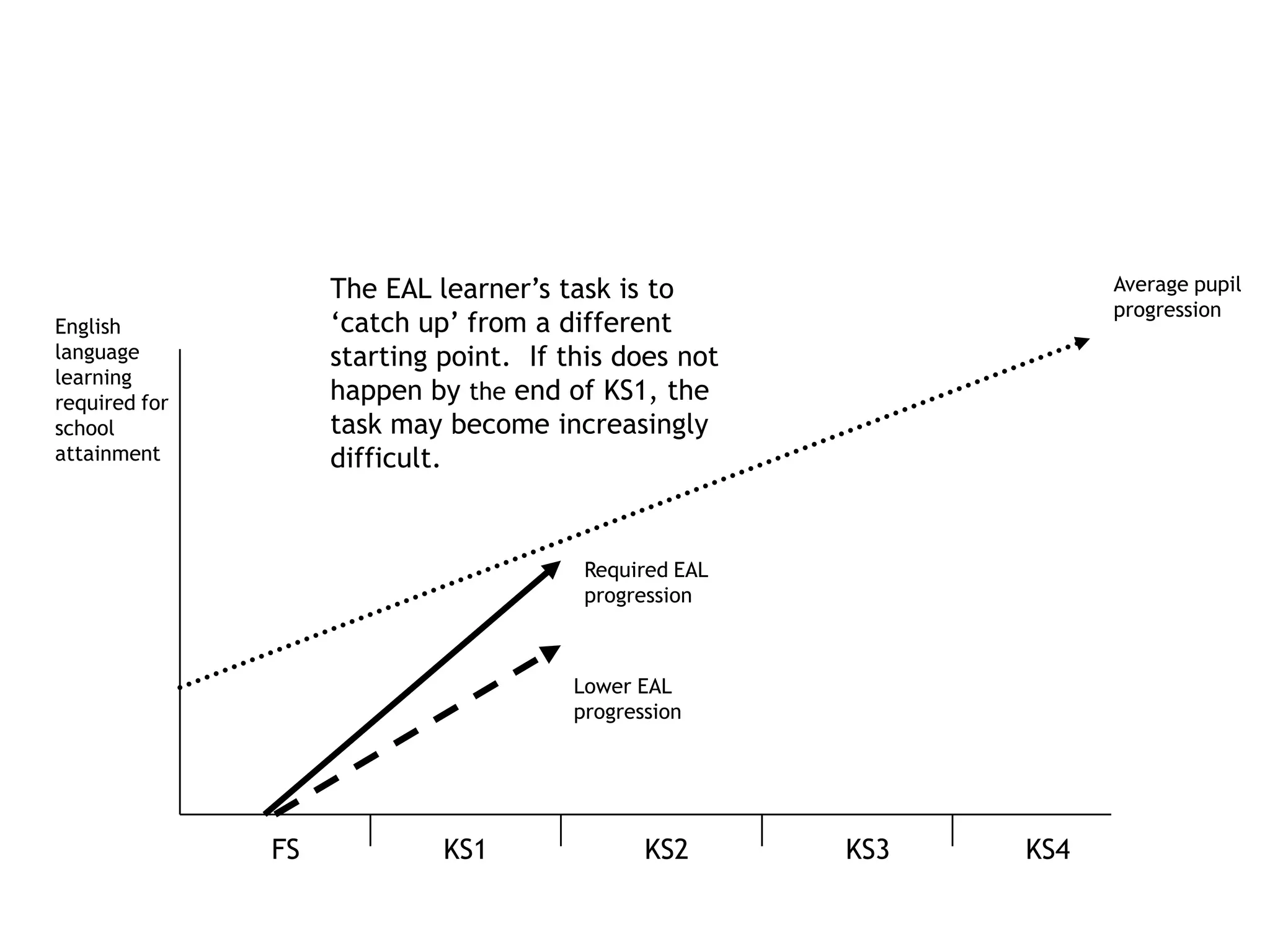
The EAL learner’s task is to                    Average pupil
                                                                    progression
English             ‘catch up’ from a different
language            starting point. If this does not
learning
required for        happen by the end of KS1, the
school              task may become increasingly
attainment          difficult.


                                         Required EAL
                                         progression


                                        Lower EAL
                                        progression


               FS            KS1               KS2      KS3   KS4
Remember…
• There is no cognitive reason for EAL pupils not
  to learn and to achieve. If pupils are unable to
  access your lesson due to language, you
  should aim to teach the words and structures
  they need to access your lesson.
• If EAL pupils feel “lost” in your lessons,
  confidence will be undermined and progress
  in English will be slower.
Give them a job
• Ask EAL pupils to hand out books, collect in
  home learning and clean the board.
• This improves self-esteem and confidence as
  they feel able to contribute to the group.
Use their language
• Beginner EAL learners can complete work in
  their own language.
• This pushes them cognitively and encourages
  them to learn in your subject.
Talking
• Planning plenty of whole class/small group
  speaking and listening exercises enables them
  to hear more of the language in context.
• They may choose not to join in but hearing
  language in a specific context will help them
  learn the language they need and they may be
  more inclined to contribute in a smaller group.
• If they can’t say it, they can’t write it.
Pictures
• If your lesson is on the interactive white board
  try to include a picture on the slide which will
  offer clues to the topic of the slide or may
  define some of the key words- this benefits all
  learners.
Give them a buddy
• If there is someone else in the group who
  speaks their language, buddy them up so that
  the other pupil can provide some help in their
  home language when needed.

Eal presentation

  • 1.
    EAL Some advice forclassroom practice
  • 2.
    Immersion and inclusion •The learning of English for pupils learning EAL takes place as much in science, mathematics, ICT and the foundation subjects as it does in English or literacy lessons. • It also takes place within the ‘hidden curriculum’, and beyond the school and is affected by attitudes to race and culture in the wider society. • If EAL were a separate subject (like a modern foreign language) the point for learners would clearly become learning a language but for pupils learning EAL in mainstream classrooms in England this is not the case.
  • 3.
    The EAL learner’stask is to Average pupil progression English ‘catch up’ from a different language starting point. If this does not learning required for happen by the end of KS1, the school task may become increasingly attainment difficult. Required EAL progression Lower EAL progression FS KS1 KS2 KS3 KS4
  • 4.
    Remember… • There isno cognitive reason for EAL pupils not to learn and to achieve. If pupils are unable to access your lesson due to language, you should aim to teach the words and structures they need to access your lesson. • If EAL pupils feel “lost” in your lessons, confidence will be undermined and progress in English will be slower.
  • 5.
    Give them ajob • Ask EAL pupils to hand out books, collect in home learning and clean the board. • This improves self-esteem and confidence as they feel able to contribute to the group.
  • 6.
    Use their language •Beginner EAL learners can complete work in their own language. • This pushes them cognitively and encourages them to learn in your subject.
  • 7.
    Talking • Planning plentyof whole class/small group speaking and listening exercises enables them to hear more of the language in context. • They may choose not to join in but hearing language in a specific context will help them learn the language they need and they may be more inclined to contribute in a smaller group. • If they can’t say it, they can’t write it.
  • 8.
    Pictures • If yourlesson is on the interactive white board try to include a picture on the slide which will offer clues to the topic of the slide or may define some of the key words- this benefits all learners.
  • 9.
    Give them abuddy • If there is someone else in the group who speaks their language, buddy them up so that the other pupil can provide some help in their home language when needed.