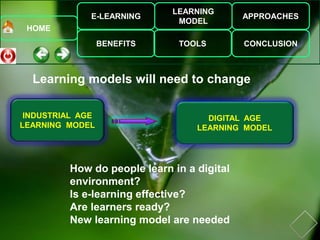
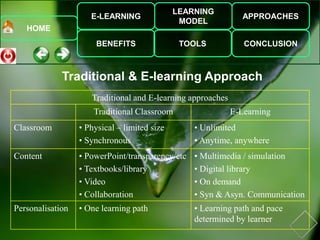
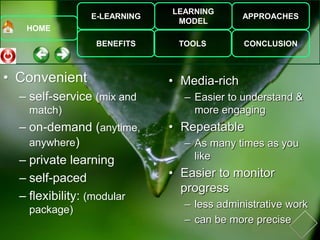
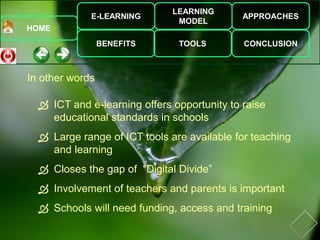
E-learning is defined as using technology to enable learning anywhere and anytime. New learning models are needed for the digital age that focus on personalized learning paths and self-paced learning. E-learning has benefits over traditional classrooms like being more convenient and media-rich, with the ability to learn anywhere and repeat lessons as needed. For e-learning to be effective, it must consider the learner, learning materials, learning environment, and technology used. Common e-learning tools include email, chats, online forums, websites, and video conferencing, which allow for collaboration and synchronous/asynchronous communication. Successful e-learning implementation in schools requires funding, access, training, and involvement of teachers and parents.