Downloaded 80 times

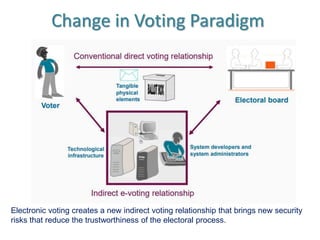
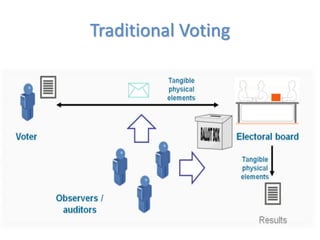
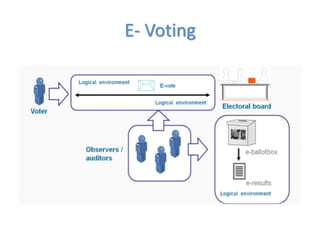
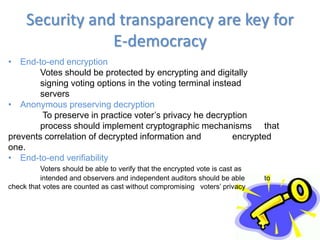
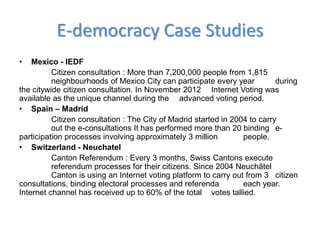



This document discusses e-democracy and the use of information and communication technologies to allow public participation in decision making. Some key advantages of e-democracy include convenience, immediacy of information dissemination and consultations, and lower costs compared to traditional democratic processes. However, risks include the digital divide excluding some citizens, lack of transparency compared to tangible information, and security vulnerabilities of remote systems. Ensuring security, transparency, and verifiability through techniques like encryption and independent auditing is important for trustworthy e-democracy. The document also provides examples of e-democracy systems used in Mexico, Spain, and Switzerland.


![[2010] e-Participation - better parliament-to-citizen communication - by Simo...](https://cdn.slidesharecdn.com/ss_thumbnails/simondelakorda-110823053426-phpapp01-thumbnail.jpg?width=640&height=640&fit=bounds)


