U.Utchimahali
ComputerScience
Definition
Cyberspace refers to the virtual computer world, and
more specifically, is an electronic medium used to form
a global computer network to facilitate online
communication.
It is a large computer network made up of many
worldwide computer networks that employ TCP/IP
protocol to aid in communication and data exchange
activities.
Cyberspace's core feature is an interactive and virtual
environment for a broad range of participants.
Threats in Cyberspace
Hacktivism
Cybercrime
Cyberespionage
Cyberterrorism
Hacktivism
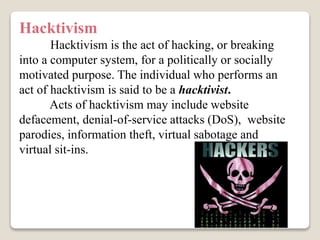
Hacktivism is the act of hacking, or breaking
into a computer system, for a politically or socially
motivated purpose. The individual who performs an
act of hacktivism is said to be a hacktivist.
Acts of hacktivism may include website
defacement, denial-of-service attacks (DoS), website
parodies, information theft, virtual sabotage and
virtual sit-ins.
Cybercrime
Cybercrime is defined as a crime in which a computer is the
object of the crime (hacking, phishing, spamming) or is used as a
tool to commit an offense (child pornography, hate crimes).
Cybercriminals may use computer technology to access
personal information, business trade secrets, or use the Internet
for exploitive or malicious purposes.
 Criminals can also use computers for communication and
document or data storage.
Criminals who perform these illegal activities are often
referred to as hackers.
Cyber espionage
Unauthorized spying by computer. The
term generally refers to the deployment
of viruses that clandestinely observe or
destroy data in the computer systems of
government agencies and large
enterprises.
Cyber terrorism
Cyber terrorism is the use of Internet based
attacks in terrorist activities, including acts of
deliberate, large-scale disruption of computer
networks, especially of personal computers
attached to the Internet, by the means of tools
such as computer viruses.
Advantages of Cyberspace
Informational resources
Entertainment
Social networking
Informational resources
The Internet is a virtual library of information.
We can get any kind of information on any topic that
we desire, it will be available on the Internet.
Entertainment
Entertainment is another popular reason why
many people prefer to surf the Internet. We can
download games and music instead of going out of our
comfort zone to get the latest and the game or CD.
There are numerous games that can be downloaded for
free.
Social networking
Social networking also plays a major role
in cyberspace. One cannot imagine an
online life without Facebook or Twitter.
Social networking has become so popular
amongst youth that it might one day
replace physical networking. It has
evolved as a great medium to connect
with millions of people with similar
interests.
Disadvantages of Cyberspace
Personal Information: If we use the Internet, our
personal information such as name, address, etc. can be
accessed by other people. If we use a credit card to shop
online, then our credit card information can also be
‘stolen’ which could be akin to giving someone a blank
check.
Pornography
This is a very serious issue concerning the
Internet, especially when it comes to young
children. There are thousands of pornographic
sites on the Internet that can be easily found and
can be a detriment to letting children use the
Internet.
Spamming
This refers to sending
unsolicited e-mails in bulk, which
serve no purpose and unnecessarily
clog up the entire system.
Use Strong Passwords:
Use different user ID / password
combinations for different accounts and avoid writing
them down. Make the passwords more complicated by
combining letters, numbers, special characters (minimum
10 characters in total) and change them on a regular
basis.
Secure your computer
Firewalls are the first line of cyber defense;
they block connections to unknown or bogus
sites and will keep out some types of viruses and
hackers.
Prevent viruses from infecting our computer
by installing and regularly updating anti-virus
software.
Prevent spyware from infiltrating our
computer by installing and updating anti-
spyware software
Make sure your social networking profiles (e.g. Face
book, Twitter, YouTube, MSN, etc.) are set to private.
Check your security settings. Be careful what
information you post online. Once it is on the
Internet, it is there forever!
Be aware that your mobile device is vulnerable to
viruses and hackers. Download applications from
trusted sources.
Cyberspace

Cyberspace

  • 1.
  • 2.
    Definition Cyberspace refers tothe virtual computer world, and more specifically, is an electronic medium used to form a global computer network to facilitate online communication. It is a large computer network made up of many worldwide computer networks that employ TCP/IP protocol to aid in communication and data exchange activities. Cyberspace's core feature is an interactive and virtual environment for a broad range of participants.
  • 3.
  • 4.
    Hacktivism Hacktivism is theact of hacking, or breaking into a computer system, for a politically or socially motivated purpose. The individual who performs an act of hacktivism is said to be a hacktivist. Acts of hacktivism may include website defacement, denial-of-service attacks (DoS), website parodies, information theft, virtual sabotage and virtual sit-ins.
  • 5.
    Cybercrime Cybercrime is definedas a crime in which a computer is the object of the crime (hacking, phishing, spamming) or is used as a tool to commit an offense (child pornography, hate crimes). Cybercriminals may use computer technology to access personal information, business trade secrets, or use the Internet for exploitive or malicious purposes.  Criminals can also use computers for communication and document or data storage. Criminals who perform these illegal activities are often referred to as hackers.
  • 6.
    Cyber espionage Unauthorized spyingby computer. The term generally refers to the deployment of viruses that clandestinely observe or destroy data in the computer systems of government agencies and large enterprises.
  • 7.
    Cyber terrorism Cyber terrorismis the use of Internet based attacks in terrorist activities, including acts of deliberate, large-scale disruption of computer networks, especially of personal computers attached to the Internet, by the means of tools such as computer viruses.
  • 8.
    Advantages of Cyberspace Informationalresources Entertainment Social networking
  • 9.
    Informational resources The Internetis a virtual library of information. We can get any kind of information on any topic that we desire, it will be available on the Internet. Entertainment Entertainment is another popular reason why many people prefer to surf the Internet. We can download games and music instead of going out of our comfort zone to get the latest and the game or CD. There are numerous games that can be downloaded for free.
  • 10.
    Social networking Social networkingalso plays a major role in cyberspace. One cannot imagine an online life without Facebook or Twitter. Social networking has become so popular amongst youth that it might one day replace physical networking. It has evolved as a great medium to connect with millions of people with similar interests.
  • 11.
    Disadvantages of Cyberspace PersonalInformation: If we use the Internet, our personal information such as name, address, etc. can be accessed by other people. If we use a credit card to shop online, then our credit card information can also be ‘stolen’ which could be akin to giving someone a blank check.
  • 12.
    Pornography This is avery serious issue concerning the Internet, especially when it comes to young children. There are thousands of pornographic sites on the Internet that can be easily found and can be a detriment to letting children use the Internet.
  • 13.
    Spamming This refers tosending unsolicited e-mails in bulk, which serve no purpose and unnecessarily clog up the entire system.
  • 14.
    Use Strong Passwords: Usedifferent user ID / password combinations for different accounts and avoid writing them down. Make the passwords more complicated by combining letters, numbers, special characters (minimum 10 characters in total) and change them on a regular basis.
  • 15.
    Secure your computer Firewallsare the first line of cyber defense; they block connections to unknown or bogus sites and will keep out some types of viruses and hackers. Prevent viruses from infecting our computer by installing and regularly updating anti-virus software. Prevent spyware from infiltrating our computer by installing and updating anti- spyware software
  • 16.
    Make sure yoursocial networking profiles (e.g. Face book, Twitter, YouTube, MSN, etc.) are set to private. Check your security settings. Be careful what information you post online. Once it is on the Internet, it is there forever! Be aware that your mobile device is vulnerable to viruses and hackers. Download applications from trusted sources.