L
DYNAMIC VOLTAGE
RESTORER
Lutf Ali (k112193)
Aamir Ali (k112396)
Ubed khan (k112386)
Yasir Ameer (k112406)
GROUP MEMBER
INTRODUCTION
• use of sensitive electronic equipment has
increased
• Power quality problems
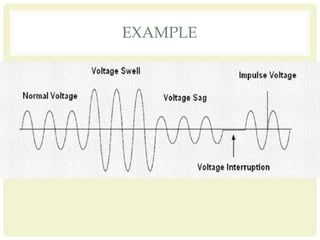
• voltage sag
• voltage swell
• voltage collapse
• can cause malfunctioning of sensitive
equipments , protection and relay system,
• can cause Short circuits, lightning strokes
EXAMPLE
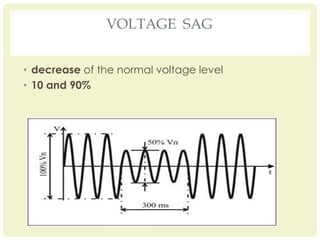
VOLTAGE SAG
• decrease of the normal voltage level
• 10 and 90%
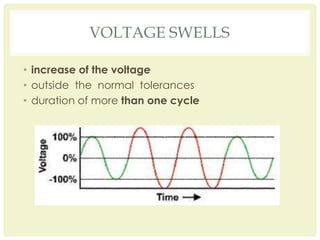
VOLTAGE SWELLS
• increase of the voltage
• outside the normal tolerances
• duration of more than one cycle
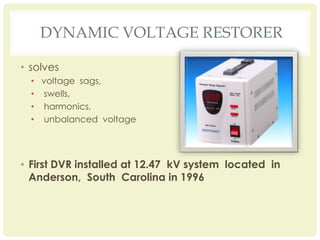
DYNAMIC VOLTAGE RESTORER
• solves
• voltage sags,
• swells,
• harmonics,
• unbalanced voltage
• First DVR installed at 12.47 kV system located in
Anderson, South Carolina in 1996
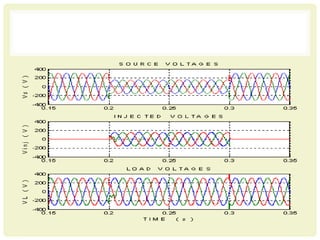
• Practically, the capability of injection voltage by
DVR system
• 50% of nominal voltage
• 0.1 seconds.
APPLICATIONS
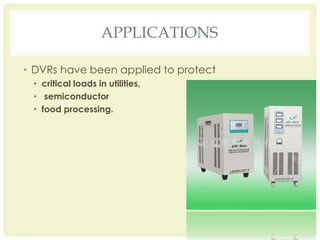
• DVRs have been applied to protect
• critical loads in utilities,
• semiconductor
• food processing.
CAUTION
• in systems that are subject to prolonged reactive
power deficiencies
• and in systems that are vulnerable to voltage
collapse.
• his reduces the innate ability to prevent a collapse and
increases the chance of cascading interruptions.
• dynamic voltage restorer would extend the voltage
range if the load is a constant power type
CONCLUSION
• Therefore, when applying DVRs, it is vital to consider
• nature of the load
• voltage supply
• the transmission system

Dynamic voltage restorer

  • 1.
    L DYNAMIC VOLTAGE RESTORER Lutf Ali(k112193) Aamir Ali (k112396) Ubed khan (k112386) Yasir Ameer (k112406) GROUP MEMBER
  • 2.
    INTRODUCTION • use ofsensitive electronic equipment has increased • Power quality problems • voltage sag • voltage swell • voltage collapse • can cause malfunctioning of sensitive equipments , protection and relay system, • can cause Short circuits, lightning strokes
  • 3.
  • 4.
    VOLTAGE SAG • decreaseof the normal voltage level • 10 and 90%
  • 5.
    VOLTAGE SWELLS • increaseof the voltage • outside the normal tolerances • duration of more than one cycle
  • 6.
    DYNAMIC VOLTAGE RESTORER •solves • voltage sags, • swells, • harmonics, • unbalanced voltage • First DVR installed at 12.47 kV system located in Anderson, South Carolina in 1996
  • 8.
    • Practically, thecapability of injection voltage by DVR system • 50% of nominal voltage • 0.1 seconds.
  • 9.
    APPLICATIONS • DVRs havebeen applied to protect • critical loads in utilities, • semiconductor • food processing.
  • 10.
    CAUTION • in systemsthat are subject to prolonged reactive power deficiencies • and in systems that are vulnerable to voltage collapse. • his reduces the innate ability to prevent a collapse and increases the chance of cascading interruptions. • dynamic voltage restorer would extend the voltage range if the load is a constant power type
  • 11.
    CONCLUSION • Therefore, whenapplying DVRs, it is vital to consider • nature of the load • voltage supply • the transmission system

Editor's Notes

  • #9 Practically, the capability of injection voltage by DVR system is 50% of nominal voltage. This allows DVRs to successfully provide protection against sags to 50% for durations of up to 0.1 seconds. Furthermore, most voltage sags rarely reach less than 50%.
  • #11 DVRs may provide good solutions for end-users subject to unwanted power quality disturbances. However, there is a caution regarding their application in systems that are subject to prolonged reactive power deficiencies (resulting in low voltage conditions) and in systems that are vulnerable to voltage collapse. In many cases, the main protection of the power system against voltage collapse is the natural response of load to decrease demand when system voltage drops. The application of DVRs would tend to maintain demand even when incipient voltage conditions are present. As a result, this reduces the innate ability to prevent a collapse and increases the chance of cascading interruptions. In addition, from the transmission viewpoint, the dynamic voltage restorer would extend the voltage range if the load is a constant power type. The combination of direct-connected DVRs, voltage-switched capacitor banks and on-load tap-changing distribution transformers, leads to more current drawn from the transmission system during periods of reactive deficiency and low voltages.
  • #12 Therefore, when applying DVRs, it is vital to consider the nature of the load whose voltage supply is being secured, as well as the transmission system which must tolerate the change in voltage-response of the load. It may be necessary to provide local fast reactive supply sources in order to protect the system, with the DVR added, from voltage collapse and cascading interruptions. A comprehensive simulation study, which includes the transmission system, is highly recommended.