What we need to know……
What we need to change……..
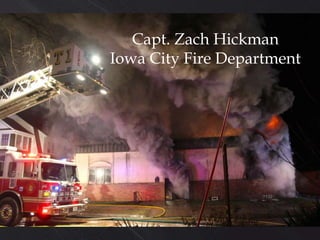
Capt. Zach Hickman
Iowa City Fire Department
What we need to know……
What we need to change……..
 A detailed look at death and injury rates
 Case Studies
 Changes in gear
 NIOSH findings
 Putting it all together with a brief “Strategy
and Tactics” Review
 Three groups
 Inside
 Outside
 Cardiac Related
 Inside deaths
 Rapid Fire Growth
 Collapse
 Ran out of AIR
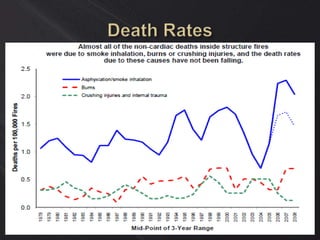
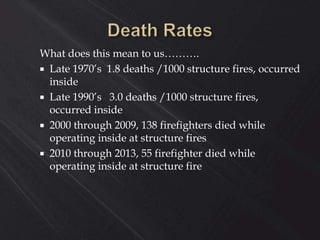
What does this mean to us……….
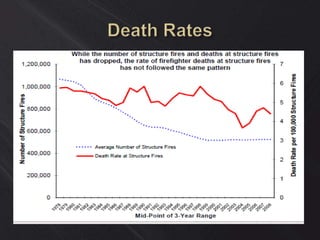
 Late 1970’s 1.8 deaths /1000 structure fires, occurred
inside
 Late 1990’s 3.0 deaths /1000 structure fires,
occurred inside
 2000 through 2009, 138 firefighters died while
operating inside at structure fires
 2010 through 2013, 55 firefighter died while
operating inside at structure fire
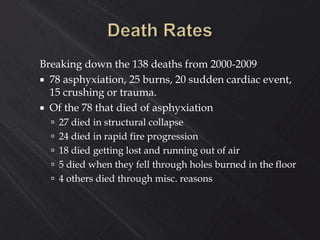
Breaking down the 138 deaths from 2000-2009
 78 asphyxiation, 25 burns, 20 sudden cardiac event,
15 crushing or trauma.
 Of the 78 that died of asphyxiation
 27 died in structural collapse
 24 died in rapid fire progression
 18 died getting lost and running out of air
 5 died when they fell through holes burned in the floor
 4 others died through misc. reasons
 Colerain Township, Ohio
 160 career firefighters
 5 Stations
 EMS Transport service
 8,700 calls for service in 2007
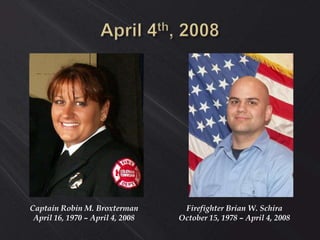
Captain Robin M. Broxterman
April 16, 1970 – April 4, 2008
Firefighter Brian W. Schira
October 15, 1978 – April 4, 2008
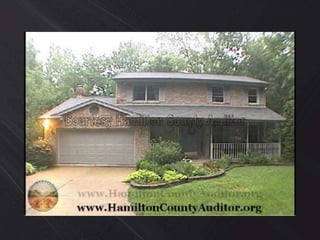
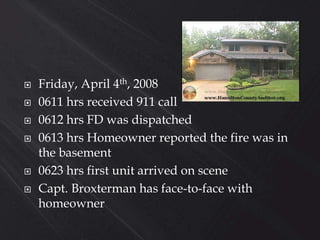
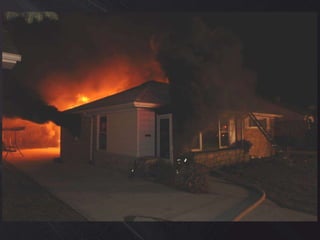
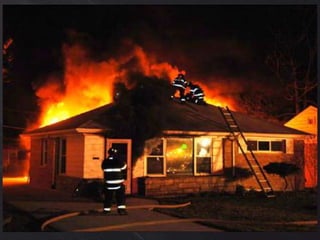
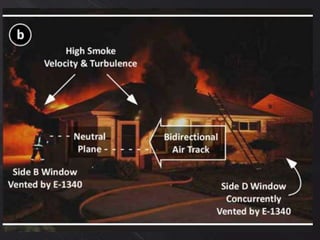
 Friday, April 4th, 2008
 0611 hrs received 911 call
 0612 hrs FD was dispatched
 0613 hrs Homeowner reported the fire was in
the basement
 0623 hrs first unit arrived on scene
 Capt. Broxterman has face-to-face with
homeowner
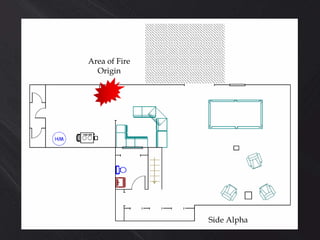
Area of Fire
Origin
Side Alpha
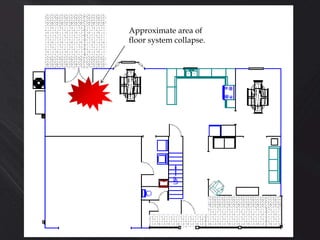
Approximate area of
floor system collapse.
Side Alpha
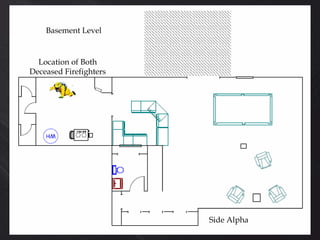
Location of Both
Deceased Firefighters
Basement Level
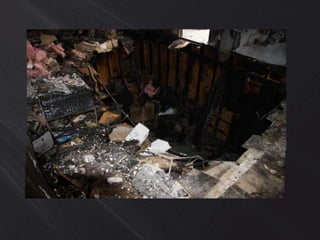
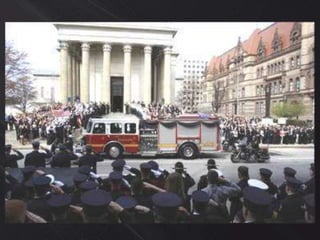
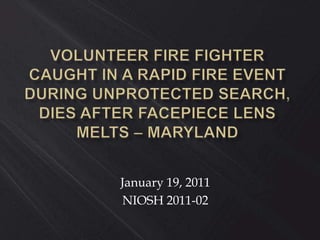
January 19, 2011
NIOSH 2011-02
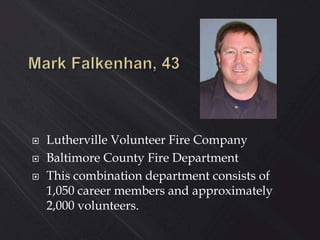
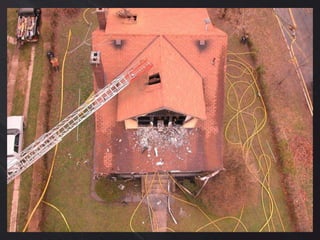
 Lutherville Volunteer Fire Company
 Baltimore County Fire Department
 This combination department consists of
1,050 career members and approximately
2,000 volunteers.
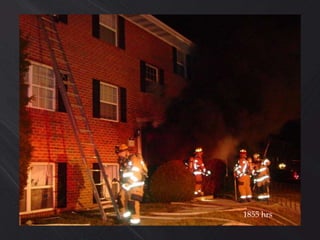
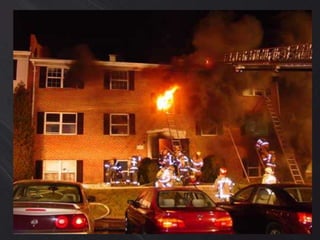
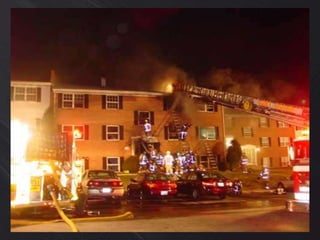
1855 hrs
 Incident Management System
 Personnel Accountability System
 Rapid Intervention Crews
 Conducting a search without a means of egress protected by a hoseline
 Tactical consideration for coordinating advancing hoselines from
opposite directions
 Building safety features, e.g., no sprinkler systems, modifications
limiting automatic door closing
 Occupant behavior-leaving sliding glass door open
 Ineffective ventilation.
 Cincinnati, OH
 Around 800 members
 26 Stations / 26 Engine Companies
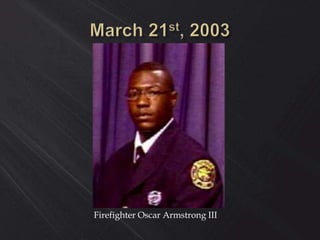
Firefighter Oscar Armstrong III
 Homewood, IL
 17 full time, 15 part-time firefighters
 Serves 20,000 residences
 2500 calls for service in 2011
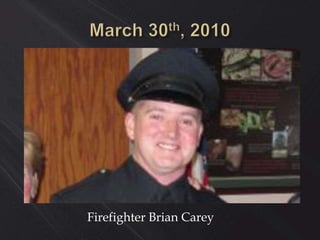
Firefighter Brian Carey
 12 Stations
 237 Uniform Members
 83,000 Residents
 15,000 Call a year
 11 Engines
 4 Trucks
 1 Rescue
 1 Tender
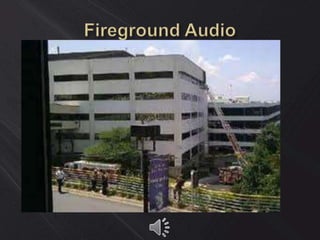
NIOSH #2011-18
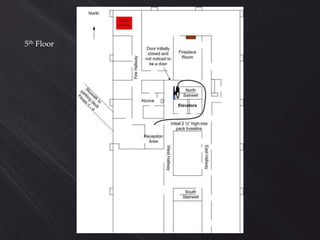
 Hard time getting water on the fire
> 48 minutes
 Lots of radio transmissions.
 Multiple Stairwells and FDC
 Mayday called 52 minutes into call.
 Fireground personnel instructed to change
radio channel
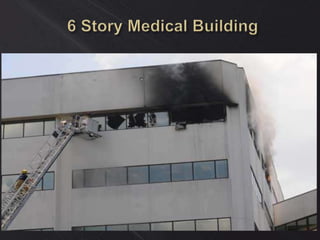
5th Floor
• Ensure that the existing standard operating procedures for high-rise fire-
fighting operations are reviewed, implemented, and enforced.
• Ensure that a deployment strategy for low-frequency/high-risk incidents is
developed and implemented.
• Ensure that the incident commander develops an incident action plan,
which is communicated to all fire fighters on scene, and includes effective
strategy and tactics for high-rise operations, a timely coordinated fire attack,
and a coordinated search plan.
• Ensure that the incident commander utilizes division/group supervisors.
• Ensure that fire fighters are properly trained in air management and
SCBA emergency operations.
• Ensure that the incident commander is provided a chief's aide.
• Ensure that the incident commander establishes a stationary
command post.
•Ensure that fire fighters are properly trained in Mayday standard
operating procedures and survival techniques.
- NIOSH Top 5 LODD Causes
1. Improper Risk Assessment / Poor size-up
2. Lack of Command
3. Lack of accountability
4. Inadequate communications
5. Lack of SOP / failure to follow SOPs
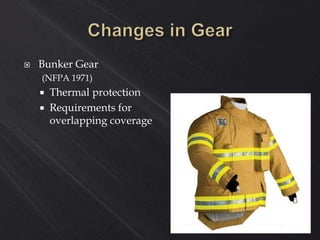
 Bunker Gear
(NFPA 1971)
 Thermal protection
 Requirements for
overlapping coverage
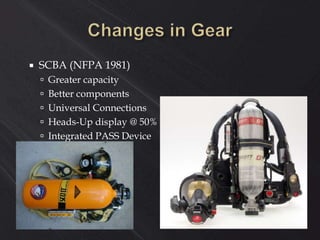
 SCBA (NFPA 1981)
 Greater capacity
 Better components
 Universal Connections
 Heads-Up display @ 50%
 Integrated PASS Device
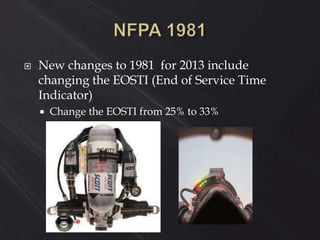
 New changes to 1981 for 2013 include
changing the EOSTI (End of Service Time
Indicator)
 Change the EOSTI from 25% to 33%
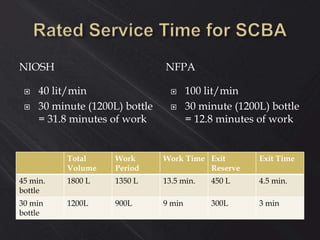
NIOSH NFPA
 40 lit/min
 30 minute (1200L) bottle
= 31.8 minutes of work
 100 lit/min
 30 minute (1200L) bottle
= 12.8 minutes of work
Total
Volume
Work
Period
Work Time Exit
Reserve
Exit Time
45 min.
bottle
1800 L 1350 L 13.5 min. 450 L 4.5 min.
30 min
bottle
1200L 900L 9 min 300L 3 min
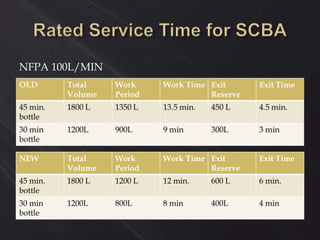
NFPA 100L/MIN
NEW Total
Volume
Work
Period
Work Time Exit
Reserve
Exit Time
45 min.
bottle
1800 L 1200 L 12 min. 600 L 6 min.
30 min
bottle
1200L 800L 8 min 400L 4 min
Changes in Gear
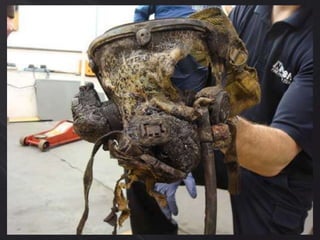
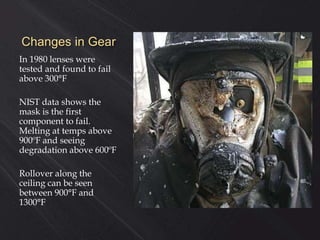
In 1980 lenses were
tested and found to fail
above 300°F
NIST data shows the
mask is the first
component to fail.
Melting at temps above
900ºF and seeing
degradation above 600ºF
Rollover along the
ceiling can be seen
between 900°F and
1300°F
Changes in Gear
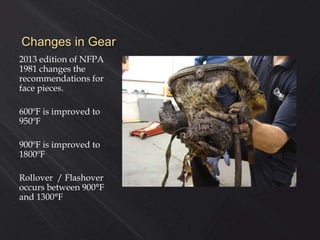
2013 edition of NFPA
1981 changes the
recommendations for
face pieces.
600ºF is improved to
950ºF
900ºF is improved to
1800ºF
Rollover / Flashover
occurs between 900°F
and 1300°F
 Impact of Horizontal Ventilation on Fire
Behavior
 Modern furniture
 New fire growth curve
 Tenability
 Forcing the door
 Proper vent locations
 Coordination of fire attack
 Pushing Fire
 What does this mean………..
 Strategy is the overall goal
 Tactics are the objectives to reach that goal
 Don’t forget about the Tasks
 Functions preformed to reach the objectives
 Lacking sufficient manpower, rescue takes
precedence.
 Remove those in greatest danger first!
 With insufficient manpower to perform needed
tasks, perform those that protect the most first.
 When sufficient manpower is available
coordinate both rescue and fire attack.
 If there are no threats to occupants or no
occupants, Firefighters should not be unduly
endangered
What’s our goal?
What are the current fire conditions?
What is the expected outcome?
How are we going to get our information?
 How are we going to get it done?
 Which line do we pull?
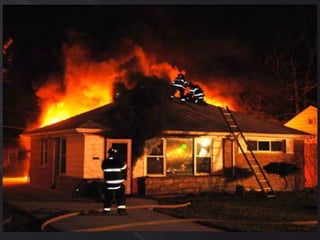
 Are we going to knock it down form the outside
with a Transitional Attack?
 When should ventilation be started, and by who?
 Who is responsible for the Search vs. Fire Attack
 Know the limits of your gear
 Manage your reserve air
 Keep crew integrity
 Don’t delay a Call for Assistance
 Choose the right equipment
 Coordinate Ventilation efforts
 Complete the 360º
 Make sure your efforts are consistent with the
game plan.
ZACH-HICKMAN@IOWA-CITY.ORG
www.slideshare.net
Title - Dying Inside
Author - ZHICKMAN
User - zhickman
 NIOSH Report #F2010-10
 http://www.youtube.com/watch?v=2nt0DT0
nXq8
 http://www.youtube.com/watch?v=JKYW6u
K4vDI
 http://www.firerescue1.com/fire-
products/training-products/articles/1283235-
High-tech-video-explains-firefighter-death/
 http://www.usfa.fema.gov/fireservice/fatalities/statistics/history.shtm
 http://www.nfpa.org/assets/files/PDF/fffstructure.pdf
 http://www.iaff.org/hs/LODD_Manual/LODD%20Reports/Colerain%
20Township,%20OH%20-
%20Preliminary%20Broxterman%20and%20Schira.pdf
 http://www.cdc.gov/niosh/fire/pdfs/face200312.pdf
 http://www.cdc.gov/niosh/fire/pdfs/face201010.pdf
 http://statter911.com/2010/03/31/illinois-firefighter-dead-another-
critical-elderly-resident-dead-in-house-fire-in-homewood/
 http://www.ul.com/global/eng/pages/offerings/industries/buildingm
aterials/fire/fireservice/ventilation/

Dying Inside

  • 1.
    What we needto know…… What we need to change……..
  • 2.
    Capt. Zach Hickman IowaCity Fire Department
  • 3.
    What we needto know…… What we need to change……..
  • 4.
     A detailedlook at death and injury rates  Case Studies  Changes in gear  NIOSH findings  Putting it all together with a brief “Strategy and Tactics” Review
  • 5.
     Three groups Inside  Outside  Cardiac Related  Inside deaths  Rapid Fire Growth  Collapse  Ran out of AIR
  • 9.
    What does thismean to us……….  Late 1970’s 1.8 deaths /1000 structure fires, occurred inside  Late 1990’s 3.0 deaths /1000 structure fires, occurred inside  2000 through 2009, 138 firefighters died while operating inside at structure fires  2010 through 2013, 55 firefighter died while operating inside at structure fire
  • 10.
    Breaking down the138 deaths from 2000-2009  78 asphyxiation, 25 burns, 20 sudden cardiac event, 15 crushing or trauma.  Of the 78 that died of asphyxiation  27 died in structural collapse  24 died in rapid fire progression  18 died getting lost and running out of air  5 died when they fell through holes burned in the floor  4 others died through misc. reasons
  • 12.
     Colerain Township,Ohio  160 career firefighters  5 Stations  EMS Transport service  8,700 calls for service in 2007
  • 13.
    Captain Robin M.Broxterman April 16, 1970 – April 4, 2008 Firefighter Brian W. Schira October 15, 1978 – April 4, 2008
  • 15.
     Friday, April4th, 2008  0611 hrs received 911 call  0612 hrs FD was dispatched  0613 hrs Homeowner reported the fire was in the basement  0623 hrs first unit arrived on scene  Capt. Broxterman has face-to-face with homeowner
  • 16.
  • 17.
    Approximate area of floorsystem collapse.
  • 18.
    Side Alpha Location ofBoth Deceased Firefighters Basement Level
  • 22.
  • 23.
     Lutherville VolunteerFire Company  Baltimore County Fire Department  This combination department consists of 1,050 career members and approximately 2,000 volunteers.
  • 24.
  • 29.
     Incident ManagementSystem  Personnel Accountability System  Rapid Intervention Crews  Conducting a search without a means of egress protected by a hoseline  Tactical consideration for coordinating advancing hoselines from opposite directions  Building safety features, e.g., no sprinkler systems, modifications limiting automatic door closing  Occupant behavior-leaving sliding glass door open  Ineffective ventilation.
  • 31.
     Cincinnati, OH Around 800 members  26 Stations / 26 Engine Companies
  • 32.
  • 39.
     Homewood, IL 17 full time, 15 part-time firefighters  Serves 20,000 residences  2500 calls for service in 2011
  • 40.
  • 52.
     12 Stations 237 Uniform Members  83,000 Residents  15,000 Call a year  11 Engines  4 Trucks  1 Rescue  1 Tender NIOSH #2011-18
  • 55.
     Hard timegetting water on the fire > 48 minutes  Lots of radio transmissions.  Multiple Stairwells and FDC  Mayday called 52 minutes into call.  Fireground personnel instructed to change radio channel
  • 56.
  • 58.
    • Ensure thatthe existing standard operating procedures for high-rise fire- fighting operations are reviewed, implemented, and enforced. • Ensure that a deployment strategy for low-frequency/high-risk incidents is developed and implemented. • Ensure that the incident commander develops an incident action plan, which is communicated to all fire fighters on scene, and includes effective strategy and tactics for high-rise operations, a timely coordinated fire attack, and a coordinated search plan. • Ensure that the incident commander utilizes division/group supervisors.
  • 59.
    • Ensure thatfire fighters are properly trained in air management and SCBA emergency operations. • Ensure that the incident commander is provided a chief's aide. • Ensure that the incident commander establishes a stationary command post. •Ensure that fire fighters are properly trained in Mayday standard operating procedures and survival techniques.
  • 60.
    - NIOSH Top5 LODD Causes 1. Improper Risk Assessment / Poor size-up 2. Lack of Command 3. Lack of accountability 4. Inadequate communications 5. Lack of SOP / failure to follow SOPs
  • 62.
     Bunker Gear (NFPA1971)  Thermal protection  Requirements for overlapping coverage
  • 63.
     SCBA (NFPA1981)  Greater capacity  Better components  Universal Connections  Heads-Up display @ 50%  Integrated PASS Device
  • 64.
     New changesto 1981 for 2013 include changing the EOSTI (End of Service Time Indicator)  Change the EOSTI from 25% to 33%
  • 65.
    NIOSH NFPA  40lit/min  30 minute (1200L) bottle = 31.8 minutes of work  100 lit/min  30 minute (1200L) bottle = 12.8 minutes of work Total Volume Work Period Work Time Exit Reserve Exit Time 45 min. bottle 1800 L 1350 L 13.5 min. 450 L 4.5 min. 30 min bottle 1200L 900L 9 min 300L 3 min
  • 66.
    NFPA 100L/MIN NEW Total Volume Work Period WorkTime Exit Reserve Exit Time 45 min. bottle 1800 L 1200 L 12 min. 600 L 6 min. 30 min bottle 1200L 800L 8 min 400L 4 min
  • 67.
    Changes in Gear In1980 lenses were tested and found to fail above 300°F NIST data shows the mask is the first component to fail. Melting at temps above 900ºF and seeing degradation above 600ºF Rollover along the ceiling can be seen between 900°F and 1300°F
  • 68.
    Changes in Gear 2013edition of NFPA 1981 changes the recommendations for face pieces. 600ºF is improved to 950ºF 900ºF is improved to 1800ºF Rollover / Flashover occurs between 900°F and 1300°F
  • 69.
     Impact ofHorizontal Ventilation on Fire Behavior  Modern furniture  New fire growth curve  Tenability  Forcing the door  Proper vent locations  Coordination of fire attack  Pushing Fire
  • 70.
     What doesthis mean………..  Strategy is the overall goal  Tactics are the objectives to reach that goal  Don’t forget about the Tasks  Functions preformed to reach the objectives
  • 71.
     Lacking sufficientmanpower, rescue takes precedence.  Remove those in greatest danger first!  With insufficient manpower to perform needed tasks, perform those that protect the most first.  When sufficient manpower is available coordinate both rescue and fire attack.  If there are no threats to occupants or no occupants, Firefighters should not be unduly endangered
  • 72.
    What’s our goal? Whatare the current fire conditions? What is the expected outcome? How are we going to get our information?
  • 74.
     How arewe going to get it done?  Which line do we pull?  Are we going to knock it down form the outside with a Transitional Attack?  When should ventilation be started, and by who?  Who is responsible for the Search vs. Fire Attack
  • 90.
     Know thelimits of your gear  Manage your reserve air  Keep crew integrity  Don’t delay a Call for Assistance  Choose the right equipment  Coordinate Ventilation efforts  Complete the 360º  Make sure your efforts are consistent with the game plan.
  • 91.
    ZACH-HICKMAN@IOWA-CITY.ORG www.slideshare.net Title - DyingInside Author - ZHICKMAN User - zhickman
  • 92.
     NIOSH Report#F2010-10  http://www.youtube.com/watch?v=2nt0DT0 nXq8  http://www.youtube.com/watch?v=JKYW6u K4vDI  http://www.firerescue1.com/fire- products/training-products/articles/1283235- High-tech-video-explains-firefighter-death/
  • 93.
     http://www.usfa.fema.gov/fireservice/fatalities/statistics/history.shtm  http://www.nfpa.org/assets/files/PDF/fffstructure.pdf http://www.iaff.org/hs/LODD_Manual/LODD%20Reports/Colerain% 20Township,%20OH%20- %20Preliminary%20Broxterman%20and%20Schira.pdf  http://www.cdc.gov/niosh/fire/pdfs/face200312.pdf  http://www.cdc.gov/niosh/fire/pdfs/face201010.pdf  http://statter911.com/2010/03/31/illinois-firefighter-dead-another- critical-elderly-resident-dead-in-house-fire-in-homewood/  http://www.ul.com/global/eng/pages/offerings/industries/buildingm aterials/fire/fireservice/ventilation/

Editor's Notes

  • #3 A little about myself
  • #6 To look closer at the fatalities, I’m going to divide them into 3 groups. These fatalities occur as a chain of events. Volunteer or Career, it doesn’t matter. Inside deaths can mostly be attributed to Rapid Fire Progression, Trapped, or Getting Lost.
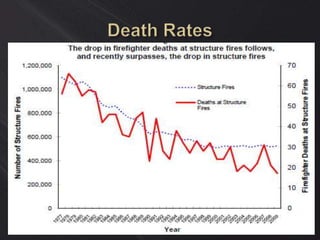
  • #7 Stats by the United States Fire Admin. Firefighter Injuries 82k in 2005 of which 42k where on the fire ground. Numbers dropped slightly to 69K and 32k in 2012 On duty firefighter deaths. 140 deaths in 1980….83 deaths in 2011 Since 2000 an average of 32 deaths/year occur on scene Same time period 39k injuries/year average Since 1977 structure fires have declined 53% -A spike is seen in 2007 with the passing of 9 Charleston Firefighters
  • #8 Closer look at the number of deaths. This shows that the number of deaths per structure fire is not falling at the same rate.
  • #9 Breaking down the inside deaths 63.5% of deaths from Smoke Inhalation 23% from Burns 15.5% from crushing injuries
  • #10 50/50 Career vs. Volunteer 50/50 Residential vs. Commercial 2003-2012 there was an average of 29 fire ground deaths / year.
  • #11 Looking closer at the 27 that died in structural collapse: - Structural collapse includes 18 roof, 6 floor, and 1 wall - Rapid fire progression includes flashover and backdraft All but 3 of the 78 were wearing SCBAs
  • #12 Case studies are important learning tools for both career and volunteer departments. Case studies give you a chance to learn from the mistakes and decisions of others. - Case studies form NIOSH and FIREFIGHTERCLOSECALLS.COM
  • #14 Capt. Broxterman 37 y/o 17 years as a career firefighter FF Schira (sounds like Scarea) 29 y/o, 6 month prob. ff
  • #15 Friday, April 4, 2008, Captain Robin Broxterman, 37-years-old, a 17-year veteran career firefighter and paramedic, and Firefighter Brian Schira (Scarea), 29-years-old, a six-month probationary, part-time firefighter and Emergency Medical Technician with Colerain Fire & EMS died after the floor they were operating on collapsed at a residential structure fire.   Automatic fire alarm activation from the first floor smoke detector and basement carbon monoxide detector   An automatic fire alarm response complement of two engine companies (Engines 102 & 109), one ladder company (Ladder 25), and the Battalion Chief (District 25) were dispatched to investigate at 06:12:45.   1 minute late the home owner called to report a fire in the basement
  • #16 Homeowner stated everyone was out of the house and the fire was in the basement. The Capt., FF #1, and FF #2 pulled a 1 ¾” line to the front door at 0626 0627 reported “Making entry to basement”
  • #17 Basement view Fire started in a closet by an electrical short in a fan located in the closet. Flooring system was 2x10 16” on center with ¾” OSB covering
  • #18 1st floor view 14 minutes after initial call, the Capt, and 2 FF entered the structure on the first floor and encountered heavy smoke coming from the basement.   8 minutes later the 2nd FF was found outside of the structure stating he lost contact with his crew.   2 minutes after that an official Mayday was declared.
  • #19 Basement view
  • #20 Walkout basement 30 minutes later the Capt. was found in the basement buried under structural components   After another 30 minutes the FF was found in the same location.   1991 Construction -1st floor constructed on 2x10wood floor joist 16in/oc Walkout basement   While the crew was making there entry, the Charlie division supervisor request interiar pull out and attack from the walkout basement.
  • #21 1st floor view with floor collapse HOLD for discussion and questions
  • #33 Left behind two children, a fiancé that was pregnant with his third child. Oscar was 25 and had been on the department for 3 years.
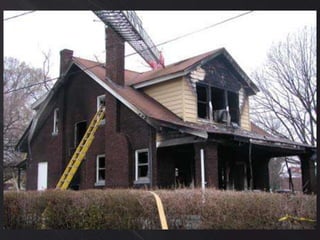
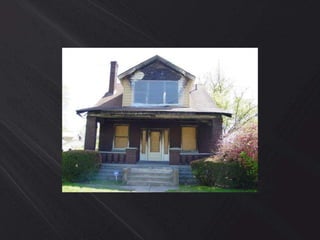
  • #34 0845 hrs paged for a working fire. 1st chief on scene reported heavy fire at rear of structure Built in 1921
  • #35 First arriving engine got their own hydrant Pulled a 350’ 1 ¾” hoseline to the front door. Front door was locked, so the repositioned to the rear, side C Once on side C, they were ordered to return to A side and attack from the unburned side.
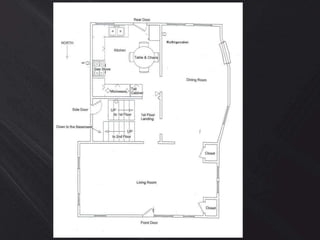
  • #36 1st floor Living room walls covered with wood paneling
  • #37 While waiting for water and after the front door was forced, another Ladder Company had vented the 1st floor windows. The engine crew could not get water to the nozzle The engine officer went to unkink the hose The victim, and two others entered the structure with an uncharged hoseline, and were caught in a flashover.
  • #39 After a 10 minute removal, FF Oscar Armstrong was pronounced dead at the hospital
  • #41 28 y/o
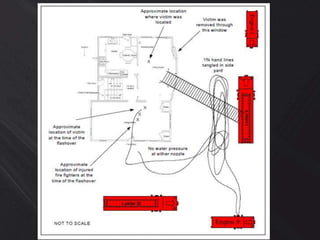
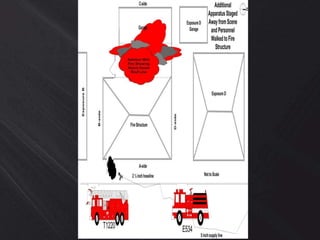
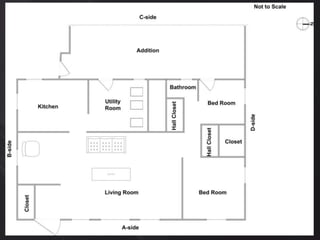
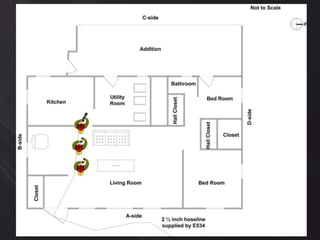
  • #43 2100 hrs. Diagram 1. Initial placement of apparatus and scene conditions. PD already on scene stated 950 sq. ft. structure The 2 ½” hoseline was pulled due to heavy fire showing on rear of the structure.
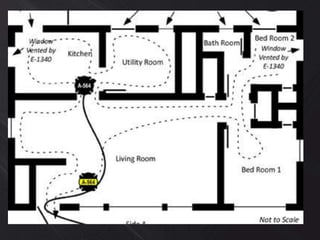
  • #44 Diagram 2. Layout of house.
  • #45 Diagram 3. FF1, victim, and injured fire fighter/paramedic made entry into house stopping at the doorway between the kitchen and utility room, approximately 12 feet from the front door.
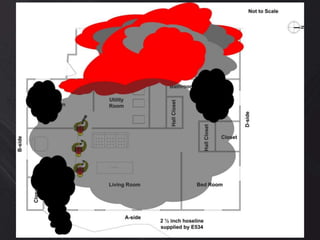
  • #46 Diagram 4. Fire fighters recall the smoke being very thick and black while operating within the house. In the diagram, the smoke around the fire fighters was made transparent to convey their location. FF2 and FF3 are not included within this diagram.
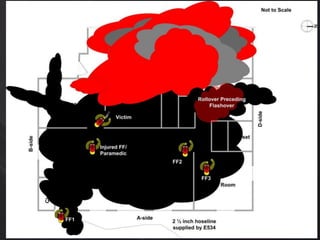
  • #47 Diagram 5. Conditions within structure preceding the flashover. Windows vented on B-, C-, and D-sides. Exterior crews were breaking out windows. Interior search crews saw flame spread on the ceiling and headed out. FF1 had exited the structure to adjust his mask. As the search crew pulled out of the structure, they yelled at the attack crew to get out. The injured FF yelled at FF Carey and then turned to head out The injured ff became stuck to the melting carpet 4’ from the front door. She was quickly pulled out of the structure by the others.
  • #48 Photo 7. Looking toward the A/B corner, thick, black smoke continues to push out the B-side window that was vented. The volume of smoke venting from the front door has increased, so has fire on C-side. FF1 can be seen in front doorway. Crews are still operating inside and on the roof.
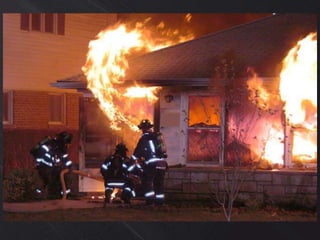
  • #51 Photo 10. Looking toward the A-side front door, the flashover has just occurred. FF1 is pulling on the 2½-inch hoseline and FF2 and FF3 are attempting to pull the injured fire fighter/paramedic from the house. She is just inside the door way and the downed fire fighter (victim) is still in the house.
  • #52 Contributing factors- Well involved fire with entrapped civilian upon arrival • Incomplete 360 degree situational size-up • Inadequate risk-versus-gain analysis • Ineffective fire control tactics • Failure to recognize, understand, and react to deteriorating conditions • Uncoordinated ventilation and its effect on fire behavior • Removal of self-contained breathing apparatus (SCBA) facepiece • Inadequate command, control, and accountability • Insufficient staffing
  • #58 Mayday call occurs at 50:00 minutes
  • #62 When used properly more protection (must be buttoned up correct) Longer coats thumb loops,
  • #63 When used properly more protection (must be buttoned up correct) Longer coats, thumb loops. Die in the fabric starts to lose color at 400 degrees Gear will start to burn around 1200 degrees. Burns occur often in the areas where straps are.
  • #64 50% lighter over the past 25 years What type of SCBAs does your department have?
  • #65 Every 5 years NFPA does updates and 1981 is due in 2013. In January 2013 NFPA release the new recommendation of 33%
  • #66 Based on respiratory minute volume. Air consumption studies have increased. USMC doing the FF Combat Challenge = 96 lit/min. The consumption goes up with prolonged work. NFPA 1500, Standard on Fire Department Occupational Safety and Health Program in 2012 moved reserve air volume to 600L
  • #67 Based on respiratory minute volume. Air consumption studies have increased. USMC doing the FF Combat Challenge = 96 lit/min. The consumption goes up with prolonged work. NFPA 1500, Standard on Fire Department Occupational Safety and Health Program in 2012 moved reserve air volume to 600L
  • #68 Heat flux can vary effects on lens Has you department conducted live training burns? What was the internal temps?
  • #69 Heat flux can vary effects on lens Has you department conducted live training burns? What was the internal temps?
  • #70 Modern flashover in 3:40, Legecy over 29 minutes. Larger homes with more open spaces allows for faster fire growth due to more available fuel and oxygen. Module 2 – Experiment Module 2 – New Curve Module 4 – Instrumentation – Video Examples Module 5 – Tactical Considerations
  • #71 Stragety = overall goal Tactics = objectives to reach goal i.e. interior fire attack
  • #72 John Norman
  • #73 Offensive, Defensive, or Transitional
  • #74 IL fire
  • #75 Tactic
  • #84 IL fire