Purpose 
Procedure 
Material 
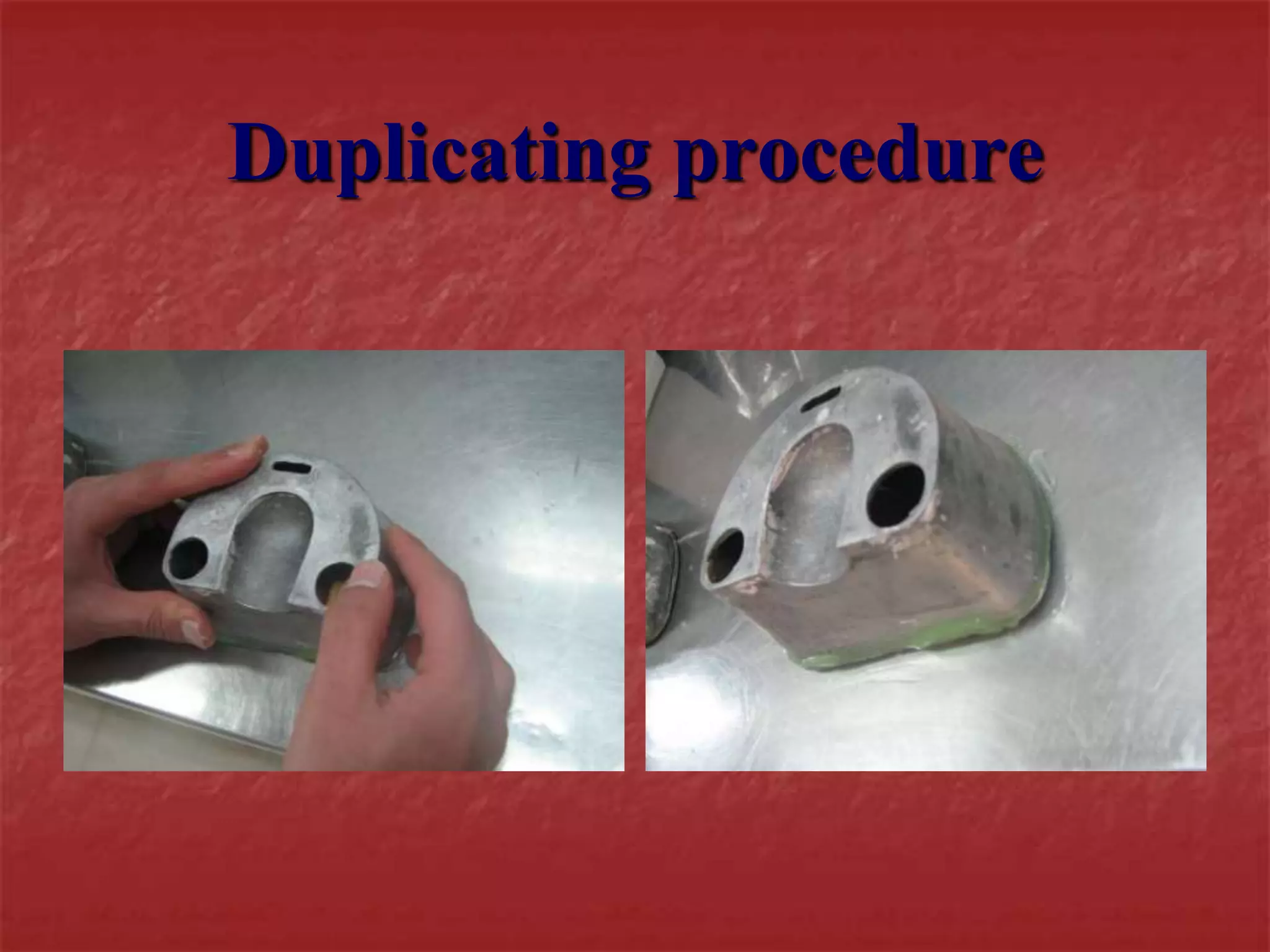
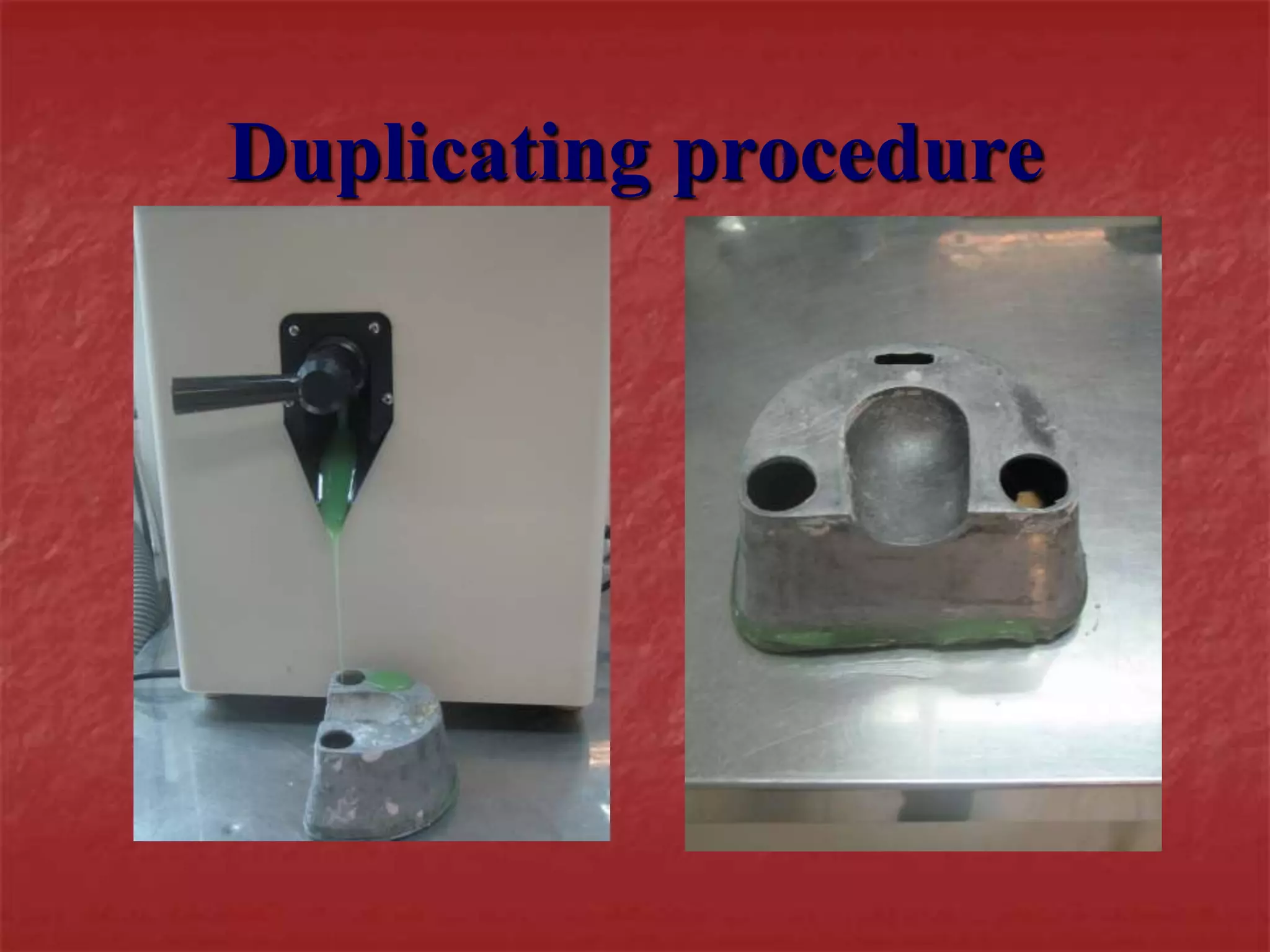
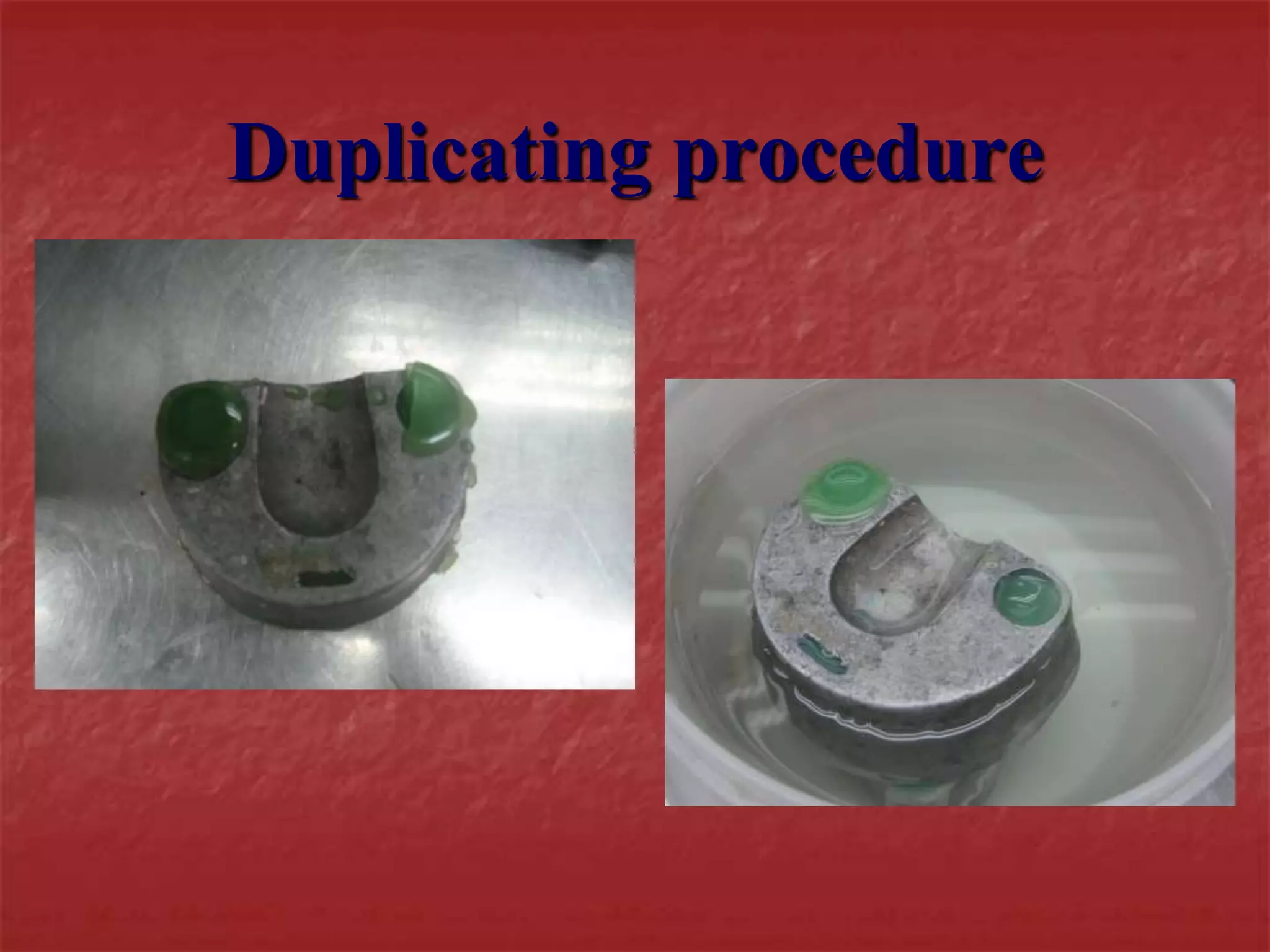
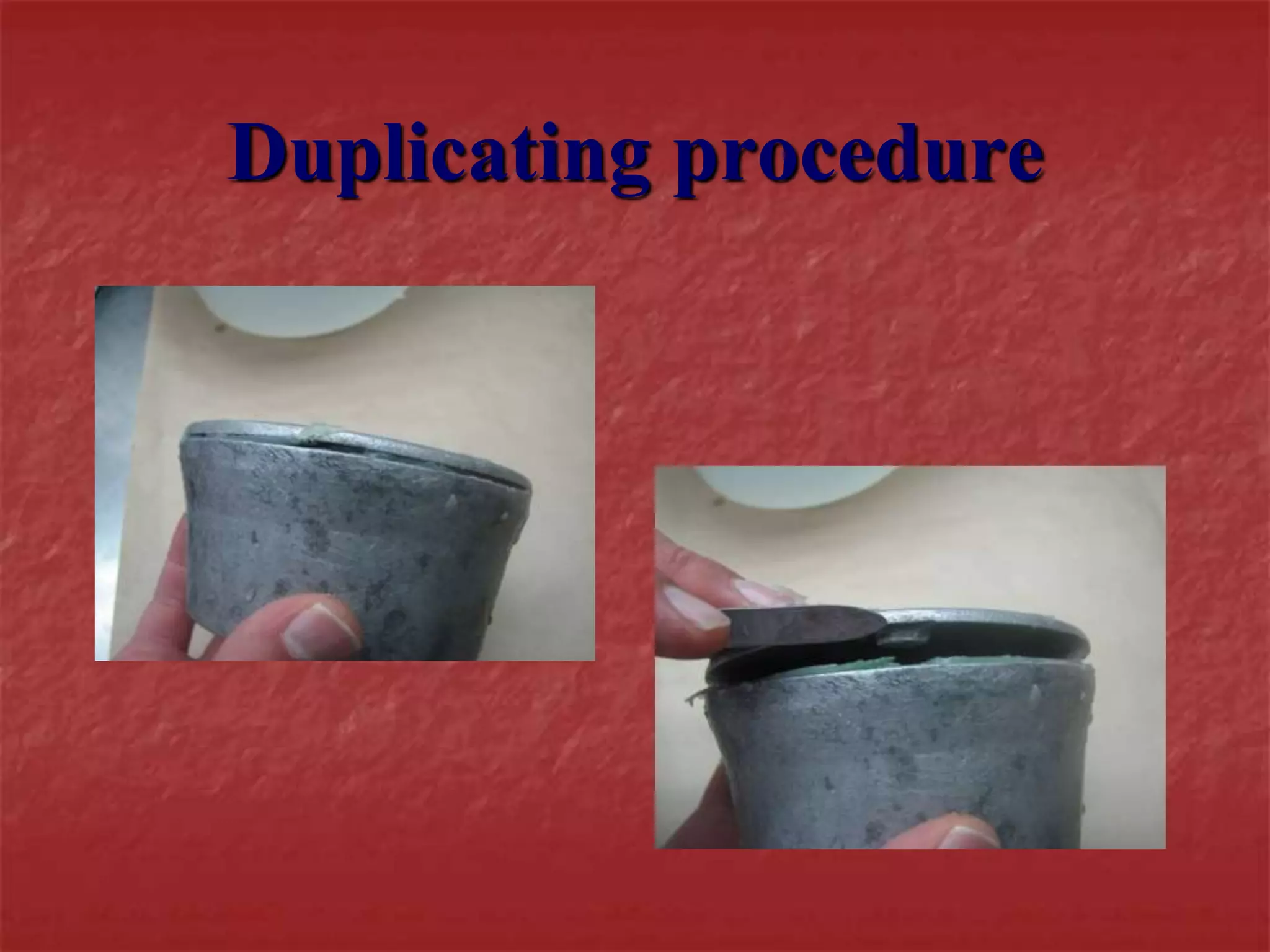
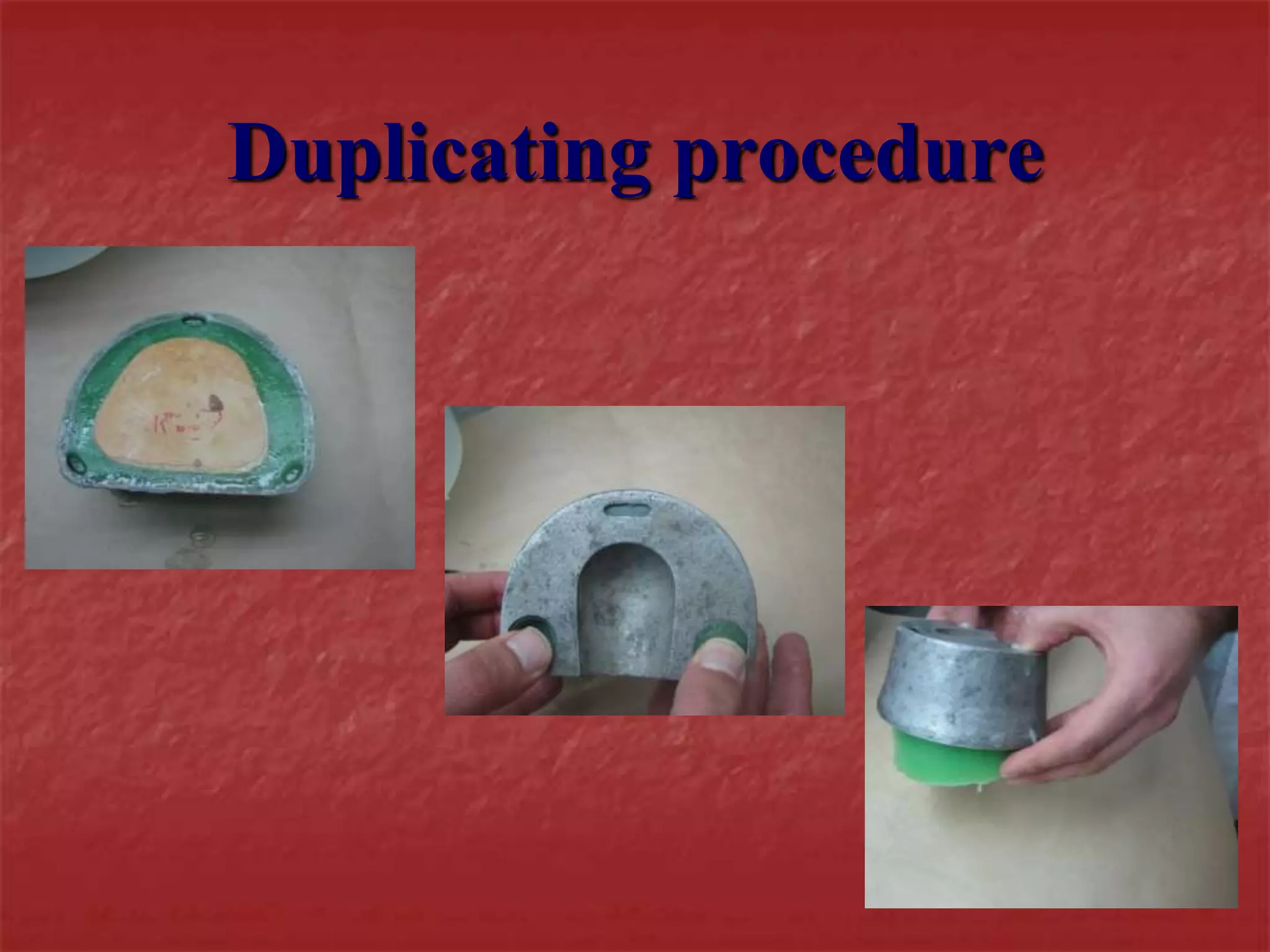
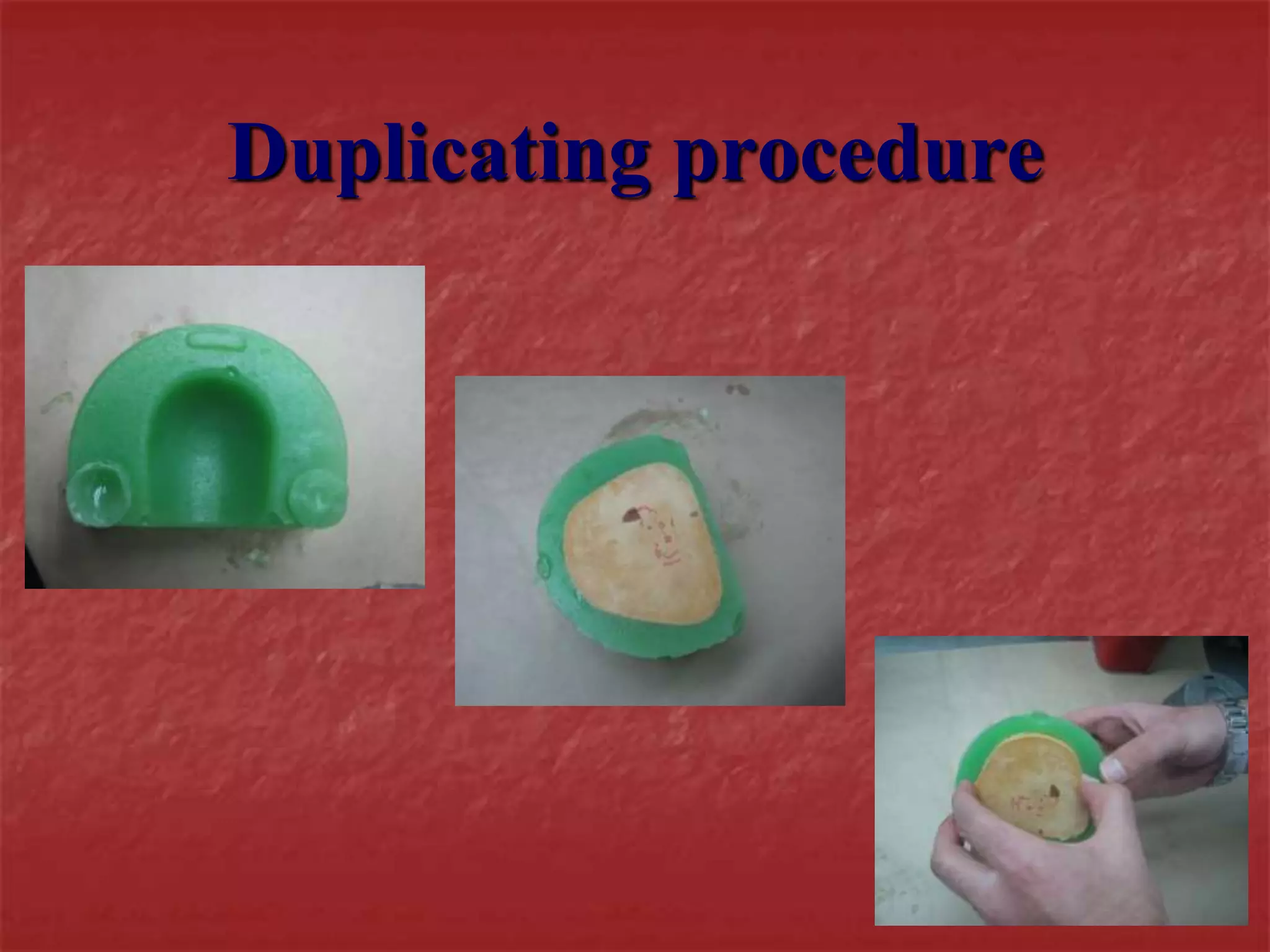
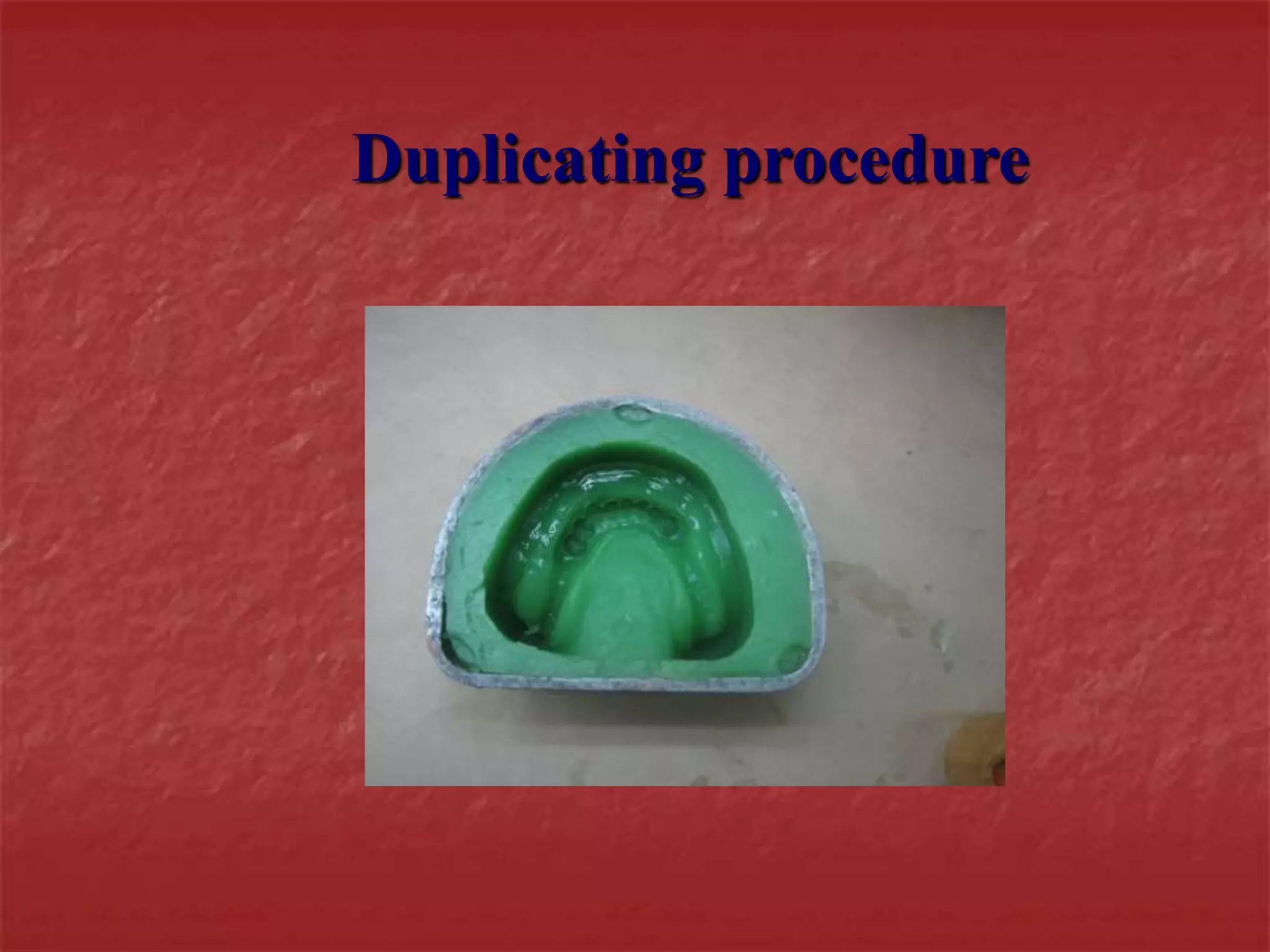
What is duplicating ?
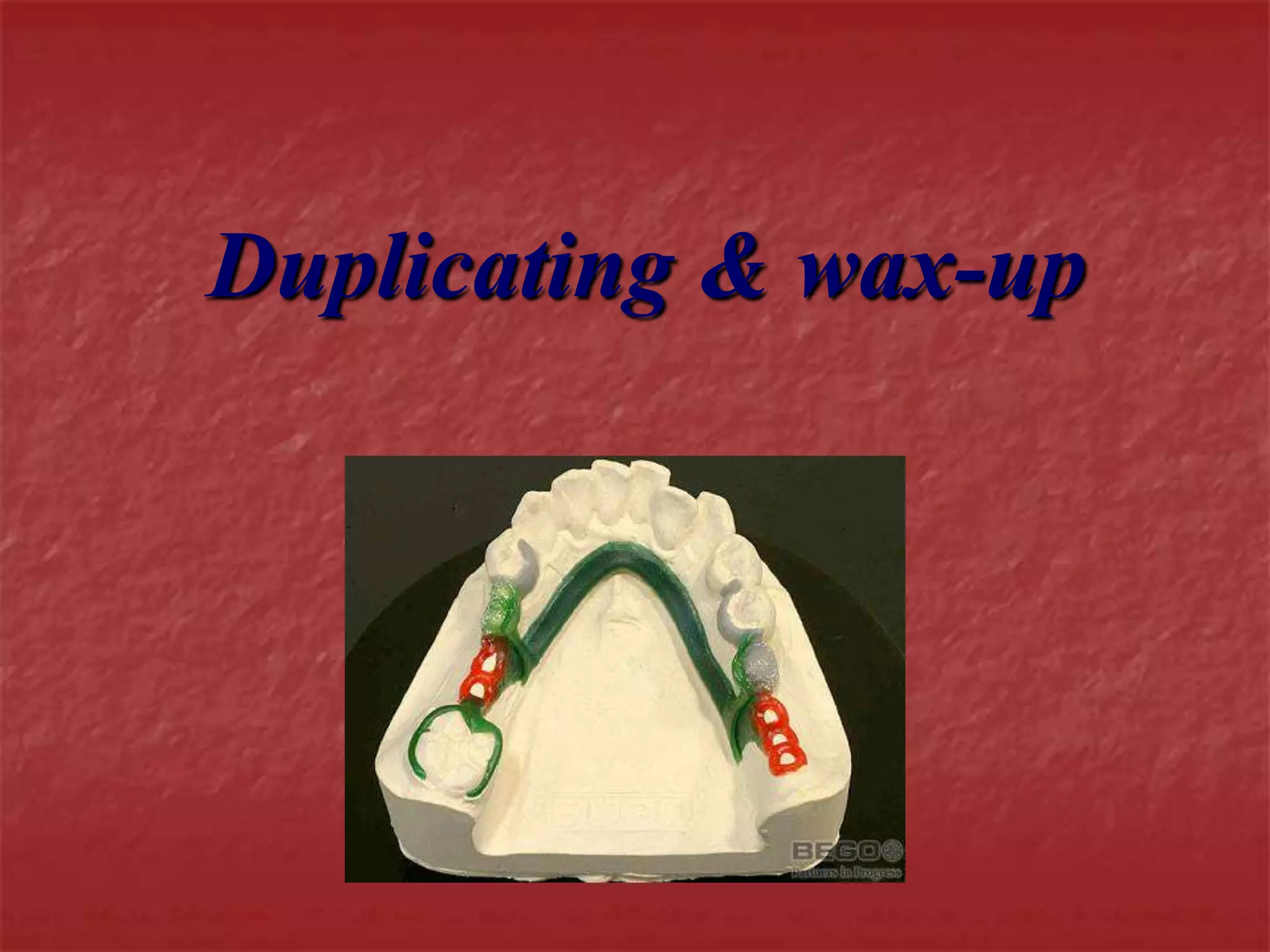
Duplicating & wax-up
Advantages 
 Preserve the original cast 
 Eliminating the danger of fracture or 
abrading the surface of the original master 
cast 
 Forming the wax or plastic pattern 
 The metal framework is cast against the 
surface of refractory cast
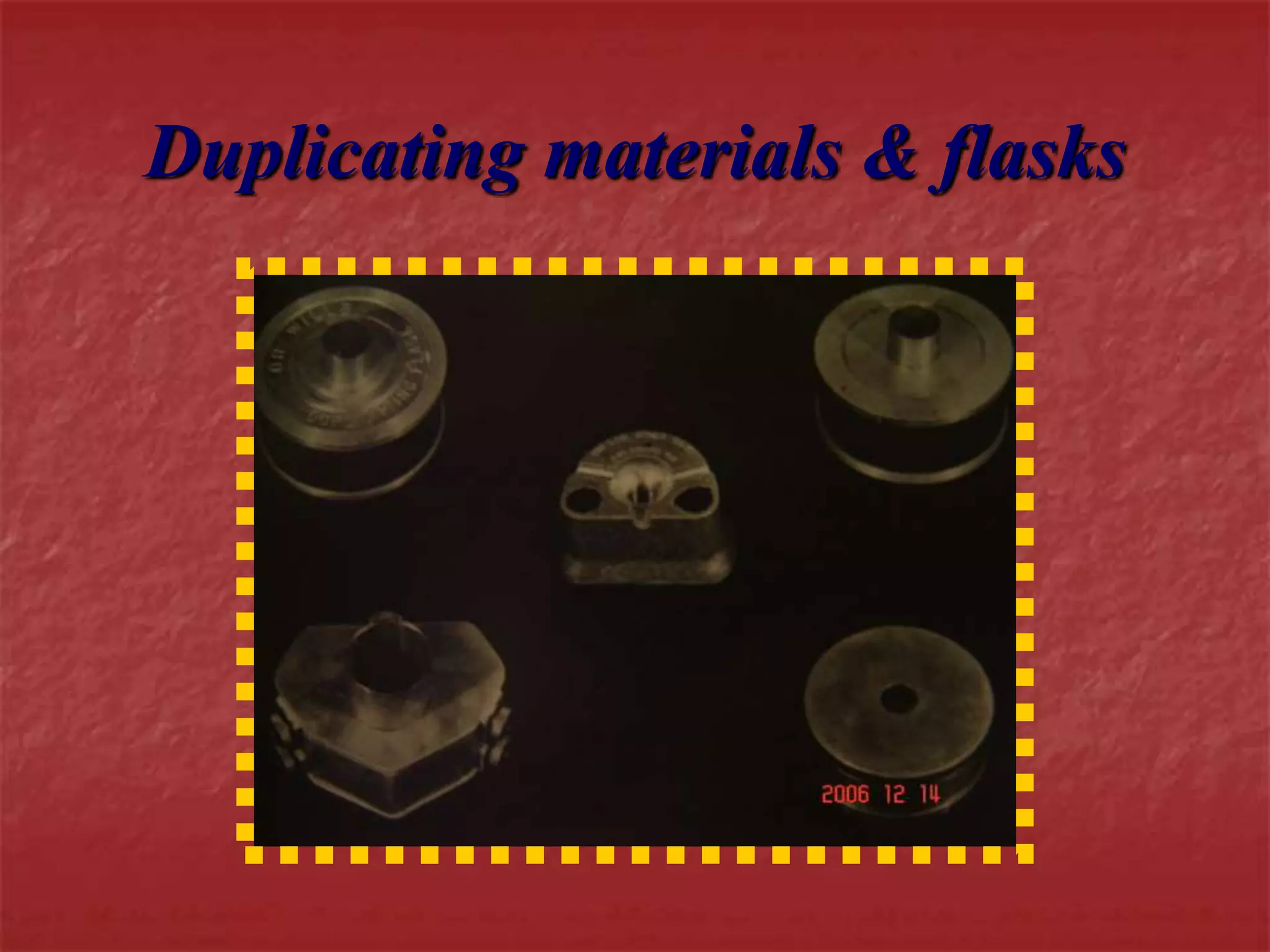
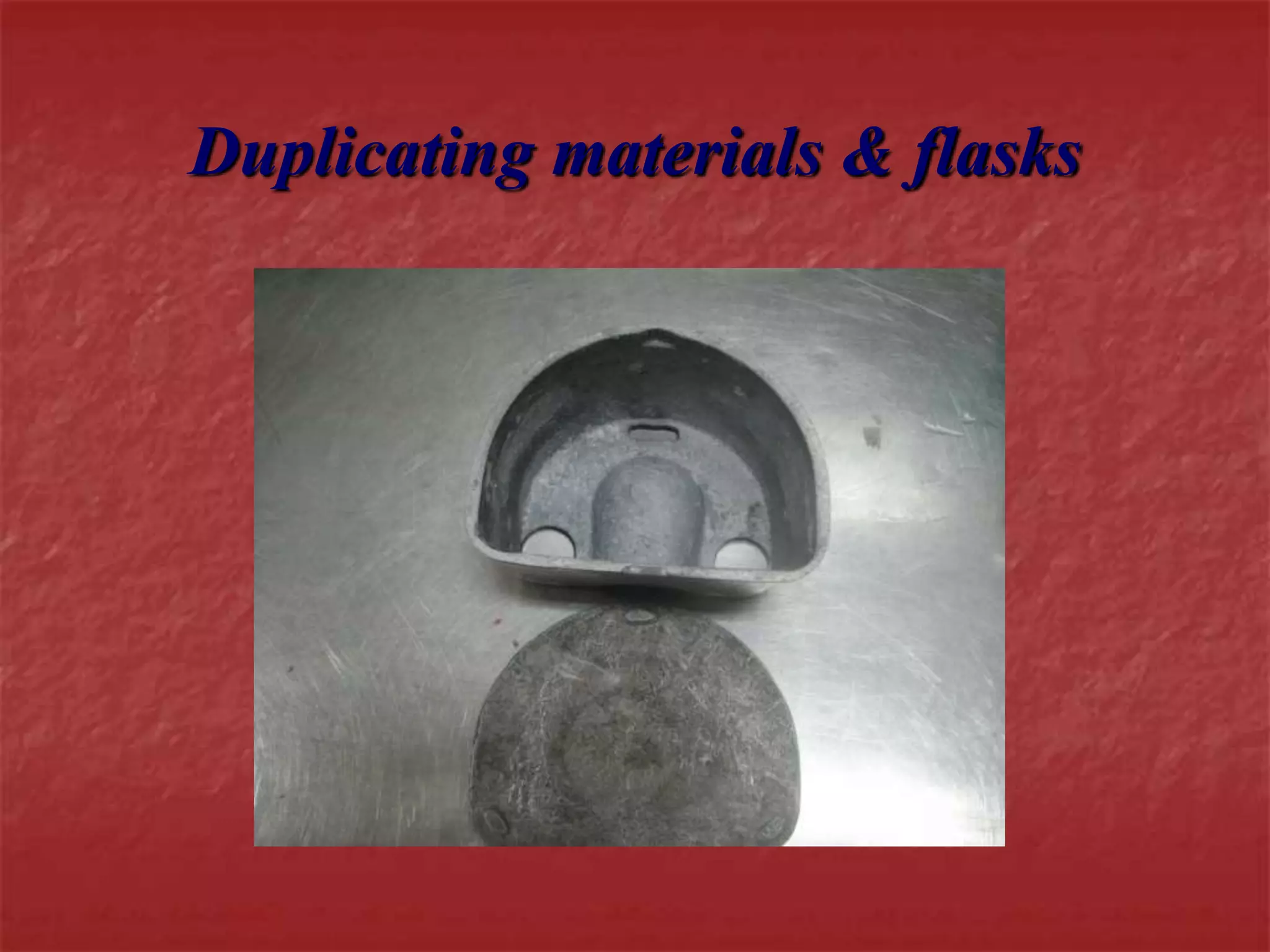
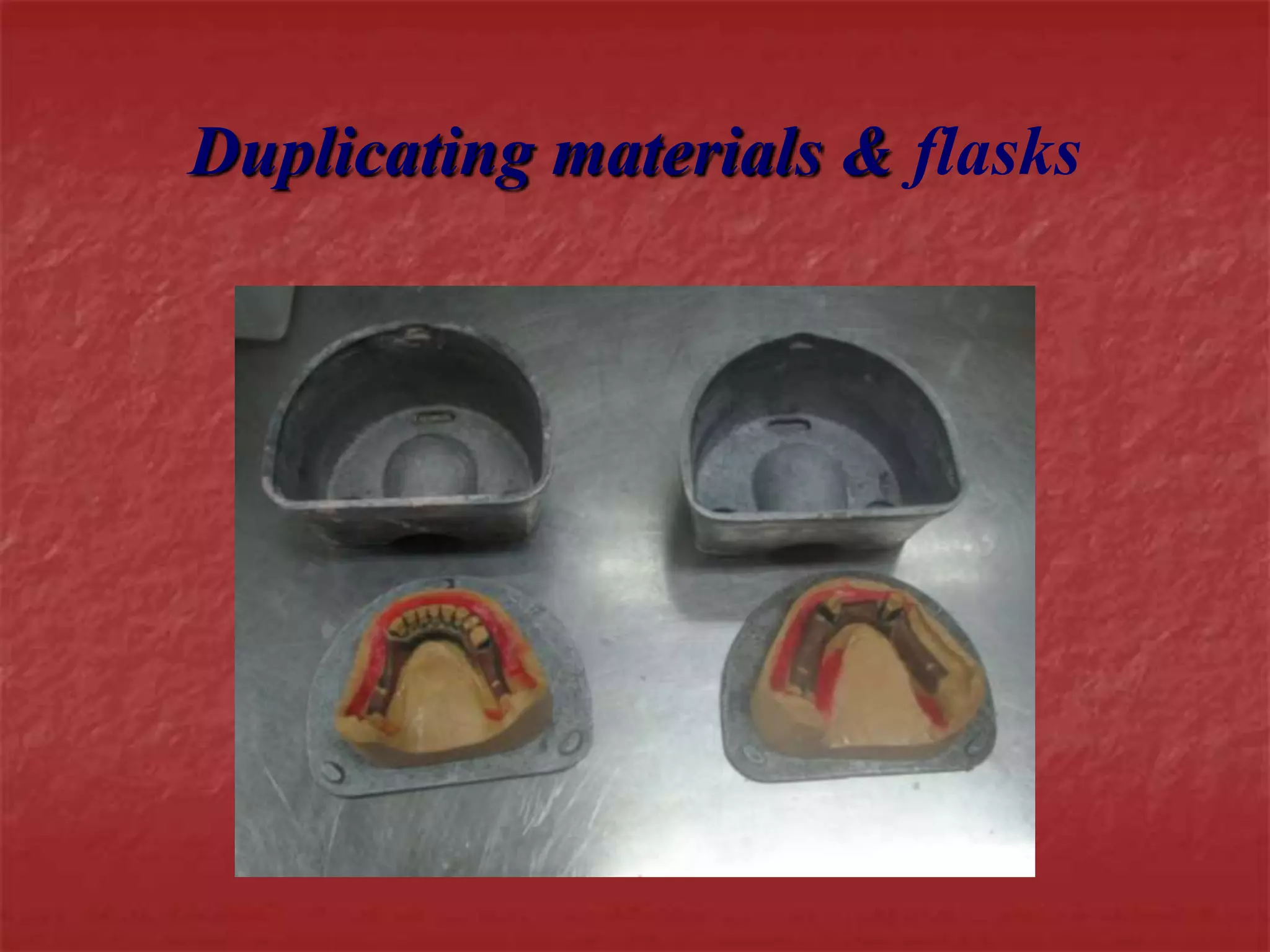
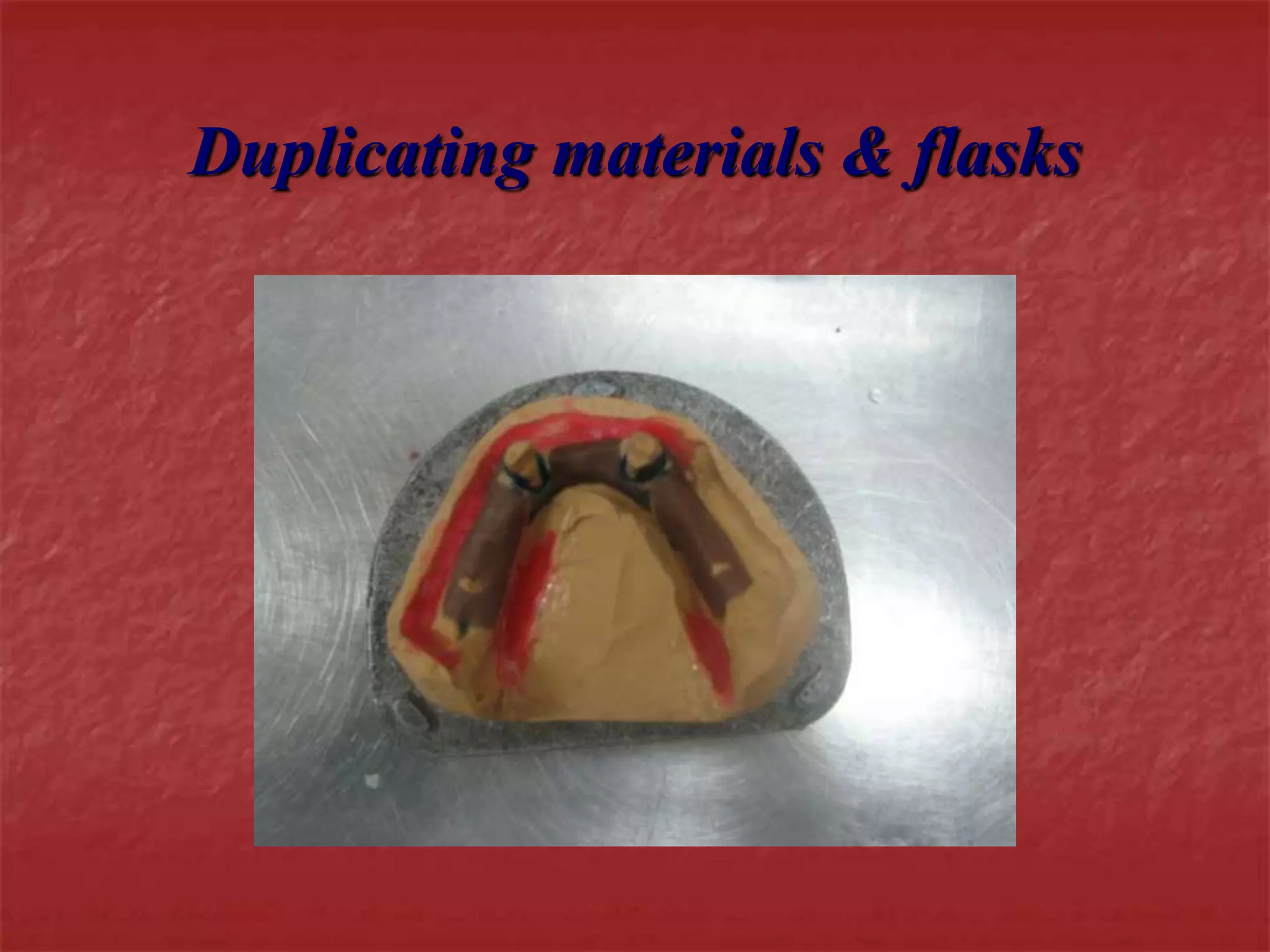
Duplicating materials & flasks
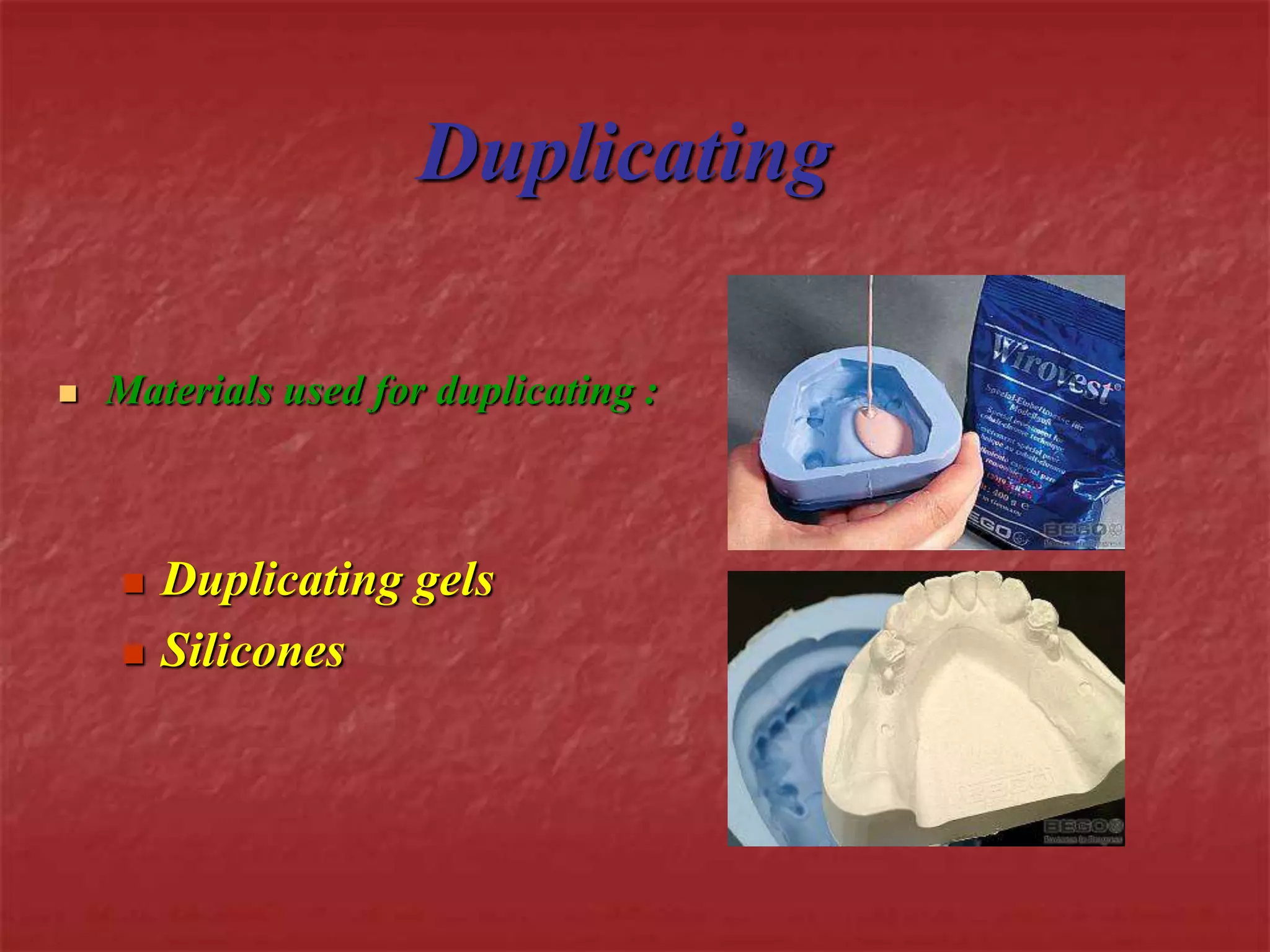
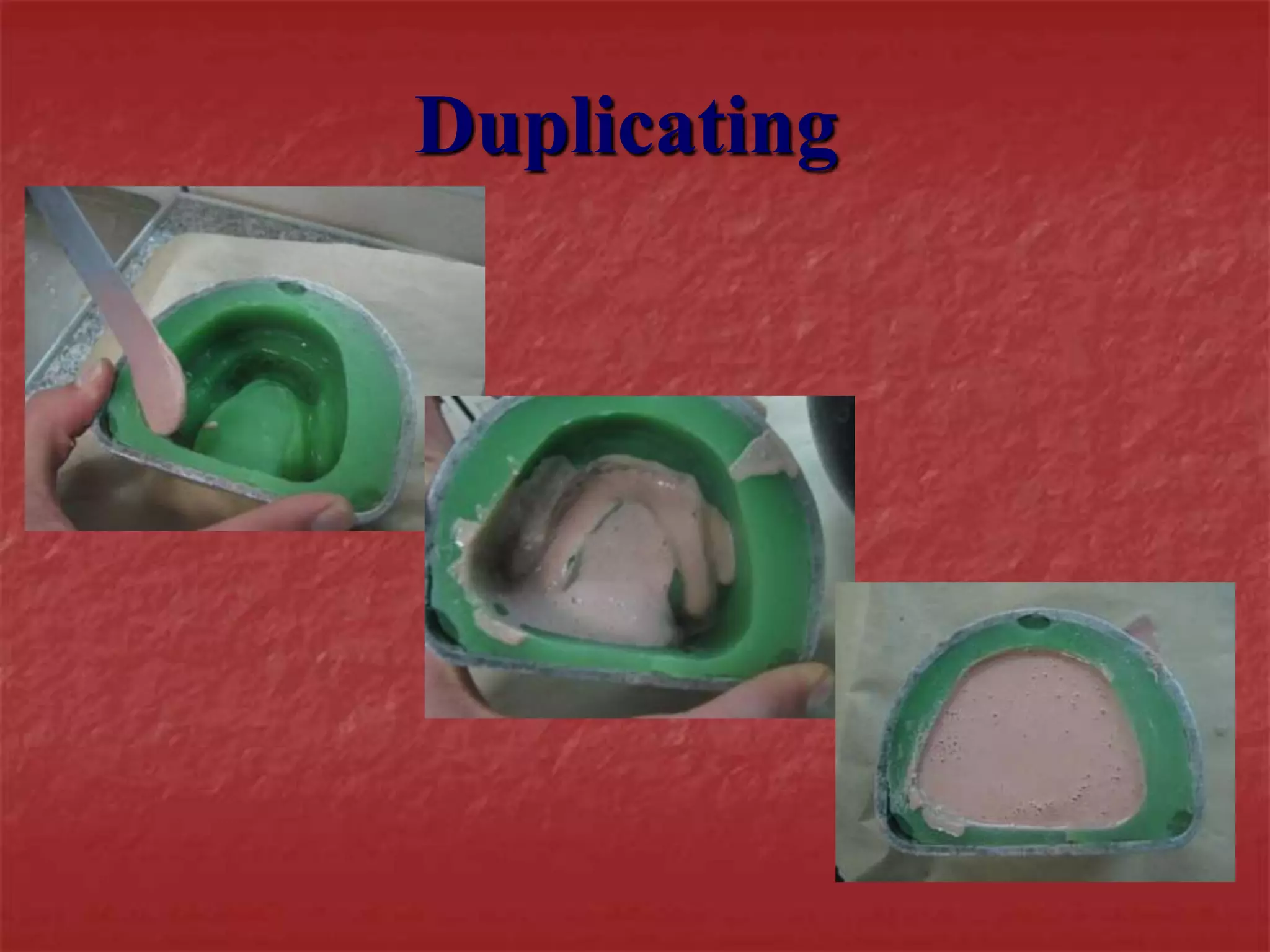
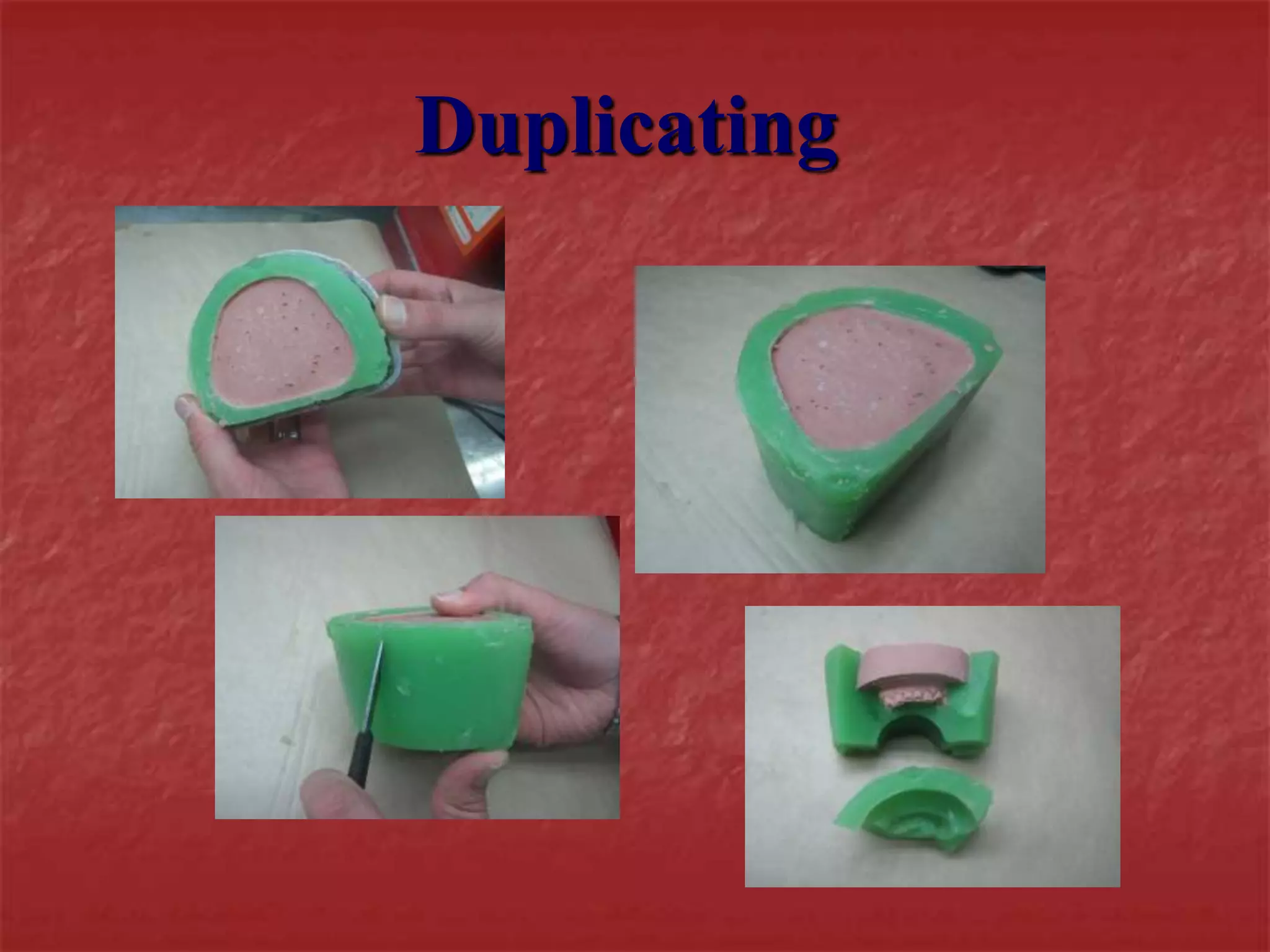
Duplicating 
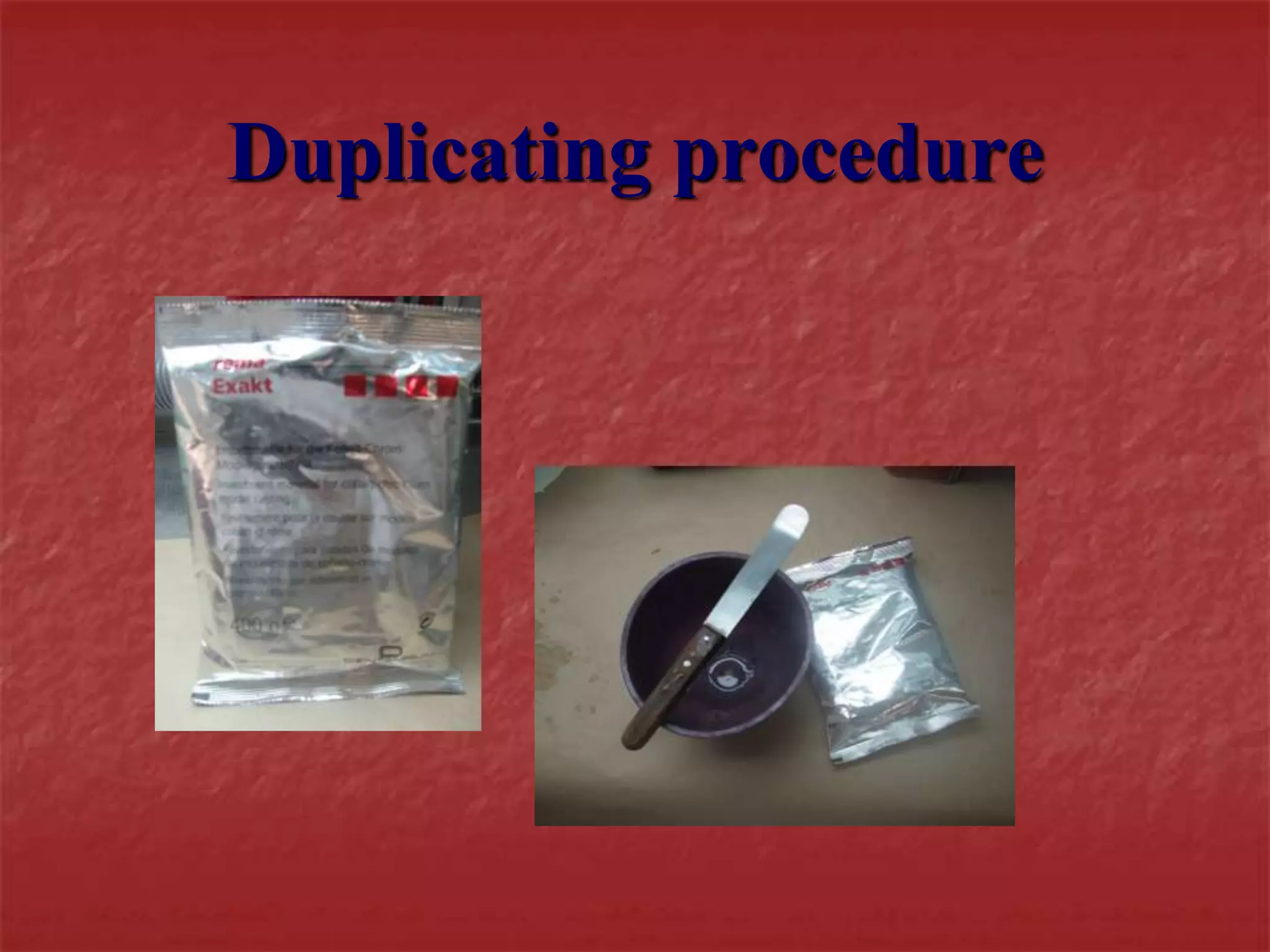
 Materials used for duplicating : 
 Duplicating gels 
 Silicones
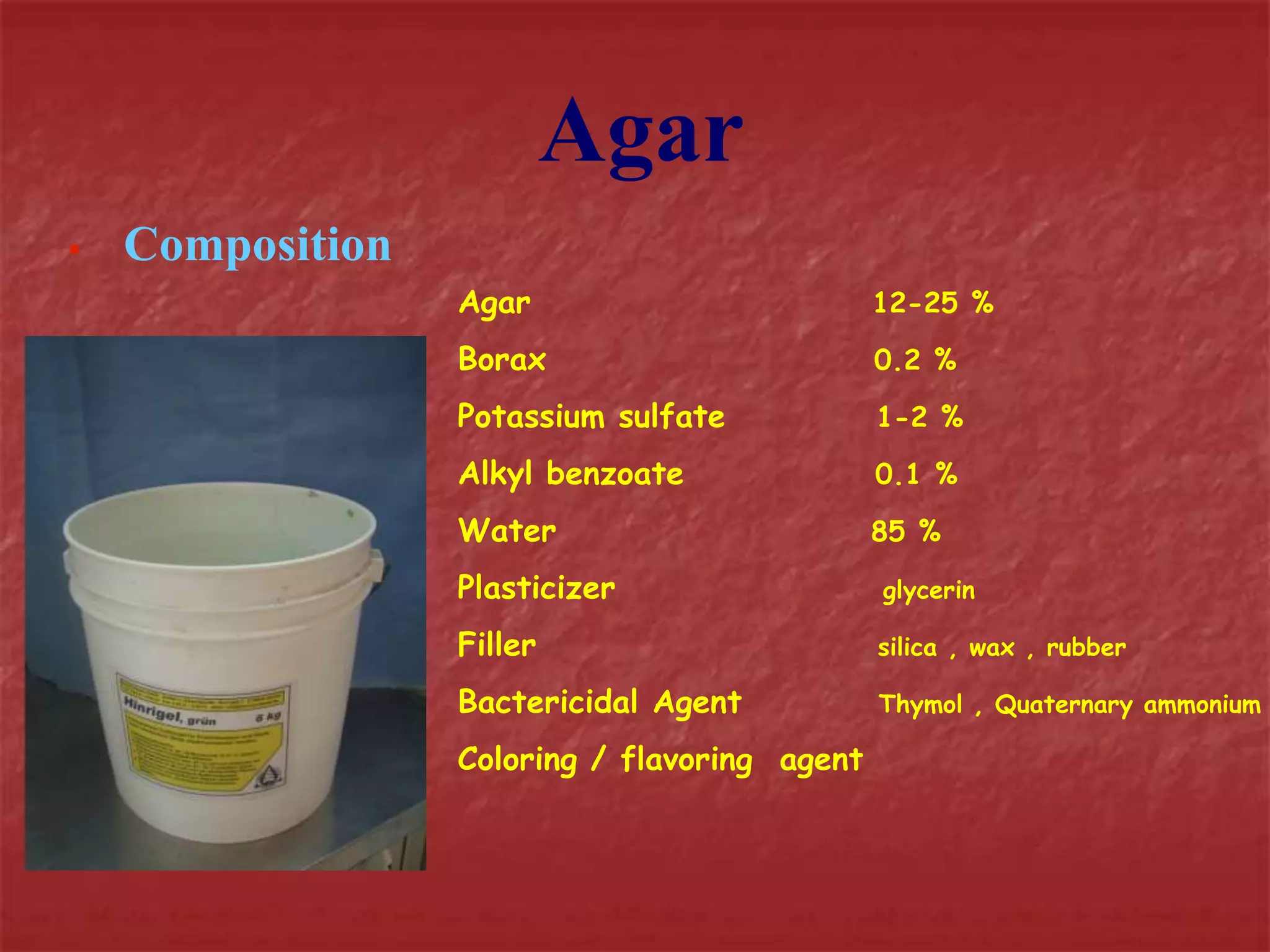
Agar 
 Composition 
Agar 12-25 % 
Borax 0.2 % 
Potassium sulfate 1-2 % 
Alkyl benzoate 0.1 % 
Water 85 % 
Plasticizer glycerin 
Filler silica , wax , rubber 
Bactericidal Agent Thymol , Quaternary ammonium 
Coloring / flavoring agent
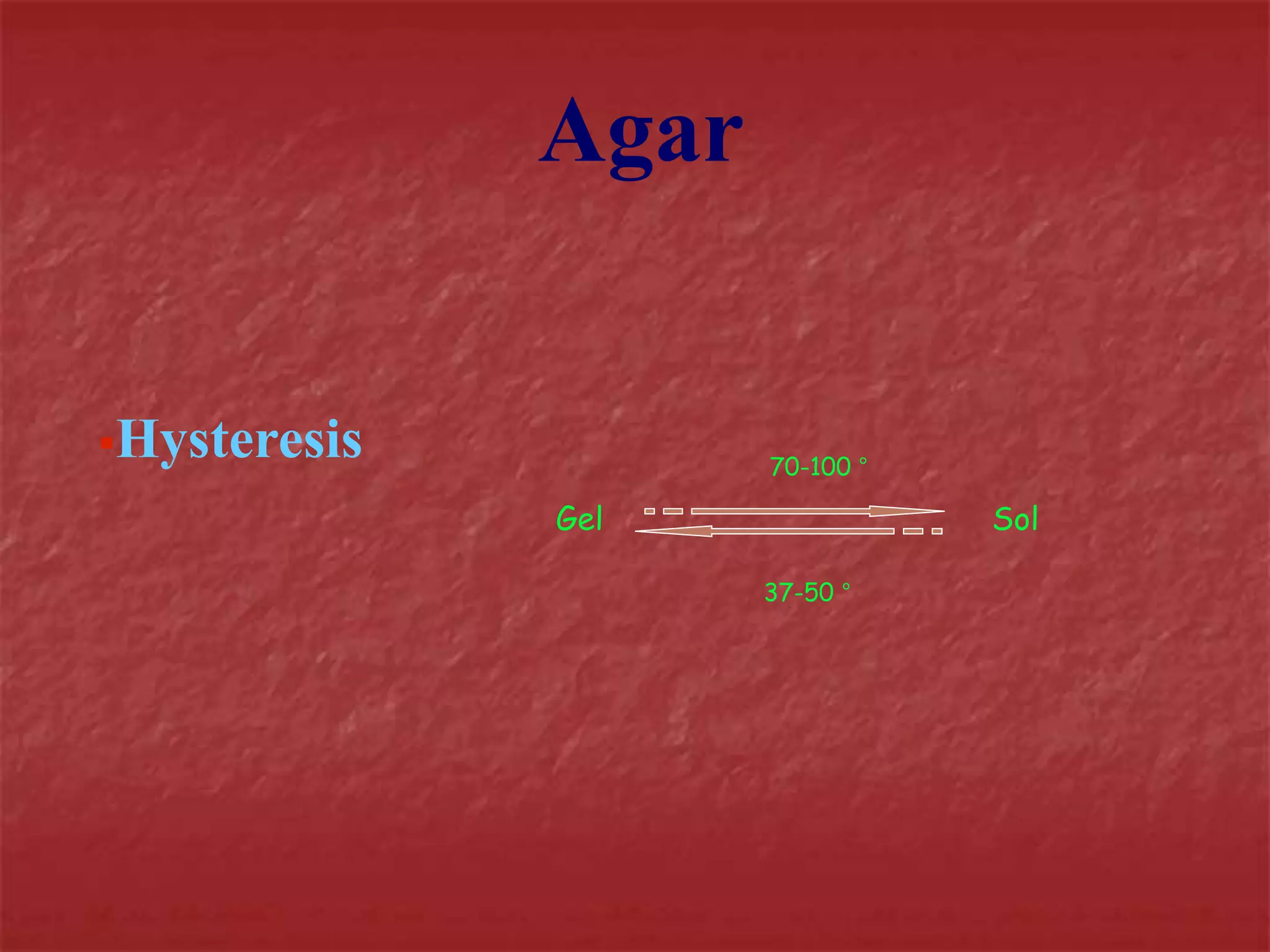
Hysteresis 
70-100 ° 
Gel Sol 
37-50 ° 
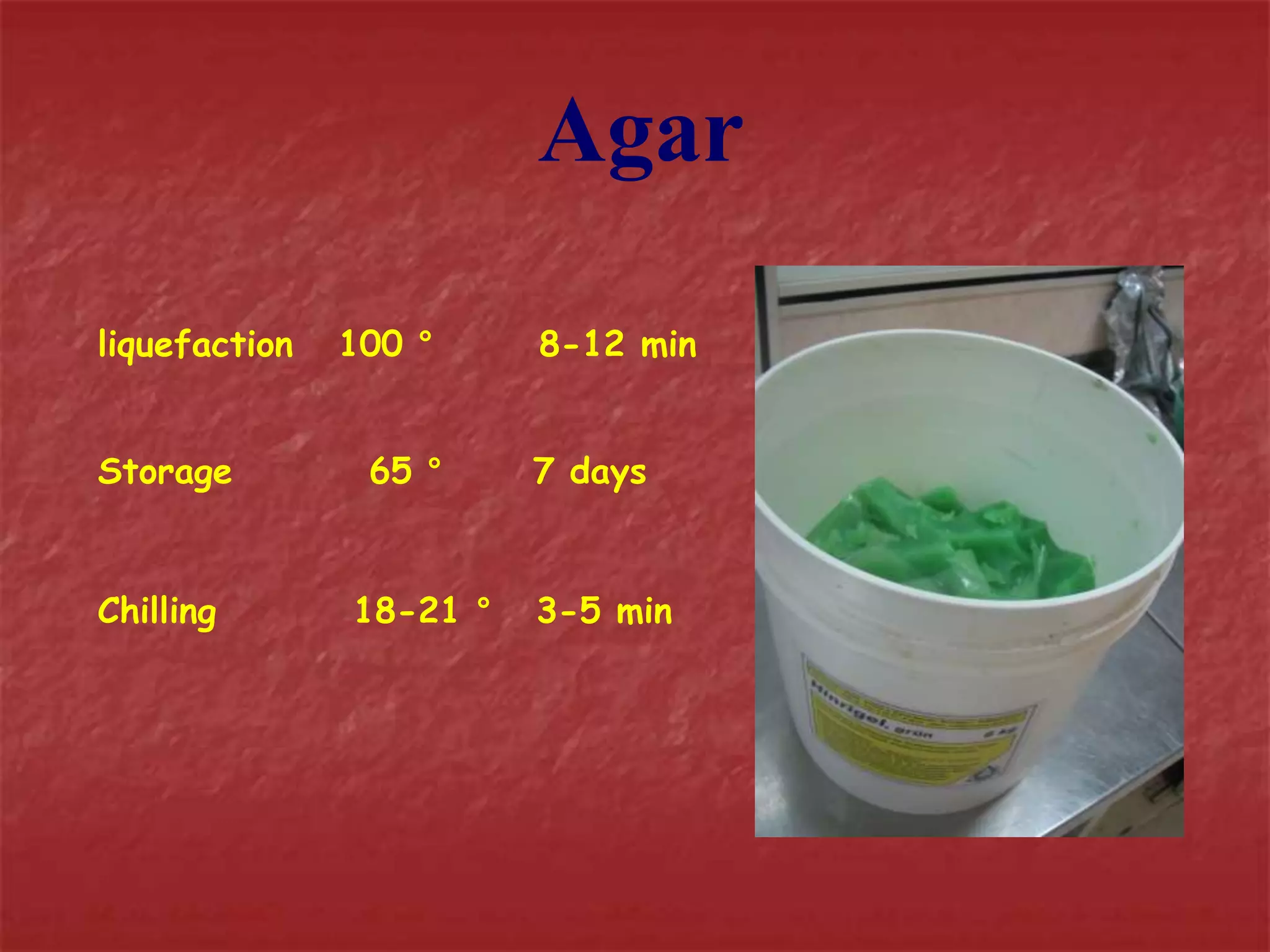
Agar
Agar 
liquefaction 100 ° 8-12 min 
Storage 65 ° 7 days 
Chilling 18-21 ° 3-5 min
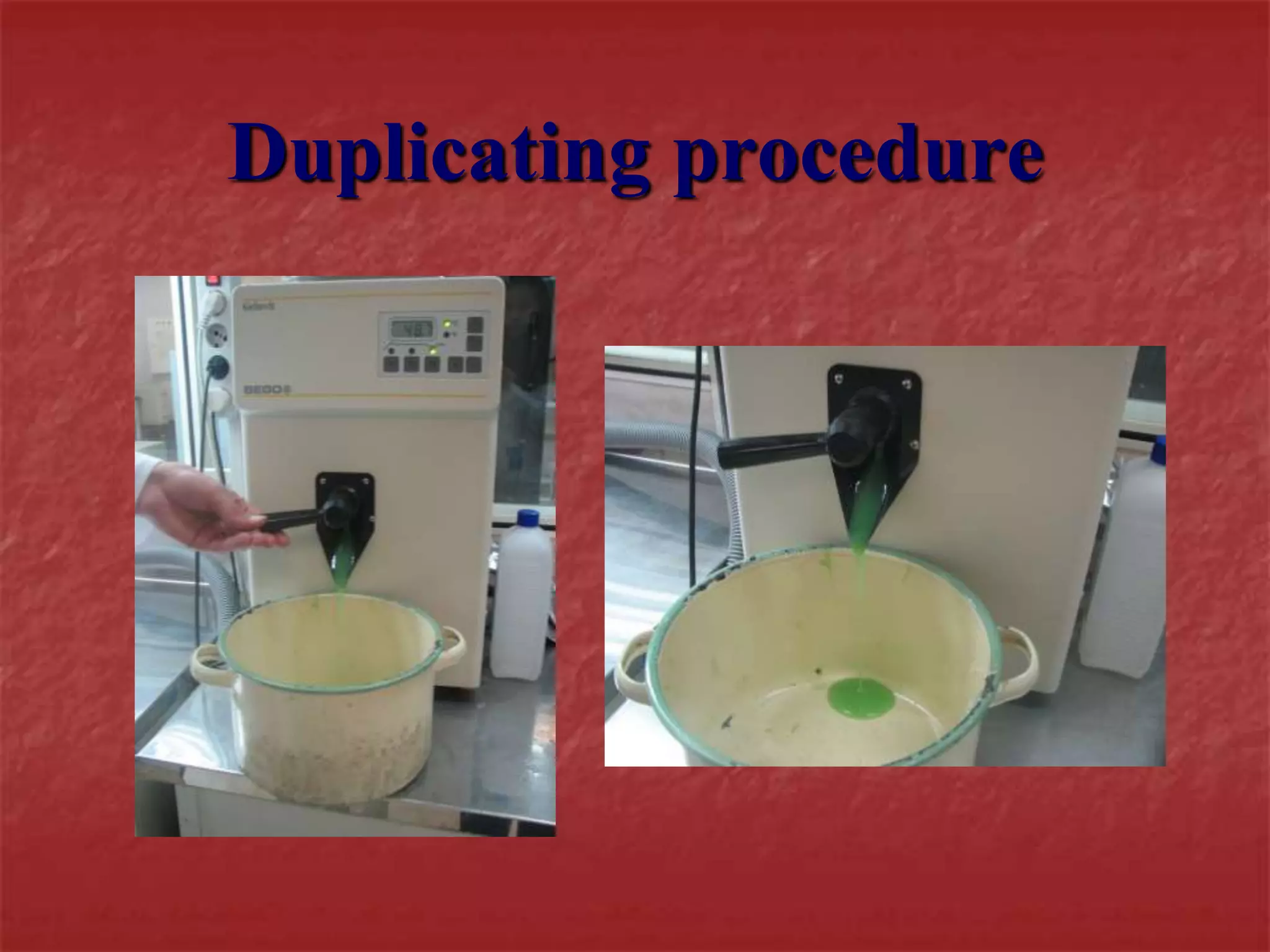
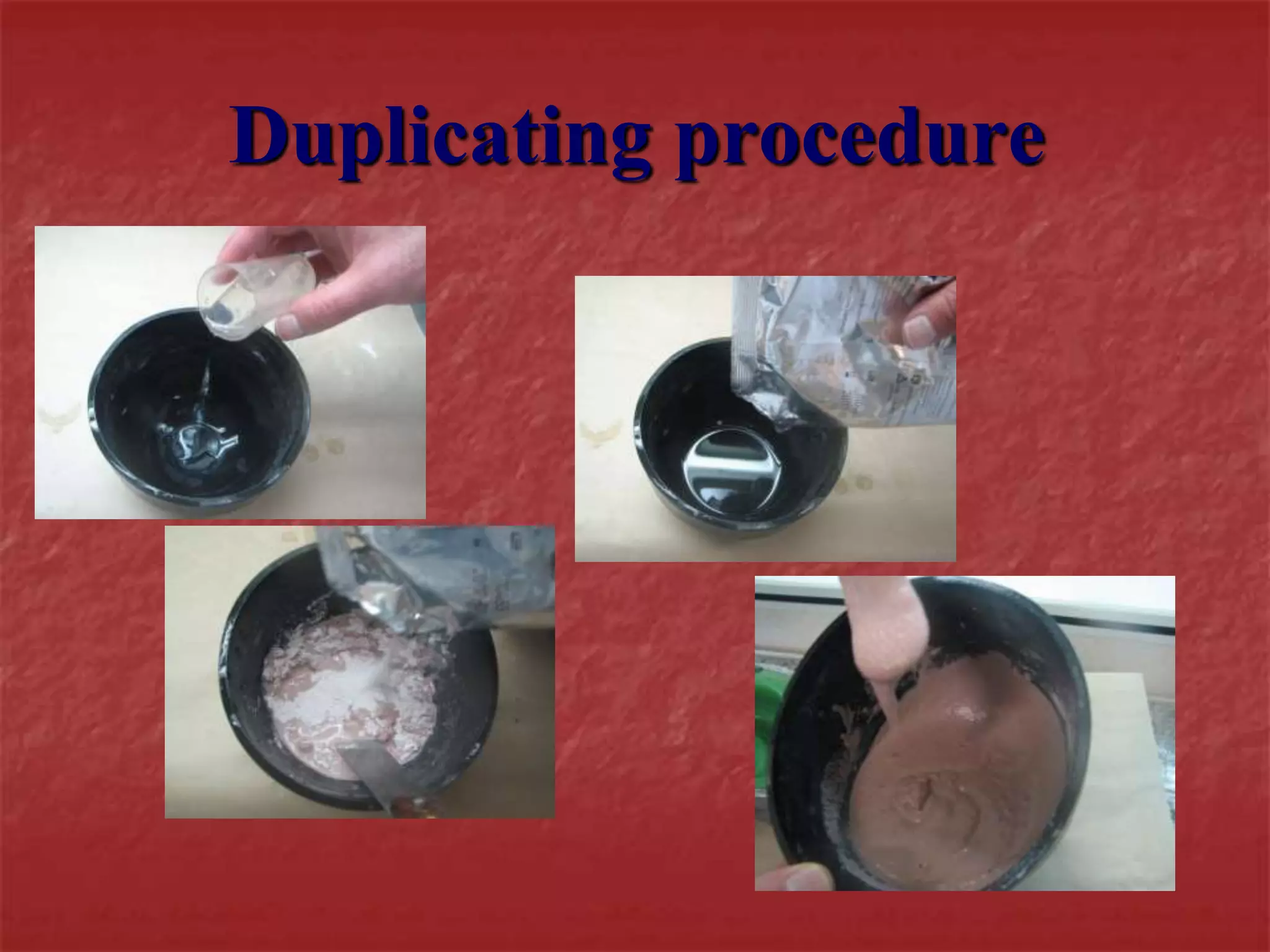
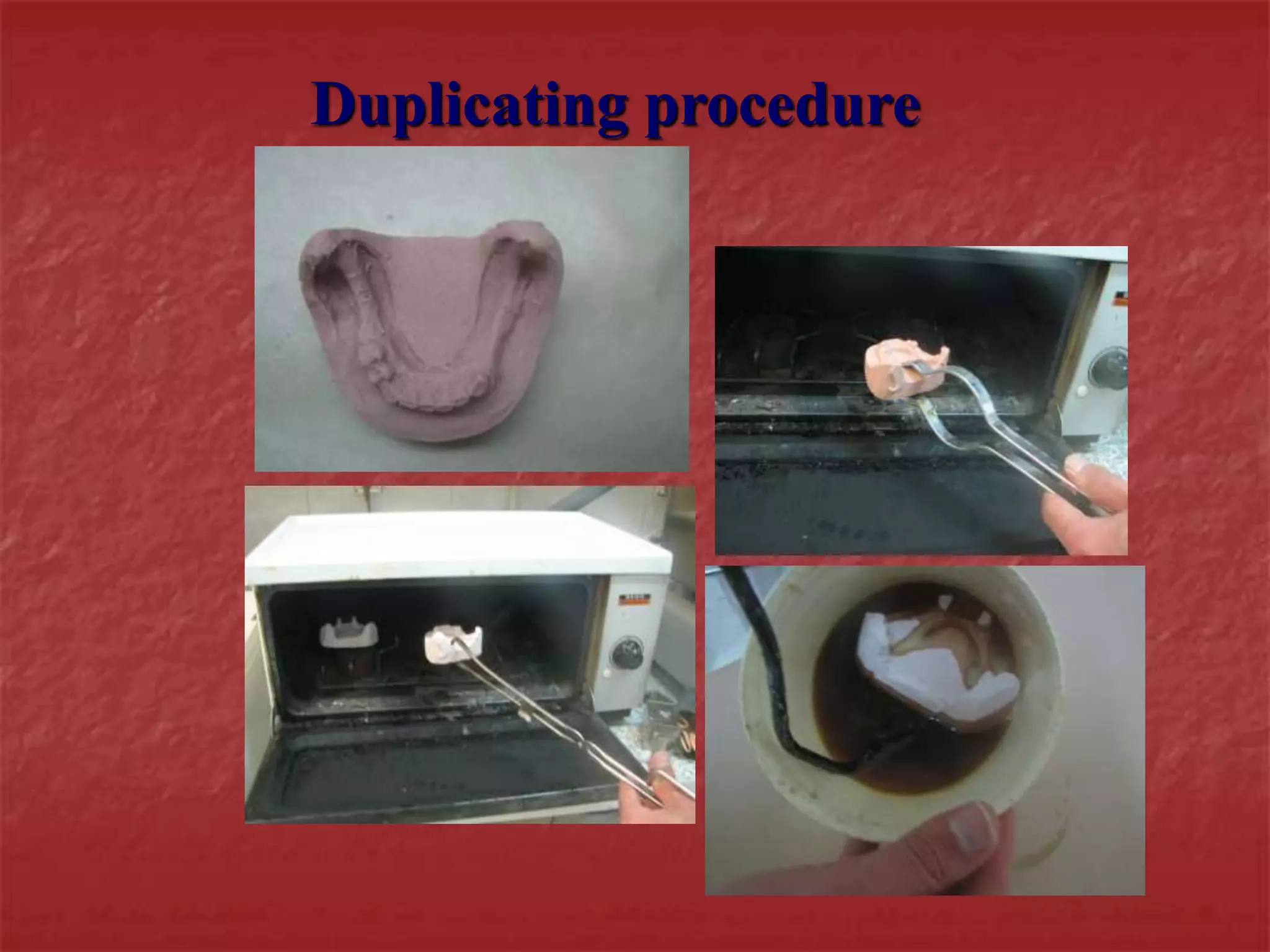
Duplicating procedure
Investment 
 Select investments that is compatible 
alloys
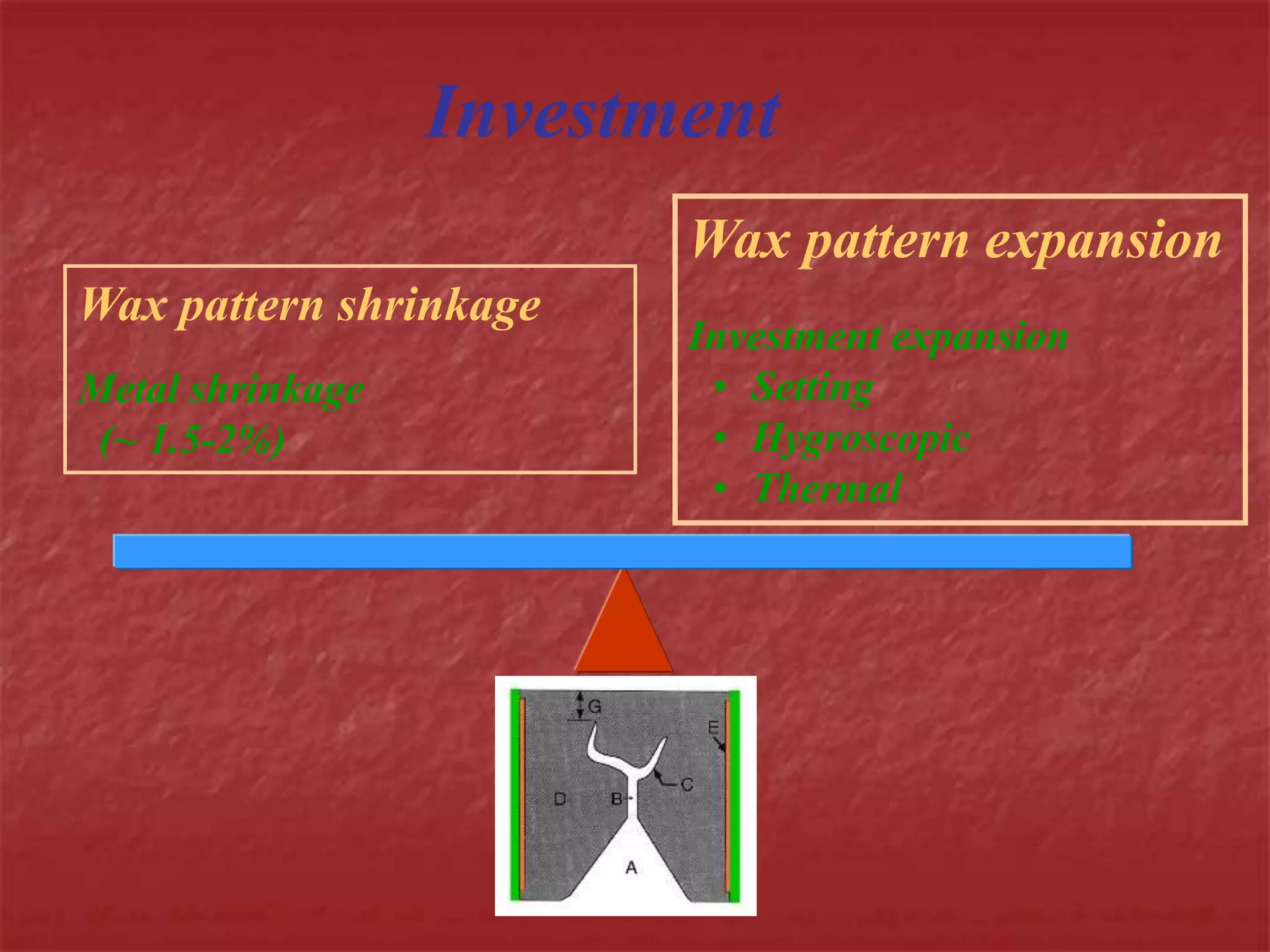
Investment 
Wax pattern shrinkage 
Metal shrinkage 
(~ 1.5-2%) 
Wax pattern expansion 
Investment expansion 
• Setting 
• Hygroscopic 
• Thermal
Expansion 
 Setting Expansion 
Hygroscopic setting expansion 
 Thermal Expansion.
“Ideal” Investment: 
 Expaned to compensate metal shrinkage 
 not decompose at high temperature 
 Strengthed at various temperature 
 Porous to allow the escape of gases 
 Consistent casting temperatures
“Ideal” Investment 
 Easy to manipulate. 
 Smooth castings. 
 Easy to break out. 
 Inexpensive.
TYPES OF INVESTMENTS 
Based on the type of binder: 
 Gypsum-bonded or Calcium-sulfate bonded 
 Phosphate-bonded
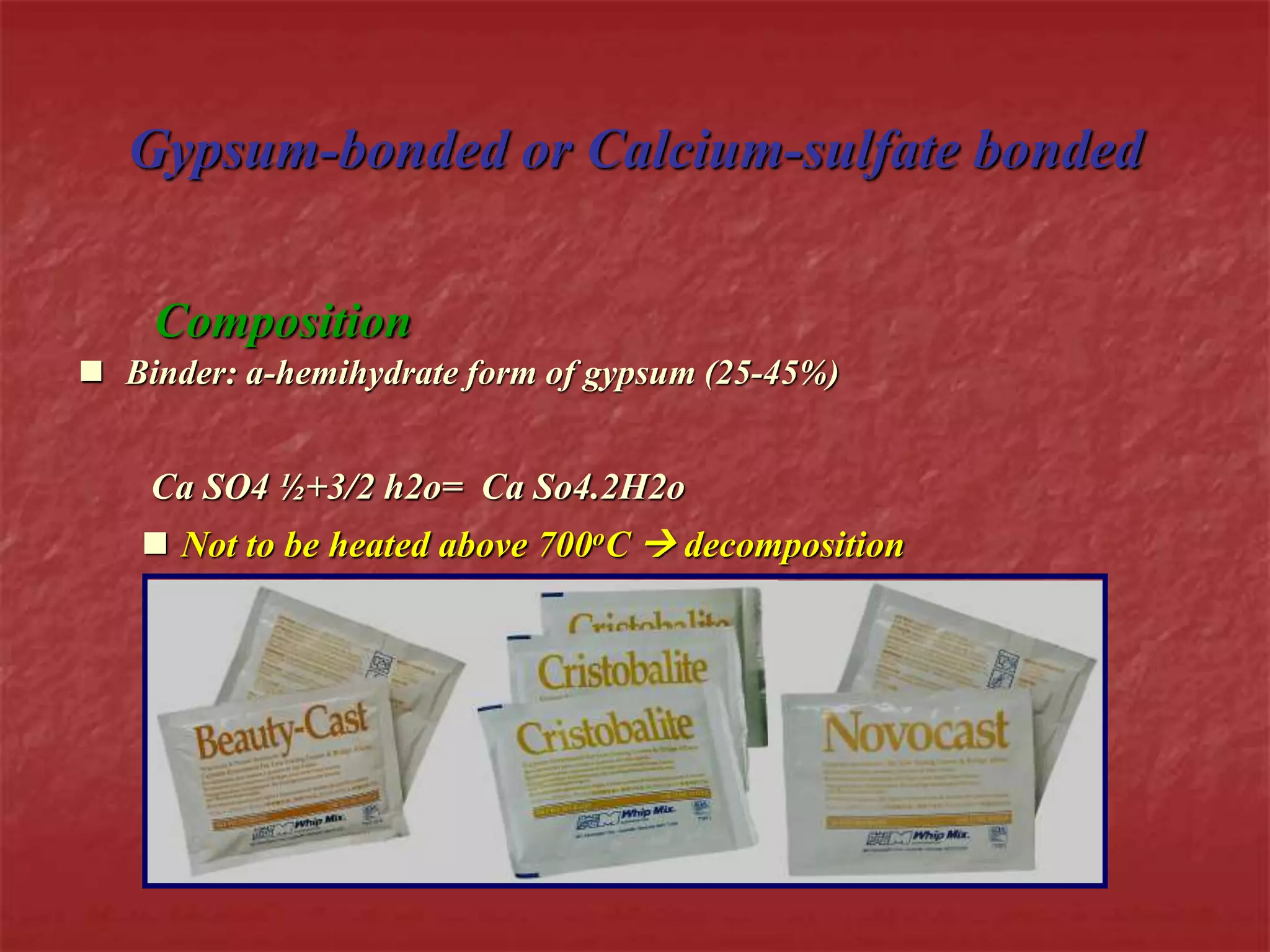
Gypsum-bonded or Calcium-sulfate bonded 
Composition 
 Binder: a-hemihydrate form of gypsum (25-45%) 
Ca SO4 ½+3/2 h2o= Ca So4.2H2o 
 Not to be heated above 700oC  decomposition
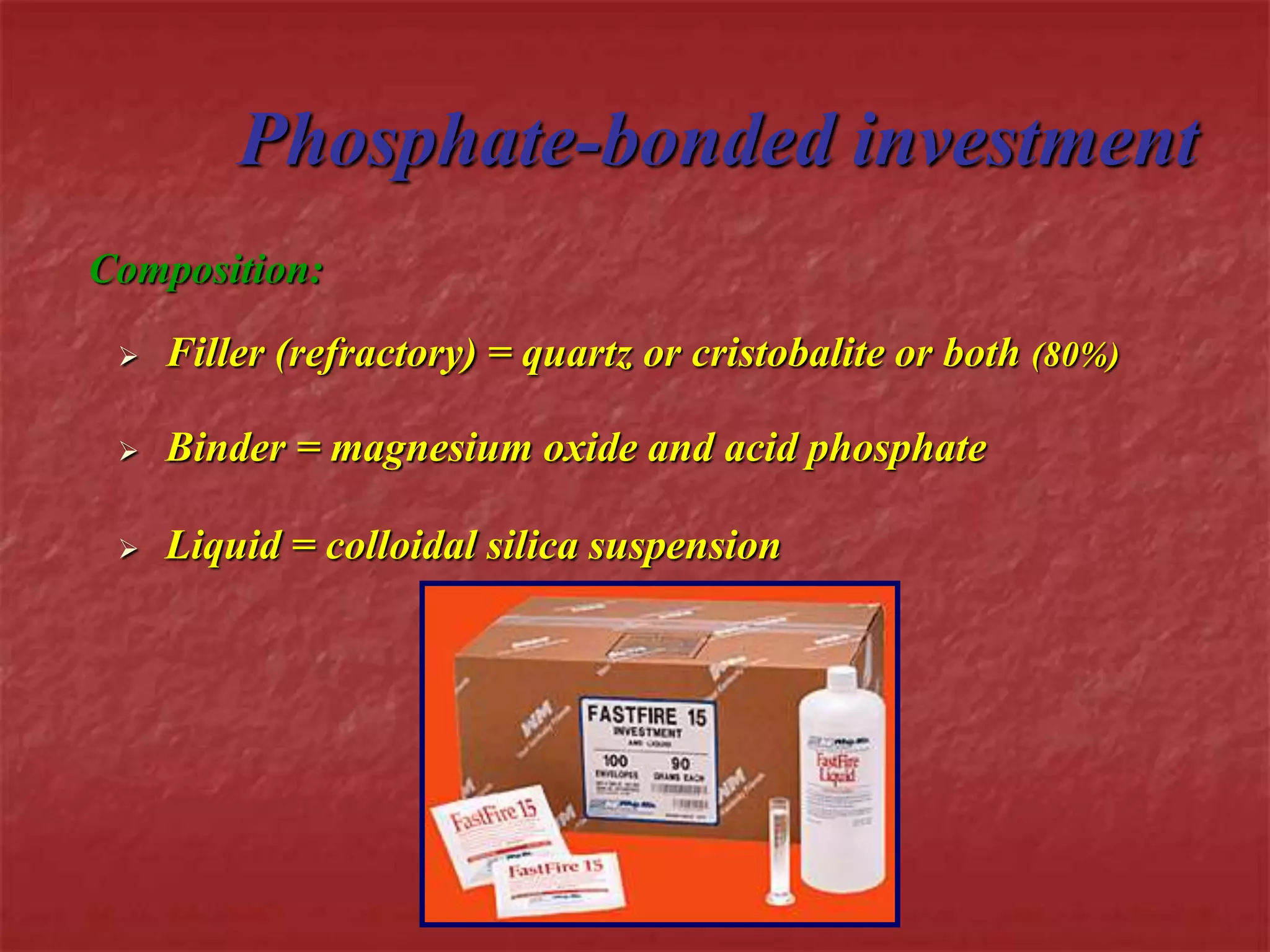
Phosphate-bonded investment 
Composition: 
 Filler (refractory) = quartz or cristobalite or both (80%) 
 Binder = magnesium oxide and acid phosphate 
 Liquid = colloidal silica suspension
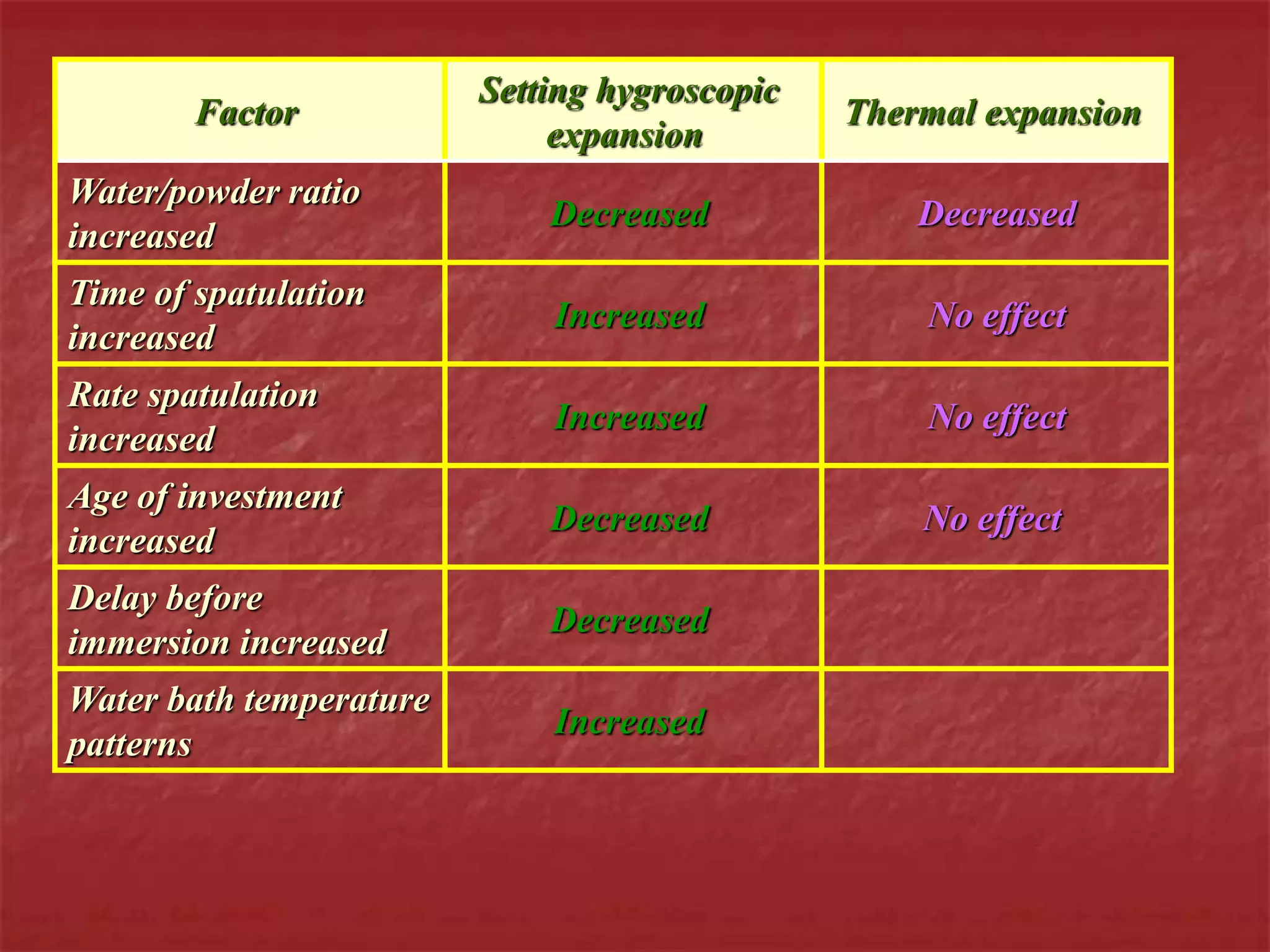
Factor 
Setting hygroscopic 
expansion 
Thermal expansion 
Water/powder ratio 
increased 
Decreased Decreased 
Time of spatulation 
increased 
Increased No effect 
Rate spatulation 
increased 
Increased No effect 
Age of investment 
increased 
Decreased No effect 
Delay before 
immersion increased 
Decreased 
Water bath temperature 
patterns 
Increased
Duplicating
Duplicating
Duplicating procedure
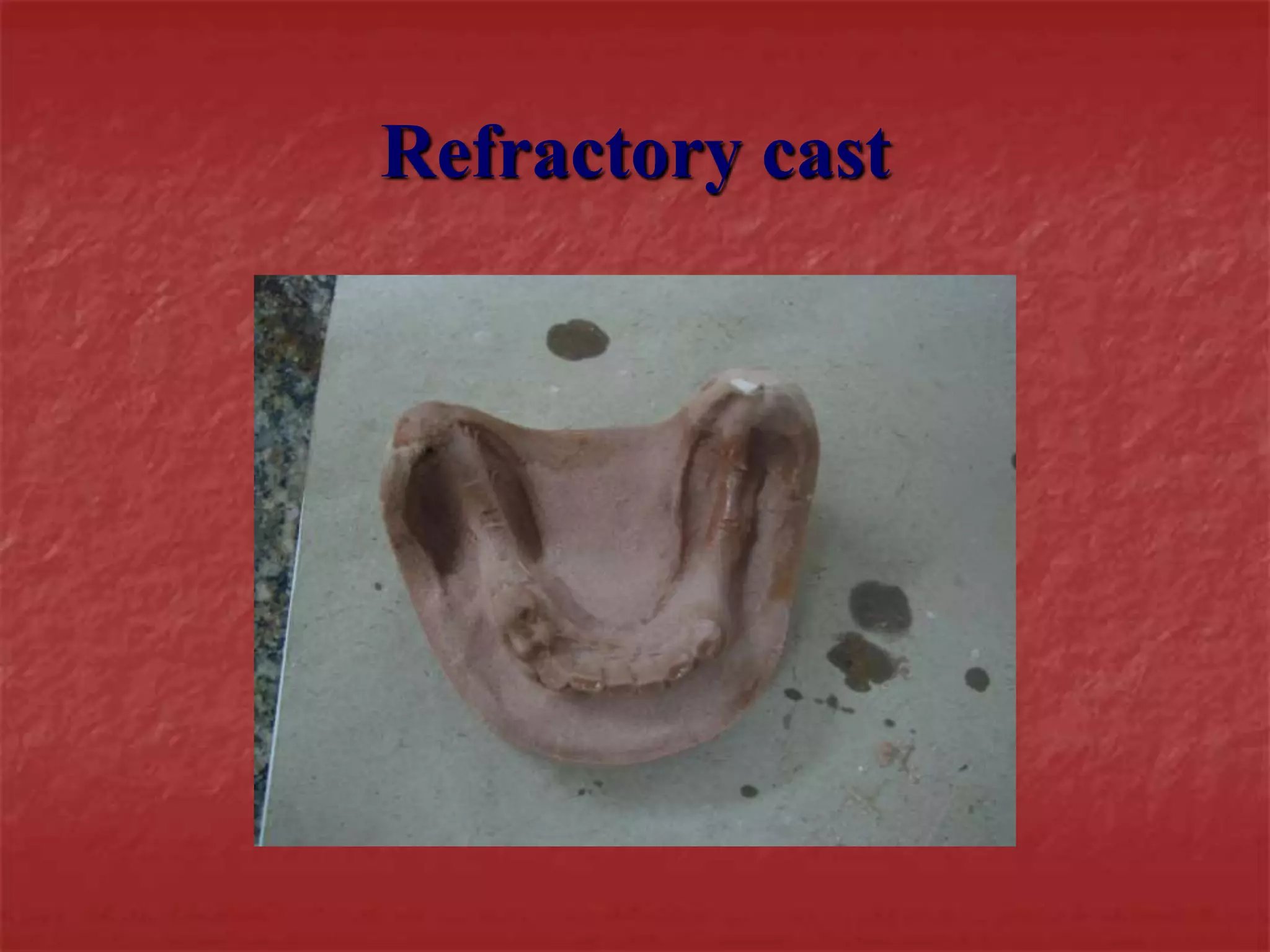
Refractory cast
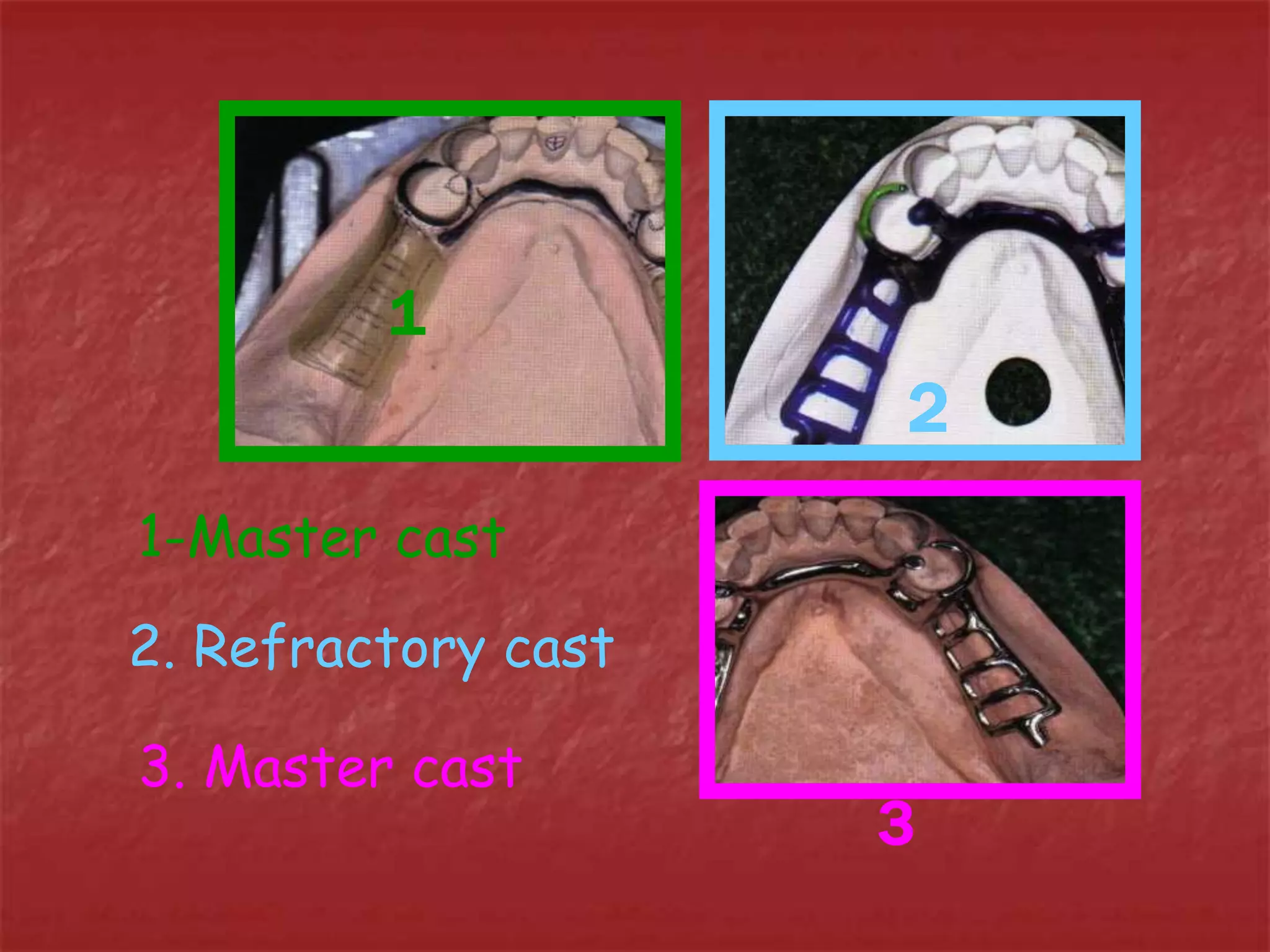
1 
2 
3 
1-Master cast 
2. Refractory cast 
3. Master cast
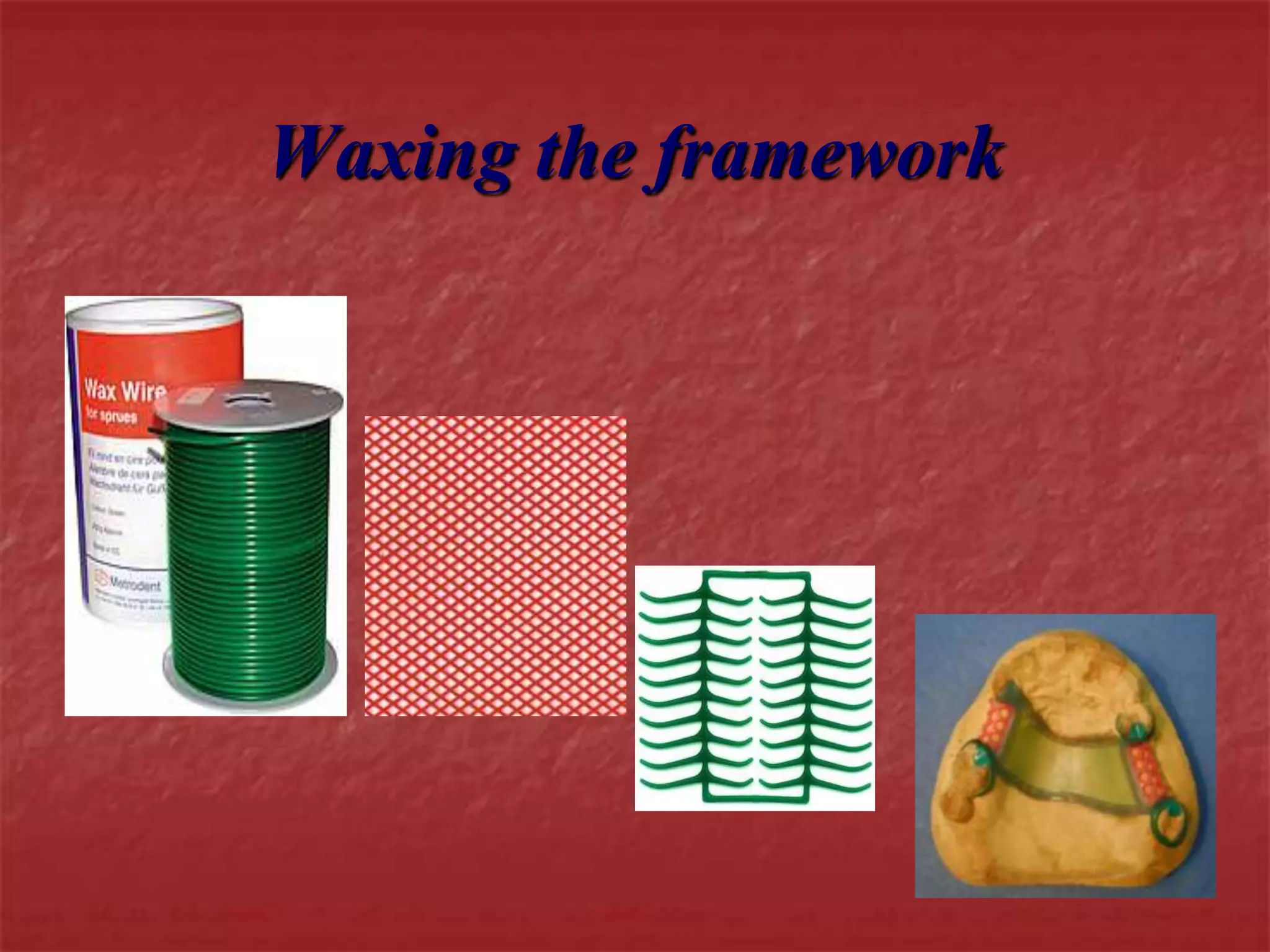
Waxing the framework
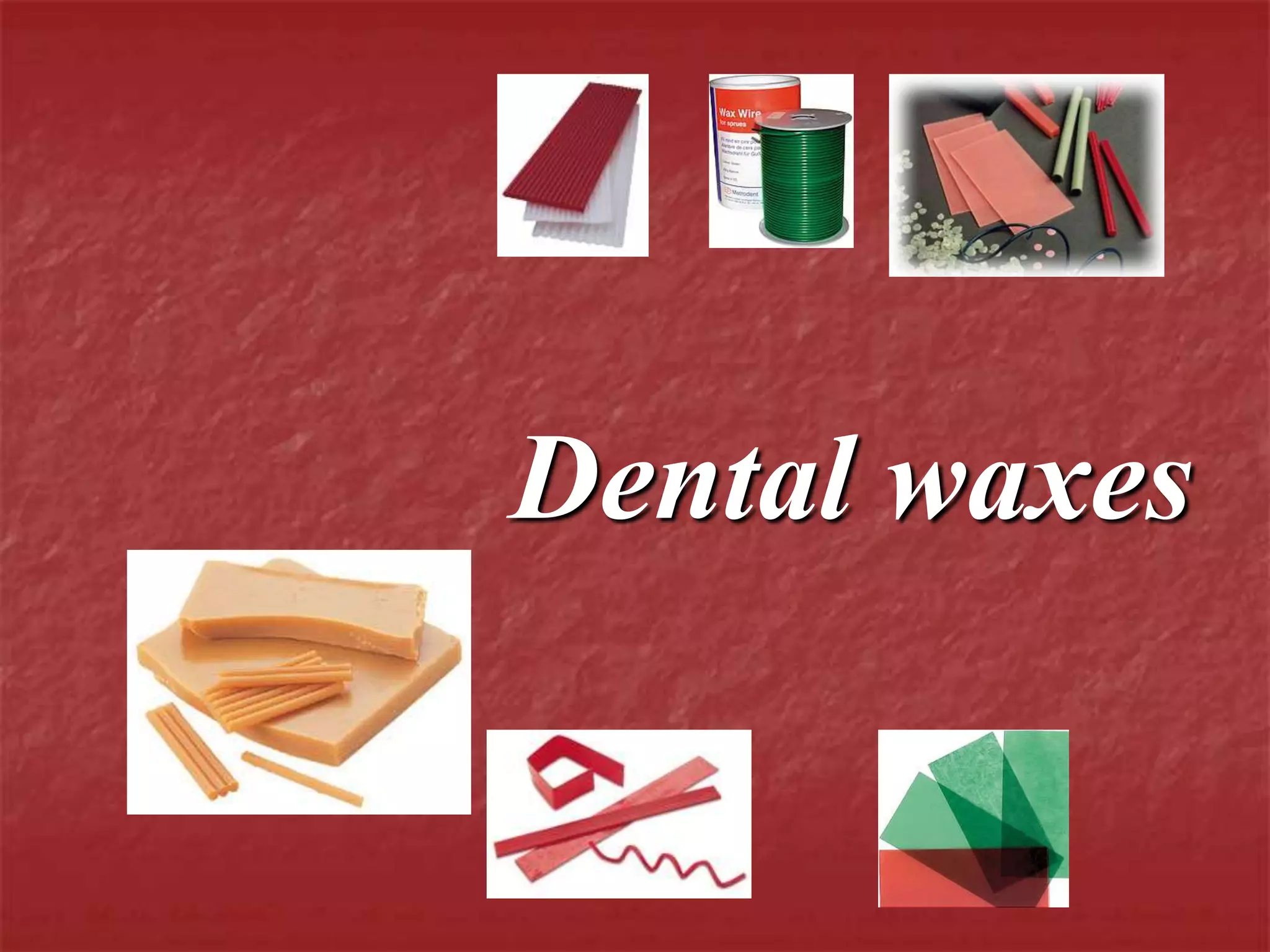
Dental waxes
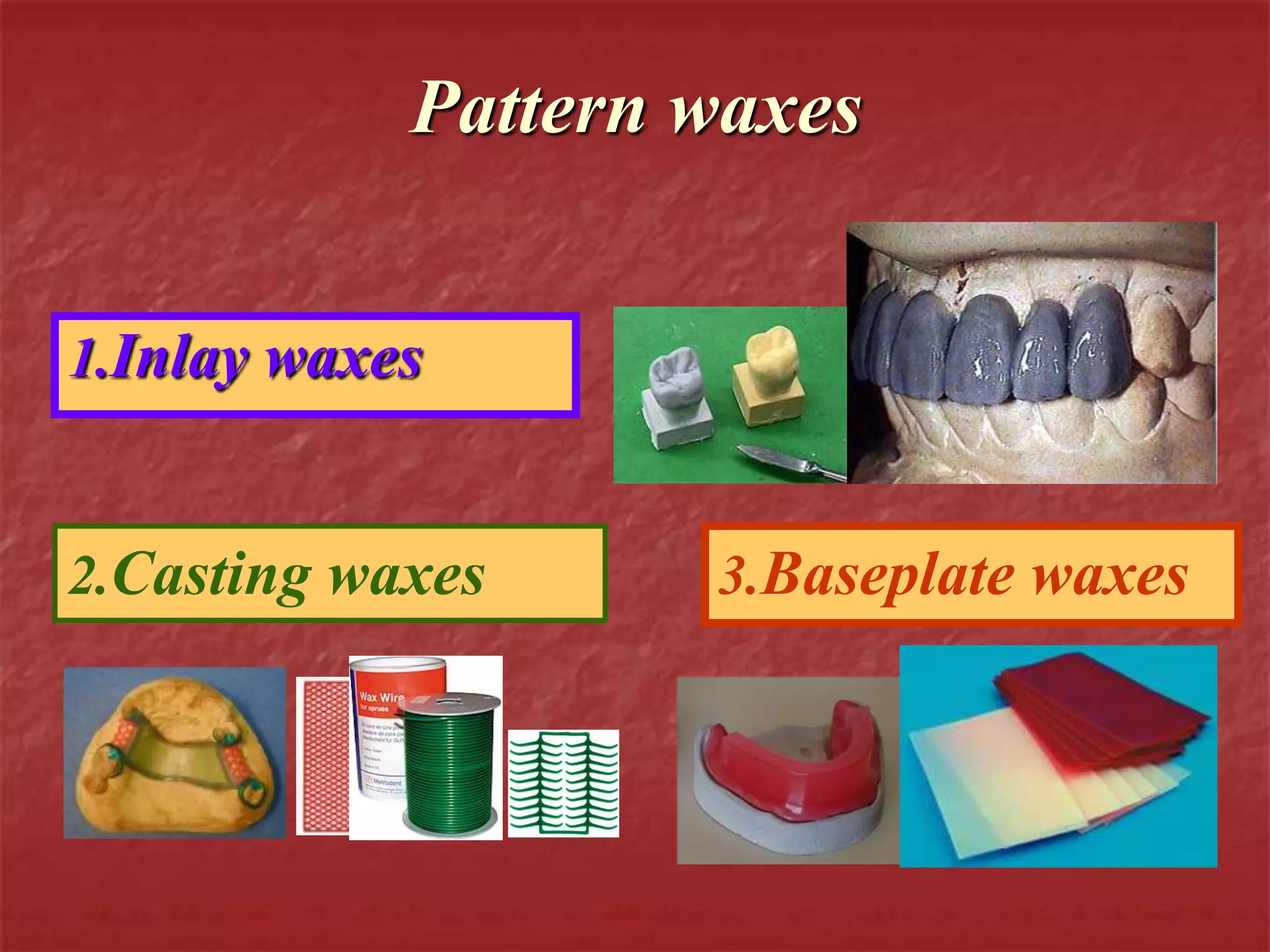
Pattern waxes 
1.Inlay waxes 
2.Casting waxes 3.Baseplate waxes
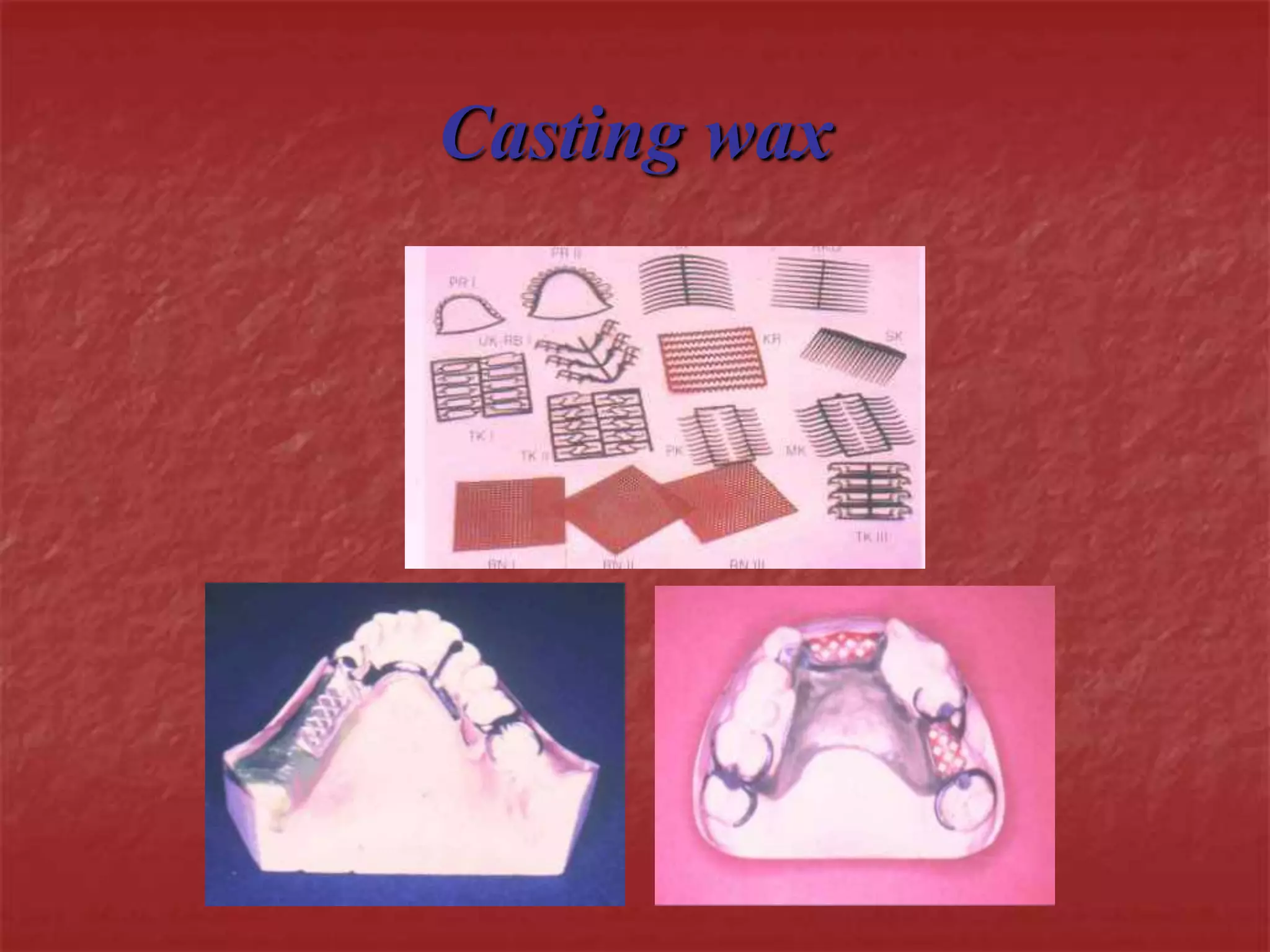
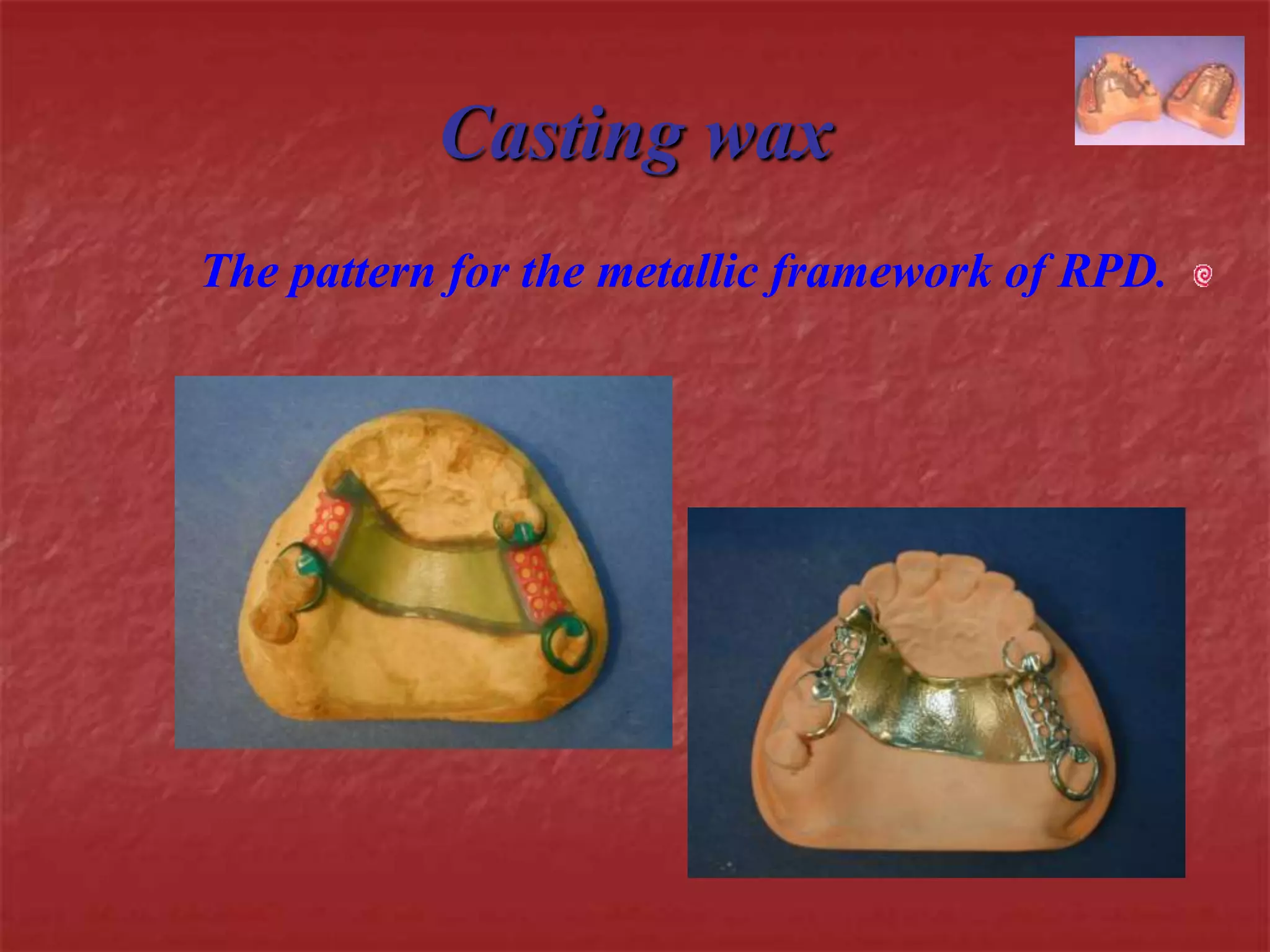
Casting wax 
The pattern for the metallic framework of RPD.
Casting wax
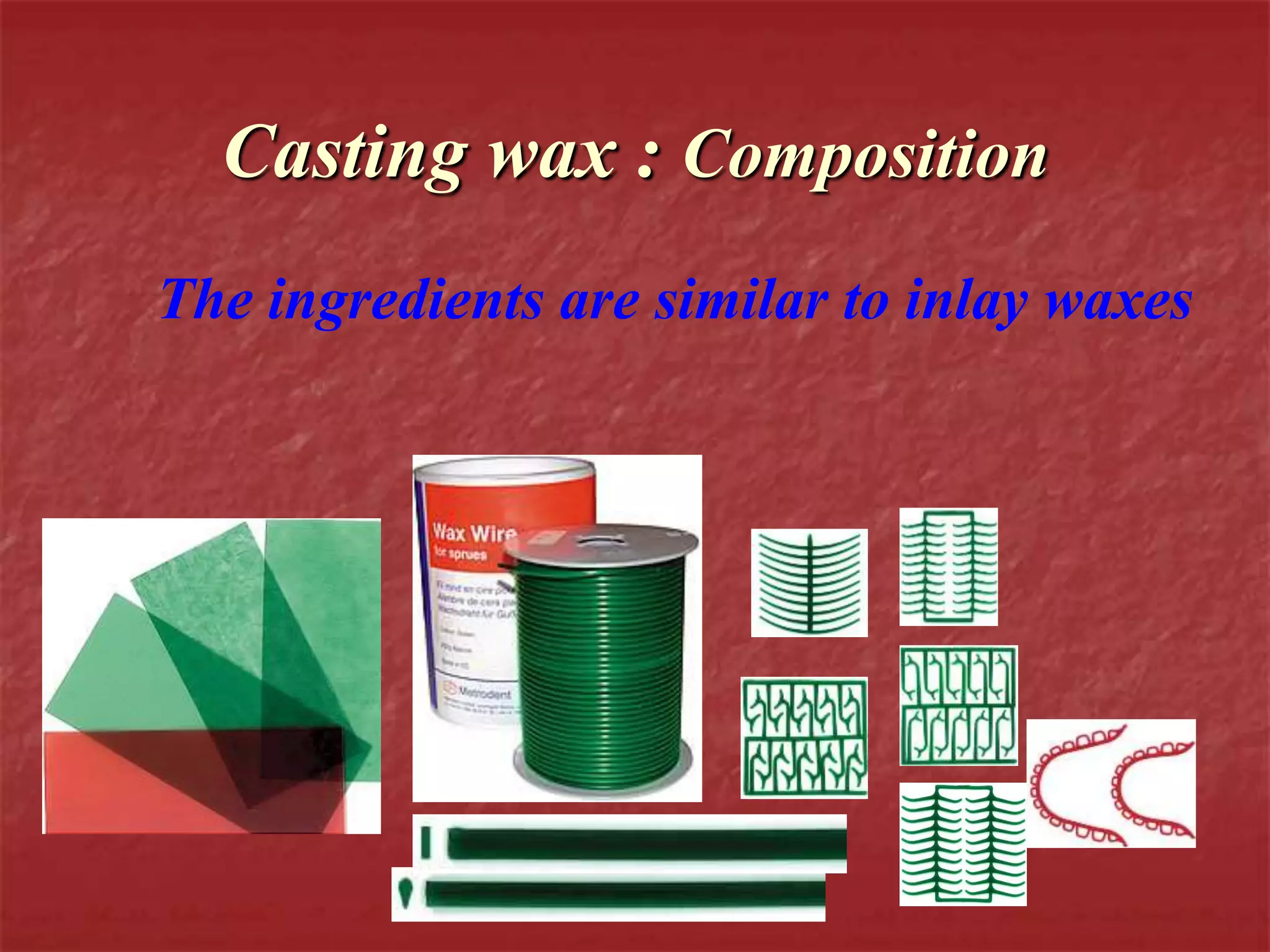
Casting wax : Composition 
The ingredients are similar to inlay waxes
Casting wax : Properties 
Flow 
Breaking point : no fracture
Working properties 
Pilable and readily adaptable 
Adapt accurately to surface against which it pressed 
not be brittle on cooling 
Vapporize, leaving no film rather than carbon
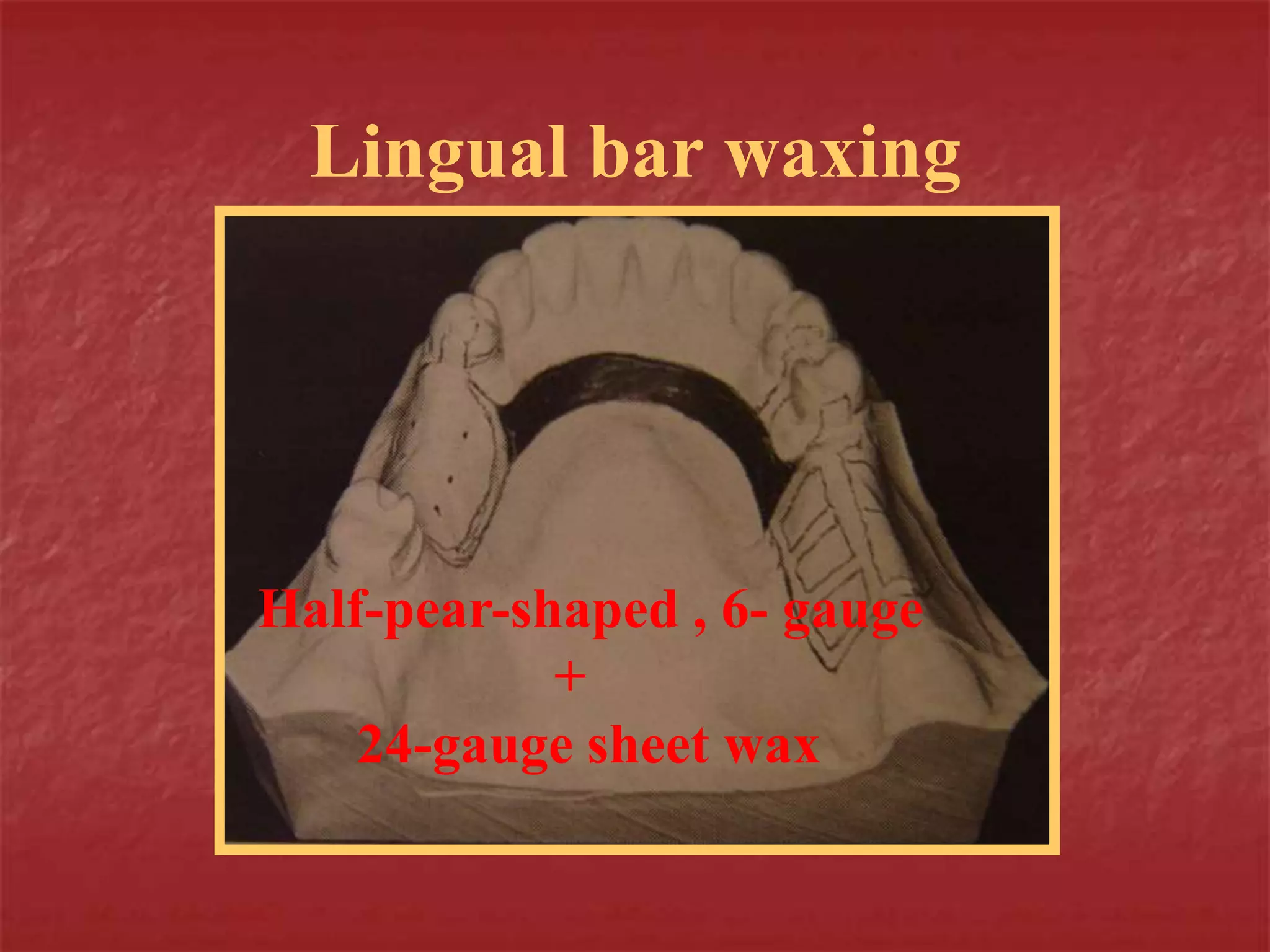
Lingual bar waxing 
Half-pear-shaped , 6- gauge 
+ 
24-gauge sheet wax
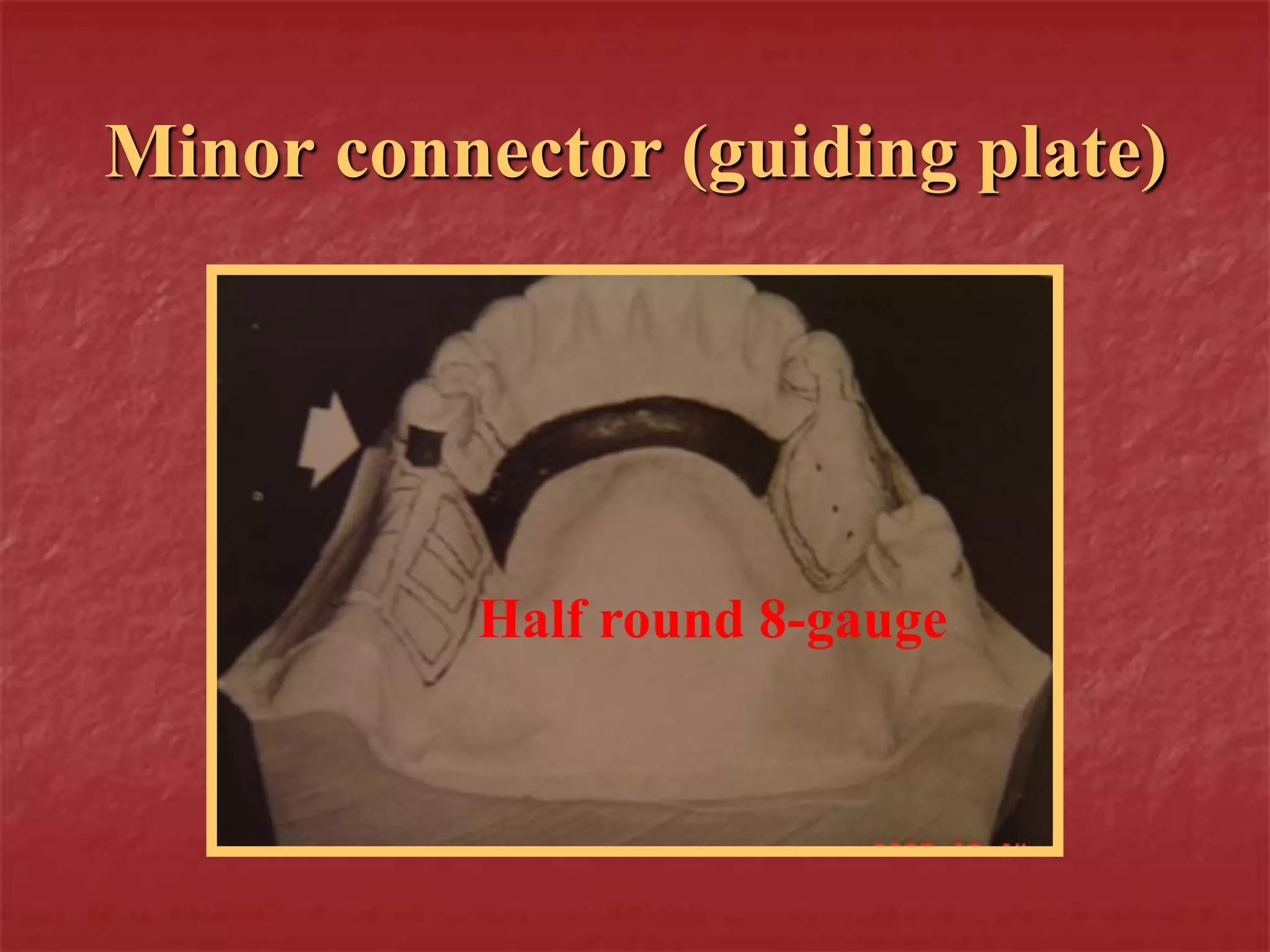
Minor connector (guiding plate) 
Half round 8-gauge
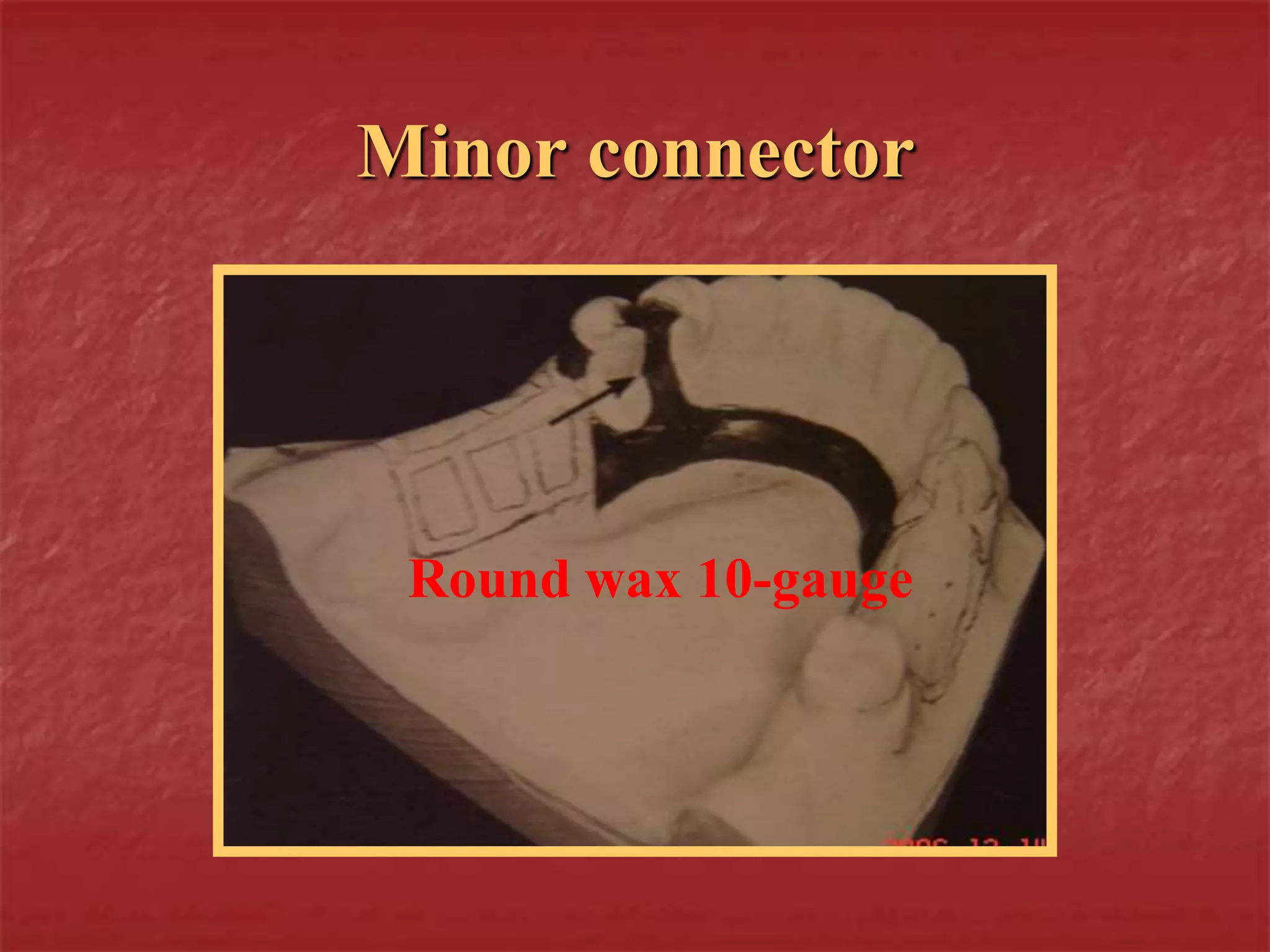
Minor connector 
Round wax 10-gauge
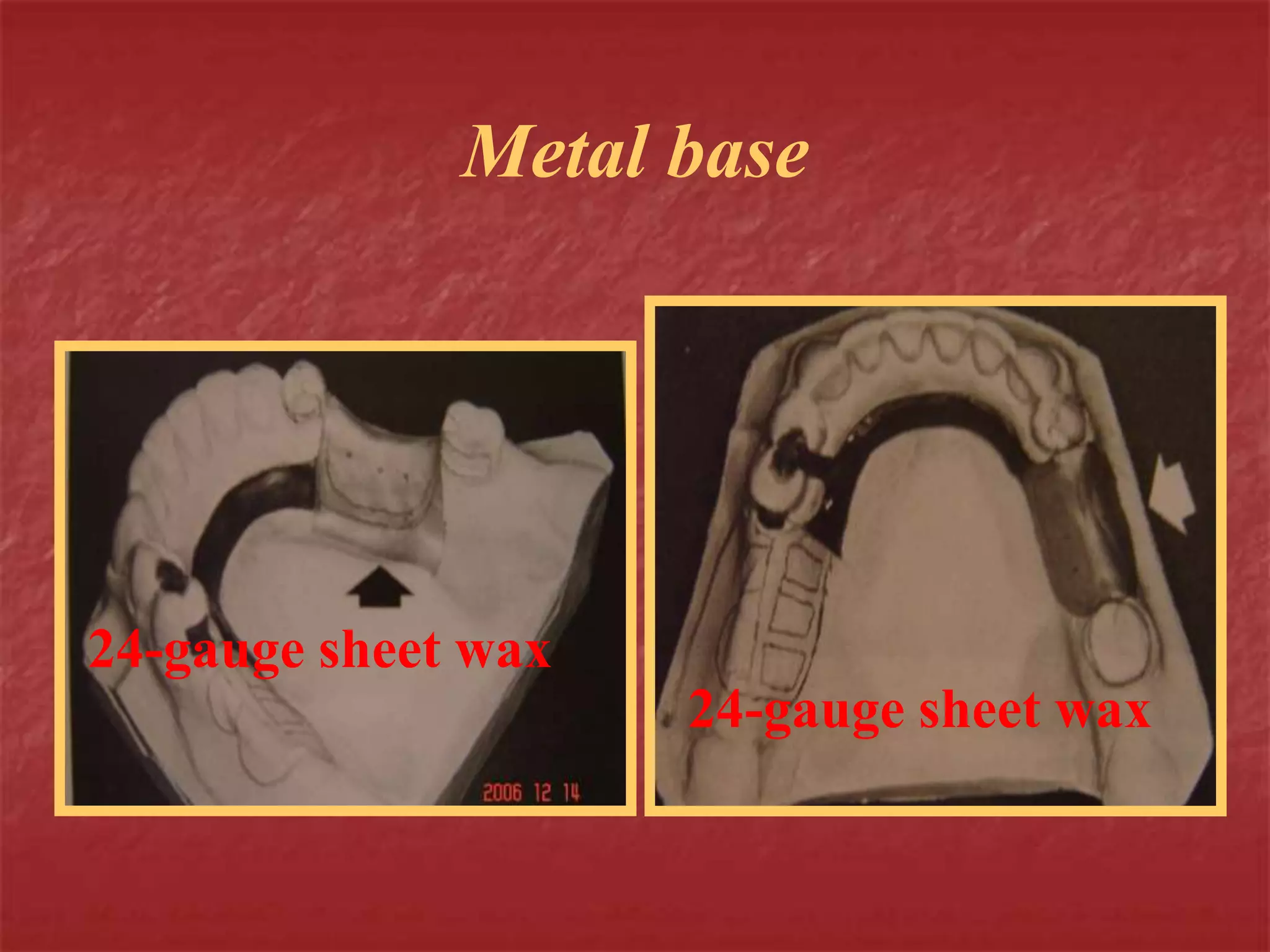
Metal base 
24-gauge sheet wax 
24-gauge sheet wax
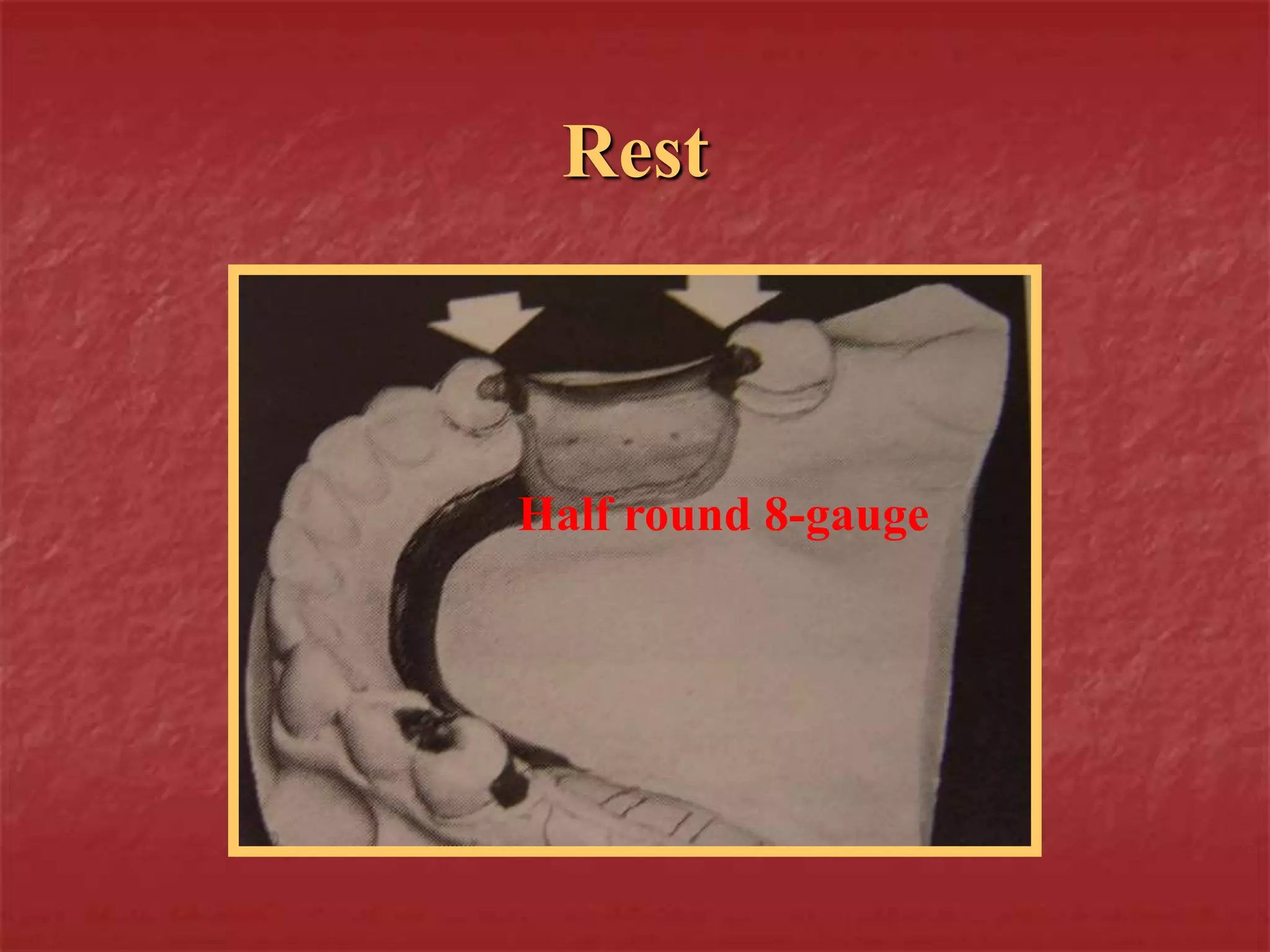
Rest 
Half round 8-gauge
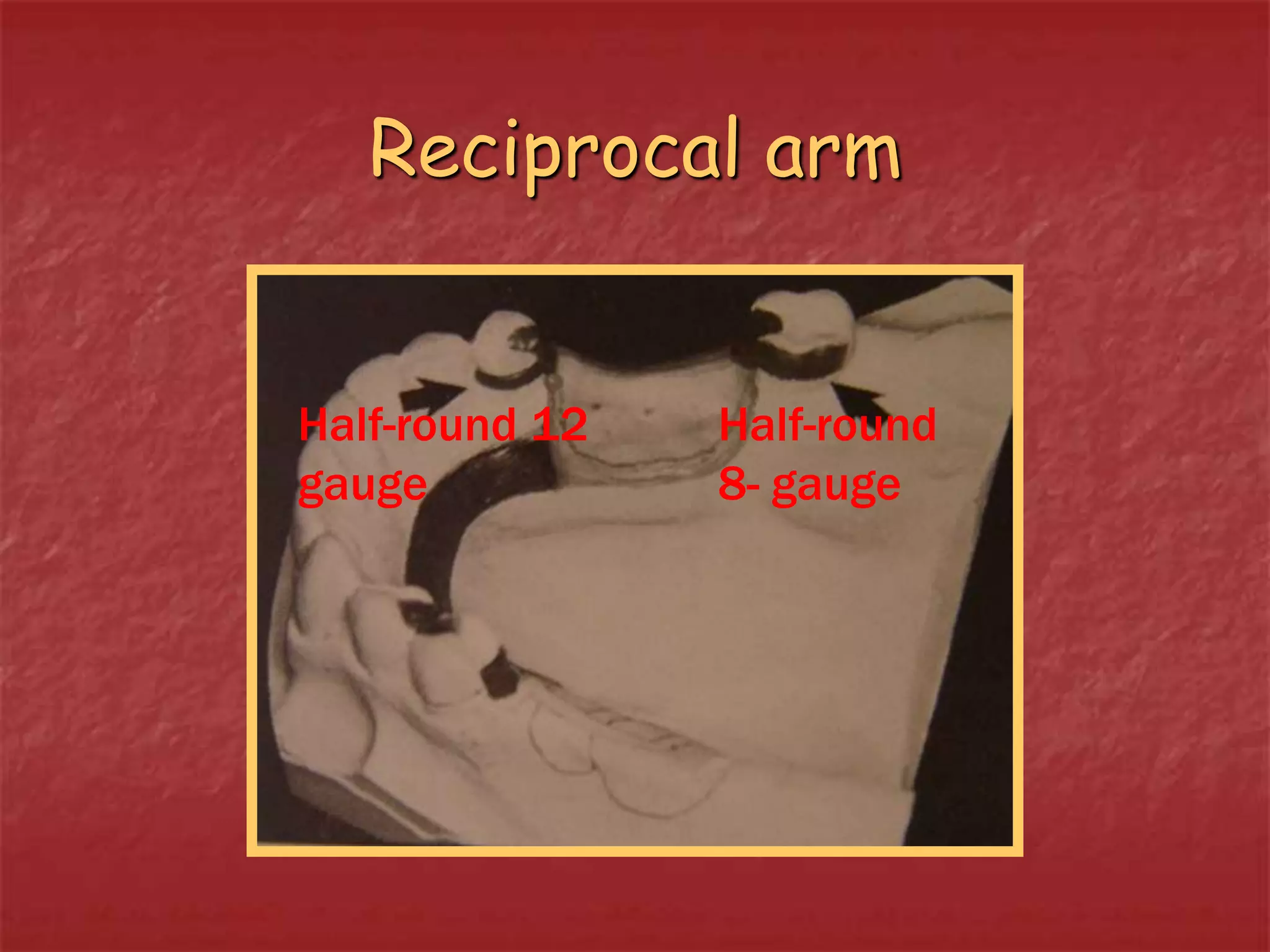
Reciprocal arm 
Half-round 12 
gauge 
Half-round 
8- gauge
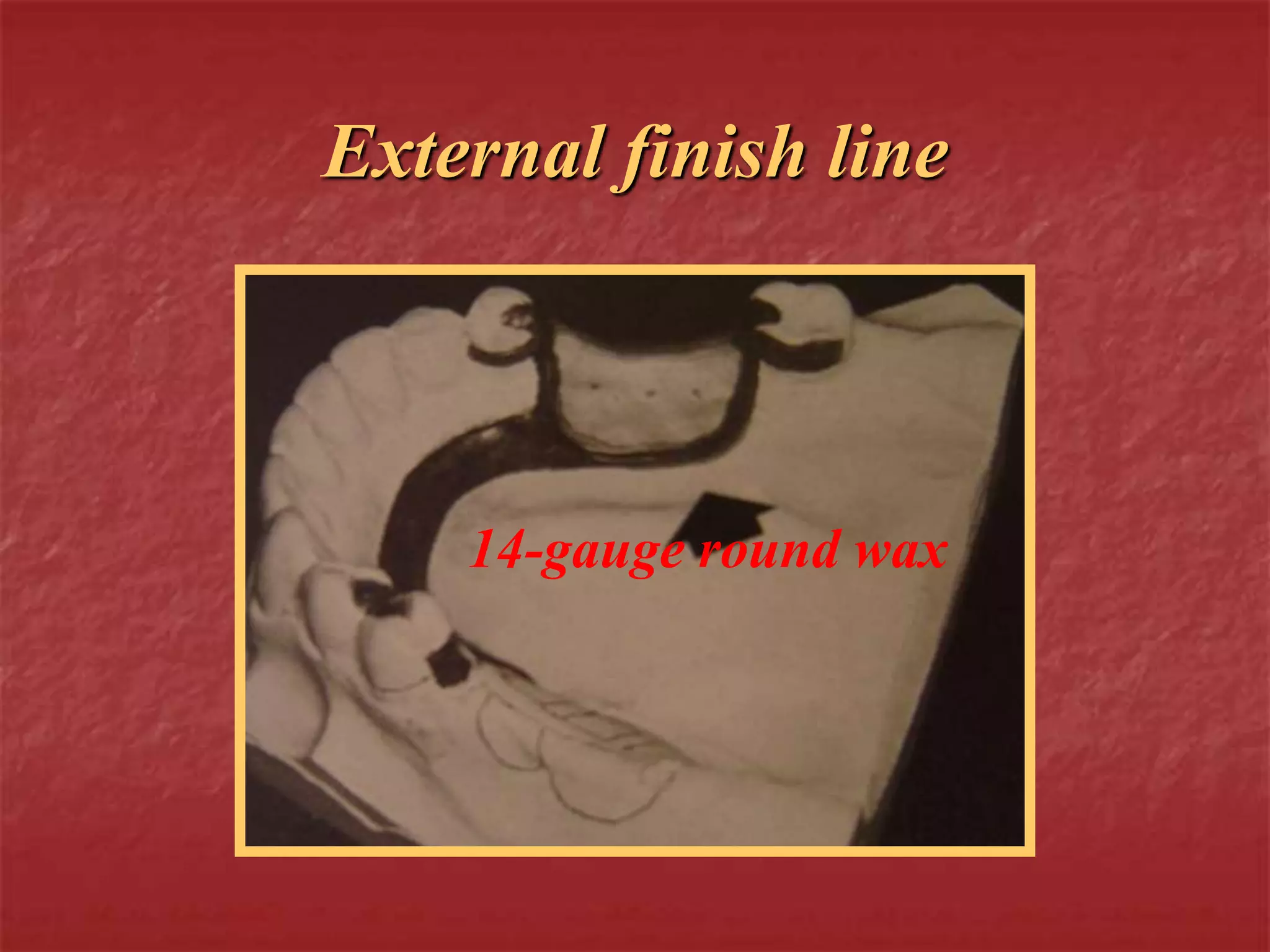
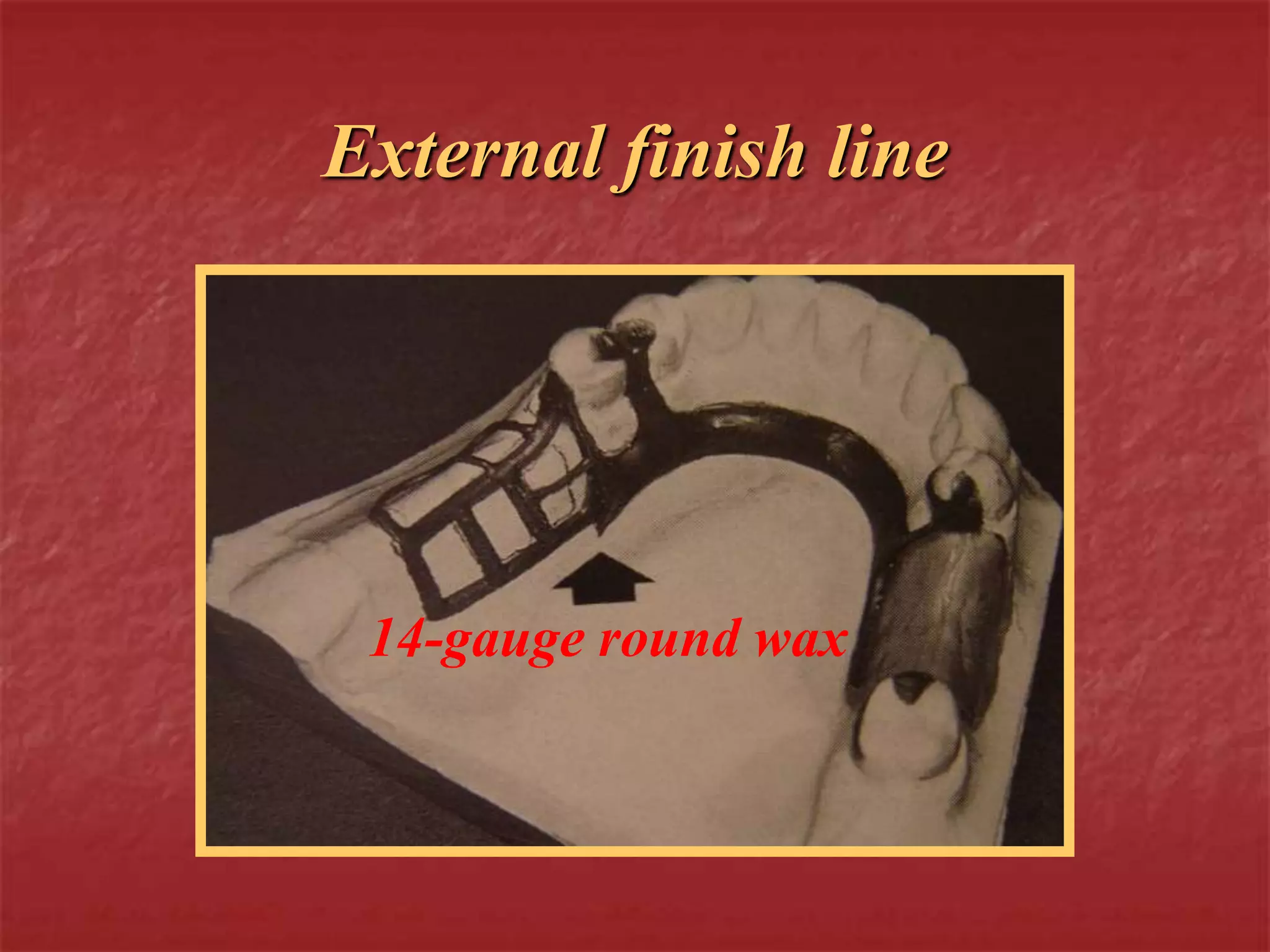
External finish line 
14-gauge round wax
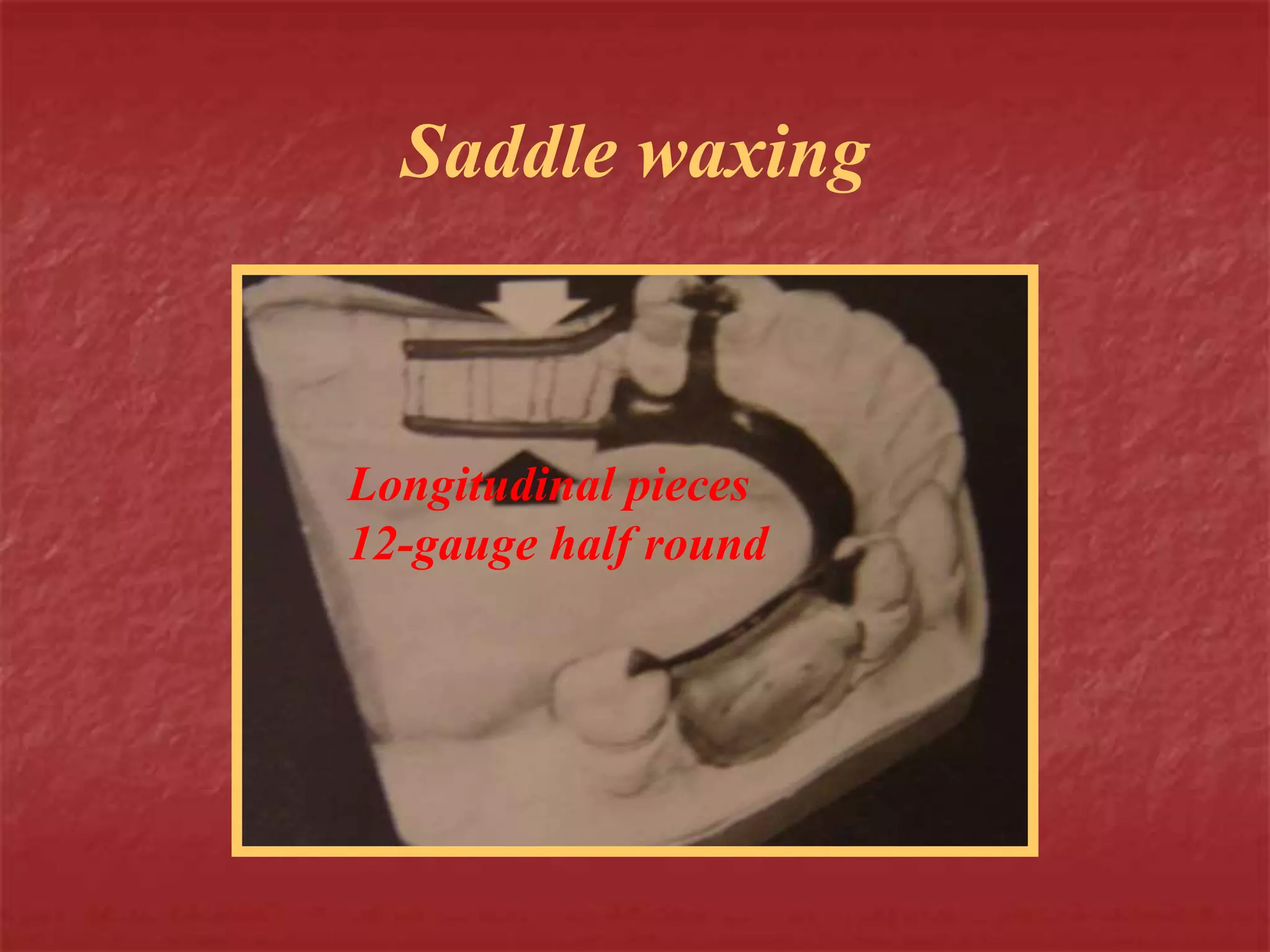
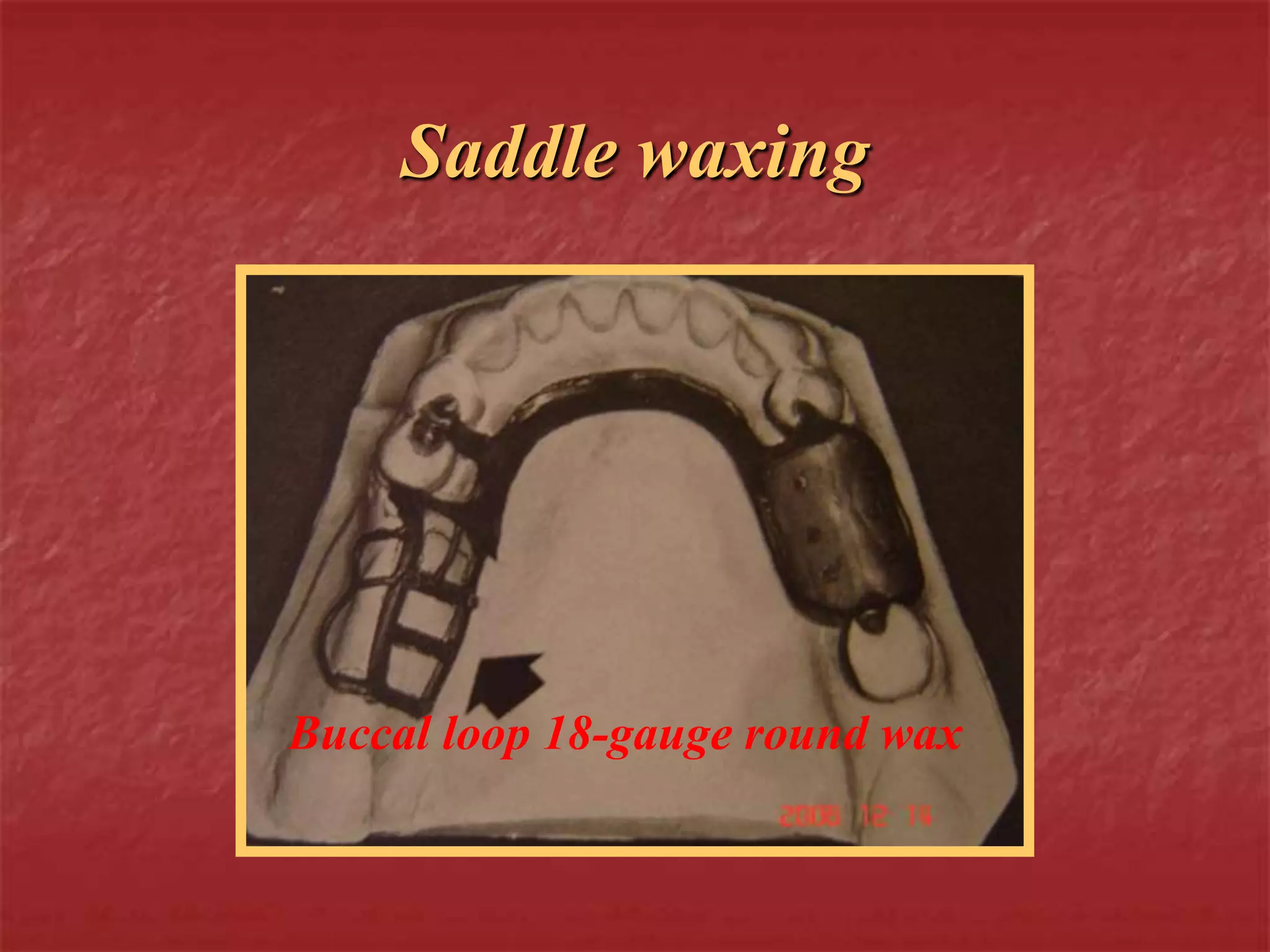
Saddle waxing 
Longitudinal pieces 
12-gauge half round
Saddle waxing 
Buccal loop 18-gauge round wax
External finish line 
14-gauge round wax
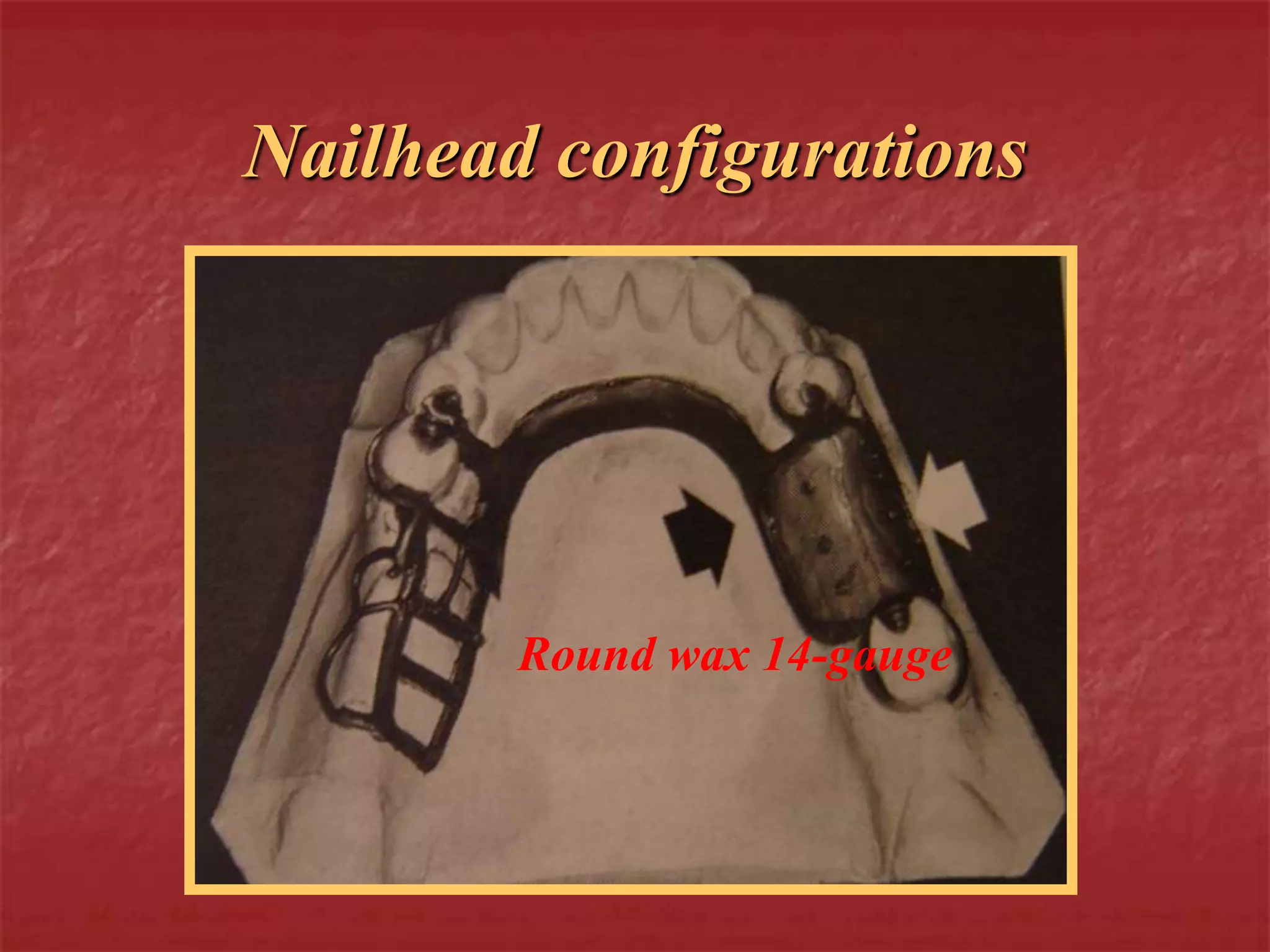
Nailhead configurations 
Round wax 14-gauge
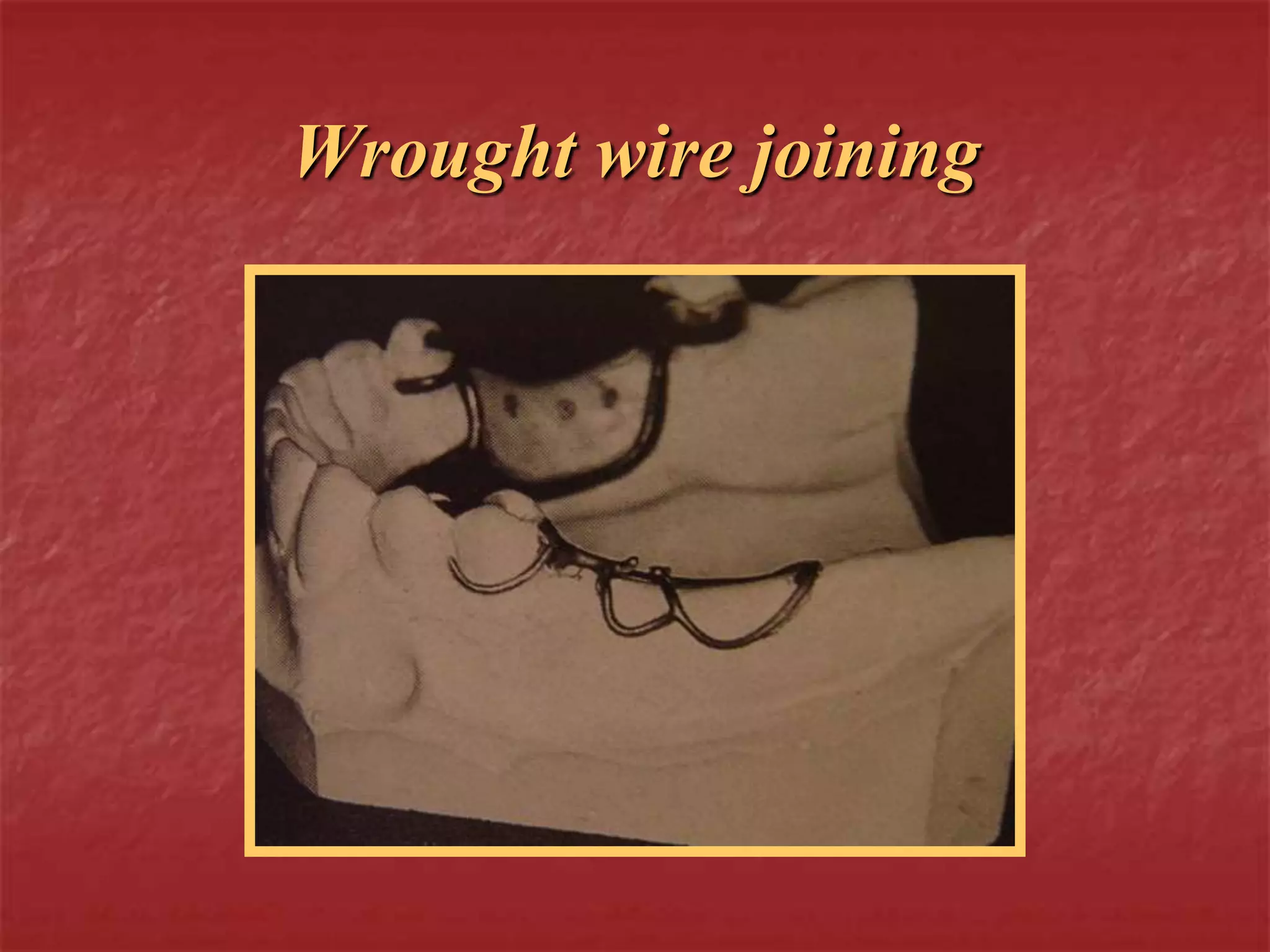
Wrought wire joining
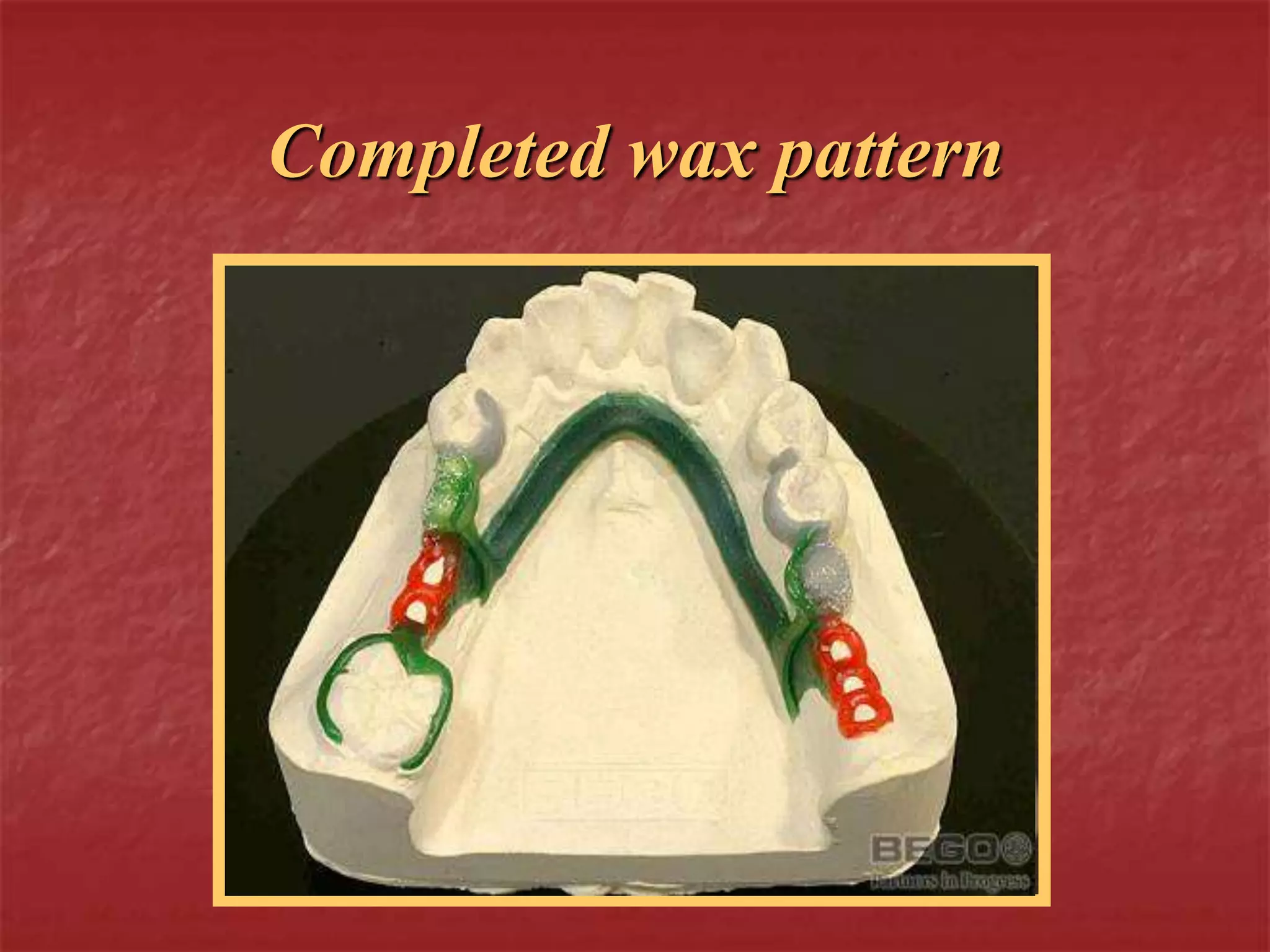
Completed wax pattern
any questions ?
Duplicating & wax up

Duplicating & wax up