
DUAL CYCLE MODEL
OF INNOVATION AND
STRATEGIC
FORESIGHT
Ben Flavel
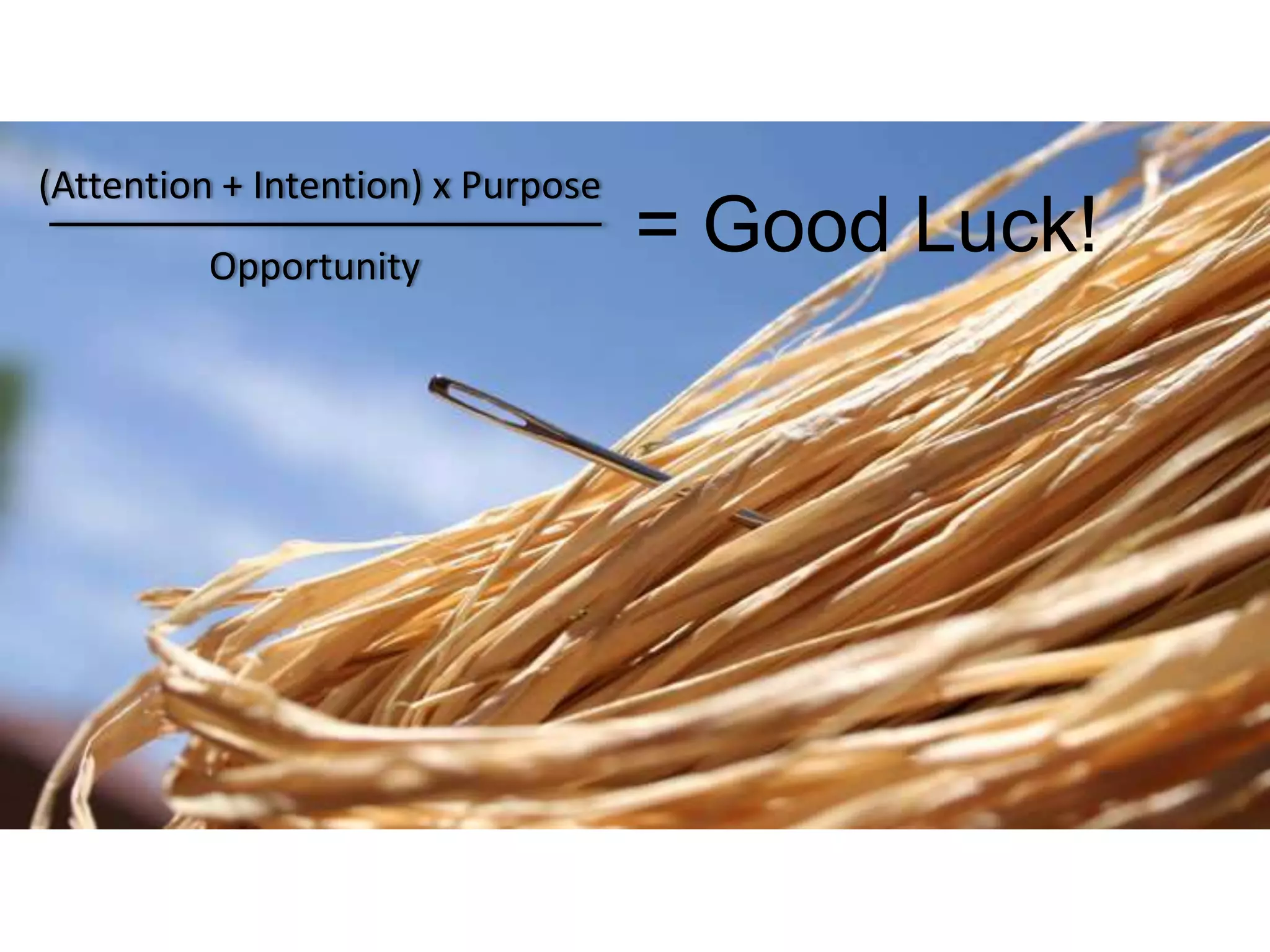
= Good Luck!
(Attention + Intention) x Purpose
Opportunity
“To be a challenger once, it is enough to
challenge the orthodoxies of the
incumbents; to be a challenger twice, a
firm must be capable of challenging its
own orthodoxies.
To reinvent its industry a second time, a
challenger must regenerate its core
strategies.”
Gary Hamel – Competing for the future
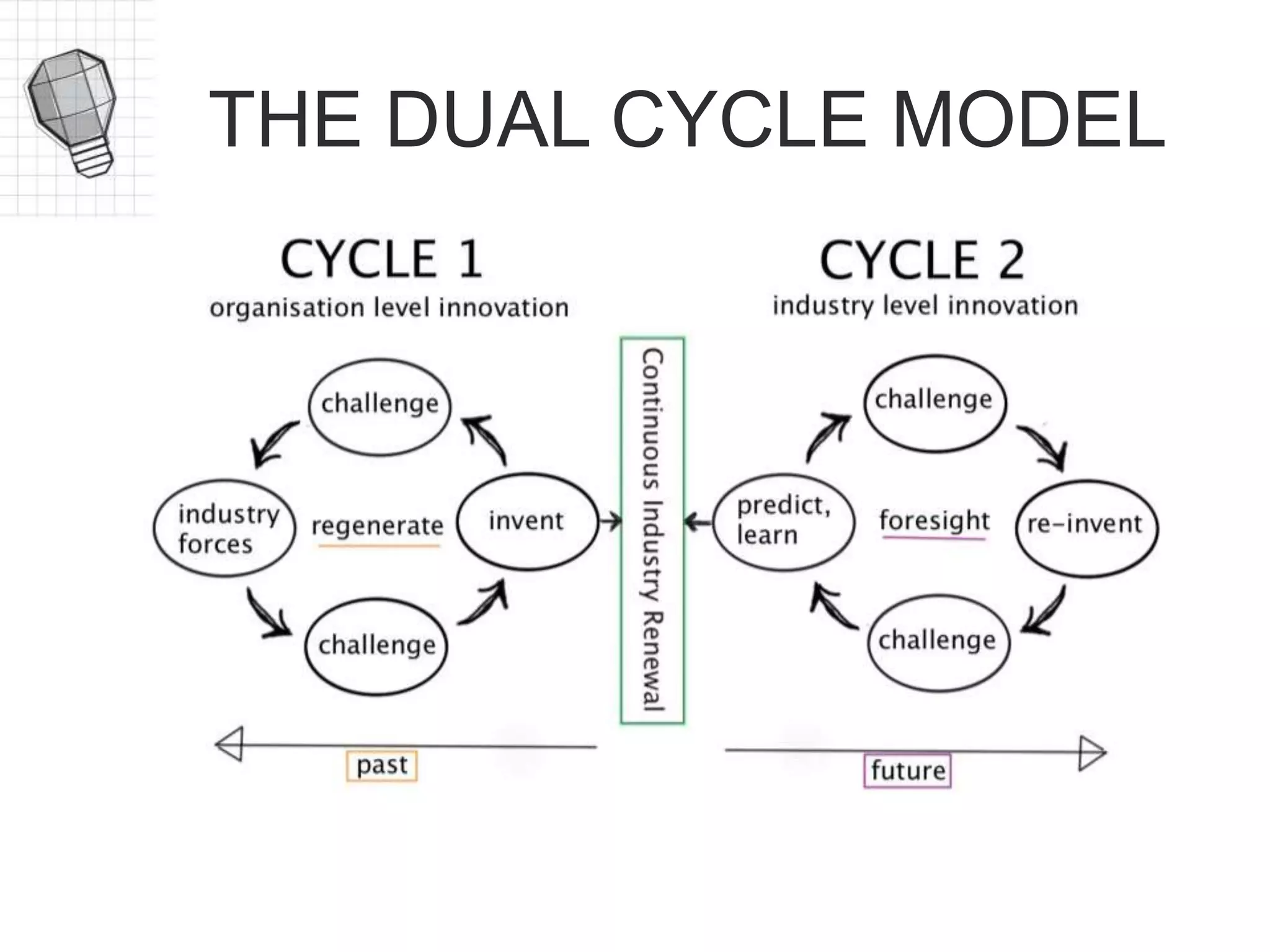
THE DUAL CYCLE MODEL
6 THINGS GOOD
ORGANISATIONS DO
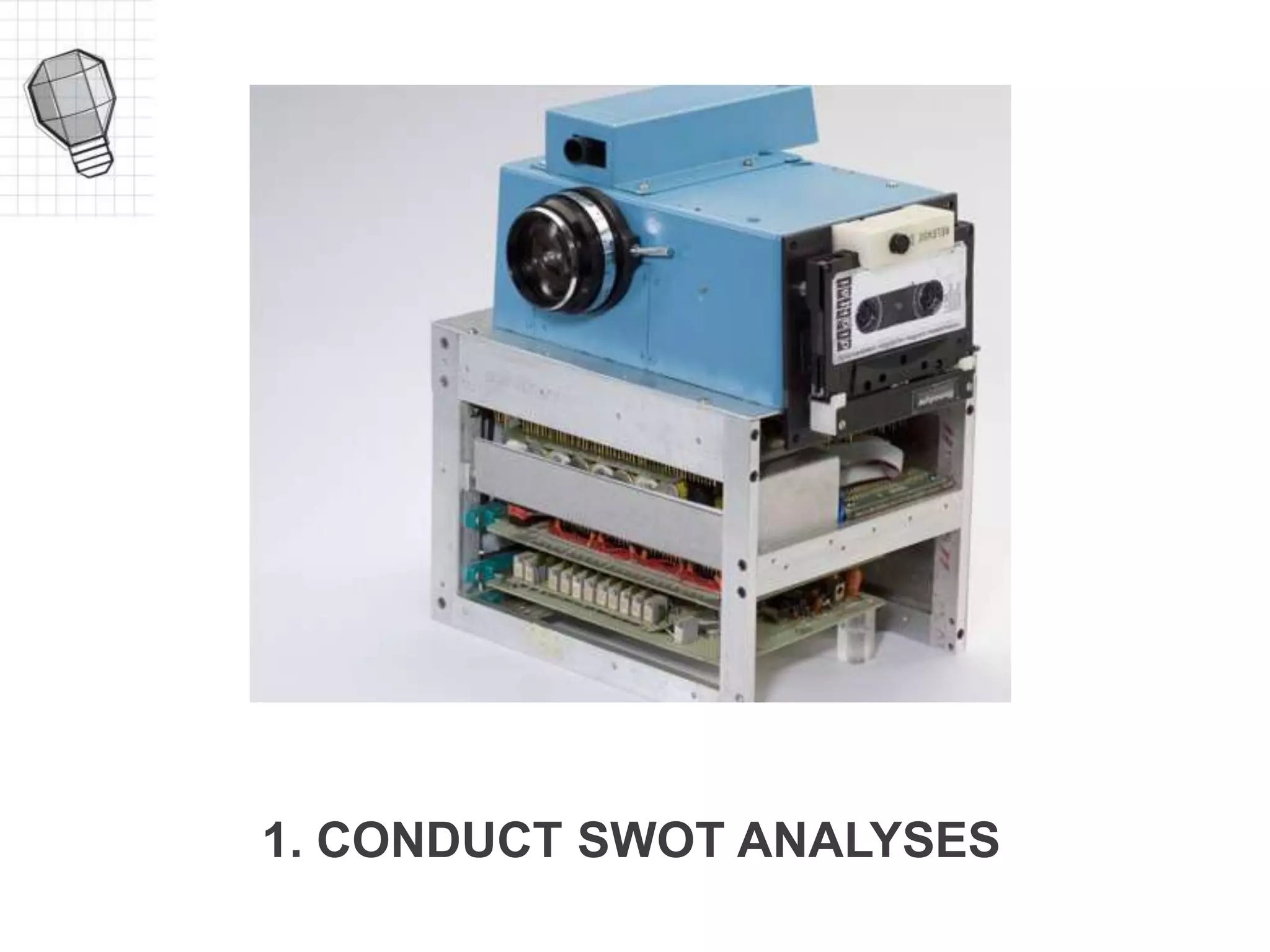
1. CONDUCT SWOT ANALYSES
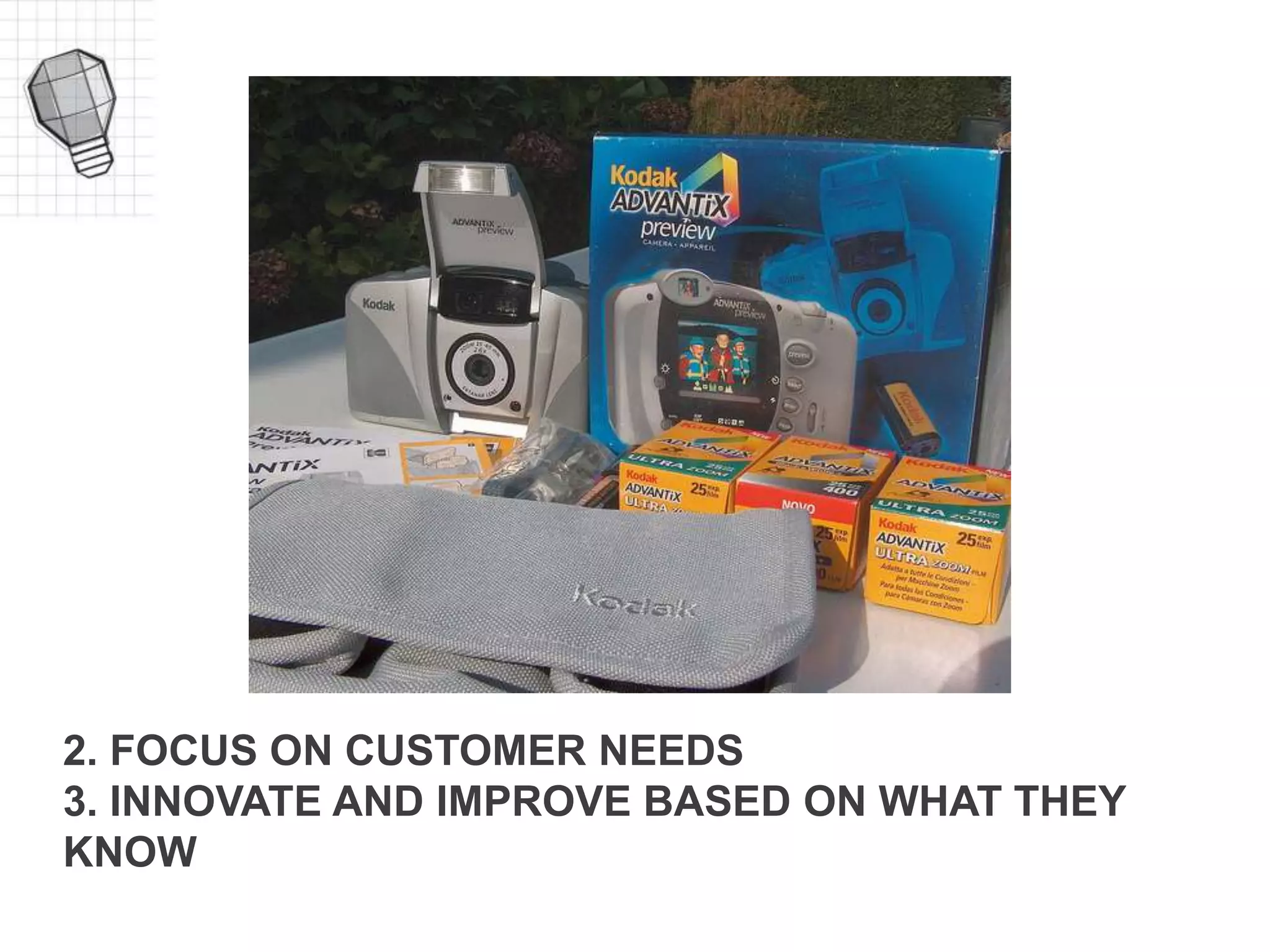
2. FOCUS ON CUSTOMER NEEDS
3. INNOVATE AND IMPROVE BASED ON WHAT THEY
KNOW
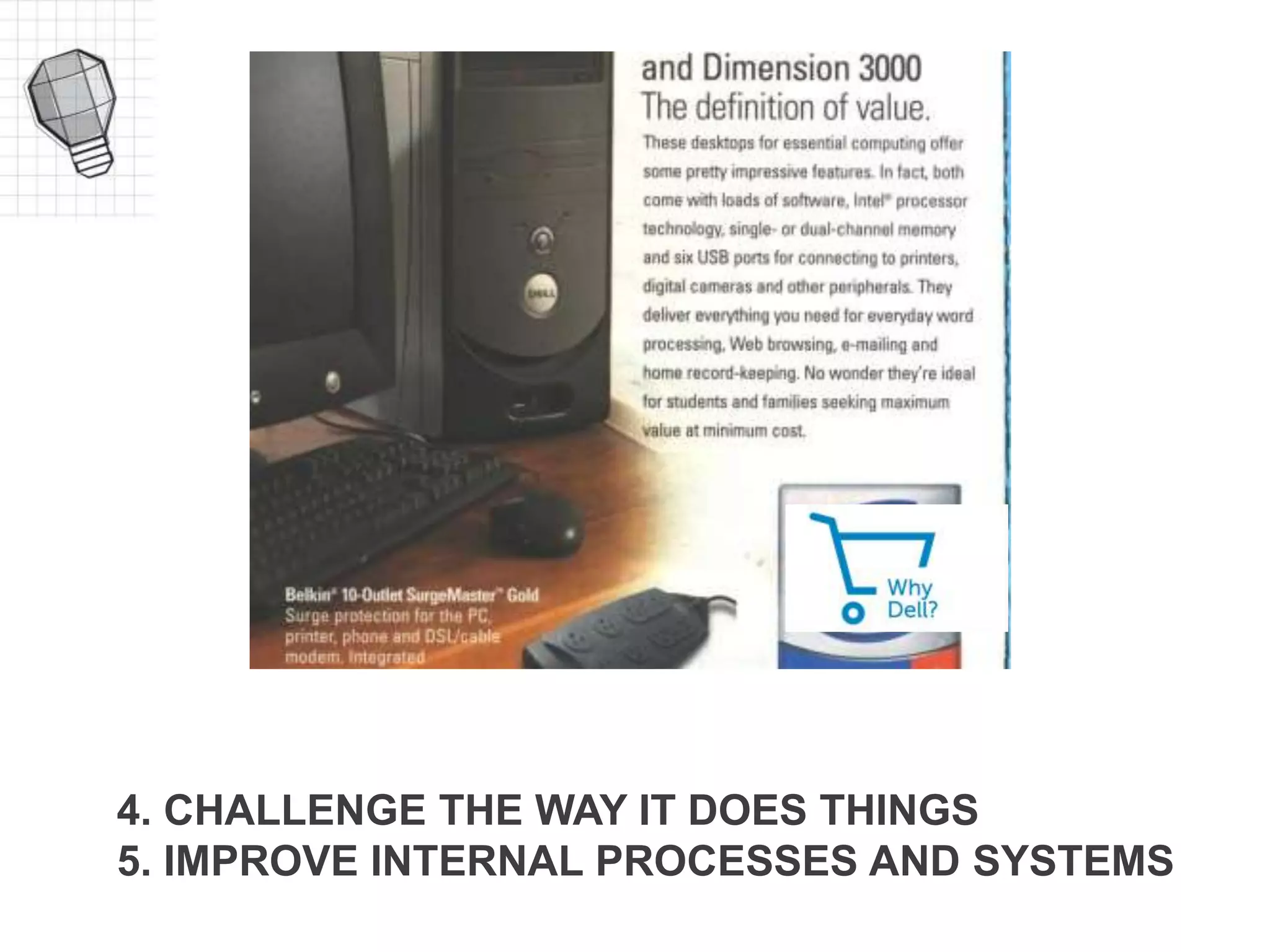
4. CHALLENGE THE WAY IT DOES THINGS
5. IMPROVE INTERNAL PROCESSES AND SYSTEMS
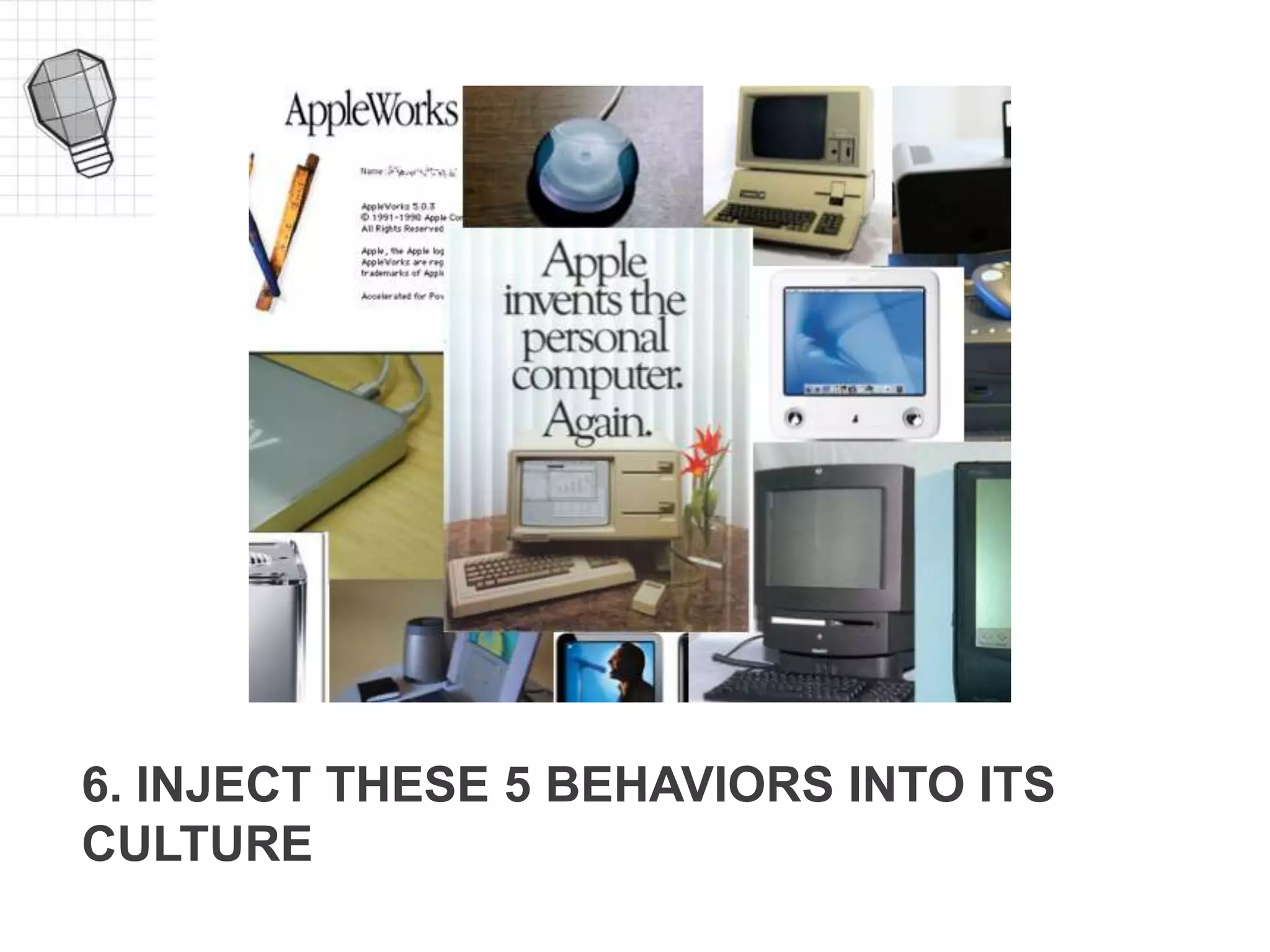
6. INJECT THESE 5 BEHAVIORS INTO ITS
CULTURE
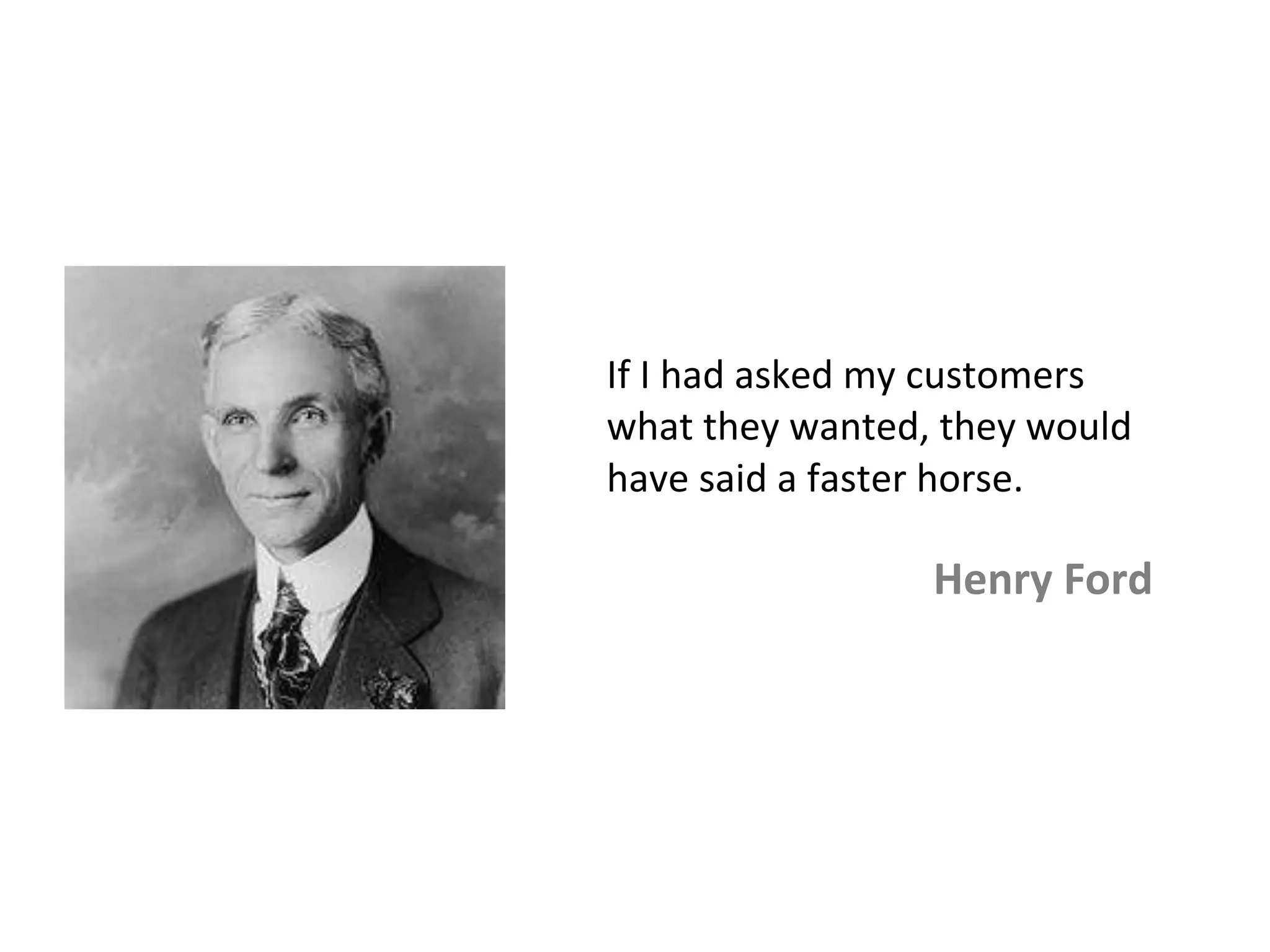
If I had asked my customers
what they wanted, they would
have said a faster horse.
Henry Ford
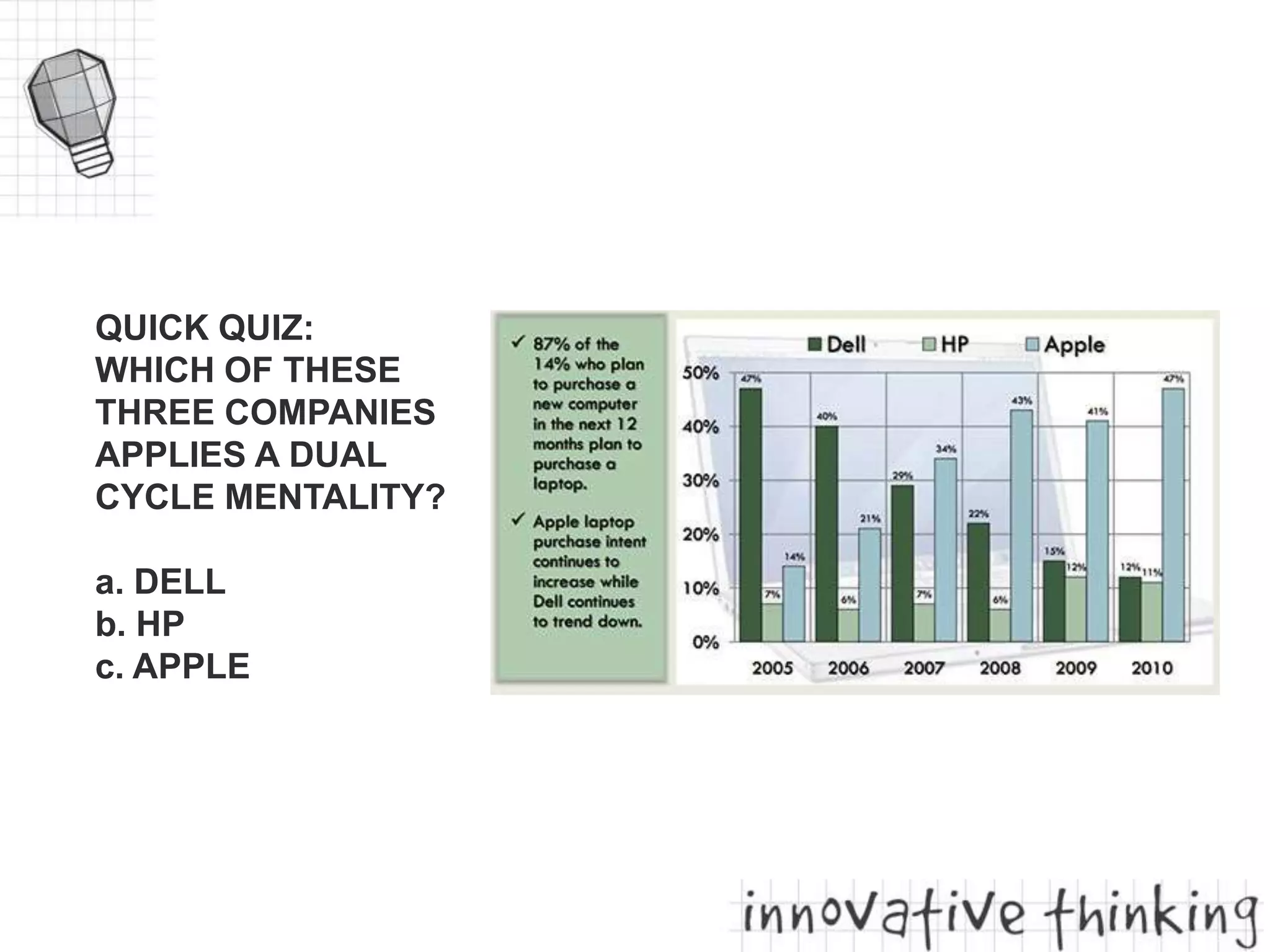
QUICK QUIZ:
WHICH OF THESE
THREE COMPANIES
APPLIES A DUAL
CYCLE MENTALITY?
a. DELL
b. HP
c. APPLE
DOING NOTHING IS
NOT AN OPTION!
WHAT GREAT
ORGANISATIONS
DO…
Great organisations…
• Develop a continuous ability to
regenerate its own core strategies
• Re-invent entire industries
• Are able to train the culture to
challenge internal and external
assumptions
• Create a culture of foresight by
challenging the competencies that
made the organisation successful
in the first place
2 CYCLES IN MOTION
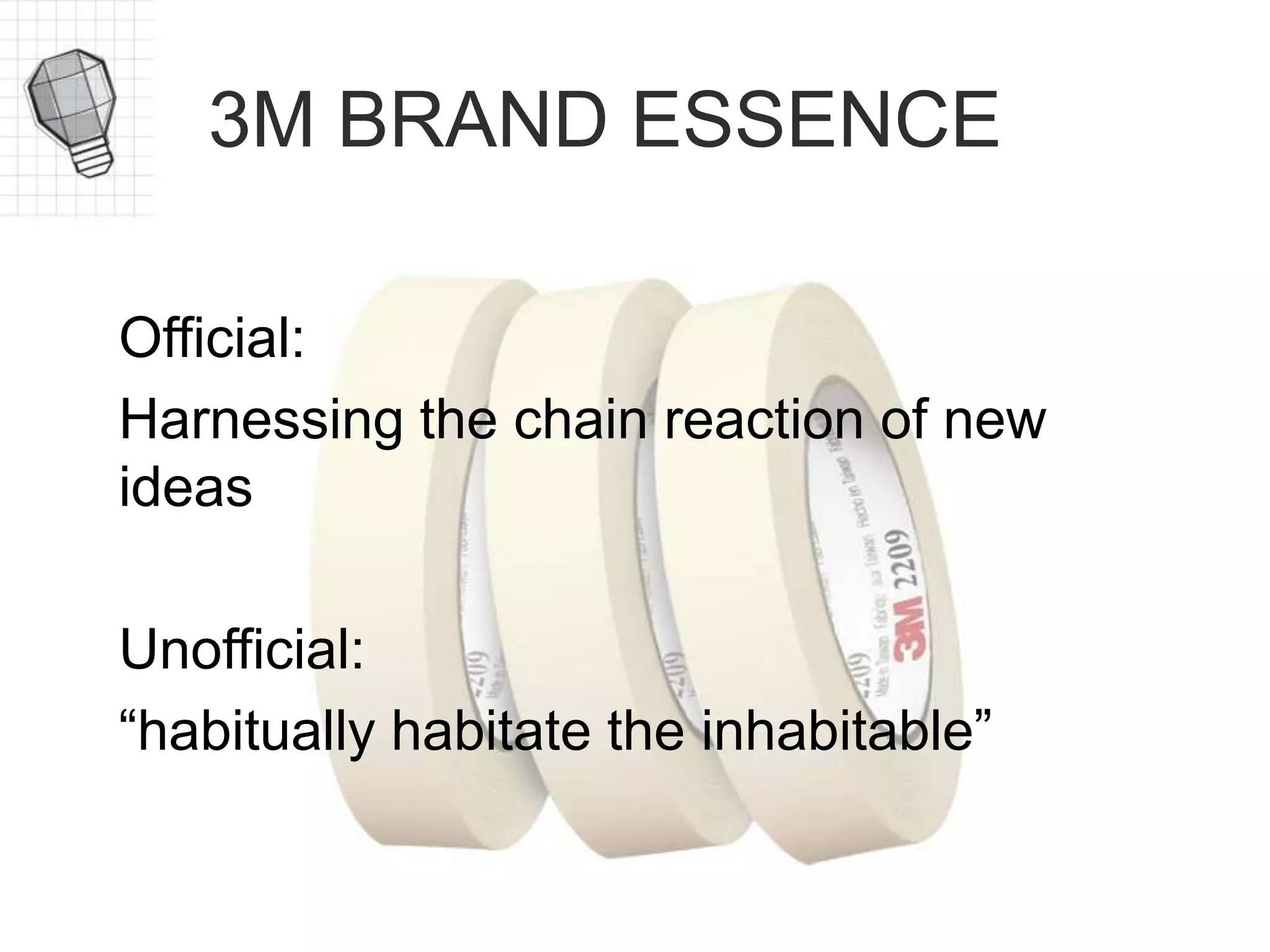
3M BRAND ESSENCE
Official:
Harnessing the chain reaction of new
ideas
Unofficial:
“habitually habitate the inhabitable”
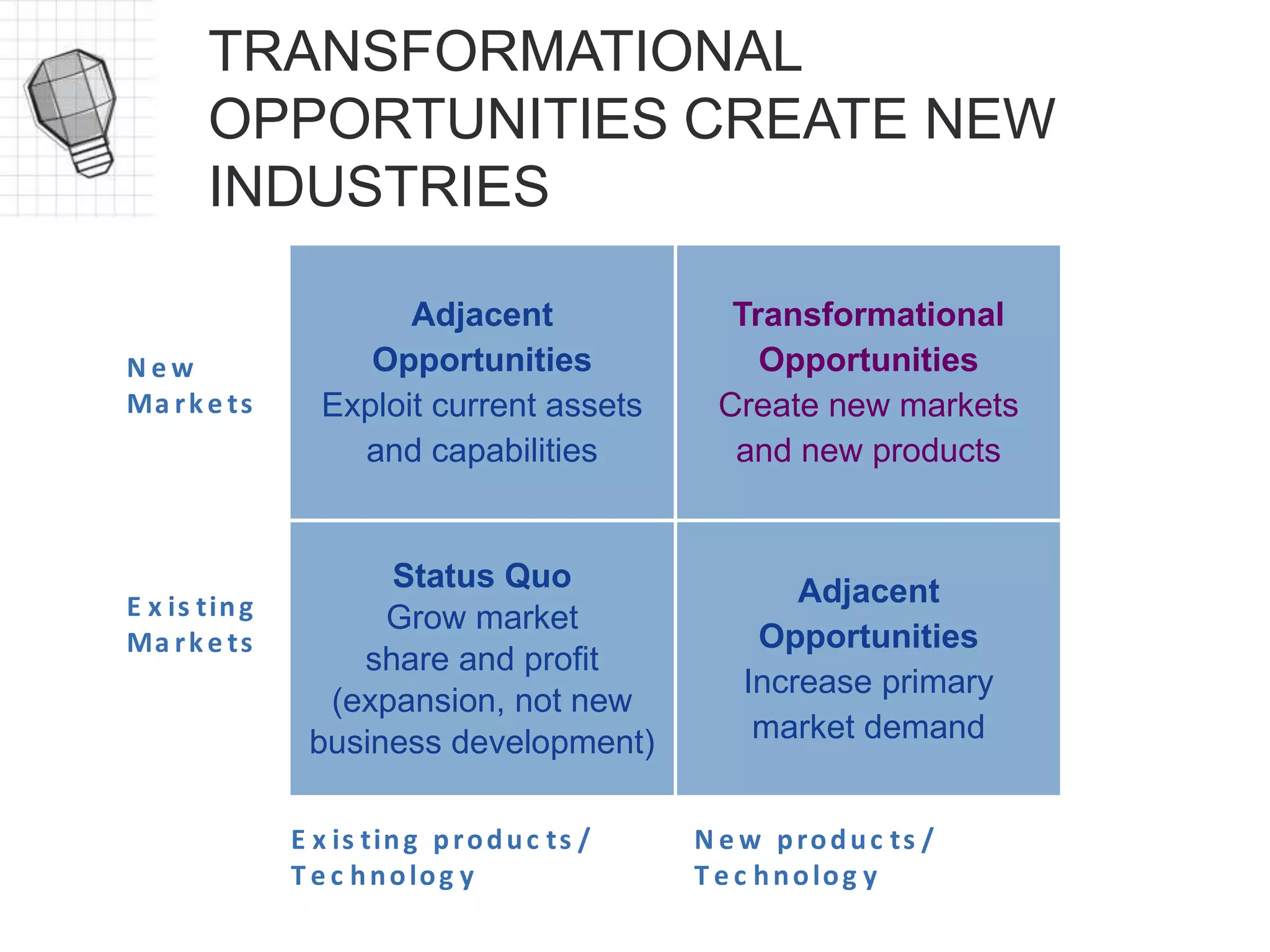
TRANSFORMATIONAL
OPPORTUNITIES CREATE NEW
INDUSTRIES
E x is ting produc ts /
T e c hnolog y
N e w produc ts /
T e c hnolog y
E x is ting
Ma rke ts
N e w
Ma rke ts
Adjacent
Opportunities
Exploit current assets
and capabilities
Transformational
Opportunities
Create new markets
and new products
Status Quo
Grow market
share and profit
(expansion, not new
business development)
Adjacent
Opportunities
Increase primary
market demand
We have an amazing ability to over-estimate
what we can achieve in one year and yet
under-estimate what we can achieve in ten.
Companies find it risky to think too far ahead.
Ideas become “scary”.
Limiting futures thinking to what we can
prove now, based on what has been, is truly
dangerous.
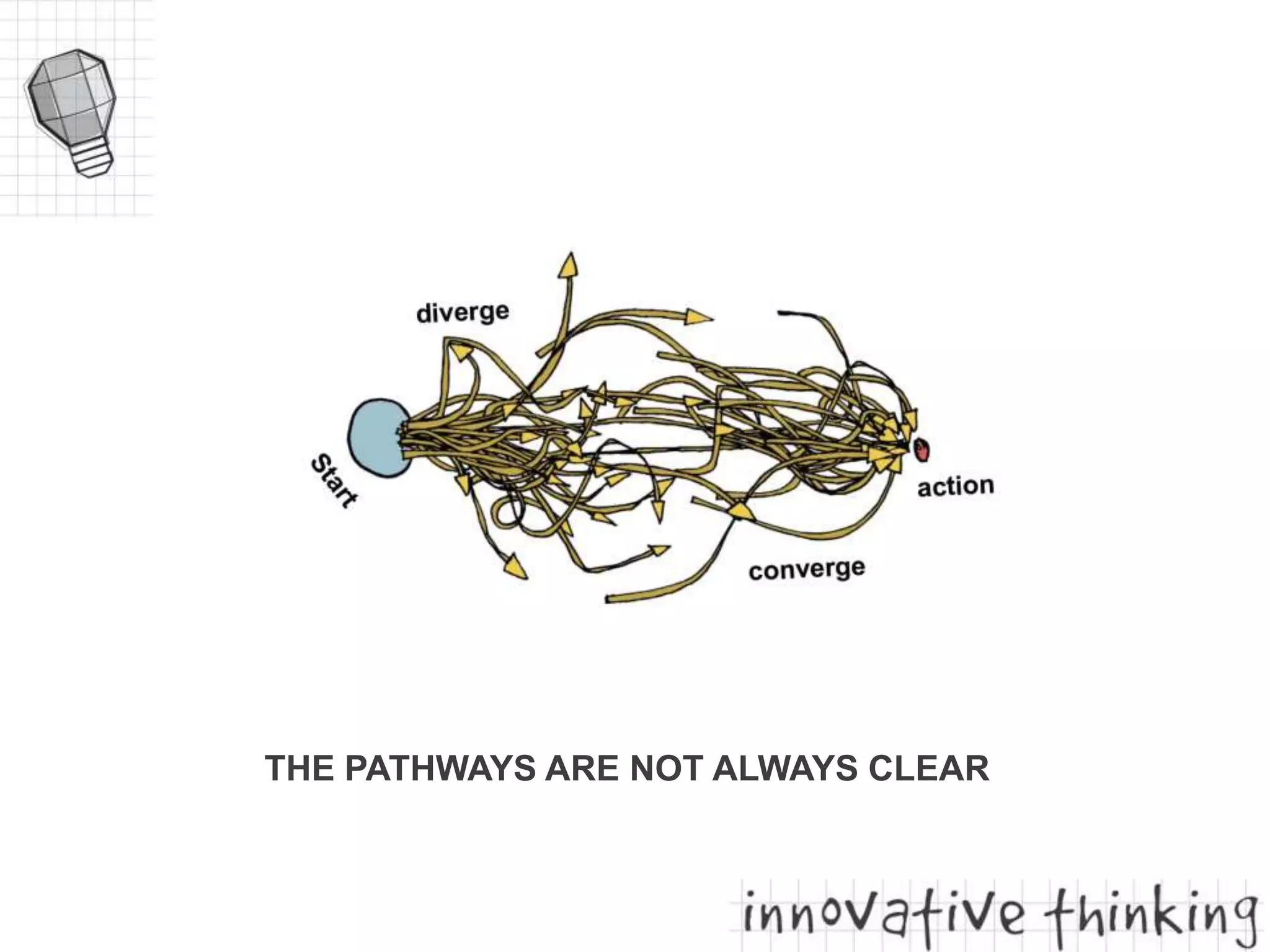
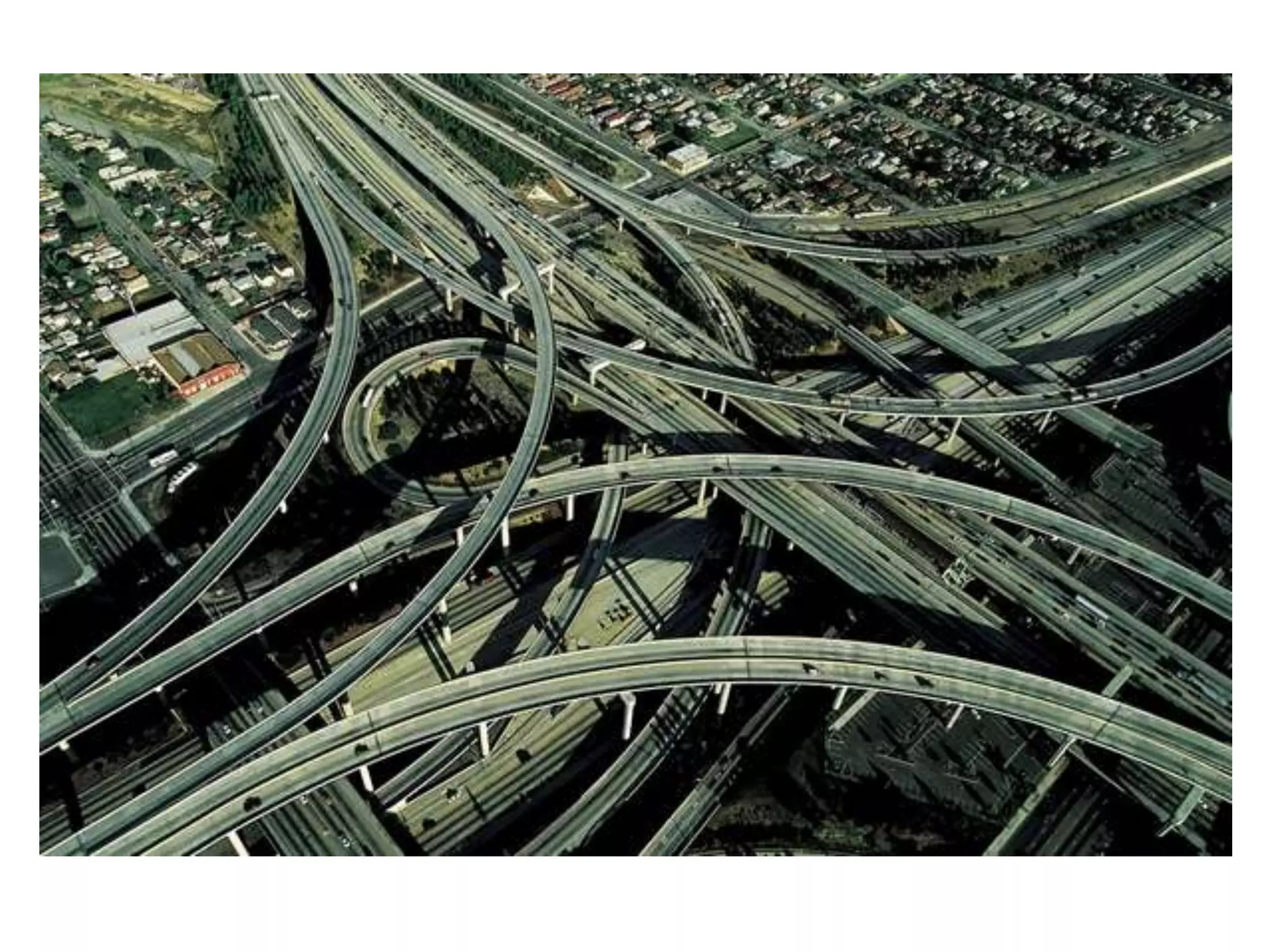
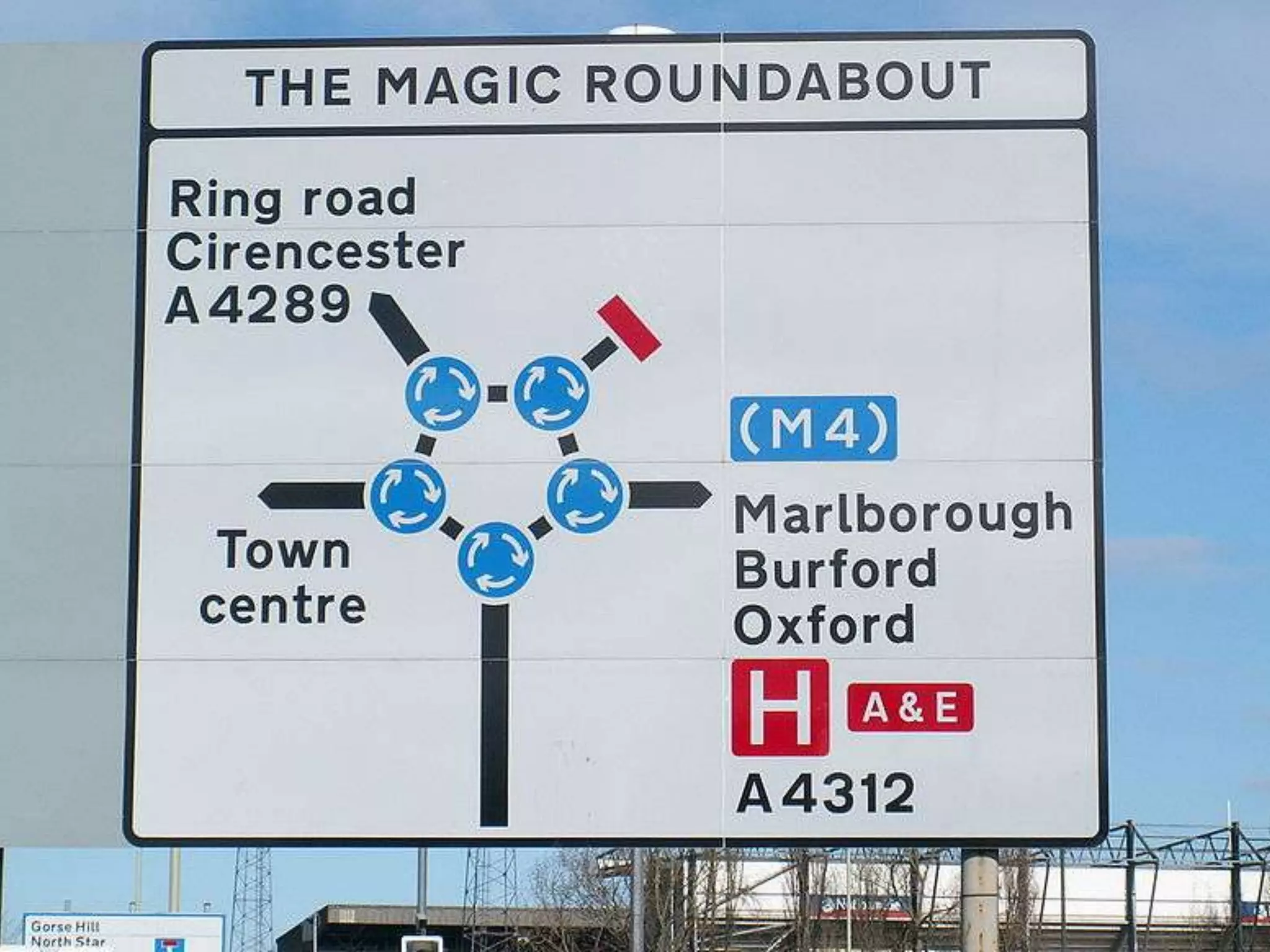
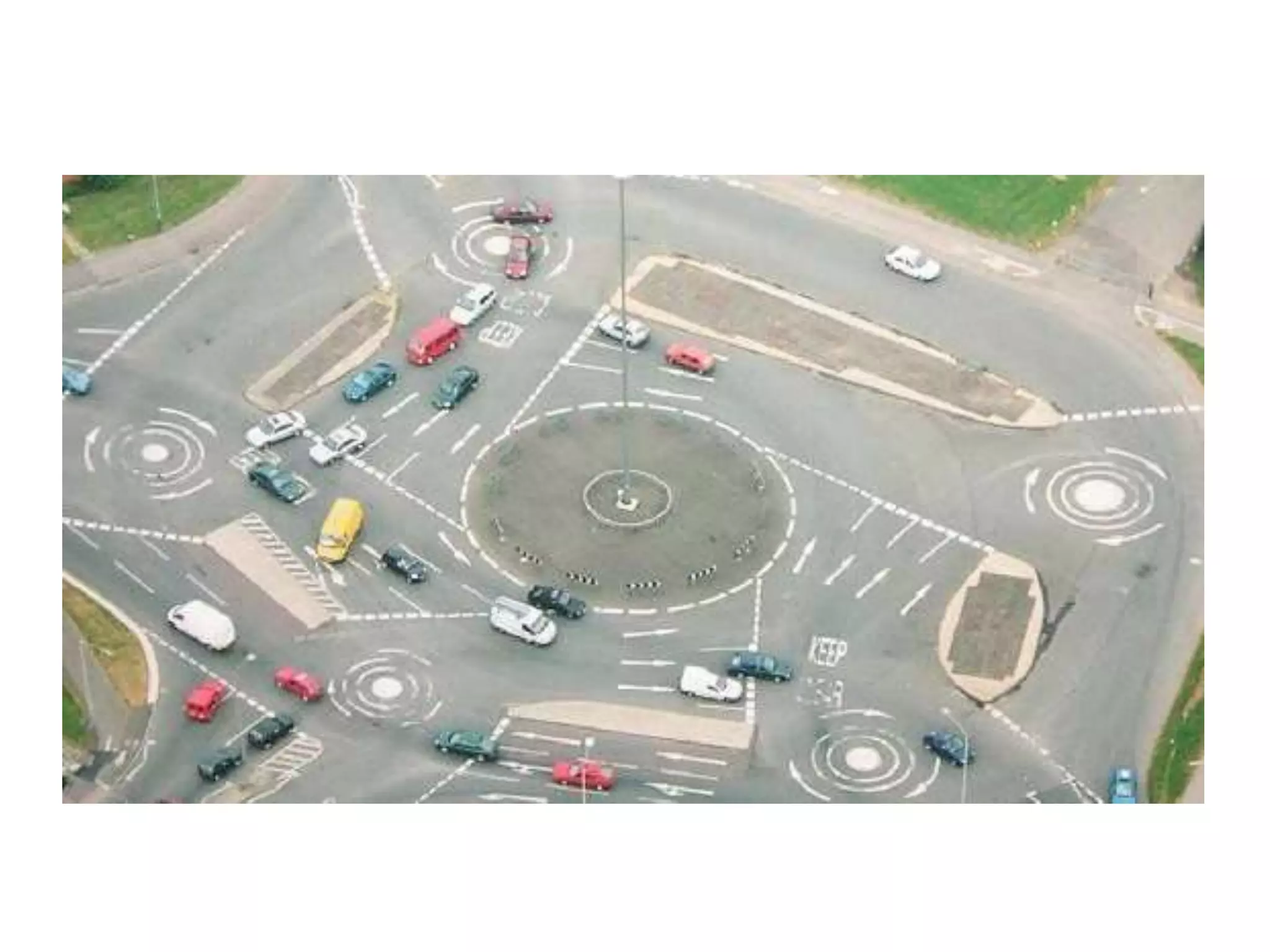
THE PATHWAYS ARE NOT ALWAYS CLEAR
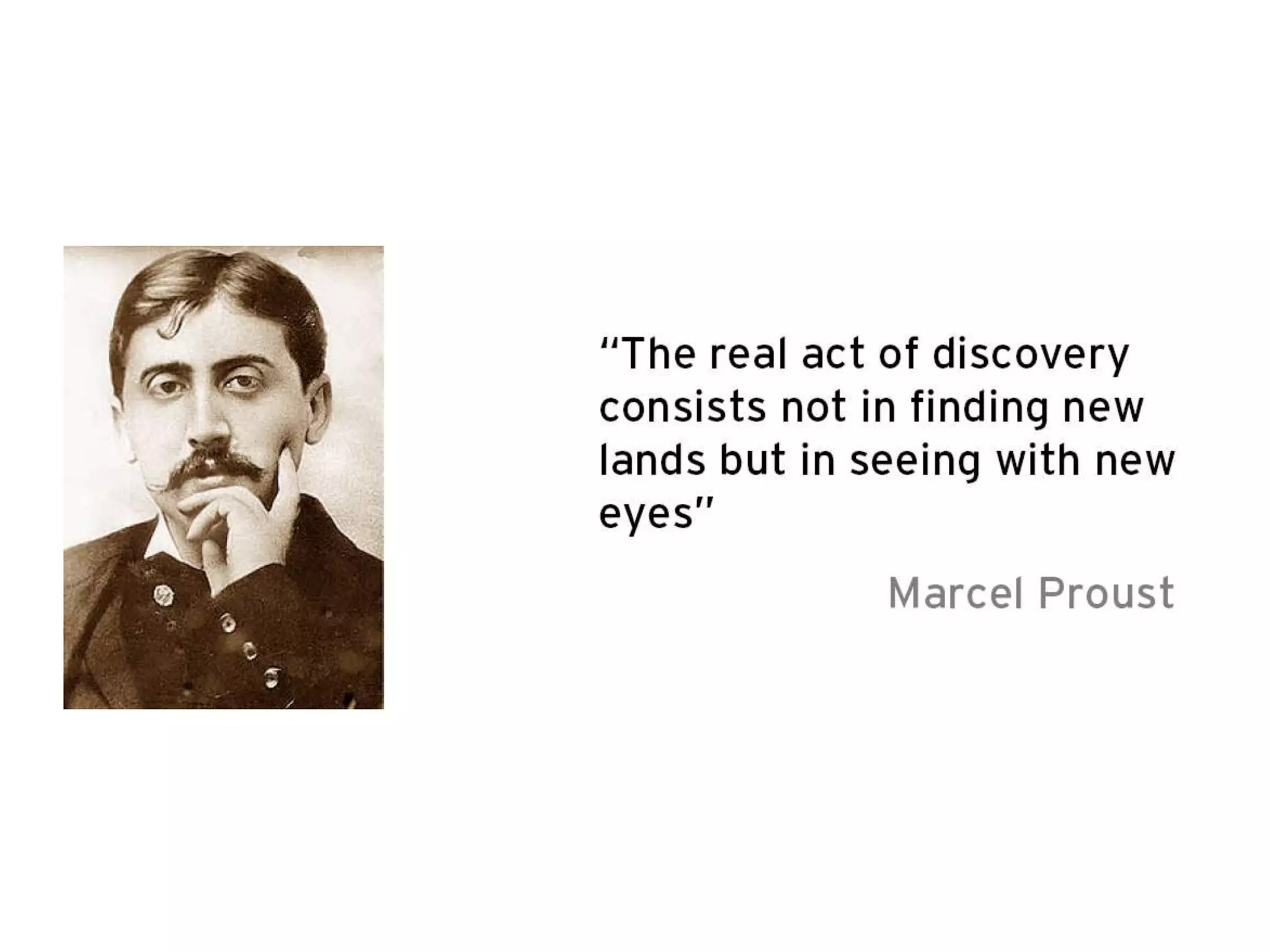
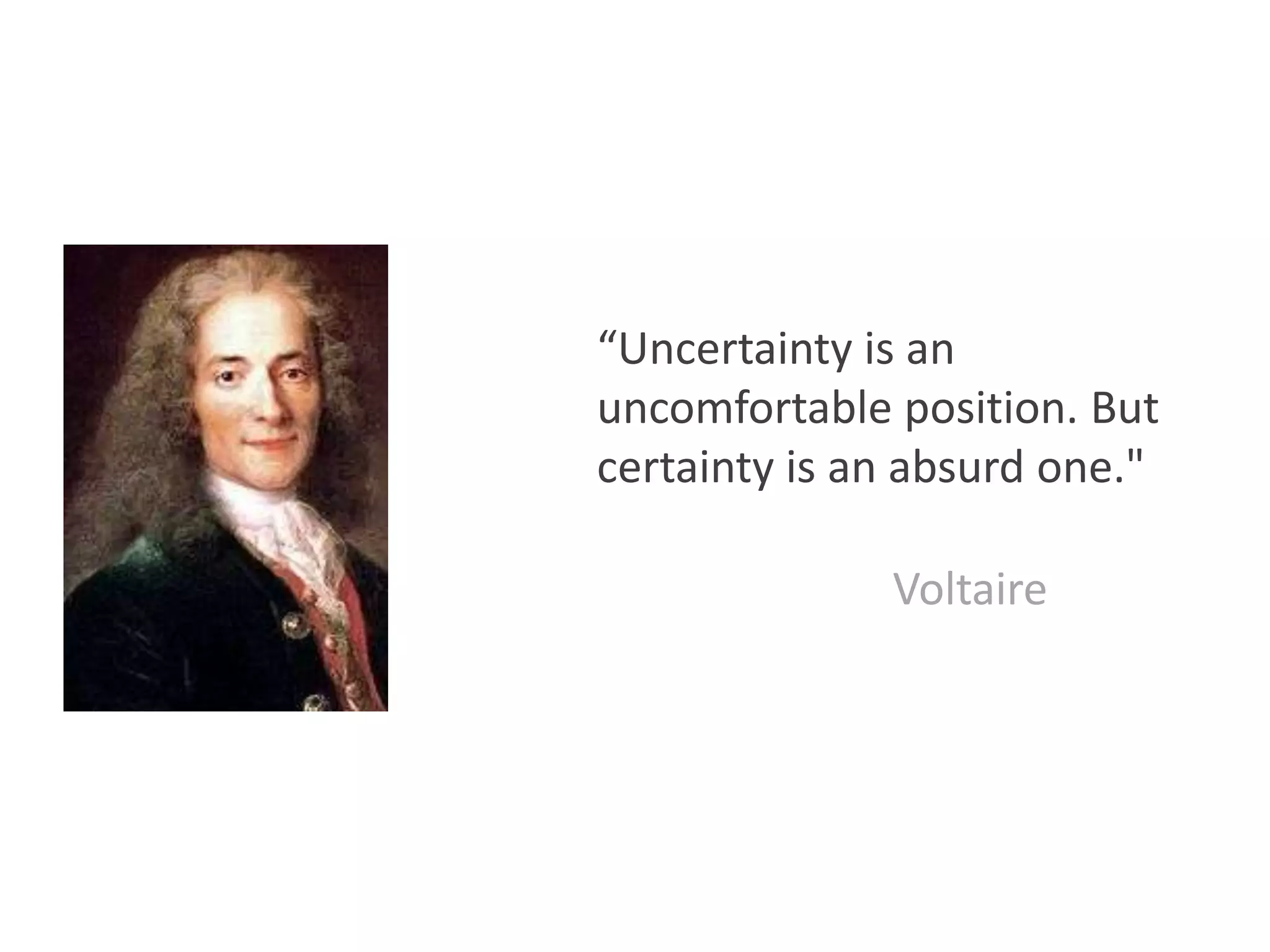
“Uncertainty is an
uncomfortable position. But
certainty is an absurd one."
Voltaire
WHEN CERTAINTY
BECOMES
MADNESS…
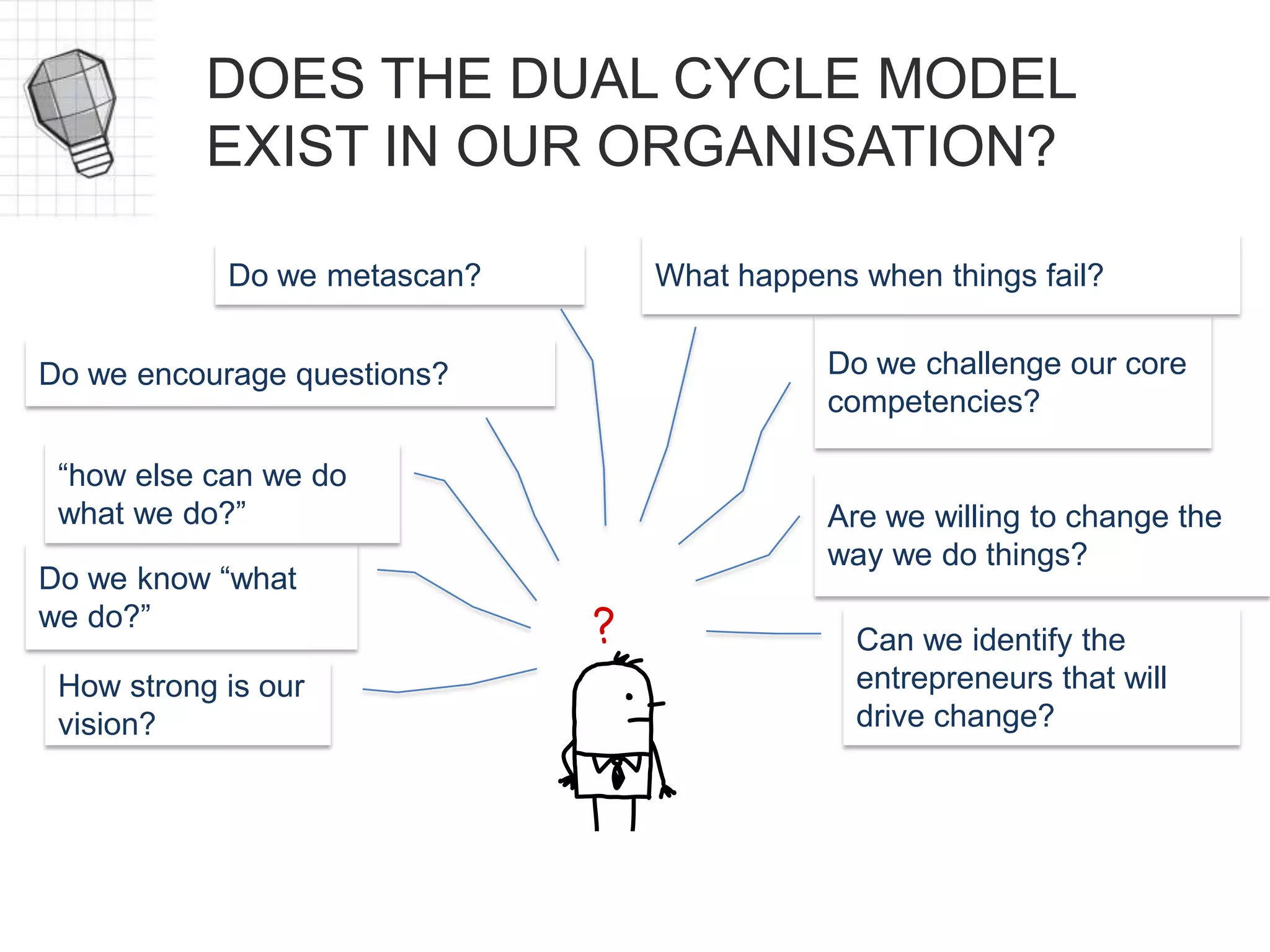
DOES THE DUAL CYCLE MODEL
EXIST IN OUR ORGANISATION?
How strong is our
vision?
Do we know “what
we do?”
“how else can we do
what we do?”
Do we encourage questions? Do we challenge our core
competencies?
Are we willing to change the
way we do things?
Do we metascan? What happens when things fail?
Can we identify the
entrepreneurs that will
drive change?
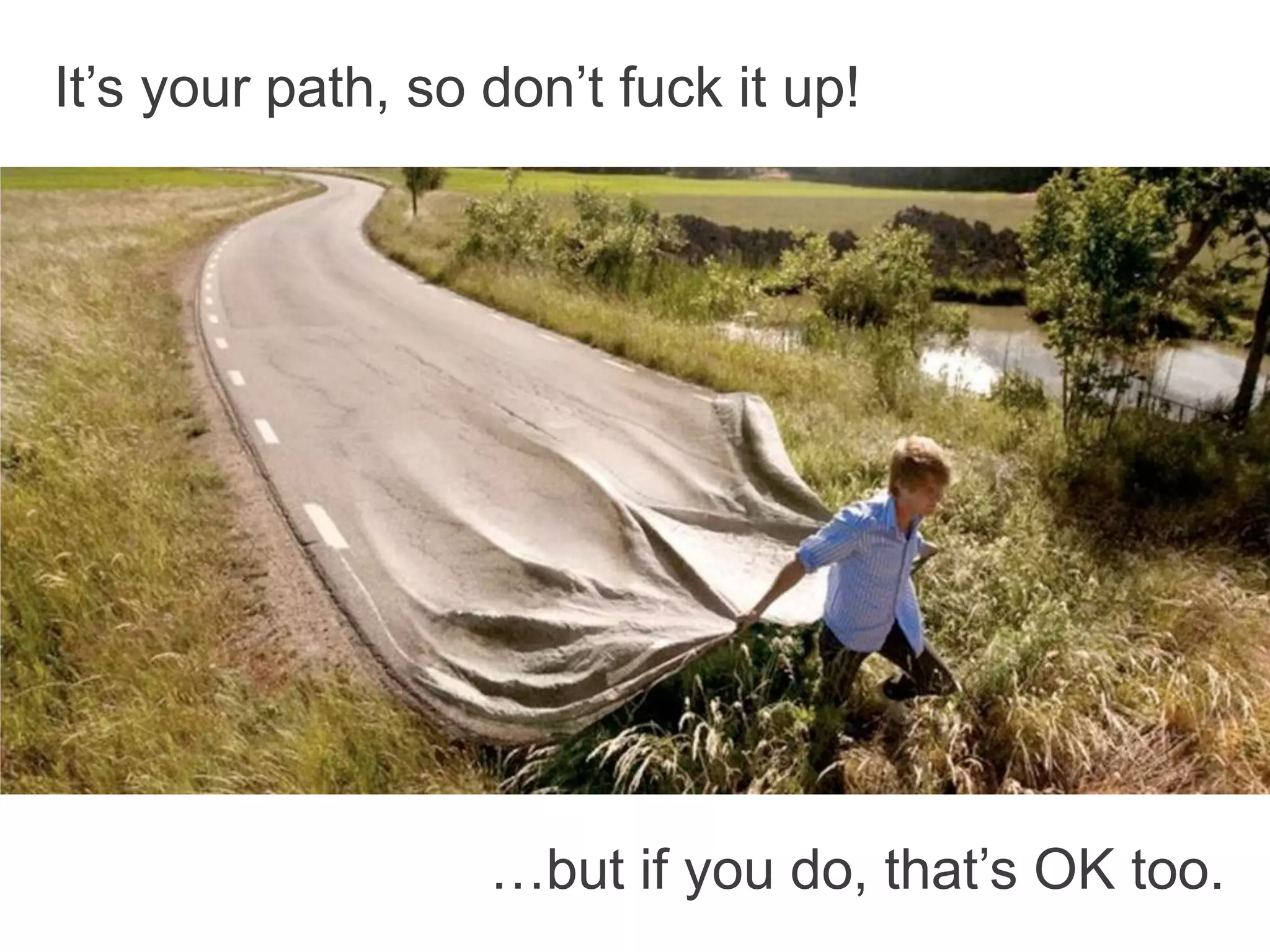
It’s your path, so don’t fuck it up!
…but if you do, that’s OK too.
Dual Cycle Model of Innovation and Strategic Foresight

Dual Cycle Model of Innovation and Strategic Foresight

  • 1.
    DUAL CYCLE MODEL OFINNOVATION AND STRATEGIC FORESIGHT Ben Flavel
  • 2.
    = Good Luck! (Attention+ Intention) x Purpose Opportunity
  • 3.
    “To be achallenger once, it is enough to challenge the orthodoxies of the incumbents; to be a challenger twice, a firm must be capable of challenging its own orthodoxies. To reinvent its industry a second time, a challenger must regenerate its core strategies.” Gary Hamel – Competing for the future
  • 4.
  • 5.
  • 6.
  • 7.
    2. FOCUS ONCUSTOMER NEEDS 3. INNOVATE AND IMPROVE BASED ON WHAT THEY KNOW
  • 8.
    4. CHALLENGE THEWAY IT DOES THINGS 5. IMPROVE INTERNAL PROCESSES AND SYSTEMS
  • 9.
    6. INJECT THESE5 BEHAVIORS INTO ITS CULTURE
  • 10.
    If I hadasked my customers what they wanted, they would have said a faster horse. Henry Ford
  • 11.
    QUICK QUIZ: WHICH OFTHESE THREE COMPANIES APPLIES A DUAL CYCLE MENTALITY? a. DELL b. HP c. APPLE
  • 13.
  • 16.
  • 17.
    Great organisations… • Developa continuous ability to regenerate its own core strategies • Re-invent entire industries • Are able to train the culture to challenge internal and external assumptions • Create a culture of foresight by challenging the competencies that made the organisation successful in the first place
  • 18.
  • 19.
    3M BRAND ESSENCE Official: Harnessingthe chain reaction of new ideas Unofficial: “habitually habitate the inhabitable”
  • 20.
    TRANSFORMATIONAL OPPORTUNITIES CREATE NEW INDUSTRIES Ex is ting produc ts / T e c hnolog y N e w produc ts / T e c hnolog y E x is ting Ma rke ts N e w Ma rke ts Adjacent Opportunities Exploit current assets and capabilities Transformational Opportunities Create new markets and new products Status Quo Grow market share and profit (expansion, not new business development) Adjacent Opportunities Increase primary market demand
  • 22.
    We have anamazing ability to over-estimate what we can achieve in one year and yet under-estimate what we can achieve in ten. Companies find it risky to think too far ahead. Ideas become “scary”. Limiting futures thinking to what we can prove now, based on what has been, is truly dangerous.
  • 24.
    THE PATHWAYS ARENOT ALWAYS CLEAR
  • 26.
    “Uncertainty is an uncomfortableposition. But certainty is an absurd one." Voltaire
  • 27.
  • 30.
    DOES THE DUALCYCLE MODEL EXIST IN OUR ORGANISATION? How strong is our vision? Do we know “what we do?” “how else can we do what we do?” Do we encourage questions? Do we challenge our core competencies? Are we willing to change the way we do things? Do we metascan? What happens when things fail? Can we identify the entrepreneurs that will drive change?
  • 31.
    It’s your path,so don’t fuck it up! …but if you do, that’s OK too.

Editor's Notes

  • #24 We have an amazing ability to over-estimate what we can achieve in one year and yet under-estimate what we can achieve in ten. Companies find it risky to think too far ahead. Ideas become “scary”, “dangerous”.Limiting futures thinking to what we can prove now, based on what we know, is more dangerous. Exponential thinking.
  • #31 How strong is our vision?Do we know “what we do?”Do we ask “how else can we do what we do?”Do we encourage questions?Do we challenge our core competencies?Are we willing to change the way we do things?Do we continually draw in information to better understand the future of our industry?What happens when things fail?Can we identify the entrepreneurs that will drive change?