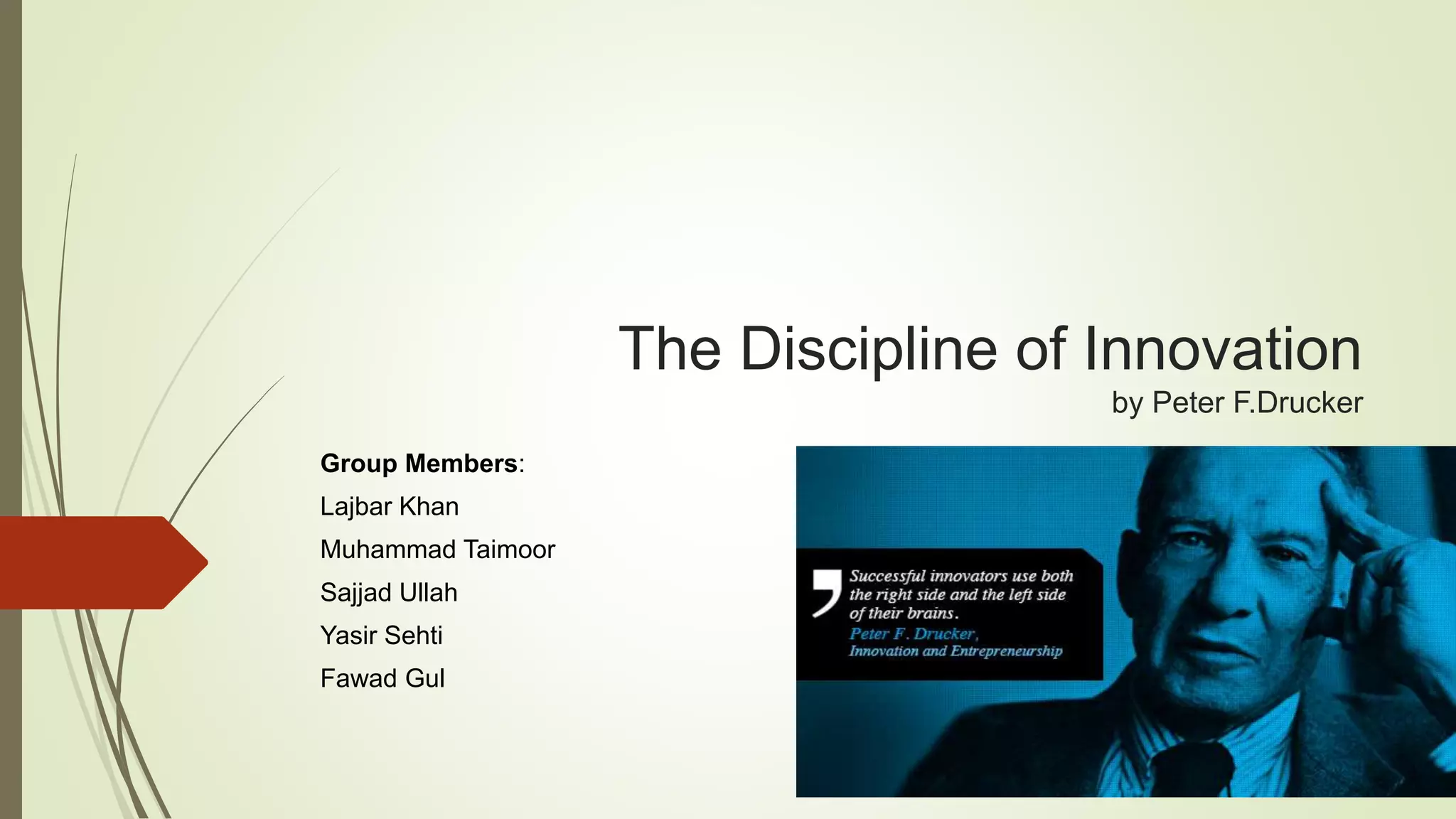
The Discipline of Innovation 
by Peter F.Drucker 
Group Members: 
Lajbar Khan 
Muhammad Taimoor 
Sajjad Ullah 
Yasir Sehti 
Fawad Gul
Introduction 
 How much of innovation is inspiration, and how much is hard work? 
 Inspiration: Hire the right people, and get out of their way 
 Hard Work: Establish the right roles and processes, set clear goals and relevant 
measures, and review progress at every step 
 “Innovation is the work of knowing rather than doing “ (Peter Drucker)
Cont… 
 The entrepreneur either creates new wealth-producing resources or endows 
existing resources with enhanced potential for creating wealth 
 Entrepreneurship refers to a certain kind of activity 
 Innovation: the effort to create purposeful, focused change in an enterprise’s 
economic or social potential
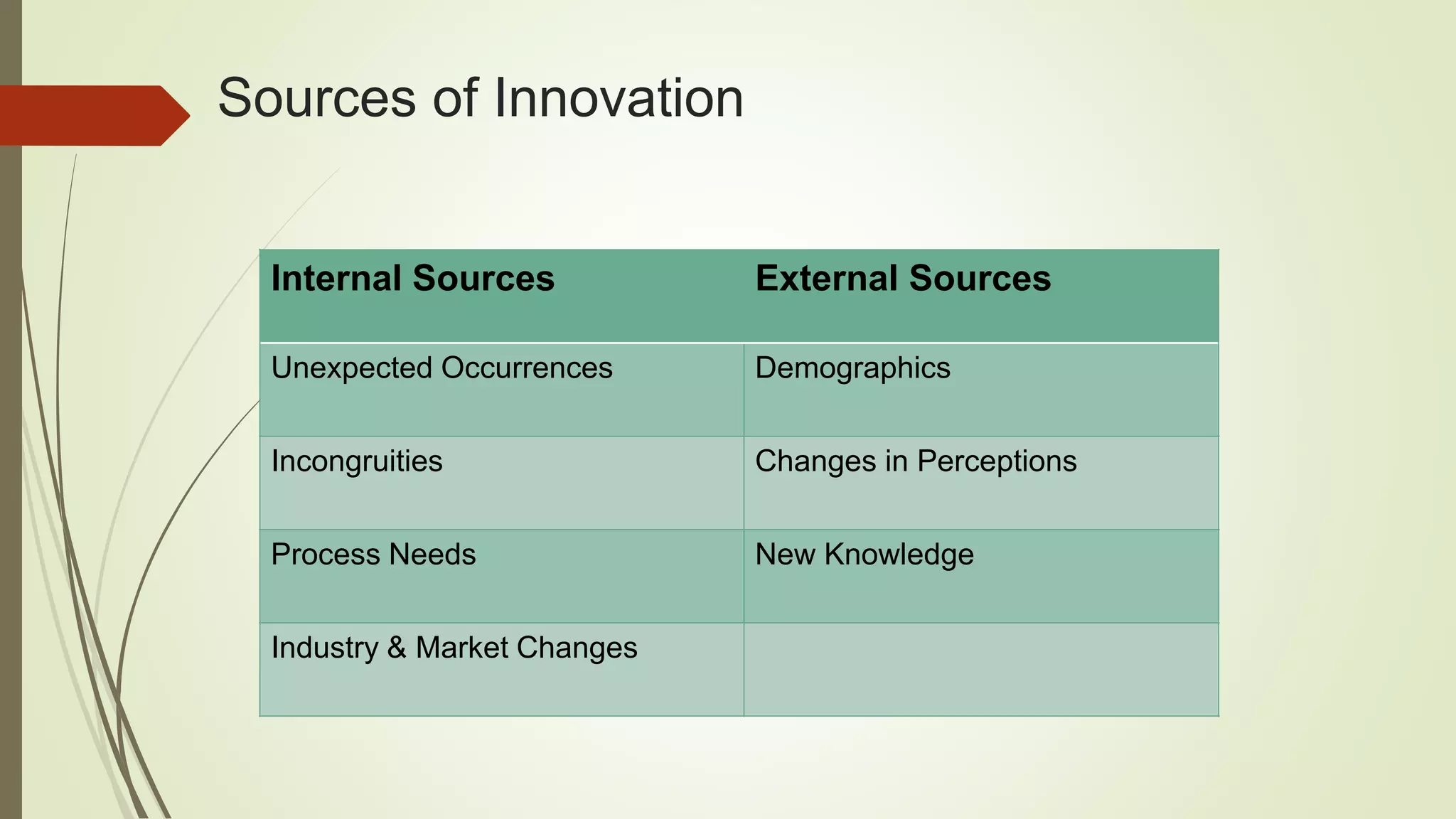
Sources of Innovation 
Internal Sources External Sources 
Unexpected Occurrences Demographics 
Incongruities Changes in Perceptions 
Process Needs New Knowledge 
Industry & Market Changes
Internal Sources 
Unexpected Occurrences 
 The richest source of Innovation 
 Most of the time Neglected 
 Alfred Einhorn’s Novocain 
It may be; 
1. Exploitation of Unexpected Success 
 The case of IBM 
 Marriott and Airline Catering
Unexpected Failures: 
 The case of Ford Edsel 
 “Failure is our most important product.” 
R. W. Johnson, Jr., Former CEO, Johnson & Johnson (1954) 
 “You can learn from success, but you have to work at it; It’s a lot easier to 
learn from failure.” 
Lewis Lehr, Former CEO – 3M Corporation
Incongruities 
 The state of not fitting in its location or situation 
 Incongruity within the logic of a process 
 Alcon Laboratory & Incongruity in Medical technology 
 Incongruity b/w Economic realities 
 The Mini Mills 
 Incongruity b/w expectations & results 
 The Roll-on and Roll-off ships
Process Needs 
 Innovations created to support other processes and products 
 It is looking for “the missing link” in the existing process 
 Japan: No modern Highway system 
 Process Need: Smooth traffic & less accidents 
 Innovative Response: Reflectors 
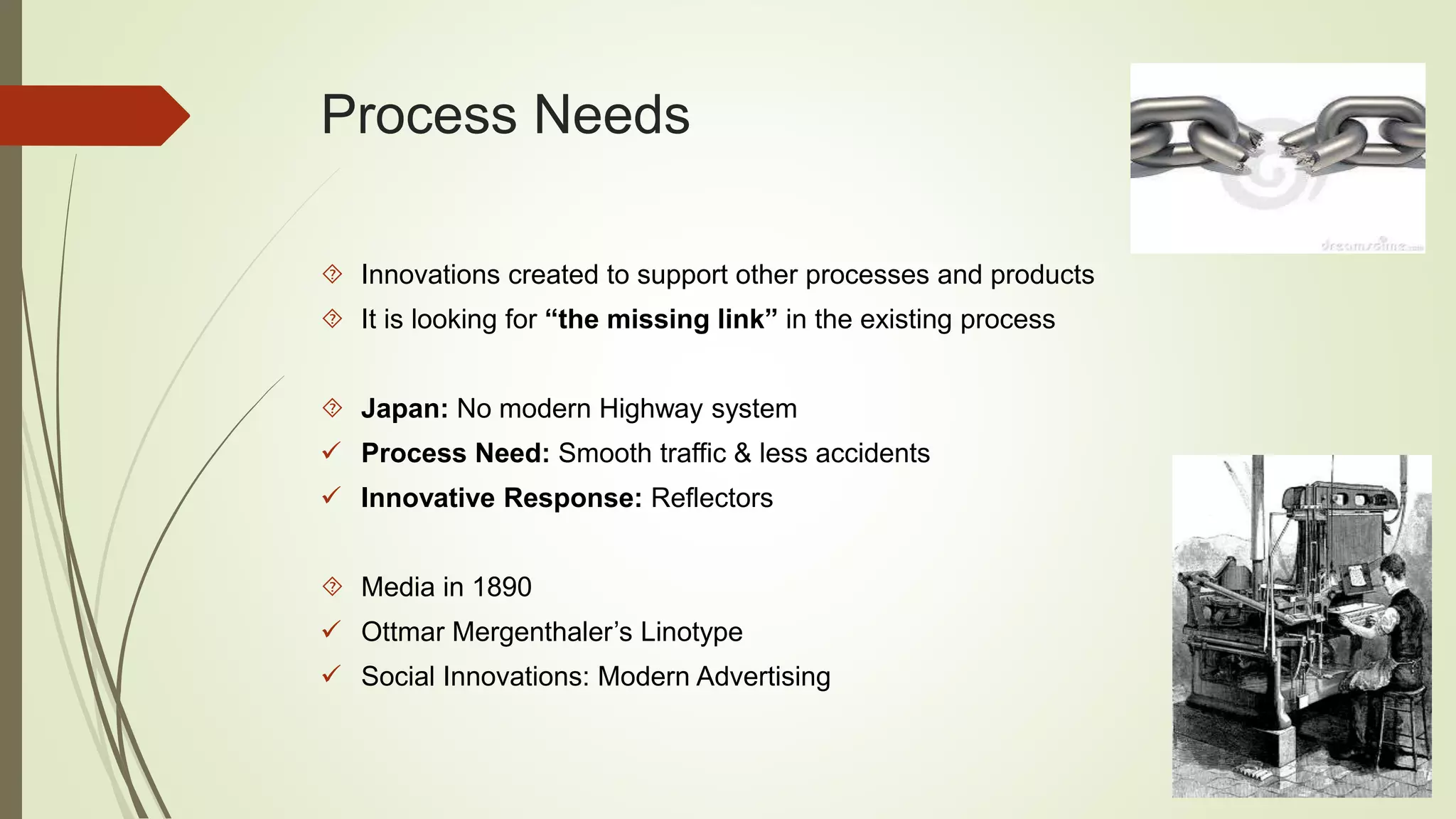
 Media in 1890 
 Ottmar Mergenthaler’s Linotype 
 Social Innovations: Modern Advertising
Industry & Market Changes 
 Industry & market structures may change overnight. 
 Structure changes due to growth in an Industry. 
 Established companies are more defensive and less attacking 
 Thus, Innovators have a chance to gain success 
 Donaldson, Lufkin and Jenrette (DL&J)brokerage firm 
 American Health care Industry
Demographic Changes 
 Out sources of innovation opportunities; 
 demographics are the most reliable 
 changes occur in populations, income levels, Education, age ranges etc. 
 The Japanese are ahead in robotics because they paid attention to 
demographics
• In 1970 the baby bust and an education explosion going on 
 More then half of the people were staying in school beyond high school 
 Consequently, the number of people for blue collar was to decrease and become inadequate 
by 1990.
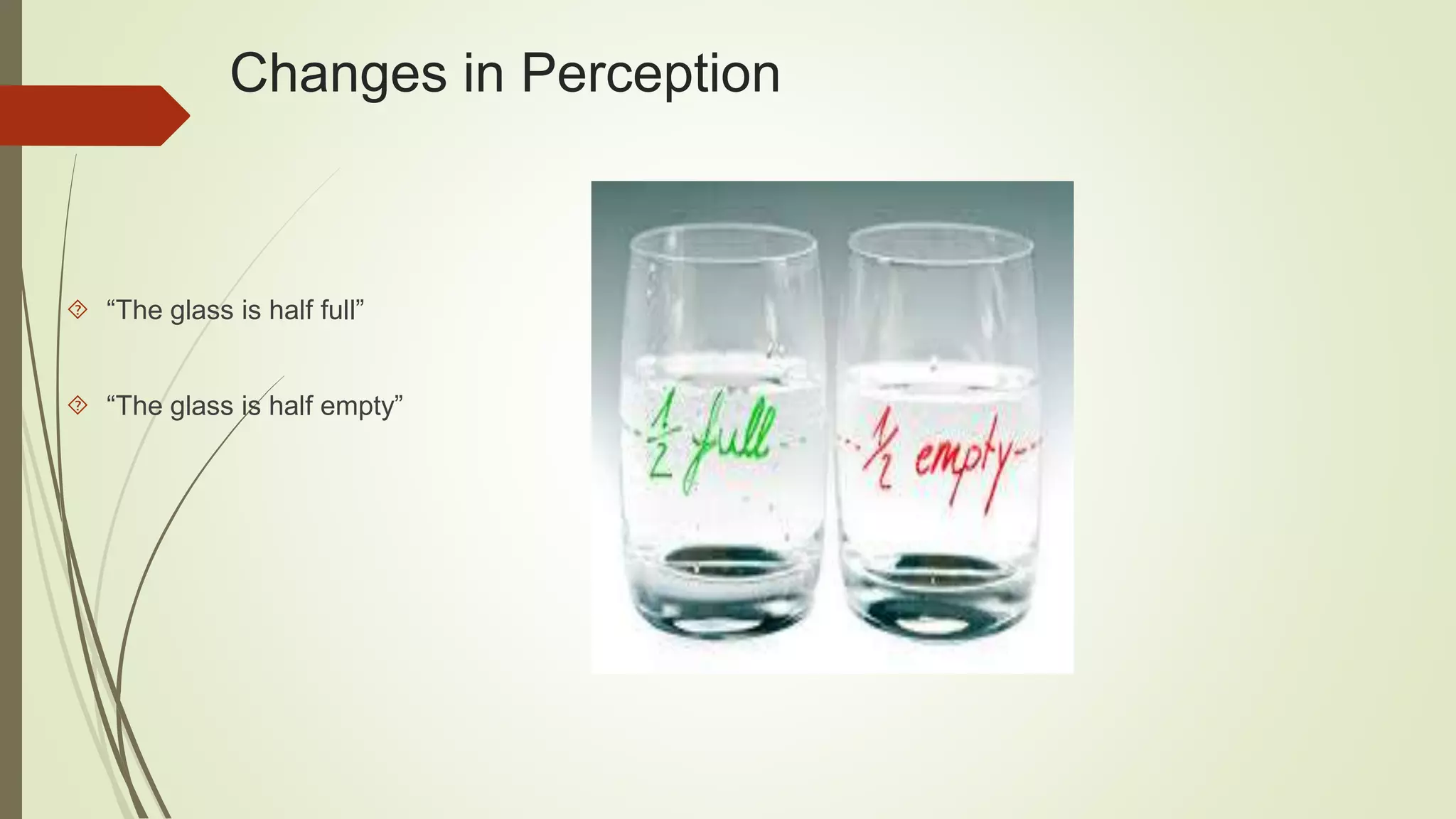
Changes in Perception 
 “The glass is half full” 
 “The glass is half empty”
Example: Health 
 markets for new healthcare magazines, 
 for exercise classes 
 jogging equipment, 
 health foods. 
 The fastest growing new U.S. business in 1983 was a 
company that makes indoor exercise equipment
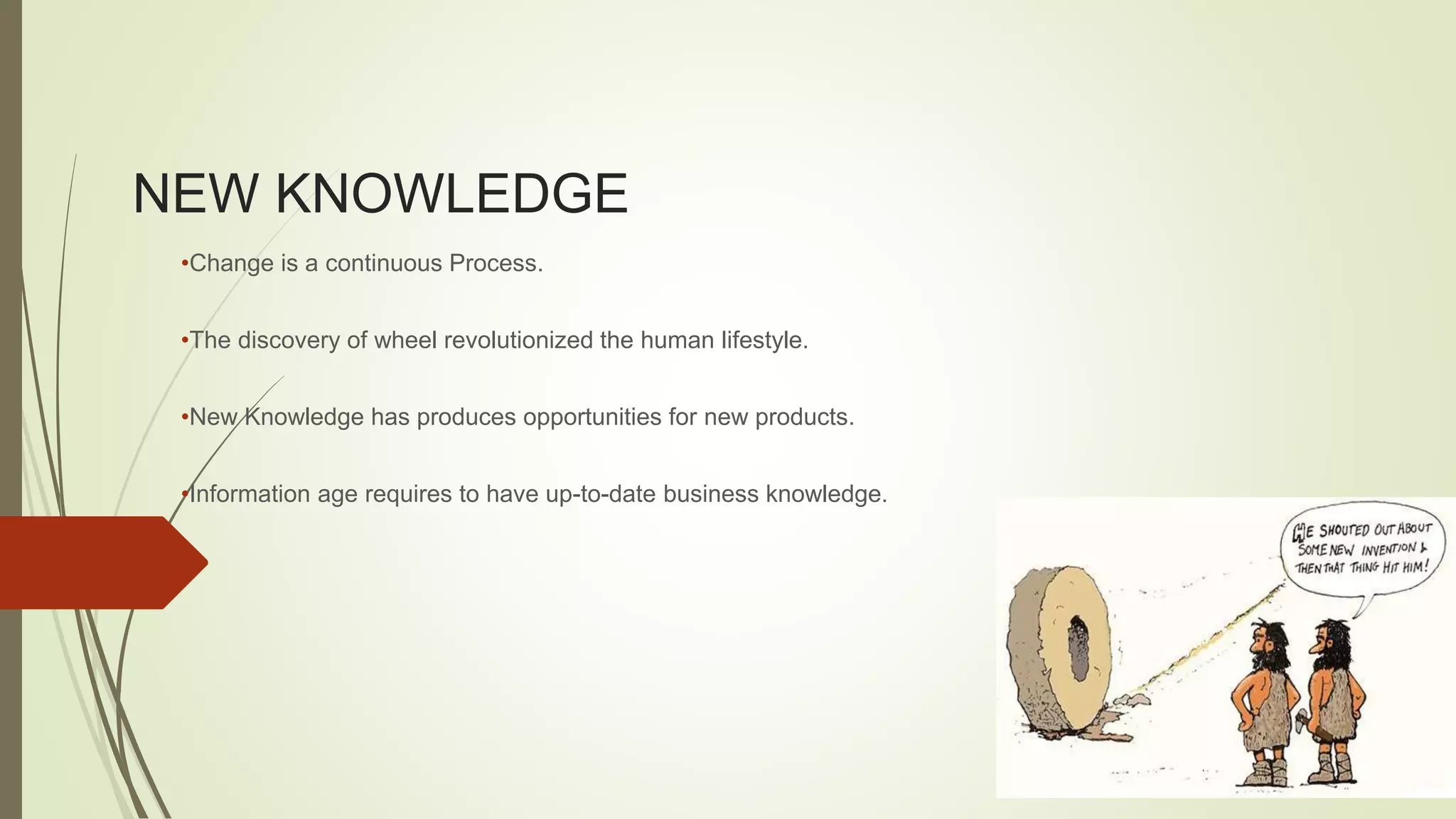
NEW KNOWLEDGE 
•Change is a continuous Process. 
•The discovery of wheel revolutionized the human lifestyle. 
•New Knowledge has produces opportunities for new products. 
•Information age requires to have up-to-date business knowledge.
NEW KNOWLEDGE
Principles Of Innovation 
 New opportunities 
 Innovation is both conceptual and perceptual 
 To be effective innovation has to be simple and it has to be focus 
 Effective innovation start small. They are not grandiose (Swedes) 
 Big business vs modest achievement 
 Modesty reach set the grounds for new technology
What Innovation needs 
 Innovation is working rather than genius 
 It required knowledge 
 It required ingenuity 
 It required focus 
 Innovator rarely work in more tan one area.( Thomas Edison) 
 If diligence, persistence, and commitment are lacking, talent, ingenuity, and 
knowledge are of no avail.
entrepreneurship and innovation 
 entrepreneurship is the practice of systematic innovation
Thank You

The discipline of innovation by Peter F. Drucker

  • 1.
    The Discipline ofInnovation by Peter F.Drucker Group Members: Lajbar Khan Muhammad Taimoor Sajjad Ullah Yasir Sehti Fawad Gul
  • 2.
    Introduction  Howmuch of innovation is inspiration, and how much is hard work?  Inspiration: Hire the right people, and get out of their way  Hard Work: Establish the right roles and processes, set clear goals and relevant measures, and review progress at every step  “Innovation is the work of knowing rather than doing “ (Peter Drucker)
  • 3.
    Cont…  Theentrepreneur either creates new wealth-producing resources or endows existing resources with enhanced potential for creating wealth  Entrepreneurship refers to a certain kind of activity  Innovation: the effort to create purposeful, focused change in an enterprise’s economic or social potential
  • 4.
    Sources of Innovation Internal Sources External Sources Unexpected Occurrences Demographics Incongruities Changes in Perceptions Process Needs New Knowledge Industry & Market Changes
  • 5.
    Internal Sources UnexpectedOccurrences  The richest source of Innovation  Most of the time Neglected  Alfred Einhorn’s Novocain It may be; 1. Exploitation of Unexpected Success  The case of IBM  Marriott and Airline Catering
  • 6.
    Unexpected Failures: The case of Ford Edsel  “Failure is our most important product.” R. W. Johnson, Jr., Former CEO, Johnson & Johnson (1954)  “You can learn from success, but you have to work at it; It’s a lot easier to learn from failure.” Lewis Lehr, Former CEO – 3M Corporation
  • 7.
    Incongruities  Thestate of not fitting in its location or situation  Incongruity within the logic of a process  Alcon Laboratory & Incongruity in Medical technology  Incongruity b/w Economic realities  The Mini Mills  Incongruity b/w expectations & results  The Roll-on and Roll-off ships
  • 8.
    Process Needs Innovations created to support other processes and products  It is looking for “the missing link” in the existing process  Japan: No modern Highway system  Process Need: Smooth traffic & less accidents  Innovative Response: Reflectors  Media in 1890  Ottmar Mergenthaler’s Linotype  Social Innovations: Modern Advertising
  • 9.
    Industry & MarketChanges  Industry & market structures may change overnight.  Structure changes due to growth in an Industry.  Established companies are more defensive and less attacking  Thus, Innovators have a chance to gain success  Donaldson, Lufkin and Jenrette (DL&J)brokerage firm  American Health care Industry
  • 10.
    Demographic Changes Out sources of innovation opportunities;  demographics are the most reliable  changes occur in populations, income levels, Education, age ranges etc.  The Japanese are ahead in robotics because they paid attention to demographics
  • 11.
    • In 1970the baby bust and an education explosion going on  More then half of the people were staying in school beyond high school  Consequently, the number of people for blue collar was to decrease and become inadequate by 1990.
  • 12.
    Changes in Perception  “The glass is half full”  “The glass is half empty”
  • 13.
    Example: Health markets for new healthcare magazines,  for exercise classes  jogging equipment,  health foods.  The fastest growing new U.S. business in 1983 was a company that makes indoor exercise equipment
  • 14.
    NEW KNOWLEDGE •Changeis a continuous Process. •The discovery of wheel revolutionized the human lifestyle. •New Knowledge has produces opportunities for new products. •Information age requires to have up-to-date business knowledge.
  • 15.
  • 16.
    Principles Of Innovation  New opportunities  Innovation is both conceptual and perceptual  To be effective innovation has to be simple and it has to be focus  Effective innovation start small. They are not grandiose (Swedes)  Big business vs modest achievement  Modesty reach set the grounds for new technology
  • 17.
    What Innovation needs  Innovation is working rather than genius  It required knowledge  It required ingenuity  It required focus  Innovator rarely work in more tan one area.( Thomas Edison)  If diligence, persistence, and commitment are lacking, talent, ingenuity, and knowledge are of no avail.
  • 18.
    entrepreneurship and innovation  entrepreneurship is the practice of systematic innovation
  • 19.