Associate prof Dr Muhammmad Ishfaq
BDS,FCPS.
Consultant Maxillofacial Surgeon
Dry socket (alveolar osteitis)
 Dry socket or alveolar osteitis is delayed healing but is not
associated with an infection
 The term dry socket describes the appearance of the tooth
extraction socket when the pain begins.
 The occurrence of a dry socket after a routine tooth
extraction is rare (2% of extractions).
 it is frequent after the removal of impacted mandibular third
molars (20% of extractions in some series).
Causes of dry socket
 Exact cause not known.
 Either the clot fails to form (decrease blood flow)
 Lysis of the clot (infection or trauma)
 Dislodgment of the clot(moth rinsing ,spiting frequent
change of cotton)
Duration of routine tooth extraction
pain
 A 45 yrs old diabetic patient presented to your surgery ward
complaining of severe pain in the left lower jaw. Hisotry of
present illness shows that he had an extraction of lower
posterior tooth 3 days ago.the pain radiates to the ear ,his
sleep is disturb the pain does not respond to medications.he
also complains of foul smell and bad tast.
examination
 On examination the lower 2nd molar has been extracted.
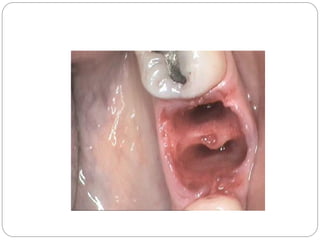
 The socket has no clot and is full of food debris
 On removal of the food debris the walls of the extraction
socket appear bare.and the exposed bone is very sensitve to
touch.
 All the other teeth on that side appears noraml.
investigation
 Radiographic findings not significant
 Radiographs were advised to see any fractured root, bone
piece or any other foreign material.
 And to exclude other causes of post op pain
diagnoses
 Dry socket
management
 Irrigation of the socket with noraml saline
 Remove all the debris from the socket
 No curretage
 Isolate the socket
 Put medicated dressing to control pain
 No antibiotic
 Change the dressing every other day till pain subsides
 Usually it needs two or three dressings
alvogel
 Eugenol
 Benzocain
 Balsum of peru
prevention
 Infection control
 Asceptic technique
 Preoperative rinsing with chlorohexidine
 Atraumatic surgery
 Irrigation
 Tetracycline placed in the extraction socket
 Proper post op instructions

41 dry socket.pdf.youtubeñnnnnnnnbbbbhhh

  • 1.
    Associate prof DrMuhammmad Ishfaq BDS,FCPS. Consultant Maxillofacial Surgeon Dry socket (alveolar osteitis)
  • 2.
     Dry socketor alveolar osteitis is delayed healing but is not associated with an infection  The term dry socket describes the appearance of the tooth extraction socket when the pain begins.  The occurrence of a dry socket after a routine tooth extraction is rare (2% of extractions).  it is frequent after the removal of impacted mandibular third molars (20% of extractions in some series).
  • 4.
    Causes of drysocket  Exact cause not known.  Either the clot fails to form (decrease blood flow)  Lysis of the clot (infection or trauma)  Dislodgment of the clot(moth rinsing ,spiting frequent change of cotton)
  • 5.
    Duration of routinetooth extraction pain
  • 6.
     A 45yrs old diabetic patient presented to your surgery ward complaining of severe pain in the left lower jaw. Hisotry of present illness shows that he had an extraction of lower posterior tooth 3 days ago.the pain radiates to the ear ,his sleep is disturb the pain does not respond to medications.he also complains of foul smell and bad tast.
  • 7.
    examination  On examinationthe lower 2nd molar has been extracted.  The socket has no clot and is full of food debris  On removal of the food debris the walls of the extraction socket appear bare.and the exposed bone is very sensitve to touch.  All the other teeth on that side appears noraml.
  • 8.
  • 9.
     Radiographs wereadvised to see any fractured root, bone piece or any other foreign material.  And to exclude other causes of post op pain
  • 10.
  • 11.
    management  Irrigation ofthe socket with noraml saline  Remove all the debris from the socket  No curretage  Isolate the socket  Put medicated dressing to control pain  No antibiotic  Change the dressing every other day till pain subsides  Usually it needs two or three dressings
  • 12.
  • 13.
    prevention  Infection control Asceptic technique  Preoperative rinsing with chlorohexidine  Atraumatic surgery  Irrigation  Tetracycline placed in the extraction socket  Proper post op instructions