P
PRASANNA DATTA,PGT, MS (ENT)
MEDICAL COLLEGE, KOLKATA
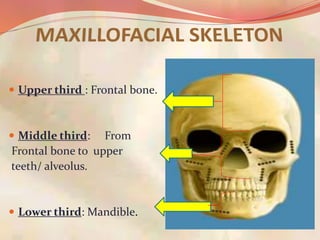
 Upper third : Frontal bone.
 Middle third: From
Frontal bone to upper
teeth/ alveolus.
 Lower third: Mandible.
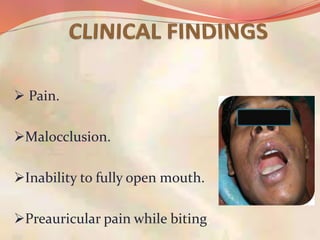
 Pain.
Malocclusion.
Inability to fully open mouth.
Preauricular pain while biting.
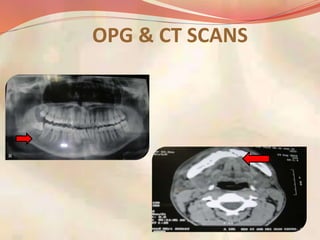
Panoramic radiograph of mandible.
Plain films including lateral/ postero
anterior and periapical views.
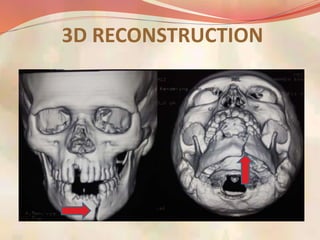
CT scan with 3 D reconstruction.
OPG & CT SCANS
3D RECONSTRUCTION
 TOTAL CASES: 20
 STUDY PERIOD: September 2013 to October 2014
 STUDY PLACE: Department of ENT, Medical College
Kolkata.
 TYPE OF STUDY: Hospital based prospective &
comparative study.
 INCLUSION CRITERIA: Adult patients having
isolated mandibular fracture/ fractures.
• EXCLUSION CRITERIA:
a. Condylar fracture.
b. Paediatric patients.
c. Associated other
maxillofacial fracture.
MATERIALS AND METHODS
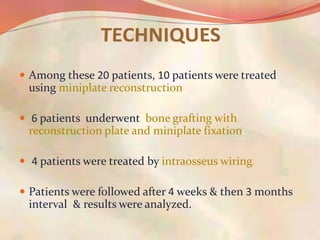
 Among these 20 patients, 10 patients were treated
using miniplate reconstruction
 6 patients underwent bone grafting with
reconstruction plate and miniplate fixation.
 4 patients were treated by intraosseus wiring.
 Patients were followed after 4 weeks & then 3 months
interval & results were analyzed.
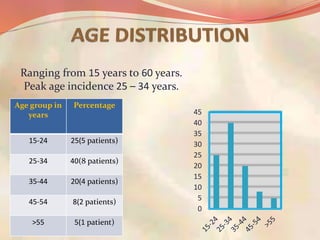
Ranging from 15 years to 60 years.
Peak age incidence 25 – 34 years.
Age group in
years
Percentage
15-24 25(5 patients)
25-34 40(8 patients)
35-44 20(4 patients)
45-54 8(2 patients)
>55 5(1 patient)
0
5
10
15
20
25
30
35
40
45
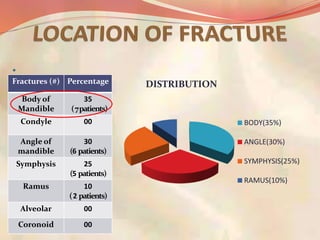
Fractures (#) Percentage
Body of
Mandible
35
(7patients)
Condyle 00
Angle of
mandible
30
(6 patients)
Symphysis 25
(5 patients)
Ramus 10
(2 patients)
Alveolar 00
Coronoid 00
DISTRIBUTION
BODY(35%)
ANGLE(30%)
SYMPHYSIS(25%)
RAMUS(10%)
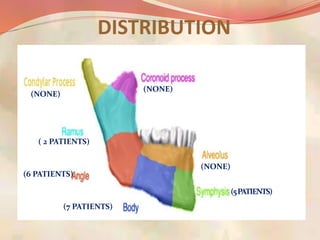
DISTRIBUTION
(NONE)
( 2 PATIENTS)
(6 PATIENTS)
(7 PATIENTS)
(NONE)
(NONE)
(5PATIENTS)
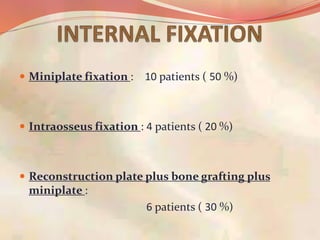
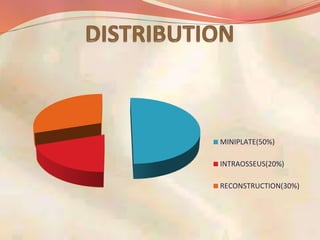
 Miniplate fixation : 10 patients ( 50 %)
 Intraosseus fixation : 4 patients ( 20 %)
 Reconstruction plate plus bone grafting plus
miniplate :
6 patients ( 30 %)
MINIPLATE(50%)
INTRAOSSEUS(20%)
RECONSTRUCTION(30%)
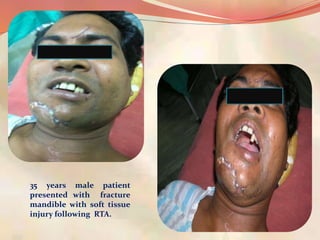
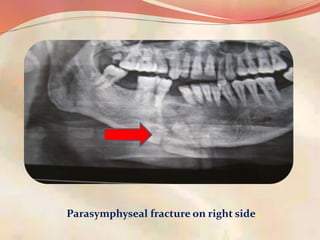
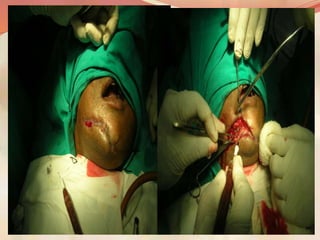
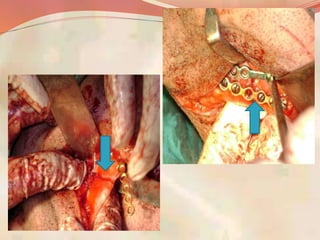
35 years male patient
presented with fracture
mandible with soft tissue
injury following RTA.
Parasymphyseal fracture on right side.
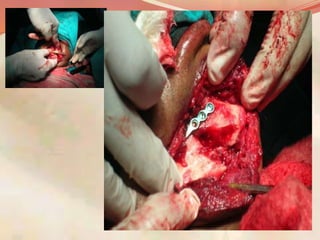
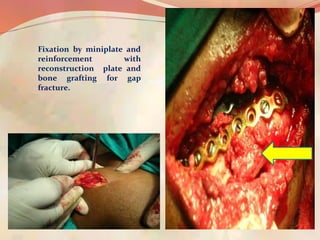
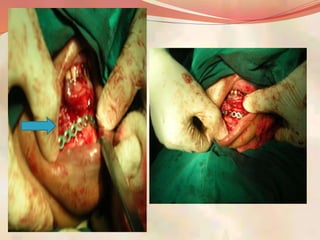
Fixation by miniplate and
reinforcement with
reconstruction plate and
bone grafting for gap
fracture.
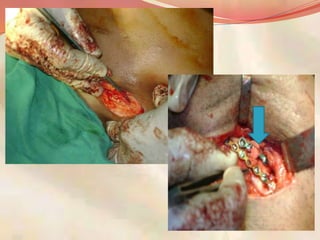
38 years old male patient having left
sided angle fracture with
parasymphyseal fracture.
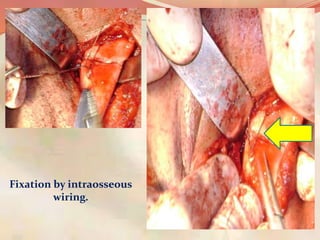
Fixation by intraosseous
wiring.
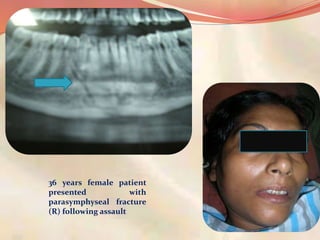
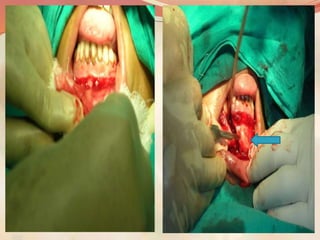
36 years female patient
presented with
parasymphyseal fracture
(R) following assault
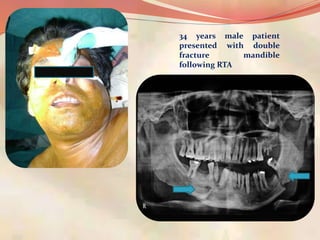
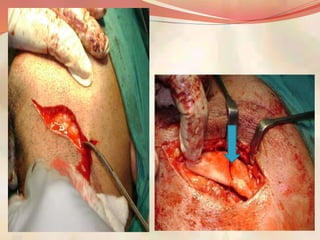
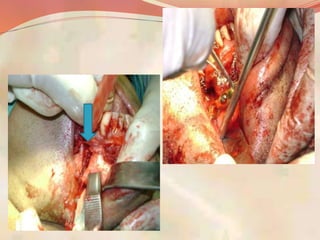
34 years male patient
presented with double
fracture mandible
following RTA
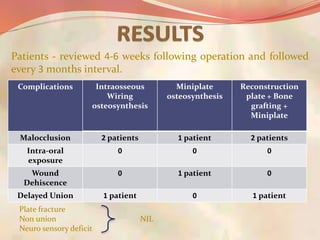
Patients - reviewed 4-6 weeks following operation and followed
every 3 months interval.
Complications Intraosseous
Wiring
osteosynthesis
Miniplate
osteosynthesis
Reconstruction
plate + Bone
grafting +
Miniplate
Malocclusion 2 patients 1 patient 2 patients
Intra-oral
exposure
0 0 0
Wound
Dehiscence
0 1 patient 0
Delayed Union 1 patient 0 1 patient
Plate fracture
Non union NIL
Neuro sensory deficit
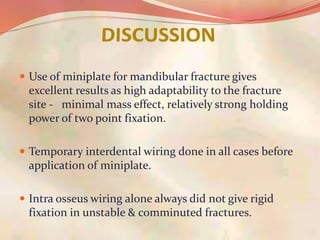
 Use of miniplate for mandibular fracture gives
excellent results as high adaptability to the fracture
site - minimal mass effect, relatively strong holding
power of two point fixation.
 Temporary interdental wiring done in all cases before
application of miniplate.
 Intra osseus wiring alone always did not give rigid
fixation in unstable & comminuted fractures.
Open reduction & internal fixation is the treatment of
choice for displaced, comminuted and multiple
fractures of mandible.
Rigid internal fixation by monocortical miniplate
osteosynthesis provides good long term results and
satisfactory cosmesis without any significant sequelae.
Mandibular Fracture Types & Management

Mandibular Fracture Types & Management

  • 1.
    P PRASANNA DATTA,PGT, MS(ENT) MEDICAL COLLEGE, KOLKATA
  • 2.
     Upper third: Frontal bone.  Middle third: From Frontal bone to upper teeth/ alveolus.  Lower third: Mandible.
  • 3.
     Pain. Malocclusion. Inability tofully open mouth. Preauricular pain while biting.
  • 4.
    Panoramic radiograph ofmandible. Plain films including lateral/ postero anterior and periapical views. CT scan with 3 D reconstruction.
  • 5.
    OPG & CTSCANS
  • 6.
  • 7.
     TOTAL CASES:20  STUDY PERIOD: September 2013 to October 2014  STUDY PLACE: Department of ENT, Medical College Kolkata.  TYPE OF STUDY: Hospital based prospective & comparative study.
  • 8.
     INCLUSION CRITERIA:Adult patients having isolated mandibular fracture/ fractures. • EXCLUSION CRITERIA: a. Condylar fracture. b. Paediatric patients. c. Associated other maxillofacial fracture. MATERIALS AND METHODS
  • 9.
     Among these20 patients, 10 patients were treated using miniplate reconstruction  6 patients underwent bone grafting with reconstruction plate and miniplate fixation.  4 patients were treated by intraosseus wiring.  Patients were followed after 4 weeks & then 3 months interval & results were analyzed.
  • 10.
    Ranging from 15years to 60 years. Peak age incidence 25 – 34 years. Age group in years Percentage 15-24 25(5 patients) 25-34 40(8 patients) 35-44 20(4 patients) 45-54 8(2 patients) >55 5(1 patient) 0 5 10 15 20 25 30 35 40 45
  • 11.
    Fractures (#) Percentage Bodyof Mandible 35 (7patients) Condyle 00 Angle of mandible 30 (6 patients) Symphysis 25 (5 patients) Ramus 10 (2 patients) Alveolar 00 Coronoid 00 DISTRIBUTION BODY(35%) ANGLE(30%) SYMPHYSIS(25%) RAMUS(10%)
  • 12.
    DISTRIBUTION (NONE) ( 2 PATIENTS) (6PATIENTS) (7 PATIENTS) (NONE) (NONE) (5PATIENTS)
  • 13.
     Miniplate fixation: 10 patients ( 50 %)  Intraosseus fixation : 4 patients ( 20 %)  Reconstruction plate plus bone grafting plus miniplate : 6 patients ( 30 %)
  • 14.
  • 16.
    35 years malepatient presented with fracture mandible with soft tissue injury following RTA.
  • 17.
  • 20.
    Fixation by miniplateand reinforcement with reconstruction plate and bone grafting for gap fracture.
  • 21.
    38 years oldmale patient having left sided angle fracture with parasymphyseal fracture.
  • 22.
  • 23.
    36 years femalepatient presented with parasymphyseal fracture (R) following assault
  • 26.
    34 years malepatient presented with double fracture mandible following RTA
  • 31.
    Patients - reviewed4-6 weeks following operation and followed every 3 months interval. Complications Intraosseous Wiring osteosynthesis Miniplate osteosynthesis Reconstruction plate + Bone grafting + Miniplate Malocclusion 2 patients 1 patient 2 patients Intra-oral exposure 0 0 0 Wound Dehiscence 0 1 patient 0 Delayed Union 1 patient 0 1 patient Plate fracture Non union NIL Neuro sensory deficit
  • 32.
     Use ofminiplate for mandibular fracture gives excellent results as high adaptability to the fracture site - minimal mass effect, relatively strong holding power of two point fixation.  Temporary interdental wiring done in all cases before application of miniplate.  Intra osseus wiring alone always did not give rigid fixation in unstable & comminuted fractures.
  • 33.
    Open reduction &internal fixation is the treatment of choice for displaced, comminuted and multiple fractures of mandible. Rigid internal fixation by monocortical miniplate osteosynthesis provides good long term results and satisfactory cosmesis without any significant sequelae.