Dr. Sachin Gupta
Department of Pharmacology
UCMS
1
10/23/2019
2
10/23/2019
 Hyperuricemia
 Excessive production or under Excretion
 Sodium Urate crystals
 Kidneys, joint cartilages and Ear
 Middle aged and older persons
 Obesity and Heavy Alcohol consumption
310/23/2019
410/23/2019
Acute Gout
A. Which inhibit Neutrophil
Migration into the joints
 COLCHICINE
B. Which inhibit inflammation and
pain
 NSAIDs and PREDNISOLONE
Chronic Gout
A. Uric Acid Synthase Inhibitors
 ALLOPURINOL, FEBUXOSTAT
B. Uricosuric Drugs
 PROBENECID,
SULPHINPYRAXONE,
BENXBROMARONE
C. Uricase-mimetic Agents
 PEGLOTICASE
510/23/2019
It suppresses the gouty inflammatory response by:-
1. Preventing granulocyte migration into the inflamed joint
2. Inhibiting the release of glycoprotein, which is responsible for
aggravating inflammation and cause joint destruction
3. Binding to tubulin protein and causing depolymerisation and
disappearance of microtubules in granulocytes
810/23/2019
 Indication and Dose
1. Prophylactic Dose
 0.5 mg/day
2. For terminating Acute attack
 1 mg followed by 0.5 mg every 3 hrs, until pain is relieved or troublesome nausea and
diarrhoea appear.
 Adverse Effects
 Diarrhoea
 Vomiting
 Abdominal pain (d/t neurogenic stimulation of gut motility)
910/23/2019
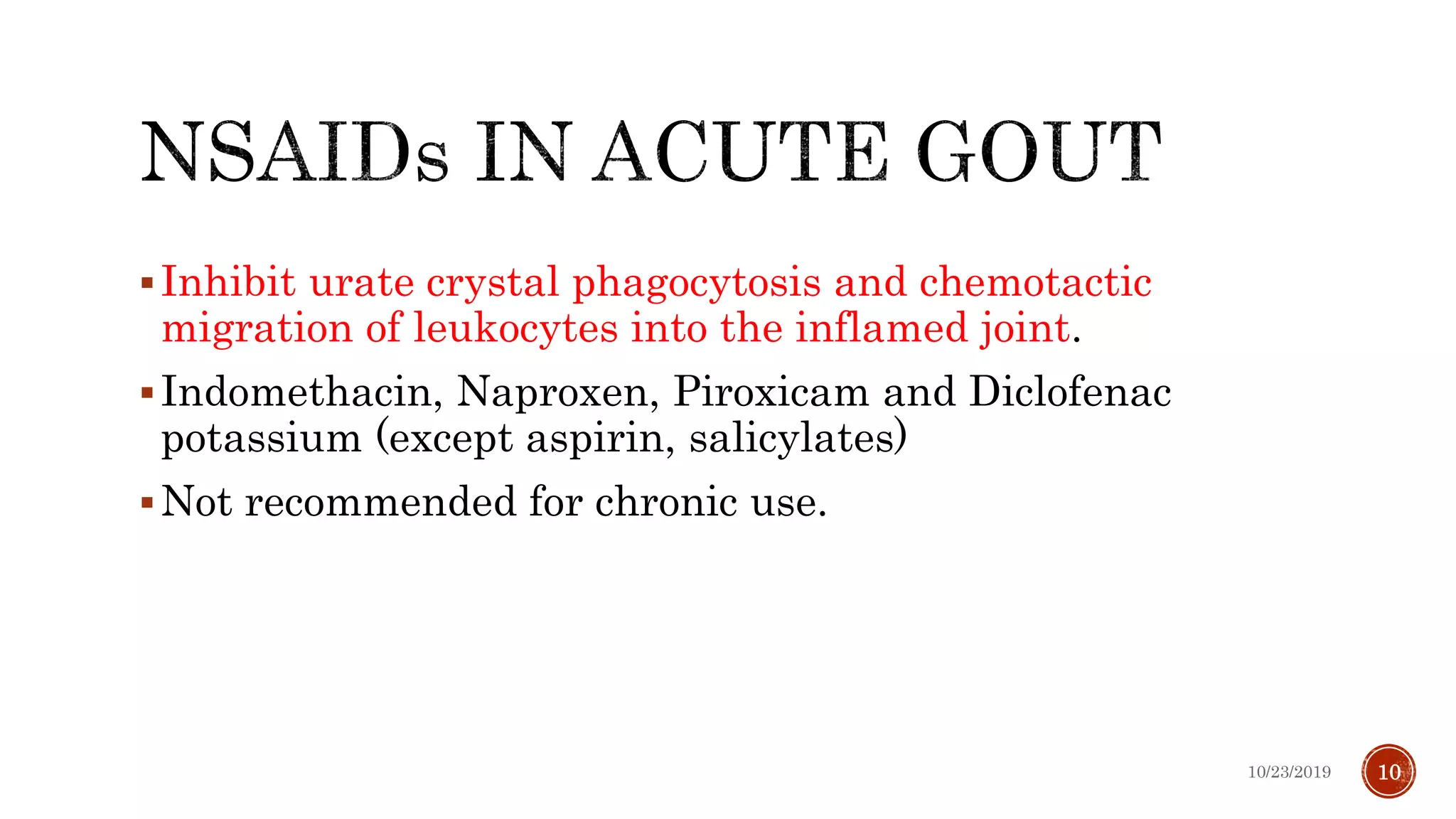
Inhibit urate crystal phagocytosis and chemotactic
migration of leukocytes into the inflamed joint.
Indomethacin, Naproxen, Piroxicam and Diclofenac
potassium (except aspirin, salicylates)
Not recommended for chronic use.
1010/23/2019
Reserved for refractory cases not responding to or not
tolerating NSAIDs or Colchicine.
Systemic steroids are usually avoided.
Prednisolone (40-60 mg/day) initially for 3-5 days followed
by tapering the dose over 2-3 weeks
1110/23/2019
CHRONIC GOUT
A. Uric Acid Synthase Inhibitors
 ALLOPURINOL, FEBUXOSTAT
B.Uricosuric Drugs
 PROBENECID, SULPHINPYRAXONE, BENXBROMARONE
C.Uricase-mimetic Agents
 PEGLOTICASE
1210/23/2019
 Allopurinol
 Febuxostat
Hypoxanthin
e
Uric AcidXanthine
Xanthine
Oxidase
Xanthine
Oxidase
Alloxanthine
--
FEBUXOSTA
T
-
Allopurinol
-
1310/23/2019
 Short acting Competitive inhibitor of Xanthine oxidase.
 100-300 mg/day
 Therapeutic Uses:-
1. Chronic Gout
2. Patients with >1 g excretion of urinary uric acid in 24 hours
3. Recurrent renal urate stones
4. Secondary Hyperuricemia due to cancer chemotherapy, radiation or thiazide diuretics
5. Adjuvant with Sodium Stibogluconate in the treatment of kala Azar
 Adverse Effects :-
1. Acute attack of gouty arthritis may get precipitated
2. Hypersensitivity reaction
3. GIT distress, nausea, peripheral neuritis and cataract
1410/23/2019
 80-120 mg once daily
 Used in the treatment of chronic gout or secondary hyperuricemia
 Very suitable drug for patients intolerant to allopurinol.
 A/E – liver dysfunction, diarrhoea and headache.
1510/23/2019
 PROBENECID
 Promotes the excretion of uric acid by inhibiting its active reabsorption from the renal
tubules.
 Therapeutic Uses
 Chronic Gout – given with plenty of water and with urinary alkaliniser to prevent formation of
renal urate calculi.
 Secondary Hyperuricemia
 Also used to prolong penicillin or cephalosporin levels
 Adverse Effects
 GIT distress
 Allergic dermatitis
 Dyspepsia
 Nephrotic syndrome and Convulsions in toxic doses
1610/23/2019
 SULFINPYRAZONE
 In therapeutic doses it prevents reabsorption of uric acid, increasing its
excretion.
 Initial dose 100-200 mg/day orally increasing over 2 weeks to 600 mg/day to be
continued till serum uric acid levels become normal.
 Maintenance dose – 200 mg/day
 Its contraindicated in Peptic ulcer as adverse effects are mainly gastrointestinal
 BENZBROMARONE
 More potent
 Can be used in patients who are either allergic or refractory to probenecid or
sulfinpyrazone or in patients with renal insufficiency where GFR is as low as
25% of the normal.
 It is a reversible inhibitor of tubular reabsorption of uric acid
 Effective in a single dose of 60-80 mg/day
 S/E – GIT distress
1710/23/2019
PEGLOTICASE
 It is a recombinant uricase
 Uricase enzyme, which is normally absent in humans, is involved
in converting uric acid to allantoin which is highly soluble and can
be easily eliminated by the kidney.
 Rapidly acting
 Dose of 4-12 mg by infusion decreases the levels of uric acid for up
to 21 days.
 Common ADRs are –
 Nausea, headache, anaemia, arthralgia, muscle rigidity and nephrolithiasis.
1810/23/2019
19
10/23/2019
Rheumatoid arthritis is a chronic systemic inflammatory
disease of unknown etiology, that may affect many tissues
and organs, but principally affects the joints, producing
symmetric peripheral polyarthritis.
Affects 0.5-1% of adult population.
Women : Men – 3:1
40-70 yrs.
2010/23/2019
 The pathogenesis of RA is not completely understood.
 An external trigger (e.g. cigarette smoking, infection, or trauma) that triggers an
autoimmune reaction.
 Earliest - Synovial cell hyperplasia and endothelial cell activation.
 Genetic factors and immune system abnormalities contribute.
 CD4 T cells, macrophages, fibroblasts, osteoclasts, and neutrophils play major cellular
roles
 B cells produce autoantibodies (i.e. RFs).
 Abnormal production of numerous cytokines, chemokine's, and other inflammatory
mediators (e.g. TNF-a, IL-1, IL-6, IL-8, TGF-ß, FGF, and PDGF) has been
demonstrated.
 Ultimately inflammation.
2110/23/2019
 NSAIDS
 GLUCOCORTICOIDS
 DMARD’s. (Disease modifying antirheumatoid drugs )
2210/23/2019
 Methotrexate
 Leflunomide
 Sulfasalazine
 Hydroxychloroquine
 T cell targeted therapy
 Abetacept
 B cell depletion therapy
 Rituximab
 Ocrelizumab
 JAK inhibitor
 Tofacitinib
 RANK ligand inhibitors
 Denosumab
2310/23/2019
BIOLOGICALS
 TNF- Alpha inhibitors
 Etanercept
 Infliximab
 Adalimumab
 Cetrolizumab
 Golimumab
 IL -1 antagonist
 Anakinra
 IL -6 antagonist
 Tocilizumab
2410/23/2019
 DMARDS
 Azathioprine
 Cyclosporine
 Minocycline
 D- penicillamine
 Gold salts- auranofin, sodium
aurothiomalate
 MISCELLANEOUS
 Muscle relaxants,
 antidepressants,
 neuromodulators,
 narcotic analgesics
2510/23/2019
 Adjunctive therapy to manage the symptoms.
 NSAIDs inhibit the COX enzymes and PG production, thereby
inhibiting the local inflammation.
 Do not retard the progression of disease.
2610/23/2019
 Bridge therapy.
 To achieve rapid disease control before the onset of fully effective DMARD
therapy, which often takes several weeks.
 Mechanism of Action
 Negatively regulates the genes for cyclooxygenase-2 and inflammatory
cytokines.
 Negatively regulates the transcription factors NF-kB and AP-1, which regulate
the expression of a number of components of the immune system.
 Long term use: side effects (peptic ulcer, osteoporosis, infection,
hyperglycemia, hypertension).
2710/23/2019
 Oral: Prednisone , prednisolone , dexamethasone and methylprednisolone .
 I/v or I/M: Methylprednisolone and Dexamethasone .
 Triamcinolone hexacetonide , is often used for intra-articular steroid injections.
2810/23/2019
 First line DMARD.
 Mechanism of Action-
1. Inhibits aminoimidazole carboxamide ribonucleotide (AICAR)
transformylase and thymidylate synthase.
2. AICAR accumulates intracellularly and inhibits AMP deaminase,
leading to AMP accumulation.
3. This AMP is converted extracellularly to adenosine which is a potent
inhibitor of inflammation.
4. Inhibits cytokine production, chemotaxis and cell mediated immune
reaction.
5. It also inhibits Dihydrofolate reductase which affects lymphocyte and
macrophage function, but this is not its principal mechanism of action.
2910/23/2019
 Dose 15-25 mg orally weekly.
 Orally absorbed - food hinders absorption.
 Metabolised to polyglutamate derivatives, which are retained in the
cell for weeks.
 Renal excretion 70% and Bile excretion 30%.
 Folinic acid (5 tetrahydrofolate) should be given to restore the folic
acid levels in normal cells.
 Adverse Effects:-
 Myelosuppresion, Oral ulcers, Hepatotoxicity, Nausea, Diarrhoea.
 C/I in pregnancy and lactation.
3010/23/2019
 Active metabolite A77-1726.
 Mechanism of Action
 Competitive inhibitor of dihydroorotate dehydrogenase, enzyme involved
in pyrimidine synthesis.(UMP).
 Arrests cells in G1 phase of cell growth and as a result inhibits T cell
proliferation and production of autoantibodies by B cells.
 Pharmacokinetics
 Half life 19 days.
 Enterohepatic circulation.
 Cholestyramine is used to increase the clearance of Leflunomide.
3110/23/2019
Loading dose is given 100mg/daily for 3 days followed by
10 mg/daily .
Adverse Effects-
 Hepatotoxicity, weight loss, alopecia.
 C/I in pregnancy and lactation.
3210/23/2019
 Sulfapyridine and 5-aminosalicylic acid.
 Sulfapyridine is the active moiety
 Mechanism of Action
1. Inhibition of IL8, IL2, TNFα expression.
2. Decreased production of Ig M & Ig G.
3. Decreased angiogenesis.
4. Decreased free radical production & cellular injury.
3310/23/2019
Sulfapyridine is excreted in urine.
Adverse Effects-
1. Drug induced lupus.
2. Nausea, vomiting, headache.
3. Hemolytic anemia and methemoglobinemia .
4. Reversible infertility occurs in men.
3410/23/2019
 Immunomodulatory properties
 Mechanism of Action
1. Reduce production of inflammatory cytokines: TNF and IL6
2. Stabilizes lysosomes
3. Impair antigen processing , T cell activation
4. Decreased leukocyte chemotaxis,
5. Trapping of free radicals.
 Mild RA, Least potent, but well tolerated.
 Combination with methotrexate .
3510/23/2019
 200–400 mg/d orally.
 They are very extensively tissue-bound, particularly in melanin-containing tissues
such as the eyes.
 Adverse Effects
1. Irreversible retinal damage
2. Cardiotoxicity
3. Nausea, Diarrhea, Headache, Rash.
 Fundoscopy and visual tests are recommended every year .
3610/23/2019
 Metabolite of penicillin, analog of amino acid cysteine
 Proposed MOA-reduced chemotaxis, phagocytosis & lysosomal
activity, inhibit CMI.
 D -isomer was used in RA
 Other uses - chelating agent in copper toxicity
 Rarely used due to toxicity
 Adverse Drug Reactions
 Blood dyscrasias, rashes, nausea, proteinuria, good pasture
syndrome, myasthenia, myositis, drug induced lupus
3710/23/2019
 Calcineurin inhibitors
 MOA:
 Target T cell signal transduction
 Inhibit expression of IL2
 Inhibit IL2 mediated T cell activation, proliferation & differentiation
 Pharmacokinetic features:
 Given orally or i.v.
 ADRs:
 Renal dysfunction, tremor, hirsutism, hypertension, hyperlipidemia, gum hyperplasia,
hyperuricemia
 Monitoring:
 BP, Creatinine
 CBC every 3 months.
3810/23/2019
 Prodrug converted to 6
mercaptopurine by TPMT
(thiopurine methyl transferase)
 MOA:
 6-MP is converted to 6-IMP, which is
incorporated in DNA, inhibit DNA
synthesis
3910/23/2019
 Pharmacokinetics:
 Pharmacogenetics:
 80% : normal TPMT
 10% : low TPMT: myelosupression
 10% high TPMT : hepatotoxicity
 ADR:
 Myelosupression
 Hepatotoxicity
 Infections & hematological malignancies
 Monitoring: CBC, LFT every 3 monthly
4010/23/2019
 Inhibition of TNF-α has emerged as an effective therapy for treating
RA
 Monoclonal anti-TNF antibodies can crosslink TNF receptor on cell
surface and inhibit T- cell and macrophage function.
 C/I:-
1. Acute or chronic infections
2. High-risk of infections
3. Malignancies and precancerous lesions
4. Demyelinating diseases
5. Class 3 or 4 heart failure
6. Pregnancy and lactation
4310/23/2019
 Chimeric anti–TNF- monoclonal antibody containing a human
constant region and a murine variable region.
 Mechanism of Action
1. It complexes with soluble TNF α receptors and inhibits interaction of TNF α
with its receptors and hence blocking all its actions.
2. Down-regulation of macrophage and T cell function and prevents the release of
proinflammatory cytokines.
 I/V infusion 3-5 mg/kg at 0 ,2 and 6 week interval.
 Half life 9 days.
4410/23/2019
Adverse Effects
1. Upper Respiratory Tract Infection
2. Nausea, Headache
3. Opportunistic infection, activation of latent tuberculosis.
4. Long term use leads to development of anti-infliximab
antibodies.
5. Infusion & injection related reactions.
4510/23/2019
 Etanercept is a recombinant fusion protein consisting of two soluble
TNF p75 receptor moieties linked to the Fc portion of human IgG1.
 Acts as exogenously administered TNFα receptor and prevents
TNF α from binding to its receptor.
 25 mg twice weekly or 50 mg weekly given s/c.
 ADRs
1. Activation of latent tuberculosis.
2. Bacterial infections is slightly increased, especially soft tissue infections and
septic arthritis.
4610/23/2019
 Anakinra is a recombinant IL-1 receptor antagonist.
 Mechanism of Action
 Competitively blocks the binding of IL-1α and IL-1β to the IL-1 receptor and
thereby inhibits the activity of these two related proinflammatory cytokines.
 100mg s.c. daily.
 ADRs
1. Risk bacterial, viral infections
2. Reactivation of latent TB
3. Neutropenia
4910/23/2019
5710/23/2019
58
10/23/2019
 It affects 10-15% of population
 Migraine is a pulsatile, throbbing headache with or without aura.
 Women are three times more likely to suffer from migraine than Men.
 Pathophysiology of Migraine
 Still debatable
 Strong evidence of 5-HT in its pathogenesis
 Dilatation of intra/extra cranial vessels
 Activation of trigeminal nerve terminals in meninges
 Neurogenic inflammation + perivascular oedema
 Pain
5910/23/2019
1. Triptans
 SUMATRIPTAN, NARATRIPTAN, ZOLMITRIPTAN, ELETRIPTAN, RIZATRIPTAN
2. Ergotamine
3. NSAIDs
 Aspirin, Paracetamol, Naproxen, Diclofenac with Metocloperamide
6010/23/2019
 MECHANISM OF ACTION
 5-HT 1D-1B agonist
 Block Trigeminal nerve transmission
 Constricts extra cranial blood vessels
 Suppresses inflammation
 Poor oral bioavailability
 Given s.c or as nasal spray
 Shorter half life
 Does not cross BBB
 Effective in 70 % of cases
6110/23/2019
 SIDE EFFECTS
 Coronary vasospasm
 Risk of MI
 C/I in Coronary Artery Disease
 Paresthesia
 Muscle weakness
6210/23/2019
 MECHANISM OF ACTION
 Partial agonist at 5-HT 1D-1B receptors.
 Block Trigeminal nerve transmission
 Constricts dilated cranial blood vessels.
 Suppresses neurogenic inflammation
 Poor oral bioavailability
 Caffeine 100 mg enhances its absorption.
 Effective but avoided because of its side effects.
6310/23/2019
 SIDE EFFECTS
 Nausea
 Vomiting
 Uterine contraction
 Coronary vasoconstriction
 C/I in
 Pregnancy
 Coronary Artery Disease
 Peripheral Vascular Disease
6410/23/2019
 MECHANISM OF ACTION
 Inhibit prostaglandin and kinin release due to neurogenic inflammation.
 Metoclopramide , besides being antiemetic, enhances the absorption of analgesics.
 Used for migraine without aura
 Usually taken till the attack passes off
 SIDE EFFECTS
 GIT disturbances
 Bleeding
6510/23/2019
1. Propranolol, Nadolol
2. Cyproheptadine
3. Flunarizine
4. Clonidine
5. Tricyclic Anti-depressant
 AMITRIPTYLINE
6610/23/2019
 MECHANISM OF ACTION
 BETA adrenoceptor blockers
 Mechanism uncertain
 Used orally
 Very effective, frequently used
 Side effects:
 Bronchoconstriction
 Fatigue
 C/I in Asthmatics
6710/23/2019
 MECHANISM OF ACTION
 5-HT 2A receptor antagonist
 Given orally
 Low efficacy
 Side Effects
 Sedation
 Weight gain
6810/23/2019
 MECHANISM OF ACTION
 Weak cerebroselective Ca2+ channel blocker
 Reduces intracellular Ca2+ overload due to cerebral hypoxia
 Given orally (5-10 mg once daily)
 As effective as propranolol
 Reduces severity of attacks and prevents recurrences.
 Side Effects
 Sedation
 Constipation
 Flushing
 Dry mouth
6910/23/2019
 MECHANISM OF ACTION
 Alpha -2 adrenoceptor agonist
 Reduces cerebral blood flow
 Mechanism unknown
 Given orally
 Side Effects
 Dry mouth
 Sedation
 Constipation
7010/23/2019
 MECHANISM OF ACTION
 5-HT uptake blocking property is causally related to the prophylactic effect.
 To be taken orally at bedtime
 Quite effective but avoided due to side effects
 Effective even in persons who are not depressed
 Side Effects
 Dry mouth
 Blurred vision
 Constipation and urinary retention
 Postural hypotension
 Weight gain
7110/23/2019
Have a nice day

Drugs for gout, rheumatoid arthritis and migraine Dr sachin

  • 1.
    Dr. Sachin Gupta Departmentof Pharmacology UCMS 1 10/23/2019
  • 2.
  • 3.
     Hyperuricemia  Excessiveproduction or under Excretion  Sodium Urate crystals  Kidneys, joint cartilages and Ear  Middle aged and older persons  Obesity and Heavy Alcohol consumption 310/23/2019
  • 4.
  • 5.
    Acute Gout A. Whichinhibit Neutrophil Migration into the joints  COLCHICINE B. Which inhibit inflammation and pain  NSAIDs and PREDNISOLONE Chronic Gout A. Uric Acid Synthase Inhibitors  ALLOPURINOL, FEBUXOSTAT B. Uricosuric Drugs  PROBENECID, SULPHINPYRAXONE, BENXBROMARONE C. Uricase-mimetic Agents  PEGLOTICASE 510/23/2019
  • 6.
    It suppresses thegouty inflammatory response by:- 1. Preventing granulocyte migration into the inflamed joint 2. Inhibiting the release of glycoprotein, which is responsible for aggravating inflammation and cause joint destruction 3. Binding to tubulin protein and causing depolymerisation and disappearance of microtubules in granulocytes 810/23/2019
  • 7.
     Indication andDose 1. Prophylactic Dose  0.5 mg/day 2. For terminating Acute attack  1 mg followed by 0.5 mg every 3 hrs, until pain is relieved or troublesome nausea and diarrhoea appear.  Adverse Effects  Diarrhoea  Vomiting  Abdominal pain (d/t neurogenic stimulation of gut motility) 910/23/2019
  • 8.
    Inhibit urate crystalphagocytosis and chemotactic migration of leukocytes into the inflamed joint. Indomethacin, Naproxen, Piroxicam and Diclofenac potassium (except aspirin, salicylates) Not recommended for chronic use. 1010/23/2019
  • 9.
    Reserved for refractorycases not responding to or not tolerating NSAIDs or Colchicine. Systemic steroids are usually avoided. Prednisolone (40-60 mg/day) initially for 3-5 days followed by tapering the dose over 2-3 weeks 1110/23/2019
  • 10.
    CHRONIC GOUT A. UricAcid Synthase Inhibitors  ALLOPURINOL, FEBUXOSTAT B.Uricosuric Drugs  PROBENECID, SULPHINPYRAXONE, BENXBROMARONE C.Uricase-mimetic Agents  PEGLOTICASE 1210/23/2019
  • 11.
     Allopurinol  Febuxostat Hypoxanthin e UricAcidXanthine Xanthine Oxidase Xanthine Oxidase Alloxanthine -- FEBUXOSTA T - Allopurinol - 1310/23/2019
  • 12.
     Short actingCompetitive inhibitor of Xanthine oxidase.  100-300 mg/day  Therapeutic Uses:- 1. Chronic Gout 2. Patients with >1 g excretion of urinary uric acid in 24 hours 3. Recurrent renal urate stones 4. Secondary Hyperuricemia due to cancer chemotherapy, radiation or thiazide diuretics 5. Adjuvant with Sodium Stibogluconate in the treatment of kala Azar  Adverse Effects :- 1. Acute attack of gouty arthritis may get precipitated 2. Hypersensitivity reaction 3. GIT distress, nausea, peripheral neuritis and cataract 1410/23/2019
  • 13.
     80-120 mgonce daily  Used in the treatment of chronic gout or secondary hyperuricemia  Very suitable drug for patients intolerant to allopurinol.  A/E – liver dysfunction, diarrhoea and headache. 1510/23/2019
  • 14.
     PROBENECID  Promotesthe excretion of uric acid by inhibiting its active reabsorption from the renal tubules.  Therapeutic Uses  Chronic Gout – given with plenty of water and with urinary alkaliniser to prevent formation of renal urate calculi.  Secondary Hyperuricemia  Also used to prolong penicillin or cephalosporin levels  Adverse Effects  GIT distress  Allergic dermatitis  Dyspepsia  Nephrotic syndrome and Convulsions in toxic doses 1610/23/2019
  • 15.
     SULFINPYRAZONE  Intherapeutic doses it prevents reabsorption of uric acid, increasing its excretion.  Initial dose 100-200 mg/day orally increasing over 2 weeks to 600 mg/day to be continued till serum uric acid levels become normal.  Maintenance dose – 200 mg/day  Its contraindicated in Peptic ulcer as adverse effects are mainly gastrointestinal  BENZBROMARONE  More potent  Can be used in patients who are either allergic or refractory to probenecid or sulfinpyrazone or in patients with renal insufficiency where GFR is as low as 25% of the normal.  It is a reversible inhibitor of tubular reabsorption of uric acid  Effective in a single dose of 60-80 mg/day  S/E – GIT distress 1710/23/2019
  • 16.
    PEGLOTICASE  It isa recombinant uricase  Uricase enzyme, which is normally absent in humans, is involved in converting uric acid to allantoin which is highly soluble and can be easily eliminated by the kidney.  Rapidly acting  Dose of 4-12 mg by infusion decreases the levels of uric acid for up to 21 days.  Common ADRs are –  Nausea, headache, anaemia, arthralgia, muscle rigidity and nephrolithiasis. 1810/23/2019
  • 17.
  • 18.
    Rheumatoid arthritis isa chronic systemic inflammatory disease of unknown etiology, that may affect many tissues and organs, but principally affects the joints, producing symmetric peripheral polyarthritis. Affects 0.5-1% of adult population. Women : Men – 3:1 40-70 yrs. 2010/23/2019
  • 19.
     The pathogenesisof RA is not completely understood.  An external trigger (e.g. cigarette smoking, infection, or trauma) that triggers an autoimmune reaction.  Earliest - Synovial cell hyperplasia and endothelial cell activation.  Genetic factors and immune system abnormalities contribute.  CD4 T cells, macrophages, fibroblasts, osteoclasts, and neutrophils play major cellular roles  B cells produce autoantibodies (i.e. RFs).  Abnormal production of numerous cytokines, chemokine's, and other inflammatory mediators (e.g. TNF-a, IL-1, IL-6, IL-8, TGF-ß, FGF, and PDGF) has been demonstrated.  Ultimately inflammation. 2110/23/2019
  • 20.
     NSAIDS  GLUCOCORTICOIDS DMARD’s. (Disease modifying antirheumatoid drugs ) 2210/23/2019
  • 21.
     Methotrexate  Leflunomide Sulfasalazine  Hydroxychloroquine  T cell targeted therapy  Abetacept  B cell depletion therapy  Rituximab  Ocrelizumab  JAK inhibitor  Tofacitinib  RANK ligand inhibitors  Denosumab 2310/23/2019
  • 22.
    BIOLOGICALS  TNF- Alphainhibitors  Etanercept  Infliximab  Adalimumab  Cetrolizumab  Golimumab  IL -1 antagonist  Anakinra  IL -6 antagonist  Tocilizumab 2410/23/2019
  • 23.
     DMARDS  Azathioprine Cyclosporine  Minocycline  D- penicillamine  Gold salts- auranofin, sodium aurothiomalate  MISCELLANEOUS  Muscle relaxants,  antidepressants,  neuromodulators,  narcotic analgesics 2510/23/2019
  • 24.
     Adjunctive therapyto manage the symptoms.  NSAIDs inhibit the COX enzymes and PG production, thereby inhibiting the local inflammation.  Do not retard the progression of disease. 2610/23/2019
  • 25.
     Bridge therapy. To achieve rapid disease control before the onset of fully effective DMARD therapy, which often takes several weeks.  Mechanism of Action  Negatively regulates the genes for cyclooxygenase-2 and inflammatory cytokines.  Negatively regulates the transcription factors NF-kB and AP-1, which regulate the expression of a number of components of the immune system.  Long term use: side effects (peptic ulcer, osteoporosis, infection, hyperglycemia, hypertension). 2710/23/2019
  • 26.
     Oral: Prednisone, prednisolone , dexamethasone and methylprednisolone .  I/v or I/M: Methylprednisolone and Dexamethasone .  Triamcinolone hexacetonide , is often used for intra-articular steroid injections. 2810/23/2019
  • 27.
     First lineDMARD.  Mechanism of Action- 1. Inhibits aminoimidazole carboxamide ribonucleotide (AICAR) transformylase and thymidylate synthase. 2. AICAR accumulates intracellularly and inhibits AMP deaminase, leading to AMP accumulation. 3. This AMP is converted extracellularly to adenosine which is a potent inhibitor of inflammation. 4. Inhibits cytokine production, chemotaxis and cell mediated immune reaction. 5. It also inhibits Dihydrofolate reductase which affects lymphocyte and macrophage function, but this is not its principal mechanism of action. 2910/23/2019
  • 28.
     Dose 15-25mg orally weekly.  Orally absorbed - food hinders absorption.  Metabolised to polyglutamate derivatives, which are retained in the cell for weeks.  Renal excretion 70% and Bile excretion 30%.  Folinic acid (5 tetrahydrofolate) should be given to restore the folic acid levels in normal cells.  Adverse Effects:-  Myelosuppresion, Oral ulcers, Hepatotoxicity, Nausea, Diarrhoea.  C/I in pregnancy and lactation. 3010/23/2019
  • 29.
     Active metaboliteA77-1726.  Mechanism of Action  Competitive inhibitor of dihydroorotate dehydrogenase, enzyme involved in pyrimidine synthesis.(UMP).  Arrests cells in G1 phase of cell growth and as a result inhibits T cell proliferation and production of autoantibodies by B cells.  Pharmacokinetics  Half life 19 days.  Enterohepatic circulation.  Cholestyramine is used to increase the clearance of Leflunomide. 3110/23/2019
  • 30.
    Loading dose isgiven 100mg/daily for 3 days followed by 10 mg/daily . Adverse Effects-  Hepatotoxicity, weight loss, alopecia.  C/I in pregnancy and lactation. 3210/23/2019
  • 31.
     Sulfapyridine and5-aminosalicylic acid.  Sulfapyridine is the active moiety  Mechanism of Action 1. Inhibition of IL8, IL2, TNFα expression. 2. Decreased production of Ig M & Ig G. 3. Decreased angiogenesis. 4. Decreased free radical production & cellular injury. 3310/23/2019
  • 32.
    Sulfapyridine is excretedin urine. Adverse Effects- 1. Drug induced lupus. 2. Nausea, vomiting, headache. 3. Hemolytic anemia and methemoglobinemia . 4. Reversible infertility occurs in men. 3410/23/2019
  • 33.
     Immunomodulatory properties Mechanism of Action 1. Reduce production of inflammatory cytokines: TNF and IL6 2. Stabilizes lysosomes 3. Impair antigen processing , T cell activation 4. Decreased leukocyte chemotaxis, 5. Trapping of free radicals.  Mild RA, Least potent, but well tolerated.  Combination with methotrexate . 3510/23/2019
  • 34.
     200–400 mg/dorally.  They are very extensively tissue-bound, particularly in melanin-containing tissues such as the eyes.  Adverse Effects 1. Irreversible retinal damage 2. Cardiotoxicity 3. Nausea, Diarrhea, Headache, Rash.  Fundoscopy and visual tests are recommended every year . 3610/23/2019
  • 35.
     Metabolite ofpenicillin, analog of amino acid cysteine  Proposed MOA-reduced chemotaxis, phagocytosis & lysosomal activity, inhibit CMI.  D -isomer was used in RA  Other uses - chelating agent in copper toxicity  Rarely used due to toxicity  Adverse Drug Reactions  Blood dyscrasias, rashes, nausea, proteinuria, good pasture syndrome, myasthenia, myositis, drug induced lupus 3710/23/2019
  • 36.
     Calcineurin inhibitors MOA:  Target T cell signal transduction  Inhibit expression of IL2  Inhibit IL2 mediated T cell activation, proliferation & differentiation  Pharmacokinetic features:  Given orally or i.v.  ADRs:  Renal dysfunction, tremor, hirsutism, hypertension, hyperlipidemia, gum hyperplasia, hyperuricemia  Monitoring:  BP, Creatinine  CBC every 3 months. 3810/23/2019
  • 37.
     Prodrug convertedto 6 mercaptopurine by TPMT (thiopurine methyl transferase)  MOA:  6-MP is converted to 6-IMP, which is incorporated in DNA, inhibit DNA synthesis 3910/23/2019
  • 38.
     Pharmacokinetics:  Pharmacogenetics: 80% : normal TPMT  10% : low TPMT: myelosupression  10% high TPMT : hepatotoxicity  ADR:  Myelosupression  Hepatotoxicity  Infections & hematological malignancies  Monitoring: CBC, LFT every 3 monthly 4010/23/2019
  • 39.
     Inhibition ofTNF-α has emerged as an effective therapy for treating RA  Monoclonal anti-TNF antibodies can crosslink TNF receptor on cell surface and inhibit T- cell and macrophage function.  C/I:- 1. Acute or chronic infections 2. High-risk of infections 3. Malignancies and precancerous lesions 4. Demyelinating diseases 5. Class 3 or 4 heart failure 6. Pregnancy and lactation 4310/23/2019
  • 40.
     Chimeric anti–TNF-monoclonal antibody containing a human constant region and a murine variable region.  Mechanism of Action 1. It complexes with soluble TNF α receptors and inhibits interaction of TNF α with its receptors and hence blocking all its actions. 2. Down-regulation of macrophage and T cell function and prevents the release of proinflammatory cytokines.  I/V infusion 3-5 mg/kg at 0 ,2 and 6 week interval.  Half life 9 days. 4410/23/2019
  • 41.
    Adverse Effects 1. UpperRespiratory Tract Infection 2. Nausea, Headache 3. Opportunistic infection, activation of latent tuberculosis. 4. Long term use leads to development of anti-infliximab antibodies. 5. Infusion & injection related reactions. 4510/23/2019
  • 42.
     Etanercept isa recombinant fusion protein consisting of two soluble TNF p75 receptor moieties linked to the Fc portion of human IgG1.  Acts as exogenously administered TNFα receptor and prevents TNF α from binding to its receptor.  25 mg twice weekly or 50 mg weekly given s/c.  ADRs 1. Activation of latent tuberculosis. 2. Bacterial infections is slightly increased, especially soft tissue infections and septic arthritis. 4610/23/2019
  • 43.
     Anakinra isa recombinant IL-1 receptor antagonist.  Mechanism of Action  Competitively blocks the binding of IL-1α and IL-1β to the IL-1 receptor and thereby inhibits the activity of these two related proinflammatory cytokines.  100mg s.c. daily.  ADRs 1. Risk bacterial, viral infections 2. Reactivation of latent TB 3. Neutropenia 4910/23/2019
  • 44.
  • 45.
  • 46.
     It affects10-15% of population  Migraine is a pulsatile, throbbing headache with or without aura.  Women are three times more likely to suffer from migraine than Men.  Pathophysiology of Migraine  Still debatable  Strong evidence of 5-HT in its pathogenesis  Dilatation of intra/extra cranial vessels  Activation of trigeminal nerve terminals in meninges  Neurogenic inflammation + perivascular oedema  Pain 5910/23/2019
  • 47.
    1. Triptans  SUMATRIPTAN,NARATRIPTAN, ZOLMITRIPTAN, ELETRIPTAN, RIZATRIPTAN 2. Ergotamine 3. NSAIDs  Aspirin, Paracetamol, Naproxen, Diclofenac with Metocloperamide 6010/23/2019
  • 48.
     MECHANISM OFACTION  5-HT 1D-1B agonist  Block Trigeminal nerve transmission  Constricts extra cranial blood vessels  Suppresses inflammation  Poor oral bioavailability  Given s.c or as nasal spray  Shorter half life  Does not cross BBB  Effective in 70 % of cases 6110/23/2019
  • 49.
     SIDE EFFECTS Coronary vasospasm  Risk of MI  C/I in Coronary Artery Disease  Paresthesia  Muscle weakness 6210/23/2019
  • 50.
     MECHANISM OFACTION  Partial agonist at 5-HT 1D-1B receptors.  Block Trigeminal nerve transmission  Constricts dilated cranial blood vessels.  Suppresses neurogenic inflammation  Poor oral bioavailability  Caffeine 100 mg enhances its absorption.  Effective but avoided because of its side effects. 6310/23/2019
  • 51.
     SIDE EFFECTS Nausea  Vomiting  Uterine contraction  Coronary vasoconstriction  C/I in  Pregnancy  Coronary Artery Disease  Peripheral Vascular Disease 6410/23/2019
  • 52.
     MECHANISM OFACTION  Inhibit prostaglandin and kinin release due to neurogenic inflammation.  Metoclopramide , besides being antiemetic, enhances the absorption of analgesics.  Used for migraine without aura  Usually taken till the attack passes off  SIDE EFFECTS  GIT disturbances  Bleeding 6510/23/2019
  • 53.
    1. Propranolol, Nadolol 2.Cyproheptadine 3. Flunarizine 4. Clonidine 5. Tricyclic Anti-depressant  AMITRIPTYLINE 6610/23/2019
  • 54.
     MECHANISM OFACTION  BETA adrenoceptor blockers  Mechanism uncertain  Used orally  Very effective, frequently used  Side effects:  Bronchoconstriction  Fatigue  C/I in Asthmatics 6710/23/2019
  • 55.
     MECHANISM OFACTION  5-HT 2A receptor antagonist  Given orally  Low efficacy  Side Effects  Sedation  Weight gain 6810/23/2019
  • 56.
     MECHANISM OFACTION  Weak cerebroselective Ca2+ channel blocker  Reduces intracellular Ca2+ overload due to cerebral hypoxia  Given orally (5-10 mg once daily)  As effective as propranolol  Reduces severity of attacks and prevents recurrences.  Side Effects  Sedation  Constipation  Flushing  Dry mouth 6910/23/2019
  • 57.
     MECHANISM OFACTION  Alpha -2 adrenoceptor agonist  Reduces cerebral blood flow  Mechanism unknown  Given orally  Side Effects  Dry mouth  Sedation  Constipation 7010/23/2019
  • 58.
     MECHANISM OFACTION  5-HT uptake blocking property is causally related to the prophylactic effect.  To be taken orally at bedtime  Quite effective but avoided due to side effects  Effective even in persons who are not depressed  Side Effects  Dry mouth  Blurred vision  Constipation and urinary retention  Postural hypotension  Weight gain 7110/23/2019
  • 59.