CONTROL OF DRUG ABUSE & MISUSE
TERMINOLOGY
 Drug use: is the term commonly used to refer to
the consumption of psychoactive substances
without medical or health care instruction.
 Drug misuse: refers to drug use that is
problematical and incurs significant risk of harm.
 Drug abuse: essentially refers to the same thing
but its use is less common in recent publications.
Substance is sometimes used in place of drug to
include non-medical chemicals such as solvents,
alcohol and nicotine.
DEFINITION OF RATIONAL USE
 “The rational use of drug requires that patients
receive medication appropriate to their clinical
need, in doses that meet their own individual
requirements, for an adequate period of time, and
at the lowest cost to them and their
community.”(WHO 1985)
 More than 50 % of all medications are prescribed,
dispensed or sold inappropriately and not in
accordance with the standard principles. (WHO
1992)
 50 %of patients fail to take their medication
correctly.
TYPES OF DRUG MISUSE:
 No drug need: e.g. minor upper respiratory viral
infections in children are treated with antibiotics.
 Wrong drug: e.g. many children with streptococcal
pharyngitis are not properly treated with narrow
spectrumpenicillins. Instead,tetracyclines(broad
spectrum antibiotics) are used.
 Ineffective drug:e.g. use of antimotility agents in acute
diarrhea.
 Unsafe drug: e.g. anabolic steroids for growth and
appetite stimulation of children and athletes, which
increase blood pressure & cholesterol, and cause heart
problems.
Underuse of available effective drugs: e.g.
underuse of ORS in diarrhea in children.
Incorrect use of drugs: e.g. one or two days’
supply of an antibiotic, rather than for the full course
of therapy.
Unnecessary expensive drugs: e.g. prescriber’s
individual monetary benefits seed for this problem, or
unnecessary use of a third-generation broad-
spectrum antibiotic, when a first line, narrow-
spectrum antibiotic is indicated.
Unlicensed drug prescribing: e.g. prescribing/use
of unregistered, unsafe drugs.
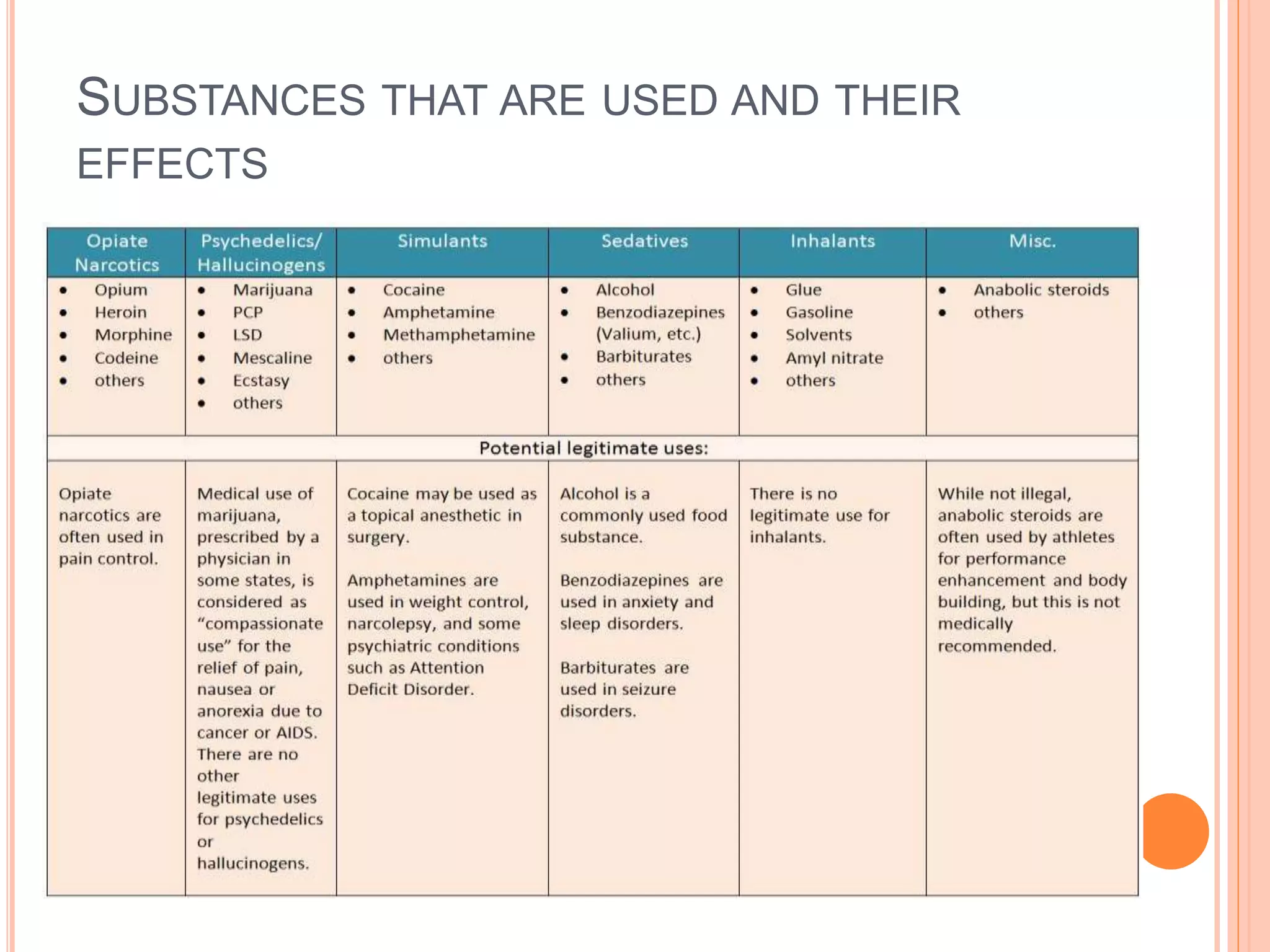
SUBSTANCES THAT ARE USED AND THEIR
EFFECTS
WHY DO PEOPLE USE PSYCHOACTIVE DRUGS
 Attainment of pleasureable feelings (e.g relaxation)
 Increased social interaction (e.g reduced
inhibitition)
 Alteration of the person’s psychological condition to
a more desirable state.
 Physical change (e.g anabolic steroids taken by
body builders)
 Avoidance of withdrawal symptoms in someone
who is dependant on drug.
CHOICE OF DRUG USED
The decision to use a drug may be influenced by
many things including:
 Availability and opportunity to try
 Legal status of the drug
 Perceived desired effects
 Perceived risks
 Specifically desired effects versus the risks as
weighed up and assessed by the individual
concerned.
 Acceptability of the drug or method of
administration to the individual.
ADVERSE IMPACT OF MISUSE OF DRUGS:
 Increased adverse drug reactions (ADRs)
 Use of non-sterile injections leads to transmission
of hepatitis and other blood borne diseases.
 Poor patient outcome
 Patient’s inappropriate reliance on the drugs
 Impact on cost
 Overuse of drugs causes excessive spending
offinancial resources by the patient.
 Expenditure on non-essential pharmaceuticals
like multi-vitamin products, cough mixtures, etc.
FACTORS UNDERLYING MISUSE OF DRUGS:
 The health system
 Unreliable supply
 Expired drugs
 Availability of inappropriate drug
Such influences result in lack of confidence of the
prescriber, and the prescriber feels obliged to provide
what is available, even if the drug is not correct for the
specific treatment.
Prescriber’s inadequate training.
Lack of objective drug information + drug information
provided by the medical representatives.
Profit may affect a prescriber’s choice if the
prescriber’s income is dependent on drug sales.
PATIENT AND THE COMMUNITY:
An individual’s adherence to the treatment depends
upon:
 cultural beliefs (not believing on the health care
system, undergoing traditional treatment or using
strongallopathic medicines )
 Lack of communication skills
 Attitude of the prescriber
 Limited time available for counseling
 Shortage of printed information
ROLE OF INDUSTRIES:
 Industries often make misleading claims about their
products. Moreover, promotional activities by
medical representatives also lead to irrational
prescribing.
HOW TO AVOID DRUG MISUSE:
Improve patient information
 Patient education for using various dosage forms
(inhalers, nebulizers, suppositories, etc.)
 Use of printed materials
 Use of mass media
 Counseling (active, passive)
Role of the prescriber
 Prescribing from EDL(essential drug
list).
 Following standard treatment
guidelines.
 Using unbiased information for drug
use.
 Monitor patients for ADRs.
WITHDRAWAL
When a person stops using a substance they are
dependant on, they often experience withdrawal.
There are two types of withdrawal:
 Physical withdrawal effect
 Psychological withdrawal effect
PHYSICAL WITHDRAWAL EFFECT
These are physical signs and symptoms experienced
when the drug is removed like:
 Seizures in alcohol withdrawal
 Stomach cramps & severe influenza type
symptoms experienced in opiate withdrawal
 Palpitation & anxiety in cocaine withdrawal
 Insomnia in nicotine withdrawal
These effects can be severe and tend to be of shorter
duration that psychological effects
PSYCHOLOGICAL WITHDRAWAL EFFECT
 These are psychological disturbance experienced
when a drug is removed.
 These cannot be easily observed or measured in
the way like that physical withdrawal effects.
Psychological withdrawal effects include:
 Intense craving
 Intense emotional experience like unmasking of
grief, inability to cope, altered mood and
depression, which may be prolonged and severe.
It tend to be of long duration and contributes to
relapse back to drug use.
PHARMACEUTICAL CARE
Pharmaceutical care plan includes the role of
pharmacists in drug dependance at community and
hospital level.
1. Community Pharmacists:
Community pharmacists are ideally placed to
contribute to the care of drug users. In addition to
the health gains for the patient, there are several
advantages for drug users, the community and
pharmacists from providing care:
 Extended opening hours: most pharmacies are
open atleast part of the weekend and some
evenings, when specialist drugs services may be
closed.
 Accessibility
 Expert advice
 Discretion: pharmacies provide a confidential
service exchange
 Network of services
 Job satisfaction: pharmacist may be the only health
care professional with whom some drug users have
regular contact. Over time, improvements in health
can often be seen in people receiving substitute
therapies, bringing job satisfaction.
 Two most common services of community
pharmacist to prevent and reduce harm are needle
exchange and dispensing services.
2. HOSPITAL PHARMACIST
Hospitals should have guidelines for the admission and
discharge of drug users to ensure that any ongoing
prescribing is continued. There should also be policies and
specialist support available to ensure treatment can be
initiated if a need is identified.
Hospital pharmacists may contribute to the formulation of such
guidelines. The includes:
 Admission: how to ensure safe continuation of substitute
prescribing with attention paid to acute and out of hours
admission.
 Discharge: how to ensure safe continuation of substitute
prescribing on discharge without a break in care or doubling
up of prescribing. Liason with a patients’s nominated
community pharmacist is important.
 Initiation of substitute therapy: for e.g if a heroin-
dependant person is admitted to a ward unplanned
via accident and emergency, it will be necessary to
control withdrawal symptoms that onset quickly.
 Appropriate referral to service provider:
guidance on identifying patients at particular risk
and rapid referral from hospital to primary care
services is recommended.
ROLE OF PHARMACOTHERAPY
 Evidence showed maintenance doses of substitute
drug treatment improve patient physical health and
mental health outcomes.
 Reduce drug related deaths.
 Improve social functioning.
All who receive pharmacotherapy, especially in the
early stages of treatment may not achieve complete
abstinence from illicit drug use. Ideally
maintainence therapy at an adequate dose may be
necessary, prior to planned detoxification and
aftercare. This maintenance stage may last for
many years.
Drug use mis use and abuse

Drug use mis use and abuse

  • 1.
    CONTROL OF DRUGABUSE & MISUSE
  • 2.
    TERMINOLOGY  Drug use:is the term commonly used to refer to the consumption of psychoactive substances without medical or health care instruction.  Drug misuse: refers to drug use that is problematical and incurs significant risk of harm.  Drug abuse: essentially refers to the same thing but its use is less common in recent publications. Substance is sometimes used in place of drug to include non-medical chemicals such as solvents, alcohol and nicotine.
  • 3.
    DEFINITION OF RATIONALUSE  “The rational use of drug requires that patients receive medication appropriate to their clinical need, in doses that meet their own individual requirements, for an adequate period of time, and at the lowest cost to them and their community.”(WHO 1985)  More than 50 % of all medications are prescribed, dispensed or sold inappropriately and not in accordance with the standard principles. (WHO 1992)  50 %of patients fail to take their medication correctly.
  • 4.
    TYPES OF DRUGMISUSE:  No drug need: e.g. minor upper respiratory viral infections in children are treated with antibiotics.  Wrong drug: e.g. many children with streptococcal pharyngitis are not properly treated with narrow spectrumpenicillins. Instead,tetracyclines(broad spectrum antibiotics) are used.  Ineffective drug:e.g. use of antimotility agents in acute diarrhea.  Unsafe drug: e.g. anabolic steroids for growth and appetite stimulation of children and athletes, which increase blood pressure & cholesterol, and cause heart problems.
  • 5.
    Underuse of availableeffective drugs: e.g. underuse of ORS in diarrhea in children. Incorrect use of drugs: e.g. one or two days’ supply of an antibiotic, rather than for the full course of therapy. Unnecessary expensive drugs: e.g. prescriber’s individual monetary benefits seed for this problem, or unnecessary use of a third-generation broad- spectrum antibiotic, when a first line, narrow- spectrum antibiotic is indicated. Unlicensed drug prescribing: e.g. prescribing/use of unregistered, unsafe drugs.
  • 6.
    SUBSTANCES THAT AREUSED AND THEIR EFFECTS
  • 7.
    WHY DO PEOPLEUSE PSYCHOACTIVE DRUGS  Attainment of pleasureable feelings (e.g relaxation)  Increased social interaction (e.g reduced inhibitition)  Alteration of the person’s psychological condition to a more desirable state.  Physical change (e.g anabolic steroids taken by body builders)  Avoidance of withdrawal symptoms in someone who is dependant on drug.
  • 8.
    CHOICE OF DRUGUSED The decision to use a drug may be influenced by many things including:  Availability and opportunity to try  Legal status of the drug  Perceived desired effects  Perceived risks  Specifically desired effects versus the risks as weighed up and assessed by the individual concerned.  Acceptability of the drug or method of administration to the individual.
  • 9.
    ADVERSE IMPACT OFMISUSE OF DRUGS:  Increased adverse drug reactions (ADRs)  Use of non-sterile injections leads to transmission of hepatitis and other blood borne diseases.  Poor patient outcome  Patient’s inappropriate reliance on the drugs  Impact on cost  Overuse of drugs causes excessive spending offinancial resources by the patient.  Expenditure on non-essential pharmaceuticals like multi-vitamin products, cough mixtures, etc.
  • 10.
    FACTORS UNDERLYING MISUSEOF DRUGS:  The health system  Unreliable supply  Expired drugs  Availability of inappropriate drug
  • 11.
    Such influences resultin lack of confidence of the prescriber, and the prescriber feels obliged to provide what is available, even if the drug is not correct for the specific treatment. Prescriber’s inadequate training. Lack of objective drug information + drug information provided by the medical representatives. Profit may affect a prescriber’s choice if the prescriber’s income is dependent on drug sales.
  • 12.
    PATIENT AND THECOMMUNITY: An individual’s adherence to the treatment depends upon:  cultural beliefs (not believing on the health care system, undergoing traditional treatment or using strongallopathic medicines )  Lack of communication skills  Attitude of the prescriber  Limited time available for counseling  Shortage of printed information
  • 13.
    ROLE OF INDUSTRIES: Industries often make misleading claims about their products. Moreover, promotional activities by medical representatives also lead to irrational prescribing.
  • 14.
    HOW TO AVOIDDRUG MISUSE: Improve patient information  Patient education for using various dosage forms (inhalers, nebulizers, suppositories, etc.)  Use of printed materials  Use of mass media  Counseling (active, passive)
  • 15.
    Role of theprescriber  Prescribing from EDL(essential drug list).  Following standard treatment guidelines.  Using unbiased information for drug use.  Monitor patients for ADRs.
  • 16.
    WITHDRAWAL When a personstops using a substance they are dependant on, they often experience withdrawal. There are two types of withdrawal:  Physical withdrawal effect  Psychological withdrawal effect
  • 17.
    PHYSICAL WITHDRAWAL EFFECT Theseare physical signs and symptoms experienced when the drug is removed like:  Seizures in alcohol withdrawal  Stomach cramps & severe influenza type symptoms experienced in opiate withdrawal  Palpitation & anxiety in cocaine withdrawal  Insomnia in nicotine withdrawal These effects can be severe and tend to be of shorter duration that psychological effects
  • 18.
    PSYCHOLOGICAL WITHDRAWAL EFFECT These are psychological disturbance experienced when a drug is removed.  These cannot be easily observed or measured in the way like that physical withdrawal effects. Psychological withdrawal effects include:  Intense craving  Intense emotional experience like unmasking of grief, inability to cope, altered mood and depression, which may be prolonged and severe. It tend to be of long duration and contributes to relapse back to drug use.
  • 19.
    PHARMACEUTICAL CARE Pharmaceutical careplan includes the role of pharmacists in drug dependance at community and hospital level. 1. Community Pharmacists: Community pharmacists are ideally placed to contribute to the care of drug users. In addition to the health gains for the patient, there are several advantages for drug users, the community and pharmacists from providing care:  Extended opening hours: most pharmacies are open atleast part of the weekend and some evenings, when specialist drugs services may be closed.
  • 20.
     Accessibility  Expertadvice  Discretion: pharmacies provide a confidential service exchange  Network of services  Job satisfaction: pharmacist may be the only health care professional with whom some drug users have regular contact. Over time, improvements in health can often be seen in people receiving substitute therapies, bringing job satisfaction.  Two most common services of community pharmacist to prevent and reduce harm are needle exchange and dispensing services.
  • 21.
    2. HOSPITAL PHARMACIST Hospitalsshould have guidelines for the admission and discharge of drug users to ensure that any ongoing prescribing is continued. There should also be policies and specialist support available to ensure treatment can be initiated if a need is identified. Hospital pharmacists may contribute to the formulation of such guidelines. The includes:  Admission: how to ensure safe continuation of substitute prescribing with attention paid to acute and out of hours admission.  Discharge: how to ensure safe continuation of substitute prescribing on discharge without a break in care or doubling up of prescribing. Liason with a patients’s nominated community pharmacist is important.
  • 22.
     Initiation ofsubstitute therapy: for e.g if a heroin- dependant person is admitted to a ward unplanned via accident and emergency, it will be necessary to control withdrawal symptoms that onset quickly.  Appropriate referral to service provider: guidance on identifying patients at particular risk and rapid referral from hospital to primary care services is recommended.
  • 23.
    ROLE OF PHARMACOTHERAPY Evidence showed maintenance doses of substitute drug treatment improve patient physical health and mental health outcomes.  Reduce drug related deaths.  Improve social functioning. All who receive pharmacotherapy, especially in the early stages of treatment may not achieve complete abstinence from illicit drug use. Ideally maintainence therapy at an adequate dose may be necessary, prior to planned detoxification and aftercare. This maintenance stage may last for many years.