By
Mohammad Omer
FA12-BS(BA)-026
COMSATS Institute of Information
Technology
Drug Use
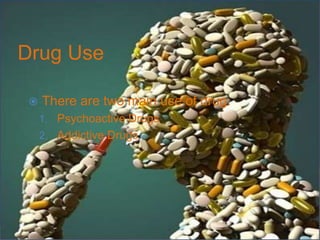
 There are two main use of drug.
1. Psychoactive Drugs
2. Addictive Drugs
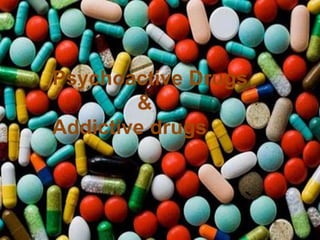
Psychoactive Drugs
&
Addictive drugs
Psychoactive Drugs
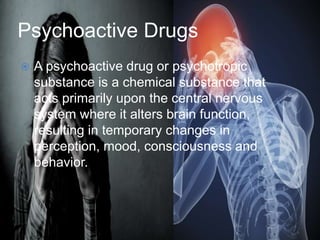
 A psychoactive drug or psychotropic
substance is a chemical substance that
acts primarily upon the central nervous
system where it alters brain function,
resulting in temporary changes in
perception, mood, consciousness and
behavior.
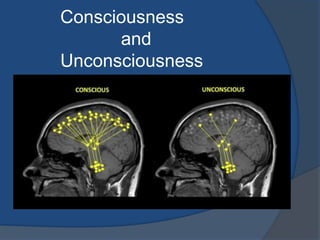
Consciousness
and
Unconsciousness
What are some of the most
common psychoactive
drugs?
 Sedative hypnotics and anxiolytics
(anti-anxiety drugs)
 Stimulants
Sedative hypnotics and
anxiolytic
 This is also known as mild tranquilizers.
 Sedative drugs which produce sedation,
calm and quietness in the patient.
 Hypnotics drugs which produce sleep
that resembles normal sleep.
 Anxiolytic drugs which reduce anxiety
and cause calm and quietness in the
patient.
 Stages from anxiety to death
Anxiety→ Drowsiness→ Hypnosis→ Anaesthesia→ Coma→ Death
 The most common drugs of sedative hypotics
and anxiolytic are:
 Alcohol
 Barbiturates
 Benzodiazepines
Alcohol
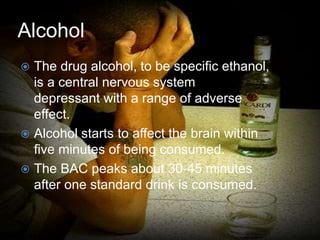
 The drug alcohol, to be specific ethanol,
is a central nervous system
depressant with a range of adverse
effect.
 Alcohol starts to affect the brain within
five minutes of being consumed.
 The BAC peaks about 30-45 minutes
after one standard drink is consumed.
The effects of alcohol vary
depending on a number of
factors including:
 type and quantity of alcohol consumed
 age, weight and gender
 body chemistry
 food in the stomach
 drinking experience
 situation in which drinking occurs
 mental health status
 other health conditions made worse by
alcohol.
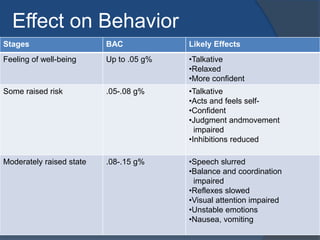
Effect on Behavior
Stages BAC Likely Effects
Feeling of well-being Up to .05 g% •Talkative
•Relaxed
•More confident
Some raised risk .05-.08 g% •Talkative
•Acts and feels self-
•Confident
•Judgment andmovement
impaired
•Inhibitions reduced
Moderately raised state .08-.15 g% •Speech slurred
•Balance and coordination
impaired
•Reflexes slowed
•Visual attention impaired
•Unstable emotions
•Nausea, vomiting
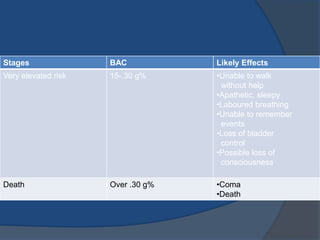
Stages BAC Likely Effects
Very elevated risk 15-.30 g% •Unable to walk
without help
•Apathetic, sleepy
•Laboured breathing
•Unable to remember
events
•Loss of bladder
control
•Possible loss of
consciousness
Death Over .30 g% •Coma
•Death
Barbiturate
 Barbiturates are a class of drugs derived
from barbituric acid that act as depressants
to the central nervous system. These drugs
are frequently used for medical reasons as
sedatives or anesthetics.
 These drugs also affect the CNS in several
different ways and can produce effects
ranging from mild sedation to a coma
depending upon the dosage.
 Low doses of barbiturates can lower anxiety
levels and relieve tension, while higher
doses can decrease the heart rate and blood
pressure.
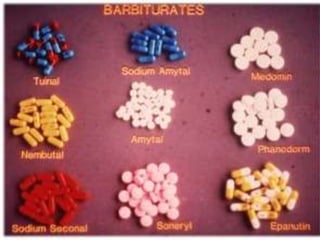
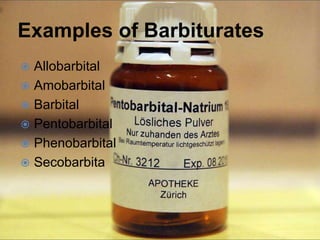
Examples of Barbiturates
 Allobarbital
 Amobarbital
 Barbital
 Pentobarbital
 Phenobarbital
 Secobarbita
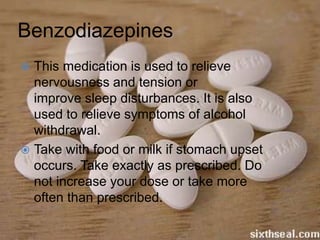
Benzodiazepines
 This medication is used to relieve
nervousness and tension or
improve sleep disturbances. It is also
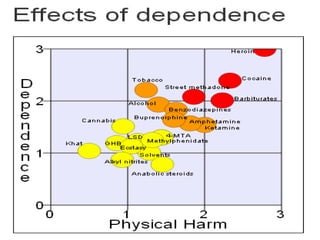
used to relieve symptoms of alcohol
withdrawal.
 Take with food or milk if stomach upset
occurs. Take exactly as prescribed. Do
not increase your dose or take more
often than prescribed.
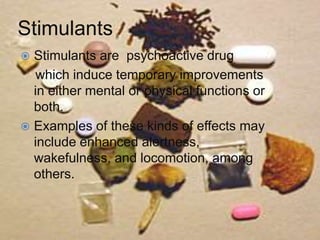
Stimulants
 Stimulants are psychoactive drug
which induce temporary improvements
in either mental or physical functions or
both.
 Examples of these kinds of effects may
include enhanced alertness,
wakefulness, and locomotion, among
others.
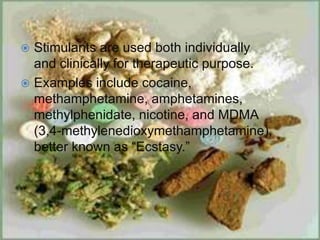
 Stimulants are used both individually
and clinically for therapeutic purpose.
 Examples include cocaine,
methamphetamine, amphetamines,
methylphenidate, nicotine, and MDMA
(3,4-methylenedioxymethamphetamine),
better known as “Ecstasy.”
Cocaine
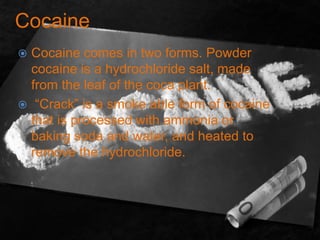
 Cocaine comes in two forms. Powder
cocaine is a hydrochloride salt, made
from the leaf of the coca plant.
 “Crack” is a smoke able form of cocaine
that is processed with ammonia or
baking soda and water, and heated to
remove the hydrochloride.
 In 1800s, psychoanalyst
Sigmund Freud advocated the use of
cocaine as a therapeutic treatment for
psychological disorders, but after
realized the addictive properties of the
drug.
 During the early 1900s, cocaine was
legal in the U.S. and could be found in
many over-the-counter medications.
Caffeine
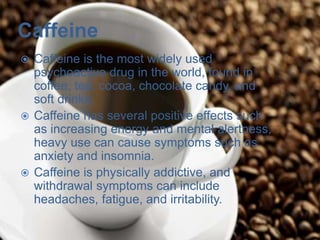
 Caffeine is the most widely used
psychoactive drug in the world, found in
coffee, tea, cocoa, chocolate candy, and
soft drinks.
 Caffeine has several positive effects such
as increasing energy and mental alertness,
heavy use can cause symptoms such as
anxiety and insomnia.
 Caffeine is physically addictive, and
withdrawal symptoms can include
headaches, fatigue, and irritability.
Amphetamines
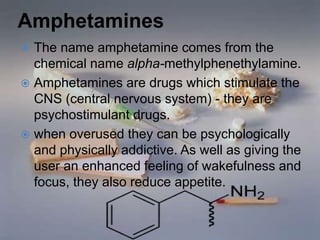
 The name amphetamine comes from the
chemical name alpha-methylphenethylamine.
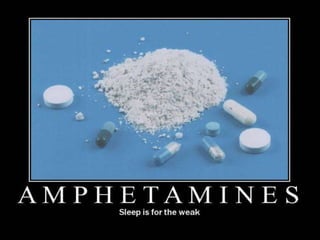
 Amphetamines are drugs which stimulate the
CNS (central nervous system) - they are
psychostimulant drugs.
 when overused they can be psychologically
and physically addictive. As well as giving the
user an enhanced feeling of wakefulness and
focus, they also reduce appetite.
Immediate effects
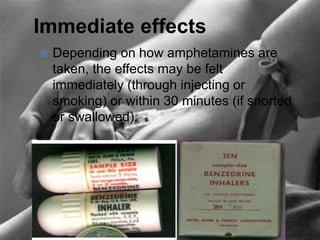
 Depending on how amphetamines are
taken, the effects may be felt
immediately (through injecting or
smoking) or within 30 minutes (if snorted
or swallowed).
 Amphetamines can also be abused—that is,
used in a way or for a purpose other than as
prescribed (e.g., crushed and snorted, "to get
high") or used by someone without a
prescription.
Nicotine
 Nicotine is considered one of the three most
widely used psychoactive drugs in the world.
 During the early to mid-twentieth century,
smoking was considered fashionable.
 Reports of the adverse health consequences
have led to cigarette use being increasingly
shunned.
 However, the Substance Abuse And Mental
Health Services Administration (SAMHSA)
reports that approximately 66.5 million
Americans over the age of 12 (or 29 percent of
the population) used a nicotine containing
product in 2001.
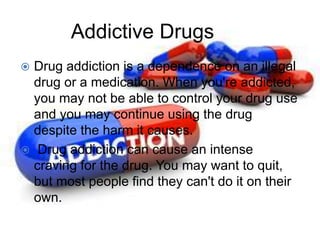
Addictive Drugs
 Drug addiction is a dependence on an illegal
drug or a medication. When you're addicted,
you may not be able to control your drug use
and you may continue using the drug
despite the harm it causes.
 Drug addiction can cause an intense
craving for the drug. You may want to quit,
but most people find they can't do it on their
own.
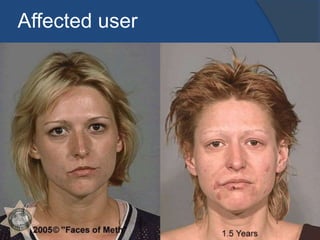
Affected user
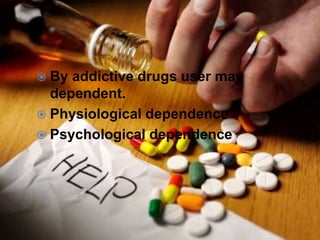
 By addictive drugs user may
dependent.
 Physiological dependence
 Psychological dependence
Physiological dependency
 Physical dependence refers to a state
resulting from chronic use of a drug that has
produced tolerance and where negative
physical symptoms of withdrawal result from
abrupt discontinuation or dosage reduction.
 Physical dependence can develop from low-
dose therapeutic use of certain medications
such as benzodiazepines, opioids,
antiepileptics and antidepressants, as well as
misuse of recreational drugs such as alcohol,
opioids and benzodiazepines.
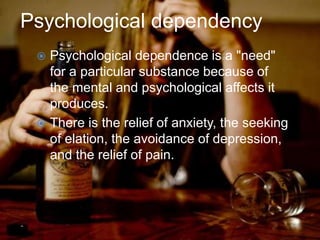
Psychological dependency
 Psychological dependence is a "need"
for a particular substance because of
the mental and psychological affects it
produces.
 There is the relief of anxiety, the seeking
of elation, the avoidance of depression,
and the relief of pain.
Drug use

Drug use

  • 1.
  • 2.
    Drug Use  Thereare two main use of drug. 1. Psychoactive Drugs 2. Addictive Drugs
  • 3.
  • 4.
    Psychoactive Drugs  Apsychoactive drug or psychotropic substance is a chemical substance that acts primarily upon the central nervous system where it alters brain function, resulting in temporary changes in perception, mood, consciousness and behavior.
  • 5.
  • 6.
    What are someof the most common psychoactive drugs?  Sedative hypnotics and anxiolytics (anti-anxiety drugs)  Stimulants
  • 7.
    Sedative hypnotics and anxiolytic This is also known as mild tranquilizers.  Sedative drugs which produce sedation, calm and quietness in the patient.  Hypnotics drugs which produce sleep that resembles normal sleep.  Anxiolytic drugs which reduce anxiety and cause calm and quietness in the patient.
  • 9.
     Stages fromanxiety to death Anxiety→ Drowsiness→ Hypnosis→ Anaesthesia→ Coma→ Death  The most common drugs of sedative hypotics and anxiolytic are:  Alcohol  Barbiturates  Benzodiazepines
  • 10.
    Alcohol  The drugalcohol, to be specific ethanol, is a central nervous system depressant with a range of adverse effect.  Alcohol starts to affect the brain within five minutes of being consumed.  The BAC peaks about 30-45 minutes after one standard drink is consumed.
  • 11.
    The effects ofalcohol vary depending on a number of factors including:  type and quantity of alcohol consumed  age, weight and gender  body chemistry  food in the stomach  drinking experience  situation in which drinking occurs  mental health status  other health conditions made worse by alcohol.
  • 13.
    Effect on Behavior StagesBAC Likely Effects Feeling of well-being Up to .05 g% •Talkative •Relaxed •More confident Some raised risk .05-.08 g% •Talkative •Acts and feels self- •Confident •Judgment andmovement impaired •Inhibitions reduced Moderately raised state .08-.15 g% •Speech slurred •Balance and coordination impaired •Reflexes slowed •Visual attention impaired •Unstable emotions •Nausea, vomiting
  • 14.
    Stages BAC LikelyEffects Very elevated risk 15-.30 g% •Unable to walk without help •Apathetic, sleepy •Laboured breathing •Unable to remember events •Loss of bladder control •Possible loss of consciousness Death Over .30 g% •Coma •Death
  • 15.
    Barbiturate  Barbiturates area class of drugs derived from barbituric acid that act as depressants to the central nervous system. These drugs are frequently used for medical reasons as sedatives or anesthetics.  These drugs also affect the CNS in several different ways and can produce effects ranging from mild sedation to a coma depending upon the dosage.  Low doses of barbiturates can lower anxiety levels and relieve tension, while higher doses can decrease the heart rate and blood pressure.
  • 17.
    Examples of Barbiturates Allobarbital  Amobarbital  Barbital  Pentobarbital  Phenobarbital  Secobarbita
  • 18.
    Benzodiazepines  This medicationis used to relieve nervousness and tension or improve sleep disturbances. It is also used to relieve symptoms of alcohol withdrawal.  Take with food or milk if stomach upset occurs. Take exactly as prescribed. Do not increase your dose or take more often than prescribed.
  • 19.
    Stimulants  Stimulants arepsychoactive drug which induce temporary improvements in either mental or physical functions or both.  Examples of these kinds of effects may include enhanced alertness, wakefulness, and locomotion, among others.
  • 20.
     Stimulants areused both individually and clinically for therapeutic purpose.  Examples include cocaine, methamphetamine, amphetamines, methylphenidate, nicotine, and MDMA (3,4-methylenedioxymethamphetamine), better known as “Ecstasy.”
  • 21.
    Cocaine  Cocaine comesin two forms. Powder cocaine is a hydrochloride salt, made from the leaf of the coca plant.  “Crack” is a smoke able form of cocaine that is processed with ammonia or baking soda and water, and heated to remove the hydrochloride.
  • 22.
     In 1800s,psychoanalyst Sigmund Freud advocated the use of cocaine as a therapeutic treatment for psychological disorders, but after realized the addictive properties of the drug.  During the early 1900s, cocaine was legal in the U.S. and could be found in many over-the-counter medications.
  • 23.
    Caffeine  Caffeine isthe most widely used psychoactive drug in the world, found in coffee, tea, cocoa, chocolate candy, and soft drinks.  Caffeine has several positive effects such as increasing energy and mental alertness, heavy use can cause symptoms such as anxiety and insomnia.  Caffeine is physically addictive, and withdrawal symptoms can include headaches, fatigue, and irritability.
  • 24.
    Amphetamines  The nameamphetamine comes from the chemical name alpha-methylphenethylamine.  Amphetamines are drugs which stimulate the CNS (central nervous system) - they are psychostimulant drugs.  when overused they can be psychologically and physically addictive. As well as giving the user an enhanced feeling of wakefulness and focus, they also reduce appetite.
  • 25.
    Immediate effects  Dependingon how amphetamines are taken, the effects may be felt immediately (through injecting or smoking) or within 30 minutes (if snorted or swallowed).
  • 27.
     Amphetamines canalso be abused—that is, used in a way or for a purpose other than as prescribed (e.g., crushed and snorted, "to get high") or used by someone without a prescription.
  • 28.
    Nicotine  Nicotine isconsidered one of the three most widely used psychoactive drugs in the world.  During the early to mid-twentieth century, smoking was considered fashionable.  Reports of the adverse health consequences have led to cigarette use being increasingly shunned.  However, the Substance Abuse And Mental Health Services Administration (SAMHSA) reports that approximately 66.5 million Americans over the age of 12 (or 29 percent of the population) used a nicotine containing product in 2001.
  • 29.
    Addictive Drugs  Drugaddiction is a dependence on an illegal drug or a medication. When you're addicted, you may not be able to control your drug use and you may continue using the drug despite the harm it causes.  Drug addiction can cause an intense craving for the drug. You may want to quit, but most people find they can't do it on their own.
  • 30.
  • 31.
     By addictivedrugs user may dependent.  Physiological dependence  Psychological dependence
  • 32.
    Physiological dependency  Physicaldependence refers to a state resulting from chronic use of a drug that has produced tolerance and where negative physical symptoms of withdrawal result from abrupt discontinuation or dosage reduction.  Physical dependence can develop from low- dose therapeutic use of certain medications such as benzodiazepines, opioids, antiepileptics and antidepressants, as well as misuse of recreational drugs such as alcohol, opioids and benzodiazepines.
  • 34.
    Psychological dependency  Psychologicaldependence is a "need" for a particular substance because of the mental and psychological affects it produces.  There is the relief of anxiety, the seeking of elation, the avoidance of depression, and the relief of pain.