ASSIGNMENTREPORTS ON DRUG EXIPIENT INTERACTIONS, DIFFERENT METHODS
ISF COLLEGE OF PHARMACY, MOGA Page | 1
DRUG EXCIPIENTS INTERACTIONS, DIFFERENT METHODS :-
DRUGS :- A pharmaceutical drug, also called a medication or medicine, is a chemical substance used
to treat, cure, prevent, or diagnose a disease or to promote well-being. Traditionally drugs were obtained
through extraction from medicinal plants, but more recently also by organic synthesis. Pharmaceutical drugs
may be used for a limited duration, or on a regular basis for chronic disorders.
EXCIPIENTS :- An excipient is a substance formulated alongside the active ingredient of a medication,
included for the purpose of long-term stabilization, bulking up solid formulations that contain potent active
ingredients in small amounts (thus often referred to as "bulking agents", "fillers", or "diluents"), or to confer a
therapeutic enhancement on the active ingredient in the final dosage form, such as facilitating drug absorption,
reducing viscosity, or enhancing solubility.
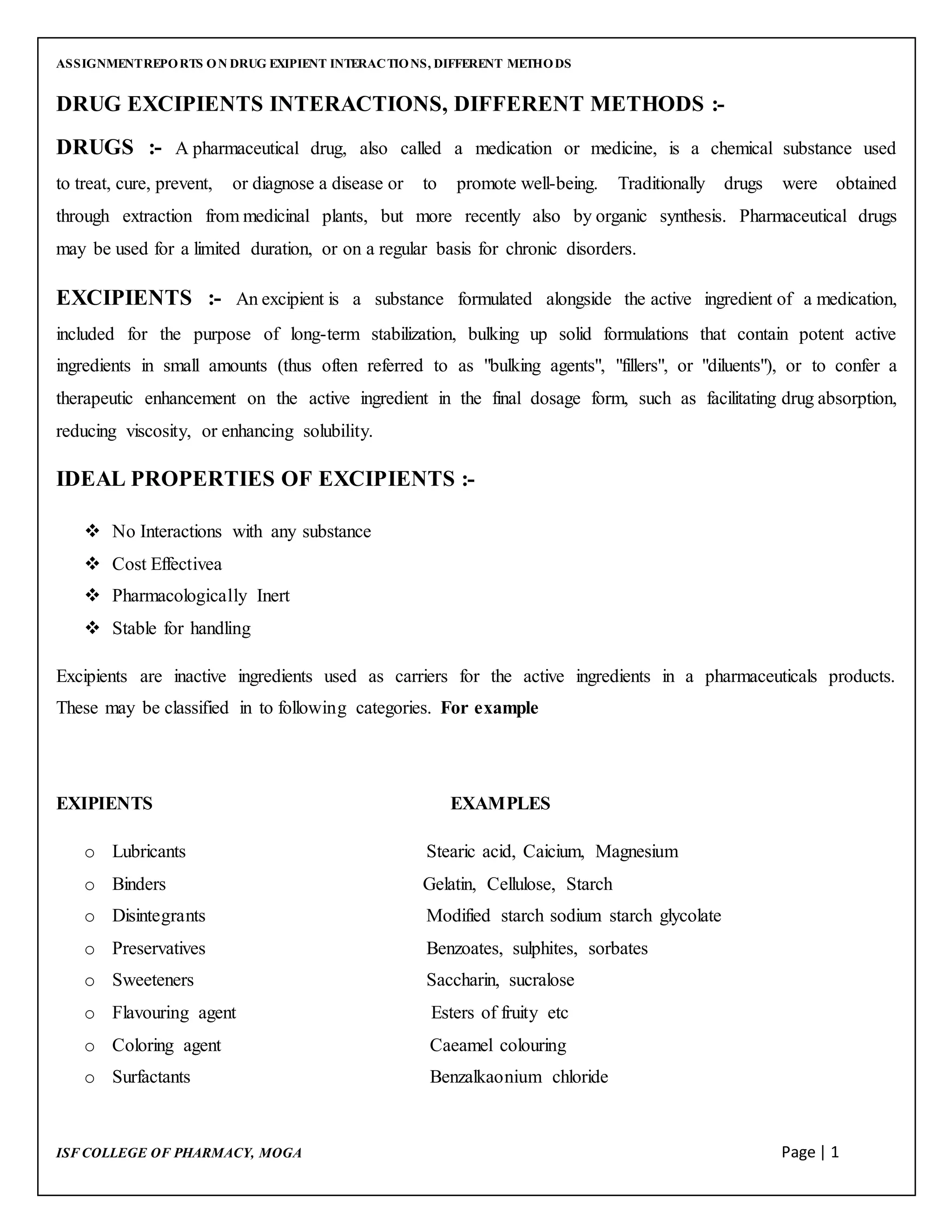
IDEAL PROPERTIES OF EXCIPIENTS :-
 No Interactions with any substance
 Cost Effectivea
 Pharmacologically Inert
 Stable for handling
Excipients are inactive ingredients used as carriers for the active ingredients in a pharmaceuticals products.
These may be classified in to following categories. For example
EXIPIENTS EXAMPLES
o Lubricants Stearic acid, Caicium, Magnesium
o Binders Gelatin, Cellulose, Starch
o Disintegrants Modified starch sodium starch glycolate
o Preservatives Benzoates, sulphites, sorbates
o Sweeteners Saccharin, sucralose
o Flavouring agent Esters of fruity etc
o Coloring agent Caeamel colouring
o Surfactants Benzalkaonium chloride
ASSIGNMENTREPORTS ON DRUG EXIPIENT INTERACTIONS, DIFFERENT METHODS
ISF COLLEGE OF PHARMACY, MOGA Page | 2
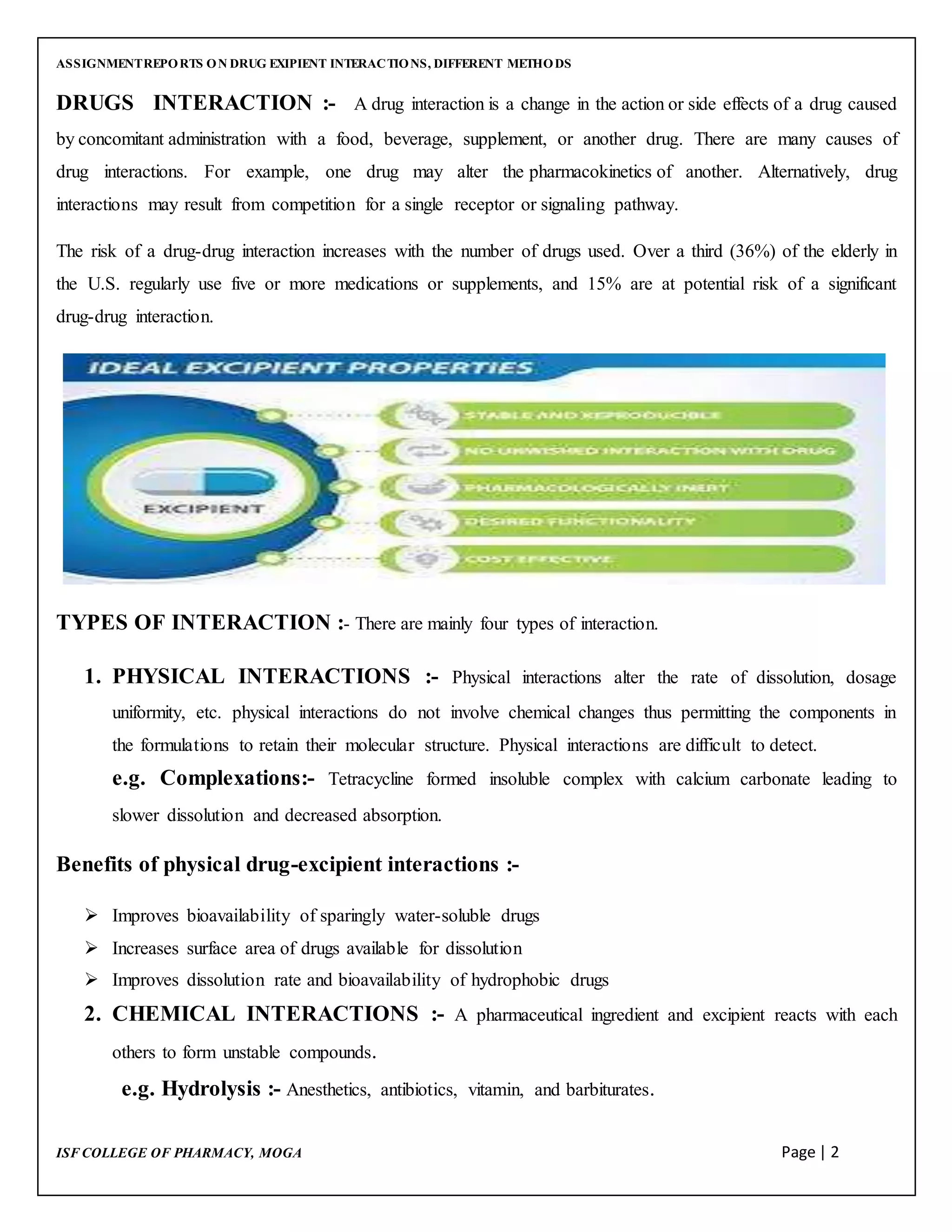
DRUGS INTERACTION :- A drug interaction is a change in the action or side effects of a drug caused
by concomitant administration with a food, beverage, supplement, or another drug. There are many causes of
drug interactions. For example, one drug may alter the pharmacokinetics of another. Alternatively, drug
interactions may result from competition for a single receptor or signaling pathway.
The risk of a drug-drug interaction increases with the number of drugs used. Over a third (36%) of the elderly in
the U.S. regularly use five or more medications or supplements, and 15% are at potential risk of a significant
drug-drug interaction.
TYPES OF INTERACTION :- There are mainly four types of interaction.
1. PHYSICAL INTERACTIONS :- Physical interactions alter the rate of dissolution, dosage
uniformity, etc. physical interactions do not involve chemical changes thus permitting the components in
the formulations to retain their molecular structure. Physical interactions are difficult to detect.
e.g. Complexations:- Tetracycline formed insoluble complex with calcium carbonate leading to
slower dissolution and decreased absorption.
Benefits of physical drug-excipient interactions :-
 Improves bioavailability of sparingly water-soluble drugs
 Increases surface area of drugs available for dissolution
 Improves dissolution rate and bioavailability of hydrophobic drugs
2. CHEMICAL INTERACTIONS :- A pharmaceutical ingredient and excipient reacts with each
others to form unstable compounds.
e.g. Hydrolysis :- Anesthetics, antibiotics, vitamin, and barbiturates.
ASSIGNMENTREPORTS ON DRUG EXIPIENT INTERACTIONS, DIFFERENT METHODS
ISF COLLEGE OF PHARMACY, MOGA Page | 3
3. BIOPHARMACEUTICAL INTERACTIONS :- These are the interaction observed after
administration of the medication. Interaction within the body is between medicine and body fluids which
influence the rate of absorption. All excipients physiological way when they are administered along with
active pharmaceutical.
e.g Premature breakdown of entric coated tablet
4. EXCIPIENT-EXCIPIENT INTERACTIONS :- Excipients-Excipients interaction
through observed very rarely. These are prime importance in determining the stability of
the dosage forms excipients –excipient interactions are used in the formulations to get the
desired products attributes.
NOTE :- Drug Interactions are also based on following basis
1. Drug Food interaction
2. Drug Drug interaction
3. Drug Herb interaction
EXCIPIENTS COMPATIBILITY STUDIES :-
Roles of drug compatibility studies :-
 Stability of dosage form is maximized
 Avoid surprise problems
 Determine list of excipients that can be used in final dosage form
 To reduce side effects
 To overcome problems associated with incorporating multiple excipients in any dosage forms
Importance of Drug-Excipient compatibility studies :-
 It maximizes the stability of a dosage form.
 It bridges drug discovery and development.
 It is essential investigational new drug submission (IND).
 It helps to avoid surprise problems during formulation processes
ASSIGNMENTREPORTS ON DRUG EXIPIENT INTERACTIONS, DIFFERENT METHODS
ISF COLLEGE OF PHARMACY, MOGA Page | 4
Analytical Techniques Used to Detect Drug-Excipient Compatibility :-
Thermal methods of analyses :-
Thermal analysis plays a critical role in compatibility studies and has frequently been employed for quick
assessment of physicochemical incompatibility. We provide three different types of thermal analyses, which
include:
 Differential scanning calorimetry (DSC)
 Isothermal microcalorimetry
 Hot stage microscopy (HSM)
 Vibrational spectroscopy
o FT-IR Spectroscopy
o Diffuse Reflectance Spectroscopy (DRS)
 Powder X-ray diffraction (PXRD)
 Solid state nuclear magnetic resonance spectroscopy (ss NMR)
 Scanning electron microscopy (SEM)
 Chromatography
 Self-Interactive Chromatography (SIC)
 Thin Layer Chromatography (TLC)
 High-Performance Liquid Chromatography (HPLC)
A. Thermal Techniques :-
Thermal methods of analysis comprise a group of techniques in which the physicochemical properties of drug
substances are measured as a function of temperature. In this method, the test samples are subjected to a
controlled temperature over a given period of time.
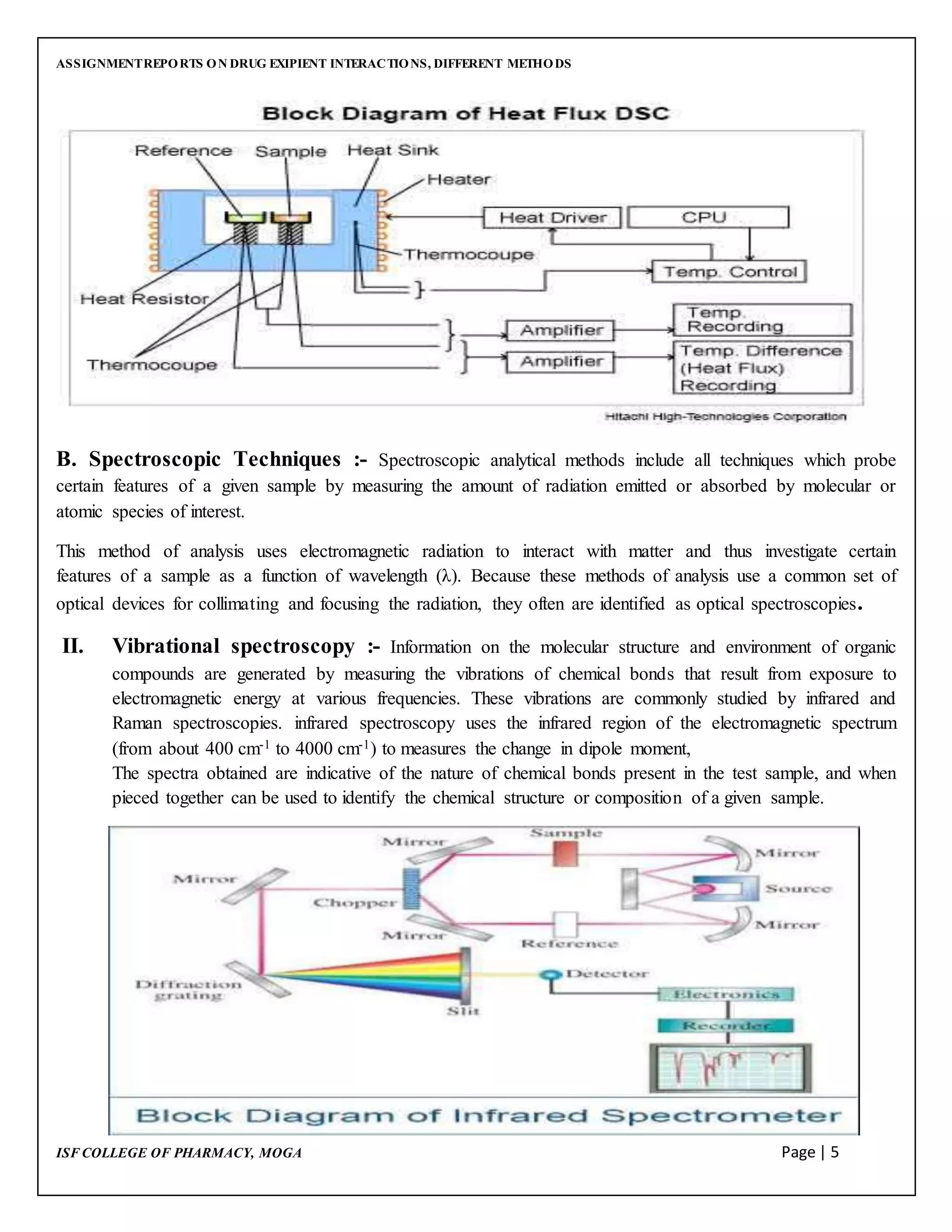
I. Differential Scanning Calorimetry (DSC) :- The DSC curves of pure samples are compared to
that obtained from 50% mixture of the drug and excipient (usually 5mg of the drug in a ratio of 1:1 with
the excipient). It is assumed that the thermal properties (melting point, change in enthalpy, etc.) of
blends are the sum of the individual components if the components are compatible with each other.
However, slight changes in peak shape height and width are expected due to possible differences in the mixture
geometry
Advantages of Differential Scanning Calorimetry
 Requires of short time of analysis
 Low sample consumption
 Provides useful indications of any potential incompatibility
ASSIGNMENTREPORTS ON DRUG EXIPIENT INTERACTIONS, DIFFERENT METHODS
ISF COLLEGE OF PHARMACY, MOGA Page | 5
B. Spectroscopic Techniques :- Spectroscopic analytical methods include all techniques which probe
certain features of a given sample by measuring the amount of radiation emitted or absorbed by molecular or
atomic species of interest.
This method of analysis uses electromagnetic radiation to interact with matter and thus investigate certain
features of a sample as a function of wavelength (λ). Because these methods of analysis use a common set of
optical devices for collimating and focusing the radiation, they often are identified as optical spectroscopies.
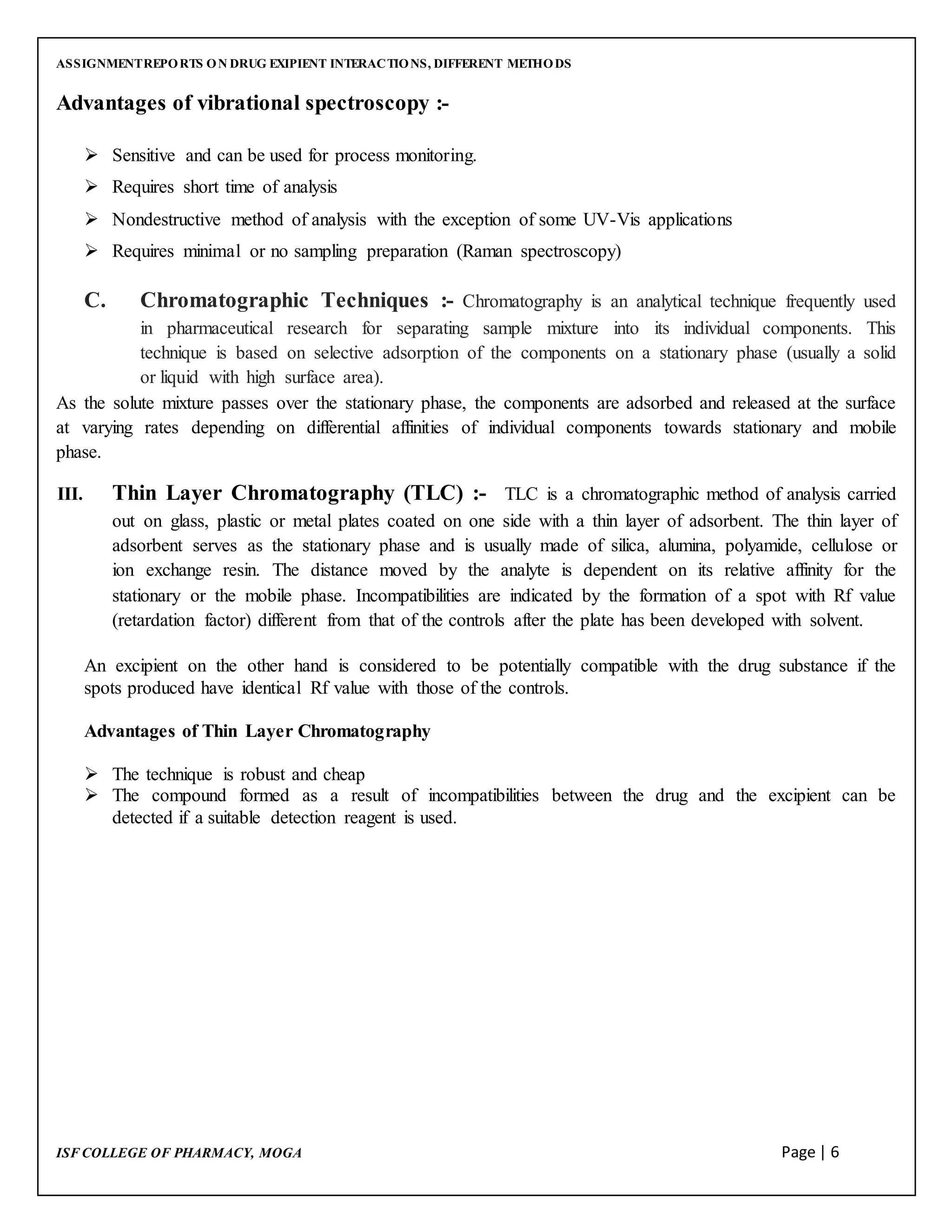
II. Vibrational spectroscopy :- Information on the molecular structure and environment of organic
compounds are generated by measuring the vibrations of chemical bonds that result from exposure to
electromagnetic energy at various frequencies. These vibrations are commonly studied by infrared and
Raman spectroscopies. infrared spectroscopy uses the infrared region of the electromagnetic spectrum
(from about 400 cm-1 to 4000 cm-1) to measures the change in dipole moment,
The spectra obtained are indicative of the nature of chemical bonds present in the test sample, and when
pieced together can be used to identify the chemical structure or composition of a given sample.
ASSIGNMENTREPORTS ON DRUG EXIPIENT INTERACTIONS, DIFFERENT METHODS
ISF COLLEGE OF PHARMACY, MOGA Page | 6
Advantages of vibrational spectroscopy :-
 Sensitive and can be used for process monitoring.
 Requires short time of analysis
 Nondestructive method of analysis with the exception of some UV-Vis applications
 Requires minimal or no sampling preparation (Raman spectroscopy)
C. Chromatographic Techniques :- Chromatography is an analytical technique frequently used
in pharmaceutical research for separating sample mixture into its individual components. This
technique is based on selective adsorption of the components on a stationary phase (usually a solid
or liquid with high surface area).
As the solute mixture passes over the stationary phase, the components are adsorbed and released at the surface
at varying rates depending on differential affinities of individual components towards stationary and mobile
phase.
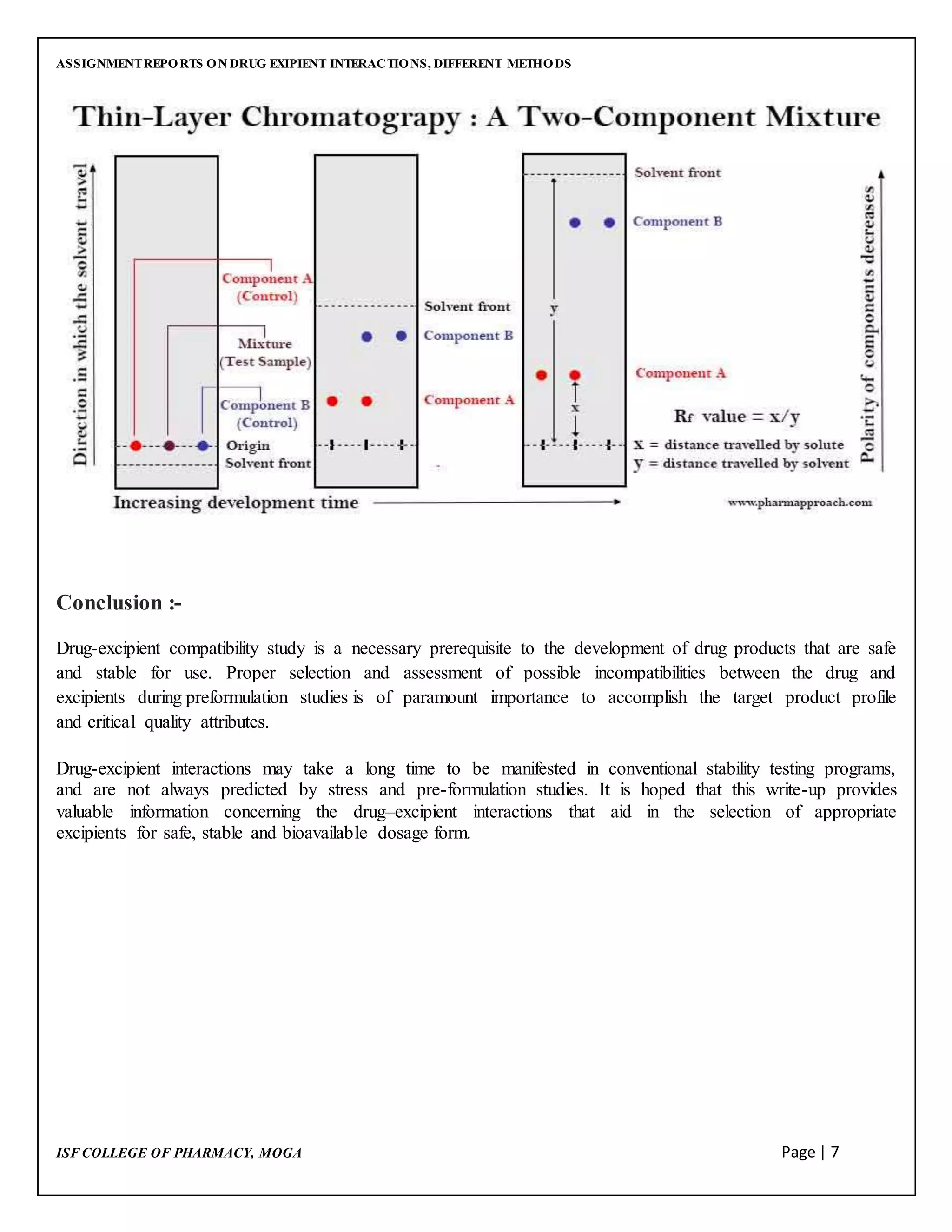
III. Thin Layer Chromatography (TLC) :- TLC is a chromatographic method of analysis carried
out on glass, plastic or metal plates coated on one side with a thin layer of adsorbent. The thin layer of
adsorbent serves as the stationary phase and is usually made of silica, alumina, polyamide, cellulose or
ion exchange resin. The distance moved by the analyte is dependent on its relative affinity for the
stationary or the mobile phase. Incompatibilities are indicated by the formation of a spot with Rf value
(retardation factor) different from that of the controls after the plate has been developed with solvent.
An excipient on the other hand is considered to be potentially compatible with the drug substance if the
spots produced have identical Rf value with those of the controls.
Advantages of Thin Layer Chromatography
 The technique is robust and cheap
 The compound formed as a result of incompatibilities between the drug and the excipient can be
detected if a suitable detection reagent is used.
ASSIGNMENTREPORTS ON DRUG EXIPIENT INTERACTIONS, DIFFERENT METHODS
ISF COLLEGE OF PHARMACY, MOGA Page | 7
Conclusion :-
Drug-excipient compatibility study is a necessary prerequisite to the development of drug products that are safe
and stable for use. Proper selection and assessment of possible incompatibilities between the drug and
excipients during preformulation studies is of paramount importance to accomplish the target product profile
and critical quality attributes.
Drug-excipient interactions may take a long time to be manifested in conventional stability testing programs,
and are not always predicted by stress and pre-formulation studies. It is hoped that this write-up provides
valuable information concerning the drug–excipient interactions that aid in the selection of appropriate
excipients for safe, stable and bioavailable dosage form.
ASSIGNMENTREPORTS ON DRUG EXIPIENT INTERACTIONS, DIFFERENT METHODS
ISF COLLEGE OF PHARMACY, MOGA Page | 8
REFERENCES
 N.Fathima, Et. Al, (2011),Drug excipient interaction and its importance in dosage form development,
Journals of applied pharmaceutical science, Vol. 01, pg: 66-71
 Qui Y. et.al : Developing solid oral dosage forms, Elsevier Academic press, 2011,
pg 125 -143
 Lachman and liverman; pharmaceuticals
 osage form, 2010

Drug excipient interaction assignment

  • 1.
    ASSIGNMENTREPORTS ON DRUGEXIPIENT INTERACTIONS, DIFFERENT METHODS ISF COLLEGE OF PHARMACY, MOGA Page | 1 DRUG EXCIPIENTS INTERACTIONS, DIFFERENT METHODS :- DRUGS :- A pharmaceutical drug, also called a medication or medicine, is a chemical substance used to treat, cure, prevent, or diagnose a disease or to promote well-being. Traditionally drugs were obtained through extraction from medicinal plants, but more recently also by organic synthesis. Pharmaceutical drugs may be used for a limited duration, or on a regular basis for chronic disorders. EXCIPIENTS :- An excipient is a substance formulated alongside the active ingredient of a medication, included for the purpose of long-term stabilization, bulking up solid formulations that contain potent active ingredients in small amounts (thus often referred to as "bulking agents", "fillers", or "diluents"), or to confer a therapeutic enhancement on the active ingredient in the final dosage form, such as facilitating drug absorption, reducing viscosity, or enhancing solubility. IDEAL PROPERTIES OF EXCIPIENTS :-  No Interactions with any substance  Cost Effectivea  Pharmacologically Inert  Stable for handling Excipients are inactive ingredients used as carriers for the active ingredients in a pharmaceuticals products. These may be classified in to following categories. For example EXIPIENTS EXAMPLES o Lubricants Stearic acid, Caicium, Magnesium o Binders Gelatin, Cellulose, Starch o Disintegrants Modified starch sodium starch glycolate o Preservatives Benzoates, sulphites, sorbates o Sweeteners Saccharin, sucralose o Flavouring agent Esters of fruity etc o Coloring agent Caeamel colouring o Surfactants Benzalkaonium chloride
  • 2.
    ASSIGNMENTREPORTS ON DRUGEXIPIENT INTERACTIONS, DIFFERENT METHODS ISF COLLEGE OF PHARMACY, MOGA Page | 2 DRUGS INTERACTION :- A drug interaction is a change in the action or side effects of a drug caused by concomitant administration with a food, beverage, supplement, or another drug. There are many causes of drug interactions. For example, one drug may alter the pharmacokinetics of another. Alternatively, drug interactions may result from competition for a single receptor or signaling pathway. The risk of a drug-drug interaction increases with the number of drugs used. Over a third (36%) of the elderly in the U.S. regularly use five or more medications or supplements, and 15% are at potential risk of a significant drug-drug interaction. TYPES OF INTERACTION :- There are mainly four types of interaction. 1. PHYSICAL INTERACTIONS :- Physical interactions alter the rate of dissolution, dosage uniformity, etc. physical interactions do not involve chemical changes thus permitting the components in the formulations to retain their molecular structure. Physical interactions are difficult to detect. e.g. Complexations:- Tetracycline formed insoluble complex with calcium carbonate leading to slower dissolution and decreased absorption. Benefits of physical drug-excipient interactions :-  Improves bioavailability of sparingly water-soluble drugs  Increases surface area of drugs available for dissolution  Improves dissolution rate and bioavailability of hydrophobic drugs 2. CHEMICAL INTERACTIONS :- A pharmaceutical ingredient and excipient reacts with each others to form unstable compounds. e.g. Hydrolysis :- Anesthetics, antibiotics, vitamin, and barbiturates.
  • 3.
    ASSIGNMENTREPORTS ON DRUGEXIPIENT INTERACTIONS, DIFFERENT METHODS ISF COLLEGE OF PHARMACY, MOGA Page | 3 3. BIOPHARMACEUTICAL INTERACTIONS :- These are the interaction observed after administration of the medication. Interaction within the body is between medicine and body fluids which influence the rate of absorption. All excipients physiological way when they are administered along with active pharmaceutical. e.g Premature breakdown of entric coated tablet 4. EXCIPIENT-EXCIPIENT INTERACTIONS :- Excipients-Excipients interaction through observed very rarely. These are prime importance in determining the stability of the dosage forms excipients –excipient interactions are used in the formulations to get the desired products attributes. NOTE :- Drug Interactions are also based on following basis 1. Drug Food interaction 2. Drug Drug interaction 3. Drug Herb interaction EXCIPIENTS COMPATIBILITY STUDIES :- Roles of drug compatibility studies :-  Stability of dosage form is maximized  Avoid surprise problems  Determine list of excipients that can be used in final dosage form  To reduce side effects  To overcome problems associated with incorporating multiple excipients in any dosage forms Importance of Drug-Excipient compatibility studies :-  It maximizes the stability of a dosage form.  It bridges drug discovery and development.  It is essential investigational new drug submission (IND).  It helps to avoid surprise problems during formulation processes
  • 4.
    ASSIGNMENTREPORTS ON DRUGEXIPIENT INTERACTIONS, DIFFERENT METHODS ISF COLLEGE OF PHARMACY, MOGA Page | 4 Analytical Techniques Used to Detect Drug-Excipient Compatibility :- Thermal methods of analyses :- Thermal analysis plays a critical role in compatibility studies and has frequently been employed for quick assessment of physicochemical incompatibility. We provide three different types of thermal analyses, which include:  Differential scanning calorimetry (DSC)  Isothermal microcalorimetry  Hot stage microscopy (HSM)  Vibrational spectroscopy o FT-IR Spectroscopy o Diffuse Reflectance Spectroscopy (DRS)  Powder X-ray diffraction (PXRD)  Solid state nuclear magnetic resonance spectroscopy (ss NMR)  Scanning electron microscopy (SEM)  Chromatography  Self-Interactive Chromatography (SIC)  Thin Layer Chromatography (TLC)  High-Performance Liquid Chromatography (HPLC) A. Thermal Techniques :- Thermal methods of analysis comprise a group of techniques in which the physicochemical properties of drug substances are measured as a function of temperature. In this method, the test samples are subjected to a controlled temperature over a given period of time. I. Differential Scanning Calorimetry (DSC) :- The DSC curves of pure samples are compared to that obtained from 50% mixture of the drug and excipient (usually 5mg of the drug in a ratio of 1:1 with the excipient). It is assumed that the thermal properties (melting point, change in enthalpy, etc.) of blends are the sum of the individual components if the components are compatible with each other. However, slight changes in peak shape height and width are expected due to possible differences in the mixture geometry Advantages of Differential Scanning Calorimetry  Requires of short time of analysis  Low sample consumption  Provides useful indications of any potential incompatibility
  • 5.
    ASSIGNMENTREPORTS ON DRUGEXIPIENT INTERACTIONS, DIFFERENT METHODS ISF COLLEGE OF PHARMACY, MOGA Page | 5 B. Spectroscopic Techniques :- Spectroscopic analytical methods include all techniques which probe certain features of a given sample by measuring the amount of radiation emitted or absorbed by molecular or atomic species of interest. This method of analysis uses electromagnetic radiation to interact with matter and thus investigate certain features of a sample as a function of wavelength (λ). Because these methods of analysis use a common set of optical devices for collimating and focusing the radiation, they often are identified as optical spectroscopies. II. Vibrational spectroscopy :- Information on the molecular structure and environment of organic compounds are generated by measuring the vibrations of chemical bonds that result from exposure to electromagnetic energy at various frequencies. These vibrations are commonly studied by infrared and Raman spectroscopies. infrared spectroscopy uses the infrared region of the electromagnetic spectrum (from about 400 cm-1 to 4000 cm-1) to measures the change in dipole moment, The spectra obtained are indicative of the nature of chemical bonds present in the test sample, and when pieced together can be used to identify the chemical structure or composition of a given sample.
  • 6.
    ASSIGNMENTREPORTS ON DRUGEXIPIENT INTERACTIONS, DIFFERENT METHODS ISF COLLEGE OF PHARMACY, MOGA Page | 6 Advantages of vibrational spectroscopy :-  Sensitive and can be used for process monitoring.  Requires short time of analysis  Nondestructive method of analysis with the exception of some UV-Vis applications  Requires minimal or no sampling preparation (Raman spectroscopy) C. Chromatographic Techniques :- Chromatography is an analytical technique frequently used in pharmaceutical research for separating sample mixture into its individual components. This technique is based on selective adsorption of the components on a stationary phase (usually a solid or liquid with high surface area). As the solute mixture passes over the stationary phase, the components are adsorbed and released at the surface at varying rates depending on differential affinities of individual components towards stationary and mobile phase. III. Thin Layer Chromatography (TLC) :- TLC is a chromatographic method of analysis carried out on glass, plastic or metal plates coated on one side with a thin layer of adsorbent. The thin layer of adsorbent serves as the stationary phase and is usually made of silica, alumina, polyamide, cellulose or ion exchange resin. The distance moved by the analyte is dependent on its relative affinity for the stationary or the mobile phase. Incompatibilities are indicated by the formation of a spot with Rf value (retardation factor) different from that of the controls after the plate has been developed with solvent. An excipient on the other hand is considered to be potentially compatible with the drug substance if the spots produced have identical Rf value with those of the controls. Advantages of Thin Layer Chromatography  The technique is robust and cheap  The compound formed as a result of incompatibilities between the drug and the excipient can be detected if a suitable detection reagent is used.
  • 7.
    ASSIGNMENTREPORTS ON DRUGEXIPIENT INTERACTIONS, DIFFERENT METHODS ISF COLLEGE OF PHARMACY, MOGA Page | 7 Conclusion :- Drug-excipient compatibility study is a necessary prerequisite to the development of drug products that are safe and stable for use. Proper selection and assessment of possible incompatibilities between the drug and excipients during preformulation studies is of paramount importance to accomplish the target product profile and critical quality attributes. Drug-excipient interactions may take a long time to be manifested in conventional stability testing programs, and are not always predicted by stress and pre-formulation studies. It is hoped that this write-up provides valuable information concerning the drug–excipient interactions that aid in the selection of appropriate excipients for safe, stable and bioavailable dosage form.
  • 8.
    ASSIGNMENTREPORTS ON DRUGEXIPIENT INTERACTIONS, DIFFERENT METHODS ISF COLLEGE OF PHARMACY, MOGA Page | 8 REFERENCES  N.Fathima, Et. Al, (2011),Drug excipient interaction and its importance in dosage form development, Journals of applied pharmaceutical science, Vol. 01, pg: 66-71  Qui Y. et.al : Developing solid oral dosage forms, Elsevier Academic press, 2011, pg 125 -143  Lachman and liverman; pharmaceuticals  osage form, 2010