WELCOME
Shri Balasaheb Mane Shikshan Prasarak Mandal Ambap’s
ASHOKRAO MANE COLLEGE OF PHARMACY,PETH VADGAON
TITLE OF SEMINAR: DRUG EXCIPIENT INTERACTION
AND ITS DIFFERENT METHODS
SUBJECT: MP (MODERN PHARMACEUTICS)
Academic Year: 2023-24
Preparedby: Guided by:
Miss .Prajakta. R. Patil Dr.Sachin.S.Mali
M.pharm FirstYear ProfessorandHead, Department
Roll no-11 of Pharmaceutics.
Department of Pharmaceutics
CONTENTS
• INTRODUCTION
• DIFFERENT TYPES OF DRUG-EXCIPIENT INTERACTION
• ANALYTICAL TECHNIQUES TO DETECT DRUG
EXCIPIENT INTERACTIONS
INTRODUCTION
• Excipients plays an important role in formulating a dosage form
• An excipient is a substanceformulated alongside the active ingredient of a
medication includedfor the purpose of long term stabilization.
• Excipients are inactive ingredients that serves as carriers for the active
ingredients in a pharmaceuticalproduct.
• Excipients are classified into following categories:
▪ Diluents
▪ Binder
▪ Disintegrants
▪ Lubricants
▪ Glidants
▪ Colouringagent
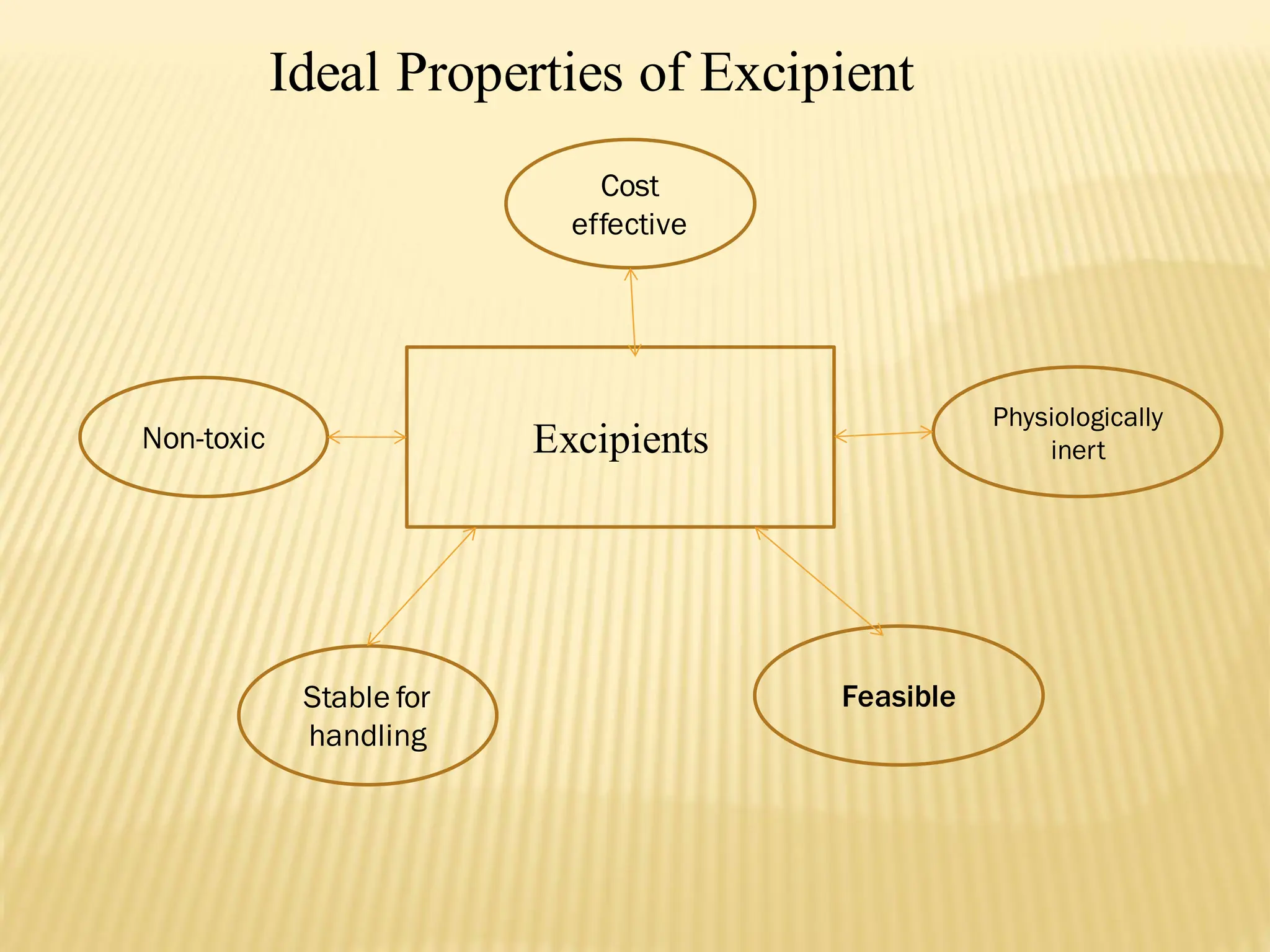
Ideal Properties of Excipient
Excipients
Cost
effective
Feasible
Non-toxic
Stable for
handling
Physiologically
inert
DRUG EXCIPIENT INTERACTION
In pharmaceuticaldosage forms the active pharmaceuticalingredients are in
intimate contactwith the excipient which are greater quantityexcipient and
drugs may have certain incompatibilitywhich lead to drug excipient interaction.
Types of drug excipient
Interactions
▪ 1. Physical interactions
▪ 2.Chemical interactions
▪ 3.Biopharmaceutical interactions
Interaction
Complexation :
1. Usually binds reversibly with drugs to form complex
2.Insoluble complexes are formed which lead to slower
dissolution
3. Decreased absorption of drug
PHYSICAL INTERACTION
• Physical interactions alter rate of dissolution, dosage
uniformity,etc.
• Physical interactions are most common but difficult to detect.
• Physical interactions do not involve chemical changes thus
permitting the components in the formulation to retain their
molecular structure
Beneficial effect example
• Cyclodextrin is often used to improve bioavailability of poorly water
soluble drugs.
• This increases bioavailability and increases rate
Detrimental effect example
• Tetracycline formed insolublecomplex with calcium carbonateleadingto
slower dissolutionand decreased absorption
CHEMICAL INTERACTION
• It involves chemical reaction between drugs and excipients or drug
and impurities present in the excipients to form different
molecules
• Chemical interactions are almost detrimental to product as they
produce degradation
• They are as follows:
1. Chemical interaction between drug and excipients
2. Interaction of drug with excipient residues or impurities
1.Chemical interaction between drug and excipient
Examples:
Release of Diclofenac sodium from matrix tablet was
inhibited by polymer (Chitosan) at low pH,due to formation of
ionic complex between Diclofenac sodium and ionized cationic
polymer.
2. Interaction between drug and excipient residues/impurities
Examples:
Excipient Residues
Povidone peroxide
Magnesium stearate Antioxidant
BIOPHARMACEUTICAL INTERACTION
• These interactions are observed after administration of medicine
• These interactions occurs between medicine(drug/excipient) and
the body fluids
• The interaction have the tendency to influence the rate of
absorption of the drug
• Examples:
Premature breakdown of enteric coat, if this occur side effects
lie gastric bleeding occurs in case of NSAIDs.
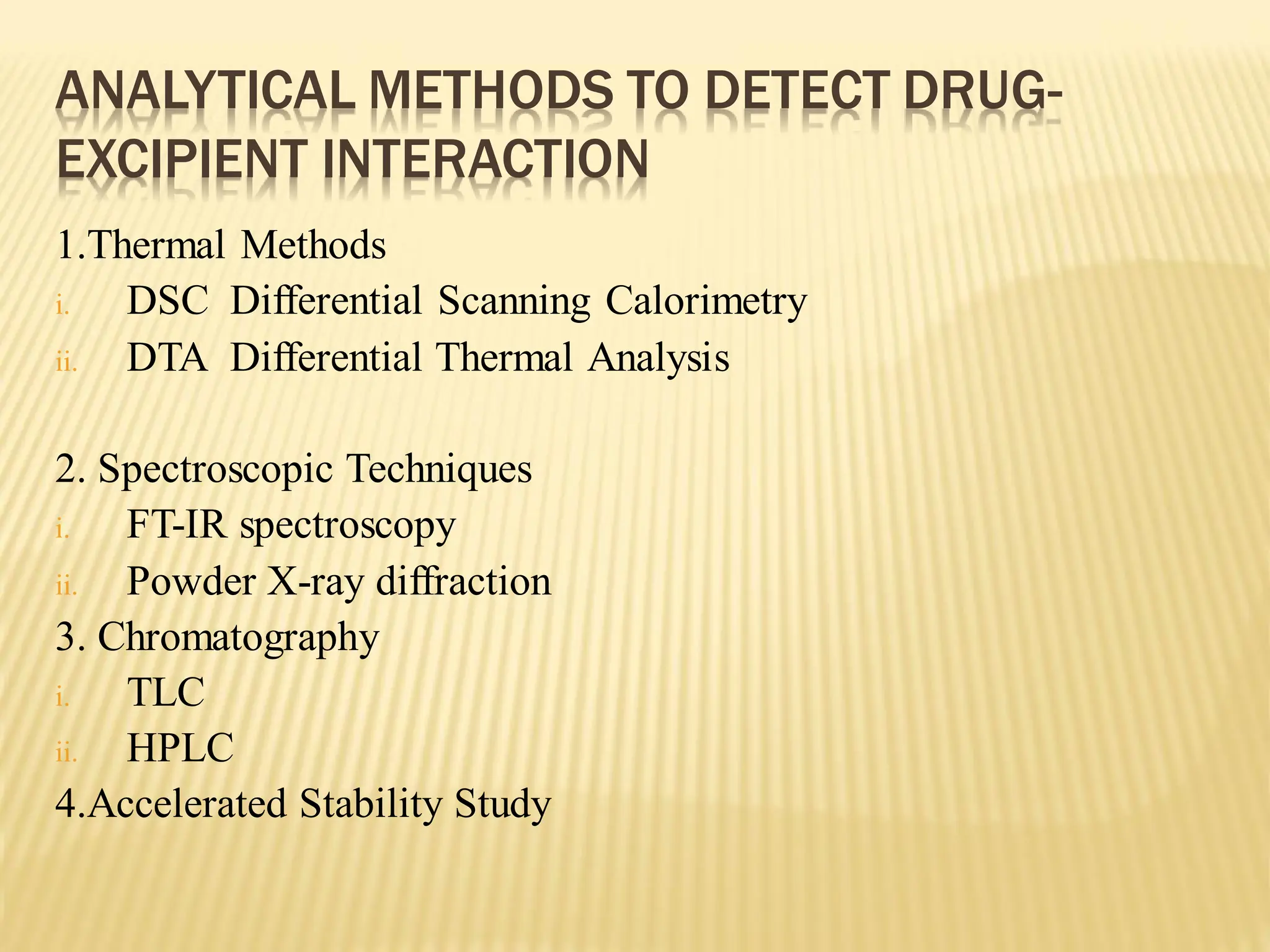
ANALYTICAL METHODS TO DETECT DRUG-
EXCIPIENT INTERACTION
1.Thermal Methods
i. DSC Differential Scanning Calorimetry
ii. DTA Differential Thermal Analysis
2. Spectroscopic Techniques
i. FT-IR spectroscopy
ii. Powder X-ray diffraction
3. Chromatography
i. TLC
ii. HPLC
4.Accelerated Stability Study
THANK YOU!

Drug Excipient Interaction and it's different methods.pdf

  • 1.
  • 2.
    Shri Balasaheb ManeShikshan Prasarak Mandal Ambap’s ASHOKRAO MANE COLLEGE OF PHARMACY,PETH VADGAON TITLE OF SEMINAR: DRUG EXCIPIENT INTERACTION AND ITS DIFFERENT METHODS SUBJECT: MP (MODERN PHARMACEUTICS) Academic Year: 2023-24 Preparedby: Guided by: Miss .Prajakta. R. Patil Dr.Sachin.S.Mali M.pharm FirstYear ProfessorandHead, Department Roll no-11 of Pharmaceutics. Department of Pharmaceutics
  • 3.
    CONTENTS • INTRODUCTION • DIFFERENTTYPES OF DRUG-EXCIPIENT INTERACTION • ANALYTICAL TECHNIQUES TO DETECT DRUG EXCIPIENT INTERACTIONS
  • 4.
    INTRODUCTION • Excipients playsan important role in formulating a dosage form • An excipient is a substanceformulated alongside the active ingredient of a medication includedfor the purpose of long term stabilization. • Excipients are inactive ingredients that serves as carriers for the active ingredients in a pharmaceuticalproduct. • Excipients are classified into following categories: ▪ Diluents ▪ Binder ▪ Disintegrants ▪ Lubricants ▪ Glidants ▪ Colouringagent
  • 5.
    Ideal Properties ofExcipient Excipients Cost effective Feasible Non-toxic Stable for handling Physiologically inert
  • 6.
    DRUG EXCIPIENT INTERACTION Inpharmaceuticaldosage forms the active pharmaceuticalingredients are in intimate contactwith the excipient which are greater quantityexcipient and drugs may have certain incompatibilitywhich lead to drug excipient interaction.
  • 7.
    Types of drugexcipient Interactions ▪ 1. Physical interactions ▪ 2.Chemical interactions ▪ 3.Biopharmaceutical interactions
  • 8.
    Interaction Complexation : 1. Usuallybinds reversibly with drugs to form complex 2.Insoluble complexes are formed which lead to slower dissolution 3. Decreased absorption of drug
  • 9.
    PHYSICAL INTERACTION • Physicalinteractions alter rate of dissolution, dosage uniformity,etc. • Physical interactions are most common but difficult to detect. • Physical interactions do not involve chemical changes thus permitting the components in the formulation to retain their molecular structure
  • 10.
    Beneficial effect example •Cyclodextrin is often used to improve bioavailability of poorly water soluble drugs. • This increases bioavailability and increases rate Detrimental effect example • Tetracycline formed insolublecomplex with calcium carbonateleadingto slower dissolutionand decreased absorption
  • 11.
    CHEMICAL INTERACTION • Itinvolves chemical reaction between drugs and excipients or drug and impurities present in the excipients to form different molecules • Chemical interactions are almost detrimental to product as they produce degradation • They are as follows: 1. Chemical interaction between drug and excipients 2. Interaction of drug with excipient residues or impurities
  • 12.
    1.Chemical interaction betweendrug and excipient Examples: Release of Diclofenac sodium from matrix tablet was inhibited by polymer (Chitosan) at low pH,due to formation of ionic complex between Diclofenac sodium and ionized cationic polymer. 2. Interaction between drug and excipient residues/impurities Examples: Excipient Residues Povidone peroxide Magnesium stearate Antioxidant
  • 13.
    BIOPHARMACEUTICAL INTERACTION • Theseinteractions are observed after administration of medicine • These interactions occurs between medicine(drug/excipient) and the body fluids • The interaction have the tendency to influence the rate of absorption of the drug • Examples: Premature breakdown of enteric coat, if this occur side effects lie gastric bleeding occurs in case of NSAIDs.
  • 14.
    ANALYTICAL METHODS TODETECT DRUG- EXCIPIENT INTERACTION 1.Thermal Methods i. DSC Differential Scanning Calorimetry ii. DTA Differential Thermal Analysis 2. Spectroscopic Techniques i. FT-IR spectroscopy ii. Powder X-ray diffraction 3. Chromatography i. TLC ii. HPLC 4.Accelerated Stability Study
  • 15.