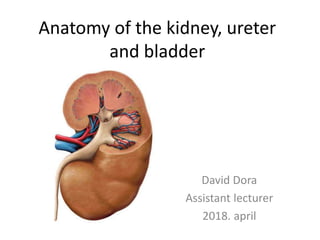
Anatomy of the kidney, ureter
and bladder
David Dora
Assistant lecturer
2018. april
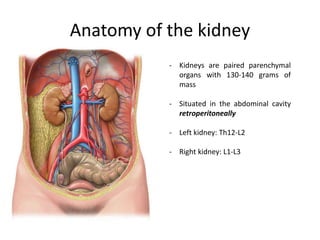
Anatomy of the kidney
- Kidneys are paired parenchymal
organs with 130-140 grams of
mass
- Situated in the abdominal cavity
retroperitoneally
- Left kidney: Th12-L2
- Right kidney: L1-L3
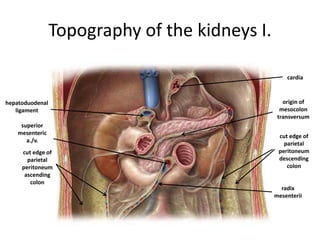
Topography of the kidneys I.
cut edge of
parietal
peritoneum
descending
colon
cut edge of
parietal
peritoneum
ascending
colon
origin of
mesocolon
transversum
radix
mesenterii
hepatoduodenal
ligament
cardia
superior
mesenteric
a./v.
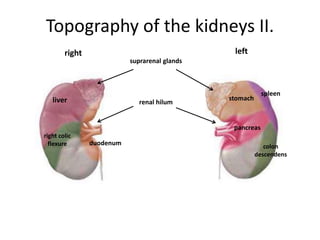
Topography of the kidneys II.
right left
suprarenal glands
liver
right colic
flexure duodenum
renal hilum
colon
descendens
pancreas
stomach
spleen
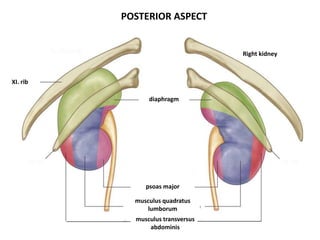
musculus transversus
abdominis
musculus quadratus
lumborum
psoas major
diaphragm
Right kidney
XI. rib
POSTERIOR ASPECT
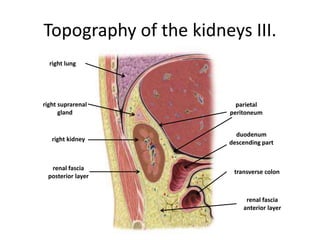
Topography of the kidneys III.
right lung
right suprarenal
gland
right kidney
duodenum
descending part
transverse colon
parietal
peritoneum
renal fascia
posterior layer
renal fascia
anterior layer
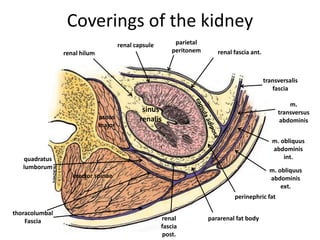
Coverings of the kidney
renal hilum
sinus
renalis
parietal
peritonem renal fascia ant.
renal capsule
transversalis
fascia
m.
transversus
abdominis
m. obliquus
abdominis
int.
m. obliquus
abdominis
ext.
renal
fascia
post.
pararenal fat body
perinephric fat
psoas
major
quadratus
lumborum
thoracolumbal
Fascia
erector spinae
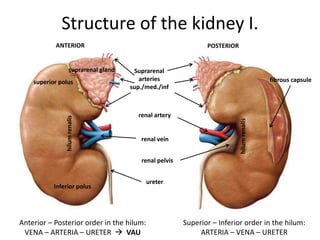
Structure of the kidney I.
suprarenal gland
ANTERIOR POSTERIOR
Suprarenal
arteries
sup./med./inf
renal artery
renal vein
renal pelvis
ureter
hilum
renalis
hilum
renalis
Inferior polus
superior polus fibrous capsule
Anterior – Posterior order in the hilum:
VENA – ARTERIA – URETER  VAU
Superior – Inferior order in the hilum:
ARTERIA – VENA – URETER
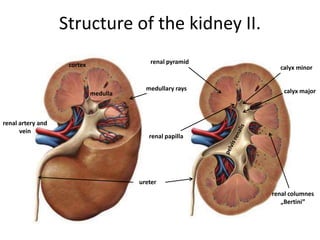
Structure of the kidney II.
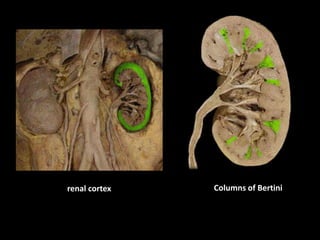
cortex renal pyramid
medulla
medullary rays
renal columnes
„Bertini”
renal papilla
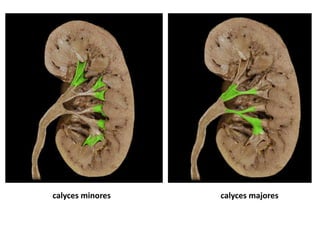
calyx minor
calyx major
renal artery and
vein
ureter
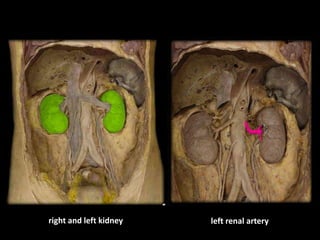
right and left kidney left renal artery
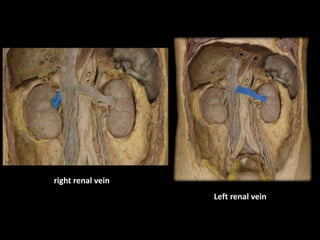
right renal vein
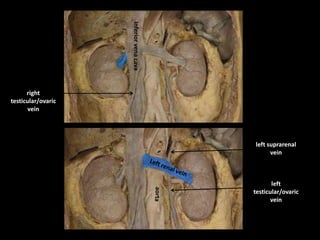
Left renal vein
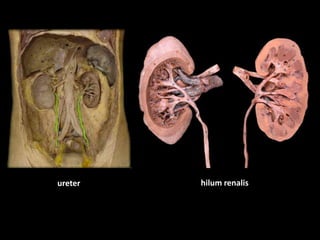
ureters hilum renalis
renal cortex Columns of Bertini
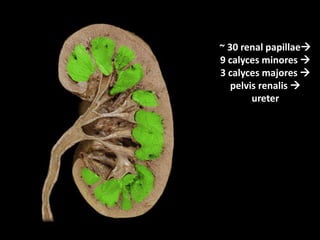
~ 30 renal papillae
9 calyces minores 
3 calyces majores 
pelvis renalis 
ureter
calyces minores calyces majores
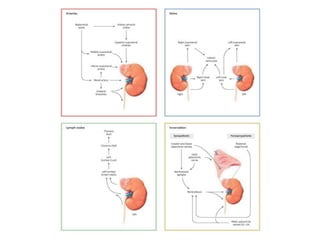
left suprarenal
vein
left
testicular/ovaric
vein
right
testicular/ovaric
vein
Inferior
vena
cava
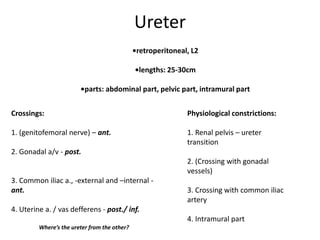
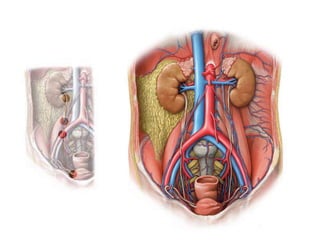
Ureter
Physiological constrictions:
1. Renal pelvis – ureter
transition
2. (Crossing with gonadal
vessels)
3. Crossing with common iliac
artery
4. Intramural part
Crossings:
1. (genitofemoral nerve) – ant.
2. Gonadal a/v - post.
3. Common iliac a., -external and –internal -
ant.
4. Uterine a. / vas defferens - post./ inf.
Where’s the ureter from the other?
•retroperitoneal, L2
•lengths: 25-30cm
•parts: abdominal part, pelvic part, intramural part
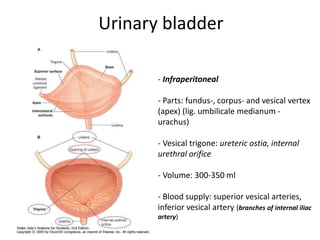
Urinary bladder
- Infraperitoneal
- Parts: fundus-, corpus- and vesical vertex
(apex) (lig. umbilicale medianum -
urachus)
- Vesical trigone: ureteric ostia, internal
urethral orifice
- Volume: 300-350 ml
- Blood supply: superior vesical arteries,
inferior vesical artery (branches of internal iliac
artery)
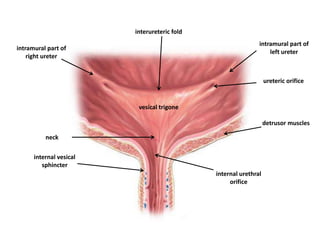
intramural part of
right ureter
intramural part of
left ureter
vesical trigone
detrusor muscles
internal vesical
sphincter
interureteric fold
internal urethral
orifice
neck
ureteric orifice
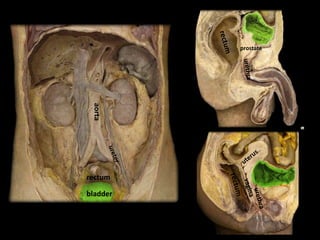
prostate
aorta
rectum
bladder
Thank you for your attention!
References:
Gray’s Anatomy for Students
Thieme: Atlas of Anatomy, Neck and Internal Organs
Grant’s Atlas of Anatomy 13th edition
studyblue.com

Dóra-Dávid-Anatomy-of-the-kidney-ureter-and-bladder-2018.pptx

  • 1.
    Anatomy of thekidney, ureter and bladder David Dora Assistant lecturer 2018. april
  • 2.
    Anatomy of thekidney - Kidneys are paired parenchymal organs with 130-140 grams of mass - Situated in the abdominal cavity retroperitoneally - Left kidney: Th12-L2 - Right kidney: L1-L3
  • 3.
    Topography of thekidneys I. cut edge of parietal peritoneum descending colon cut edge of parietal peritoneum ascending colon origin of mesocolon transversum radix mesenterii hepatoduodenal ligament cardia superior mesenteric a./v.
  • 4.
    Topography of thekidneys II. right left suprarenal glands liver right colic flexure duodenum renal hilum colon descendens pancreas stomach spleen
  • 5.
    musculus transversus abdominis musculus quadratus lumborum psoasmajor diaphragm Right kidney XI. rib POSTERIOR ASPECT
  • 6.
    Topography of thekidneys III. right lung right suprarenal gland right kidney duodenum descending part transverse colon parietal peritoneum renal fascia posterior layer renal fascia anterior layer
  • 7.
    Coverings of thekidney renal hilum sinus renalis parietal peritonem renal fascia ant. renal capsule transversalis fascia m. transversus abdominis m. obliquus abdominis int. m. obliquus abdominis ext. renal fascia post. pararenal fat body perinephric fat psoas major quadratus lumborum thoracolumbal Fascia erector spinae
  • 8.
    Structure of thekidney I. suprarenal gland ANTERIOR POSTERIOR Suprarenal arteries sup./med./inf renal artery renal vein renal pelvis ureter hilum renalis hilum renalis Inferior polus superior polus fibrous capsule Anterior – Posterior order in the hilum: VENA – ARTERIA – URETER  VAU Superior – Inferior order in the hilum: ARTERIA – VENA – URETER
  • 9.
    Structure of thekidney II. cortex renal pyramid medulla medullary rays renal columnes „Bertini” renal papilla calyx minor calyx major renal artery and vein ureter
  • 10.
    right and leftkidney left renal artery
  • 11.
  • 12.
  • 13.
  • 14.
    ~ 30 renalpapillae 9 calyces minores  3 calyces majores  pelvis renalis  ureter
  • 15.
  • 16.
  • 17.
    Ureter Physiological constrictions: 1. Renalpelvis – ureter transition 2. (Crossing with gonadal vessels) 3. Crossing with common iliac artery 4. Intramural part Crossings: 1. (genitofemoral nerve) – ant. 2. Gonadal a/v - post. 3. Common iliac a., -external and –internal - ant. 4. Uterine a. / vas defferens - post./ inf. Where’s the ureter from the other? •retroperitoneal, L2 •lengths: 25-30cm •parts: abdominal part, pelvic part, intramural part
  • 19.
    Urinary bladder - Infraperitoneal -Parts: fundus-, corpus- and vesical vertex (apex) (lig. umbilicale medianum - urachus) - Vesical trigone: ureteric ostia, internal urethral orifice - Volume: 300-350 ml - Blood supply: superior vesical arteries, inferior vesical artery (branches of internal iliac artery)
  • 20.
    intramural part of rightureter intramural part of left ureter vesical trigone detrusor muscles internal vesical sphincter interureteric fold internal urethral orifice neck ureteric orifice
  • 21.
  • 23.
    Thank you foryour attention! References: Gray’s Anatomy for Students Thieme: Atlas of Anatomy, Neck and Internal Organs Grant’s Atlas of Anatomy 13th edition studyblue.com