Erling Falk: CV
SalarySalary Cardiovascular pathologist
Aarhus University, Denmark
Main interestMain interest Vulnerable plaques
coronary thrombosis, and
ACS
COICOI None!
Major limitationsMajor limitations
Limited insight in imaging, epidemiology, statistics
prediction models, cost-effectiveness analyses etc etc
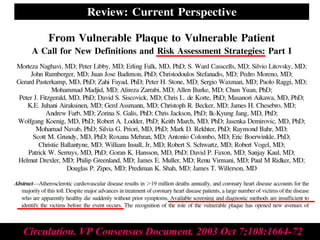
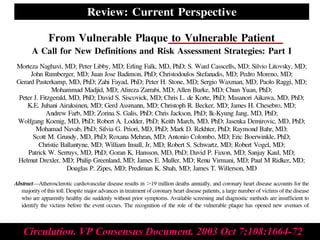
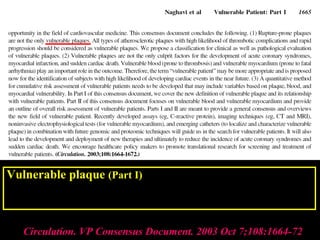
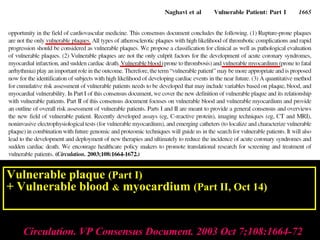
Circulation. VP Consensus Document. 2003 Oct 7;108:1664-72Circulation. VP Consensus Document. 2003 Oct 7;108:1664-72
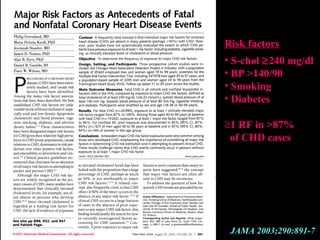
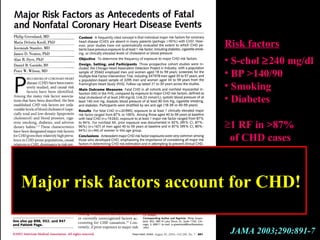
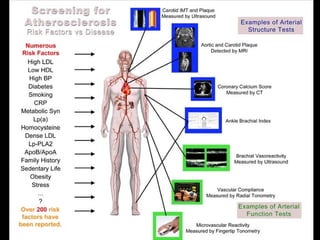
Risk factorsRisk factors
• S-cholS-chol ≥≥240 mg/dl240 mg/dl
• BP >140/90BP >140/90
• SmokingSmoking
• DiabetesDiabetes
≥1 RF in >87%1 RF in >87%
of CHD casesof CHD cases
JAMA 2003;290:891-7
Risk factorsRisk factors
• S-cholS-chol ≥≥240 mg/dl240 mg/dl
• BP >140/90BP >140/90
• SmokingSmoking
• DiabetesDiabetes
≥1 RF in >87%1 RF in >87%
of CHD casesof CHD cases
JAMA 2003;290:891-7
Major risk factors account for CHD!
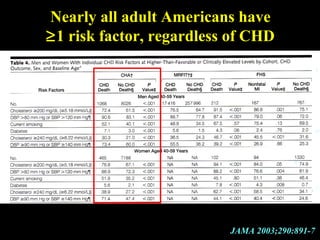
Nearly all adult Americans have
≥1 risk factor, regardless of CHD
JAMA 2003;290:891-7
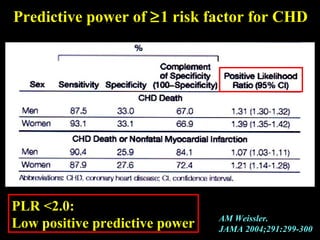
Predictive power of ≥1 risk factor for CHD
PLR <2.0:
Low positive predictive power AM Weissler.
JAMA 2004;291:299-300
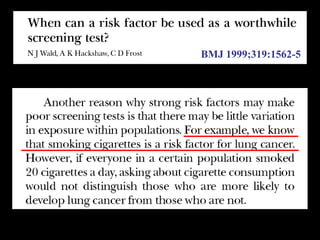
BMJ 1999;319:1562-5
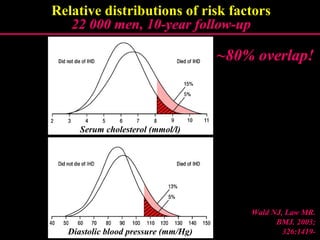
Relative distributions of risk factors
22 000 men, 10-year follow-up22 000 men, 10-year follow-up
Wald NJ, Law MR.Wald NJ, Law MR.
BMJ. 2003;BMJ. 2003;
326:1419-326:1419-
~80% overlap!~80% overlap!
Serum cholesterol (mmol/l)
Diastolic blood pressure (mm/Hg)
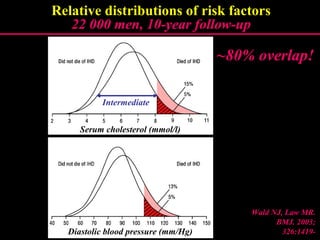
Relative distributions of risk factors
22 000 men, 10-year follow-up22 000 men, 10-year follow-up
Wald NJ, Law MR.Wald NJ, Law MR.
BMJ. 2003;BMJ. 2003;
326:1419-326:1419-
~80% overlap!~80% overlap!
Serum cholesterol (mmol/l)
Diastolic blood pressure (mm/Hg)
Intermediate
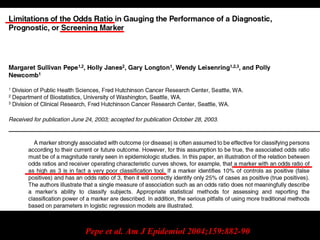
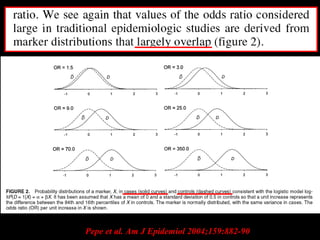
Pepe et al. Am J Epidemiol 2004;159:882-90Pepe et al. Am J Epidemiol 2004;159:882-90
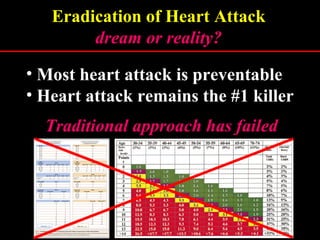
Eradication of Heart Attack
dream or reality?dream or reality?
• Most heart attack is preventable
Heart attack remains the #1 killer
Traditional approach has failed
• Most heart attack is preventable
• Heart attack remains the #1 killer
Traditional approach has failed
Eradication of Heart Attack
dream or reality?dream or reality?
• Most heart attack is preventable
• Heart attack remains the #1 killer
Traditional approach has failedTraditional approach has failed
Eradication of Heart Attack
dream or reality?dream or reality?
• Most heart attack is preventable
• Heart attack remains the #1 killer
Traditional approach has failedTraditional approach has failed
Eradication of Heart Attack
dream or reality?dream or reality?
Circulation. VP Consensus Document. 2003 Oct 7;108:1664-72Circulation. VP Consensus Document. 2003 Oct 7;108:1664-72
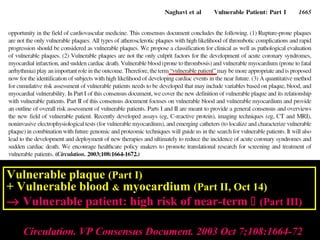
Vulnerable plaque (Part I)
+ Vulnerable blood & myocardium (Part II, Oct 14)
→ Vulnerable patient: high risk of near-term  (Part III)
Circulation. VP Consensus Document. 2003 Oct 7;108:1664-72Circulation. VP Consensus Document. 2003 Oct 7;108:1664-72
Vulnerable plaque (Part I)
+ Vulnerable blood & myocardium (Part II, Oct 14)
→ Vulnerable patient: high risk of near-term  (Part III)
Circulation. VP Consensus Document. 2003 Oct 7;108:1664-72Circulation. VP Consensus Document. 2003 Oct 7;108:1664-72
Vulnerable plaque (Part I)
+ Vulnerable blood & myocardium (Part II, Oct 14)
→ Vulnerable patient: high risk of near-term  (Part III)
From:From: Morteza NaghaviMorteza Naghavi , M.D. [mailto:mn2@vp.org], M.D. [mailto:mn2@vp.org]
Sent:Sent: Tue 3/1/2005 2:26 AMTue 3/1/2005 2:26 AM
… in case of symptomatic or post-ACS population we all know the
balance between components of vulnerability (i.e. plaque – blood –
myocardium) shifts toward increasing the role of blood and
myocardium.
Circulation. VP Consensus Document. 2003 Oct 7;108:1664-72Circulation. VP Consensus Document. 2003 Oct 7;108:1664-72
Vulnerable plaque (Part I)
+ Vulnerable blood & myocardium (Part II, Oct 14)
→ Vulnerable patient: high risk of near-term  (Part III)
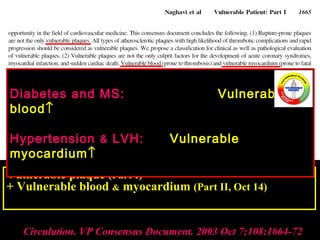
Diabetes and MS:Diabetes and MS: Vulnerable
blood↑
HypertensionHypertension && LVH:LVH: Vulnerable
myocardium↑
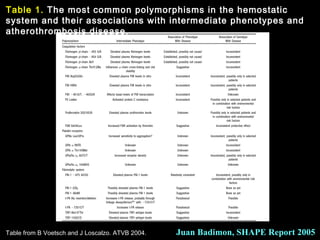
Table 1. The most common polymorphisms in the hemostatic
system and their associations with intermediate phenotypes and
atherothrombosis disease.
Table from B Voetsch and J Loscalzo. ATVB 2004. Juan Badimon, SHAPE Report 2005
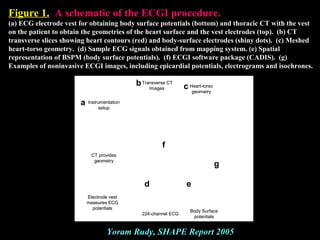
Figure 1. A schematic of the ECGI procedure.A schematic of the ECGI procedure.
(a) ECG electrode vest for obtaining body surface potentials (bottom) and thoracic CT with the vest
on the patient to obtain the geometries of the heart surface and the vest electrodes (top). (b) CT
transverse slices showing heart contours (red) and body-surface electrodes (shiny dots). (c) Meshed
heart-torso geometry. (d) Sample ECG signals obtained from mapping system. (e) Spatial
representation of BSPM (body surface potentials). (f) ECGI software package (CADIS). (g)
Examples of noninvasive ECGI images, including epicardial potentials, electrograms and isochrones.
Electrode vest
measures ECG
potentials
Instrumentation
setup
Transverse CT
Images
Body Surface
potentials
Heart-torso
geometry
224-channel ECG
CT provides
geometry
a
b c
d e
f
g
Electrode vest
measures ECG
potentials
Instrumentation
setup
Transverse CT
Images
Body Surface
potentials
Heart-torso
geometry
224-channel ECG
CT provides
geometry
a
b c
d e
f
g
Yoram Rudy, SHAPE Report 2005
Circulation. VP Consensus Document. 2003 Oct 7;108:1664-72Circulation. VP Consensus Document. 2003 Oct 7;108:1664-72
Vulnerable plaque (Part I)
+ Vulnerable blood & myocardium (Part II, Oct 14)
→→ Vulnerable patient: high risk of near-termVulnerable patient: high risk of near-term  (Part III)(Part III)
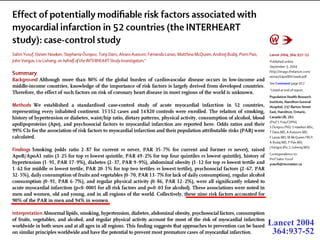
Lancet 2004
364:937-52
Lancet 2004
364:937-52
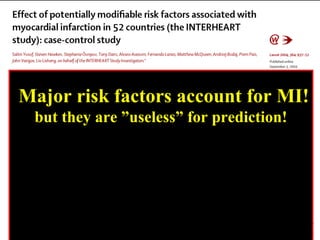
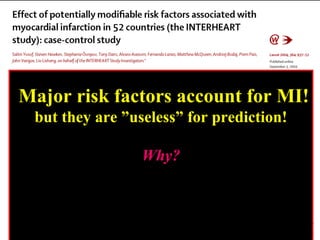
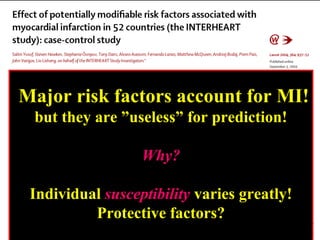
Major risk factors account for MI!
but they are ”useless” for prediction!
Why?
Individual vulnerability varies greatly!
Protective factors?
Lancet 2004
364:937-52
Major risk factors account for MI!
but they are ”useless” for prediction!
Why?Why?
Individual vulnerability varies greatly!
Protective factors?
Lancet 2004
364:937-52
Major risk factors account for MI!
but they are ”useless” for prediction!
Why?Why?
Individual susceptibilitysusceptibility varies greatly!
Protective factors?
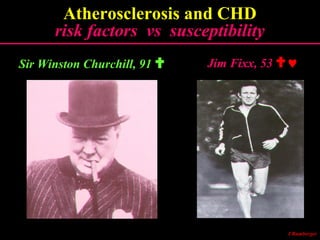
Atherosclerosis and CHD
risk factors vs susceptibilityrisk factors vs susceptibility
Sir Winston Churchill, 91Sir Winston Churchill, 91  Jim Fixx, 53Jim Fixx, 53 ♥♥
J RumbergerJ Rumberger
Atherosclerosis and CHD
risk factors vs susceptibilityrisk factors vs susceptibility
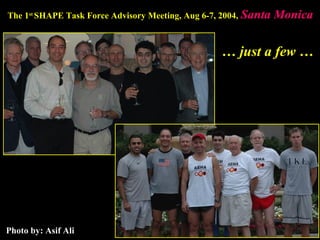
The 1st
SHAPE Task Force Advisory Meeting, Aug 6-7, 2004, Santa MonicaSanta Monica
Photo by: Asif Ali
… just a few …
From: Morteza Naghavi, M.D. [mailto:mn2@vp.org]
Sent: Thu 2/24/2005 7:47 AM
To: Erling Falk; John Rumberger; Kaul, Sanjay M.D.; HHecht@aol.com; Kaul, Sanjay M.D.; Diamond, George, MD
Cc: lshaw@acrionline.org; Kaul, Sanjay M.D.; JamieM@pfizer.com; Dmlmdphd@aol.com; Jasenka.Demirovic@uth.tmc.edu;
Shah, Prediman Krishan
Subject: RE: Association vs classification
Let's not forget the most important question, the short-
term prediction (<5y) in search of the Vulnerable Patient.
We didn't start SHAPE just to engineer a new paradigm. The concept of
search for the Vulnerable Patient, those at a very high risk of a near term
event is by itself a new paradigm and requires new approaches. Preventive
cardiology today does not have any recognition for this group and put them all
together with high risk. ……
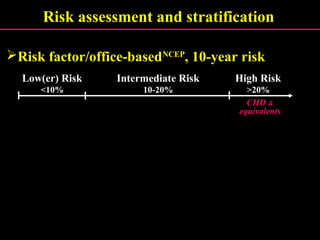
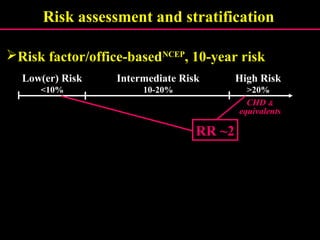
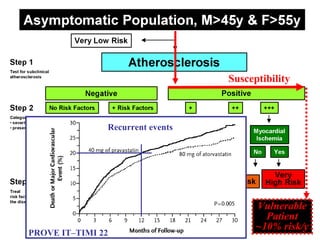
Risk assessment and stratification
Risk factor/office-basedNCEP
, 10-year risk
Intermediate Risk
10-20%
High Risk
>20%
Low(er) Risk
<10%
CHDCHD &&
equivalentsequivalents
Risk assessment and stratification
Risk factor/office-basedNCEP
, 10-year risk
Intermediate Risk
10-20%
High Risk
>20%
Low(er) Risk
<10%
RR ~2RR ~2
CHDCHD &&
equivalentsequivalents
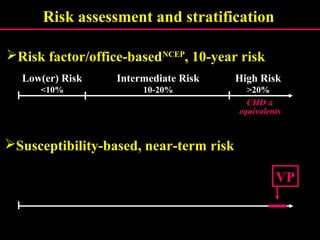
Risk assessment and stratification
Risk factor/office-basedNCEP
, 10-year risk
Intermediate Risk
10-20%
High Risk
>20%
Susceptibility-based, near-term risk
Low(er) Risk
<10%
VPVP
CHDCHD &&
equivalentsequivalents
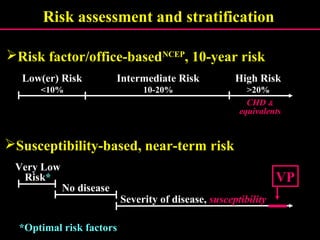
Risk assessment and stratification
Risk factor/office-basedNCEP
, 10-year risk
Intermediate Risk
10-20%
High Risk
>20%
Susceptibility-based, near-term risk
VPVP
Low(er) Risk
<10%
Very Low
Risk*
No disease
Severity of disease, susceptibilitysusceptibility
*Optimal risk factors
CHDCHD &&
equivalentsequivalents
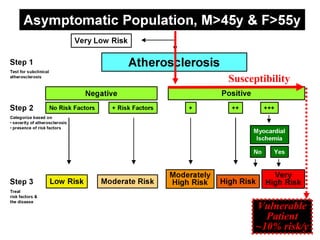
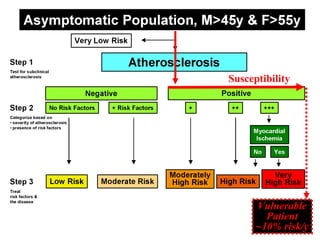
Susceptibility
VulnerableVulnerable
PatientPatient
~10% risk/y~10% risk/y
Susceptibility
PROVE IT–TIMI 22
VulnerableVulnerable
PatientPatient
~10% risk/y~10% risk/y
Recurrent events
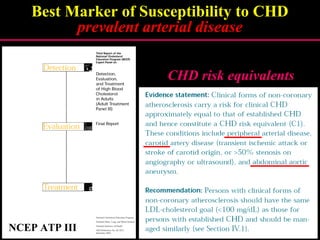
Best Marker of Susceptibility to CHD
prevalent arterial diseaseprevalent arterial disease
CHD risk equivalentsCHD risk equivalents
NCEP ATP III
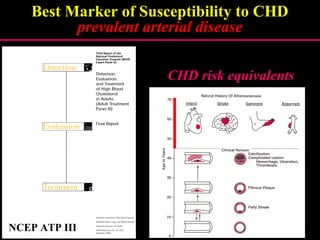
CHD risk equivalentsCHD risk equivalents
NCEP ATP III
Best Marker of Susceptibility to CHD
prevalent arterial diseaseprevalent arterial disease
Susceptibility
VulnerableVulnerable
PatientPatient
~10% risk/y~10% risk/y
Definition of
at-risk population
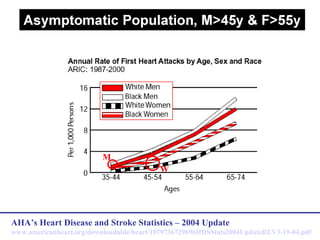
AHA’s Heart Disease and Stroke Statistics – 2004 Update
www.americanheart.org/downloadable/heart/1079736729696HDSStats2004UpdateREV3-19-04.pdf
M
W

Dr falk's slides part i

  • 2.
    Erling Falk: CV SalarySalaryCardiovascular pathologist Aarhus University, Denmark Main interestMain interest Vulnerable plaques coronary thrombosis, and ACS COICOI None! Major limitationsMajor limitations Limited insight in imaging, epidemiology, statistics prediction models, cost-effectiveness analyses etc etc
  • 3.
    Circulation. VP ConsensusDocument. 2003 Oct 7;108:1664-72Circulation. VP Consensus Document. 2003 Oct 7;108:1664-72
  • 4.
    Risk factorsRisk factors •S-cholS-chol ≥≥240 mg/dl240 mg/dl • BP >140/90BP >140/90 • SmokingSmoking • DiabetesDiabetes ≥1 RF in >87%1 RF in >87% of CHD casesof CHD cases JAMA 2003;290:891-7
  • 5.
    Risk factorsRisk factors •S-cholS-chol ≥≥240 mg/dl240 mg/dl • BP >140/90BP >140/90 • SmokingSmoking • DiabetesDiabetes ≥1 RF in >87%1 RF in >87% of CHD casesof CHD cases JAMA 2003;290:891-7 Major risk factors account for CHD!
  • 6.
    Nearly all adultAmericans have ≥1 risk factor, regardless of CHD JAMA 2003;290:891-7
  • 7.
    Predictive power of≥1 risk factor for CHD PLR <2.0: Low positive predictive power AM Weissler. JAMA 2004;291:299-300
  • 8.
  • 10.
    Relative distributions ofrisk factors 22 000 men, 10-year follow-up22 000 men, 10-year follow-up Wald NJ, Law MR.Wald NJ, Law MR. BMJ. 2003;BMJ. 2003; 326:1419-326:1419- ~80% overlap!~80% overlap! Serum cholesterol (mmol/l) Diastolic blood pressure (mm/Hg)
  • 11.
    Relative distributions ofrisk factors 22 000 men, 10-year follow-up22 000 men, 10-year follow-up Wald NJ, Law MR.Wald NJ, Law MR. BMJ. 2003;BMJ. 2003; 326:1419-326:1419- ~80% overlap!~80% overlap! Serum cholesterol (mmol/l) Diastolic blood pressure (mm/Hg) Intermediate
  • 12.
    Pepe et al.Am J Epidemiol 2004;159:882-90Pepe et al. Am J Epidemiol 2004;159:882-90
  • 13.
    Pepe et al.Am J Epidemiol 2004;159:882-90Pepe et al. Am J Epidemiol 2004;159:882-90
  • 14.
    Eradication of HeartAttack dream or reality?dream or reality? • Most heart attack is preventable Heart attack remains the #1 killer Traditional approach has failed
  • 15.
    • Most heartattack is preventable • Heart attack remains the #1 killer Traditional approach has failed Eradication of Heart Attack dream or reality?dream or reality?
  • 16.
    • Most heartattack is preventable • Heart attack remains the #1 killer Traditional approach has failedTraditional approach has failed Eradication of Heart Attack dream or reality?dream or reality?
  • 17.
    • Most heartattack is preventable • Heart attack remains the #1 killer Traditional approach has failedTraditional approach has failed Eradication of Heart Attack dream or reality?dream or reality?
  • 18.
    Circulation. VP ConsensusDocument. 2003 Oct 7;108:1664-72Circulation. VP Consensus Document. 2003 Oct 7;108:1664-72
  • 19.
    Circulation. VP ConsensusDocument. 2003 Oct 7;108:1664-72Circulation. VP Consensus Document. 2003 Oct 7;108:1664-72 Vulnerable plaque (Part I) + Vulnerable blood & myocardium (Part II, Oct 14) → Vulnerable patient: high risk of near-term  (Part III)
  • 20.
    Circulation. VP ConsensusDocument. 2003 Oct 7;108:1664-72Circulation. VP Consensus Document. 2003 Oct 7;108:1664-72 Vulnerable plaque (Part I) + Vulnerable blood & myocardium (Part II, Oct 14) → Vulnerable patient: high risk of near-term  (Part III)
  • 21.
    Circulation. VP ConsensusDocument. 2003 Oct 7;108:1664-72Circulation. VP Consensus Document. 2003 Oct 7;108:1664-72 Vulnerable plaque (Part I) + Vulnerable blood & myocardium (Part II, Oct 14) → Vulnerable patient: high risk of near-term  (Part III) From:From: Morteza NaghaviMorteza Naghavi , M.D. [mailto:mn2@vp.org], M.D. [mailto:mn2@vp.org] Sent:Sent: Tue 3/1/2005 2:26 AMTue 3/1/2005 2:26 AM … in case of symptomatic or post-ACS population we all know the balance between components of vulnerability (i.e. plaque – blood – myocardium) shifts toward increasing the role of blood and myocardium.
  • 22.
    Circulation. VP ConsensusDocument. 2003 Oct 7;108:1664-72Circulation. VP Consensus Document. 2003 Oct 7;108:1664-72 Vulnerable plaque (Part I) + Vulnerable blood & myocardium (Part II, Oct 14) → Vulnerable patient: high risk of near-term  (Part III) Diabetes and MS:Diabetes and MS: Vulnerable blood↑ HypertensionHypertension && LVH:LVH: Vulnerable myocardium↑
  • 23.
    Table 1. Themost common polymorphisms in the hemostatic system and their associations with intermediate phenotypes and atherothrombosis disease. Table from B Voetsch and J Loscalzo. ATVB 2004. Juan Badimon, SHAPE Report 2005
  • 24.
    Figure 1. Aschematic of the ECGI procedure.A schematic of the ECGI procedure. (a) ECG electrode vest for obtaining body surface potentials (bottom) and thoracic CT with the vest on the patient to obtain the geometries of the heart surface and the vest electrodes (top). (b) CT transverse slices showing heart contours (red) and body-surface electrodes (shiny dots). (c) Meshed heart-torso geometry. (d) Sample ECG signals obtained from mapping system. (e) Spatial representation of BSPM (body surface potentials). (f) ECGI software package (CADIS). (g) Examples of noninvasive ECGI images, including epicardial potentials, electrograms and isochrones. Electrode vest measures ECG potentials Instrumentation setup Transverse CT Images Body Surface potentials Heart-torso geometry 224-channel ECG CT provides geometry a b c d e f g Electrode vest measures ECG potentials Instrumentation setup Transverse CT Images Body Surface potentials Heart-torso geometry 224-channel ECG CT provides geometry a b c d e f g Yoram Rudy, SHAPE Report 2005
  • 25.
    Circulation. VP ConsensusDocument. 2003 Oct 7;108:1664-72Circulation. VP Consensus Document. 2003 Oct 7;108:1664-72 Vulnerable plaque (Part I) + Vulnerable blood & myocardium (Part II, Oct 14) →→ Vulnerable patient: high risk of near-termVulnerable patient: high risk of near-term  (Part III)(Part III)
  • 26.
  • 27.
    Lancet 2004 364:937-52 Major riskfactors account for MI! but they are ”useless” for prediction! Why? Individual vulnerability varies greatly! Protective factors?
  • 28.
    Lancet 2004 364:937-52 Major riskfactors account for MI! but they are ”useless” for prediction! Why?Why? Individual vulnerability varies greatly! Protective factors?
  • 29.
    Lancet 2004 364:937-52 Major riskfactors account for MI! but they are ”useless” for prediction! Why?Why? Individual susceptibilitysusceptibility varies greatly! Protective factors?
  • 30.
    Atherosclerosis and CHD riskfactors vs susceptibilityrisk factors vs susceptibility
  • 31.
    Sir Winston Churchill,91Sir Winston Churchill, 91  Jim Fixx, 53Jim Fixx, 53 ♥♥ J RumbergerJ Rumberger Atherosclerosis and CHD risk factors vs susceptibilityrisk factors vs susceptibility
  • 32.
    The 1st SHAPE TaskForce Advisory Meeting, Aug 6-7, 2004, Santa MonicaSanta Monica Photo by: Asif Ali … just a few …
  • 33.
    From: Morteza Naghavi,M.D. [mailto:mn2@vp.org] Sent: Thu 2/24/2005 7:47 AM To: Erling Falk; John Rumberger; Kaul, Sanjay M.D.; HHecht@aol.com; Kaul, Sanjay M.D.; Diamond, George, MD Cc: lshaw@acrionline.org; Kaul, Sanjay M.D.; JamieM@pfizer.com; Dmlmdphd@aol.com; Jasenka.Demirovic@uth.tmc.edu; Shah, Prediman Krishan Subject: RE: Association vs classification Let's not forget the most important question, the short- term prediction (<5y) in search of the Vulnerable Patient. We didn't start SHAPE just to engineer a new paradigm. The concept of search for the Vulnerable Patient, those at a very high risk of a near term event is by itself a new paradigm and requires new approaches. Preventive cardiology today does not have any recognition for this group and put them all together with high risk. ……
  • 34.
    Risk assessment andstratification Risk factor/office-basedNCEP , 10-year risk Intermediate Risk 10-20% High Risk >20% Low(er) Risk <10% CHDCHD && equivalentsequivalents
  • 35.
    Risk assessment andstratification Risk factor/office-basedNCEP , 10-year risk Intermediate Risk 10-20% High Risk >20% Low(er) Risk <10% RR ~2RR ~2 CHDCHD && equivalentsequivalents
  • 36.
    Risk assessment andstratification Risk factor/office-basedNCEP , 10-year risk Intermediate Risk 10-20% High Risk >20% Susceptibility-based, near-term risk Low(er) Risk <10% VPVP CHDCHD && equivalentsequivalents
  • 37.
    Risk assessment andstratification Risk factor/office-basedNCEP , 10-year risk Intermediate Risk 10-20% High Risk >20% Susceptibility-based, near-term risk VPVP Low(er) Risk <10% Very Low Risk* No disease Severity of disease, susceptibilitysusceptibility *Optimal risk factors CHDCHD && equivalentsequivalents
  • 38.
  • 39.
  • 40.
    Best Marker ofSusceptibility to CHD prevalent arterial diseaseprevalent arterial disease CHD risk equivalentsCHD risk equivalents NCEP ATP III
  • 41.
    CHD risk equivalentsCHDrisk equivalents NCEP ATP III Best Marker of Susceptibility to CHD prevalent arterial diseaseprevalent arterial disease
  • 43.
  • 44.
  • 45.
    AHA’s Heart Diseaseand Stroke Statistics – 2004 Update www.americanheart.org/downloadable/heart/1079736729696HDSStats2004UpdateREV3-19-04.pdf M W