IMPROVING MINNESOTA
PRRS/PED CONTROL
Dave Wright & Bill Hartmann
Minnesota Pork Congress
January 19, 2016
Improving the Value of
Minnesota PRRS & PED
Control
“WHAT’S NEXT?”
Review and Progress
Report
Timeline Review
A discussion process that lead to
the proposal being presented for
consideration
N212 Regional meetings on
July 27 and August 3: “Have
we reached a tipping point?”
• Discussed options and limitations of
additional PRRS/PED control measures
• Concluded that there was enough
interest to explore other options
N212 Progress Report
Jan 2013 Jan 2014 Dec 2015
Sites Identified 812 872 914
Signed Participants 408 567 600
Positive PRRS Sites 89 72 69
Stable or St. Vaccinated 18 88 66
Negative PRRS/PEDV 273 308/0 360/201
Empty Sites 88 107 111
Unknown PRRS Status 343 296 307
PED Positive Sites 8 10
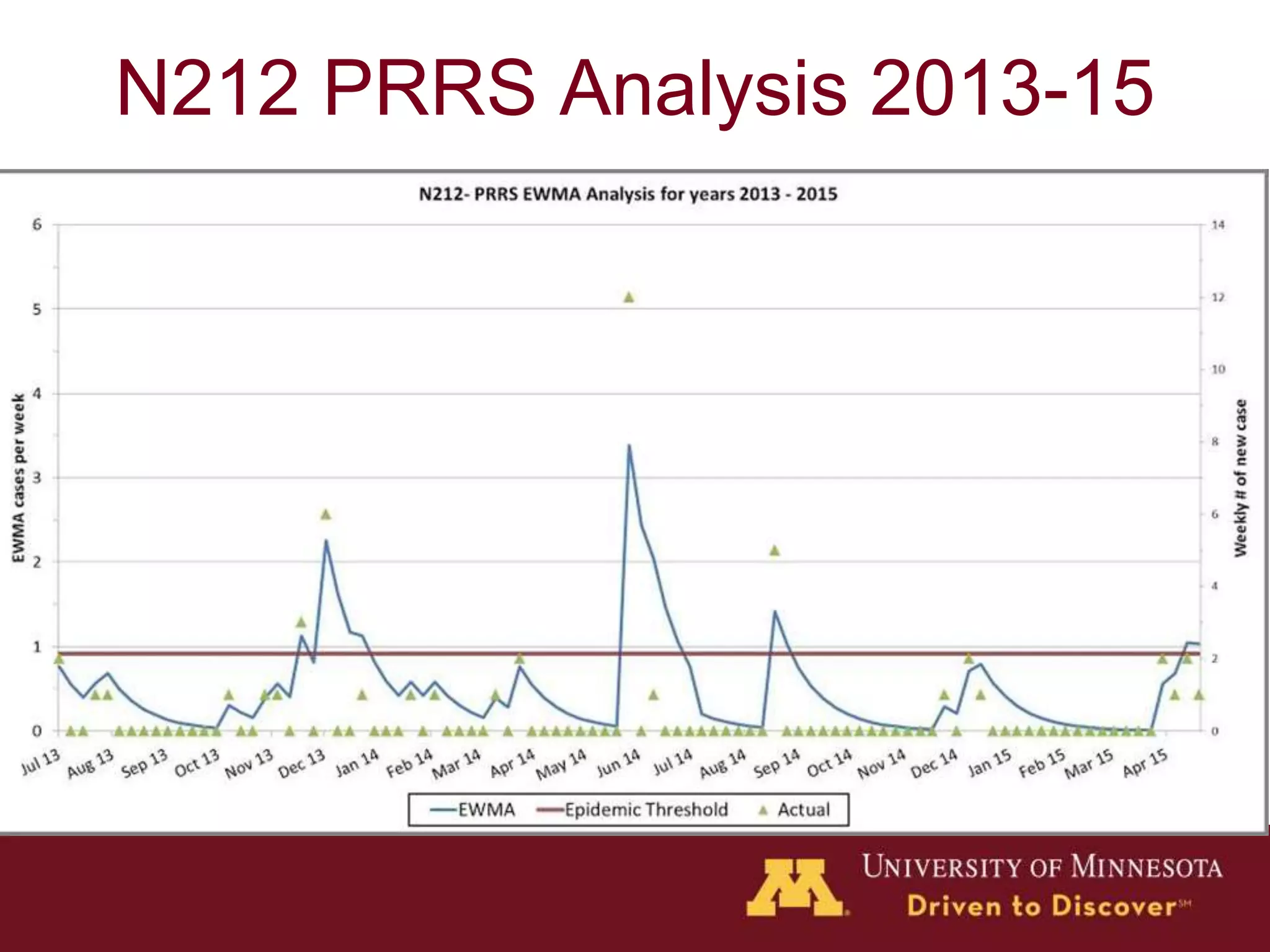
N212 PRRS Analysis 2013-15
Minor clinical
signs
5 unique sequences;
Major losses-
$5,000,000?
1-4-4 mostly
N212 crosses
epidemic
threshold,
9+sequences
Willmar on August 24: “What’s
Next? Options for PRRS &
PED Control”
• Participants: Dave Wright, Roger
Koosmann, Beth Thompson, Montse
Torremorell, Nate Winkelman, Sarah
Schiek, John Anderson, Mark Schwartz,
Tim Snider, Dave Preisler, Deb Murray
(+ Steve Langhorst & Randy Koehl)
Meeting Goal:
To explore feasible options to
improve PRRS and PEDV
control in Minnesota
Limitations that became
apparent
• PRRS & PED control is voluntary and
remains the responsibility of the swine
industry
• Cannot split the state
• Must accommodate diverse opinions
• No movement restrictions
• Limited cost and inconvenience
Meeting in Mankato on
September 23:
MPB Executive Committee
summarizing discussion from
previous two meetings.
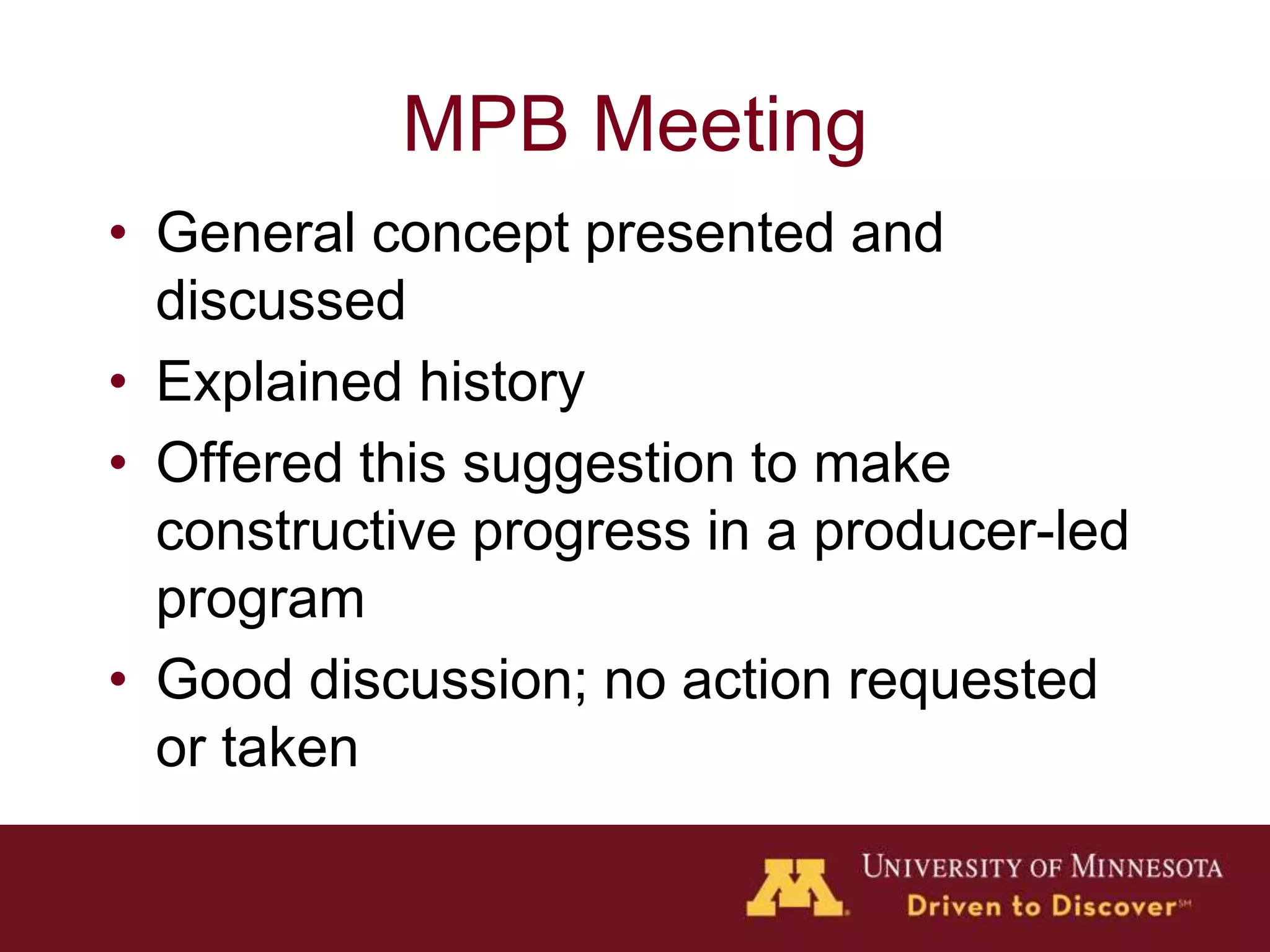
MPB Meeting
• General concept presented and
discussed
• Explained history
• Offered this suggestion to make
constructive progress in a producer-led
program
• Good discussion; no action requested
or taken
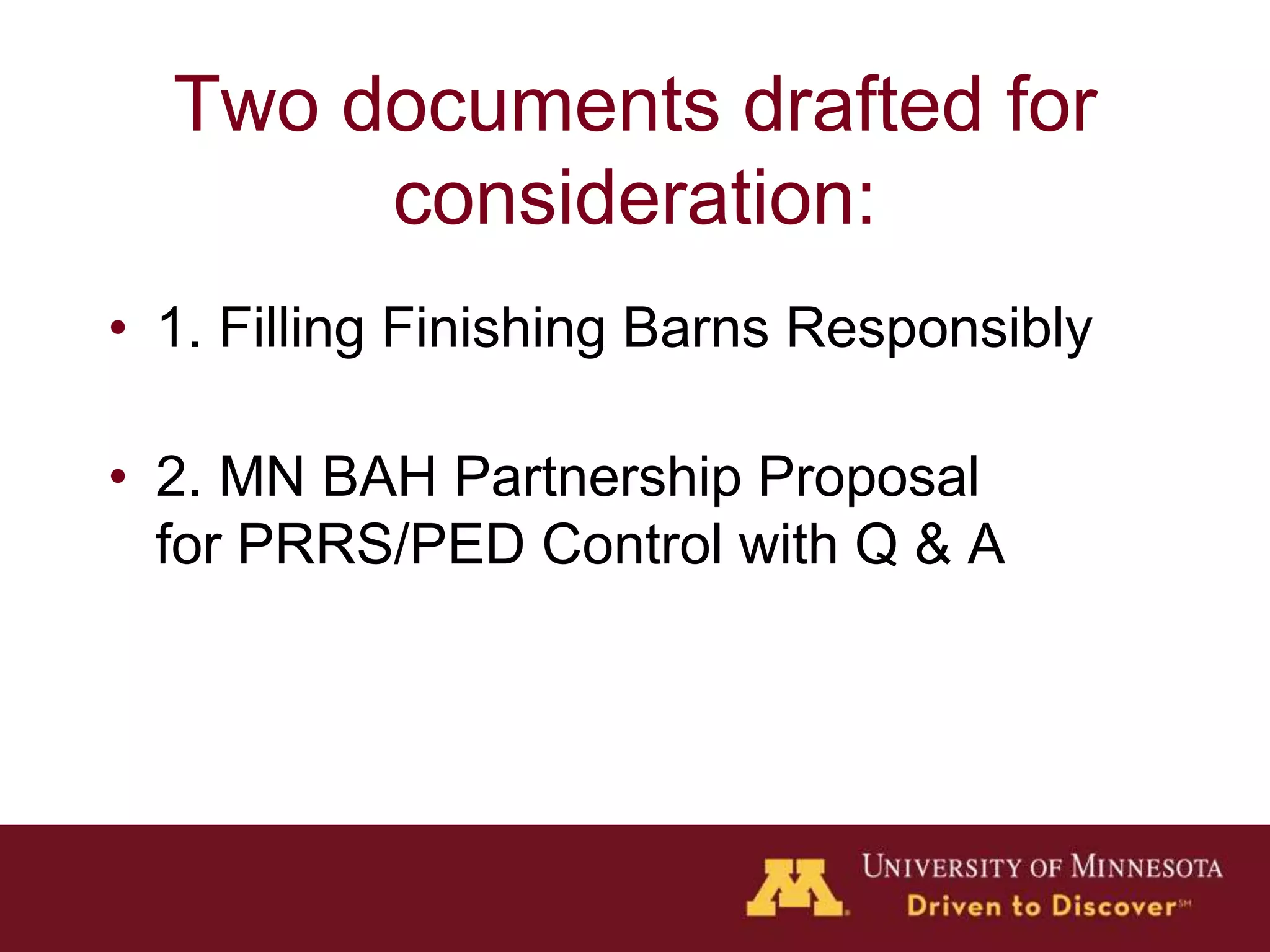
Two documents drafted for
consideration:
• 1. Filling Finishing Barns Responsibly
• 2. MN BAH Partnership Proposal
for PRRS/PED Control with Q & A
MN BAH Partnership Proposal
for PRRS/PED Control
with Q & A’s
Distributed to MN Swine Health
Task Force for review
Meeting on Nov 18 in Mankato
with MN Swine Health Task
Force
MN BAH Partnership Proposal
Background
• PRRS and PED continue to plague the
Minnesota swine industry despite a
reduced prevalence nationwide.
• 15 million pigs are finished in Minnesota
annually. The MN Board of Animal
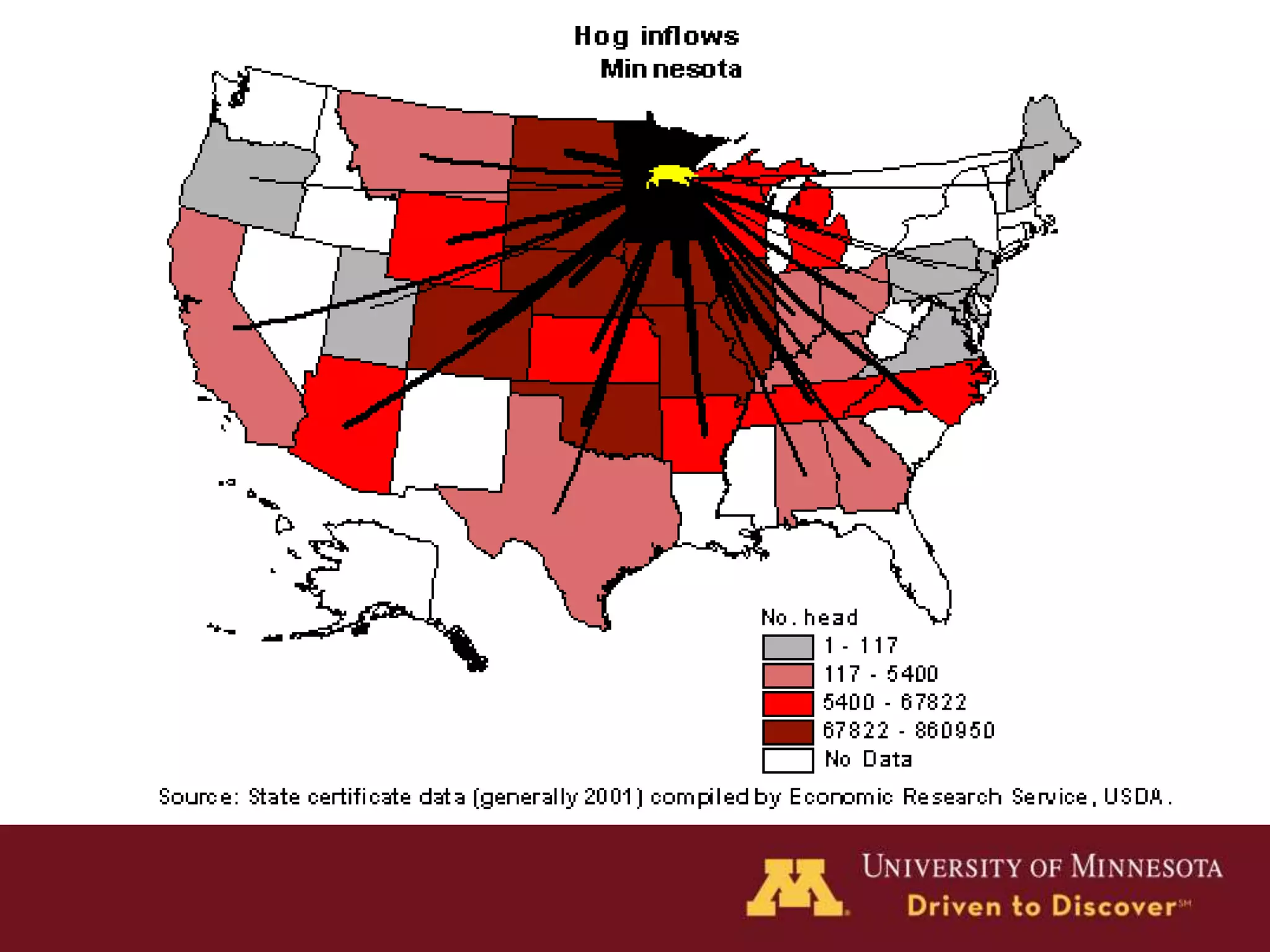
Health (BAH) reports that 6.5 million
pigs move into Minnesota from other
states and an additional 1 million pigs
are imported from Canada.
Regional control projects have
been helpful in promoting
collaboration among producers
and veterinarians, but
effectiveness is limited by the
voluntary nature of the
programs:
Voluntary Limitations
• There usually is not 100% participation.
• Not all participants test and report status
changes regularly—particularly among
independent finishers and small producers.
• A perceived lack of progress frustrates
producers and leads to a further lack of
participation.
• We do not know the status of non-
participating herds nor of pigs coming into
Minnesota.
Purpose of the Proposal:
• To partner with the MN BAH to gather
information about the PRRS and PED
status of pigs entering Minnesota that
could lead to a better understanding of
the dynamics of disease control.
• Information will help determine area risk
and assist in outbreak investigations
• Limited inconvenience to producers,
veterinarians or the BAH
Proposal:
• Partner with the MN BAH by asking
them to request that certificates of
veterinary inspection (CVI’s) of all pigs
entering Minnesota include a statement
disclosing the PRRS and PED status of
the herd of origin, if known. No
movement restrictions would be
imposed. All pigs, regardless of status,
could enter the state.
2015 Summary of CVI’s
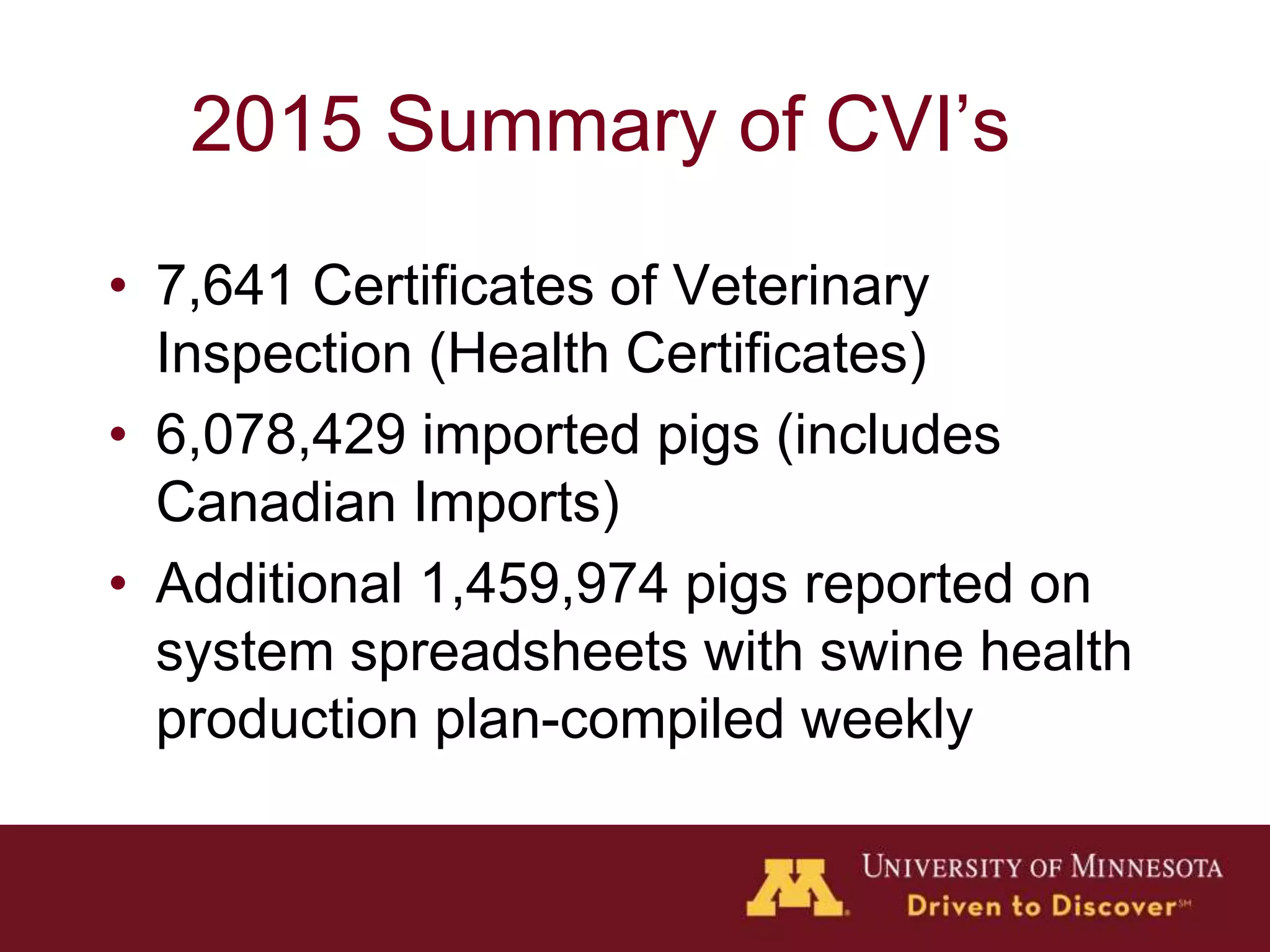
• 7,641 Certificates of Veterinary
Inspection (Health Certificates)
• 6,078,429 imported pigs (includes
Canadian Imports)
• Additional 1,459,974 pigs reported on
system spreadsheets with swine health
production plan-compiled weekly
Variable Formats for CVI’s
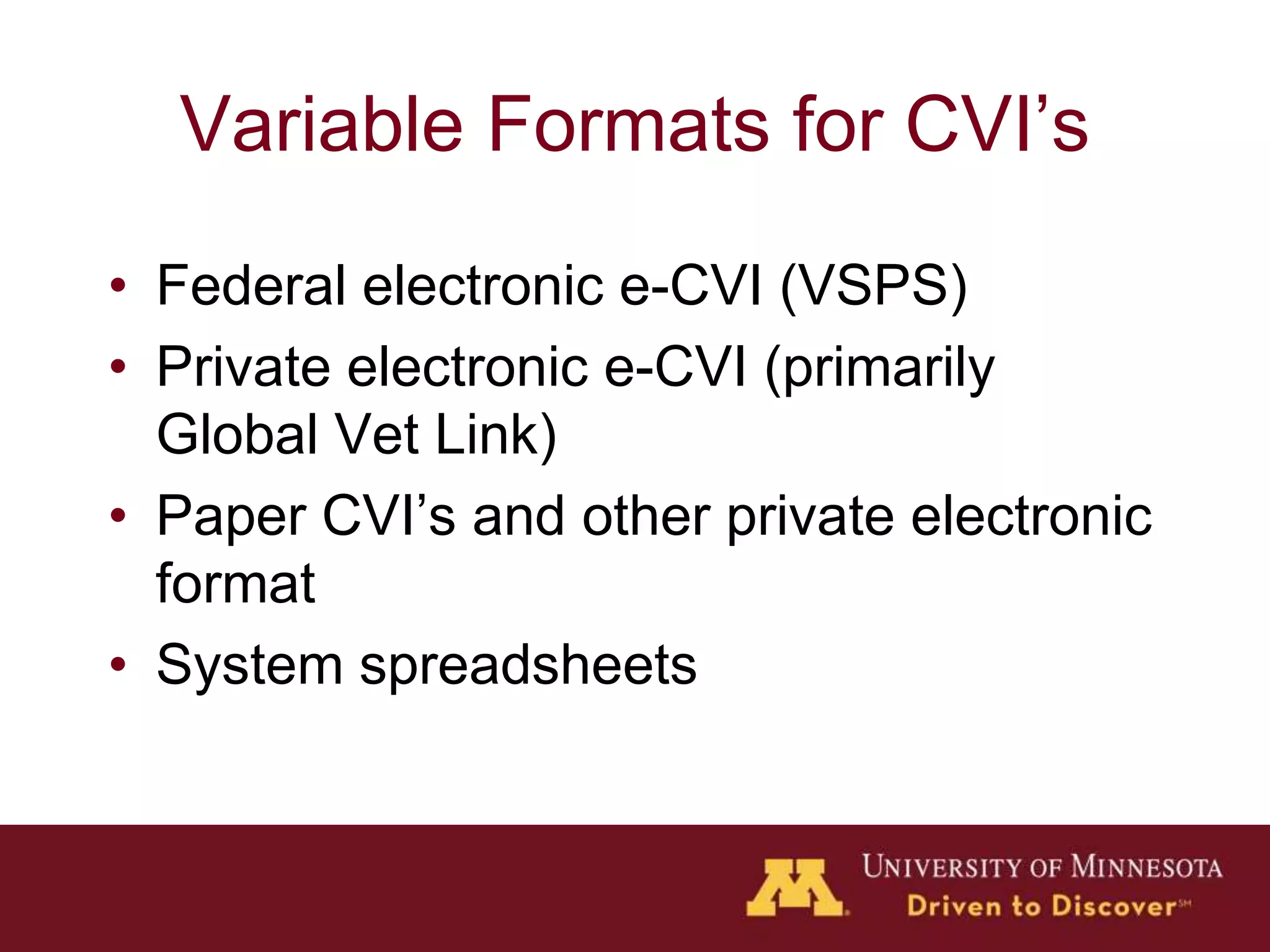
• Federal electronic e-CVI (VSPS)
• Private electronic e-CVI (primarily
Global Vet Link)
• Paper CVI’s and other private electronic
format
• System spreadsheets
County Map
Zip code map
Zip code close up
Proposed Information
Available on BAH Website
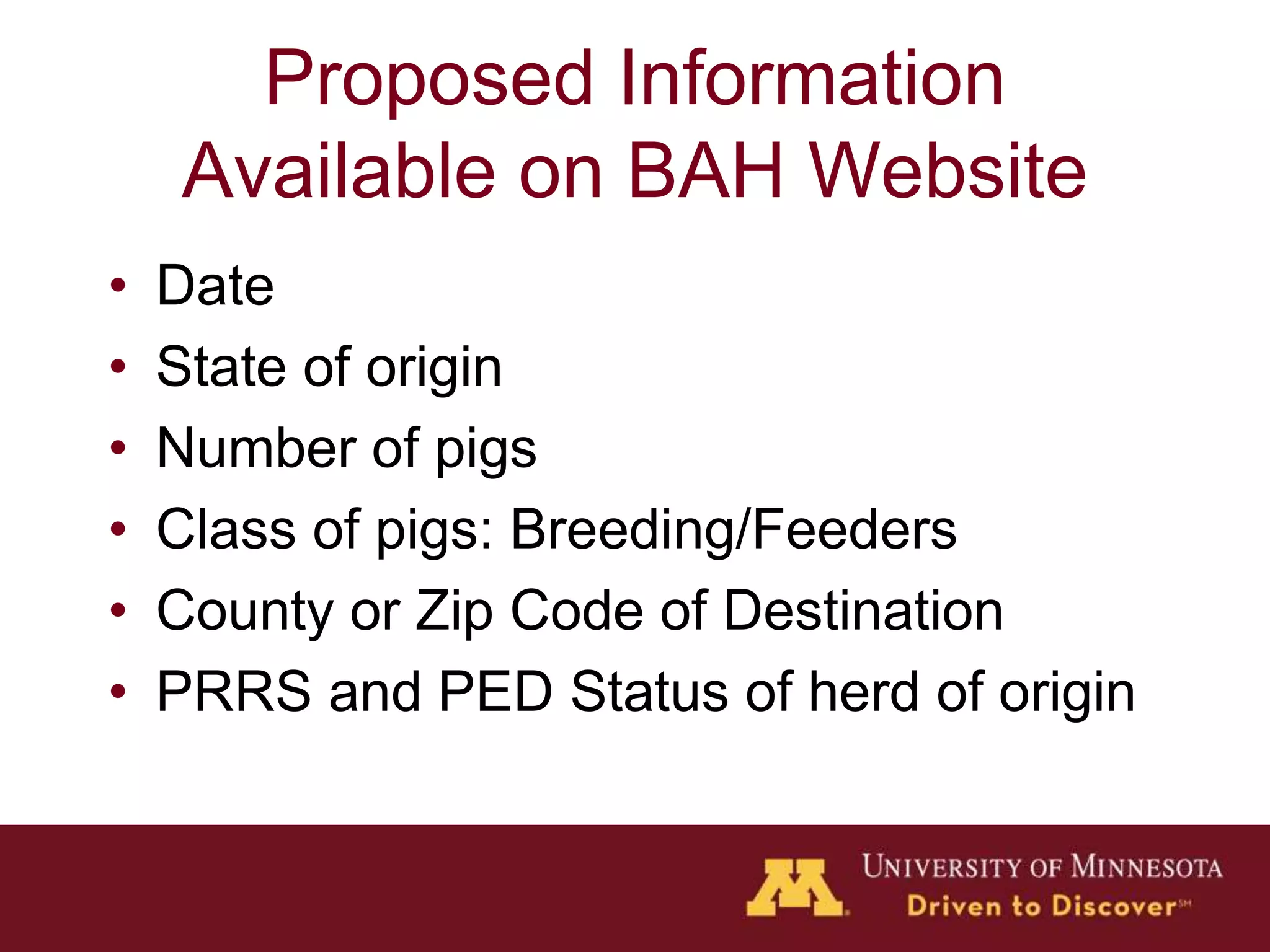
• Date
• State of origin
• Number of pigs
• Class of pigs: Breeding/Feeders
• County or Zip Code of Destination
• PRRS and PED Status of herd of origin
The Swine Health
Task Force felt that the
proposal has enough merit to
present it to Minnesota pork
producers for comment and
feedback.
Value to Swine Industry
• To identify the PRRS & PED status of
7.5 million pigs entering Minnesota
• To better understand the dynamics of
PRRS & PED as it relates to pig
movement into the state
• To assist in outbreak investigations
• To encourage vet-to-vet communication
Value to Swine Industry
• To inspire more regional participation
and transparency within the industry
• Ultimately, to reduce PRRS & PED
infection rates—necessary to reduce
antibiotic use
• To take a progressive step forward in
PRRS & PED control
Bayesian Thinking
“Prior probability (belief or opinion) exists,
but with new information, the probability
(belief or opinion) is revised.”
-Paraphrased explanation by Peter Davies
explaining the philosophy of Thomas Bayes
“It’s always better to know
than not to know.”
-Michael Murtaugh
Questions and
Discussion
Dave Wright, D.V.M.
763-242-7535
wright2me.dave@gmail.com
N212 Project Coordinator
AASV and NPB
POSTION STATEMENT
It is the position of the AASV that
eradication of PRRS from the
North American swine industry is
the long term goal.
October 19, 2005 — AASV Staff
Joe Connor Presentation:
North American PRRS
Symposium
December 2014
http://www.swinecast.com/dr-joe-
connor-historical-perspective-prrs-
area-regional-control-prrs-arc
Joe Connor Message Points
• Multiple comparisons between PRV ad
PRRS
• PRRS costs the industry far more than
PRV did ($664 M vs. $30 M annually)
• Incidence of new infections trend is
down
• We probably know more about PRRS
now than we did about PRV
Joe Connor Message Points
• Elimination steps:
Develop a team
Develop a strategy
Implement the plan
• The process is underway
Wisconsin Experience
• Imposed mandatory reporting of
PRRS/PEDV status of herd of origin of
incoming pigs about 2 years ago
• PRRS and PEDV are reportable
• Statement on CVI stating PRRS and
PEDV status of the herd of origin:
Positive
Negative
Unknown
Wisconsin Experience
• Educational effort more than control
effort
• Difficult to assess impact on incidence-
remains low
Julie McGwin, WI BAH
Tammy Vaassen, WI Pork Association
Wisconsin Summary
PRRS Source
• 54% Negative
• 18% Vaccinated
• 18% Positive
• 9% Unknown
PED Source
• 23% Negative
• 11% Positive
• 66% Unknown
State Animal Health Officials
have the authority to approve
movement of swine entering
their state and within their
state.
Criteria to approve movement:
• Protect animal welfare
• Preserve business continuity
• Conserve animal resources
• Reduce the need for disposal of animal
carcasses
• Reduce the spread of (FMD) virus

Dr. David Wright, Dr. Bill Hartmann - PRRS & PEDV Control Proposal: Open Forum

  • 1.
    IMPROVING MINNESOTA PRRS/PED CONTROL DaveWright & Bill Hartmann Minnesota Pork Congress January 19, 2016
  • 2.
    Improving the Valueof Minnesota PRRS & PED Control “WHAT’S NEXT?” Review and Progress Report
  • 3.
    Timeline Review A discussionprocess that lead to the proposal being presented for consideration
  • 4.
    N212 Regional meetingson July 27 and August 3: “Have we reached a tipping point?” • Discussed options and limitations of additional PRRS/PED control measures • Concluded that there was enough interest to explore other options
  • 5.
    N212 Progress Report Jan2013 Jan 2014 Dec 2015 Sites Identified 812 872 914 Signed Participants 408 567 600 Positive PRRS Sites 89 72 69 Stable or St. Vaccinated 18 88 66 Negative PRRS/PEDV 273 308/0 360/201 Empty Sites 88 107 111 Unknown PRRS Status 343 296 307 PED Positive Sites 8 10
  • 6.
  • 7.
    Minor clinical signs 5 uniquesequences; Major losses- $5,000,000? 1-4-4 mostly N212 crosses epidemic threshold, 9+sequences
  • 8.
    Willmar on August24: “What’s Next? Options for PRRS & PED Control” • Participants: Dave Wright, Roger Koosmann, Beth Thompson, Montse Torremorell, Nate Winkelman, Sarah Schiek, John Anderson, Mark Schwartz, Tim Snider, Dave Preisler, Deb Murray (+ Steve Langhorst & Randy Koehl)
  • 9.
    Meeting Goal: To explorefeasible options to improve PRRS and PEDV control in Minnesota
  • 10.
    Limitations that became apparent •PRRS & PED control is voluntary and remains the responsibility of the swine industry • Cannot split the state • Must accommodate diverse opinions • No movement restrictions • Limited cost and inconvenience
  • 11.
    Meeting in Mankatoon September 23: MPB Executive Committee summarizing discussion from previous two meetings.
  • 12.
    MPB Meeting • Generalconcept presented and discussed • Explained history • Offered this suggestion to make constructive progress in a producer-led program • Good discussion; no action requested or taken
  • 13.
    Two documents draftedfor consideration: • 1. Filling Finishing Barns Responsibly • 2. MN BAH Partnership Proposal for PRRS/PED Control with Q & A
  • 14.
    MN BAH PartnershipProposal for PRRS/PED Control with Q & A’s Distributed to MN Swine Health Task Force for review
  • 15.
    Meeting on Nov18 in Mankato with MN Swine Health Task Force
  • 16.
    MN BAH PartnershipProposal Background • PRRS and PED continue to plague the Minnesota swine industry despite a reduced prevalence nationwide. • 15 million pigs are finished in Minnesota annually. The MN Board of Animal Health (BAH) reports that 6.5 million pigs move into Minnesota from other states and an additional 1 million pigs are imported from Canada.
  • 18.
    Regional control projectshave been helpful in promoting collaboration among producers and veterinarians, but effectiveness is limited by the voluntary nature of the programs:
  • 19.
    Voluntary Limitations • Thereusually is not 100% participation. • Not all participants test and report status changes regularly—particularly among independent finishers and small producers. • A perceived lack of progress frustrates producers and leads to a further lack of participation. • We do not know the status of non- participating herds nor of pigs coming into Minnesota.
  • 20.
    Purpose of theProposal: • To partner with the MN BAH to gather information about the PRRS and PED status of pigs entering Minnesota that could lead to a better understanding of the dynamics of disease control. • Information will help determine area risk and assist in outbreak investigations • Limited inconvenience to producers, veterinarians or the BAH
  • 21.
    Proposal: • Partner withthe MN BAH by asking them to request that certificates of veterinary inspection (CVI’s) of all pigs entering Minnesota include a statement disclosing the PRRS and PED status of the herd of origin, if known. No movement restrictions would be imposed. All pigs, regardless of status, could enter the state.
  • 22.
    2015 Summary ofCVI’s • 7,641 Certificates of Veterinary Inspection (Health Certificates) • 6,078,429 imported pigs (includes Canadian Imports) • Additional 1,459,974 pigs reported on system spreadsheets with swine health production plan-compiled weekly
  • 23.
    Variable Formats forCVI’s • Federal electronic e-CVI (VSPS) • Private electronic e-CVI (primarily Global Vet Link) • Paper CVI’s and other private electronic format • System spreadsheets
  • 24.
  • 25.
  • 26.
  • 27.
    Proposed Information Available onBAH Website • Date • State of origin • Number of pigs • Class of pigs: Breeding/Feeders • County or Zip Code of Destination • PRRS and PED Status of herd of origin
  • 28.
    The Swine Health TaskForce felt that the proposal has enough merit to present it to Minnesota pork producers for comment and feedback.
  • 29.
    Value to SwineIndustry • To identify the PRRS & PED status of 7.5 million pigs entering Minnesota • To better understand the dynamics of PRRS & PED as it relates to pig movement into the state • To assist in outbreak investigations • To encourage vet-to-vet communication
  • 30.
    Value to SwineIndustry • To inspire more regional participation and transparency within the industry • Ultimately, to reduce PRRS & PED infection rates—necessary to reduce antibiotic use • To take a progressive step forward in PRRS & PED control
  • 31.
    Bayesian Thinking “Prior probability(belief or opinion) exists, but with new information, the probability (belief or opinion) is revised.” -Paraphrased explanation by Peter Davies explaining the philosophy of Thomas Bayes
  • 32.
    “It’s always betterto know than not to know.” -Michael Murtaugh
  • 33.
  • 35.
  • 36.
    AASV and NPB POSTIONSTATEMENT It is the position of the AASV that eradication of PRRS from the North American swine industry is the long term goal. October 19, 2005 — AASV Staff
  • 37.
    Joe Connor Presentation: NorthAmerican PRRS Symposium December 2014 http://www.swinecast.com/dr-joe- connor-historical-perspective-prrs- area-regional-control-prrs-arc
  • 38.
    Joe Connor MessagePoints • Multiple comparisons between PRV ad PRRS • PRRS costs the industry far more than PRV did ($664 M vs. $30 M annually) • Incidence of new infections trend is down • We probably know more about PRRS now than we did about PRV
  • 39.
    Joe Connor MessagePoints • Elimination steps: Develop a team Develop a strategy Implement the plan • The process is underway
  • 40.
    Wisconsin Experience • Imposedmandatory reporting of PRRS/PEDV status of herd of origin of incoming pigs about 2 years ago • PRRS and PEDV are reportable • Statement on CVI stating PRRS and PEDV status of the herd of origin: Positive Negative Unknown
  • 41.
    Wisconsin Experience • Educationaleffort more than control effort • Difficult to assess impact on incidence- remains low Julie McGwin, WI BAH Tammy Vaassen, WI Pork Association
  • 42.
    Wisconsin Summary PRRS Source •54% Negative • 18% Vaccinated • 18% Positive • 9% Unknown PED Source • 23% Negative • 11% Positive • 66% Unknown
  • 43.
    State Animal HealthOfficials have the authority to approve movement of swine entering their state and within their state.
  • 44.
    Criteria to approvemovement: • Protect animal welfare • Preserve business continuity • Conserve animal resources • Reduce the need for disposal of animal carcasses • Reduce the spread of (FMD) virus

Editor's Notes

  • #3 Purpose of exercise to improve PRRS & PED control in MN
  • #5 Not a mandate to act, but a mandate to explore
  • #11 Voluntary-no impact on exports; no public health concerns 1 million pigs on the road each day
  • #17 PRRS incidence of new infections still at 40% of breeding herds
  • #20 Many of the participating producers in the N212 project have been involved since 2004
  • #24 All have zip code of destination; not all have county of destination Will need part time position to capture and report data-5 hrs/week?
  • #28 Hope to be able to enter zip code or county with a date range and view number and status of pigs entering this area Ideally integrate the information with a map
  • #30 Broker vs. vet-to-vet
  • #32 Thomas Bayes was an English theologian, statistician and philosopher. Even though he lived 300 years ago, his theories are useful in studying modern biosecurity and disease control. (Pork Network) Peter Davies-Bayesian thinking is about conditional probability: prior probability (belief or opinion) exists, but with new information, the probability (belief or opinion) is revised