TRANSPORT
SYSTEMS IN
ANIMALS
DOUBLE CIRCULATION
• The circulatory systems has two distinct
circuits.
• The pumps of the two circuits serve
different tissues but are combined into a
single organ, the heart.
• The two circuits are called:
1. Pulmonary circuit
2. Systemic circuit
DOUBLE CIRCULATION
1. Pulmonary circuit
The heart pumps deoxygenated blood to
the lungs and oxygenated blood back to the
heart.
2. Systemic circuit
The heart pumps oxygenated blood to the
body cells and the deoxygenated blood
back to the heart.
DOUBLE CIRCULATION
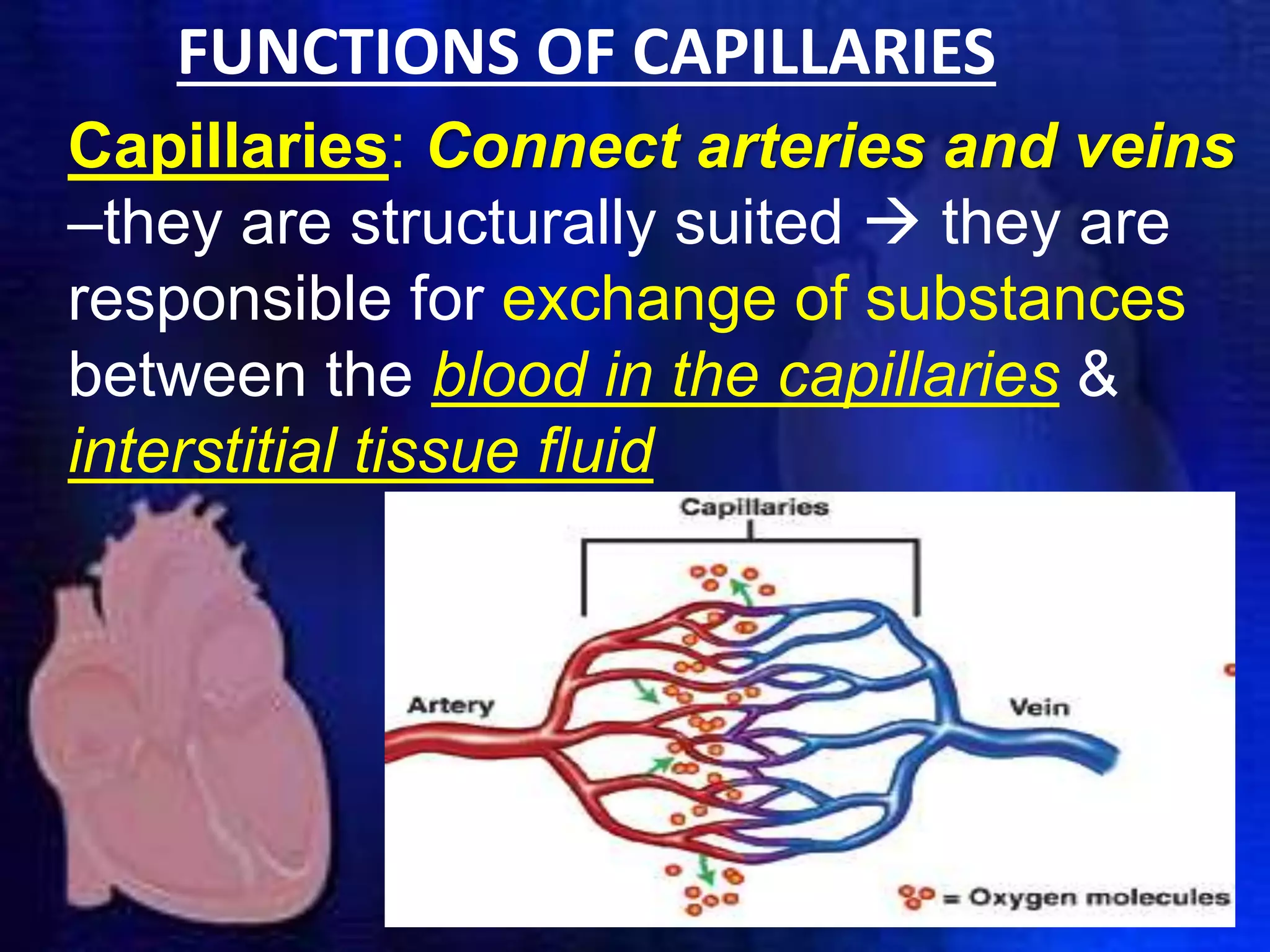
FUNCTIONS OF CAPILLARIES
Capillaries: Connect arteries and veins
–they are structurally suited  they are
responsible for exchange of substances
between the blood in the capillaries &
interstitial tissue fluid
FUNCTIONS OF ARTERIES
• Arteries: transports oxygenated
blood except for the pulmonary
artery.
• Main artery is the Aorta which
pumps oxygenated blood away from
heart to the rest of body.
• Other arteries:
• Renal artery (kidney)
• Hepatic artery (liver)
FUNCTIONS OF VEINS
• Veins: transports deoxygenated
blood except for the pulmonary
vein.
• Main vein is called the vena cava
which pumps deoxygenated blood
towards the heart from the rest of
the body.
• Other veins:
• Renal vein (kidney)
• Hepatic vein (liver)
THE HUMAN CIRCULATORY SYSTEM:
HEART AND ASSOCIATED VESSELS
THE HUMAN CIRCULATORY SYSTEM:
HEART AND ASSOCIATED VESSELS
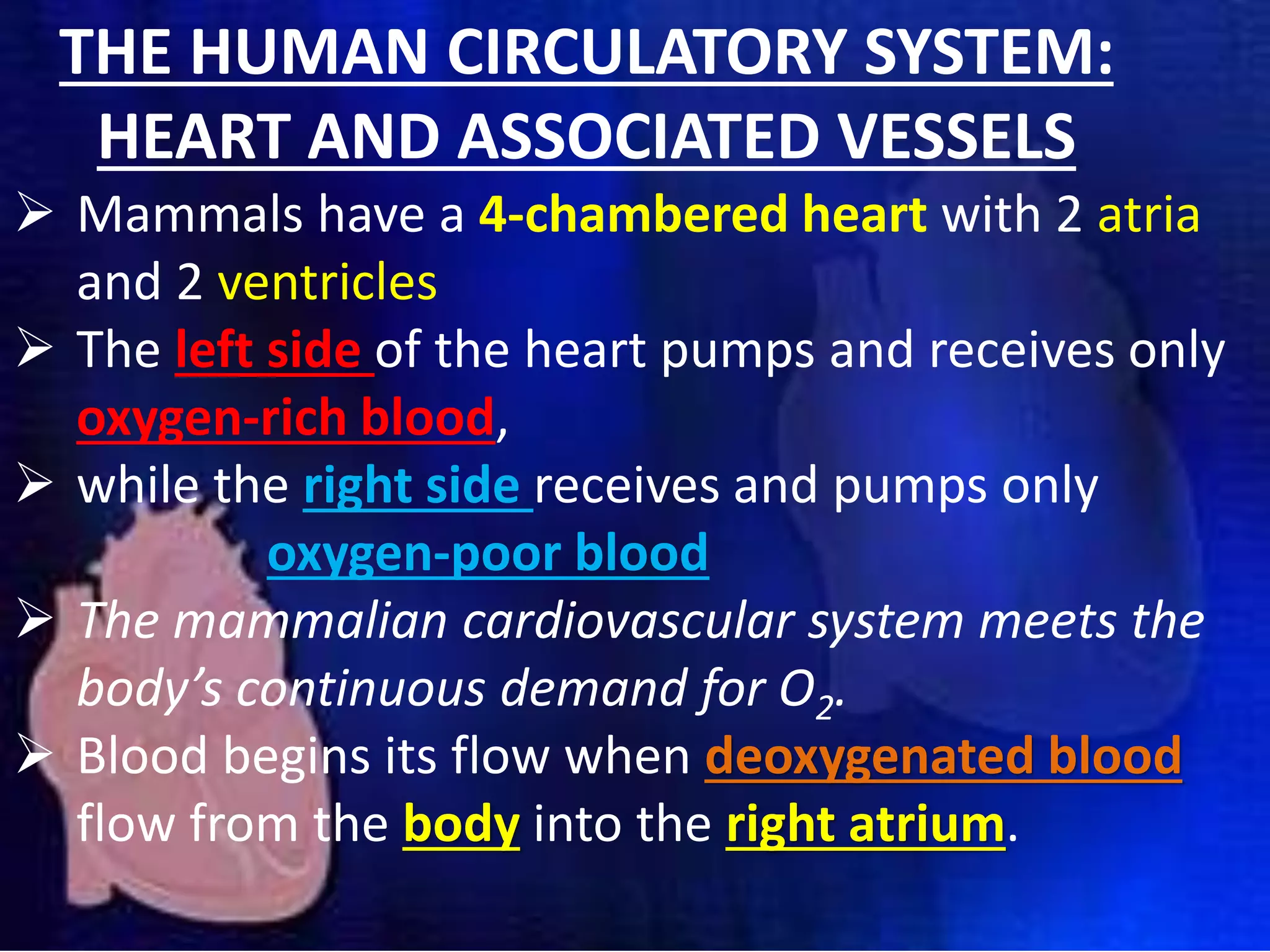
 Mammals have a 4-chambered heart with 2 atria
and 2 ventricles
 The left side of the heart pumps and receives only
oxygen-rich blood,
 while the right side receives and pumps only
oxygen-poor blood
 The mammalian cardiovascular system meets the
body’s continuous demand for O2.
 Blood begins its flow when deoxygenated blood
flow from the body into the right atrium.
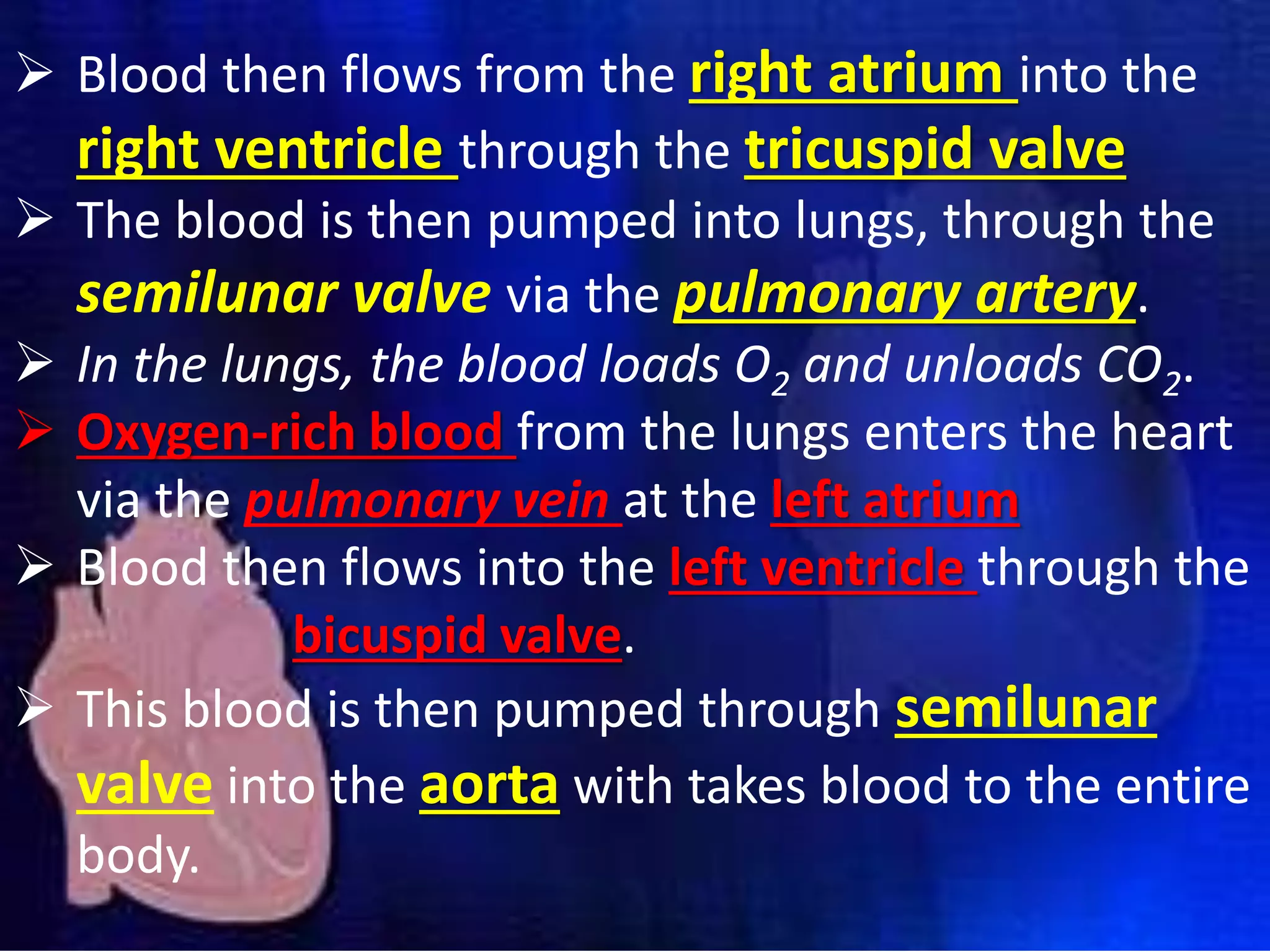
 Blood then flows from the right atrium into the
right ventricle through the tricuspid valve
 The blood is then pumped into lungs, through the
semilunar valve via the pulmonary artery.
 In the lungs, the blood loads O2 and unloads CO2.
 Oxygen-rich blood from the lungs enters the heart
via the pulmonary vein at the left atrium
 Blood then flows into the left ventricle through the
bicuspid valve.
 This blood is then pumped through semilunar
valve into the aorta with takes blood to the entire
body.
 Deoxygenated blood returns to heart through
superior vena cava (blood from head, neck, and
forelimbs) & inferior vena cava (blood from
trunk and hind limbs) which flows into the right
atrium.
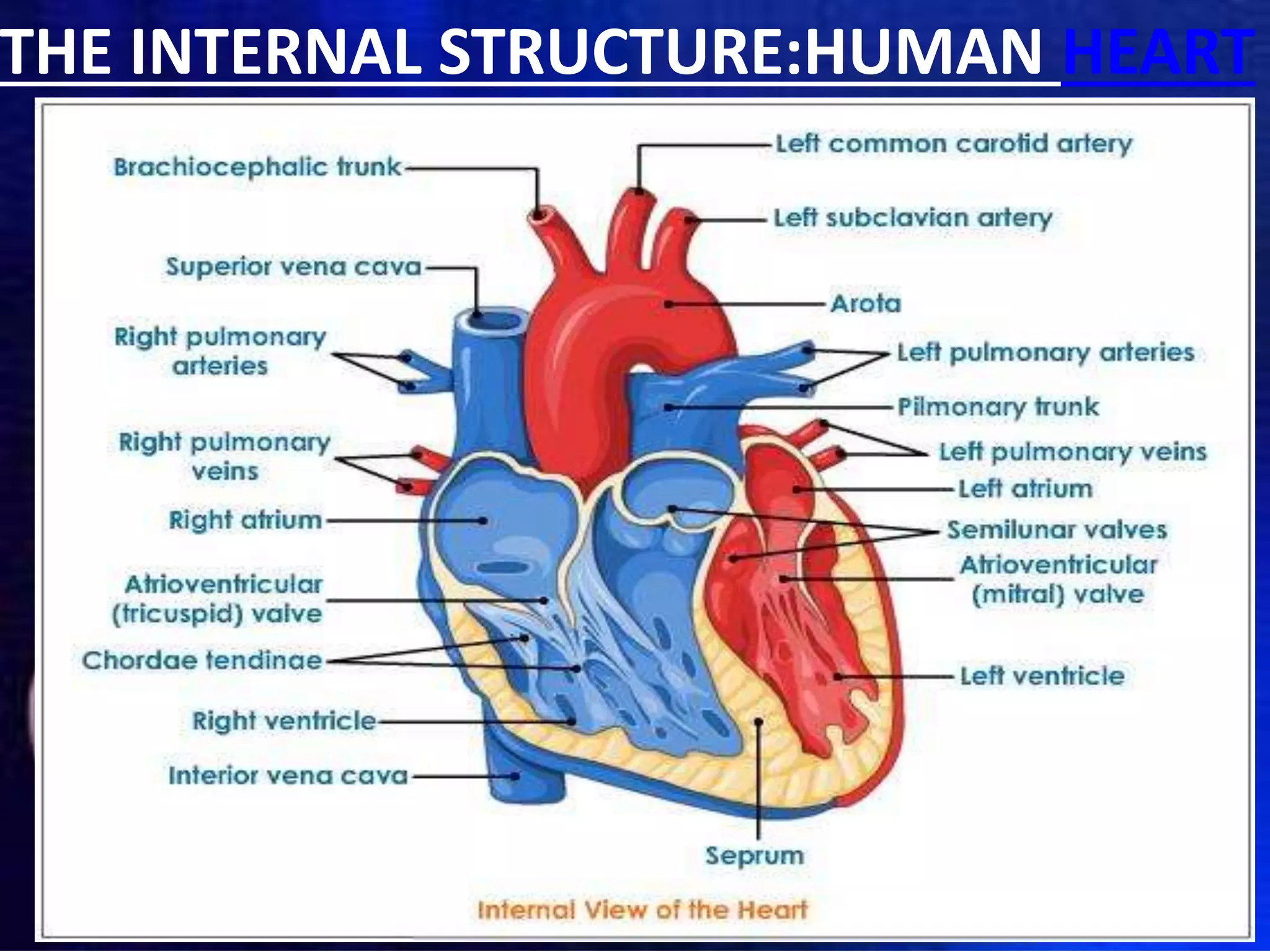
 The atrioventricular (AV) valves ( which are
the tricuspid and the bicuspid valves)
separate each atrium & ventricle
 The semilunar valves control blood flow to the
aorta & the pulmonary artery.
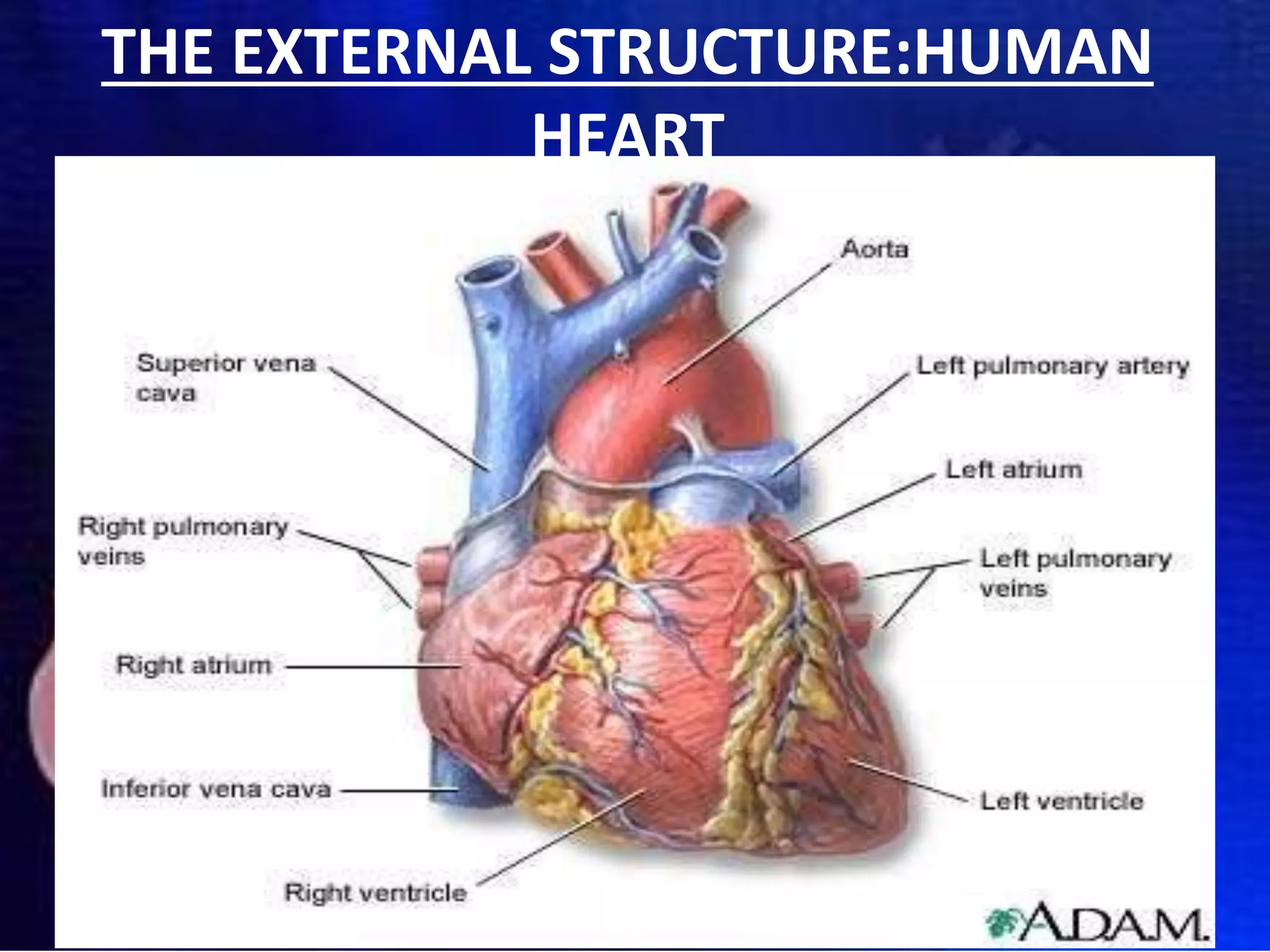
THE EXTERNAL STRUCTURE:HUMAN
HEART
THE INTERNAL STRUCTURE:HUMAN HEART

Doc 20170830-wa0020

  • 1.
  • 2.
    DOUBLE CIRCULATION • Thecirculatory systems has two distinct circuits. • The pumps of the two circuits serve different tissues but are combined into a single organ, the heart. • The two circuits are called: 1. Pulmonary circuit 2. Systemic circuit
  • 3.
    DOUBLE CIRCULATION 1. Pulmonarycircuit The heart pumps deoxygenated blood to the lungs and oxygenated blood back to the heart. 2. Systemic circuit The heart pumps oxygenated blood to the body cells and the deoxygenated blood back to the heart.
  • 4.
  • 5.
    FUNCTIONS OF CAPILLARIES Capillaries:Connect arteries and veins –they are structurally suited  they are responsible for exchange of substances between the blood in the capillaries & interstitial tissue fluid
  • 6.
    FUNCTIONS OF ARTERIES •Arteries: transports oxygenated blood except for the pulmonary artery. • Main artery is the Aorta which pumps oxygenated blood away from heart to the rest of body. • Other arteries: • Renal artery (kidney) • Hepatic artery (liver)
  • 7.
    FUNCTIONS OF VEINS •Veins: transports deoxygenated blood except for the pulmonary vein. • Main vein is called the vena cava which pumps deoxygenated blood towards the heart from the rest of the body. • Other veins: • Renal vein (kidney) • Hepatic vein (liver)
  • 9.
    THE HUMAN CIRCULATORYSYSTEM: HEART AND ASSOCIATED VESSELS
  • 10.
    THE HUMAN CIRCULATORYSYSTEM: HEART AND ASSOCIATED VESSELS  Mammals have a 4-chambered heart with 2 atria and 2 ventricles  The left side of the heart pumps and receives only oxygen-rich blood,  while the right side receives and pumps only oxygen-poor blood  The mammalian cardiovascular system meets the body’s continuous demand for O2.  Blood begins its flow when deoxygenated blood flow from the body into the right atrium.
  • 11.
     Blood thenflows from the right atrium into the right ventricle through the tricuspid valve  The blood is then pumped into lungs, through the semilunar valve via the pulmonary artery.  In the lungs, the blood loads O2 and unloads CO2.  Oxygen-rich blood from the lungs enters the heart via the pulmonary vein at the left atrium  Blood then flows into the left ventricle through the bicuspid valve.  This blood is then pumped through semilunar valve into the aorta with takes blood to the entire body.
  • 12.
     Deoxygenated bloodreturns to heart through superior vena cava (blood from head, neck, and forelimbs) & inferior vena cava (blood from trunk and hind limbs) which flows into the right atrium.  The atrioventricular (AV) valves ( which are the tricuspid and the bicuspid valves) separate each atrium & ventricle  The semilunar valves control blood flow to the aorta & the pulmonary artery.
  • 13.
  • 14.