DO NOT RESUSCITATE
(DNR)
Legal ethics and social aspects.
- By Dhanraj Sethi
WHAT ARE ADVANCE DIRECTIVES ?
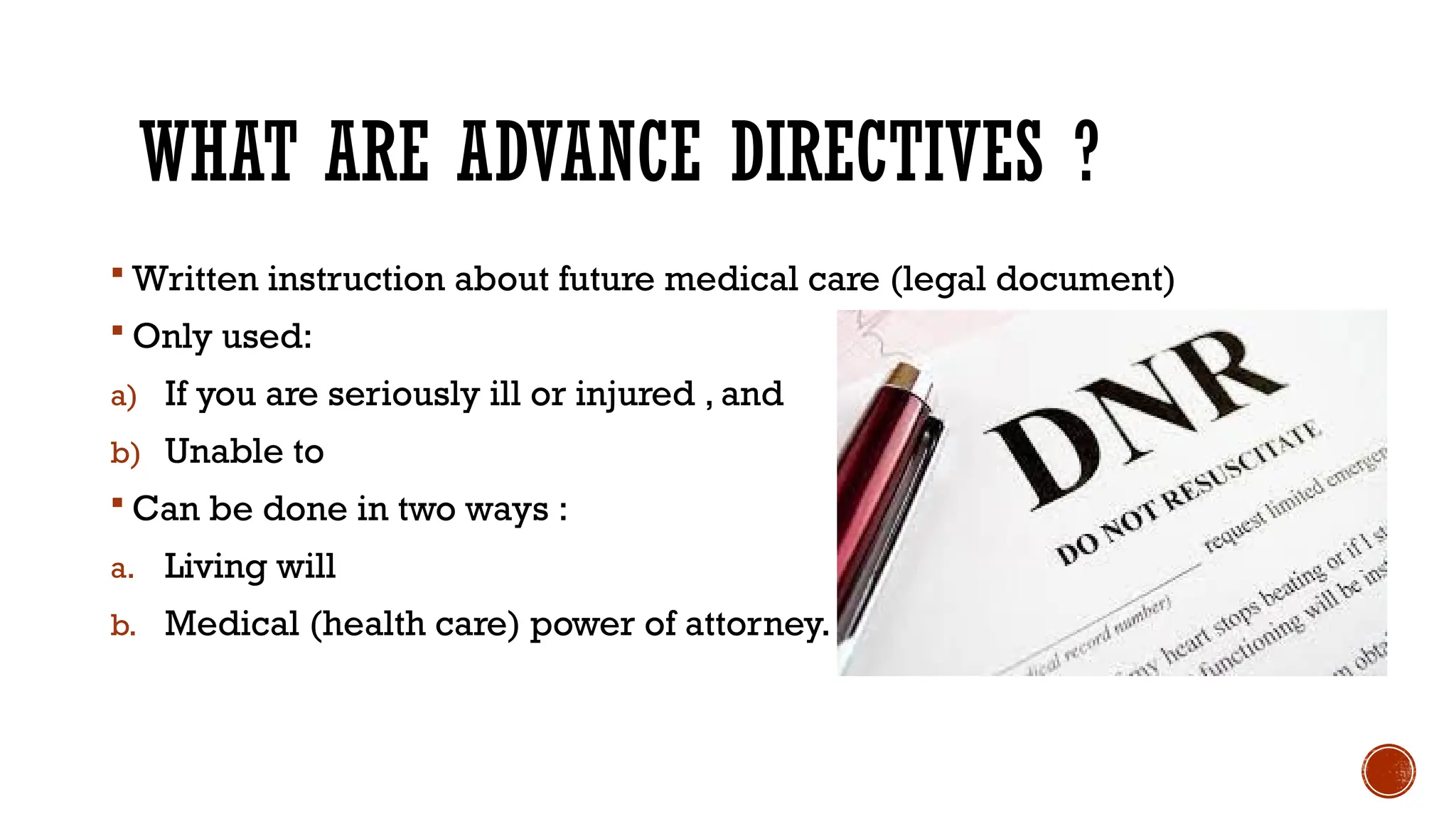
 Written instruction about future medical care (legal document)
 Only used:
a) If you are seriously ill or injured , and
b) Unable to
 Can be done in two ways :
a. Living will
b. Medical (health care) power of attorney.
WHAT IS DNR ?
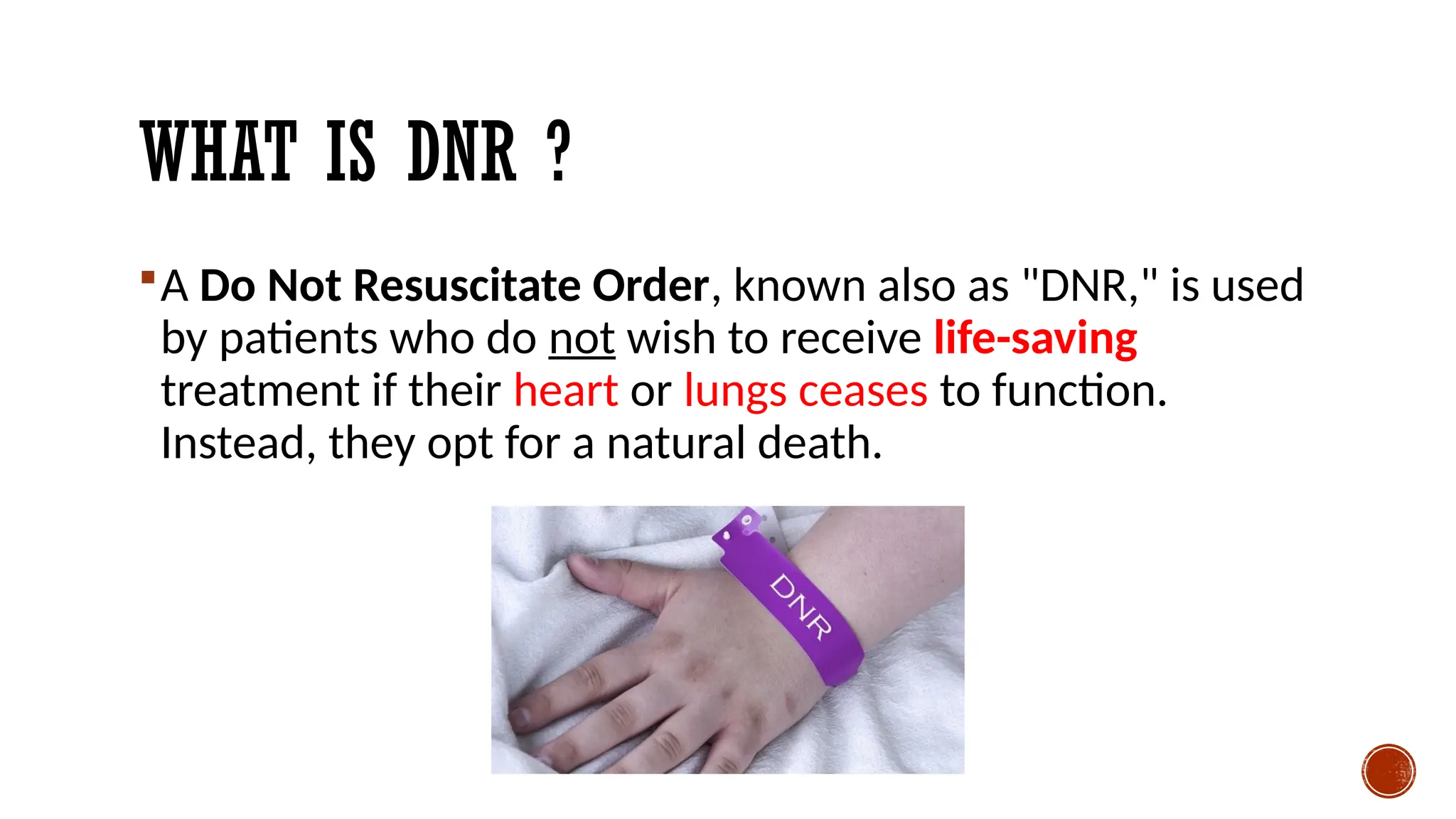
A Do Not Resuscitate Order, known also as "DNR," is used
by patients who do not wish to receive life-saving
treatment if their heart or lungs ceases to function.
Instead, they opt for a natural death.
WHO WRITES DNR ?
A Do Not Attempt Resuscitation (DNAR) order, also known
as Do Not Resuscitate (DNR) order is written by a licensed
physician in consultation with a patient or decision
surrogate maker.
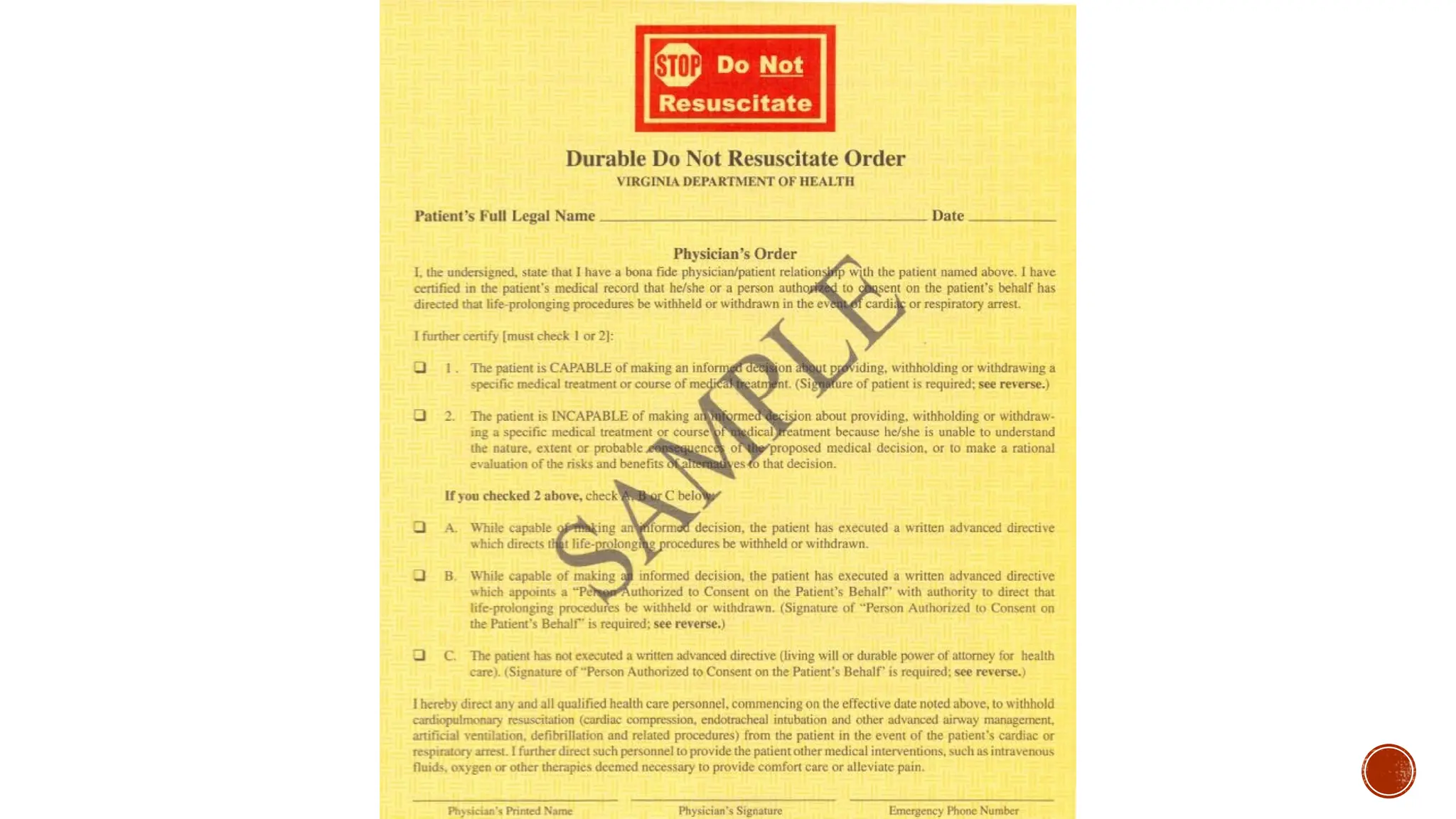
Decision of DNR should be informed and written (DNAR
form)
RELEVANCE OF CPR ?
Emergency procedure to attempt to revive patients
suffering from cardiac and/or respiratory arrest
Involves either or all of the following
1. Repeated chest compressions
2. Mouth to mouth breathing or Breathing through
artificial airway.
3. Electric shock/s on chest via defibrillator
4. Injectable drugs.
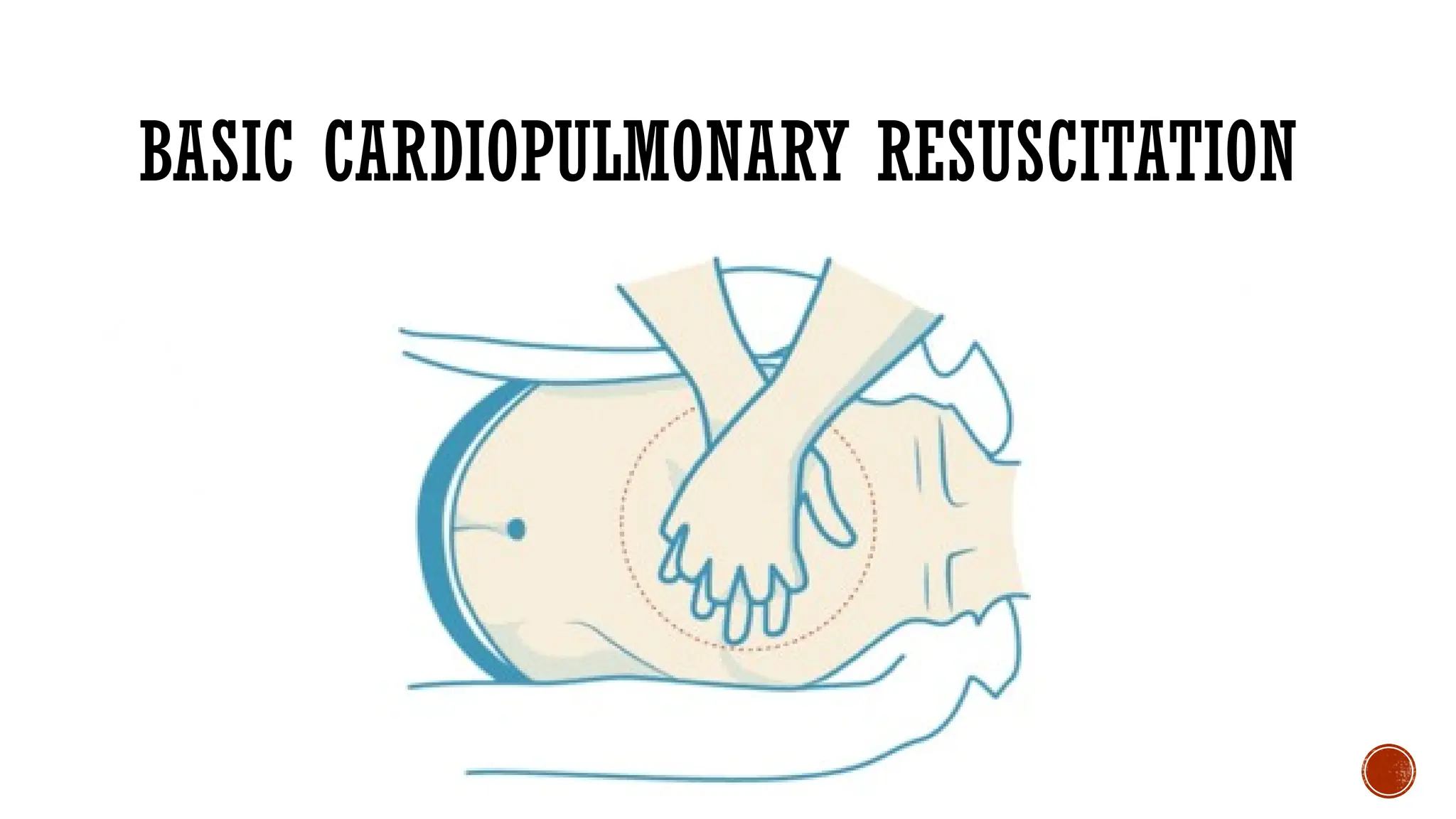
BASIC CARDIOPULMONARY RESUSCITATION
WHAT DOES IT PROHIBIT?
DNR prohibits cardiopulmonary resuscitation in a event of
cardiac arrest.
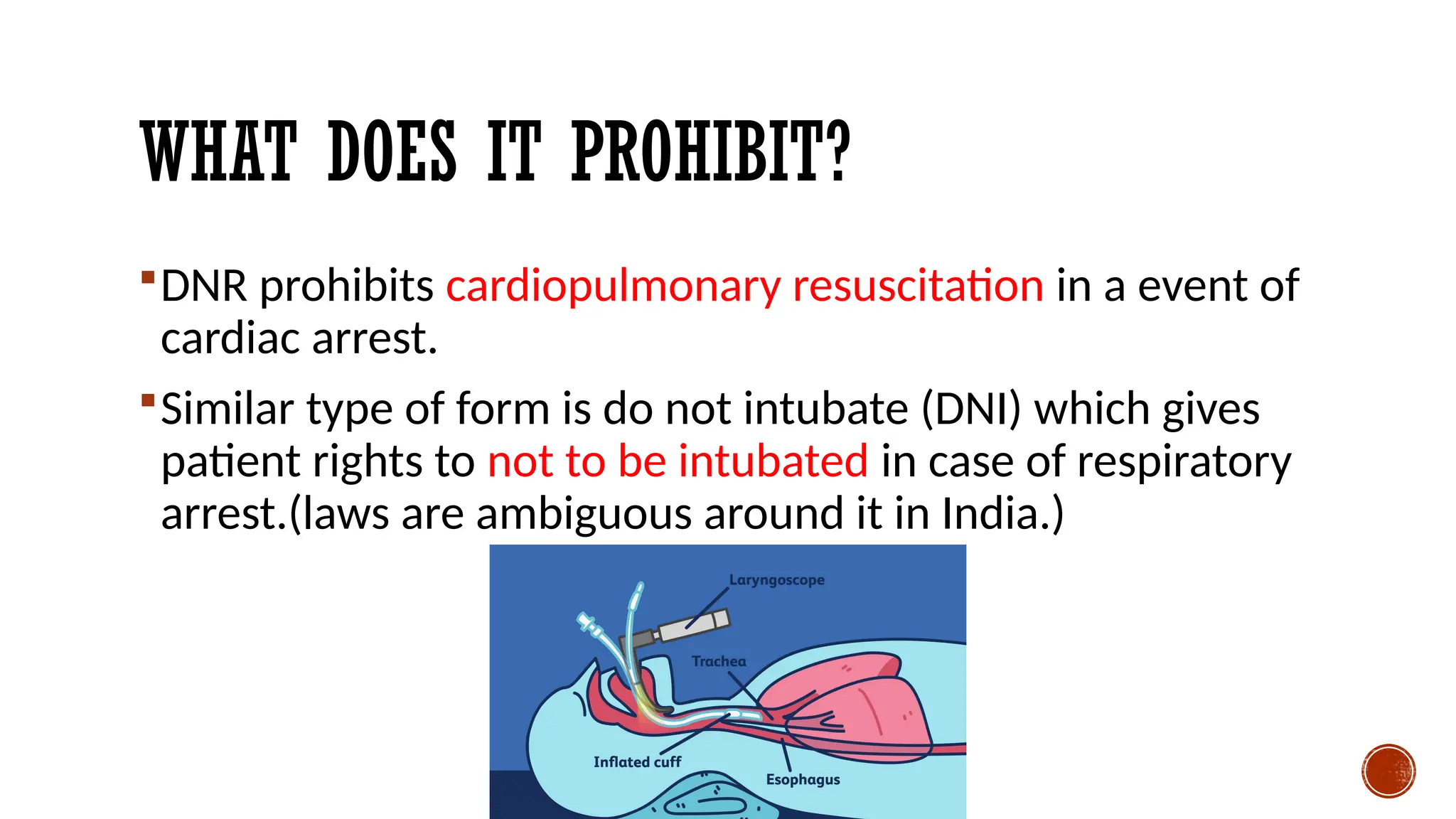
Similar type of form is do not intubate (DNI) which gives
patient rights to not to be intubated in case of respiratory
arrest.(laws are ambiguous around it in India.)
WHEN IS DNR RELEVANT ?
 Serious often terminal/debilitating/incurable illness
without prospects of reasonable quality of life even after
revival.
 Should be done in anticipating of an impending
cardiorespiratory arrest, during the current hospitalization
of the patient.
HOW IS THE DECISION MADE ?
 SOCIAL ASPECTS –
 Team work and good communication
 COMBINED DECISION MAKING with the help of another
physician, psychologist and hospital administrator.
1. If the treating physician is unsure about the futility of
CPR
2. If there is no consensus between the patient/surrogate
and the physician.
ETHICS IN WRITING A DNR ORDER.
Physicians should discuss the resuscitation preferences
with the patients surrogate decision maker.
 Take into account Advance Directive if any.
 Conversation should be documented in patient's notes.
 Final decision should be explicit.
 Indicate who were present during the conversation.
 DNR Form is filled and signed by all parties concerned.
LEGAL PAPERWORK
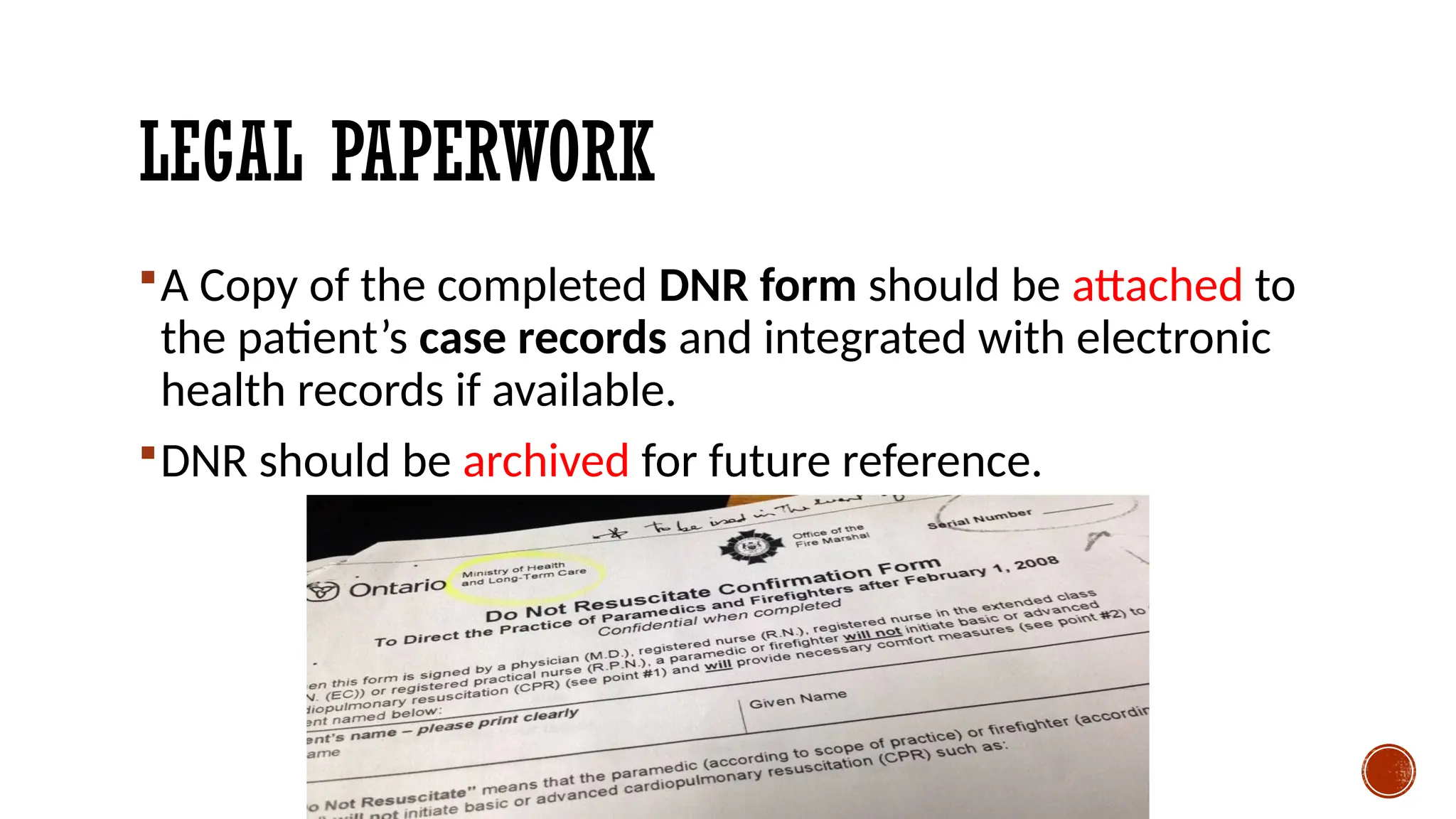
A Copy of the completed DNR form should be attached to
the patient’s case records and integrated with electronic
health records if available.
DNR should be archived for future reference.
SUMMARY
DNR is an important clinical decision
 DNR order should ideally be made by a senior clinician.
 Decision should be made in consultation with the patient
/relatives after a clear agreement is reached (patient autonomy
should be respected.)
 Should be well documented.
 Can be revised and reversed.
 It has medico-legal implications.
THANK YOU !!

Do Not Resuscitate (DNR): Understanding Its Meaning, Implications, and Ethical Considerations

  • 1.
    DO NOT RESUSCITATE (DNR) Legalethics and social aspects. - By Dhanraj Sethi
  • 2.
    WHAT ARE ADVANCEDIRECTIVES ?  Written instruction about future medical care (legal document)  Only used: a) If you are seriously ill or injured , and b) Unable to  Can be done in two ways : a. Living will b. Medical (health care) power of attorney.
  • 3.
    WHAT IS DNR? A Do Not Resuscitate Order, known also as "DNR," is used by patients who do not wish to receive life-saving treatment if their heart or lungs ceases to function. Instead, they opt for a natural death.
  • 4.
    WHO WRITES DNR? A Do Not Attempt Resuscitation (DNAR) order, also known as Do Not Resuscitate (DNR) order is written by a licensed physician in consultation with a patient or decision surrogate maker. Decision of DNR should be informed and written (DNAR form)
  • 5.
    RELEVANCE OF CPR? Emergency procedure to attempt to revive patients suffering from cardiac and/or respiratory arrest Involves either or all of the following 1. Repeated chest compressions 2. Mouth to mouth breathing or Breathing through artificial airway. 3. Electric shock/s on chest via defibrillator 4. Injectable drugs.
  • 6.
  • 7.
    WHAT DOES ITPROHIBIT? DNR prohibits cardiopulmonary resuscitation in a event of cardiac arrest. Similar type of form is do not intubate (DNI) which gives patient rights to not to be intubated in case of respiratory arrest.(laws are ambiguous around it in India.)
  • 8.
    WHEN IS DNRRELEVANT ?  Serious often terminal/debilitating/incurable illness without prospects of reasonable quality of life even after revival.  Should be done in anticipating of an impending cardiorespiratory arrest, during the current hospitalization of the patient.
  • 9.
    HOW IS THEDECISION MADE ?  SOCIAL ASPECTS –  Team work and good communication  COMBINED DECISION MAKING with the help of another physician, psychologist and hospital administrator. 1. If the treating physician is unsure about the futility of CPR 2. If there is no consensus between the patient/surrogate and the physician.
  • 11.
    ETHICS IN WRITINGA DNR ORDER. Physicians should discuss the resuscitation preferences with the patients surrogate decision maker.  Take into account Advance Directive if any.  Conversation should be documented in patient's notes.  Final decision should be explicit.  Indicate who were present during the conversation.  DNR Form is filled and signed by all parties concerned.
  • 13.
    LEGAL PAPERWORK A Copyof the completed DNR form should be attached to the patient’s case records and integrated with electronic health records if available. DNR should be archived for future reference.
  • 14.
    SUMMARY DNR is animportant clinical decision  DNR order should ideally be made by a senior clinician.  Decision should be made in consultation with the patient /relatives after a clear agreement is reached (patient autonomy should be respected.)  Should be well documented.  Can be revised and reversed.  It has medico-legal implications.
  • 15.