DNA STRUCTURE María Mercedes Barros Daza Medicine Student 3 Semester
 
 
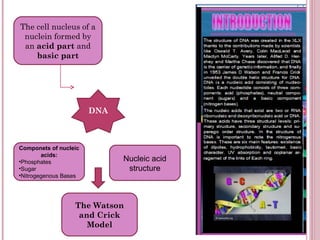
The cell nucleus of a nuclein formed by an  acid part  and  basic part DNA Componets of nucleic acids: Phosphates Sugar Nitrogegenous Bases The Watson and Crick Model Nucleic acid structure
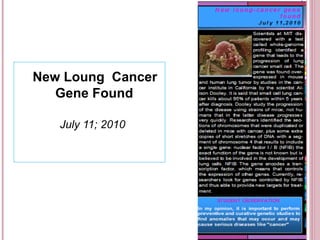
New Loung  Cancer Gene Found July 11; 2010
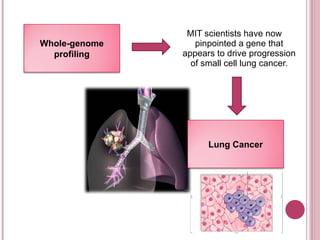
MIT scientists have now pinpointed a gene that appears to drive progression of small cell lung cancer. Whole-genome profiling Lung Cancer
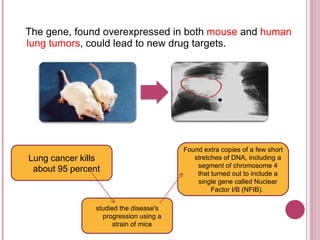
The gene, found overexpressed in both  mouse  and  human lung tumors , could lead to new drug targets. Lung cancer kills about 95 percent studied the disease's progression using a strain of mice Found extra copies of a few short stretches of DNA, including a segment of chromosome 4 that turned out to include a single gene called Nuclear Factor I/B (NFIB).
ALERT. . .  New targets for small cell lung cancer therapy. The gene encoding the expression of other genes. researchers and scientists are searching for genes controlled by NFIB to find small cell lung treatment. These new animal research now provides a breakthrough for science, which discloses new diagnostic methods and treatments that help exploration in the future to reduce death rates.
In my opinion is important to perform preventive and curative genetic studies to find anomalies that may occur and may cause serious diseases like “cancer”. OBSERVATION
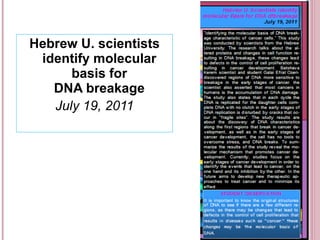
Hebrew U. scientists identify molecular basis for DNA breakage July 19, 2011
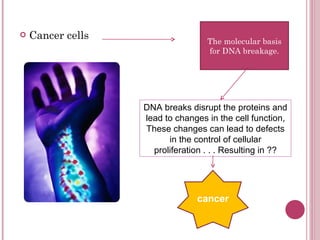
Cancer cells  The molecular basis for DNA breakage. DNA breaks disrupt the proteins and lead to changes in the cell function, These changes can lead to defects in the control of cellular proliferation . . . Resulting in ?? cancer
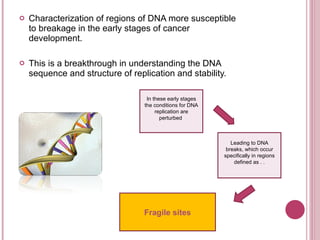
Characterization of regions of DNA more susceptible to breakage in the early stages of cancer development. This is a breakthrough in understanding the DNA sequence and structure of replication and stability. In these early stages the conditions for DNA replication are perturbed  Leading to DNA breaks, which occur specifically in regions defined as . . Fragile sites
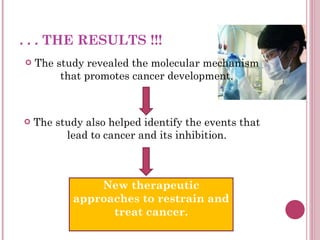
. . . THE RESULTS !!! The study revealed the molecular mechanism that promotes cancer development. The study also helped identify the events that lead to cancer and its inhibition. New therapeutic approaches to restrain and treat cancer.
OBSERVATION It is important to know all the original structure of the DNA to see if there are a few different regions, as there may be changes that lead to defects in the control of cell proliferation that results "cancer." these changes may be the molecular basis of DNA.  
 
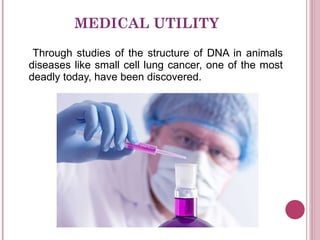
MEDICAL UTILITY Through studies of the structure of DNA in animals diseases like small cell lung cancer, one of the most deadly today, have been discovered.
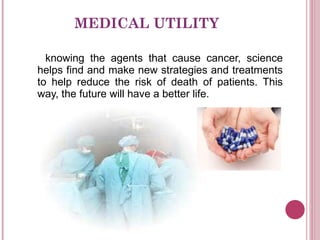
MEDICAL UTILITY knowing the agents that cause cancer, science helps find and make new strategies and treatments to help reduce the risk of death of patients. This way, the future will have a better life.
BIBLIOGRAPHY Hebrew U. scientists identify molecular basis for DNA breakage. URL: http://esciencenews.com/articles/2011/07/19/hebrew.u.scientists.identify.molecular.basis.dna.breakage  (science News) New lung-cancer gene found. URL: http://esciencenews.com/articles/2011/07/19/new.lung.cancer.gene. Found (science News) Martínez S. Lina María. Biología molecular. 6ta Ed. Medellín:upb, facultad de medicina 2011.p 56– 59.
 

Dna structure

  • 1.
    DNA STRUCTURE MaríaMercedes Barros Daza Medicine Student 3 Semester
  • 2.
  • 3.
  • 4.
    The cell nucleusof a nuclein formed by an acid part and basic part DNA Componets of nucleic acids: Phosphates Sugar Nitrogegenous Bases The Watson and Crick Model Nucleic acid structure
  • 5.
    New Loung Cancer Gene Found July 11; 2010
  • 6.
    MIT scientists havenow pinpointed a gene that appears to drive progression of small cell lung cancer. Whole-genome profiling Lung Cancer
  • 7.
    The gene, foundoverexpressed in both mouse and human lung tumors , could lead to new drug targets. Lung cancer kills about 95 percent studied the disease's progression using a strain of mice Found extra copies of a few short stretches of DNA, including a segment of chromosome 4 that turned out to include a single gene called Nuclear Factor I/B (NFIB).
  • 8.
    ALERT. . . New targets for small cell lung cancer therapy. The gene encoding the expression of other genes. researchers and scientists are searching for genes controlled by NFIB to find small cell lung treatment. These new animal research now provides a breakthrough for science, which discloses new diagnostic methods and treatments that help exploration in the future to reduce death rates.
  • 9.
    In my opinionis important to perform preventive and curative genetic studies to find anomalies that may occur and may cause serious diseases like “cancer”. OBSERVATION
  • 10.
    Hebrew U. scientistsidentify molecular basis for DNA breakage July 19, 2011
  • 11.
    Cancer cells The molecular basis for DNA breakage. DNA breaks disrupt the proteins and lead to changes in the cell function, These changes can lead to defects in the control of cellular proliferation . . . Resulting in ?? cancer
  • 12.
    Characterization of regionsof DNA more susceptible to breakage in the early stages of cancer development. This is a breakthrough in understanding the DNA sequence and structure of replication and stability. In these early stages the conditions for DNA replication are perturbed Leading to DNA breaks, which occur specifically in regions defined as . . Fragile sites
  • 13.
    . . .THE RESULTS !!! The study revealed the molecular mechanism that promotes cancer development. The study also helped identify the events that lead to cancer and its inhibition. New therapeutic approaches to restrain and treat cancer.
  • 14.
    OBSERVATION It isimportant to know all the original structure of the DNA to see if there are a few different regions, as there may be changes that lead to defects in the control of cell proliferation that results "cancer." these changes may be the molecular basis of DNA.  
  • 15.
  • 16.
    MEDICAL UTILITY Throughstudies of the structure of DNA in animals diseases like small cell lung cancer, one of the most deadly today, have been discovered.
  • 17.
    MEDICAL UTILITY knowingthe agents that cause cancer, science helps find and make new strategies and treatments to help reduce the risk of death of patients. This way, the future will have a better life.
  • 18.
    BIBLIOGRAPHY Hebrew U.scientists identify molecular basis for DNA breakage. URL: http://esciencenews.com/articles/2011/07/19/hebrew.u.scientists.identify.molecular.basis.dna.breakage (science News) New lung-cancer gene found. URL: http://esciencenews.com/articles/2011/07/19/new.lung.cancer.gene. Found (science News) Martínez S. Lina María. Biología molecular. 6ta Ed. Medellín:upb, facultad de medicina 2011.p 56– 59.
  • 19.