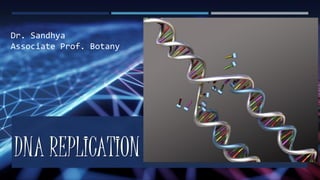
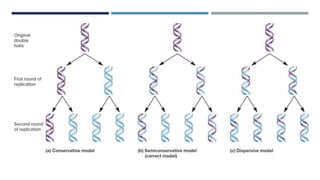
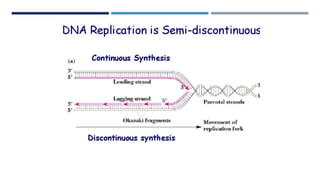
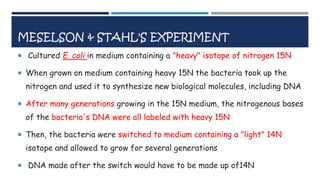
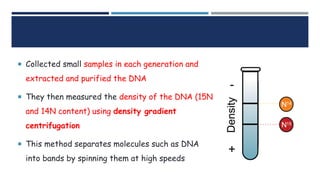
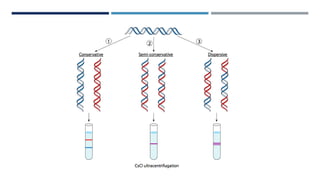
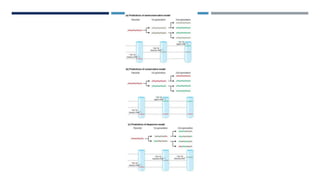
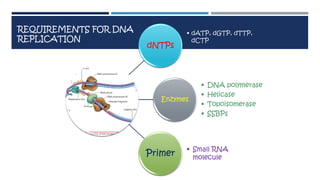
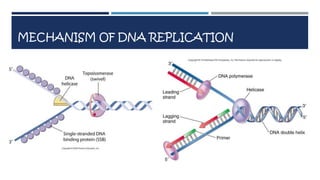
DNA replication is the process by which a parent DNA molecule makes two identical daughter DNA molecules. It is semi-conservative, meaning the parent DNA strands separate and each serves as a template for a new complementary daughter strand. Meselson and Stahl's experiment provided evidence for this semi-conservative model of replication. They grew E. coli in medium containing a heavy isotope of nitrogen, then switched to light nitrogen medium. After multiple generations, they found DNA bands corresponding to hybrid heavy-light DNA strands, supporting the semi-conservative model. DNA replication requires dNTPs, DNA polymerase and other enzymes, primers, and separation of the parental strands by helicase.






![Human Reproduction [ Reproductive System ] Notes @irfanullah_mehar Irfanullah...](https://cdn.slidesharecdn.com/ss_thumbnails/humanreproductionreproductivesystemnotesirfanullahmeharirfanullahmeharjanantantra-260111172350-56e85778-thumbnail.jpg?width=640&height=640&fit=bounds)


