HISTORY OF DNA
CHEMISTRY OF DNA
1. A sugar molecules – Deoxyribose sugar.
A nitrogenous base. There are two types of nitrogenous
bases in DNA. They are
(a) Purines (Adenine and Guanine)
(b) Pyrimidines (Cytosine and Thymine)
3. A phosphate group
NUCLEOSIDE AND NUCLEOTIDE
WATSON AND CRICK MODEL OF DNA
DNA molecule consists of two polynucleotide chains
These chains form a double helix structure with two
strands which run anti-parallel to one another.
5’
3’
3’
5’
Nitrogenous bases in the centre are linked to sugar-
phosphate units which form the backbone of the DNA.
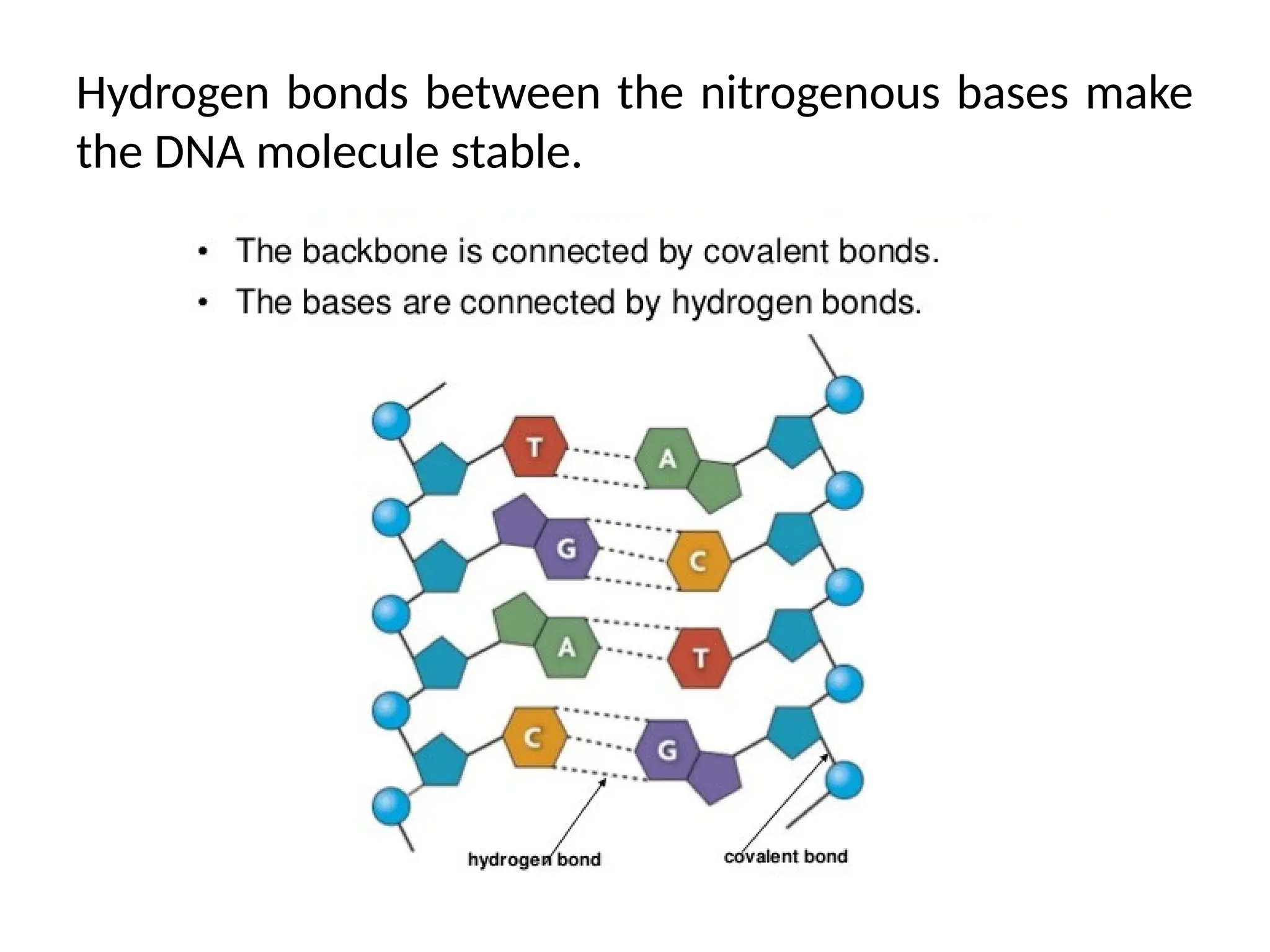
Pairing between the nitrogenous bases is very specific
and is always between purine and pyrimidine linked by
hydrogen bonds.
•Adenine (A) links Thymine (T) with two hydrogen
bonds (A = T)
•Cytosine (C) links Guanine (G) with three hydrogen
bonds( C ≡ G)
•This is called complementary base pairing.
Hydrogen bonds between the nitrogenous bases make
the DNA molecule stable.
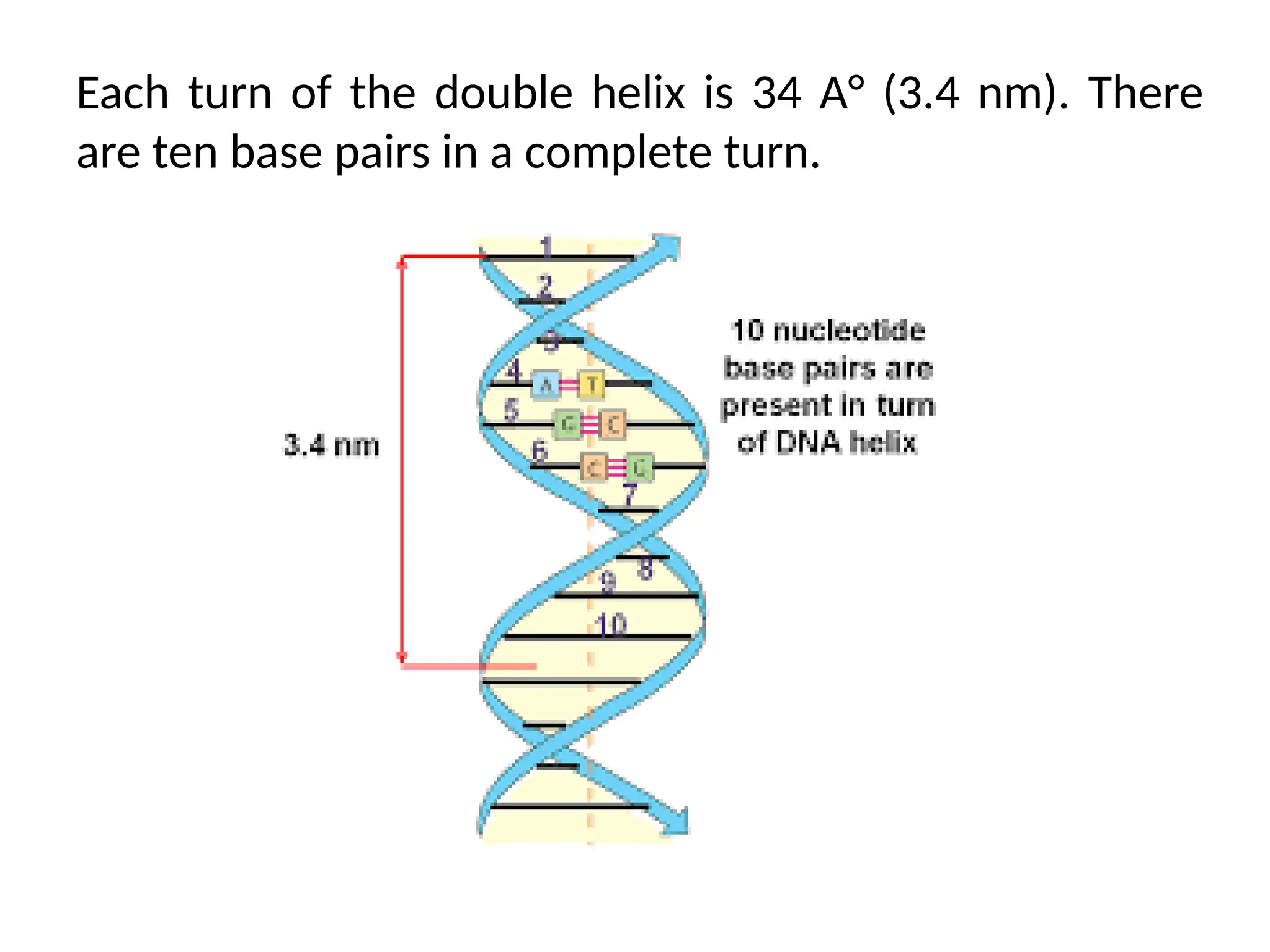
Each turn of the double helix is 34 A° (3.4 nm). There
are ten base pairs in a complete turn.
The nucleotides in a helix are joined together by
phosphodiester bonds
STRUCTURE OF DNA
dna class 12 NCERT science chapter biomolecules

dna class 12 NCERT science chapter biomolecules