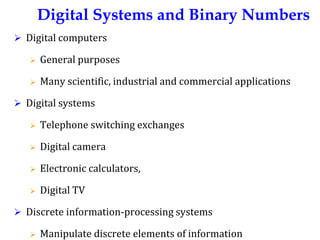
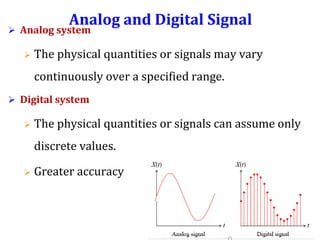
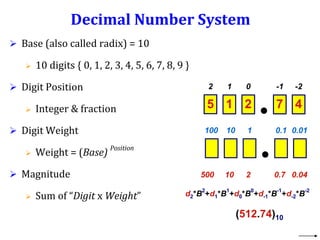
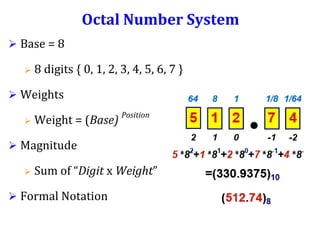
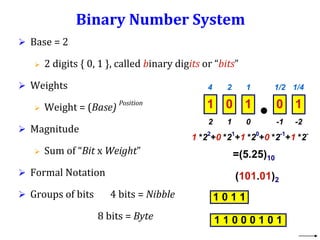
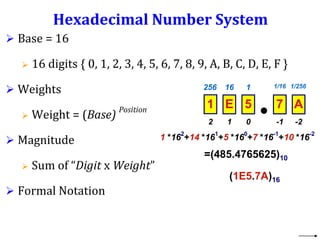
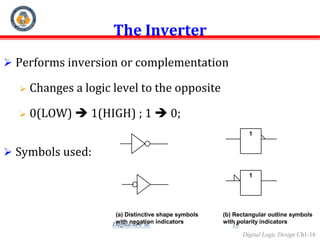
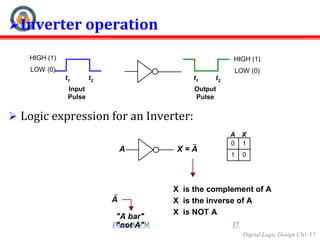
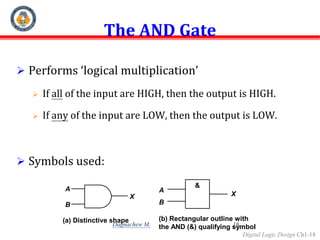
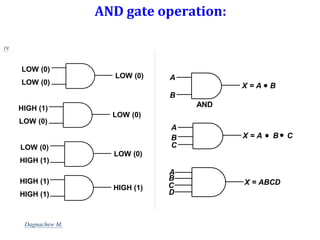
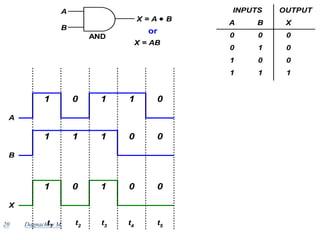
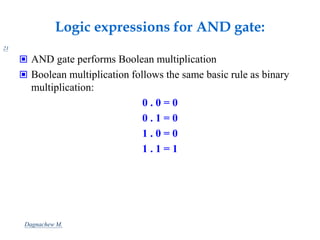
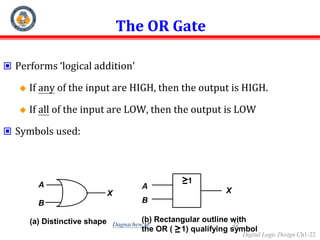
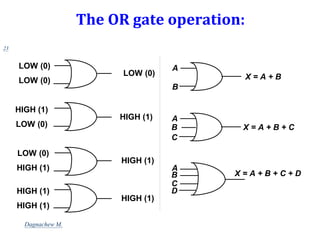
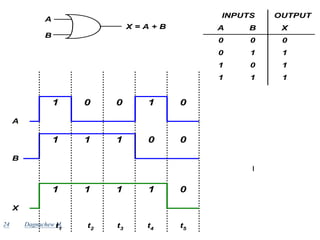
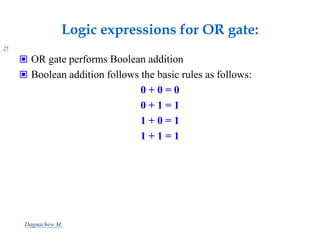
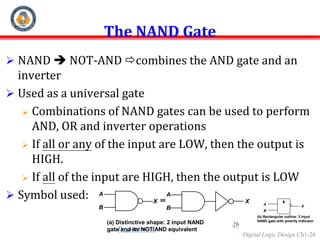
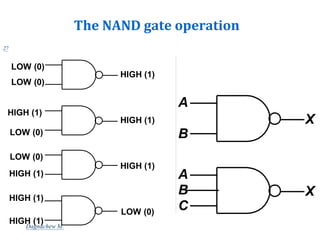
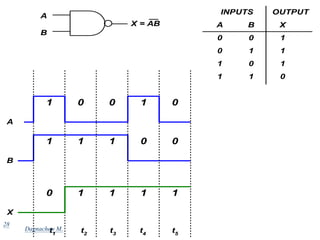
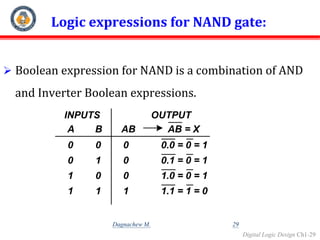
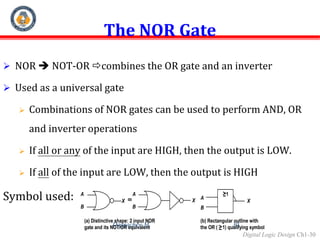
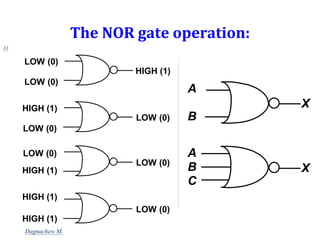
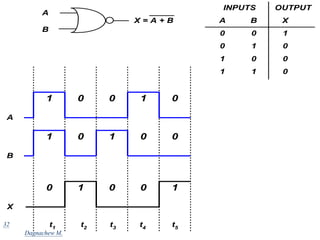
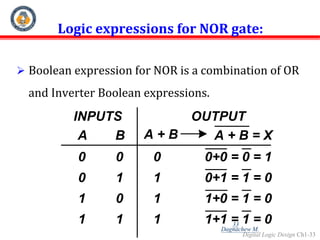
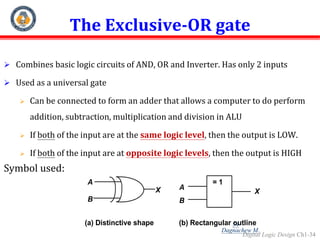
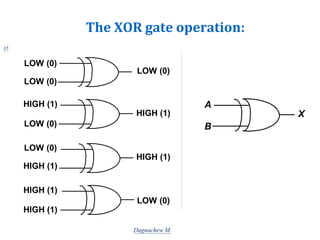
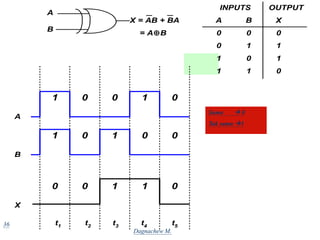
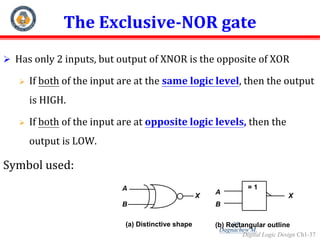
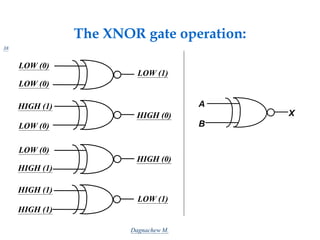
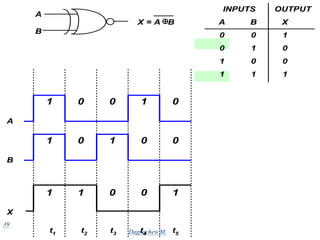
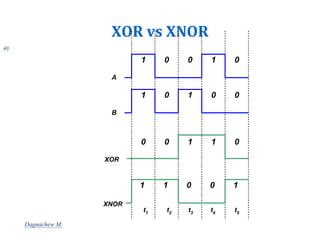
Digital systems use discrete binary values represented as 0s and 1s to process information. Common digital systems include computers, cameras, calculators, televisions and more. Analog systems represent information as continuously variable physical quantities, while digital systems represent information as discrete values. Binary digits (bits) are the fundamental units of digital systems and can have values of 0, 1, low, high, on or off. Logic gates like AND, OR, NOT, NAND and NOR are basic building blocks used to perform operations on binary inputs and produce binary outputs.



![[Deck] What's New in Spark-Iceberg Integration via DSV2.pptx](https://cdn.slidesharecdn.com/ss_thumbnails/deckwhatsnewinspark-icebergintegrationviadsv2-260210005337-25955b12-thumbnail.jpg?width=640&height=640&fit=bounds)


