
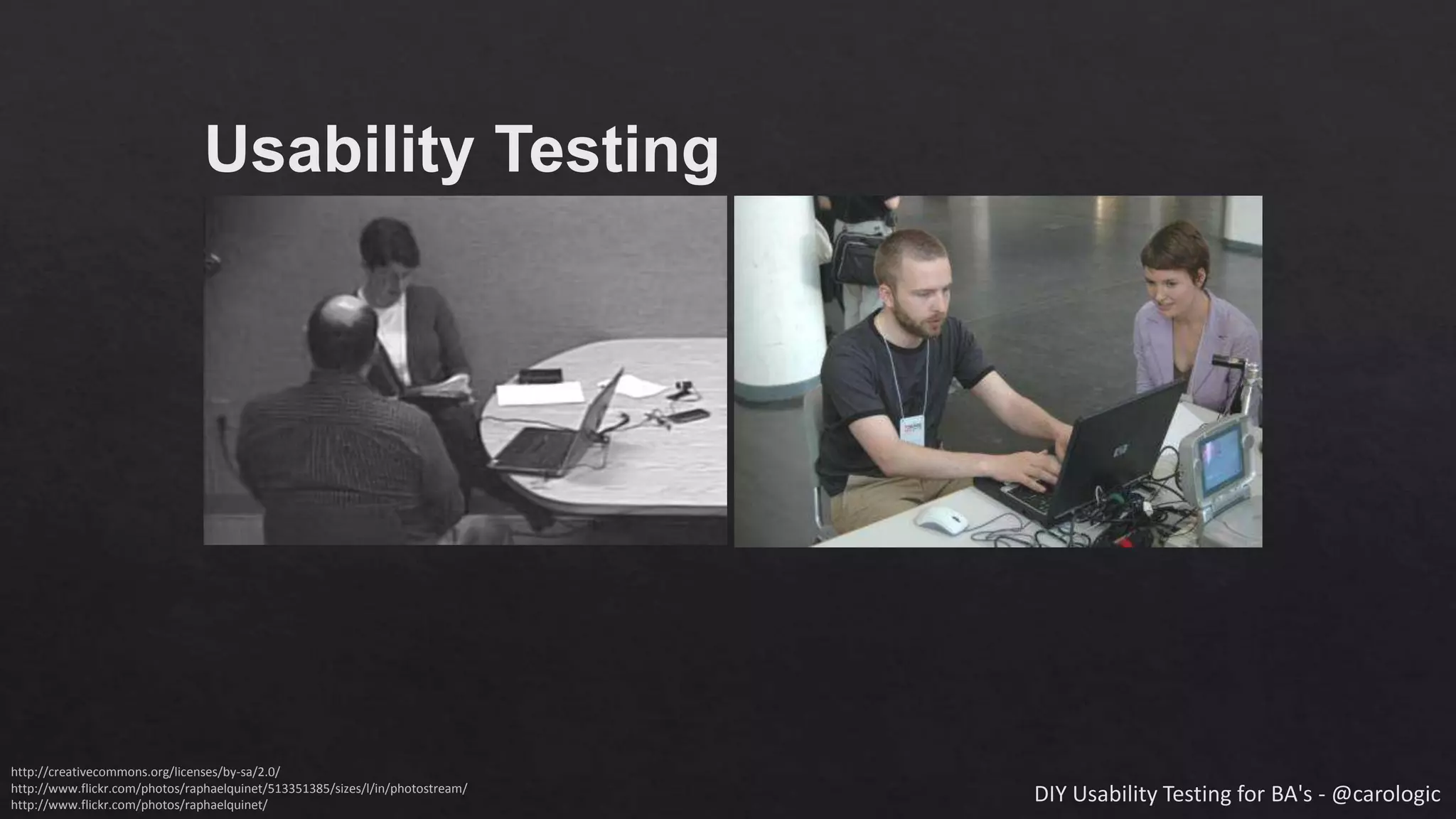


http://creativecommons.org/licenses/by-sa/2.0/
http://www.flickr.com/photos/raphaelquinet/513351385/sizes/l/in/photostream/
http://www.flickr.com/photos/raphaelquinet/
Usability Testing
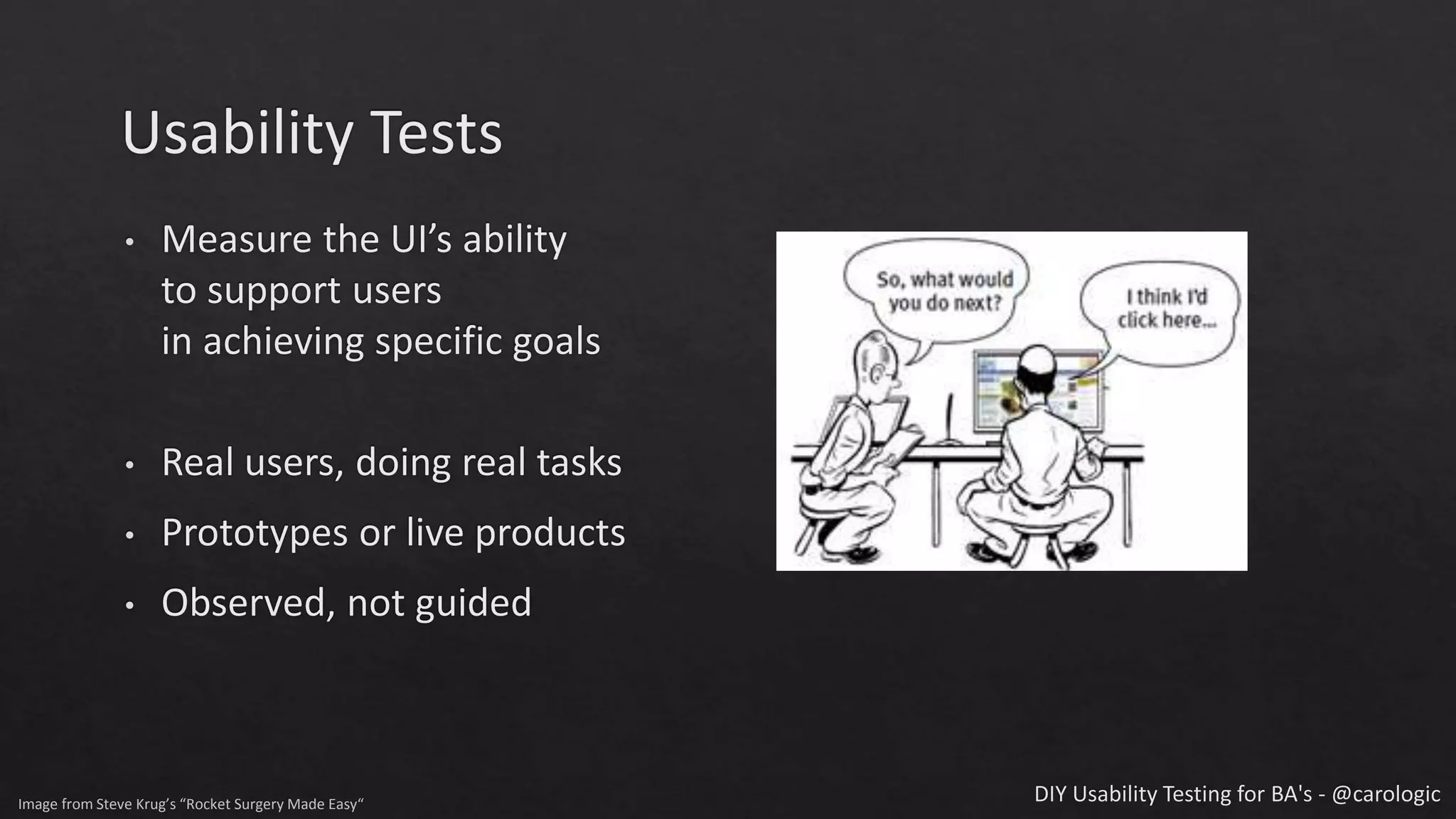
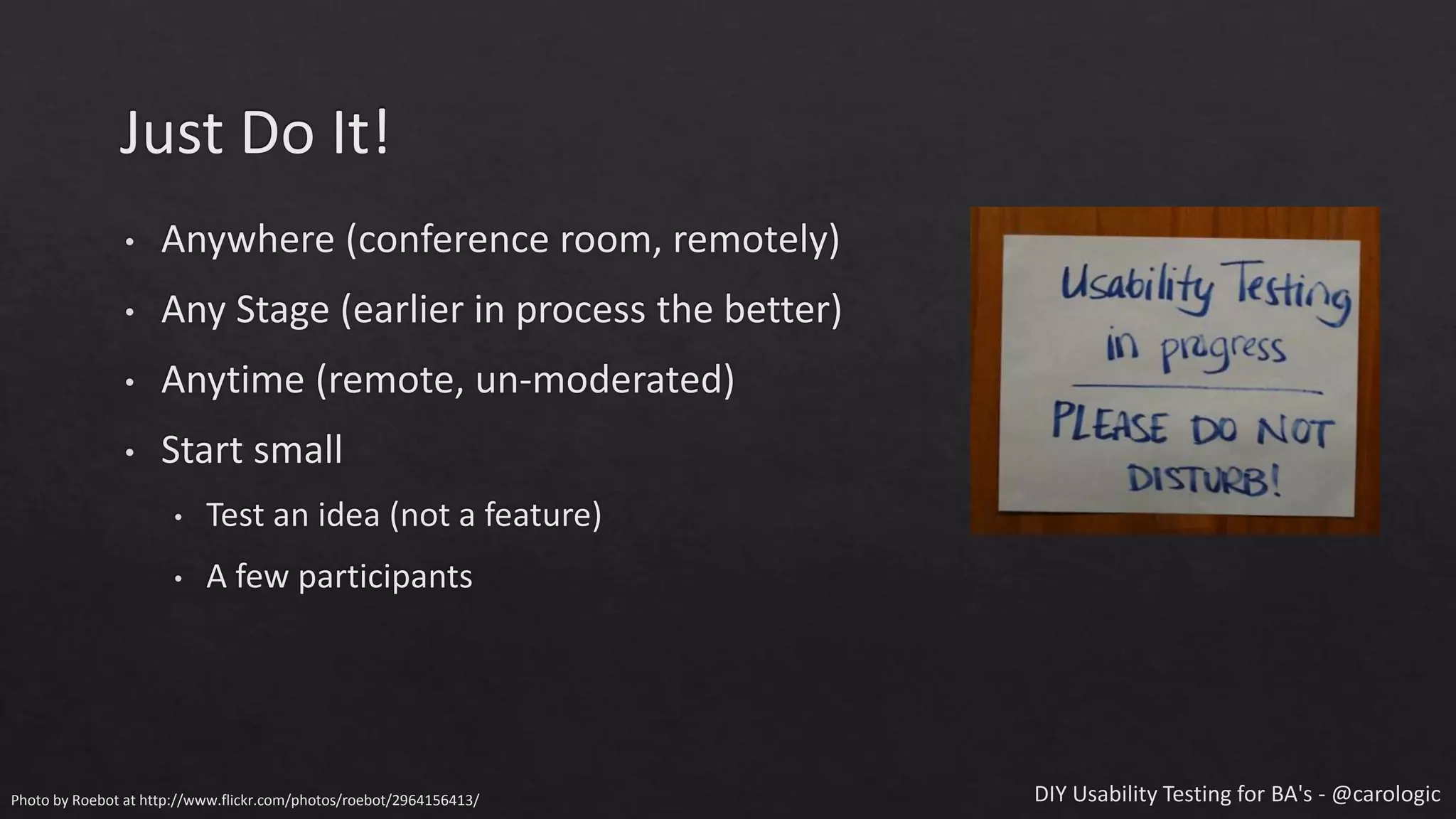
Image from Steve Krug’s “Rocket Surgery Made Easy“
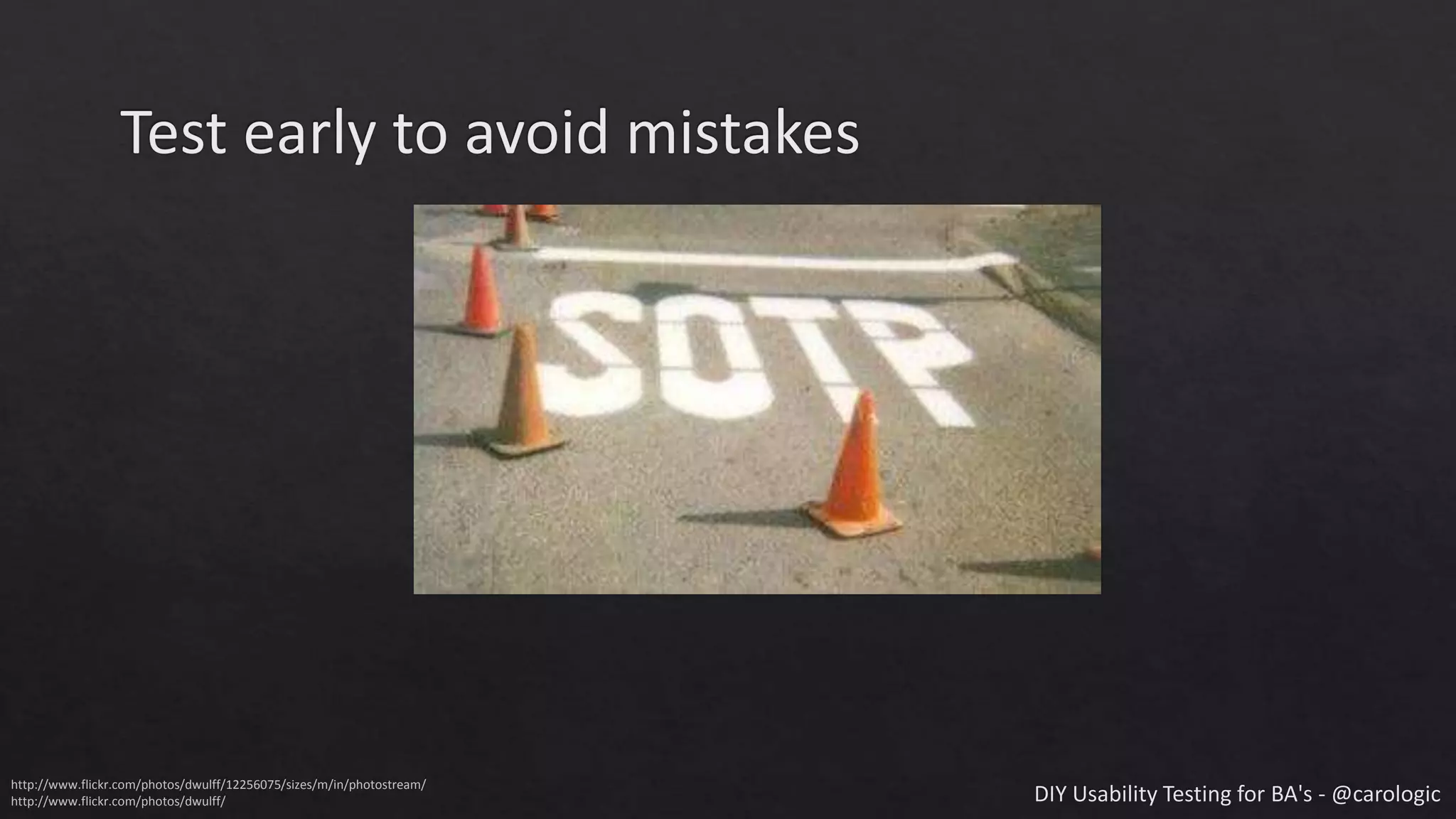
http://www.flickr.com/photos/dwulff/12256075/sizes/m/in/photostream/
http://www.flickr.com/photos/dwulff/
*See guidance for Observers in Resources section
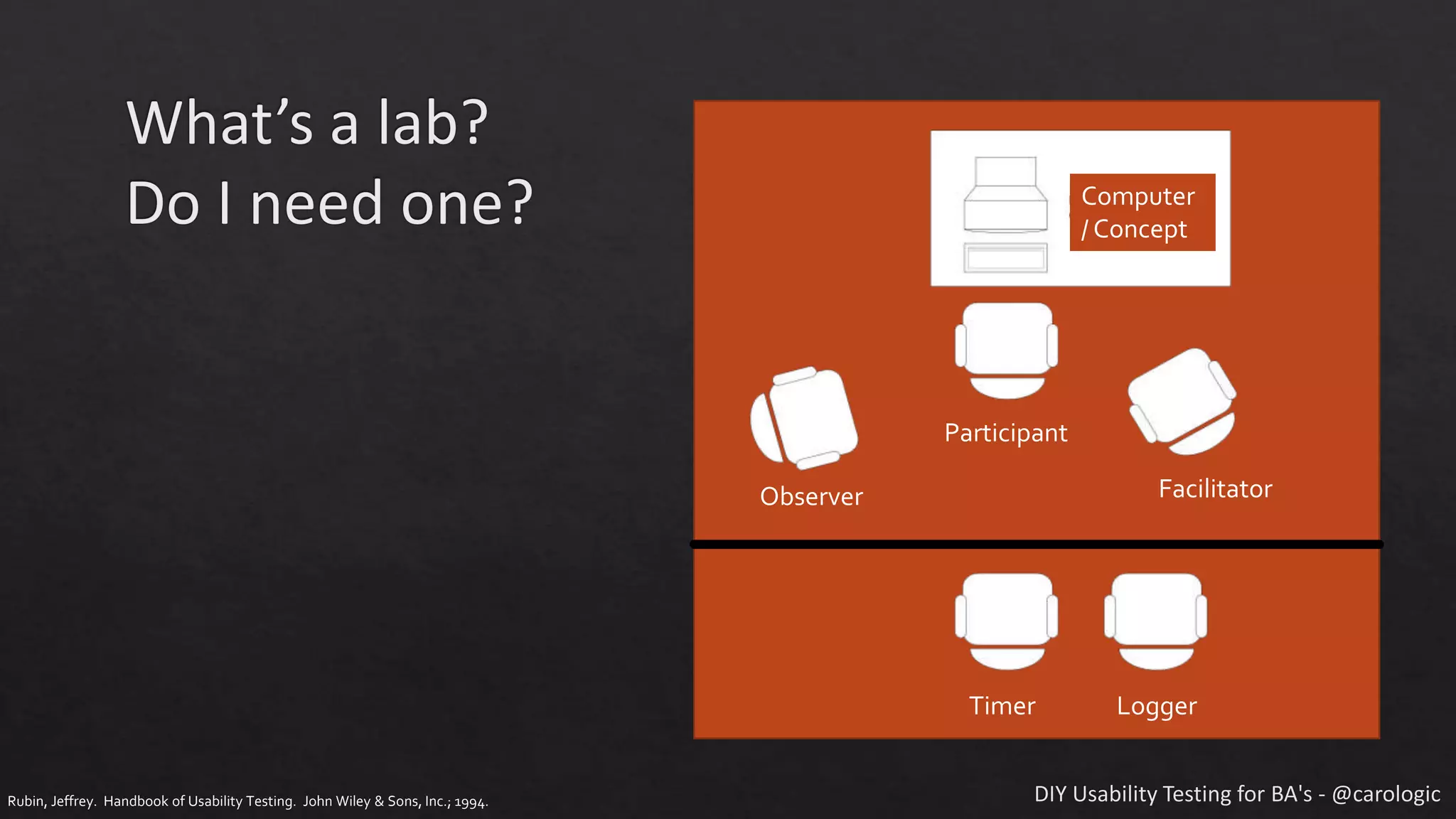
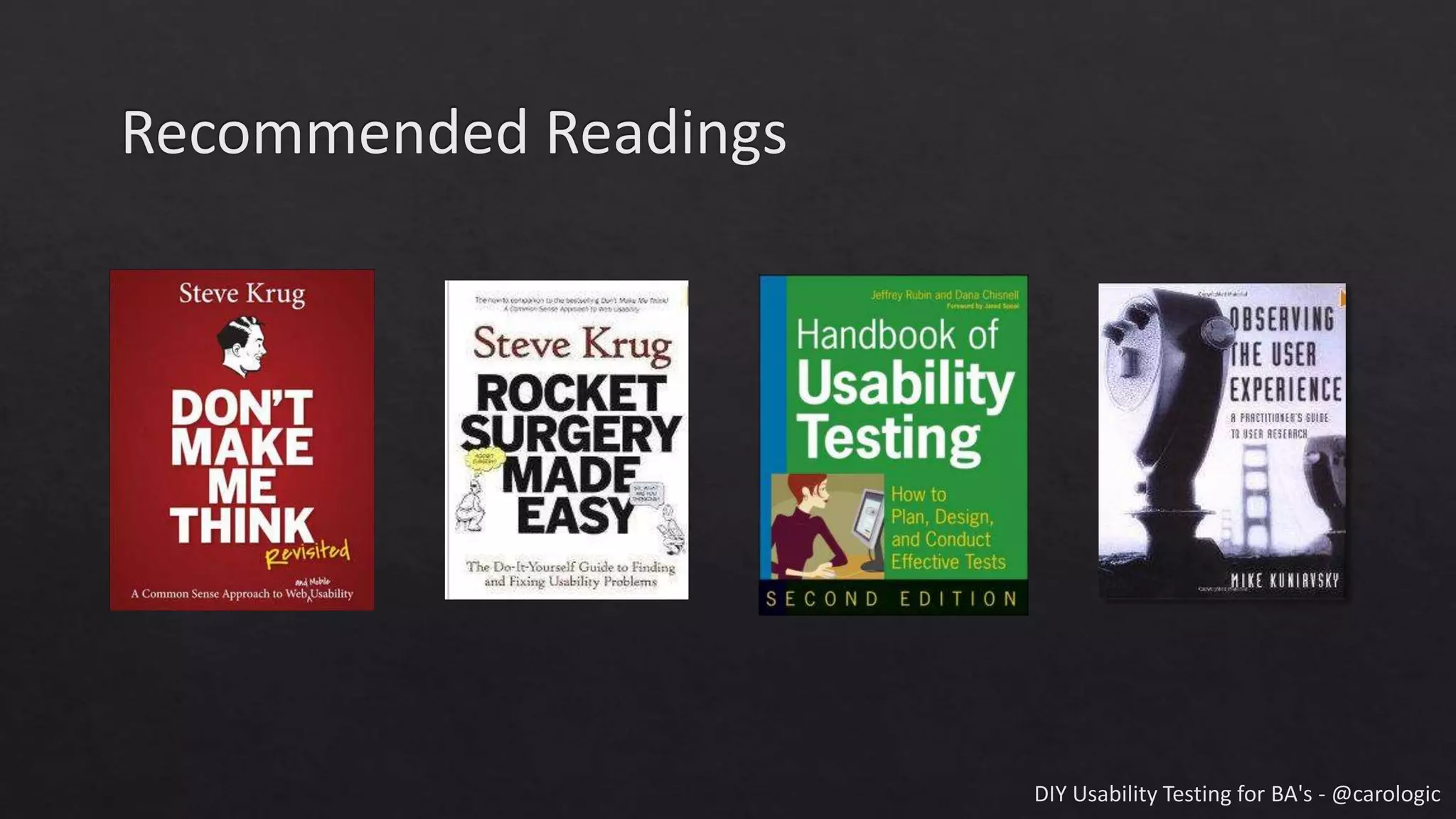
Rubin, Jeffrey. Handbook of Usability Testing. John Wiley & Sons, Inc.; 1994.
Computer
/ Concept
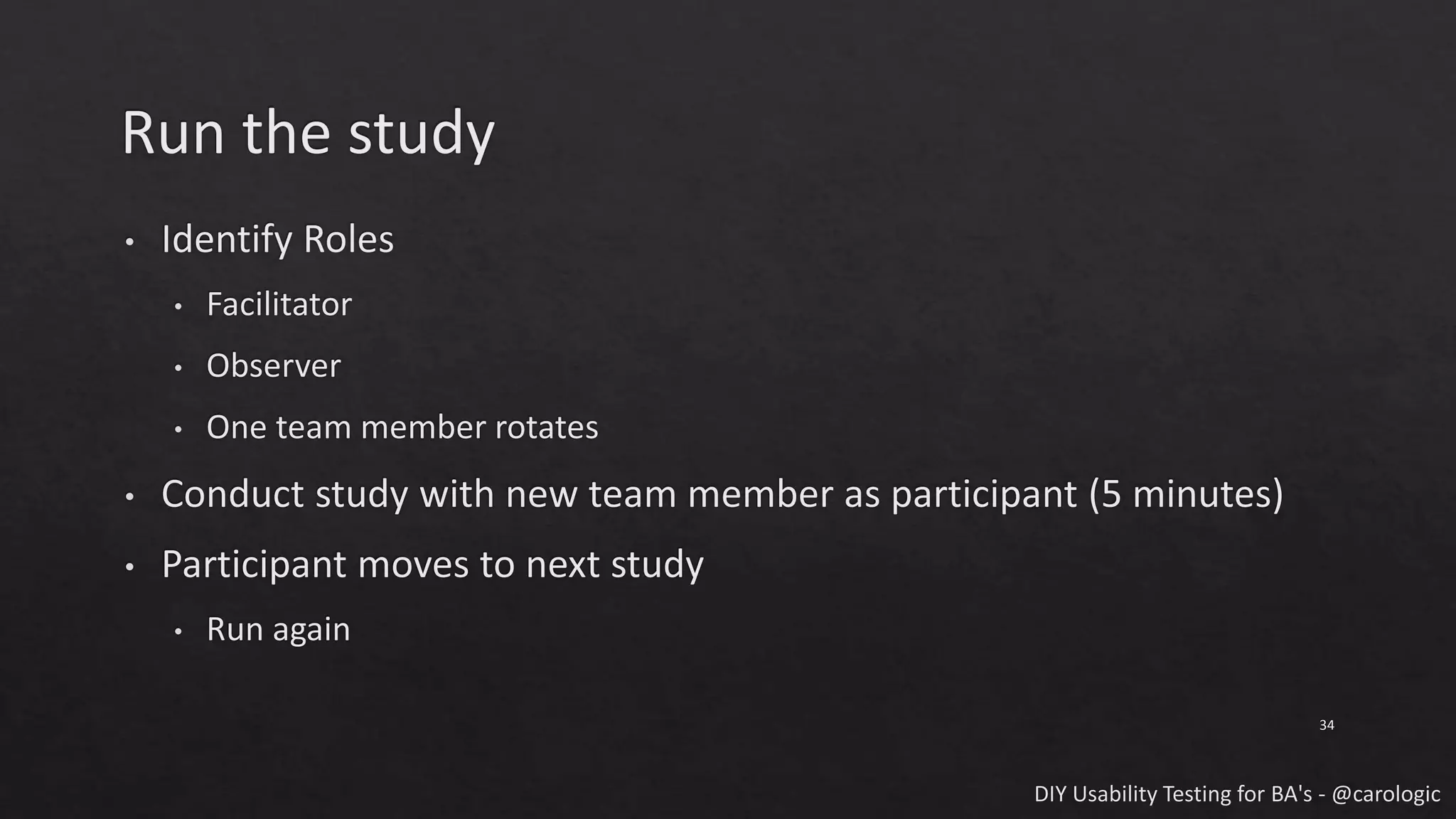
Facilitator
Participant
Observer
Timer Logger
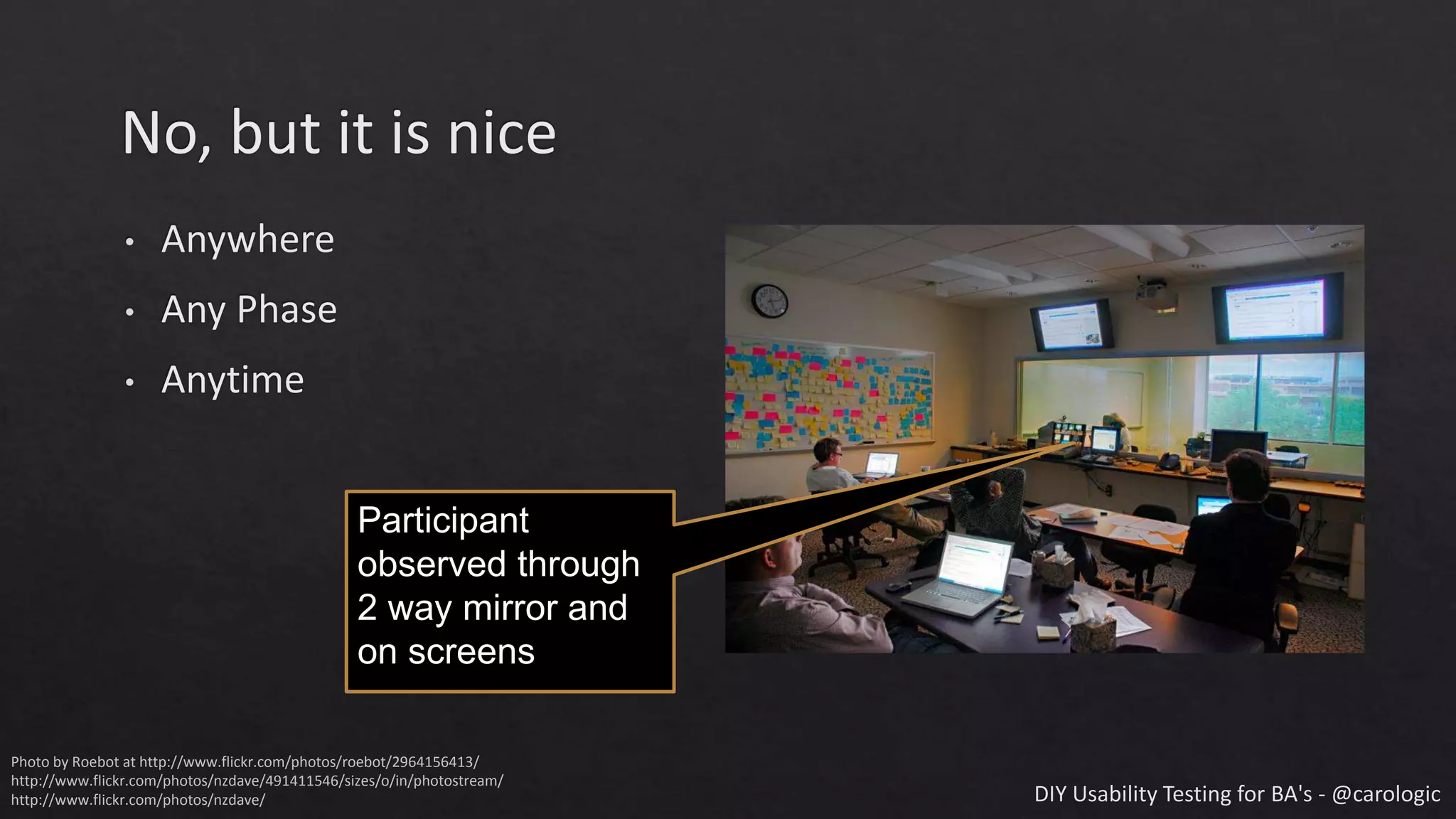
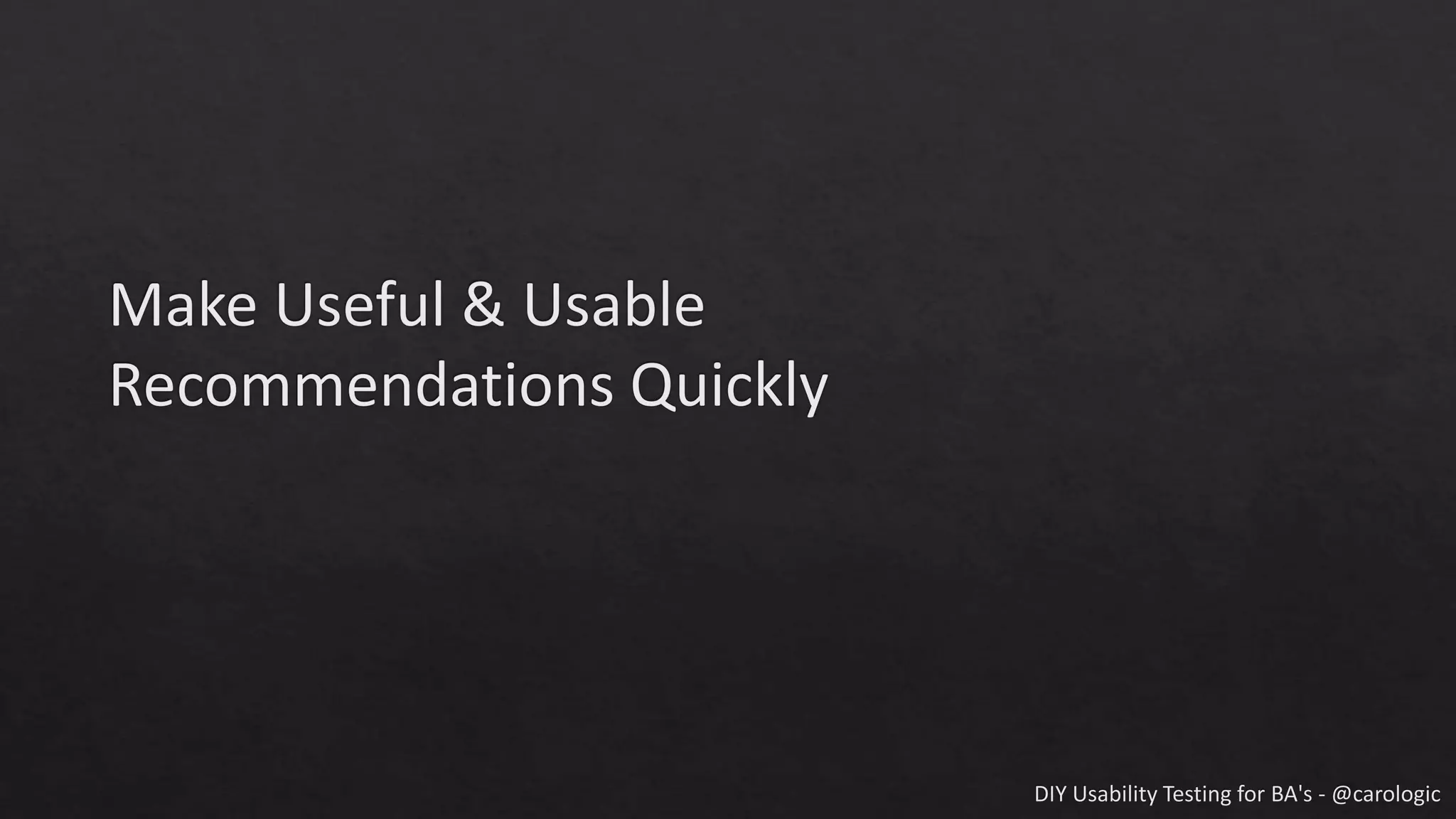
Photo by Roebot at http://www.flickr.com/photos/roebot/2964156413/
http://www.flickr.com/photos/nzdave/491411546/sizes/o/in/photostream/
http://www.flickr.com/photos/nzdave/
Participant
observed through
2 way mirror and
on screens
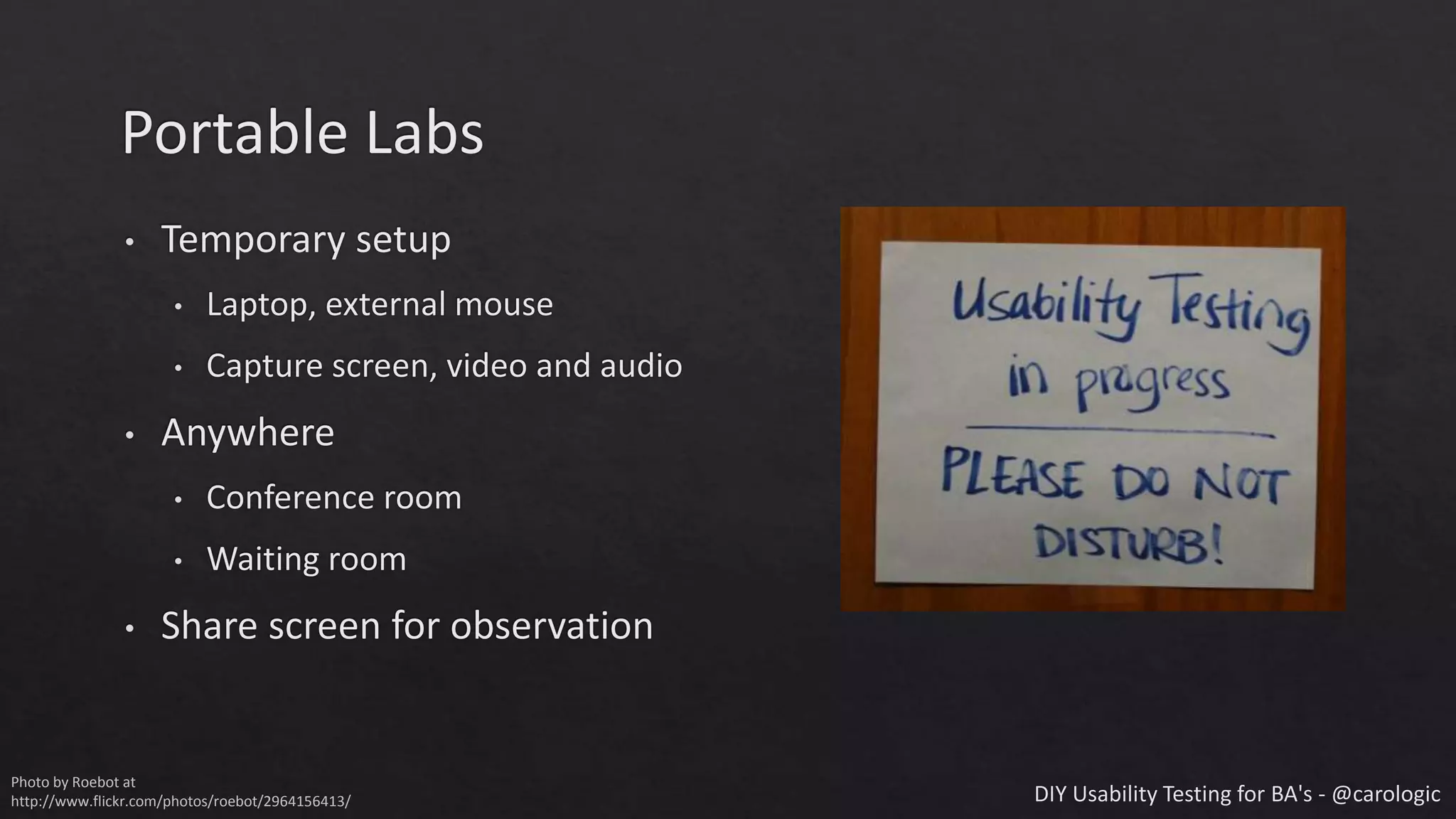
Photo by Roebot at
http://www.flickr.com/photos/roebot/2964156413/
33
34
35
Rocket Surgery Made Easy: The Do-It-Yourself Guide to Finding and Fixing Usability Problems. By Steve Krug
Adapted from: Rocket Surgery Made Easy: The Do-It-Yourself Guide to Finding and Fixing Usability Problems. By Steve Krug
Photo by Roebot at http://www.flickr.com/photos/roebot/2964156413/
in/CarolJSmith
@Carologic
slideshare.net/carologic
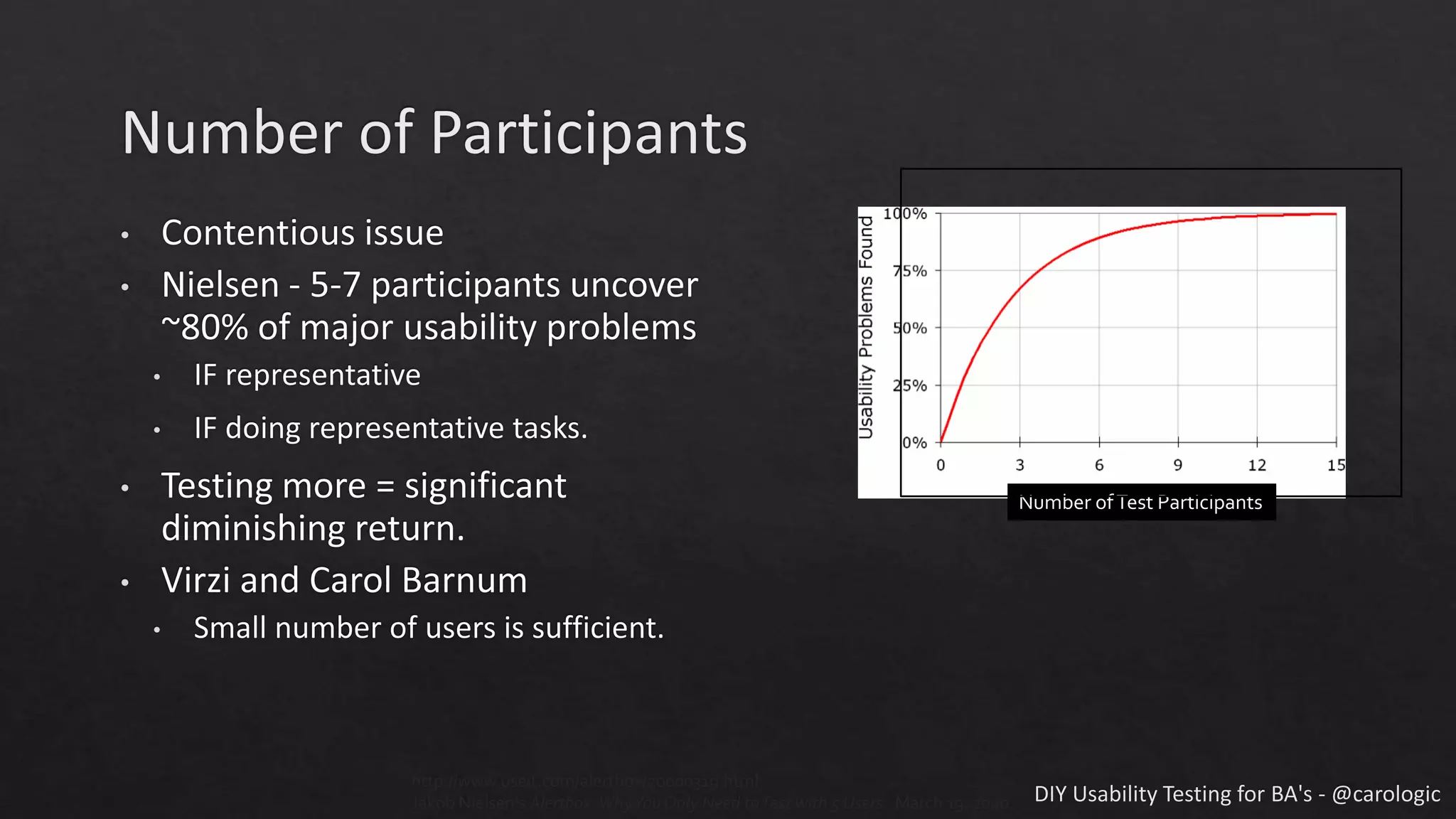
http://www.useit.com/alertbox/20000319.html
Jakob Nielsen’s Alertbox.WhyYou Only Need toTest with 5 Users. March 19, 2000.
Number ofTest Participants
Quote by @mollydotcom at #stirtrek 2011 via @carologic
Photo By Kenyaboy7AndrewChipley
http://www.flickr.com/photos/kenyaboy7/3749535540/
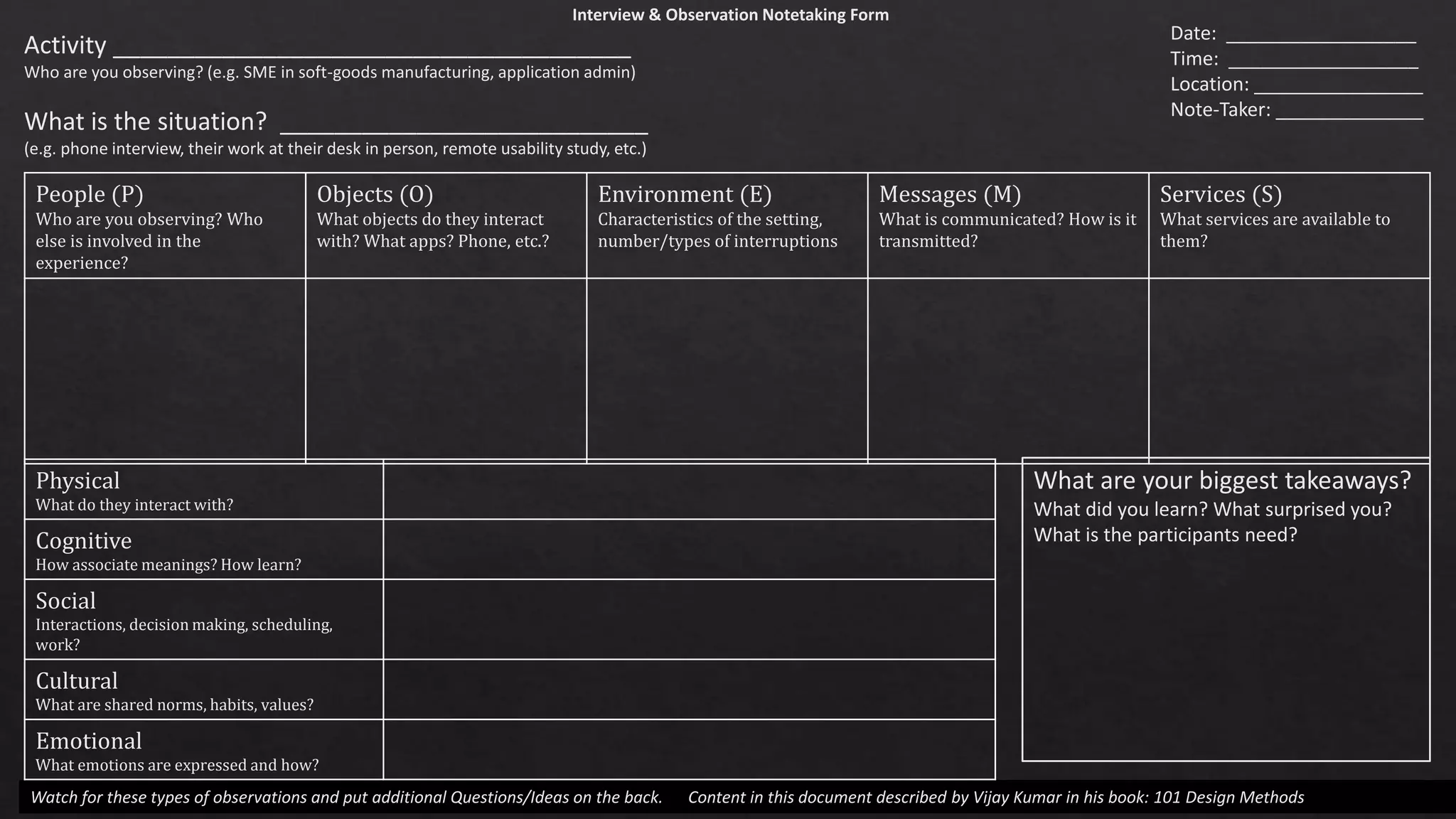
Activity ______________________________________
Who are you observing? (e.g. SME in soft-goods manufacturing, application admin)
What is the situation? ___________________________
(e.g. phone interview, their work at their desk in person, remote usability study, etc.)
Date: __________________
Time: __________________
Location: ________________
Note-Taker: ______________
People (P)
Who are you observing? Who
else is involved in the
experience?
Objects (O)
What objects do they interact
with? What apps? Phone, etc.?
Environment (E)
Characteristics of the setting,
number/types of interruptions
Messages (M)
What is communicated? How is it
transmitted?
Services (S)
What services are available to
them?
Watch for these types of observations and put additional Questions/Ideas on the back. Content in this document described by Vijay Kumar in his book: 101 Design Methods
Physical
What do they interact with?
Cognitive
How associate meanings? How learn?
Social
Interactions, decision making, scheduling,
work?
Cultural
What are shared norms, habits, values?
Emotional
What emotions are expressed and how?
What are your biggest takeaways?
What did you learn? What surprised you?
What is the participants need?
Interview & Observation Notetaking Form
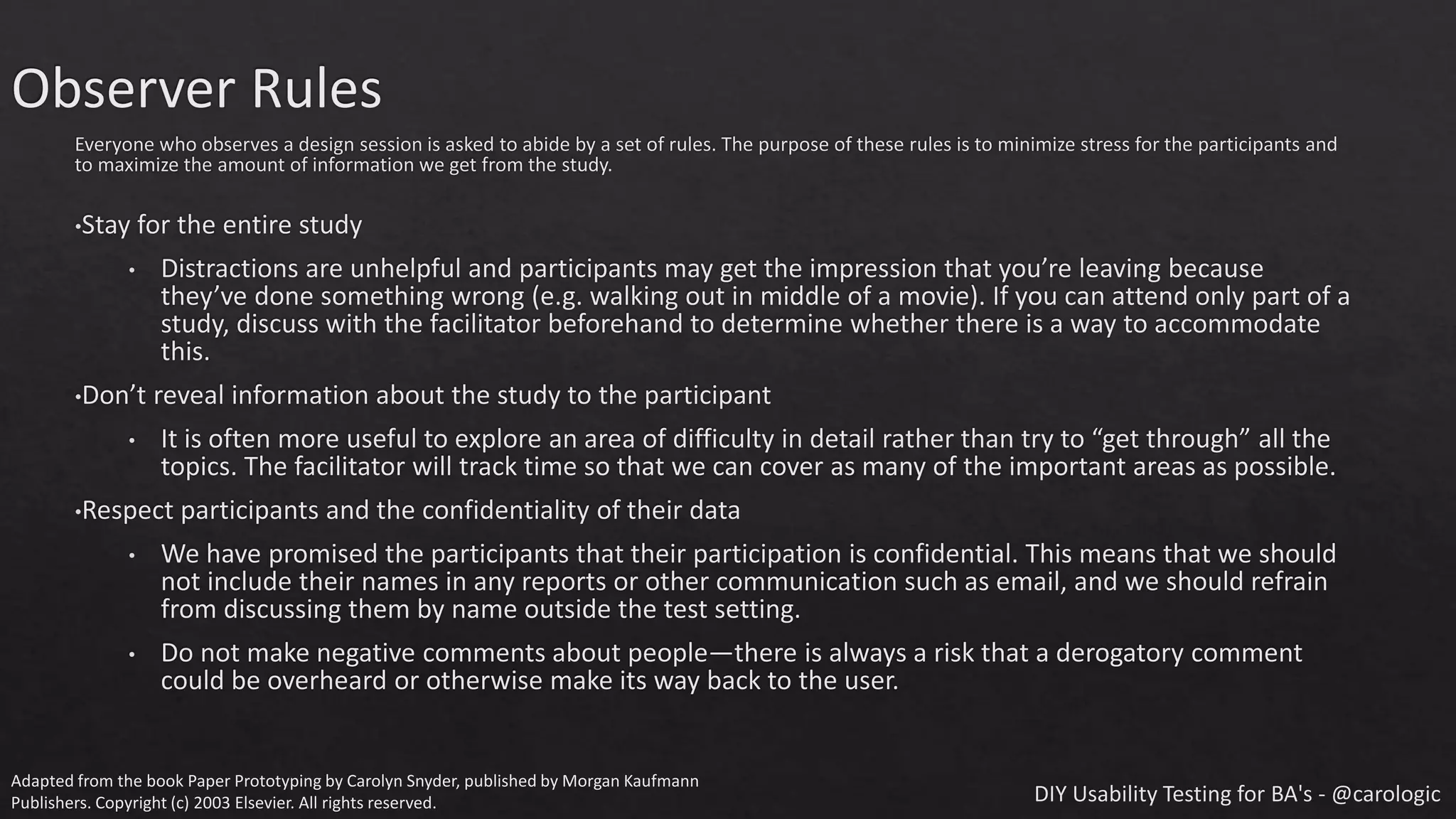
Adapted from the book Paper Prototyping by Carolyn Snyder, published by Morgan Kaufmann
Publishers. Copyright (c) 2003 Elsevier. All rights reserved.
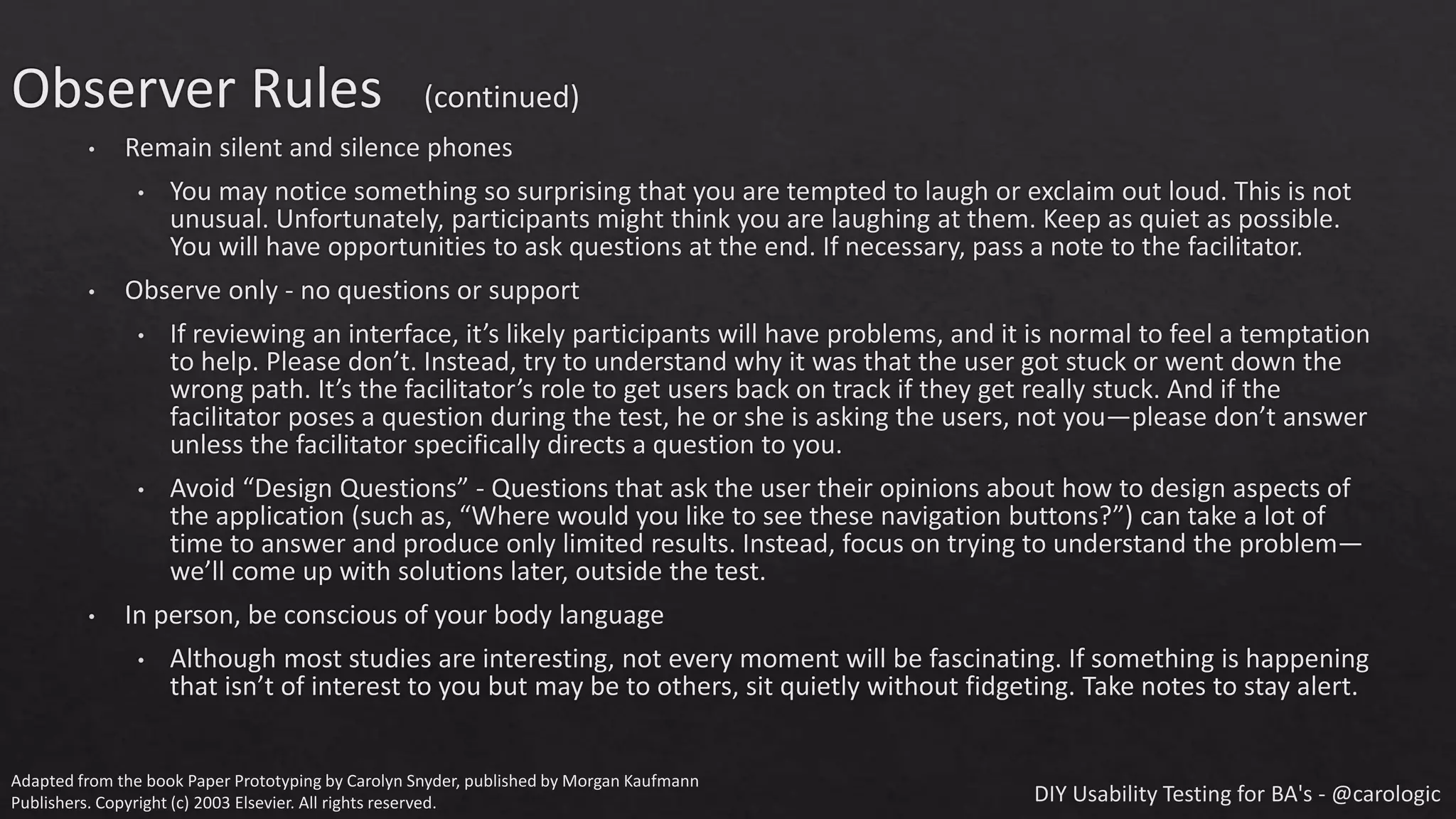
Adapted from the book Paper Prototyping by Carolyn Snyder, published by Morgan Kaufmann
Publishers. Copyright (c) 2003 Elsevier. All rights reserved.
DIY Usability Testing for Business Analysts (BA)

DIY Usability Testing for Business Analysts (BA)