Eye Tracking 
What I learned from 6 months of experimenting 
UX Camp Brighton - November 15th 2014
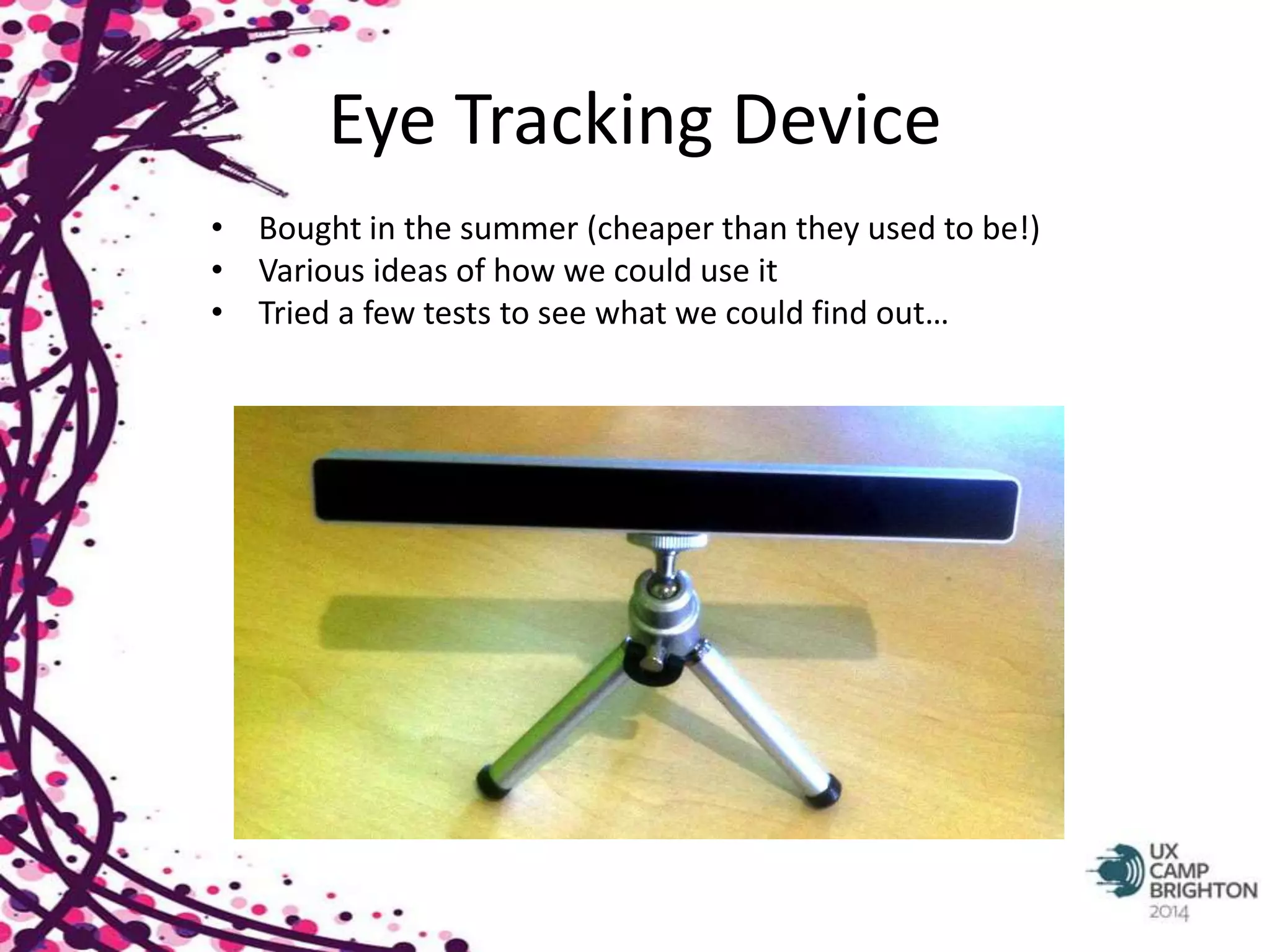
Eye Tracking Device 
• Bought in the summer (cheaper than they used to be!) 
• Various ideas of how we could use it 
• Tried a few tests to see what we could find out…
A quick demo 
Any volunteers?!?
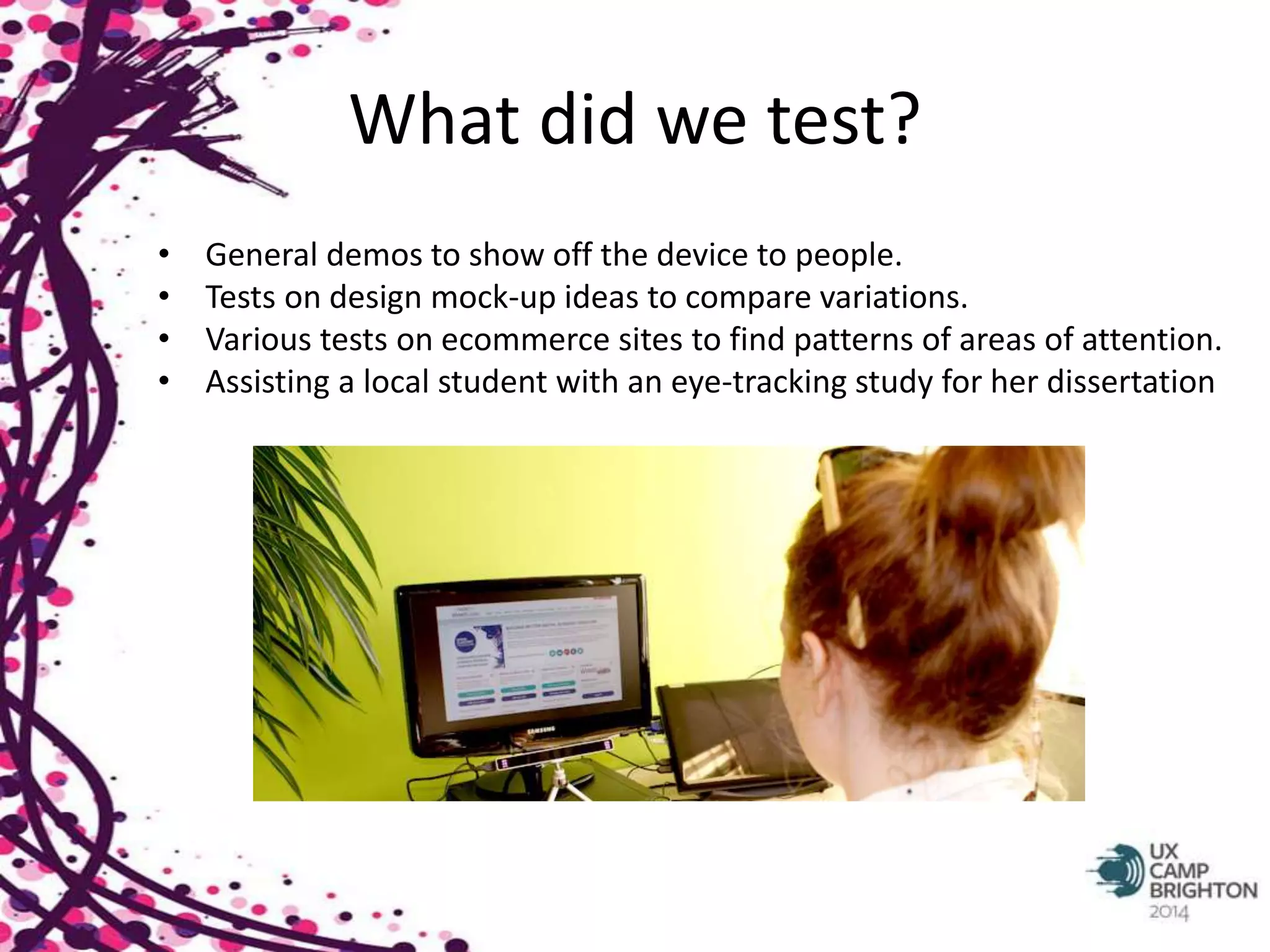
What did we test? 
• General demos to show off the device to people. 
• Tests on design mock-up ideas to compare variations. 
• Various tests on ecommerce sites to find patterns of areas of attention. 
• Assisting a local student with an eye-tracking study for her dissertation
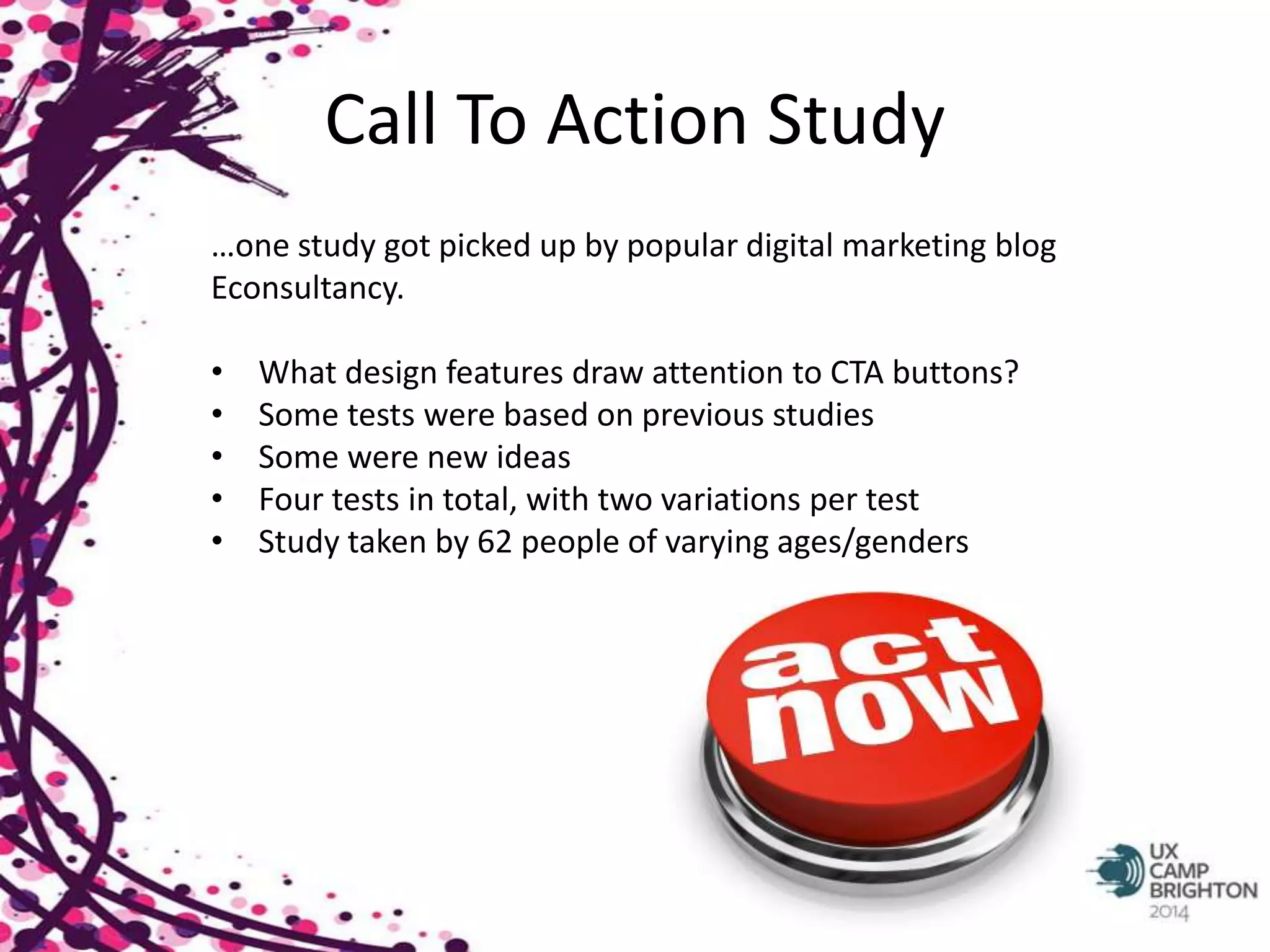
Call To Action Study 
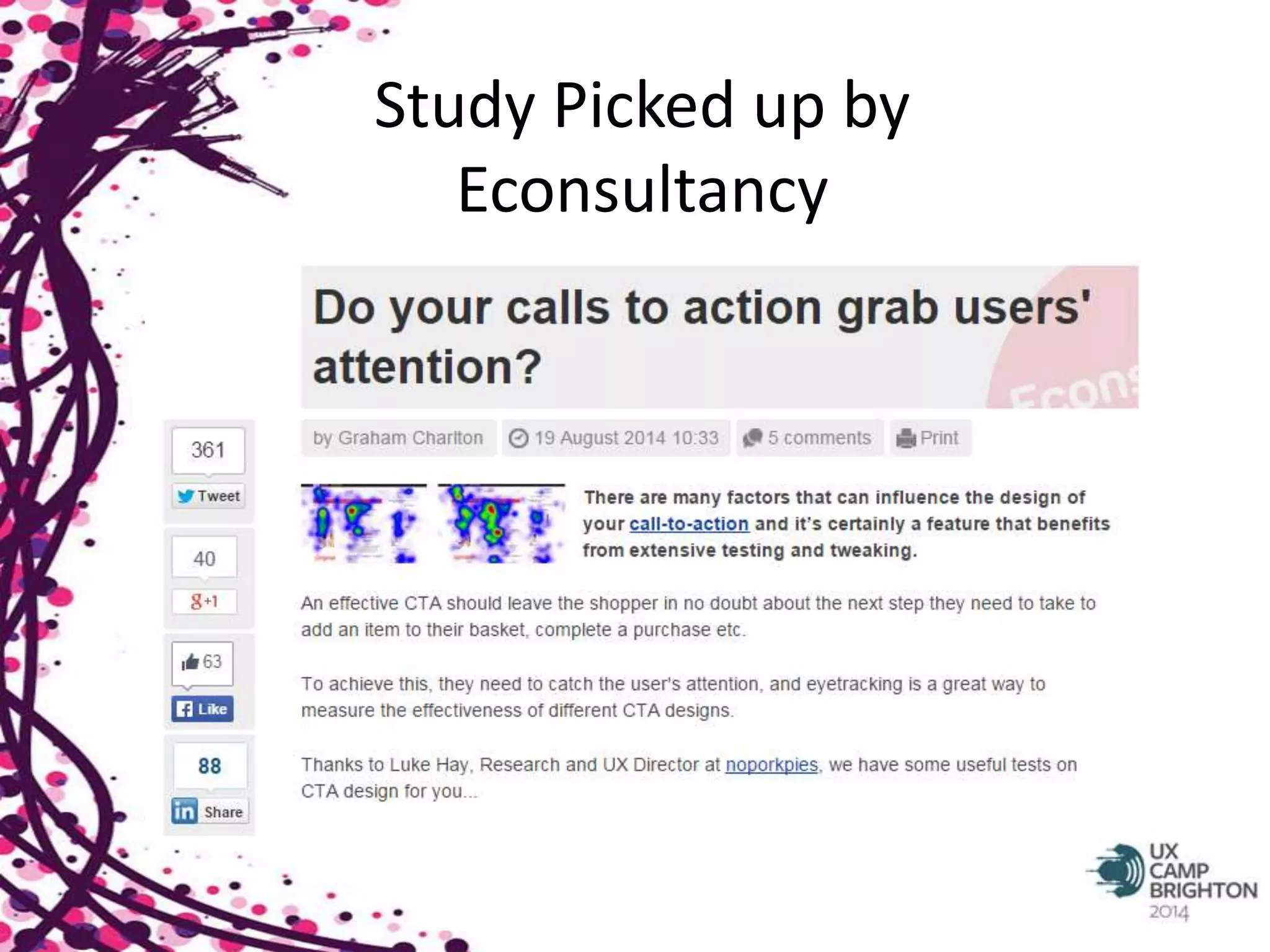
…one study got picked up by popular digital marketing blog 
Econsultancy. 
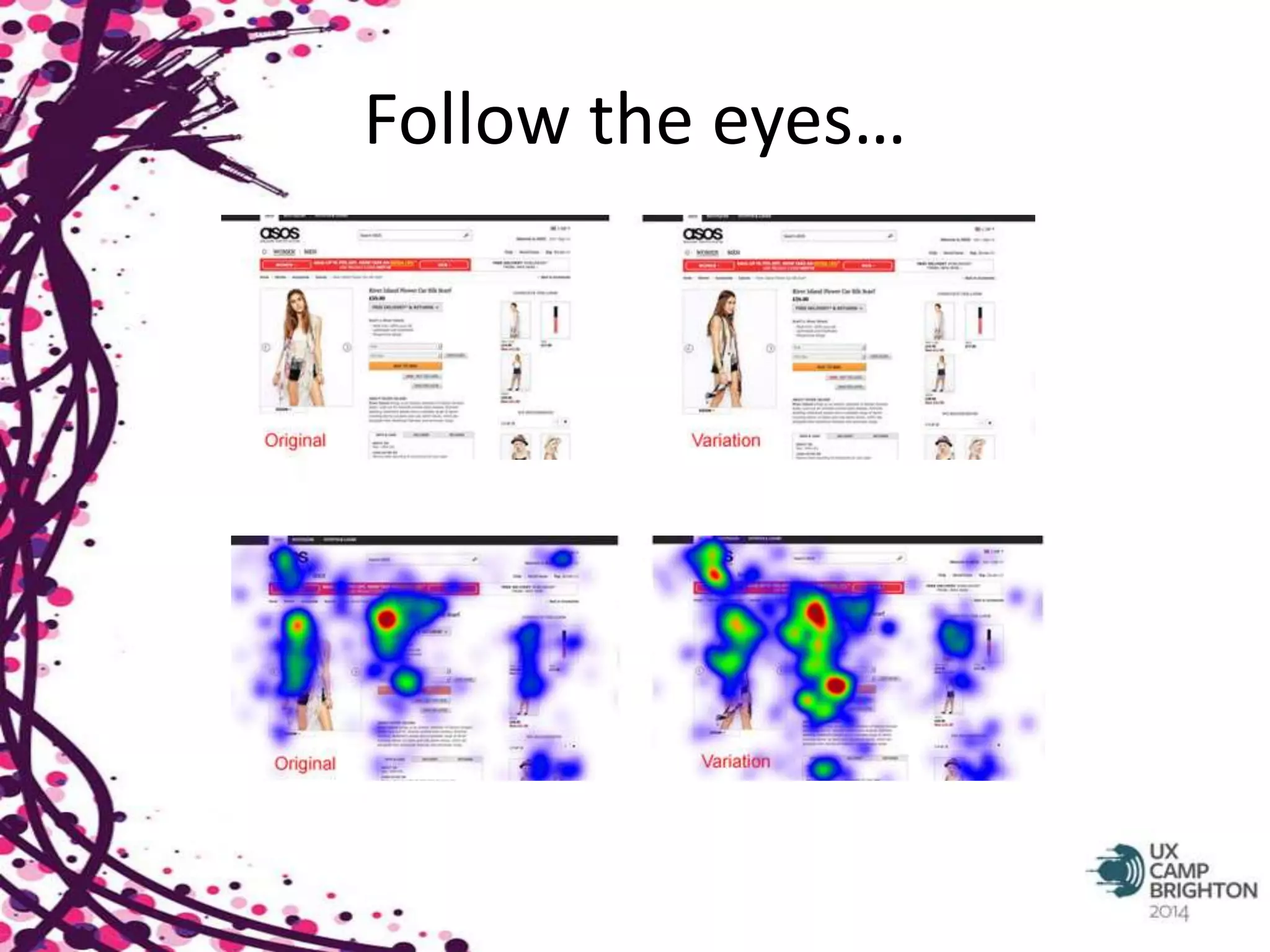
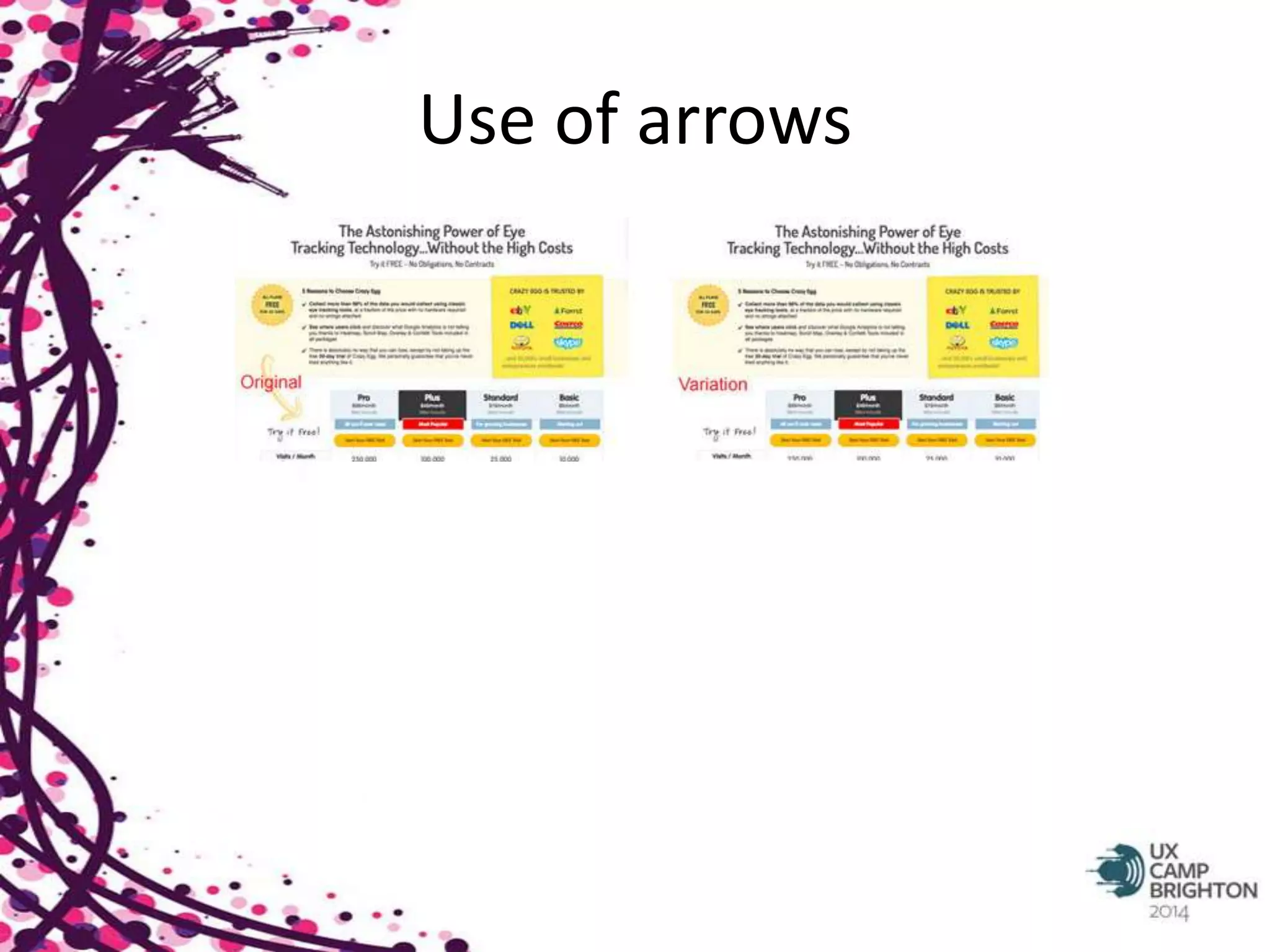
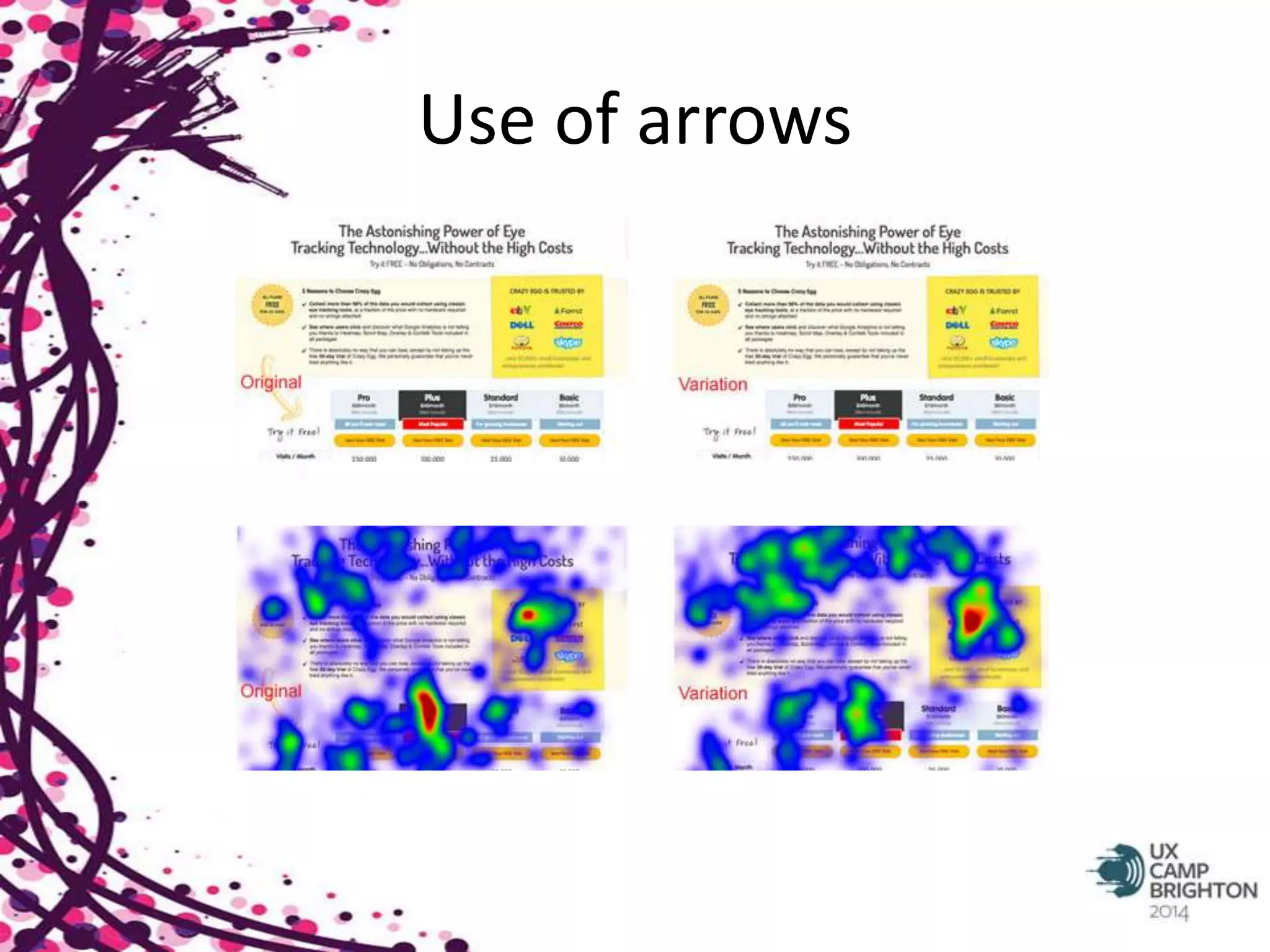
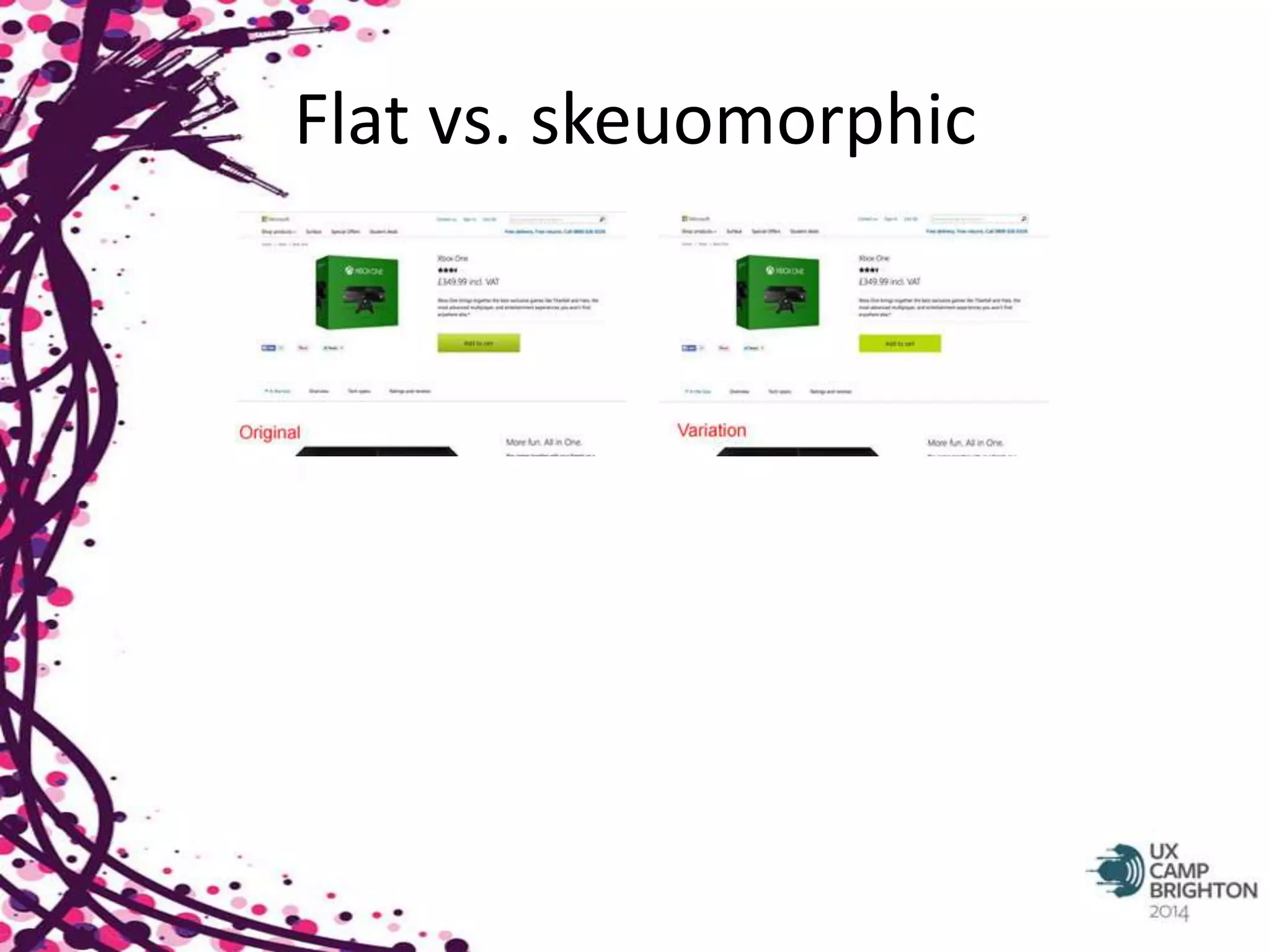
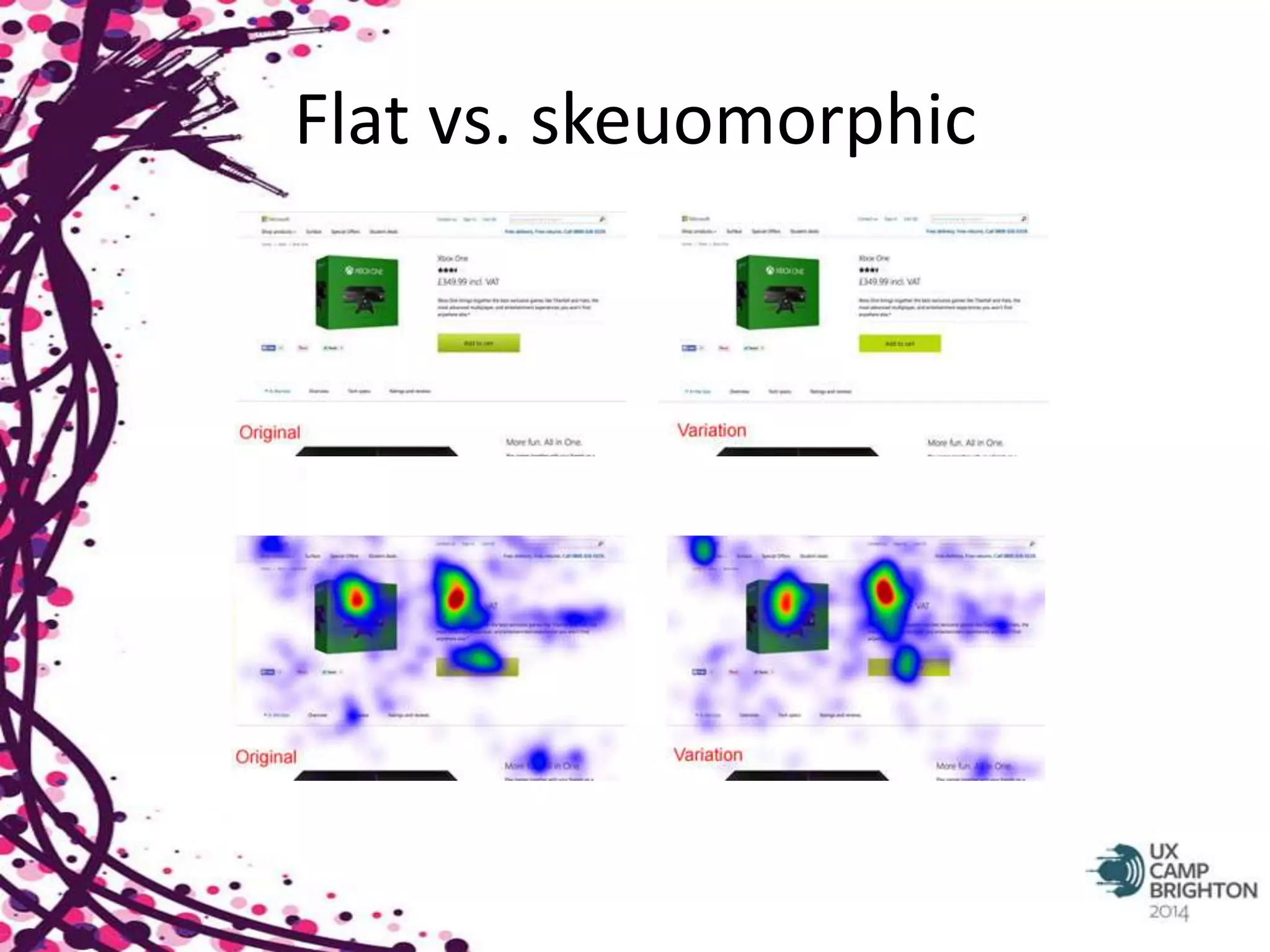
• What design features draw attention to CTA buttons? 
• Some tests were based on previous studies 
• Some were new ideas 
• Four tests in total, with two variations per test 
• Study taken by 62 people of varying ages/genders
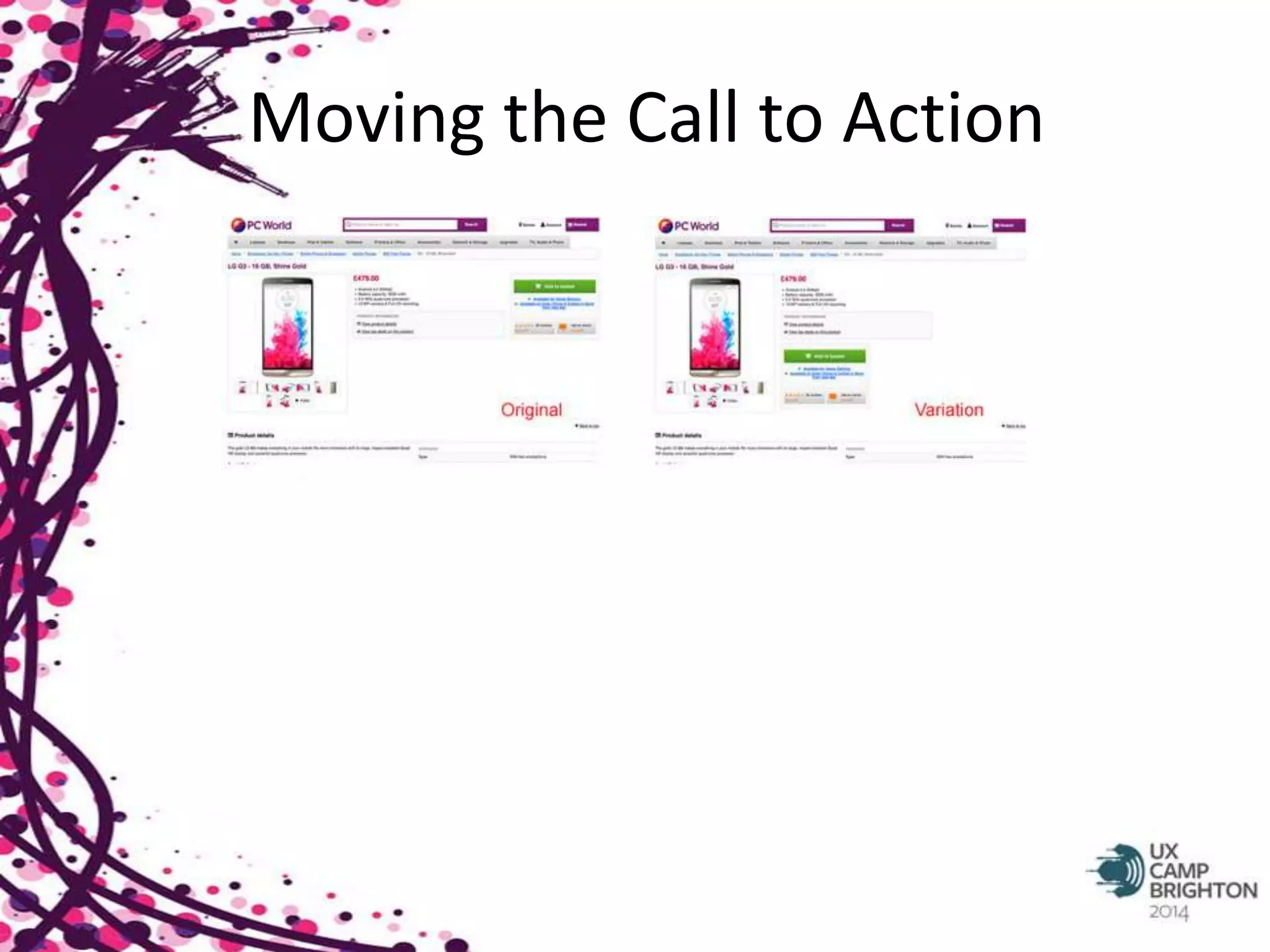
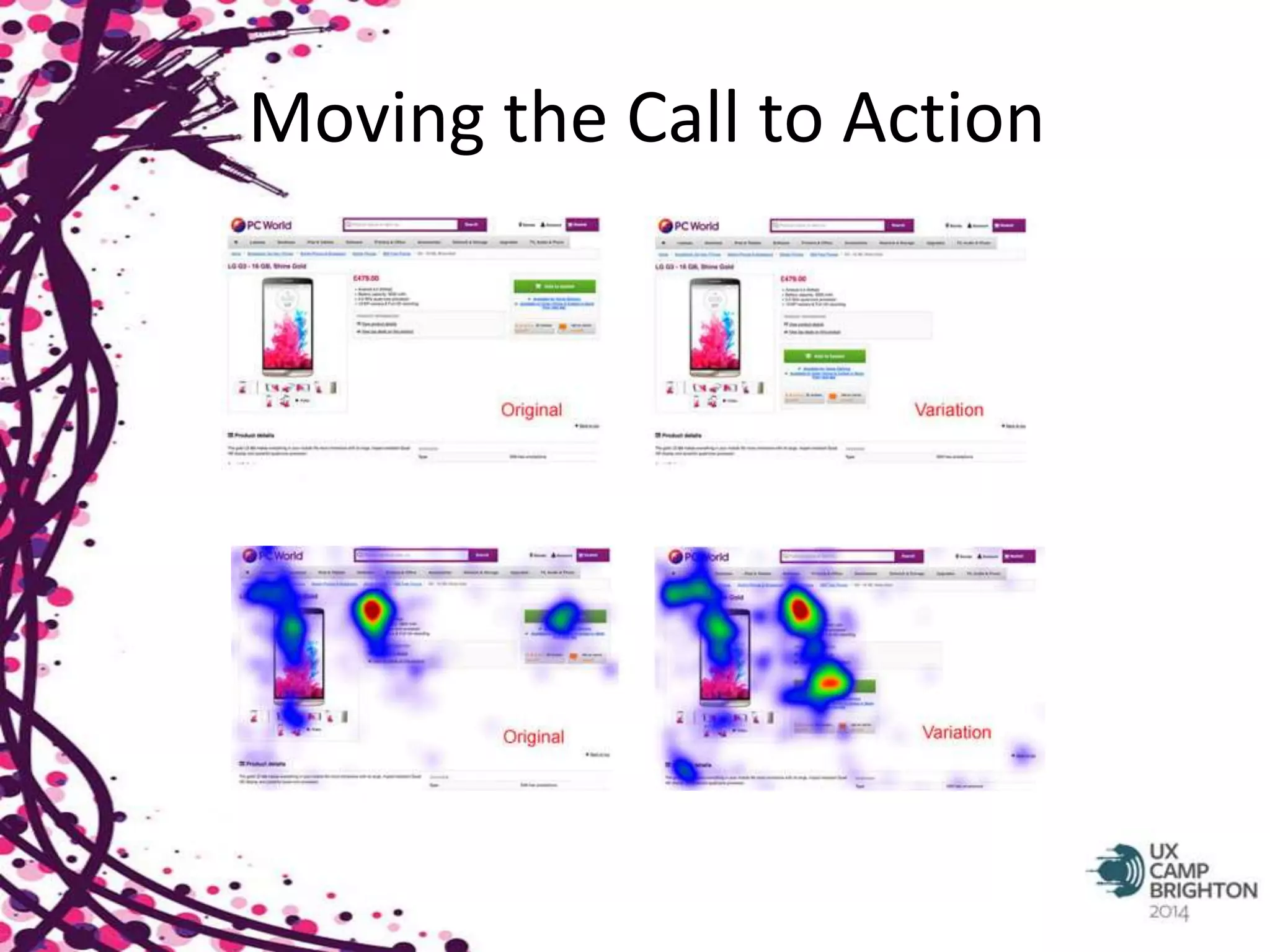
Moving the Call to Action
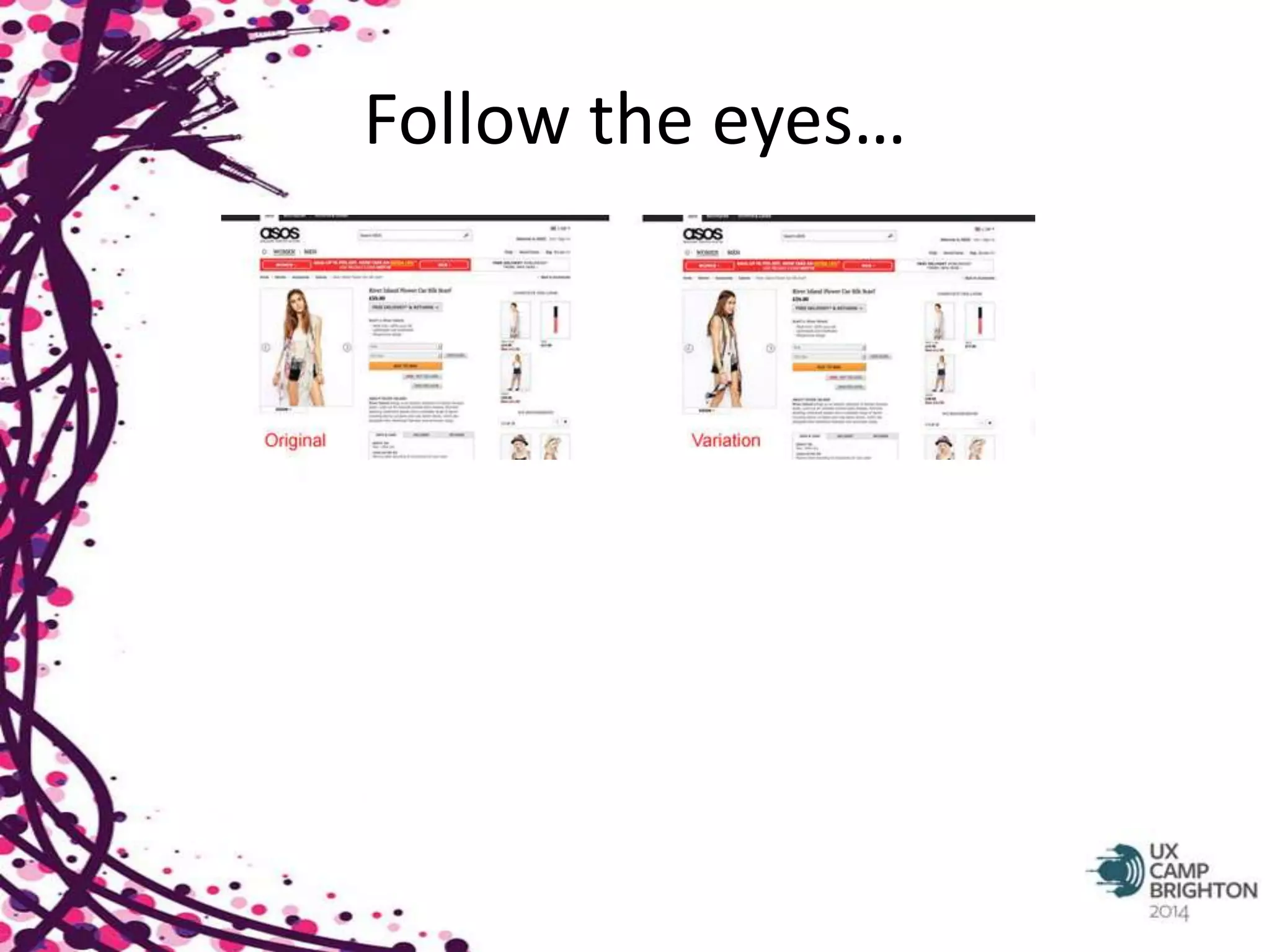
Follow the eyes…
Follow the eyes…
Use of arrows
Use of arrows
Flat vs. skeuomorphic
What did we learn?
What did we learn? 
Is it good if people look at the CTA button? 
- They (probably) know the button is there 
- They could be focusing on the product 
- Doesn’t mean they’re going to click it! 
- Test is only for seven seconds 
- Test is flawed (user is aware of the eye 
tracking)
Study Picked up by 
Econsultancy
The Good… 
• Clients love it 
• It’s a unique way of testing 
• Nice heatmaps! 
• Can be fairly quick to run 
• It’s a gimmick (good for publicity) 
• Can give useful insight, if used alongside other methods 
• Some useful ‘discoveries’ e.g. the ‘F-Shape pattern 
• Useful during wireframing/prototyping to get quick feedback 
• Fairly simple to set up and run 
• Good for attention/publicity (e.g . the Econsultancy article has over 
500 shares)
The Bad… 
• Can be inaccurate 
• Can be expensive 
• Can be inaccurate 
• Doesn’t tell you ‘why’, just ‘what 
• Might not work on users with glasses 
• Light conditions can cause innacuracies 
• Need a lot of test subjects to get results 
• Tests cannot measure peripheral vision 
• Almost impossible to get users acting naturally 
• Can be seen as a gimmick (bad for reputation)
I’m unconvinced but… 
Eye Tracking is just another tool that we can 
use to gain insight into our users. It may be 
flawed but used correctly, for the correct 
purpose, at the correct time, it can add 
something to the overall process.
Questions??
Thanks 
www.lukehay.co.uk 
luke@lukehay.co.uk 
twitter.com/hayluke
Want more? 
Read my blog post on the 
Pros and Cons of Eye Tracking 
Read the Call to Action study 
on Econsultancy

Pros and Cons of Eyetracking

  • 1.
    Eye Tracking WhatI learned from 6 months of experimenting UX Camp Brighton - November 15th 2014
  • 2.
    Eye Tracking Device • Bought in the summer (cheaper than they used to be!) • Various ideas of how we could use it • Tried a few tests to see what we could find out…
  • 3.
    A quick demo Any volunteers?!?
  • 4.
    What did wetest? • General demos to show off the device to people. • Tests on design mock-up ideas to compare variations. • Various tests on ecommerce sites to find patterns of areas of attention. • Assisting a local student with an eye-tracking study for her dissertation
  • 5.
    Call To ActionStudy …one study got picked up by popular digital marketing blog Econsultancy. • What design features draw attention to CTA buttons? • Some tests were based on previous studies • Some were new ideas • Four tests in total, with two variations per test • Study taken by 62 people of varying ages/genders
  • 6.
    Moving the Callto Action
  • 7.
    Moving the Callto Action
  • 8.
  • 9.
  • 10.
  • 11.
  • 12.
  • 13.
  • 14.
  • 15.
    What did welearn? Is it good if people look at the CTA button? - They (probably) know the button is there - They could be focusing on the product - Doesn’t mean they’re going to click it! - Test is only for seven seconds - Test is flawed (user is aware of the eye tracking)
  • 16.
    Study Picked upby Econsultancy
  • 17.
    The Good… •Clients love it • It’s a unique way of testing • Nice heatmaps! • Can be fairly quick to run • It’s a gimmick (good for publicity) • Can give useful insight, if used alongside other methods • Some useful ‘discoveries’ e.g. the ‘F-Shape pattern • Useful during wireframing/prototyping to get quick feedback • Fairly simple to set up and run • Good for attention/publicity (e.g . the Econsultancy article has over 500 shares)
  • 18.
    The Bad… •Can be inaccurate • Can be expensive • Can be inaccurate • Doesn’t tell you ‘why’, just ‘what • Might not work on users with glasses • Light conditions can cause innacuracies • Need a lot of test subjects to get results • Tests cannot measure peripheral vision • Almost impossible to get users acting naturally • Can be seen as a gimmick (bad for reputation)
  • 19.
    I’m unconvinced but… Eye Tracking is just another tool that we can use to gain insight into our users. It may be flawed but used correctly, for the correct purpose, at the correct time, it can add something to the overall process.
  • 20.
  • 21.
  • 22.
    Want more? Readmy blog post on the Pros and Cons of Eye Tracking Read the Call to Action study on Econsultancy