
Disaster
             management
               B.V.L.Narayana / SPTM


21-04-2009                             1
Definition --disaster

                Disaster is a sudden, calamitous
                 event bringing great damage,
                 loss, and destruction and
                 devastation to life and property.
                Losses exceed the ability of
                 affected to cope with it using its
                 own resources


21-04-2009                                        2
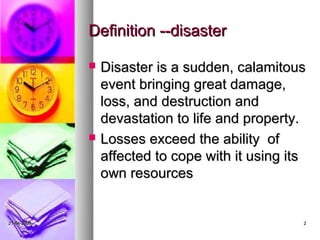
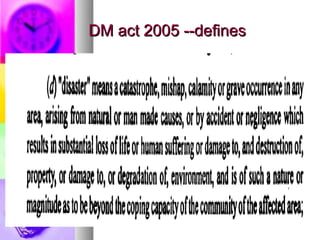
DM act 2005 --defines


21-04-2009                           3
Definitions—Disaster/
             emergency management
                As the discipline of dealing with
                 and avoiding risks (Wikipedia)
                Involves
                  Preparing   for disaster

                  Disaster   response

                  Supporting   and rebuilding post
                   disaster
21-04-2009                                            4
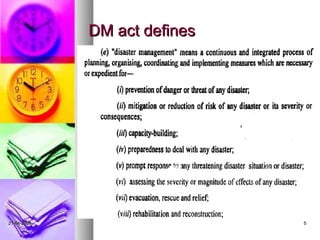
DM act defines


21-04-2009                    5
Disaster management

                Is a continuous process
                Managed at all levels— interlinked
                  Individual

                  Groups

                  Communities

                Actions based on risk perception
                Integration of plans – government/
                 private
21-04-2009                                       6
Disaster management

                Commonly responsibility with
                 government
                Replaced civil defense activities
                Emphasis more on prevention
                  Calleddisaster risk reduction
                  Focus on preparedness, mitigation

                Covers both war and peace times

21-04-2009                                             7
Disaster management

                In India
                   Apex body- NDMA
                  EMRI – improve community
                   preparedness
                  DM Act 2005

                  UNDP funded disaster risk
                   management programme
                  National disaster management
                   framework
21-04-2009                                        8
Role of Ministry of Railways

                Part of nodal agency
                  Manage   all disasters

                Creation and capacity building
                 of state level agencies

                Training and capacity building of
                 railway officers and staff
21-04-2009                                        9
Characteristics of disaster

                Unpredictability
                Unfamiliarity
                Speed
                Urgency
                Uncertainty
                Threat


21-04-2009                                 10
Types of disasters
                  Major natural        Minor natural disasters:
                      disasters:             • Cold wave
                    •      Flood          • Thunderstorms
                  •     Cyclone            • Heat waves
                  •     Drought             • Mud slides
                •     Earthquake               • Storm
                 Major manmade         Minor manmade disaster:
                      disaster:         • Road / train accidents,
               1. Setting of fires                  riots
                  2. Epidemic             • Food poisoning
                3. Deforestation       • Industrial disaster/ crisis
               4. Pollution due to     • Environmental pollution
                   prawn cultivation
                                                     
             5. Chemical pollution.                   
                    6. Wars                           
21-04-2009                                                         11
Associated terms
                Risk:
                    Risk is a measure of the expected losses due to a
                     hazardous event . The level of risk depends on:
                         Nature of the Hazard
                         Vulnerability of the elements which are affected
                         Economic value of those elements
                Vulnerability:
                    Predisposition of a community, structure, service,
                     and/or geographic area to damage on account of their
                     nature, construction and proximity to hazardous
                     terrain or a disaster prone area”

                Hazards:
                    “Phenomena that pose a threat to people, structures,
                     or economic assets and which may cause a disaster.


21-04-2009                                                                   12
Disaster risk management
             programme
                Goal
                  “Sustainable Reduction in
                   Natural Disaster Risk”
                Objectives
                  Awareness

                  capacity building at all levels
                  Preparedness

                  Creation of knowledge


21-04-2009                                           13
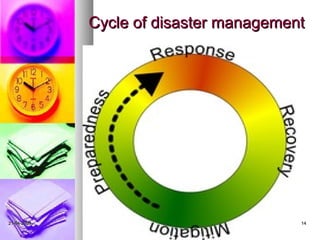
Cycle of disaster management


21-04-2009                              14
Terminology
                Mitigation
                  Prevention   of hazards developing
                   into disasters
                  Reduce effects of disasters
                  Focuses on long term measures
                  Is part of recovery process
                  Actions
                     structural – use technology
                     Non structural –legislation

                  Mostcost effective
                  Necessitates identification of risk
21-04-2009                                               15
Terminology


                Preparedness
                  Prepare   action plans
                    Communication plans
                    Emergency response teams
                    Emergency warning methods
                    Shelters, evacuation plans
                    Resources inventory building
                    Develop trained volunteers
                    Casualty prediction- helps in
                     evacuation

21-04-2009                                           16
Terminology

                Response
                  Mobilization   of
                      Emergency teams
                         Core emergency services
                         Specialist teams

                    First responders in area
                    Search and rescue efforts

                  Runs   on
                    principle of unified command
                    Mutual aid

                  Immediate     needs are addressed
21-04-2009                                             17
Terminology

                Recovery
                  Restore   affected area to previous
                   state
                  Rebuild , employ and repair

                  “window of opportunity” for
                   implementing harsh measures of
                   mitigation


21-04-2009                                               18
Golden hour

                Critical for saving lives of
                 trauma and shock affected
                 people
                Begins from occurrence of
                 disaster
                Arrange for rescue and giving
                 life saving measures
                  Stoppageof bleeding
                  Shock management
21-04-2009                                       19
Management of Golden hour

                Require integrated plan
                   with state disaster management
                   units
                  Trained rescue teams

                  Access to tools and equipment at
                   site
                  Swift evacuation measures


21-04-2009                                            20
Management of disasters
                Implementation of disaster
                 management plan
                  Single  command team at control
                   centre- planning, monitoring,
                   resource mobilization, liaison
                  At site team- rescue and
                   evacuation, flow of information,
                   recovery at site
                  Management of communication-
                   separate teams at site and control,
                   flow of reliable, verified information
21-04-2009
                   to public at large                  21
THANK YOU


21-04-2009               22

disaster management by tirth sodagar xc

  • 1.
    Disaster management B.V.L.Narayana / SPTM 21-04-2009 1
  • 2.
    Definition --disaster  Disaster is a sudden, calamitous event bringing great damage, loss, and destruction and devastation to life and property.  Losses exceed the ability of affected to cope with it using its own resources 21-04-2009 2
  • 3.
    DM act 2005--defines 21-04-2009 3
  • 4.
    Definitions—Disaster/ emergency management  As the discipline of dealing with and avoiding risks (Wikipedia)  Involves  Preparing for disaster  Disaster response  Supporting and rebuilding post disaster 21-04-2009 4
  • 5.
  • 6.
    Disaster management  Is a continuous process  Managed at all levels— interlinked  Individual  Groups  Communities  Actions based on risk perception  Integration of plans – government/ private 21-04-2009 6
  • 7.
    Disaster management  Commonly responsibility with government  Replaced civil defense activities  Emphasis more on prevention  Calleddisaster risk reduction  Focus on preparedness, mitigation  Covers both war and peace times 21-04-2009 7
  • 8.
    Disaster management  In India  Apex body- NDMA  EMRI – improve community preparedness  DM Act 2005  UNDP funded disaster risk management programme  National disaster management framework 21-04-2009 8
  • 9.
    Role of Ministryof Railways  Part of nodal agency  Manage all disasters  Creation and capacity building of state level agencies  Training and capacity building of railway officers and staff 21-04-2009 9
  • 10.
    Characteristics of disaster  Unpredictability  Unfamiliarity  Speed  Urgency  Uncertainty  Threat 21-04-2009 10
  • 11.
    Types of disasters Major natural Minor natural disasters: disasters: • Cold wave •   Flood • Thunderstorms • Cyclone • Heat waves • Drought • Mud slides • Earthquake • Storm Major manmade Minor manmade disaster: disaster: • Road / train accidents, 1. Setting of fires riots 2. Epidemic • Food poisoning 3. Deforestation • Industrial disaster/ crisis 4. Pollution due to • Environmental pollution prawn cultivation   5. Chemical pollution.   6. Wars   21-04-2009     11
  • 12.
    Associated terms  Risk:  Risk is a measure of the expected losses due to a hazardous event . The level of risk depends on:  Nature of the Hazard  Vulnerability of the elements which are affected  Economic value of those elements  Vulnerability:  Predisposition of a community, structure, service, and/or geographic area to damage on account of their nature, construction and proximity to hazardous terrain or a disaster prone area”  Hazards:  “Phenomena that pose a threat to people, structures, or economic assets and which may cause a disaster. 21-04-2009 12
  • 13.
    Disaster risk management programme  Goal  “Sustainable Reduction in Natural Disaster Risk”  Objectives  Awareness  capacity building at all levels  Preparedness  Creation of knowledge 21-04-2009 13
  • 14.
    Cycle of disastermanagement 21-04-2009 14
  • 15.
    Terminology  Mitigation  Prevention of hazards developing into disasters  Reduce effects of disasters  Focuses on long term measures  Is part of recovery process  Actions  structural – use technology  Non structural –legislation  Mostcost effective  Necessitates identification of risk 21-04-2009 15
  • 16.
    Terminology  Preparedness  Prepare action plans  Communication plans  Emergency response teams  Emergency warning methods  Shelters, evacuation plans  Resources inventory building  Develop trained volunteers  Casualty prediction- helps in evacuation 21-04-2009 16
  • 17.
    Terminology  Response  Mobilization of  Emergency teams  Core emergency services  Specialist teams  First responders in area  Search and rescue efforts  Runs on  principle of unified command  Mutual aid  Immediate needs are addressed 21-04-2009 17
  • 18.
    Terminology  Recovery  Restore affected area to previous state  Rebuild , employ and repair  “window of opportunity” for implementing harsh measures of mitigation 21-04-2009 18
  • 19.
    Golden hour  Critical for saving lives of trauma and shock affected people  Begins from occurrence of disaster  Arrange for rescue and giving life saving measures  Stoppageof bleeding  Shock management 21-04-2009 19
  • 20.
    Management of Goldenhour  Require integrated plan  with state disaster management units  Trained rescue teams  Access to tools and equipment at site  Swift evacuation measures 21-04-2009 20
  • 21.
    Management of disasters  Implementation of disaster management plan  Single command team at control centre- planning, monitoring, resource mobilization, liaison  At site team- rescue and evacuation, flow of information, recovery at site  Management of communication- separate teams at site and control, flow of reliable, verified information 21-04-2009 to public at large 21
  • 22.