People with disabilities
by Pilar Rejano, Carmen Gragero,
Clara Lorenzo and Javier Herráiz
Disability over time.
Employment and education.
1.-Society: Segregated and, often, rejected in the past.

2.- Employment: LISMI (law for the Social Integration of
Handicapped People).
3.-Education: People are working on laws against
discrimination and encourage inclusion.
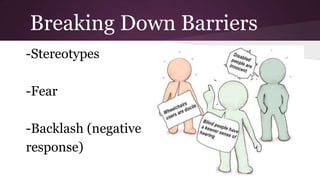
Breaking Down Barriers
-Stereotypes
-Fear
-Backlash (negative
response)
Etiquette: What can we do to interact
with disabled people?
-Listen to the person with the disability.
-Extend common courtesies.

-If you don’t understand what that person is saying, ask
him/her to repeat.
-Think the word “person” instead of “disability”.
Associations
I. What is CERMI?
- Objectives and functions
- Who forms CERMI?
- Associations supported
- Procedures
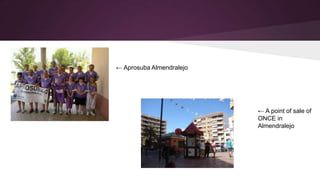
← Aprosuba Almendralejo

← A point of sale of
ONCE in
Almendralejo
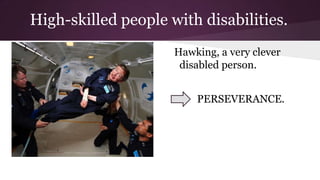
High-skilled people with disabilities.
Stephen Hawking, a very clever

Hawking, a very clever
disabled person.
PERSEVERANCE.
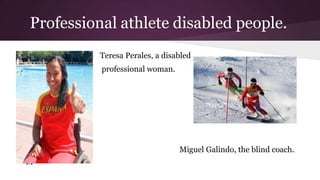
Professional athlete disabled people.
Teresa Perales, a disabled
professional woman.

Miguel Galindo, the blind coach.
M
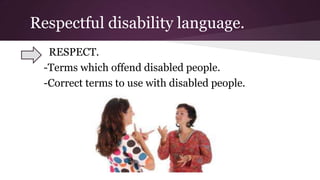
Respectful disability language.
RESPECT.
-Terms which offend disabled people.
-Correct terms to use with disabled people.
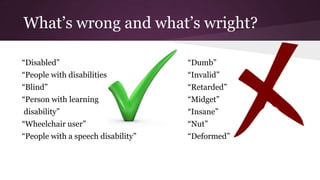
What’s wrong and what’s wright?
“Disabled”

“Dumb”

“People with disabilities”

“Invalid”

“Blind”

“Retarded”

“Person with learning

“Midget”

disability”

“Insane”

“Wheelchair user”

“Nut”

“People with a speech disability”

“Deformed”

Disability in spain

  • 1.
    People with disabilities byPilar Rejano, Carmen Gragero, Clara Lorenzo and Javier Herráiz
  • 2.
    Disability over time. Employmentand education. 1.-Society: Segregated and, often, rejected in the past. 2.- Employment: LISMI (law for the Social Integration of Handicapped People). 3.-Education: People are working on laws against discrimination and encourage inclusion.
  • 3.
  • 4.
    Etiquette: What canwe do to interact with disabled people? -Listen to the person with the disability. -Extend common courtesies. -If you don’t understand what that person is saying, ask him/her to repeat. -Think the word “person” instead of “disability”.
  • 5.
    Associations I. What isCERMI? - Objectives and functions - Who forms CERMI? - Associations supported - Procedures
  • 6.
    ← Aprosuba Almendralejo ←A point of sale of ONCE in Almendralejo
  • 7.
    High-skilled people withdisabilities. Stephen Hawking, a very clever Hawking, a very clever disabled person. PERSEVERANCE.
  • 8.
    Professional athlete disabledpeople. Teresa Perales, a disabled professional woman. Miguel Galindo, the blind coach. M
  • 9.
    Respectful disability language. RESPECT. -Termswhich offend disabled people. -Correct terms to use with disabled people.
  • 10.
    What’s wrong andwhat’s wright? “Disabled” “Dumb” “People with disabilities” “Invalid” “Blind” “Retarded” “Person with learning “Midget” disability” “Insane” “Wheelchair user” “Nut” “People with a speech disability” “Deformed”