Corporate Social
Responsibility and
People with Disabilities
Alireza Omidvar
Managing Director
Corporate Governance and Responsibility Development Centre of Iran
People with Disabilities (PWD)
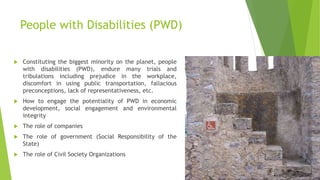
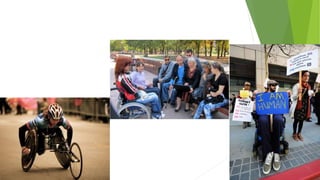
 Constituting the biggest minority on the planet, people
with disabilities (PWD), endure many trials and
tribulations including prejudice in the workplace,
discomfort in using public transportation, fallacious
preconceptions, lack of representativeness, etc.
 How to engage the potentiality of PWD in economic
development, social engagement and environmental
integrity
 The role of companies
 The role of government (Social Responsibility of the
State)
 The role of Civil Society Organizations
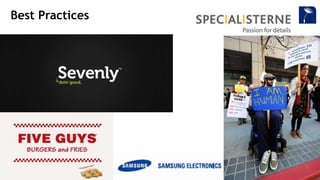
Best Practices
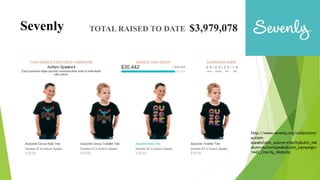
Sevenly
http://www.sevenly.org/collections/
autism-
speaks?utm_source=charity&utm_me
dium=AutismSpeaks&utm_campaign=
1443_Charity_Website
TOTAL RAISED TO DATE $3,979,078
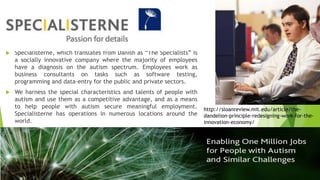
 Specialisterne, which translates from Danish as “The Specialists” is
a socially innovative company where the majority of employees
have a diagnosis on the autism spectrum. Employees work as
business consultants on tasks such as software testing,
programming and data-entry for the public and private sectors.
 We harness the special characteristics and talents of people with
autism and use them as a competitive advantage, and as a means
to help people with autism secure meaningful employment.
Specialisterne has operations in numerous locations around the
world.
http://sloanreview.mit.edu/article/the-
dandelion-principle-redesigning-work-for-the-
innovation-economy/
SAP
 The Dandelion Principle: Redesigning Work for the Innovation
 At its annual user conference in May 2013, German multinational
software giant SAP AG announced plans to hire hundreds of
people diagnosed with autism, with a target of having people
with autism represent 1% of the company’s work force by 2020.
 Like weeds in a green lawn, people who are “different” —
whether behaviorally or neurologically — don’t always fit into
standard job categories. But if you can arrange working
conditions to align with the abilities of such individuals, they
can add significant value.
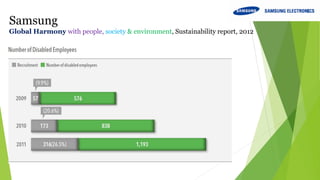
Samsung
Global Harmony with people, society & environment, Sustainability report, 2012
FIVE GUYS
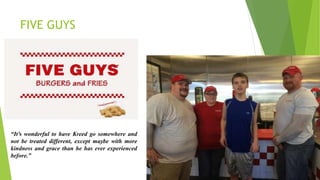
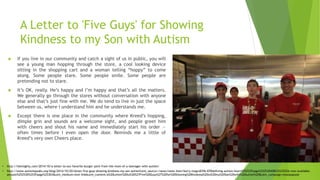
“It’s wonderful to have Kreed go somewhere and
not be treated different, except maybe with more
kindness and grace than he has ever experienced
before.”
A Letter to 'Five Guys' for Showing
Kindness to my Son with Autism
 If you live in our community and catch a sight of us in public, you will
see a young man hopping through the store, a cool looking device
sitting in the shopping cart and a woman telling “hoppy” to come
along. Some people stare. Some people smile. Some people are
pretending not to stare.
 It’s OK, really. He’s happy and I’m happy and that’s all the matters.
We generally go through the stores without conversation with anyone
else and that’s just fine with me. We do tend to live in just the space
between us, where I understand him and he understands me.
 Except there is one place in the community where Kreed’s hopping,
dimple grin and sounds are a welcome sight, and people greet him
with cheers and shout his name and immediately start his order —
often times before I even open the door. Reminds me a little of
Kreed’s very own Cheers place.
• http://www.autismspeaks.org/blog/2014/10/20/letter-five-guys-showing-kindness-my-son-autism?utm_source=/news/news-item/kerry-magro039s-039defining-autism-heart%25253Fpage%25253D408%25252526-now-available-
amazon%25253D%253Fpage%253D3&utm_medium=text-link&utm_content=A%20Letter%20to%20%27Five%20Guys%27%20for%20Showing%20Kindness%20to%20my%20Son%20with%20Autism%20&utm_campaign=mostpopular
• http://themighty.com/2014/10/a-letter-to-our-favorite-burger-joint-from-the-mom-of-a-teenager-with-autism/
Forworded by Professor Stephen Hawking, Lucasian professor of
Mathematics at Cambridge University and world leading astrophysicist,
first World report on disability was released by WHO and World Bank to
follow up Convention on the Rights of Persons with Disabilities (adopted
2006 and implemented from May 2008) which was put forth to “promote,
protect and ensure the full and equal enjoyment of all human rights and
fundamental freedoms by all persons with disabilities, and to promote
respect for their inherent dignity”.
WHO and World Bank
WORLD REPORT ON DISABILITY 2011
In summary the report focuses on:
 Attitudinal, physical, and financial barriers that People with disabilities face.
 How to address them.
 Action at the local, national and international levels.
Findings:
 1 Billion people (15% of the world population based on 2010 global population
estimates) in the world live with some form of disability, of whom nearly 200
million, between 110-190 million, experience considerable difficulties in
functioning. In the 1970s, this figure was around 10%.
 In OECD countries, employment rate for people with disabilities is 44% while
this figure is over 75% for the people without disabilities.
WHO and World Bank
WORLD REPORT ON DISABILITY 2011
Findings:
 The number of people with disabilities is growing. This is because populations are ageing –
older people have a higher risk of disability – and because of the global increase in chronic
health conditions associated with disability, such as diabetes, cardiovascular diseases, and
mental illness.
 Disability disproportionately affects vulnerable populations. Results from the World Health
Survey indicate a higher disability prevalence in lower income countries than in higher income
countries.
 Stereotypical views of disability emphasize wheelchair users and a few other “classic” groups
such as blind people and deaf people and not other types of disabilities.
 Children with disabilities are less likely to attend school than non-disabled children.
 People with disabilities experience increased dependency and restricted participation in their
societies. Even in high-income countries, 20-40% of people with disabilities lack the help they
require to engage in everyday activities. In the United States of America, 70% of adults with
disabilities rely on family and friends for assistance with daily activities.
WHO and World Bank
WORLD REPORT ON DISABILITY 2011
Disabling barriers:
 Inadequate policies and standards
 Negative attitudes
 Lack of provision of services
 Problems with service delivery
 Inadequate funding
 Lack of accessibility
 Lack of consultation and involvement
 Lack of data and evidence
WHO and World Bank
WORLD REPORT ON DISABILITY 2011
Recommendations:
 Enable access to all mainstream systems and services
 Invest in programmes and services for people with disabilities
 Adopt a national disability strategy and a plan of action
 Involve people with disabilities
 Improve human resource capacity
 Provide adequate funding and improve affordability
 Increase public awareness and understanding about disability
 Improve the availability and quality of data on disability
 Strengthen and support research on disability.
WHO and World Bank
WORLD REPORT ON DISABILITY 2011
Corporate Social Responsibility and People with Disabilities

Corporate Social Responsibility and People with Disabilities

  • 1.
    Corporate Social Responsibility and Peoplewith Disabilities Alireza Omidvar Managing Director Corporate Governance and Responsibility Development Centre of Iran
  • 2.
    People with Disabilities(PWD)  Constituting the biggest minority on the planet, people with disabilities (PWD), endure many trials and tribulations including prejudice in the workplace, discomfort in using public transportation, fallacious preconceptions, lack of representativeness, etc.  How to engage the potentiality of PWD in economic development, social engagement and environmental integrity  The role of companies  The role of government (Social Responsibility of the State)  The role of Civil Society Organizations
  • 3.
  • 4.
  • 5.
     Specialisterne, whichtranslates from Danish as “The Specialists” is a socially innovative company where the majority of employees have a diagnosis on the autism spectrum. Employees work as business consultants on tasks such as software testing, programming and data-entry for the public and private sectors.  We harness the special characteristics and talents of people with autism and use them as a competitive advantage, and as a means to help people with autism secure meaningful employment. Specialisterne has operations in numerous locations around the world. http://sloanreview.mit.edu/article/the- dandelion-principle-redesigning-work-for-the- innovation-economy/
  • 6.
    SAP  The DandelionPrinciple: Redesigning Work for the Innovation  At its annual user conference in May 2013, German multinational software giant SAP AG announced plans to hire hundreds of people diagnosed with autism, with a target of having people with autism represent 1% of the company’s work force by 2020.  Like weeds in a green lawn, people who are “different” — whether behaviorally or neurologically — don’t always fit into standard job categories. But if you can arrange working conditions to align with the abilities of such individuals, they can add significant value.
  • 7.
    Samsung Global Harmony withpeople, society & environment, Sustainability report, 2012
  • 8.
    FIVE GUYS “It’s wonderfulto have Kreed go somewhere and not be treated different, except maybe with more kindness and grace than he has ever experienced before.”
  • 9.
    A Letter to'Five Guys' for Showing Kindness to my Son with Autism  If you live in our community and catch a sight of us in public, you will see a young man hopping through the store, a cool looking device sitting in the shopping cart and a woman telling “hoppy” to come along. Some people stare. Some people smile. Some people are pretending not to stare.  It’s OK, really. He’s happy and I’m happy and that’s all the matters. We generally go through the stores without conversation with anyone else and that’s just fine with me. We do tend to live in just the space between us, where I understand him and he understands me.  Except there is one place in the community where Kreed’s hopping, dimple grin and sounds are a welcome sight, and people greet him with cheers and shout his name and immediately start his order — often times before I even open the door. Reminds me a little of Kreed’s very own Cheers place. • http://www.autismspeaks.org/blog/2014/10/20/letter-five-guys-showing-kindness-my-son-autism?utm_source=/news/news-item/kerry-magro039s-039defining-autism-heart%25253Fpage%25253D408%25252526-now-available- amazon%25253D%253Fpage%253D3&utm_medium=text-link&utm_content=A%20Letter%20to%20%27Five%20Guys%27%20for%20Showing%20Kindness%20to%20my%20Son%20with%20Autism%20&utm_campaign=mostpopular • http://themighty.com/2014/10/a-letter-to-our-favorite-burger-joint-from-the-mom-of-a-teenager-with-autism/
  • 10.
    Forworded by ProfessorStephen Hawking, Lucasian professor of Mathematics at Cambridge University and world leading astrophysicist, first World report on disability was released by WHO and World Bank to follow up Convention on the Rights of Persons with Disabilities (adopted 2006 and implemented from May 2008) which was put forth to “promote, protect and ensure the full and equal enjoyment of all human rights and fundamental freedoms by all persons with disabilities, and to promote respect for their inherent dignity”. WHO and World Bank WORLD REPORT ON DISABILITY 2011
  • 11.
    In summary thereport focuses on:  Attitudinal, physical, and financial barriers that People with disabilities face.  How to address them.  Action at the local, national and international levels. Findings:  1 Billion people (15% of the world population based on 2010 global population estimates) in the world live with some form of disability, of whom nearly 200 million, between 110-190 million, experience considerable difficulties in functioning. In the 1970s, this figure was around 10%.  In OECD countries, employment rate for people with disabilities is 44% while this figure is over 75% for the people without disabilities. WHO and World Bank WORLD REPORT ON DISABILITY 2011
  • 12.
    Findings:  The numberof people with disabilities is growing. This is because populations are ageing – older people have a higher risk of disability – and because of the global increase in chronic health conditions associated with disability, such as diabetes, cardiovascular diseases, and mental illness.  Disability disproportionately affects vulnerable populations. Results from the World Health Survey indicate a higher disability prevalence in lower income countries than in higher income countries.  Stereotypical views of disability emphasize wheelchair users and a few other “classic” groups such as blind people and deaf people and not other types of disabilities.  Children with disabilities are less likely to attend school than non-disabled children.  People with disabilities experience increased dependency and restricted participation in their societies. Even in high-income countries, 20-40% of people with disabilities lack the help they require to engage in everyday activities. In the United States of America, 70% of adults with disabilities rely on family and friends for assistance with daily activities. WHO and World Bank WORLD REPORT ON DISABILITY 2011
  • 13.
    Disabling barriers:  Inadequatepolicies and standards  Negative attitudes  Lack of provision of services  Problems with service delivery  Inadequate funding  Lack of accessibility  Lack of consultation and involvement  Lack of data and evidence WHO and World Bank WORLD REPORT ON DISABILITY 2011
  • 14.
    Recommendations:  Enable accessto all mainstream systems and services  Invest in programmes and services for people with disabilities  Adopt a national disability strategy and a plan of action  Involve people with disabilities  Improve human resource capacity  Provide adequate funding and improve affordability  Increase public awareness and understanding about disability  Improve the availability and quality of data on disability  Strengthen and support research on disability. WHO and World Bank WORLD REPORT ON DISABILITY 2011