Professional Skills Training I
SINDUJA B
AP / English
KEC
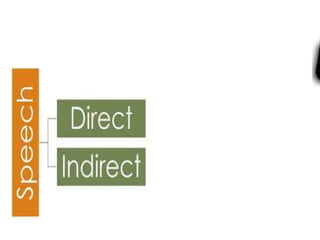
What is Direct & Indirect Speech?
Direct Speech: the message of the speaker is conveyed
or reported in his own actual words without any
change.
Indirect Speech: the message of the speaker is
conveyed or reported in our own words.
verbs
Do / does become did
Rule 1
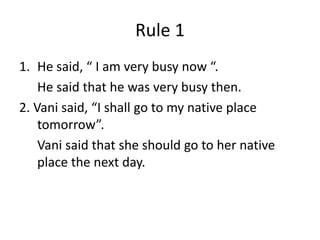
1. He said, “ I am very busy now “.
He said that he was very busy then.
2. Vani said, “I shall go to my native place
tomorrow”.
Vani said that she should go to her native
place the next day.
1. Rajan said to his friend, “ “I have passed the examination”
Rajan told his friend that he had passed the examination.
2. The announcer said, “ The Cheran express is late by two
hours.”
The announcer said that the Cheran express was late by two
hours”.
3. The director said, “ The company has not been able to achieve
its production target this year.”
The director said that the company had not been able to
achieve its production target that year.”
Remove , & “” “”
Said to - told
Rule 2 A Said to  asked…if
/whether+S+V+…
Rule 2 B Said to ----> asked ..wh+S+V…
Rule 3
1. The master said to the servant, “get out.”
The master ordered the servant to get out.
2. The teacher said to the students, “work hard”
The teacher advised the students to work
hard.
3. The king said to his men, “ shoot”
The king commanded his men to shoot.
Imperative
“V+___” = to + V
Rule 4
1. She said to her mother, “ please give me
some money today”
She requested her mother to give her some
money that day”
2.
3.
“please + V +___”-
requested… to + V
Rule 5
https://www.edudose.com/english/direct-and-
indirect-speech-rules/
https://scoop.eduncle.com/direct-indirect-
speech-rules-example
REMEMBER: With reported speech, the pattern
is the following:
1. simple present becomes simple past
2. future tenses becomes conditional
3. present continuous becomes past
continuous
4. present perfect becomes past perfect
5. commands (ex. come!)
become infinitive (ex. to come)
1. She said, “I am taking lessons in music”
She said that she had been taking lessons in music
She said that she was taking lessons in music
She said that she is taking lessons in music
She says that she is taking lessons in music
Correct Ans:She said that she was taking lessons in music
2. His father said that it was time he visited his
uncle.
lt was time you visited your uncle’, said his father.
It is time you visited my uncle', said his father.
It is time you visit your uncle', said his father.
lt is time you visited your uncle', said his father.
Correct Ans:‘lt is time you visited your uncle',said his father.
3. “Leave your keys on the desk, please,” the
receptionist told us.
The receptionist commanded us to leave the keys on the desk
The receptionist demanded that our keys should be left on the desk
The receptionist told us that the keys should be kept on the desk
The receptionist requested us to leave the keys on the desk
Correct Ans:The receptionist requested us to leave the keys on the desk
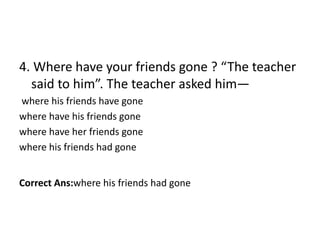
4. Where have your friends gone ? “The teacher
said to him”. The teacher asked him—
where his friends have gone
where have his friends gone
where have her friends gone
where his friends had gone
Correct Ans:where his friends had gone
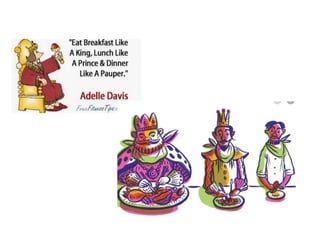
Today’s vocabulary & idiom
Eat like a horse
Meaning- Someone who eats a lot regularly.
E.g. Rohit is thin as a stick yet he eats like a horse.
Eat like a bird
Meaning- This means the opposite of ‘eat like a
horse’. It refers to someone who eats very less.
E.g. Pooja was very concerned about her figure so
she always ate like a bird.
Direct indirect
Direct indirect

Direct indirect

  • 1.
    Professional Skills TrainingI SINDUJA B AP / English KEC
  • 3.
    What is Direct& Indirect Speech? Direct Speech: the message of the speaker is conveyed or reported in his own actual words without any change. Indirect Speech: the message of the speaker is conveyed or reported in our own words.
  • 6.
    verbs Do / doesbecome did
  • 8.
    Rule 1 1. Hesaid, “ I am very busy now “. He said that he was very busy then. 2. Vani said, “I shall go to my native place tomorrow”. Vani said that she should go to her native place the next day.
  • 9.
    1. Rajan saidto his friend, “ “I have passed the examination” Rajan told his friend that he had passed the examination. 2. The announcer said, “ The Cheran express is late by two hours.” The announcer said that the Cheran express was late by two hours”. 3. The director said, “ The company has not been able to achieve its production target this year.” The director said that the company had not been able to achieve its production target that year.” Remove , & “” “” Said to - told
  • 10.
    Rule 2 ASaid to  asked…if /whether+S+V+…
  • 11.
    Rule 2 BSaid to ----> asked ..wh+S+V…
  • 12.
    Rule 3 1. Themaster said to the servant, “get out.” The master ordered the servant to get out. 2. The teacher said to the students, “work hard” The teacher advised the students to work hard. 3. The king said to his men, “ shoot” The king commanded his men to shoot. Imperative “V+___” = to + V
  • 13.
    Rule 4 1. Shesaid to her mother, “ please give me some money today” She requested her mother to give her some money that day” 2. 3. “please + V +___”- requested… to + V
  • 14.
  • 15.
  • 16.
    REMEMBER: With reportedspeech, the pattern is the following: 1. simple present becomes simple past 2. future tenses becomes conditional 3. present continuous becomes past continuous 4. present perfect becomes past perfect 5. commands (ex. come!) become infinitive (ex. to come)
  • 17.
    1. She said,“I am taking lessons in music” She said that she had been taking lessons in music She said that she was taking lessons in music She said that she is taking lessons in music She says that she is taking lessons in music Correct Ans:She said that she was taking lessons in music
  • 18.
    2. His fathersaid that it was time he visited his uncle. lt was time you visited your uncle’, said his father. It is time you visited my uncle', said his father. It is time you visit your uncle', said his father. lt is time you visited your uncle', said his father. Correct Ans:‘lt is time you visited your uncle',said his father.
  • 19.
    3. “Leave yourkeys on the desk, please,” the receptionist told us. The receptionist commanded us to leave the keys on the desk The receptionist demanded that our keys should be left on the desk The receptionist told us that the keys should be kept on the desk The receptionist requested us to leave the keys on the desk Correct Ans:The receptionist requested us to leave the keys on the desk
  • 20.
    4. Where haveyour friends gone ? “The teacher said to him”. The teacher asked him— where his friends have gone where have his friends gone where have her friends gone where his friends had gone Correct Ans:where his friends had gone
  • 21.
    Today’s vocabulary &idiom Eat like a horse Meaning- Someone who eats a lot regularly. E.g. Rohit is thin as a stick yet he eats like a horse. Eat like a bird Meaning- This means the opposite of ‘eat like a horse’. It refers to someone who eats very less. E.g. Pooja was very concerned about her figure so she always ate like a bird.