Blueprint Approach


    Dilip Sadh
Contents
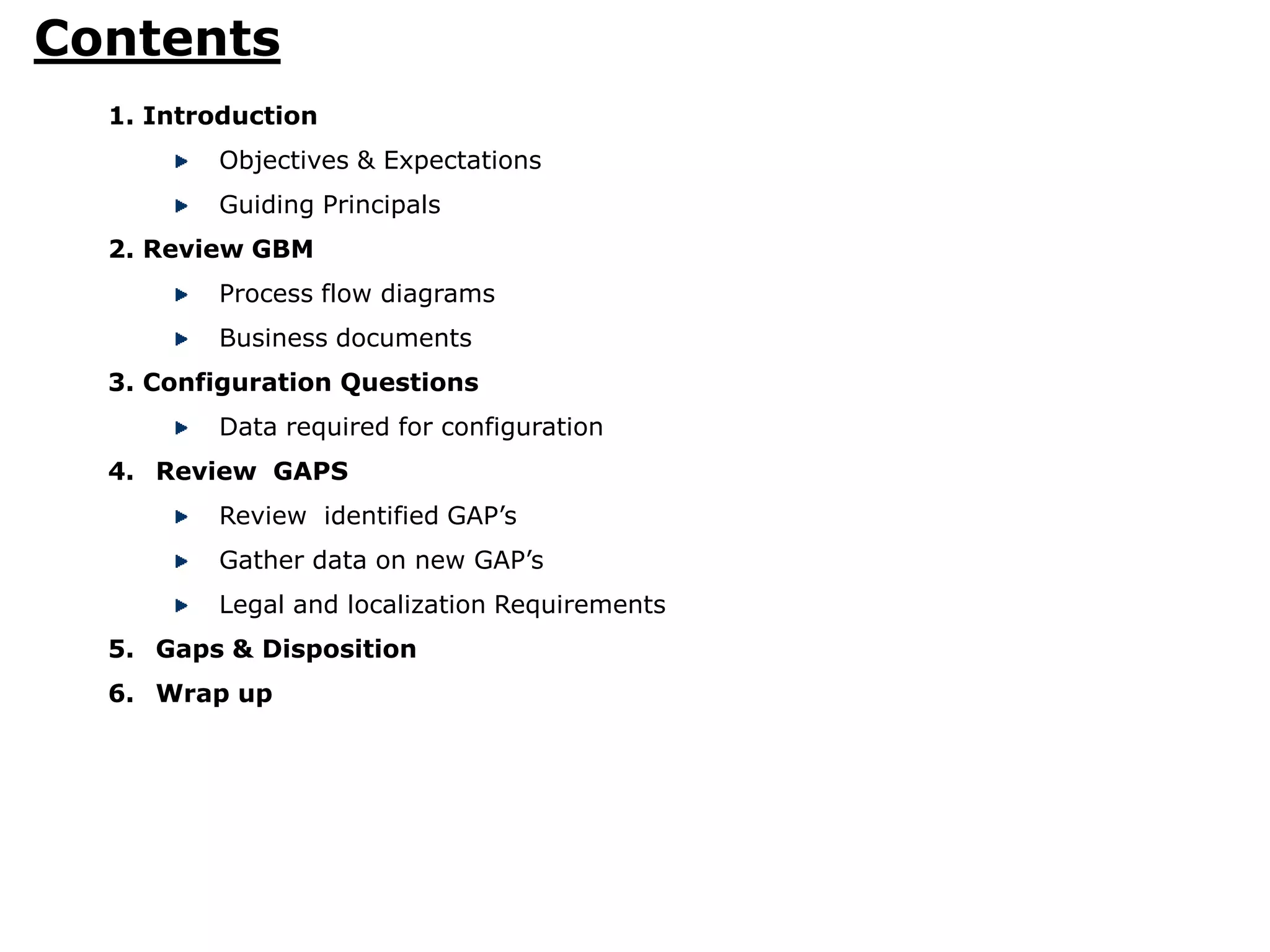
  1. Introduction
         Objectives & Expectations
         Guiding Principals
  2. Review GBM
         Process flow diagrams
         Business documents
  3. Configuration Questions
         Data required for configuration
  4. Review GAPS
         Review identified GAP’s
         Gather data on new GAP’s
         Legal and localization Requirements
  5. Gaps & Disposition
  6. Wrap up
Overall Approach
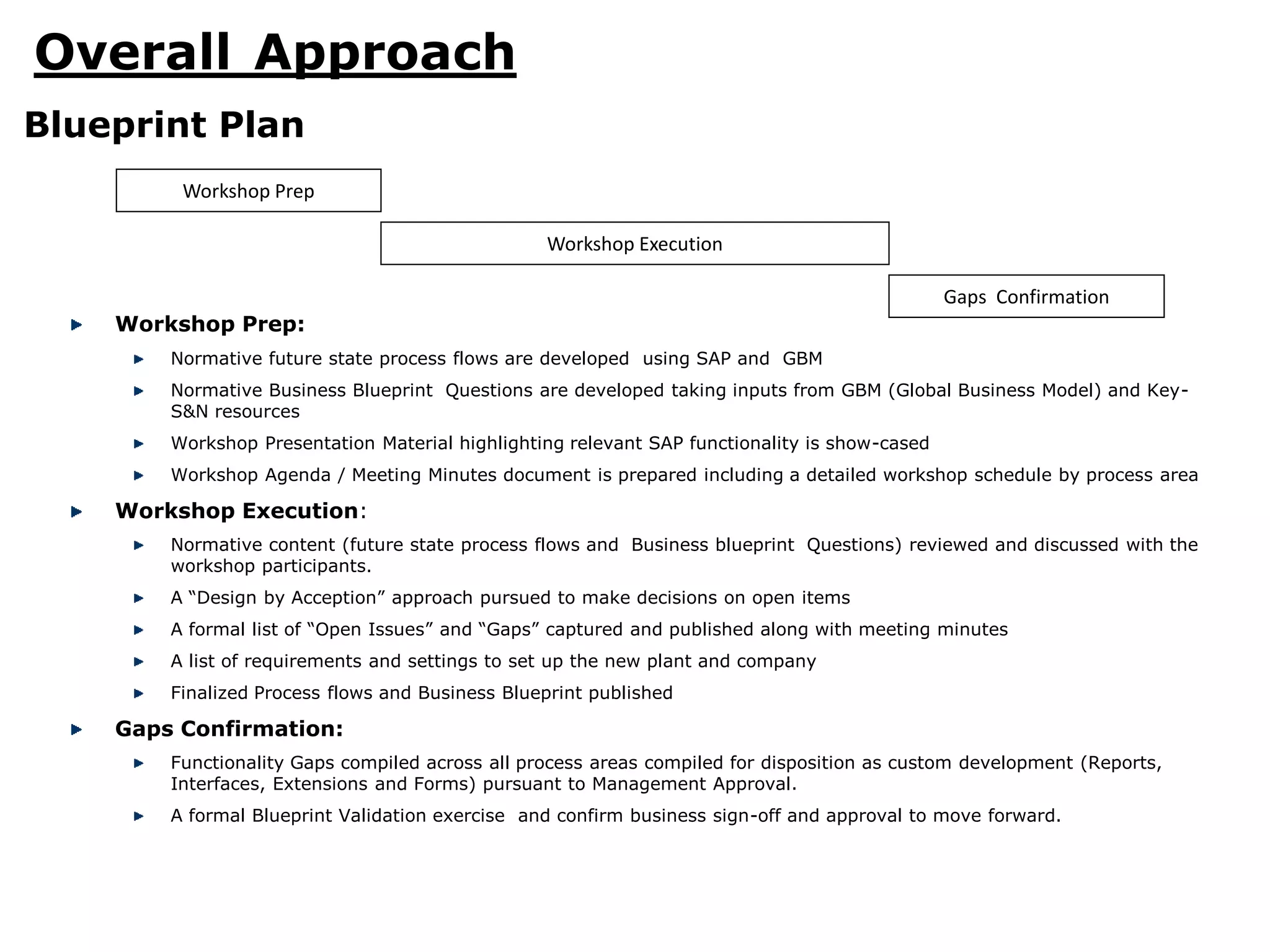
Blueprint Plan
         Workshop Prep

                                                 Workshop Execution

                                                                                               Gaps Confirmation
    Workshop Prep:
        Normative future state process flows are developed using SAP and GBM
        Normative Business Blueprint Questions are developed taking inputs from GBM (Global Business Model) and Key-
        S&N resources
        Workshop Presentation Material highlighting relevant SAP functionality is show-cased
        Workshop Agenda / Meeting Minutes document is prepared including a detailed workshop schedule by process area

    Workshop Execution:
        Normative content (future state process flows and Business blueprint Questions) reviewed and discussed with the
        workshop participants.
        A “Design by Acception” approach pursued to make decisions on open items
        A formal list of “Open Issues” and “Gaps” captured and published along with meeting minutes
        A list of requirements and settings to set up the new plant and company
        Finalized Process flows and Business Blueprint published

    Gaps Confirmation:
        Functionality Gaps compiled across all process areas compiled for disposition as custom development (Reports,
        Interfaces, Extensions and Forms) pursuant to Management Approval.
        A formal Blueprint Validation exercise and confirm business sign-off and approval to move forward.
Overall Approach
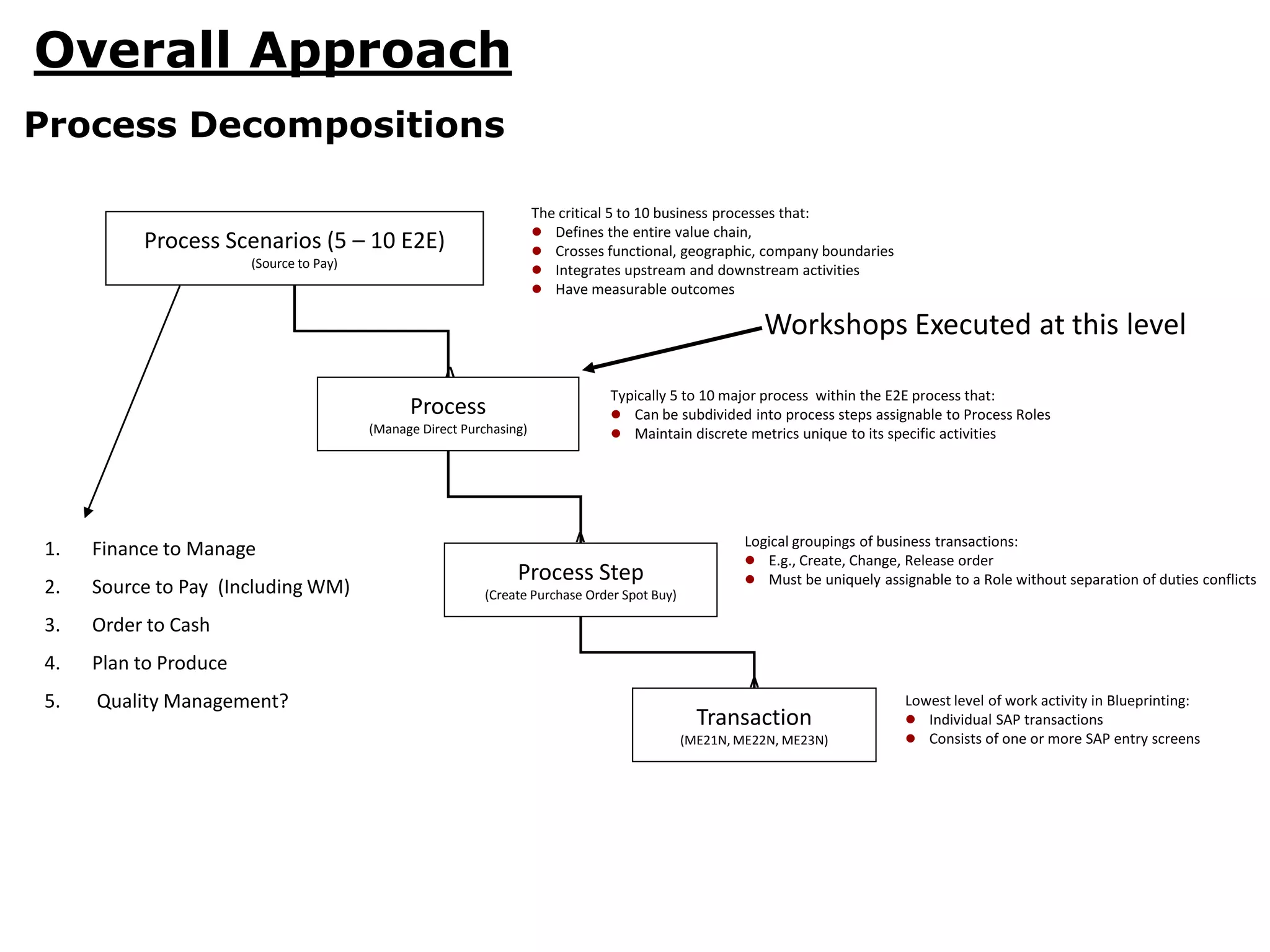
Process Decompositions

                                                                      The critical 5 to 10 business processes that:
                                                                       Defines the entire value chain,
          Process Scenarios (5 – 10 E2E)                               Crosses functional, geographic, company boundaries
                       (Source to Pay)
                                                                       Integrates upstream and downstream activities
                                                                       Have measurable outcomes

                                                                                                            Workshops Executed at this level
                                                     V

                                                                                 Typically 5 to 10 major process within the E2E process that:
                                               Process                            Can be subdivided into process steps assignable to Process Roles
                                         (Manage Direct Purchasing)               Maintain discrete metrics unique to its specific activities


                                                                            V
                                                                                                        Logical groupings of business transactions:
1.   Finance to Manage                                                                                   E.g., Create, Change, Release order
                                                                 Process Step                            Must be uniquely assignable to a Role without separation of duties conflicts
2.   Source to Pay (Including WM)                           (Create Purchase Order Spot Buy)

3.   Order to Cash
4.   Plan to Produce                                                                                    V
5.   Quality Management?                                                                                                        Lowest level of work activity in Blueprinting:
                                                                                                 Transaction                     Individual SAP transactions
                                                                                               (ME21N, ME22N, ME23N)             Consists of one or more SAP entry screens
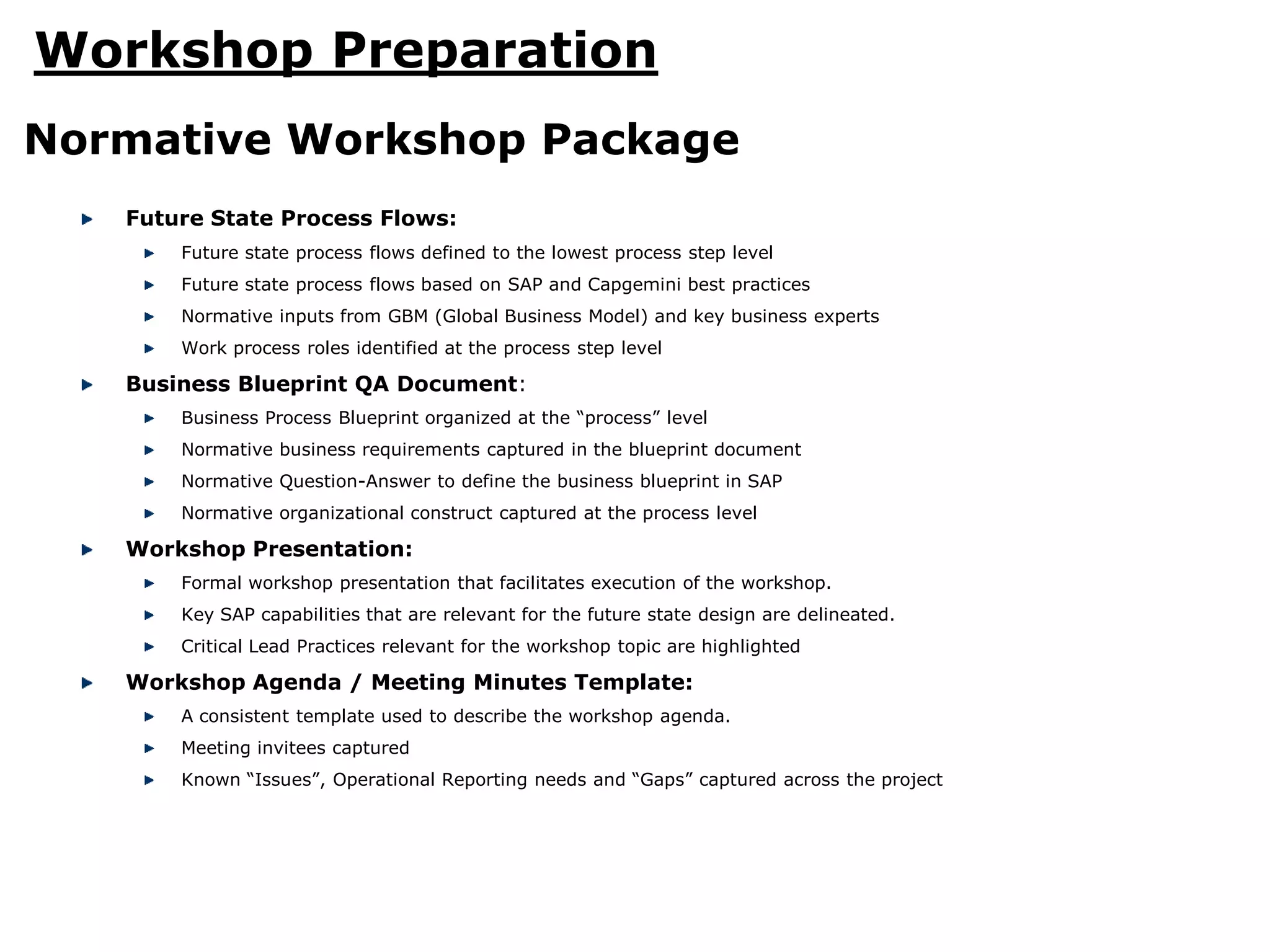
Workshop Preparation
Normative Workshop Package
   Future State Process Flows:
       Future state process flows defined to the lowest process step level
       Future state process flows based on SAP and Capgemini best practices
       Normative inputs from GBM (Global Business Model) and key business experts
       Work process roles identified at the process step level

   Business Blueprint QA Document:
       Business Process Blueprint organized at the “process” level
       Normative business requirements captured in the blueprint document
       Normative Question-Answer to define the business blueprint in SAP
       Normative organizational construct captured at the process level

   Workshop Presentation:
       Formal workshop presentation that facilitates execution of the workshop.
       Key SAP capabilities that are relevant for the future state design are delineated.
       Critical Lead Practices relevant for the workshop topic are highlighted

   Workshop Agenda / Meeting Minutes Template:
       A consistent template used to describe the workshop agenda.
       Meeting invitees captured
       Known “Issues”, Operational Reporting needs and “Gaps” captured across the project
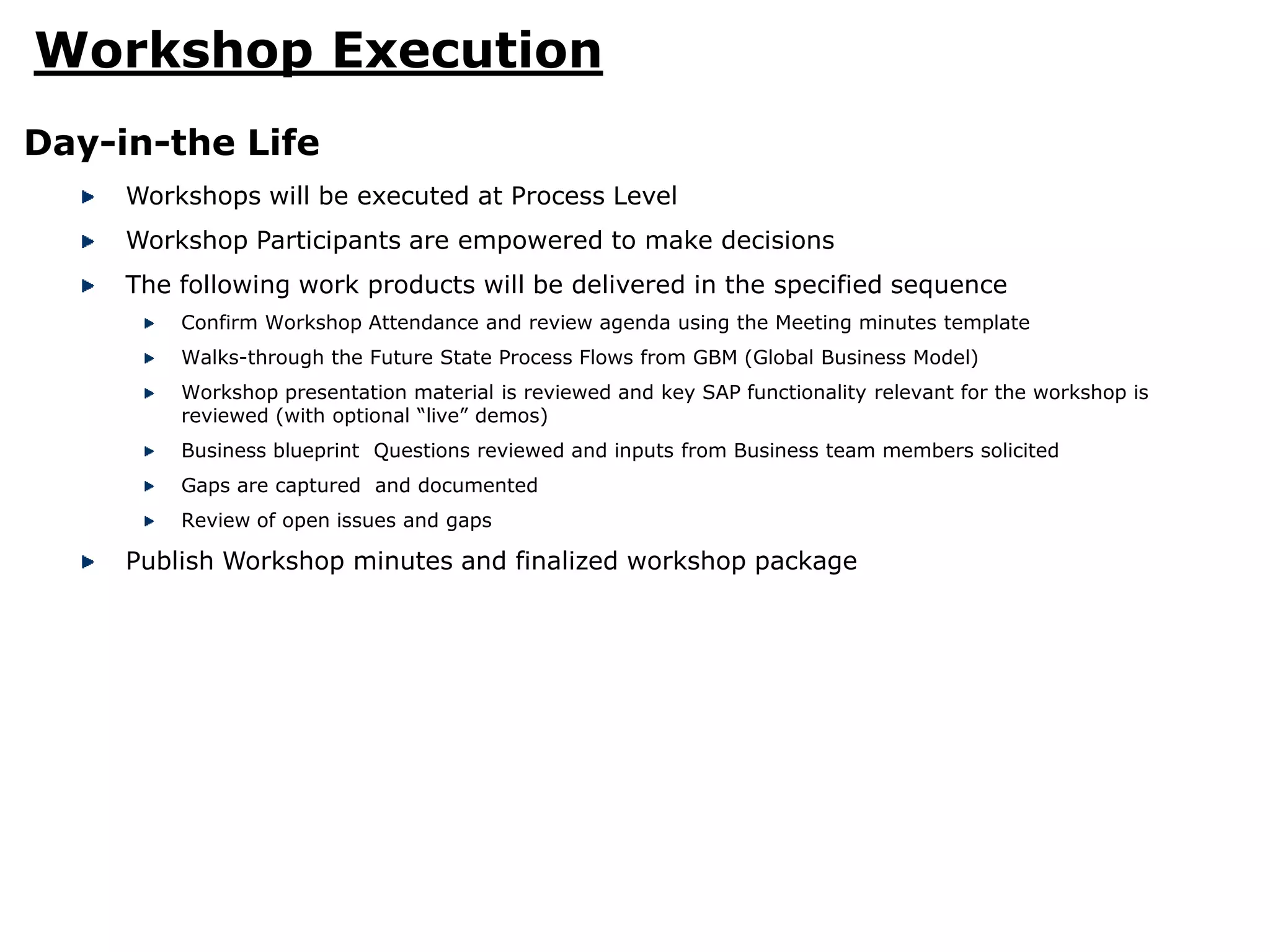
Workshop Execution
Day-in-the Life
     Workshops will be executed at Process Level
     Workshop Participants are empowered to make decisions
     The following work products will be delivered in the specified sequence
         Confirm Workshop Attendance and review agenda using the Meeting minutes template
         Walks-through the Future State Process Flows from GBM (Global Business Model)
         Workshop presentation material is reviewed and key SAP functionality relevant for the workshop is
         reviewed (with optional “live” demos)
         Business blueprint Questions reviewed and inputs from Business team members solicited
         Gaps are captured and documented
         Review of open issues and gaps

     Publish Workshop minutes and finalized workshop package
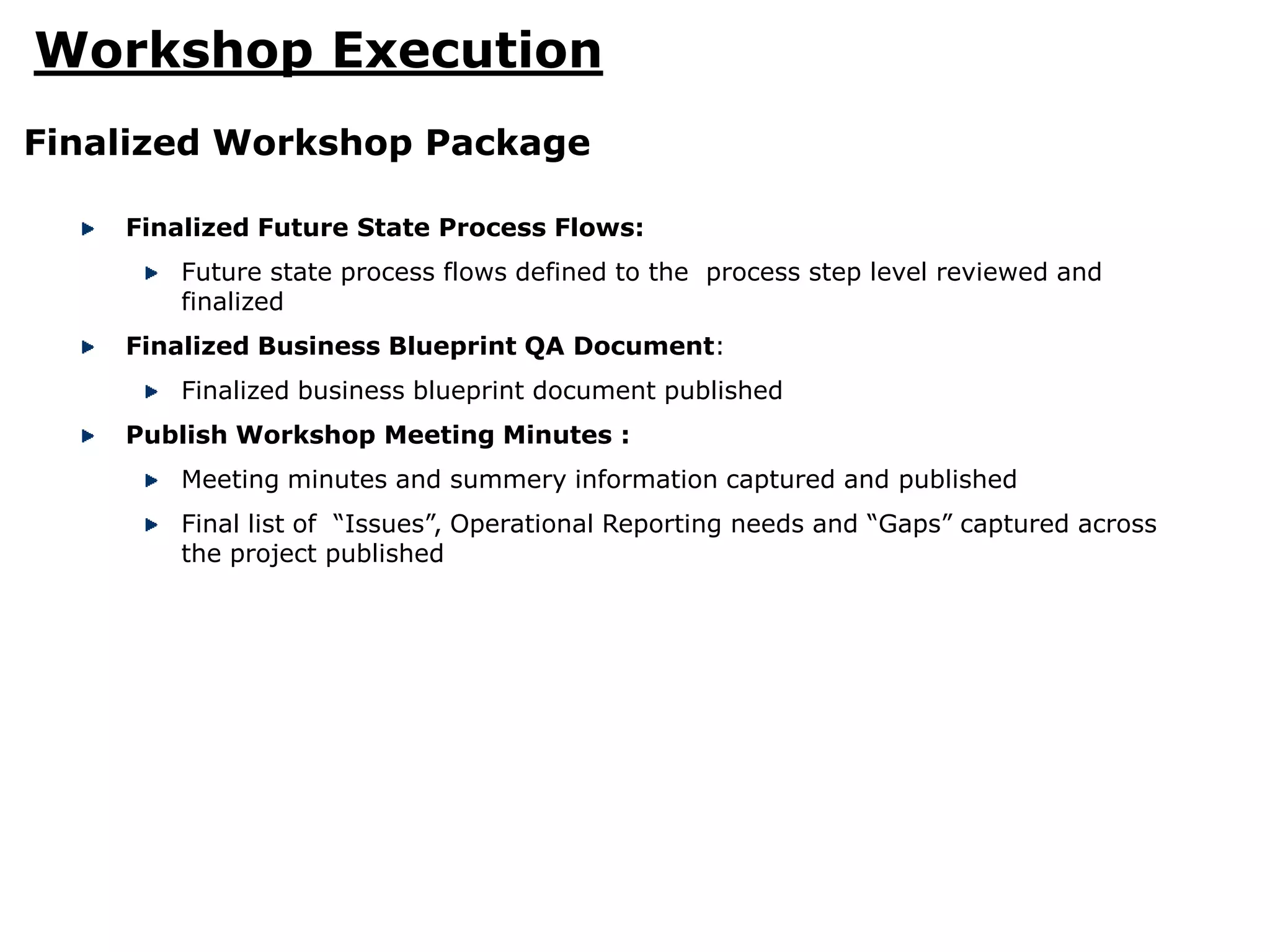
Workshop Execution
Finalized Workshop Package

    Finalized Future State Process Flows:
       Future state process flows defined to the process step level reviewed and
       finalized
    Finalized Business Blueprint QA Document:
       Finalized business blueprint document published
    Publish Workshop Meeting Minutes :
       Meeting minutes and summery information captured and published
       Final list of “Issues”, Operational Reporting needs and “Gaps” captured across
       the project published
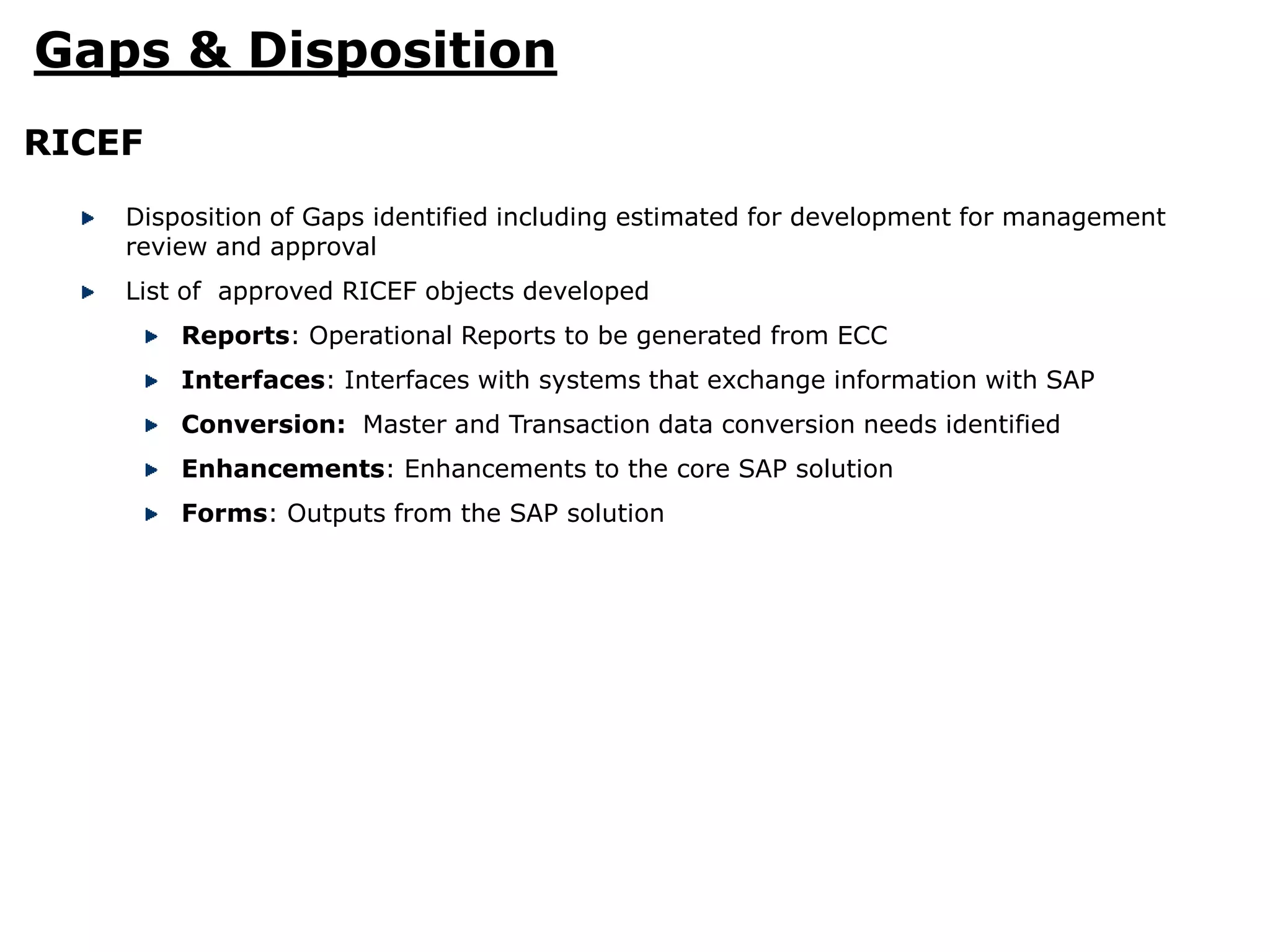
Gaps & Disposition
RICEF
    Disposition of Gaps identified including estimated for development for management
    review and approval
    List of approved RICEF objects developed
        Reports: Operational Reports to be generated from ECC
        Interfaces: Interfaces with systems that exchange information with SAP
        Conversion: Master and Transaction data conversion needs identified
        Enhancements: Enhancements to the core SAP solution
        Forms: Outputs from the SAP solution

Dilip sadh blueprint approach

  • 1.
  • 2.
    Contents 1.Introduction Objectives & Expectations Guiding Principals 2. Review GBM Process flow diagrams Business documents 3. Configuration Questions Data required for configuration 4. Review GAPS Review identified GAP’s Gather data on new GAP’s Legal and localization Requirements 5. Gaps & Disposition 6. Wrap up
  • 3.
    Overall Approach Blueprint Plan Workshop Prep Workshop Execution Gaps Confirmation Workshop Prep: Normative future state process flows are developed using SAP and GBM Normative Business Blueprint Questions are developed taking inputs from GBM (Global Business Model) and Key- S&N resources Workshop Presentation Material highlighting relevant SAP functionality is show-cased Workshop Agenda / Meeting Minutes document is prepared including a detailed workshop schedule by process area Workshop Execution: Normative content (future state process flows and Business blueprint Questions) reviewed and discussed with the workshop participants. A “Design by Acception” approach pursued to make decisions on open items A formal list of “Open Issues” and “Gaps” captured and published along with meeting minutes A list of requirements and settings to set up the new plant and company Finalized Process flows and Business Blueprint published Gaps Confirmation: Functionality Gaps compiled across all process areas compiled for disposition as custom development (Reports, Interfaces, Extensions and Forms) pursuant to Management Approval. A formal Blueprint Validation exercise and confirm business sign-off and approval to move forward.
  • 4.
    Overall Approach Process Decompositions The critical 5 to 10 business processes that:  Defines the entire value chain, Process Scenarios (5 – 10 E2E)  Crosses functional, geographic, company boundaries (Source to Pay)  Integrates upstream and downstream activities  Have measurable outcomes Workshops Executed at this level V Typically 5 to 10 major process within the E2E process that: Process  Can be subdivided into process steps assignable to Process Roles (Manage Direct Purchasing)  Maintain discrete metrics unique to its specific activities V Logical groupings of business transactions: 1. Finance to Manage  E.g., Create, Change, Release order Process Step  Must be uniquely assignable to a Role without separation of duties conflicts 2. Source to Pay (Including WM) (Create Purchase Order Spot Buy) 3. Order to Cash 4. Plan to Produce V 5. Quality Management? Lowest level of work activity in Blueprinting: Transaction  Individual SAP transactions (ME21N, ME22N, ME23N)  Consists of one or more SAP entry screens
  • 5.
    Workshop Preparation Normative WorkshopPackage Future State Process Flows: Future state process flows defined to the lowest process step level Future state process flows based on SAP and Capgemini best practices Normative inputs from GBM (Global Business Model) and key business experts Work process roles identified at the process step level Business Blueprint QA Document: Business Process Blueprint organized at the “process” level Normative business requirements captured in the blueprint document Normative Question-Answer to define the business blueprint in SAP Normative organizational construct captured at the process level Workshop Presentation: Formal workshop presentation that facilitates execution of the workshop. Key SAP capabilities that are relevant for the future state design are delineated. Critical Lead Practices relevant for the workshop topic are highlighted Workshop Agenda / Meeting Minutes Template: A consistent template used to describe the workshop agenda. Meeting invitees captured Known “Issues”, Operational Reporting needs and “Gaps” captured across the project
  • 6.
    Workshop Execution Day-in-the Life Workshops will be executed at Process Level Workshop Participants are empowered to make decisions The following work products will be delivered in the specified sequence Confirm Workshop Attendance and review agenda using the Meeting minutes template Walks-through the Future State Process Flows from GBM (Global Business Model) Workshop presentation material is reviewed and key SAP functionality relevant for the workshop is reviewed (with optional “live” demos) Business blueprint Questions reviewed and inputs from Business team members solicited Gaps are captured and documented Review of open issues and gaps Publish Workshop minutes and finalized workshop package
  • 7.
    Workshop Execution Finalized WorkshopPackage Finalized Future State Process Flows: Future state process flows defined to the process step level reviewed and finalized Finalized Business Blueprint QA Document: Finalized business blueprint document published Publish Workshop Meeting Minutes : Meeting minutes and summery information captured and published Final list of “Issues”, Operational Reporting needs and “Gaps” captured across the project published
  • 8.
    Gaps & Disposition RICEF Disposition of Gaps identified including estimated for development for management review and approval List of approved RICEF objects developed Reports: Operational Reports to be generated from ECC Interfaces: Interfaces with systems that exchange information with SAP Conversion: Master and Transaction data conversion needs identified Enhancements: Enhancements to the core SAP solution Forms: Outputs from the SAP solution