Digital Tools for Personal
Brands
28st of June 2016
Electric House
Chris: In the next hour or so you will….
• Understand what a brand is.
• Understand what brand thinking is.
• Understand how digital identity is changing.
• Appreciate the value of social capital
• Appreciate the value of trust in establishing your
brand.
• See what happens if we apply this knowledge to
our online identities.
• Become aware of tools
• Establish our personal brands.
Juliet: In the next hour or so you will….
• How to generate stories.
• How to find your company’s distinct voice.
• How to make your communication purposeful
and effective.
But first…a small Social Media Quiz
Question 1:
Which is the only Social Network that
has more men using it than women?
Men & Women
Question 2:
Who posts more often per day
Men or Women?
Women!
Question 3:
Who are more likely to interact with
Brands via Social Media
Men or Women?
Women!
Question 4:
Who consumers most News via Social
Media
Men or Women?
Women!
Question 5:
Who uses Social Media via Mobile
devices more
Men or Women?
Women!
Question 6:
What is the best time for posting on
Facebook. Is it?
a)7am
b)10am
c)12pm
d)3pm
e)5pm
Best times to post on Social Media
Question 6:
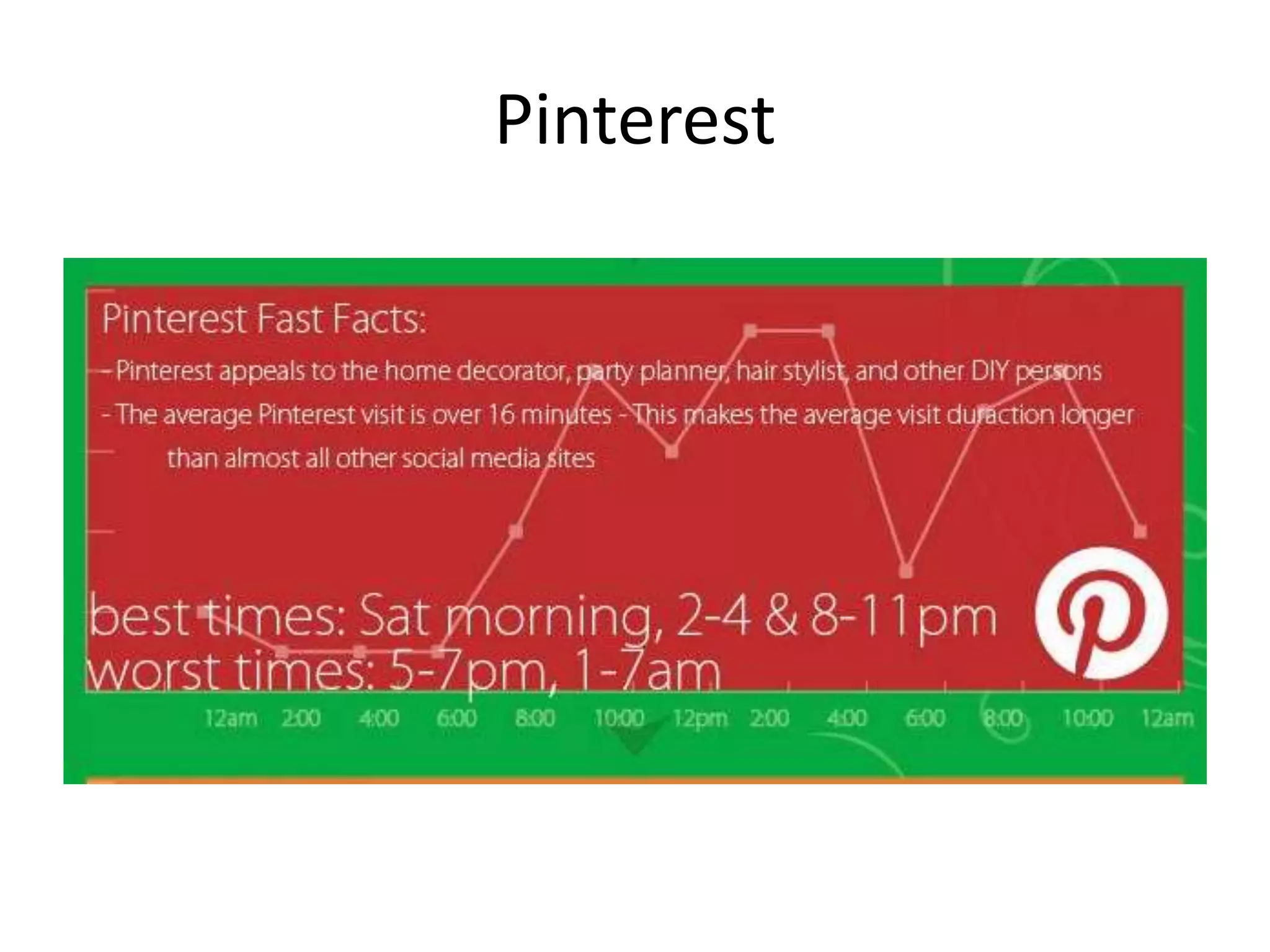
Is the average length of website visit on
Pinterest?
a)5m
b)8m
c)13m
d)16m
e)20m
Pinterest
Digital Identity
Early Online Identity
Your logo here
Did celebrities teach us how to use Social Media?
We all leave Vapor Trails of data.
Your logo here
Social Media is only really 5 years old
is it any wonder….
This is #Megastar
Your logo here
We all generate Personal Data
Fitbit, Garmin, and Nike—say they don't sell personally identifiable information
collected from fitness devices. But privacy advocates warn that the policies of these
firms could allow them to sell data, if they ever choose to do so.
Most data companies see people like this. They are interested in
great and profitable migrations of wallets. Not your name.
• We are all changing.
• With our new
knowledge of Social
networking, comes
a desire to
understand the
value of the types
of our new social
relationships.
• How much can we
trust these
technologies?
• How much do we
trust the people
within our networks
• Also how much do
we trust our
governments.
Digital Storytelling
Social Capital
What is the combined value of your
social network?
Who do
you know?
You have to
pay into the
social bank
before you
can take
out.
• Write down the roles that you have in your life.
• Father, brother, entrepreneur, writer, sometimes
a teacher.
• Choose at least 6.
• What excites you about each of these roles?
• Come up with a 8 word sentence to describe
yourself.
• e.g – 101 Dalmatians - Spotted puppies avoid
futures as fur coat components.
Exercise
• Look at your roles.
• Look at your partners, potential customers,
stakeholders.
• Look at what their job is . Define it.
• What are their biggest problems.
• What are they trying to do?
• How can you help them as individuals?
• How can you make their pains go away, how can
you help them grow?
Pains and Gains.
Trust
The Trust Curve
• You need less contracts.
• Important when you can’t monitor your employees
work.
• Trust is especially needed in the creative
industries.
• Litigation Is less frequent.
• Less resources to protecting yourself. Tax,
Insurance, bribes or private security.
• Low trust discourages innovation. More time to
dealing with bad employees, partners etc
Trust
Conversations that failed. - Starbucks
#Fail
Your logo here
• #RaceTogether failed because of
• (1) poor brand alignment,
• (2) authenticity deficit
• (3) poor reaction.
Starbucks #Fail
Your logo here
Digital Tools to manage your personal
brand
Followerwonk
The Amazing CLOZE
https://www.canva.com/
https://about.canva.com/work/
Creative Commons Images
• It is always a courtesy to credit people if you
use their image.
Other Tools
• Nuzzle – Discover your competitors website
traffic details.
• BuzzSumo – Discover what content gets
shared most by competitor. Find out what
content is liked.
• Bluenod – A visual way of finding influencers
Finding your voice Part 1
• Sound human
• Tell don’t sell.
• Avoid corporate speak or fluffy brochure talk
• Your followers need to feel that there is an
engaged person behind every tweet, post, picture
or pin.
• Don’t be afraid to have a little personality:
everything should sound or read as though it’s
something a person would say not a marketing
machine.
Finding your voice Part 2
• To have credibility and charisma, it’s
important to ensure your tone, vocabulary,
and taste is consistent for your brand, across
everything you do.
• What other brands do you align yourself with?
• If you wanted celebrity endorsement – who
would you choose?
• What magazines/publications do your
customers buy?
Dishoom do it Right!
• https://www.instagram.com/dishoom/
• In your groups.
• Go to this Twitter account, and try and work-
out why it is doing what it does.
• Look at the pictures
• What they retweet.
• What is their relationship with their local
community?
List what is wrong with this picture from a
social media POV?
Storytelling with words and pictures.
• Rule of Thumb. Entertain and inform with
every post, picture, pin. Or ideally, entertain
and inform with each post.
• How could we improve the following Twitter
and Instagram?
• https://twitter.com/Cafedirect
1.golden section
2.set your still life
3.crop don’t zoom
4.edit don’t filter
5.don’t use flash
6.keep your lens clean
Top Tips
smart phone pics
#goldensection
Vermeer is thought to
have used the golden
ratio, a geometric
proportion regarded as
the key to creating
aesthetically pleasing
art.
Science suggests that
these proportion help
the brain ‘get’ an image
quickly.
1.take lots of pics choose one
2.lighting is key
3.background
4.angle high to low
5.not too close
6.filter
Top Tips
#selfie
#silentmovie
#getcloseup
Instagram is a mobile only
tool. You can’t upload from
a desktop. It places all the
focus on visual language.
Travel and Restaurants
LOVE IT.
Take a close-up picture of
your lunch.
Who made it?
What exactly is in the
picture?
Choose 2 hashtags.
Thank you for listening.
• Juliet Kinsman - julietkinsman@mac.com
• Christopher Hogg – chris@digitalsavannah.net
Website: christopherhogg.net

Digital tools for personal brands eh

  • 1.
    Digital Tools forPersonal Brands 28st of June 2016 Electric House
  • 2.
    Chris: In thenext hour or so you will…. • Understand what a brand is. • Understand what brand thinking is. • Understand how digital identity is changing. • Appreciate the value of social capital • Appreciate the value of trust in establishing your brand. • See what happens if we apply this knowledge to our online identities. • Become aware of tools • Establish our personal brands.
  • 3.
    Juliet: In thenext hour or so you will…. • How to generate stories. • How to find your company’s distinct voice. • How to make your communication purposeful and effective.
  • 4.
    But first…a smallSocial Media Quiz
  • 5.
    Question 1: Which isthe only Social Network that has more men using it than women?
  • 6.
  • 7.
    Question 2: Who postsmore often per day Men or Women?
  • 8.
  • 9.
    Question 3: Who aremore likely to interact with Brands via Social Media Men or Women?
  • 10.
  • 11.
    Question 4: Who consumersmost News via Social Media Men or Women?
  • 12.
  • 13.
    Question 5: Who usesSocial Media via Mobile devices more Men or Women?
  • 14.
  • 15.
    Question 6: What isthe best time for posting on Facebook. Is it? a)7am b)10am c)12pm d)3pm e)5pm
  • 16.
    Best times topost on Social Media
  • 17.
    Question 6: Is theaverage length of website visit on Pinterest? a)5m b)8m c)13m d)16m e)20m
  • 18.
  • 19.
  • 20.
  • 21.
    Your logo here Didcelebrities teach us how to use Social Media?
  • 22.
    We all leaveVapor Trails of data.
  • 23.
    Your logo here SocialMedia is only really 5 years old is it any wonder….
  • 24.
  • 25.
    We all generatePersonal Data Fitbit, Garmin, and Nike—say they don't sell personally identifiable information collected from fitness devices. But privacy advocates warn that the policies of these firms could allow them to sell data, if they ever choose to do so.
  • 26.
    Most data companiessee people like this. They are interested in great and profitable migrations of wallets. Not your name.
  • 27.
    • We areall changing. • With our new knowledge of Social networking, comes a desire to understand the value of the types of our new social relationships. • How much can we trust these technologies? • How much do we trust the people within our networks • Also how much do we trust our governments.
  • 28.
  • 34.
    Social Capital What isthe combined value of your social network?
  • 35.
    Who do you know? Youhave to pay into the social bank before you can take out.
  • 40.
    • Write downthe roles that you have in your life. • Father, brother, entrepreneur, writer, sometimes a teacher. • Choose at least 6. • What excites you about each of these roles? • Come up with a 8 word sentence to describe yourself. • e.g – 101 Dalmatians - Spotted puppies avoid futures as fur coat components. Exercise
  • 41.
    • Look atyour roles. • Look at your partners, potential customers, stakeholders. • Look at what their job is . Define it. • What are their biggest problems. • What are they trying to do? • How can you help them as individuals? • How can you make their pains go away, how can you help them grow? Pains and Gains.
  • 43.
  • 45.
  • 46.
    • You needless contracts. • Important when you can’t monitor your employees work. • Trust is especially needed in the creative industries. • Litigation Is less frequent. • Less resources to protecting yourself. Tax, Insurance, bribes or private security. • Low trust discourages innovation. More time to dealing with bad employees, partners etc Trust
  • 48.
    Conversations that failed.- Starbucks #Fail Your logo here
  • 49.
    • #RaceTogether failedbecause of • (1) poor brand alignment, • (2) authenticity deficit • (3) poor reaction. Starbucks #Fail Your logo here
  • 50.
    Digital Tools tomanage your personal brand
  • 51.
  • 52.
  • 53.
  • 54.
    Creative Commons Images •It is always a courtesy to credit people if you use their image.
  • 55.
    Other Tools • Nuzzle– Discover your competitors website traffic details. • BuzzSumo – Discover what content gets shared most by competitor. Find out what content is liked. • Bluenod – A visual way of finding influencers
  • 56.
    Finding your voicePart 1 • Sound human • Tell don’t sell. • Avoid corporate speak or fluffy brochure talk • Your followers need to feel that there is an engaged person behind every tweet, post, picture or pin. • Don’t be afraid to have a little personality: everything should sound or read as though it’s something a person would say not a marketing machine.
  • 57.
    Finding your voicePart 2 • To have credibility and charisma, it’s important to ensure your tone, vocabulary, and taste is consistent for your brand, across everything you do. • What other brands do you align yourself with? • If you wanted celebrity endorsement – who would you choose? • What magazines/publications do your customers buy?
  • 58.
    Dishoom do itRight! • https://www.instagram.com/dishoom/ • In your groups. • Go to this Twitter account, and try and work- out why it is doing what it does. • Look at the pictures • What they retweet. • What is their relationship with their local community?
  • 59.
    List what iswrong with this picture from a social media POV?
  • 60.
    Storytelling with wordsand pictures. • Rule of Thumb. Entertain and inform with every post, picture, pin. Or ideally, entertain and inform with each post. • How could we improve the following Twitter and Instagram? • https://twitter.com/Cafedirect
  • 61.
    1.golden section 2.set yourstill life 3.crop don’t zoom 4.edit don’t filter 5.don’t use flash 6.keep your lens clean Top Tips smart phone pics
  • 62.
    #goldensection Vermeer is thoughtto have used the golden ratio, a geometric proportion regarded as the key to creating aesthetically pleasing art. Science suggests that these proportion help the brain ‘get’ an image quickly.
  • 65.
    1.take lots ofpics choose one 2.lighting is key 3.background 4.angle high to low 5.not too close 6.filter Top Tips #selfie
  • 66.
  • 67.
    #getcloseup Instagram is amobile only tool. You can’t upload from a desktop. It places all the focus on visual language. Travel and Restaurants LOVE IT. Take a close-up picture of your lunch. Who made it? What exactly is in the picture? Choose 2 hashtags.
  • 68.
    Thank you forlistening. • Juliet Kinsman - julietkinsman@mac.com • Christopher Hogg – chris@digitalsavannah.net Website: christopherhogg.net

Editor's Notes

  • #38 What’s your story? Describe yourself in 6 words or less.
  • #39 Everything is connected. The Pixar Theory that all of the Pixar movies actually exist within the same universe. http://www.pixartheory.com/ - demo of connections Everything is connected So how do you start taking back the power of your brand in order to tell your brand story? You start by looking for patterns and realising that everything is connected. Everything you are, everything you do and everything you say.
  • #40 All the world’s a stage Session 1: Who am I? 15 minutes Most of us (and this applies to businesses as well) are trying to manage at least two personalities. Who we are in our professional context and who are we in our social context? There is only one version of you. The more you fight to keep them separate the more fragmented you become, the more energy you use and the less time you spend being who you are really meant to be. We tend to wear masks. There are lots of different psychological and sociological theories about why masking but I’m quite interested in the concept of Dramaturgy, the theory that we wear different character and or social masks depending on the audience, situation, and or view of the theatre of life that we are currently performing in. But is that authentic and what does that do to the story we are trying to tell about ourselves and our personal brands? Do we push out narratives rather than have or be open to have dialogue and real connections? Now I’m going to ask you to strip that back and hold a mirror up to yourselves for a moment. Look at the person behind those different masks and see what patterns see and can you make any connections? What character, identity or masks do we wear? What excites us but those different masks or identities? I’d like you to take 8 pieces of paper and on the top of each write down what role you currently play (personally or professionally) e.g. Mother, Daughter, Entrepreneur….(2 mins) When you have written all 8, go back to the first piece of paper and now write underneath, what excites you about that role. Now I want you to rank those pieces of paper in order of importance to you where you are now in your life/ career. Don’t worry the order can change but this is about you in the NOW. Now looking at your top 3, find a partner and have a short discussion about each of those roles and there reason they excite you. Ask for some to share with the group and reflect on any personal revelations/ surprises.