Digital Literacy
TAYLER DENNEY & SARA HILL
1ST PERIOD
APRIL 17TH 2015
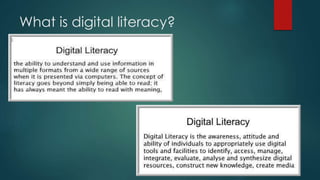
What is digital literacy?
The eight essentials of digital
literacy
Why its important
 Digital literacy is an important topic because technology is
changing faster than society is.
 The same advances that enhance leisure and make our work
easier—those that make it possible for us to search online
databases, text friends, and stream media—also present urgent
challenges to the social norms, market models, and legal
frameworks that structure our society.
On the rise
 Digital literacy classes are on the rise in classrooms all around the
country
 The world is becoming immersed in technology and many more
students are learning to keep up with it
Information literacy
 Determines the nature and extent of information needed
 Accesses the needed information effectively and efficiently
 Evaluates information and its sources critically and incorporates
selected information into his or her knowledge base and value
system
 Uses information effectively to accomplish a specific purpose
 Understands many of the economic, legal, and social issues
surrounding the use of information, and accesses and uses
information ethically and legally
What it is
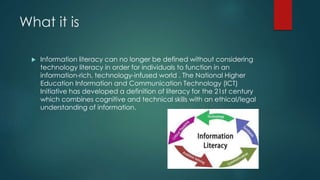
 Information literacy can no longer be defined without considering
technology literacy in order for individuals to function in an
information-rich, technology-infused world . The National Higher
Education Information and Communication Technology (ICT)
Initiative has developed a definition of literacy for the 21st century
which combines cognitive and technical skills with an ethical/legal
understanding of information.
Digital citizenship
 uses these skills to actively participate in civic society and contribute
to a vibrant, informed, and engaged community
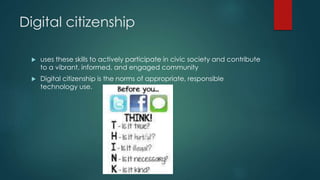
 Digital citizenship is the norms of appropriate, responsible
technology use.
The 9 elements of digital citizenship
 Digital Access: full electronic participation in society.
 Digital Commerce: electronic buying and selling of goods.
 Digital Communication: electronic exchange of information.
 Digital Literacy: process of teaching and learning about technology
and the use of technology.
 Digital Etiquette: electronic standards of conduct or procedure.
 Digital Law: electronic responsibility for actions and deeds
 Digital Rights & Responsibilities: those freedoms extended to everyone
in a digital world.
 Digital Health & Wellness: physical and psychological well-being in a
digital technology world.
 Digital Security (self-protection): electronic precautions to guarantee
safety.
Social Networking
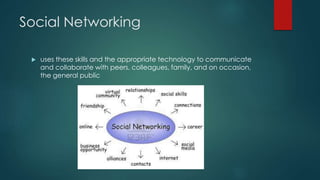
 uses these skills and the appropriate technology to communicate
and collaborate with peers, colleagues, family, and on occasion,
the general public
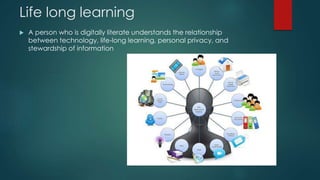
Life long learning
 A person who is digitally literate understands the relationship
between technology, life-long learning, personal privacy, and
stewardship of information

Digital literacy powerpoint project

  • 1.
    Digital Literacy TAYLER DENNEY& SARA HILL 1ST PERIOD APRIL 17TH 2015
  • 2.
    What is digitalliteracy?
  • 3.
    The eight essentialsof digital literacy
  • 4.
    Why its important Digital literacy is an important topic because technology is changing faster than society is.  The same advances that enhance leisure and make our work easier—those that make it possible for us to search online databases, text friends, and stream media—also present urgent challenges to the social norms, market models, and legal frameworks that structure our society.
  • 5.
    On the rise Digital literacy classes are on the rise in classrooms all around the country  The world is becoming immersed in technology and many more students are learning to keep up with it
  • 6.
    Information literacy  Determinesthe nature and extent of information needed  Accesses the needed information effectively and efficiently  Evaluates information and its sources critically and incorporates selected information into his or her knowledge base and value system  Uses information effectively to accomplish a specific purpose  Understands many of the economic, legal, and social issues surrounding the use of information, and accesses and uses information ethically and legally
  • 7.
    What it is Information literacy can no longer be defined without considering technology literacy in order for individuals to function in an information-rich, technology-infused world . The National Higher Education Information and Communication Technology (ICT) Initiative has developed a definition of literacy for the 21st century which combines cognitive and technical skills with an ethical/legal understanding of information.
  • 8.
    Digital citizenship  usesthese skills to actively participate in civic society and contribute to a vibrant, informed, and engaged community  Digital citizenship is the norms of appropriate, responsible technology use.
  • 9.
    The 9 elementsof digital citizenship  Digital Access: full electronic participation in society.  Digital Commerce: electronic buying and selling of goods.  Digital Communication: electronic exchange of information.  Digital Literacy: process of teaching and learning about technology and the use of technology.  Digital Etiquette: electronic standards of conduct or procedure.  Digital Law: electronic responsibility for actions and deeds  Digital Rights & Responsibilities: those freedoms extended to everyone in a digital world.  Digital Health & Wellness: physical and psychological well-being in a digital technology world.  Digital Security (self-protection): electronic precautions to guarantee safety.
  • 10.
    Social Networking  usesthese skills and the appropriate technology to communicate and collaborate with peers, colleagues, family, and on occasion, the general public
  • 11.
    Life long learning A person who is digitally literate understands the relationship between technology, life-long learning, personal privacy, and stewardship of information