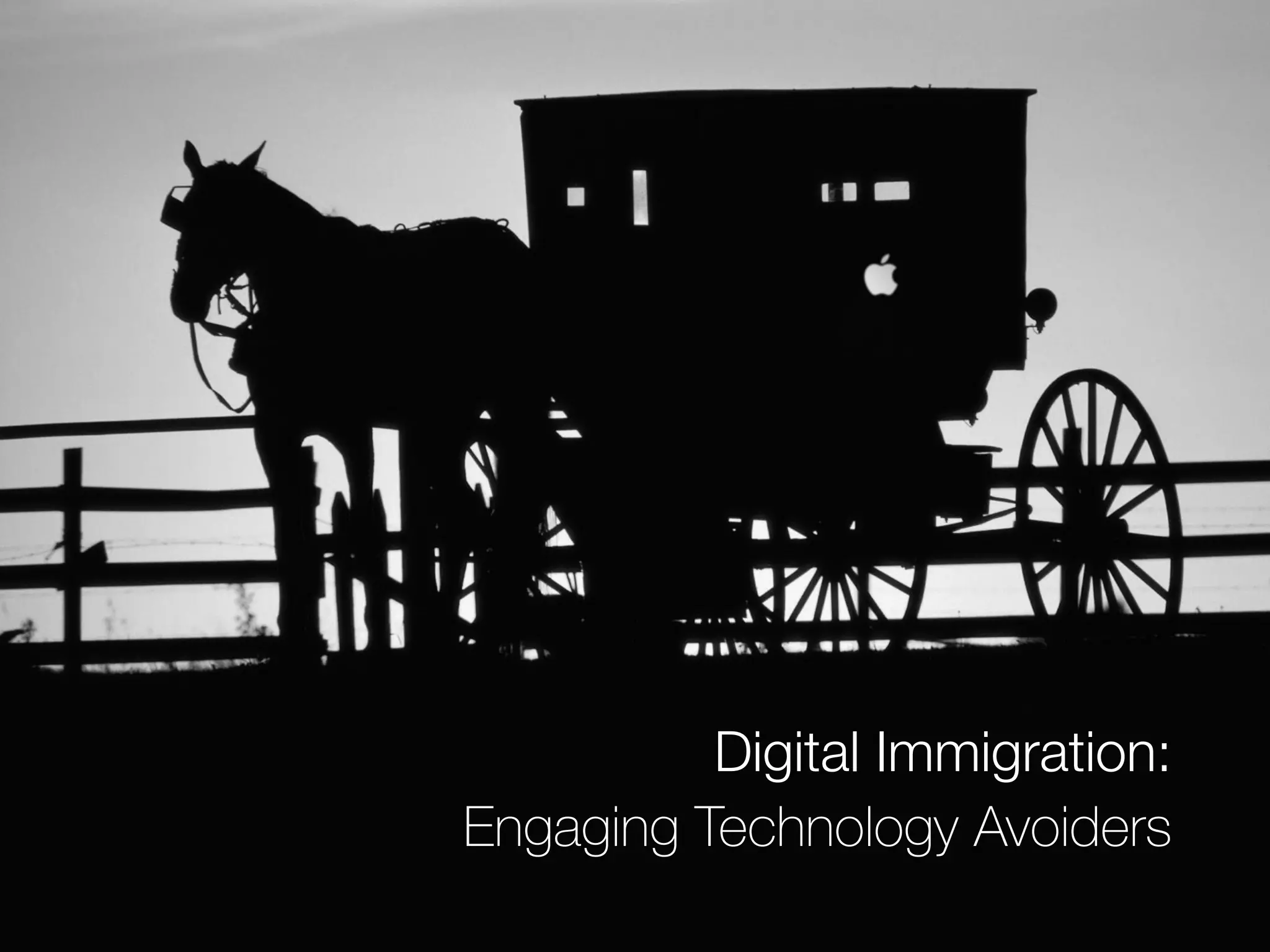
Digital Immigration: 
Engaging Technology Avoiders
“Technology is teaching us 
to be human again.” 
– Simon Mainwaring
3 Steps 
To Win Over 
A Technology Avoider
1 
Use existing cues 
from previous 
experiences
2 
Bridge the Uncanny 
Valley by making it 
more human
3 
Build a familiar 
solution, in order to 
build trust
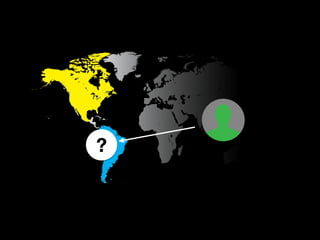
?
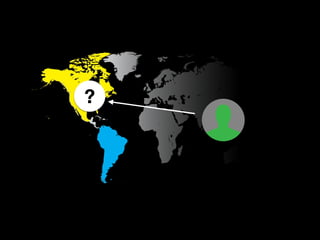
?
What is a digital 
immigrant?
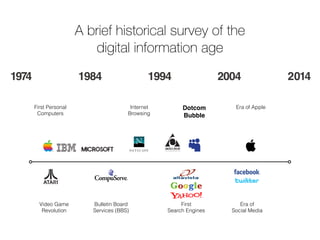
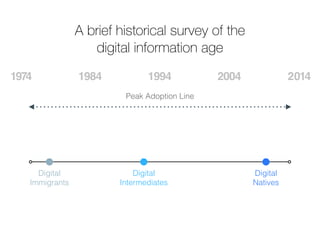
A brief historical survey of the 
digital information age 
1974 1984 1994 2004 2014 
First Personal 
Computers 
Internet Era of Apple 
Browsing 
Bulletin Board 
Services (BBS) 
Video Game 
Revolution 
Dotcom 
Bubble 
Era of 
Social Media 
First 
Search Engines
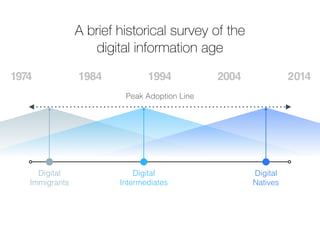
A brief historical survey of the 
digital information age 
1974 1984 1994 2004 2014 
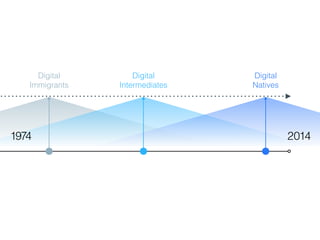
Digital 
Immigrants 
Digital 
Intermediates 
Digital 
Natives 
Peak Adoption Line
1974 1984 1994 2004 2014 
Digital 
Immigrants 
A brief historical survey of the 
digital information age 
Digital 
Intermediates 
Digital 
Natives 
Peak Adoption Line
1974 1984 1994 2004 2014 
Digital 
Immigrants 
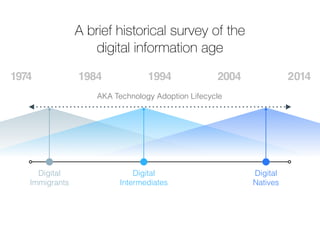
A brief historical survey of the 
digital information age 
Digital 
Intermediates 
Digital 
Natives 
AKA Technology Adoption Lifecycle
Digital 
Immigrants 
Digital 
Intermediates 
Digital 
Natives 
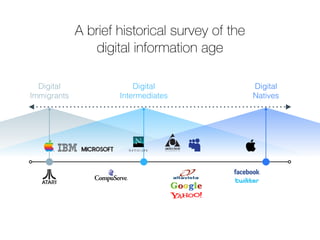
A brief historical survey of the 
digital information age
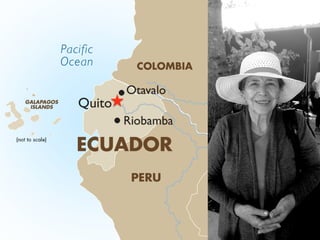
Name: 
Judith Ortega 
Occupation: 
Retired School Teacher 
Age: 
None of your business
Digital 
Immigrants 
Digital 
Intermediates 
Digital 
Natives 
1974 2014
Digital 
Immigrants 
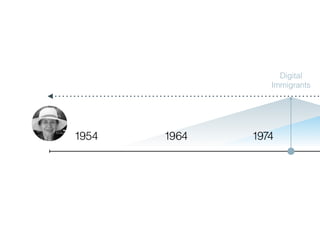
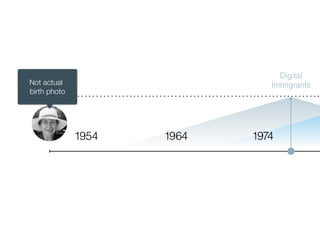
1954 1964 1974
Digital 
Immigrants 
1954 1964 1974 
Not actual 
birth photo
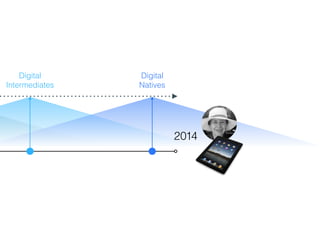
2014 
Digital 
Intermediates 
Digital 
Natives
Translation: 
Remember the IESS delivers one 
universal key and with it access to all 
our services.
Is this the type of adoption 
we desire?
2 Ways 
to change avoiders into adopters
1 Natural Adoption
2 Forced Adoption
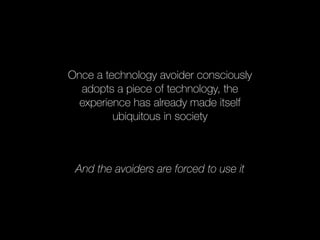
Once a technology avoider consciously 
adopts a piece of technology, the 
experience has already made itself 
ubiquitous in society 
And the avoiders are forced to use it
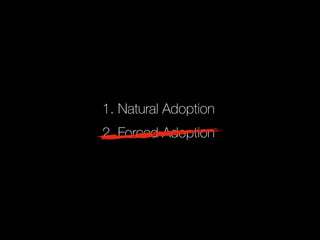
1. Natural Adoption 
2. Forced Adoption 
*Work on these names
Traversing the Uncanny Valley
“Any sufficiently advanced 
technology is equivalent 
to magic.” 
– Sir Arthur C. Clarke
un·can·ny 
Peculiarly unsettling, eerie. 
So keen and perceptive as to seem beyond 
what is normal or natural.
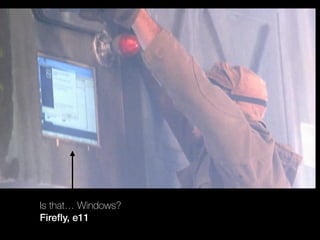
Technology becomes uncanny 
when it becomes unplugged from 
human experience
http://fakeui.tumblr.com/
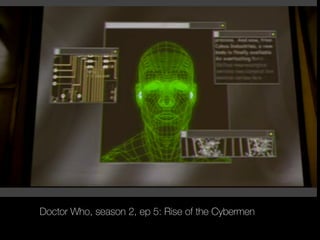
Doctor Who, season 2, ep 5: Rise of the Cybermen
Is that… Windows? 
Firefly, e11
electrifyingtimes.com
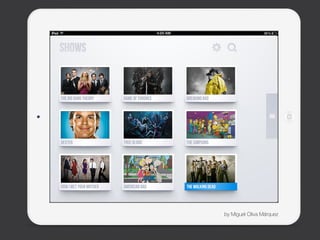
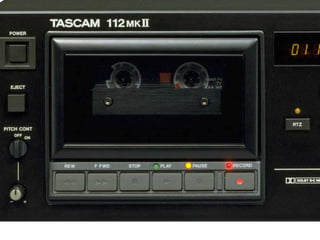
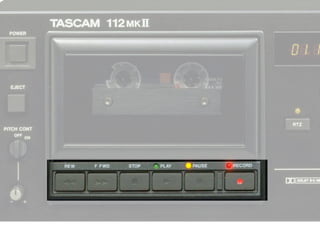
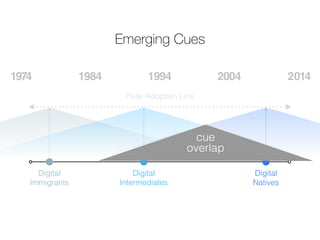
Technology adoption is built 
upon known interaction cues 
built from our own human 
experience
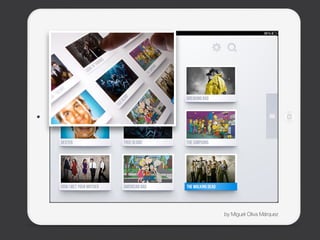
by Miguel Oliva Márquez
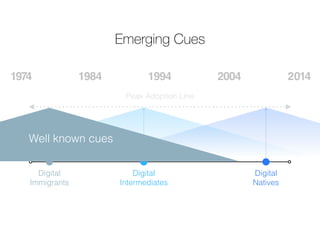
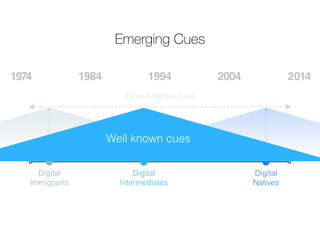
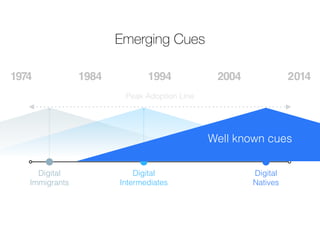
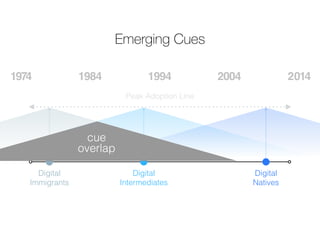
These cues have either been 
adopted from previous technology 
or are part of our current knowledge
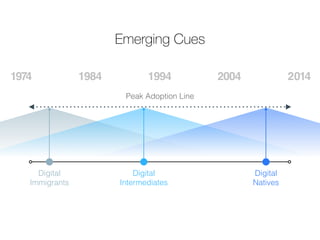
Emerging Cues 
1974 1984 1994 2004 2014 
Digital 
Immigrants 
Digital 
Intermediates 
Digital 
Natives 
Peak Adoption Line
1974 1984 1994 2004 2014 
Digital 
Immigrants 
Emerging Cues 
Digital 
Intermediates 
Digital 
Natives 
Peak Adoption Line 
Well known cues
1974 1984 1994 2004 2014 
Digital 
Immigrants 
Emerging Cues 
Digital 
Intermediates 
Digital 
Natives 
Peak Adoption Line 
Well known cues
1974 1984 1994 2004 2014 
Digital 
Immigrants 
Emerging Cues 
Digital 
Intermediates 
Digital 
Natives 
Peak Adoption Line 
Well known cues
1974 1984 1994 2004 2014 
Digital 
Immigrants 
Emerging Cues 
Digital 
Intermediates 
Digital 
Natives 
Peak Adoption Line 
cue 
overlap
1974 1984 1994 2004 2014 
Digital 
Immigrants 
Emerging Cues 
Digital 
Intermediates 
Digital 
Natives 
Peak Adoption Line 
cue 
overlap
1974 1984 1994 2004 2014 
Digital 
Immigrants 
Emerging Cues 
Digital 
Intermediates 
Digital 
Natives 
Peak Adoption Line 
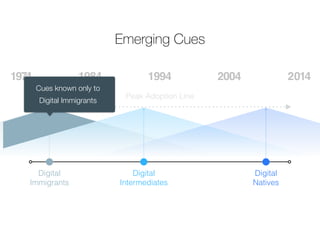
Cues known only to 
Digital Immigrants
1974 1984 1994 2004 2014 
Digital 
Immigrants 
Emerging Cues 
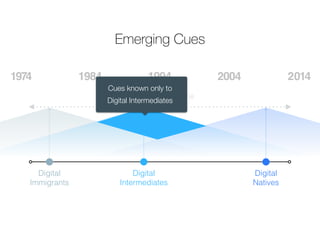
Cues known only to 
Digital Intermediates 
Digital 
Intermediates 
Digital 
Natives 
Peak Adoption Line
1974 1984 1994 2004 2014 
Digital 
Immigrants 
Emerging Cues 
Digital 
Intermediates 
Digital 
Natives 
Peak Adoption Line 
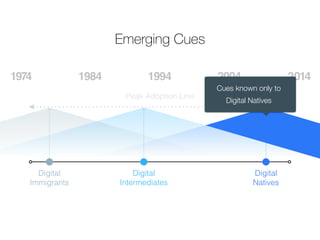
Cues known only to 
Digital Natives
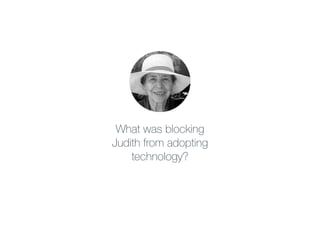
What was blocking 
Judith from adopting 
technology?
No Cues = 
No Human 
Experience
No Barrier 
to Entry
The key to technology avoidance is to 
bridge the gap between need and trust. 
And that is accomplished by making 
the experience as human as possible.
note: 
Digital Natives will learn to do 
fundamentally different things 
than digital immigrants
Because Natives are 
accustomed to fundamentally 
different ways of doing things, 
they [also] forget the 
associated cues we receive 
from previous technology that 
immigrants already have as 
current knowledge
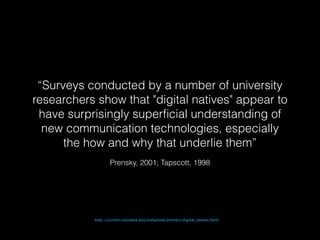
“Surveys conducted by a number of university 
researchers show that "digital natives" appear to 
have surprisingly superficial understanding of 
new communication technologies, especially 
the how and why that underlie them” 
Prensky, 2001; Tapscott, 1998 
http://ccnmtl.columbia.edu/enhanced/primers/digital_natives.html
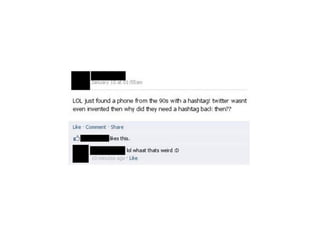
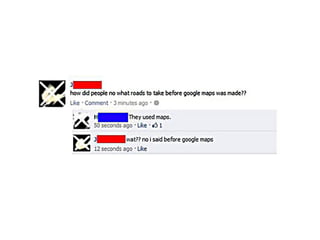
When immigrant knowledge is the 
cue for native technology
When technology 
avoiders clash with 
the natives
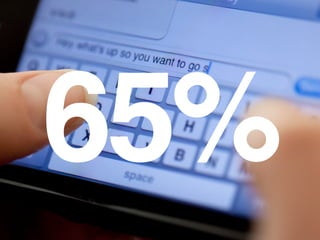
Online Poll: 
“What technology do you regularly find 
yourself using today, that you promised 
you would never adopt in years past? 
And why?”
65%
“Communications tools 
don’t get socially 
interesting until they get 
technologically boring.” 
– Clay Shirky
3 Steps To Winning Over 
A Technology Avoider 
• Use existing cues from 
previous technology 
• Bridge the Uncanny Valley by 
making it more human 
• Build a familiar solution, in 
order to build user trust
Thank You
Kevin Schumacher 
schubox.com 
@schubox

Digital Immigration: Engaging Technology Avoiders

  • 1.
    Digital Immigration: EngagingTechnology Avoiders
  • 2.
    “Technology is teachingus to be human again.” – Simon Mainwaring
  • 3.
    3 Steps ToWin Over A Technology Avoider
  • 4.
    1 Use existingcues from previous experiences
  • 5.
    2 Bridge theUncanny Valley by making it more human
  • 6.
    3 Build afamiliar solution, in order to build trust
  • 14.
  • 15.
  • 16.
    What is adigital immigrant?
  • 17.
    A brief historicalsurvey of the digital information age 1974 1984 1994 2004 2014 First Personal Computers Internet Era of Apple Browsing Bulletin Board Services (BBS) Video Game Revolution Dotcom Bubble Era of Social Media First Search Engines
  • 18.
    A brief historicalsurvey of the digital information age 1974 1984 1994 2004 2014 Digital Immigrants Digital Intermediates Digital Natives Peak Adoption Line
  • 19.
    1974 1984 19942004 2014 Digital Immigrants A brief historical survey of the digital information age Digital Intermediates Digital Natives Peak Adoption Line
  • 20.
    1974 1984 19942004 2014 Digital Immigrants A brief historical survey of the digital information age Digital Intermediates Digital Natives AKA Technology Adoption Lifecycle
  • 21.
    Digital Immigrants Digital Intermediates Digital Natives A brief historical survey of the digital information age
  • 24.
    Name: Judith Ortega Occupation: Retired School Teacher Age: None of your business
  • 26.
    Digital Immigrants Digital Intermediates Digital Natives 1974 2014
  • 27.
  • 28.
    Digital Immigrants 19541964 1974 Not actual birth photo
  • 29.
  • 32.
    Translation: Remember theIESS delivers one universal key and with it access to all our services.
  • 35.
    Is this thetype of adoption we desire?
  • 36.
    2 Ways tochange avoiders into adopters
  • 37.
  • 38.
  • 39.
    Once a technologyavoider consciously adopts a piece of technology, the experience has already made itself ubiquitous in society And the avoiders are forced to use it
  • 40.
    1. Natural Adoption 2. Forced Adoption *Work on these names
  • 41.
  • 42.
    “Any sufficiently advanced technology is equivalent to magic.” – Sir Arthur C. Clarke
  • 43.
    un·can·ny Peculiarly unsettling,eerie. So keen and perceptive as to seem beyond what is normal or natural.
  • 48.
    Technology becomes uncanny when it becomes unplugged from human experience
  • 49.
  • 50.
    Doctor Who, season2, ep 5: Rise of the Cybermen
  • 51.
    Is that… Windows? Firefly, e11
  • 52.
  • 53.
    Technology adoption isbuilt upon known interaction cues built from our own human experience
  • 56.
  • 57.
  • 62.
    These cues haveeither been adopted from previous technology or are part of our current knowledge
  • 63.
    Emerging Cues 19741984 1994 2004 2014 Digital Immigrants Digital Intermediates Digital Natives Peak Adoption Line
  • 64.
    1974 1984 19942004 2014 Digital Immigrants Emerging Cues Digital Intermediates Digital Natives Peak Adoption Line Well known cues
  • 65.
    1974 1984 19942004 2014 Digital Immigrants Emerging Cues Digital Intermediates Digital Natives Peak Adoption Line Well known cues
  • 66.
    1974 1984 19942004 2014 Digital Immigrants Emerging Cues Digital Intermediates Digital Natives Peak Adoption Line Well known cues
  • 67.
    1974 1984 19942004 2014 Digital Immigrants Emerging Cues Digital Intermediates Digital Natives Peak Adoption Line cue overlap
  • 68.
    1974 1984 19942004 2014 Digital Immigrants Emerging Cues Digital Intermediates Digital Natives Peak Adoption Line cue overlap
  • 69.
    1974 1984 19942004 2014 Digital Immigrants Emerging Cues Digital Intermediates Digital Natives Peak Adoption Line Cues known only to Digital Immigrants
  • 70.
    1974 1984 19942004 2014 Digital Immigrants Emerging Cues Cues known only to Digital Intermediates Digital Intermediates Digital Natives Peak Adoption Line
  • 71.
    1974 1984 19942004 2014 Digital Immigrants Emerging Cues Digital Intermediates Digital Natives Peak Adoption Line Cues known only to Digital Natives
  • 72.
    What was blocking Judith from adopting technology?
  • 74.
    No Cues = No Human Experience
  • 76.
  • 77.
    The key totechnology avoidance is to bridge the gap between need and trust. And that is accomplished by making the experience as human as possible.
  • 78.
    note: Digital Nativeswill learn to do fundamentally different things than digital immigrants
  • 79.
    Because Natives are accustomed to fundamentally different ways of doing things, they [also] forget the associated cues we receive from previous technology that immigrants already have as current knowledge
  • 80.
    “Surveys conducted bya number of university researchers show that "digital natives" appear to have surprisingly superficial understanding of new communication technologies, especially the how and why that underlie them” Prensky, 2001; Tapscott, 1998 http://ccnmtl.columbia.edu/enhanced/primers/digital_natives.html
  • 81.
    When immigrant knowledgeis the cue for native technology
  • 84.
    When technology avoidersclash with the natives
  • 85.
    Online Poll: “Whattechnology do you regularly find yourself using today, that you promised you would never adopt in years past? And why?”
  • 86.
  • 88.
    “Communications tools don’tget socially interesting until they get technologically boring.” – Clay Shirky
  • 89.
    3 Steps ToWinning Over A Technology Avoider • Use existing cues from previous technology • Bridge the Uncanny Valley by making it more human • Build a familiar solution, in order to build user trust
  • 90.
  • 91.