Fear and Awe of the  Digital Native Mark Weber, Atticmedia
Fear & Awe…
We live in a polarised world… Young people are… Digital Natives Experts in everything technical Multi-taskers, consuming media in ways unfathomable & alien to adults They are the gods of the new world, and we can do nothing but bow down to them
“ tech-savvy youth” “ a generation for whom media means MySpace, Flickr, YouTube” “ Generational Divide” “ a different generation all together….” “ My son consumes TV, mobile, online all at the same time…” “ my 5 year old has already mastered text messaging…” “ The Digital Generation”
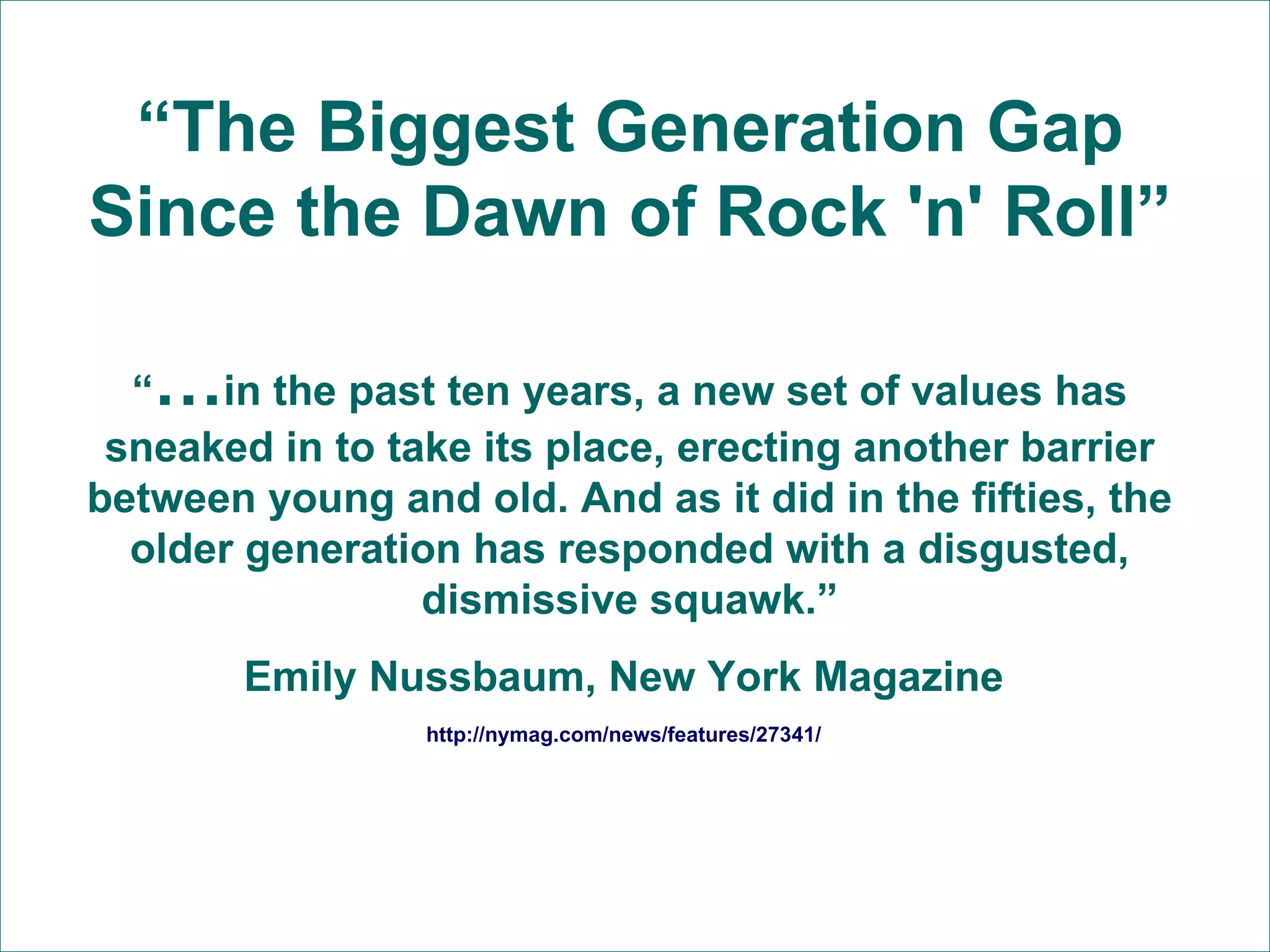
“ The Biggest Generation Gap Since the Dawn of Rock 'n' Roll” “ … in the past ten years, a new set of values has sneaked in to take its place, erecting another barrier between young and old. And as it did in the fifties, the older generation has responded with a disgusted, dismissive squawk.” Emily Nussbaum, New York Magazine  http://nymag.com/news/features/27341/
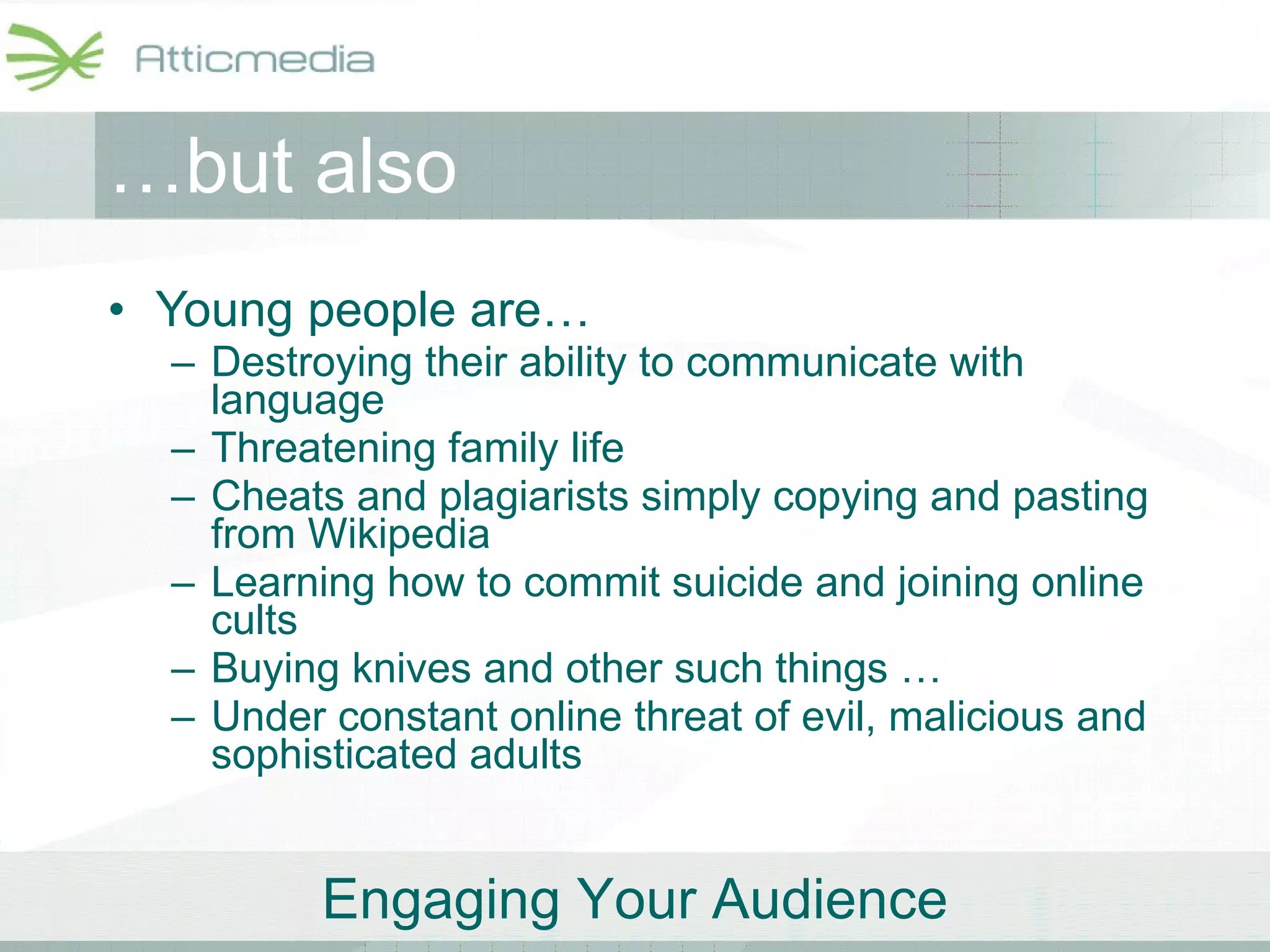
… but also Young people are… Destroying their ability to communicate with language Threatening family life Cheats and plagiarists simply copying and pasting from Wikipedia Learning how to commit suicide and joining online cults Buying knives and other such things … Under constant online threat of evil, malicious and sophisticated adults
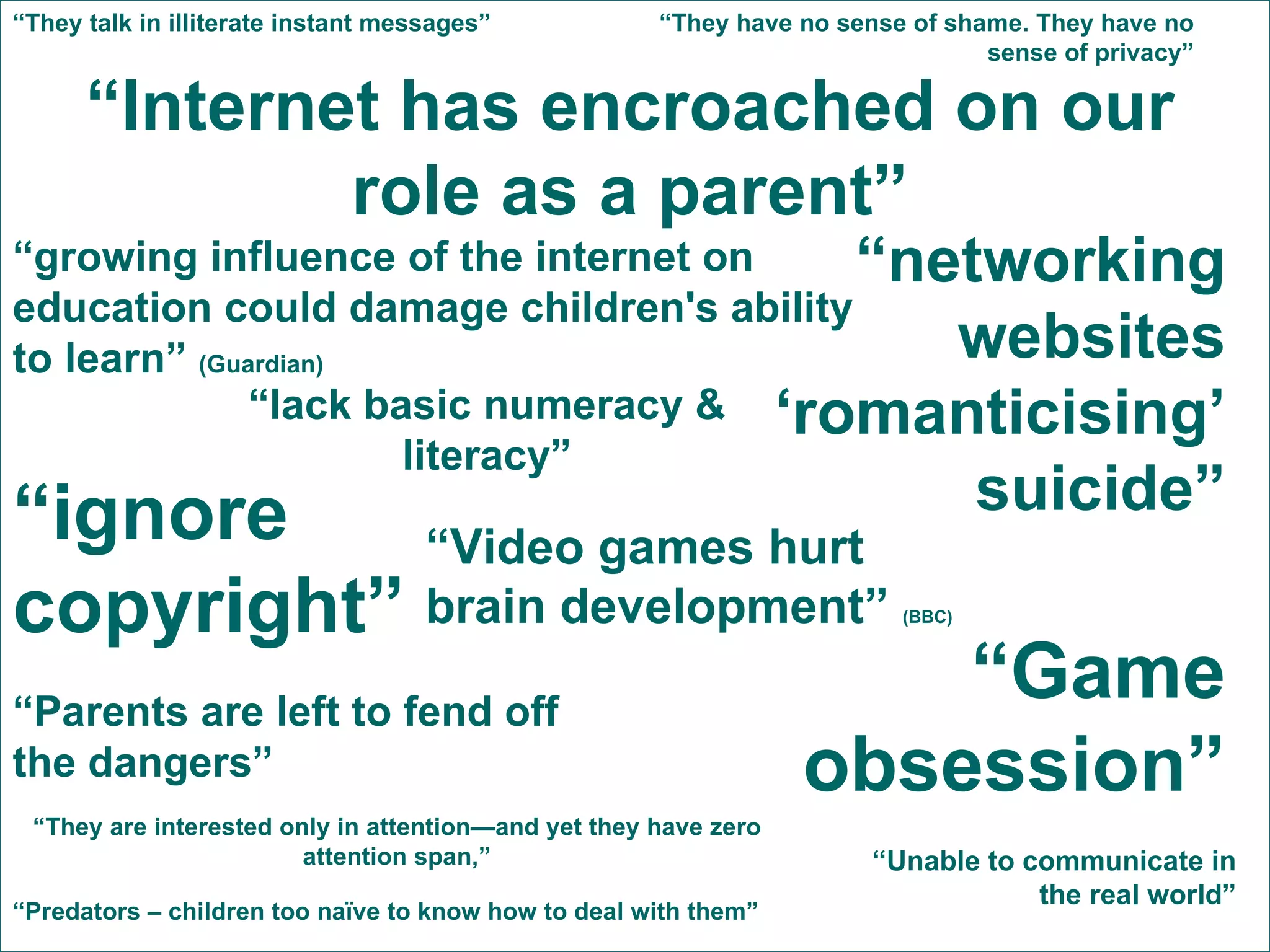
“ Internet has encroached on our role as a parent” “ Parents are left to fend off the dangers” “ networking websites ‘romanticising’ suicide” “ ignore copyright” “ Game obsession” “ Video games hurt brain development”  (BBC) “ growing influence of the internet on education could damage children's ability to learn”  (Guardian) “ Predators – children too naïve to know how to deal with them” “ lack basic numeracy & literacy” “ Unable to communicate in the real world” “ They are interested only in attention—and yet they have zero attention span,” “ They talk in illiterate instant messages” “ They have no sense of shame. They have no sense of privacy”
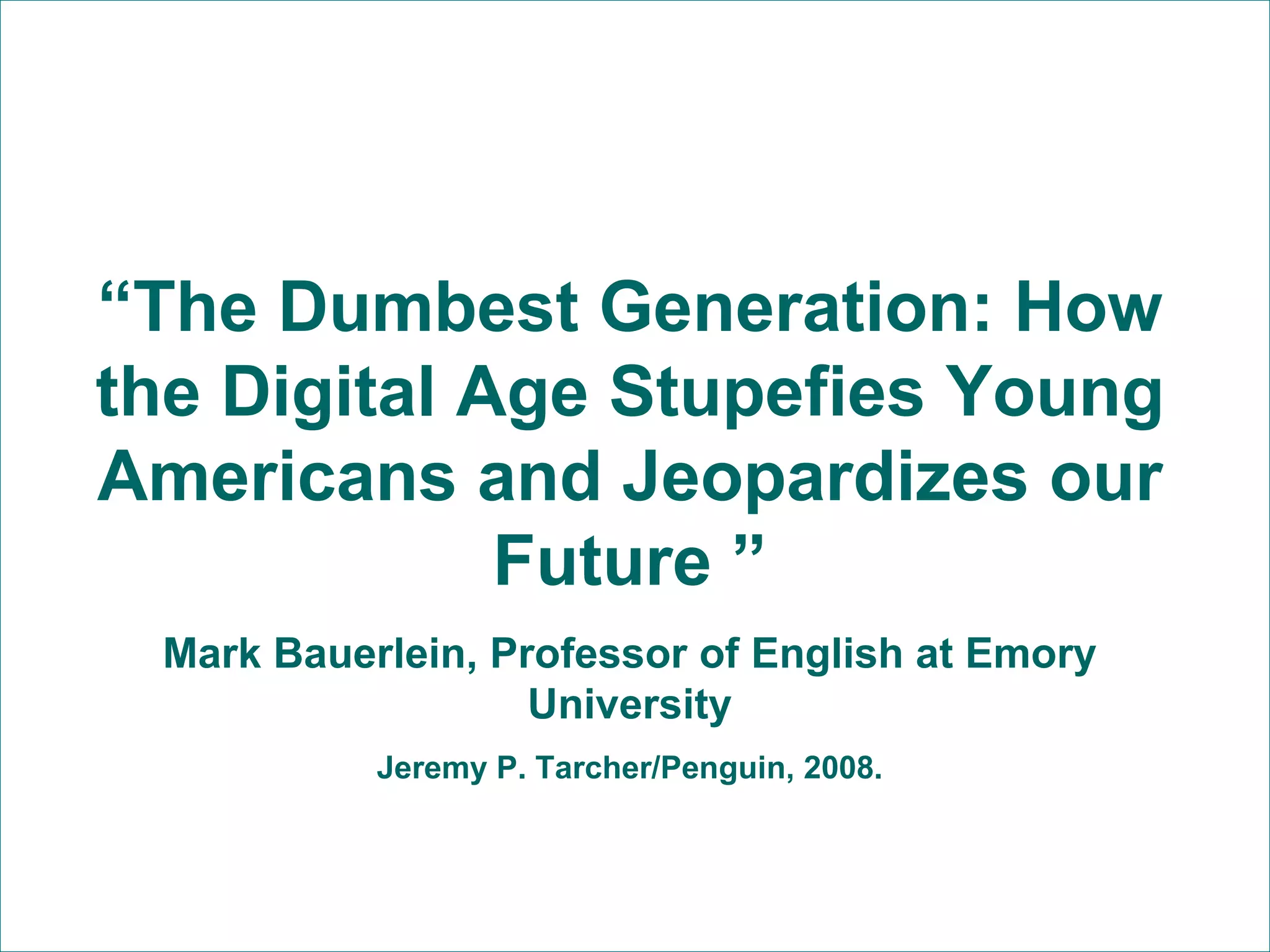
“ The Dumbest Generation: How the Digital Age Stupefies Young Americans and Jeopardizes our Future ” Mark Bauerlein, Professor of English at Emory University Jeremy P. Tarcher/Penguin, 2008.
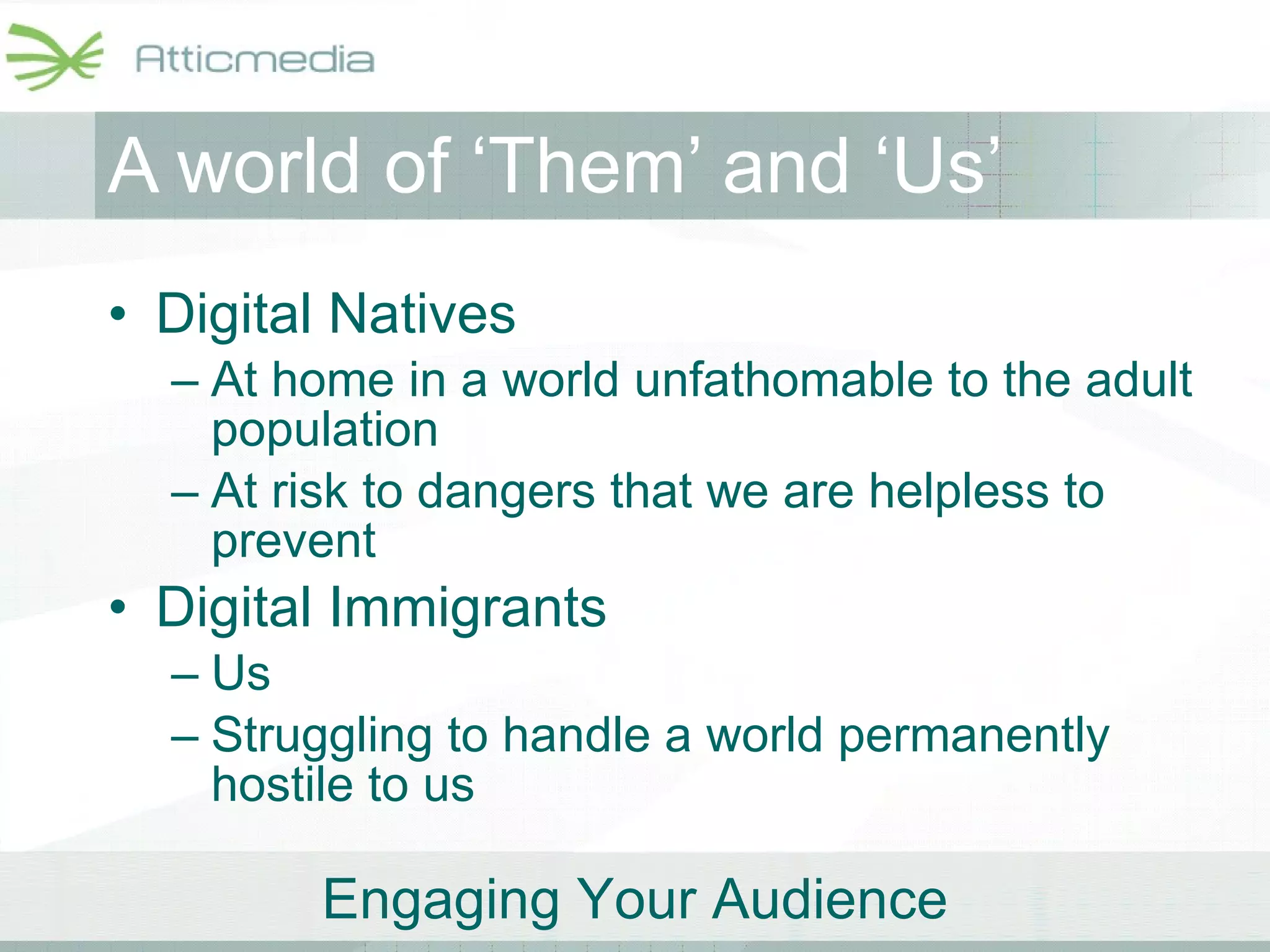
A world of ‘Them’ and ‘Us’ Digital Natives At home in a world unfathomable to the adult population At risk to dangers that we are helpless to prevent Digital Immigrants Us Struggling to handle a world permanently hostile to us
Digital Natives
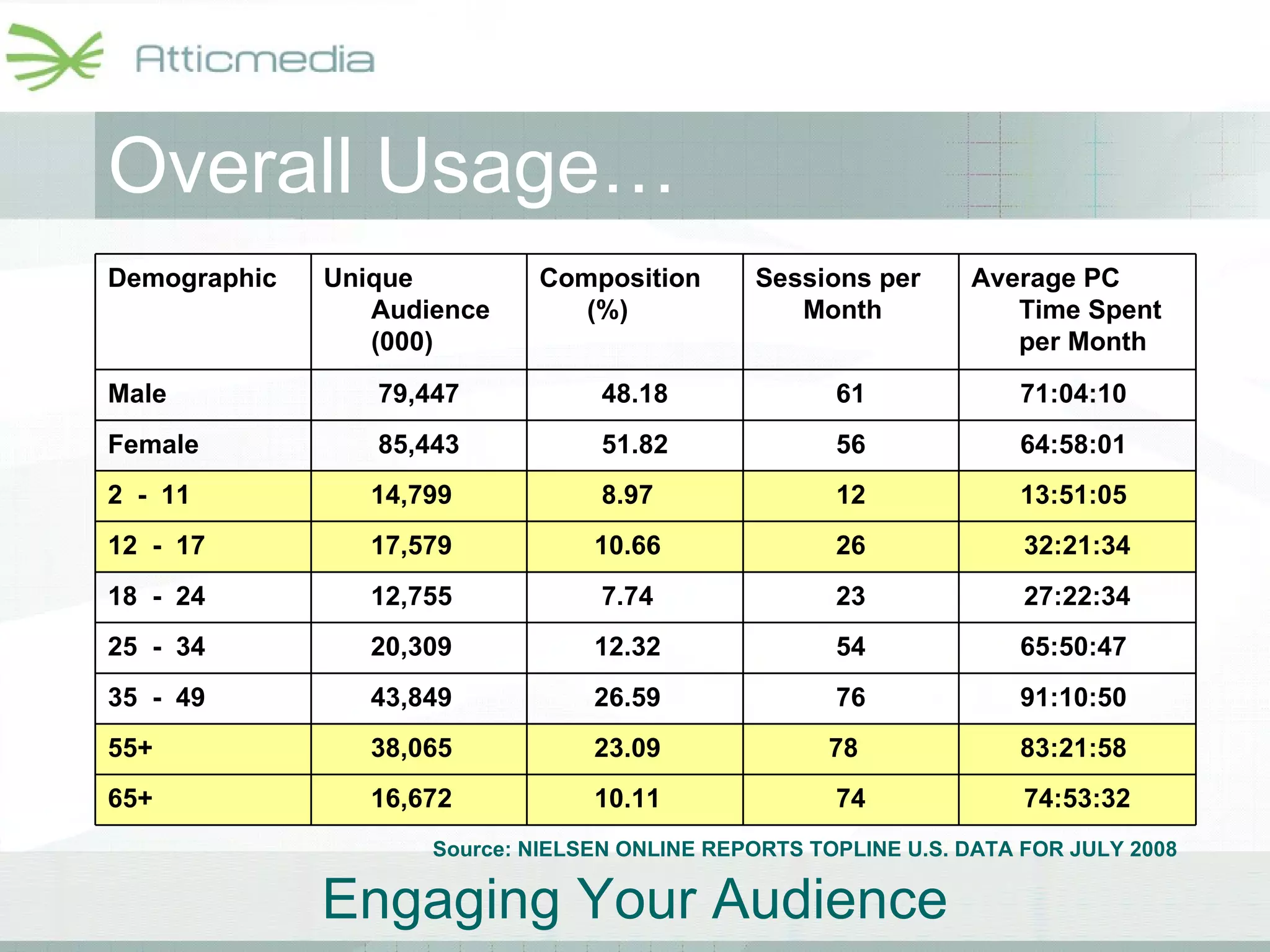
Overall Usage… Source: NIELSEN ONLINE REPORTS TOPLINE U.S. DATA FOR JULY 2008   74:53:32 74 10.11  16,672  65+  83:21:58  78  23.09  38,065  55+  91:10:50  76 26.59  43,849  35  -  49  65:50:47  54 12.32  20,309  25  -  34  27:22:34 23 7.74  12,755  18  -  24  32:21:34 26 10.66  17,579  12  -  17  13:51:05  12 8.97  14,799  2  -  11  64:58:01  56 51.82 85,443 Female 71:04:10  61 48.18 79,447 Male Average PC Time Spent per Month  Sessions per Month  Composition (%)  Unique Audience (000)  Demographic
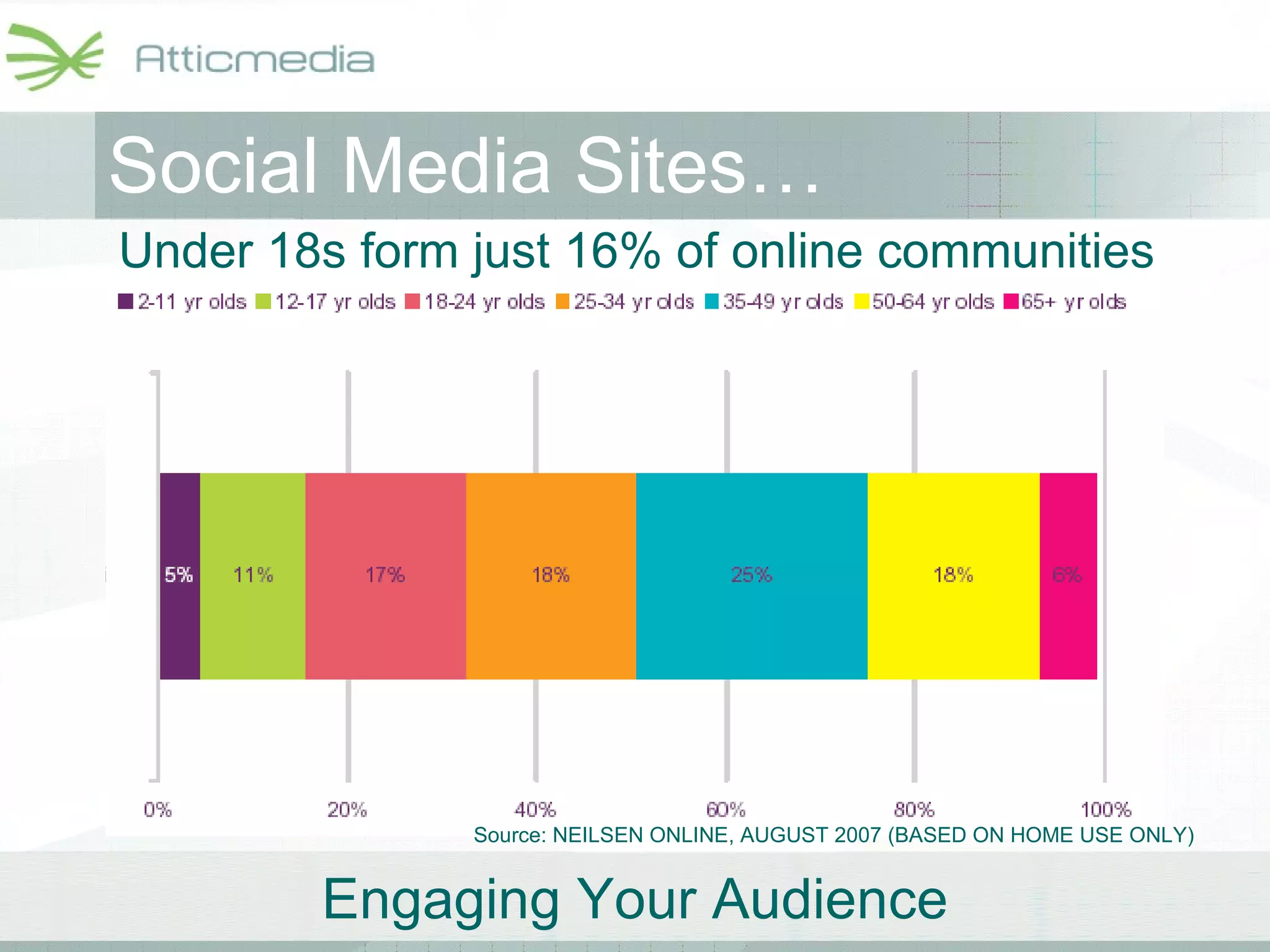
Social Media Sites… Under 18s form just 16% of online communities Source: NEILSEN ONLINE, AUGUST 2007 (BASED ON HOME USE ONLY)
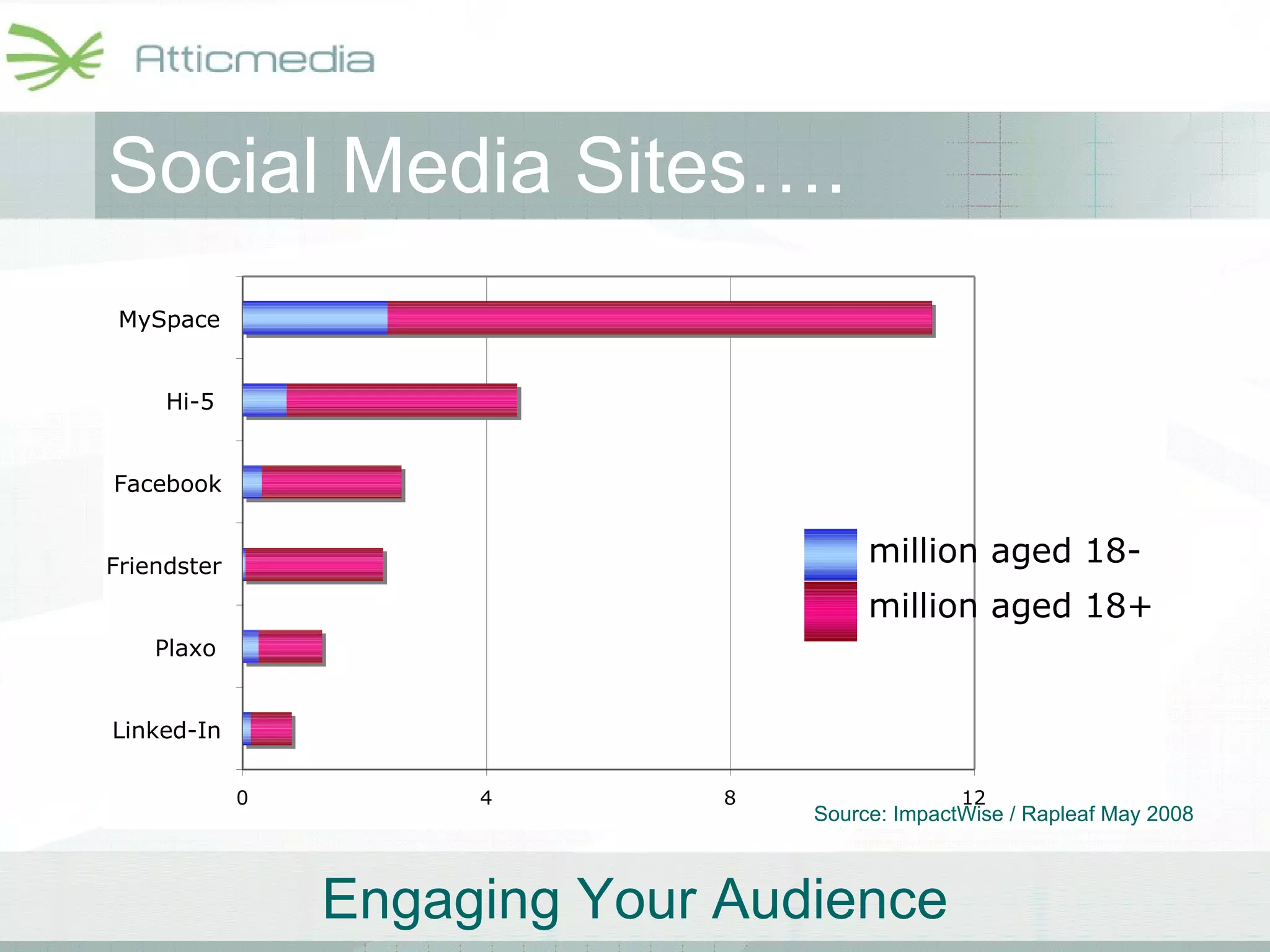
Social Media Sites…. 0 4 8 12 Linked-In Plaxo Friendster Facebook Hi-5 MySpace million aged 18- million aged 18+ Source: ImpactWise / Rapleaf May 2008
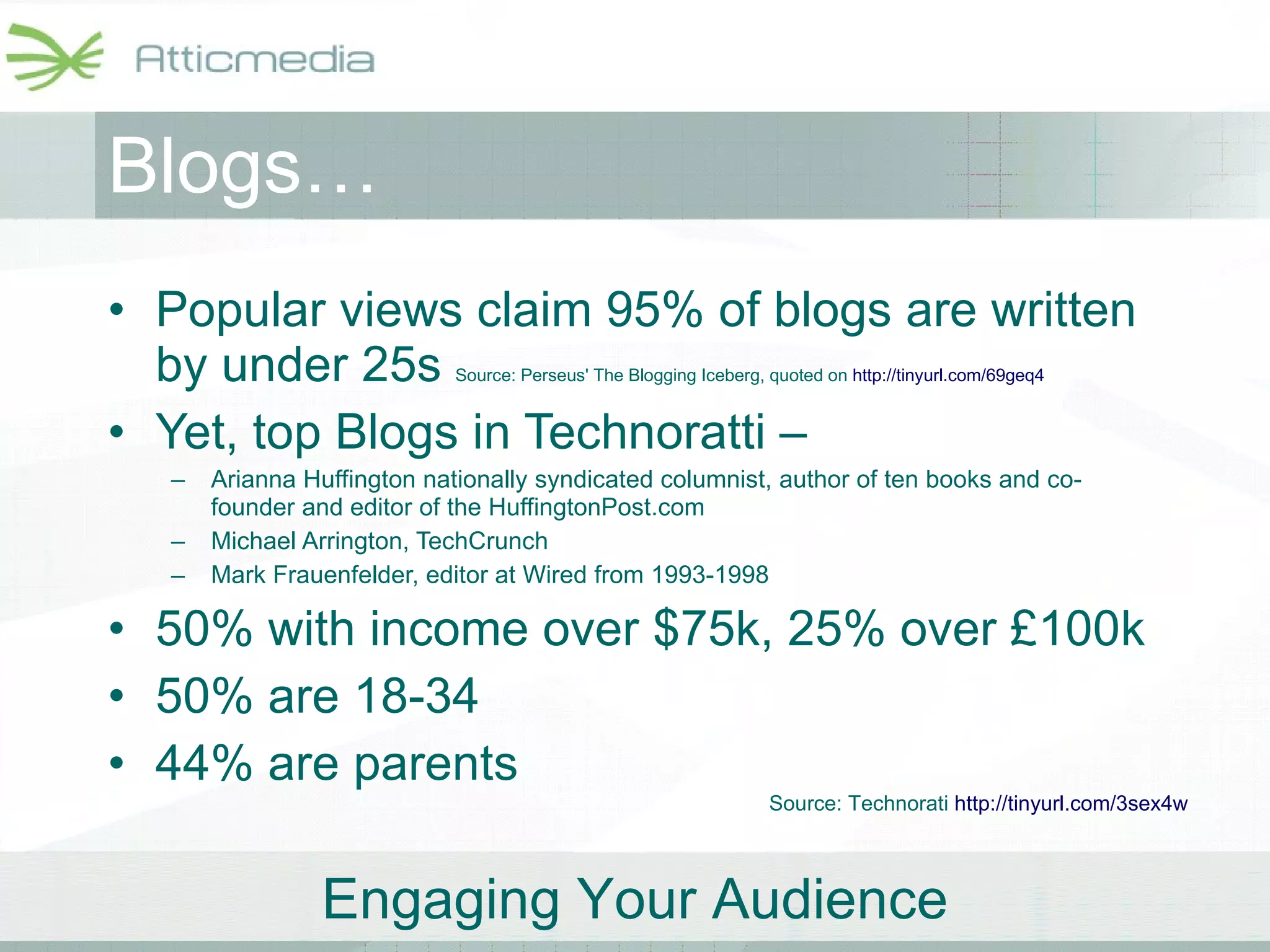
Blogs… Popular views claim 95% of blogs are written by under 25s  Source: Perseus' The Blogging Iceberg, quoted on  http://tinyurl.com/69geq4   Yet, top Blogs in Technoratti – Arianna Huffington nationally syndicated columnist, author of ten books and co-founder and editor of the HuffingtonPost.com Michael Arrington, TechCrunch Mark Frauenfelder,  editor at Wired from 1993-1998 50% with income over $75k, 25% over £100k 50% are 18-34 44% are parents  Source: Technorati  http://tinyurl.com/3sex4w
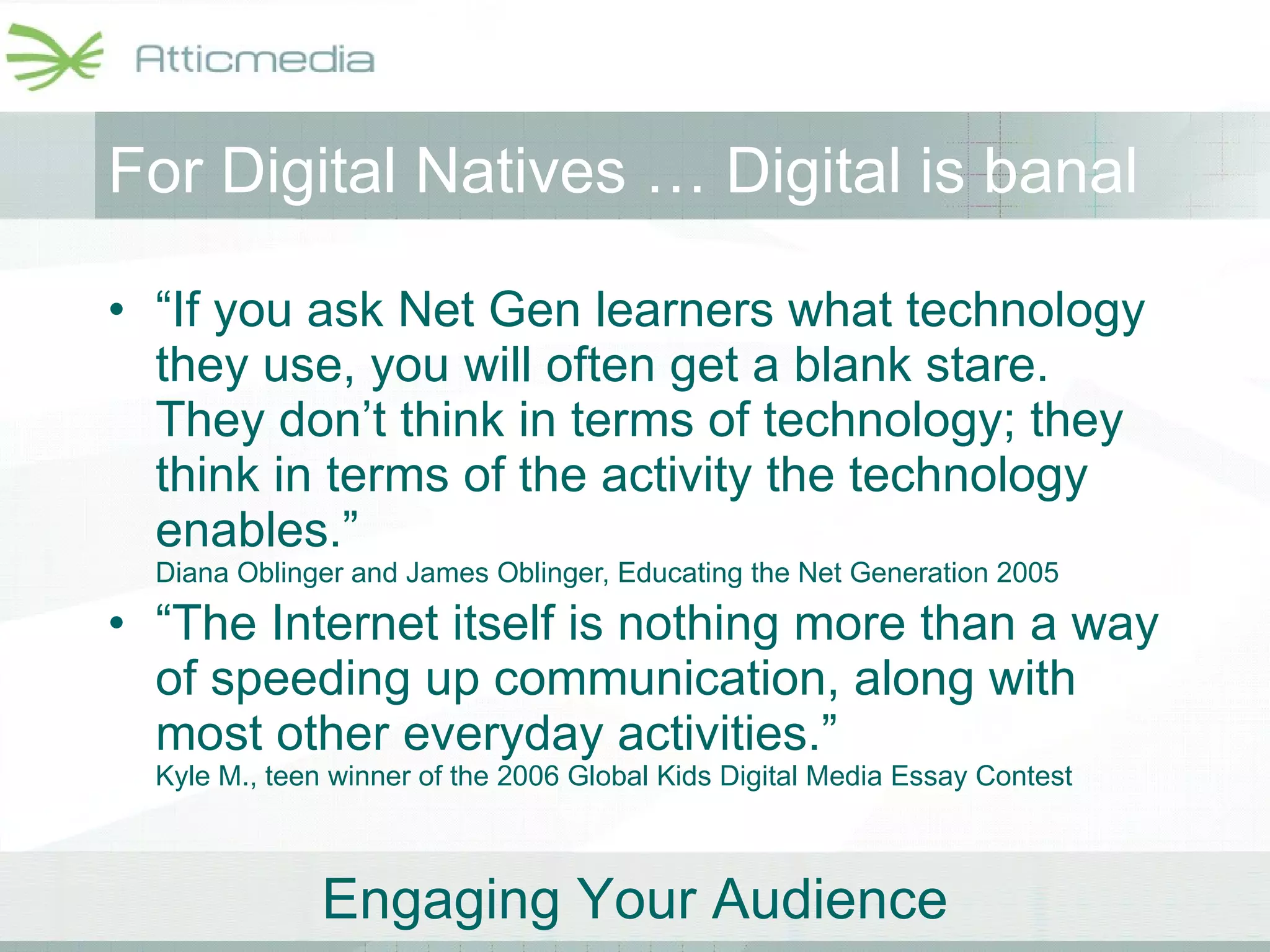
For Digital Natives … Digital is banal   “ If you ask Net Gen learners what technology they use, you will often get a blank stare. They don’t think in terms of technology; they think in terms of the activity the technology enables.”  Diana Oblinger and James Oblinger, Educating the Net Generation 2005 “ The Internet itself is nothing more than a way of speeding up communication, along with most other everyday activities.”  Kyle M., teen winner of the 2006 Global Kids Digital Media Essay Contest
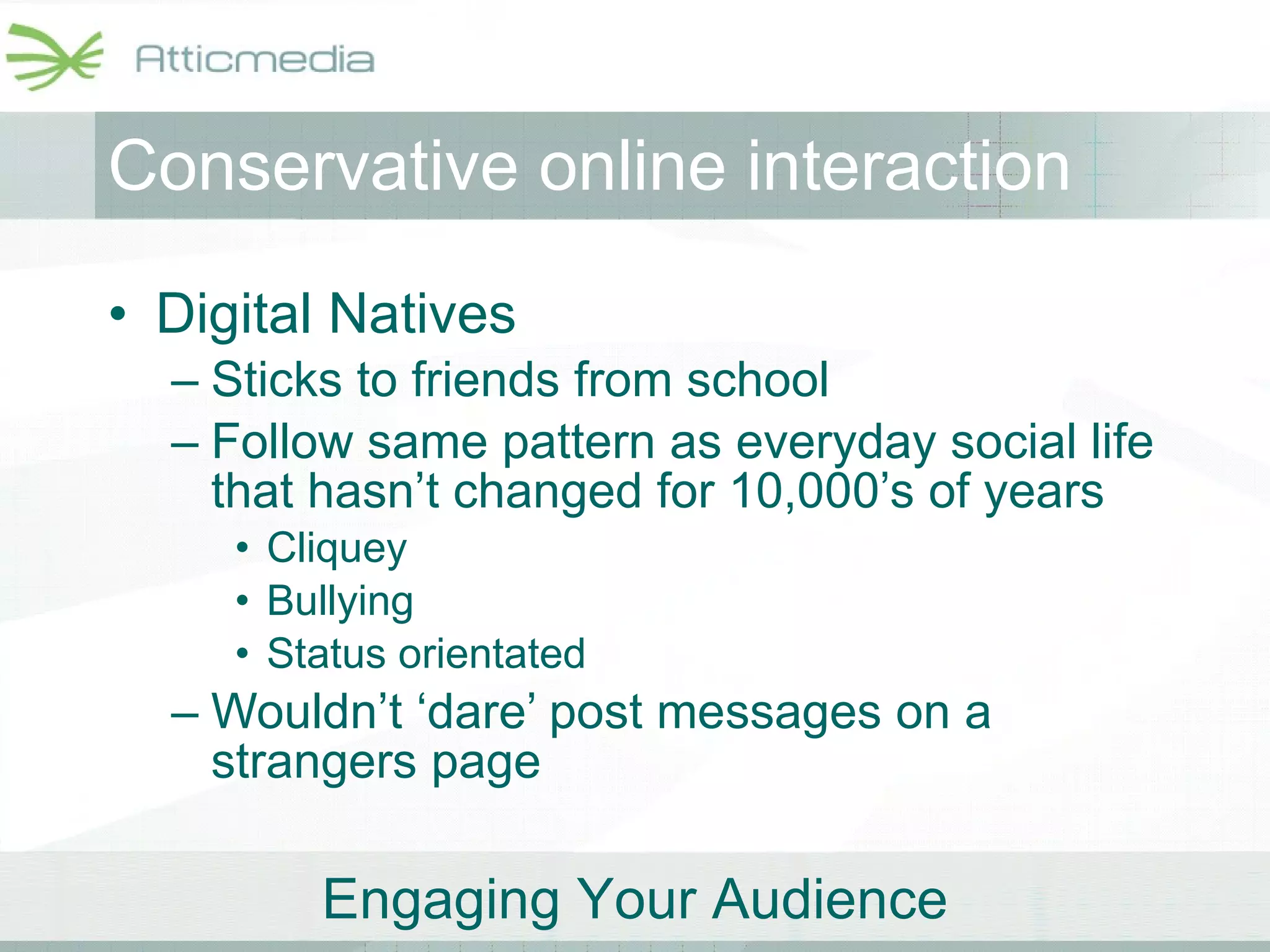
Conservative online interaction Digital Natives Sticks to friends from school Follow same pattern as everyday social life that hasn’t changed for 10,000’s of years Cliquey Bullying Status orientated Wouldn’t ‘dare’ post messages on a strangers page
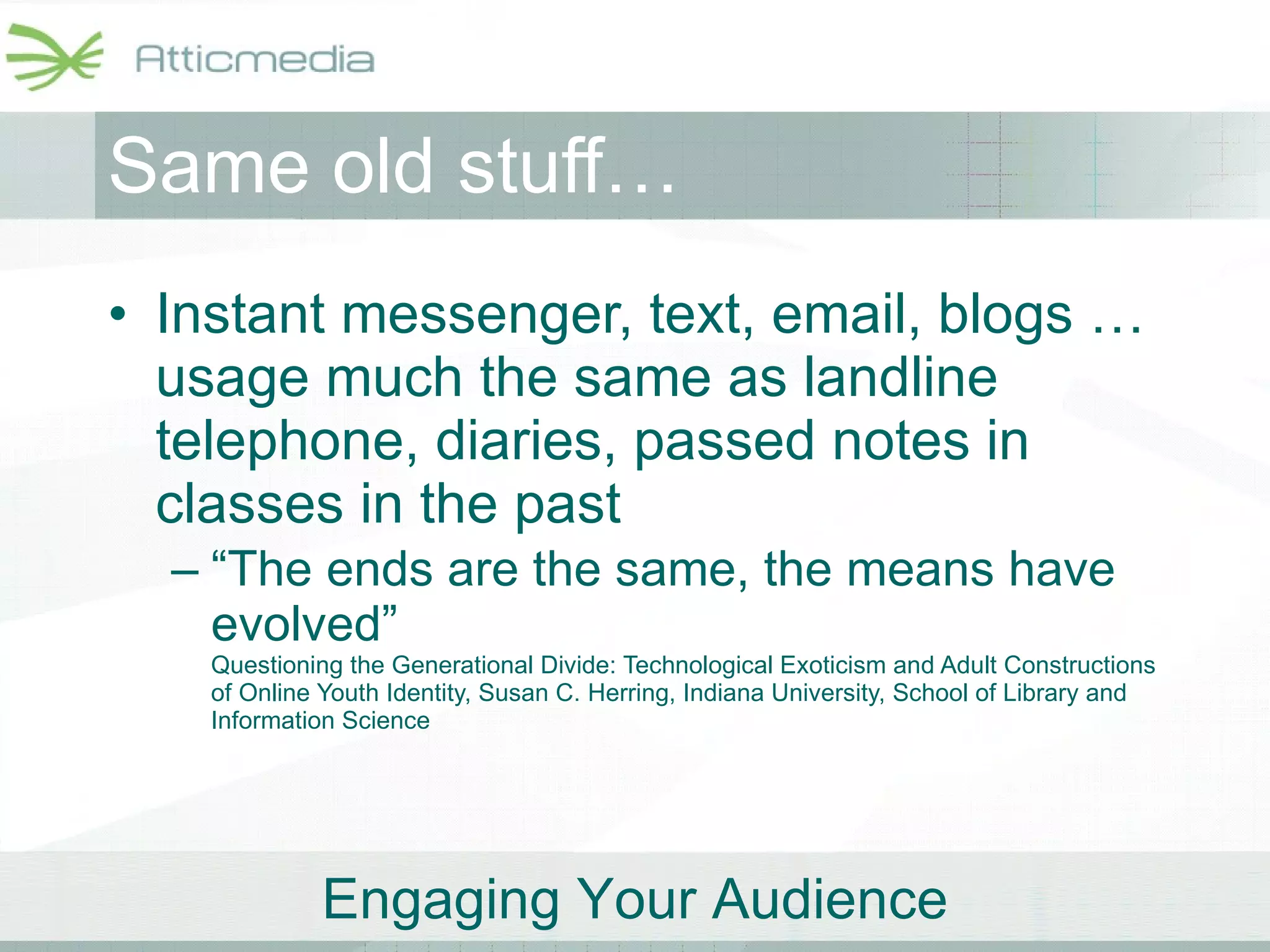
Same old stuff… Instant messenger, text, email, blogs … usage much the same as landline telephone, diaries, passed notes in classes in the past “ The ends are the same, the means have evolved” Questioning the Generational Divide: Technological Exoticism and Adult Constructions of Online Youth Identity, Susan C. Herring, Indiana University, School of Library and Information Science
As always, limited to what is cheap & available… “a majority of [UK] teens said that they would rather go out to a movie or do something with friends than stay home and consume media” Same old stuff… Source: Livingstone and Bovill, 2000
Technical understanding? Digital Natives Consumes Recycles But technical understanding of underlying media needed to originate? 1970’s generation: had to learn code to use a computer 1990’s generation: easy to use visual systems enable quick generation of content
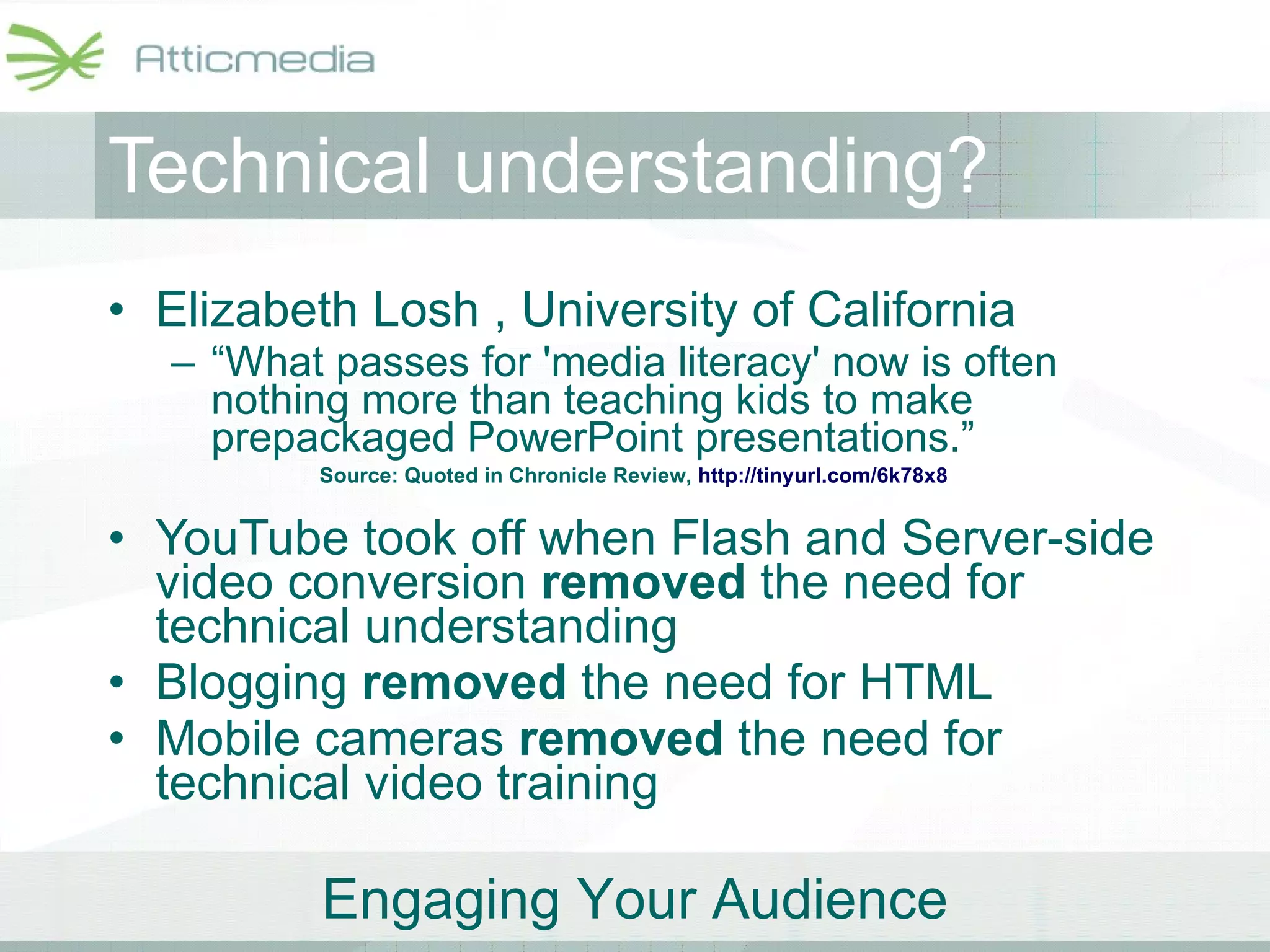
Technical understanding? Elizabeth Losh , University of California “ What passes for 'media literacy' now is often nothing more than teaching kids to make prepackaged PowerPoint presentations.” YouTube took off when Flash and Server-side video conversion  removed  the need for technical understanding Blogging  removed  the need for HTML Mobile cameras  removed  the need for technical video training Source: Quoted in Chronicle Review,  http://tinyurl.com/6k78x8
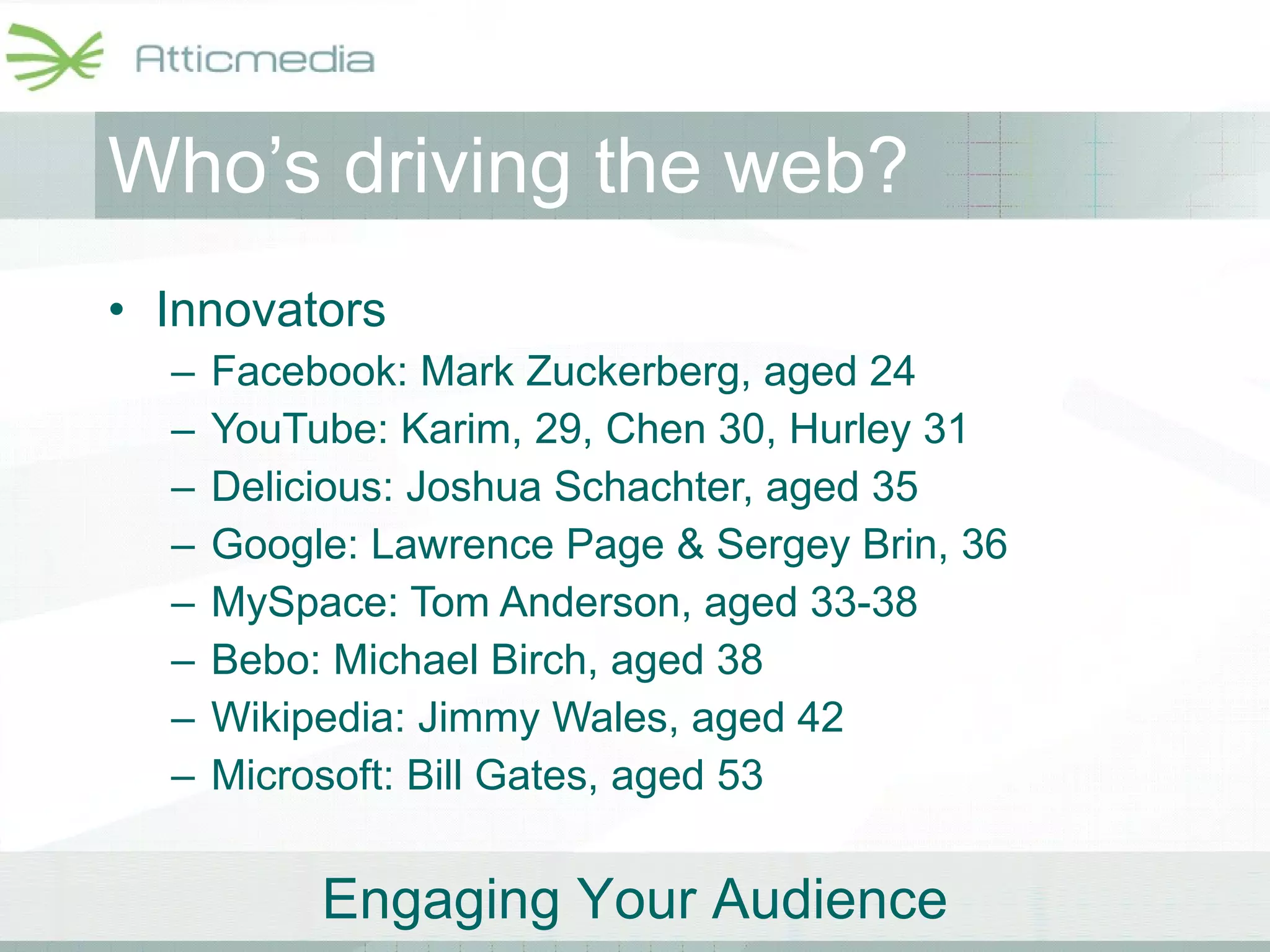
Who’s driving the web? Innovators Facebook: Mark Zuckerberg, aged 24 YouTube: Karim, 29, Chen 30, Hurley 31 Delicious: Joshua Schachter, aged 35 Google: Lawrence Page & Sergey Brin, 36  MySpace: Tom Anderson, aged 33-38 Bebo: Michael Birch, aged 38 Wikipedia: Jimmy Wales, aged 42  Microsoft: Bill Gates, aged 53
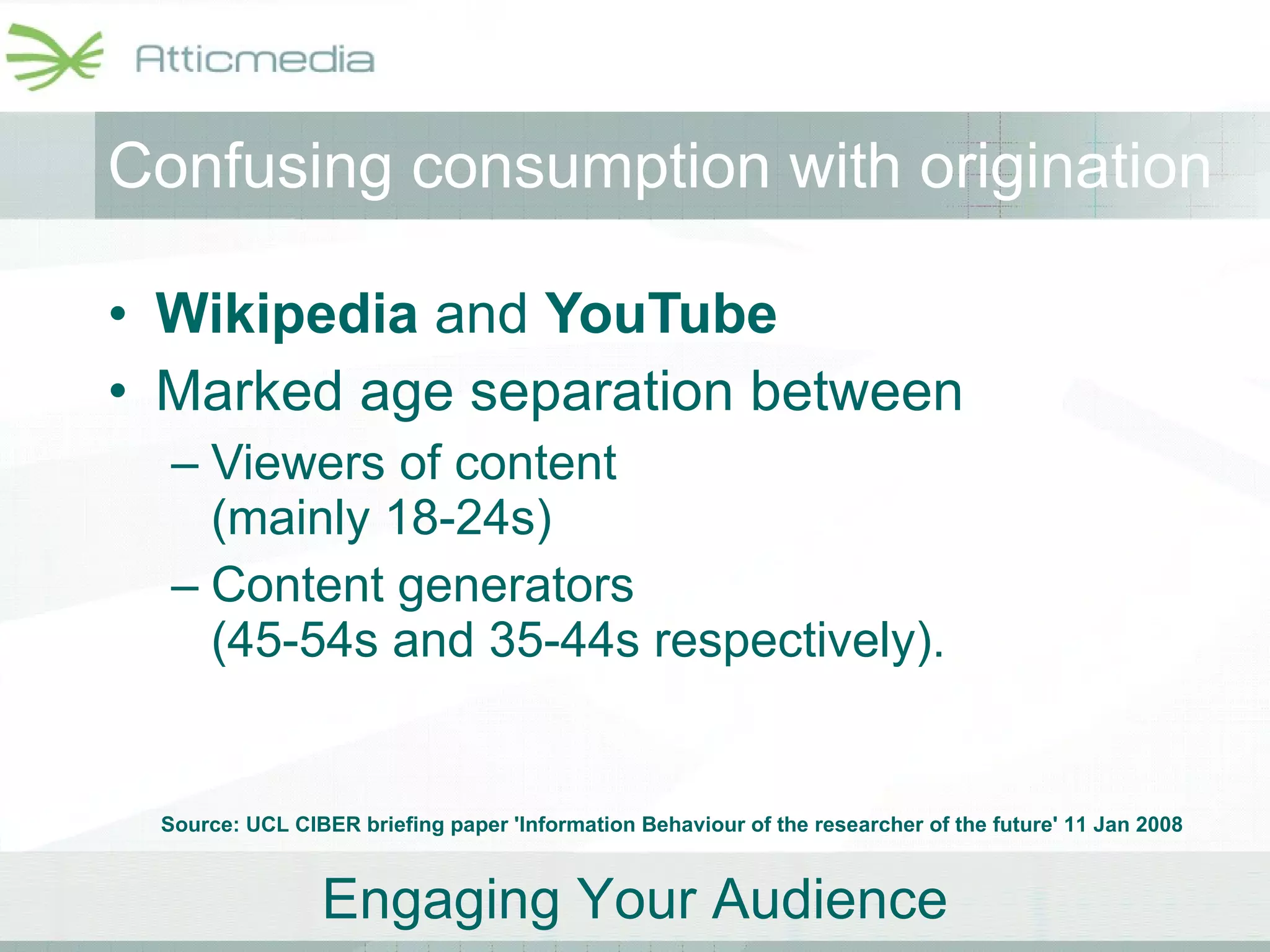
Confusing consumption with origination Wikipedia  and  YouTube   Marked age separation between  Viewers of content  (mainly 18-24s)  Content generators  (45-54s and 35-44s respectively).  Source: UCL CIBER briefing paper 'Information Behaviour of the researcher of the future' 11 Jan 2008
‘ Digital Native’ a dangerous concept Generational division simplifies picture Assumes that ‘just because’ someone is young they have the necessary skill set to deal with modern economy Presumes a level playing field for the young, ignores economic and social problems & differences Places unwanted pressure on the young
‘ Digital Native’ a dangerous concept Henry Jenkins, MIT "Talking about youth as digital natives implies that there is a world which these young people all share and a body of knowledge they have all mastered, rather than seeing the online world as unfamiliar and uncertain for all of us."  Source: Quoted in Chronicle Review,  http://tinyurl.com/6k78x8
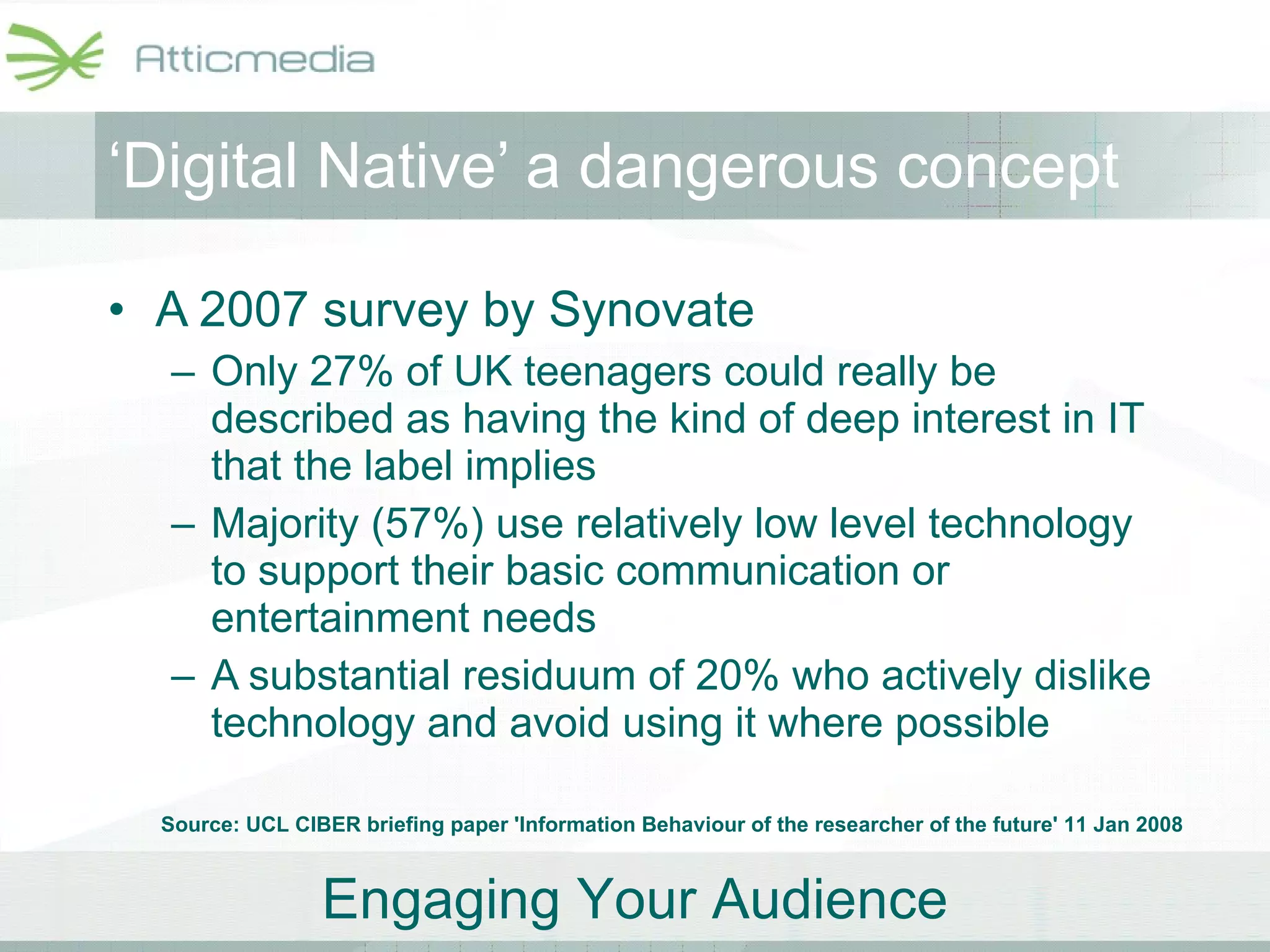
A 2007 survey by Synovate Only 27% of UK teenagers could really be described as having the kind of deep interest in IT that the label implies Majority (57%) use relatively low level technology to support their basic communication or entertainment needs  A substantial residuum of 20% who actively dislike technology and avoid using it where possible ‘ Digital Native’ a dangerous concept Source: UCL CIBER briefing paper 'Information Behaviour of the researcher of the future' 11 Jan 2008
‘ Digital Native’ makes us feel better Young people are proficient consumers, and so  must be  proficient originators They are the future, and we want to believe that they are organically absorbing the potential we impose on them But this view stops us from seeing their real needs
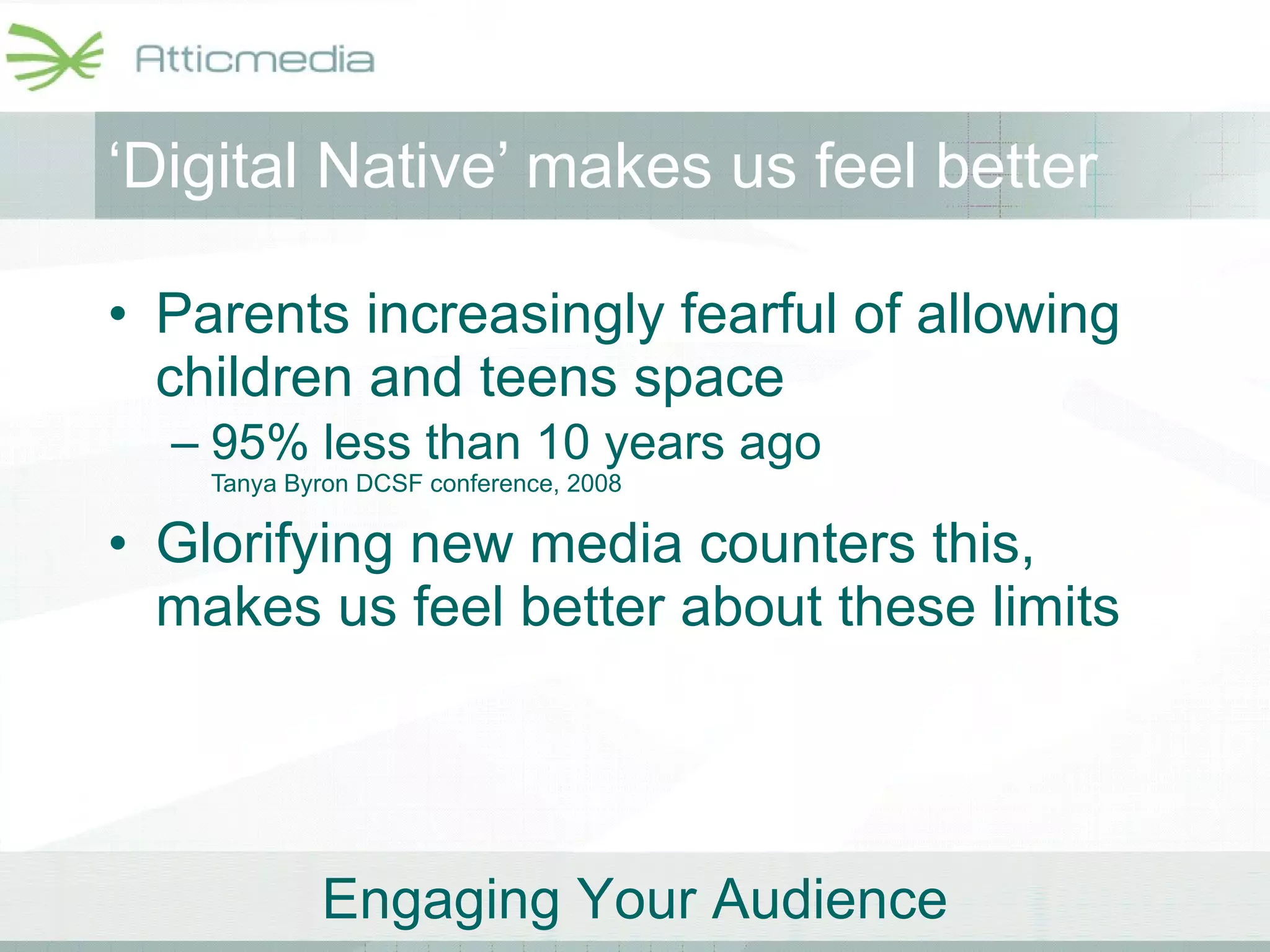
‘ Digital Native’ makes us feel better Parents increasingly fearful of allowing children and teens space 95% less than 10 years ago Tanya Byron DCSF conference, 2008 Glorifying new media counters this, makes us feel better about these limits
Understanding Digital & Young People
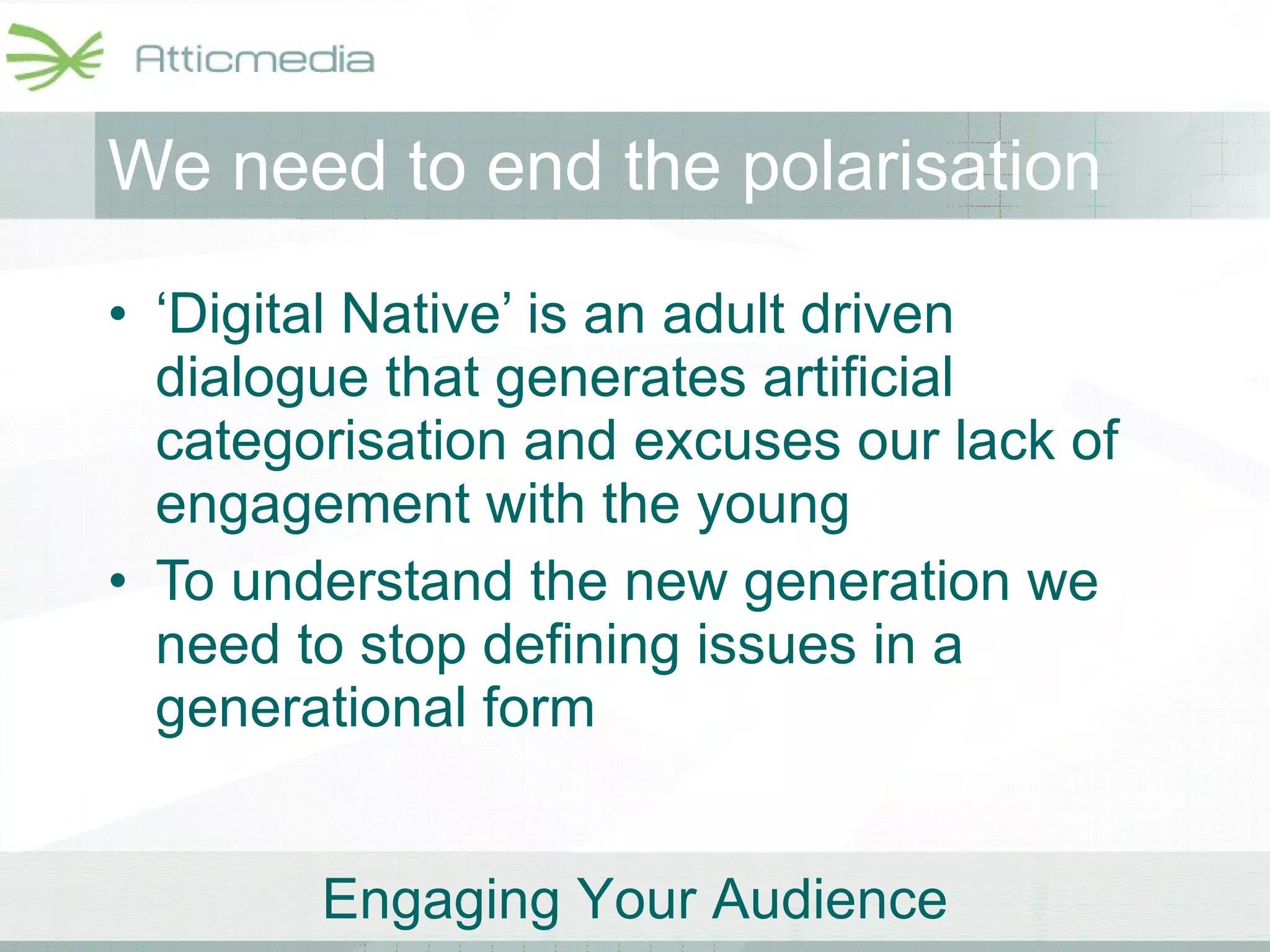
We need to end the polarisation ‘ Digital Native’ is an adult driven dialogue that generates artificial categorisation and excuses our lack of engagement with the young To understand the new generation we need to stop defining issues in a generational form
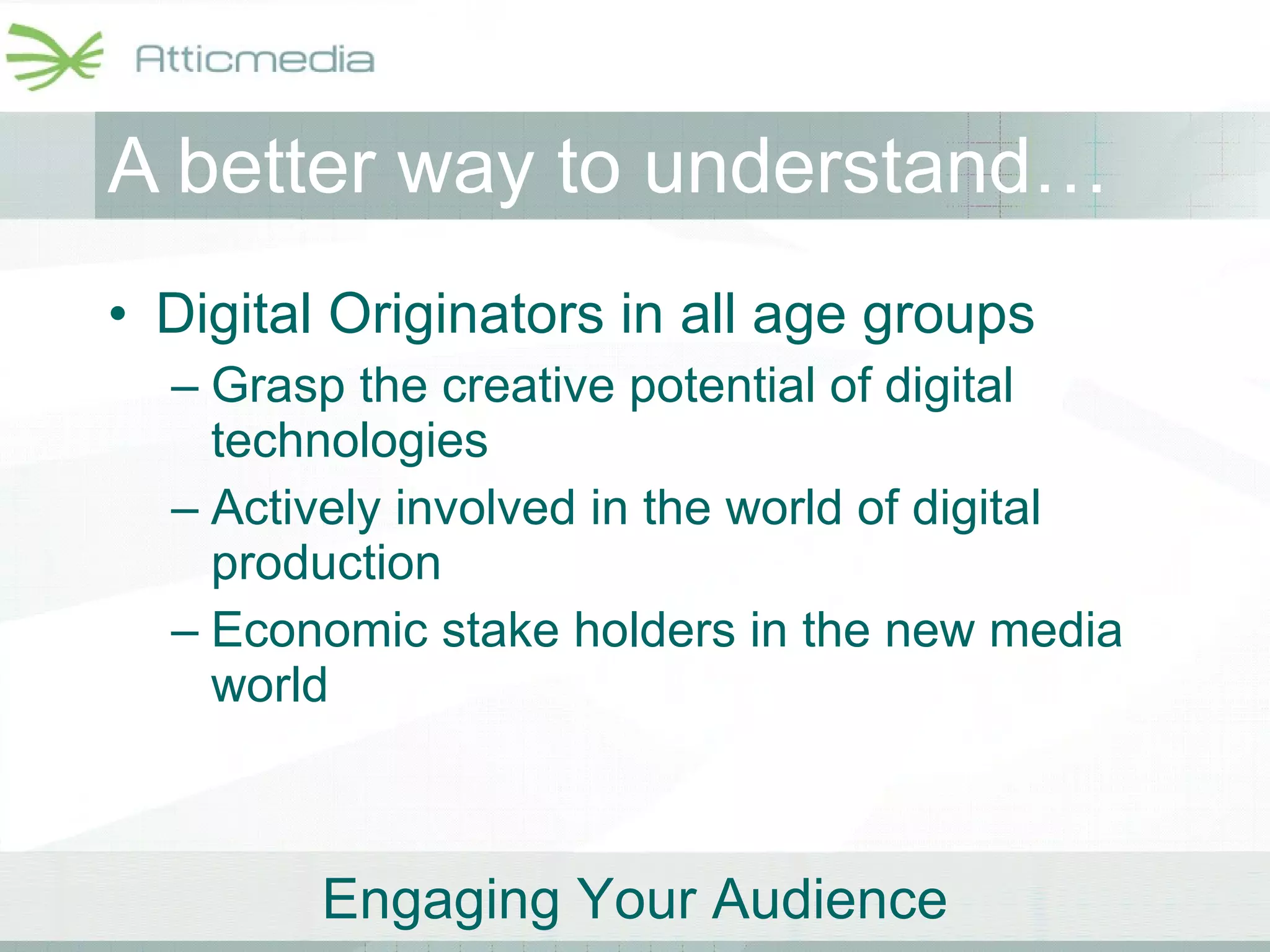
A better way to understand… Digital Originators in all age groups Grasp the creative potential of digital technologies Actively involved in the world of digital production Economic stake holders in the new media world
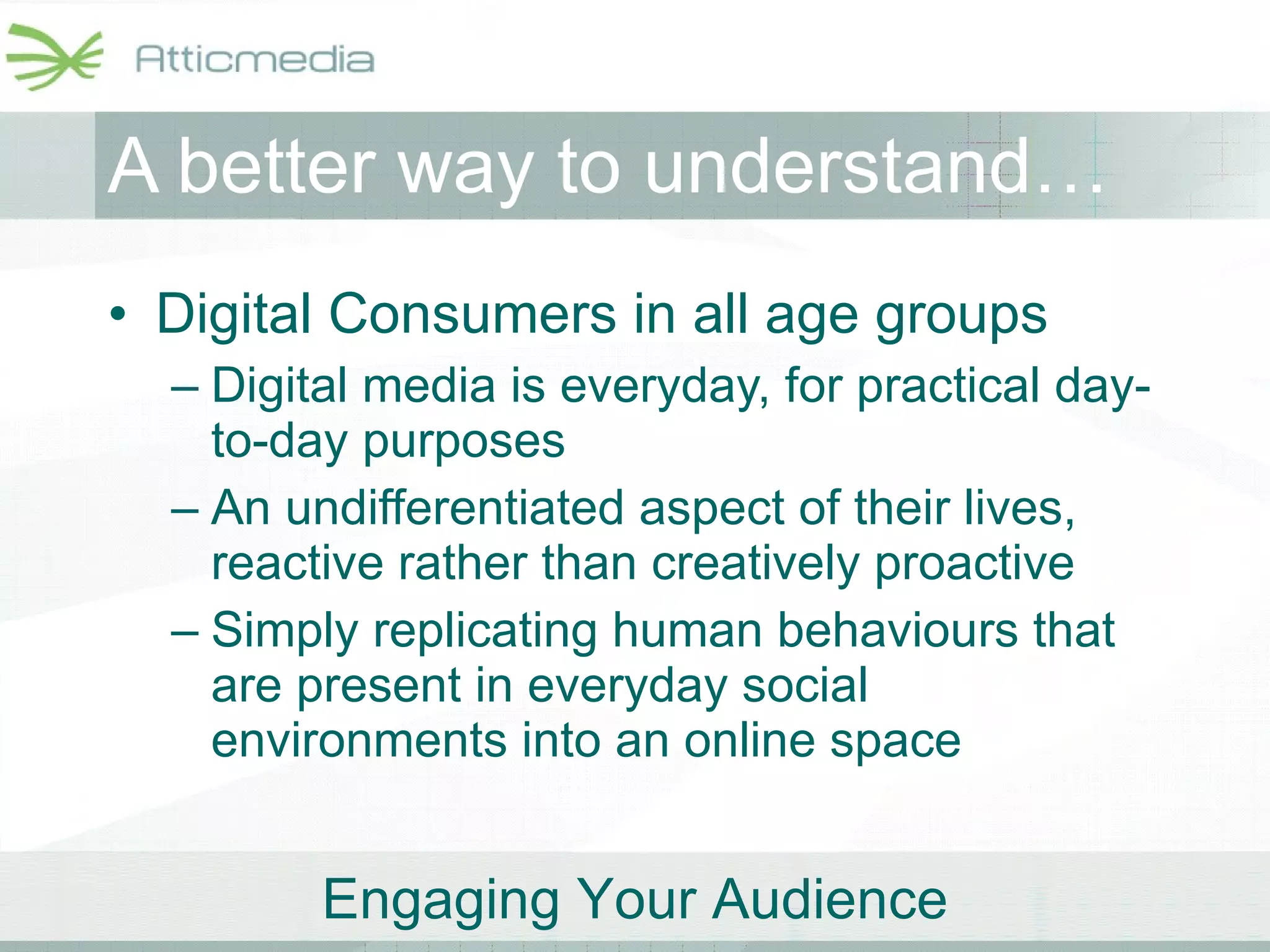
A better way to understand… Digital Consumers in all age groups Digital media is everyday, for practical day-to-day purposes An undifferentiated aspect of their lives, reactive rather than creatively proactive Simply replicating human behaviours that are present in everyday social environments into an online space
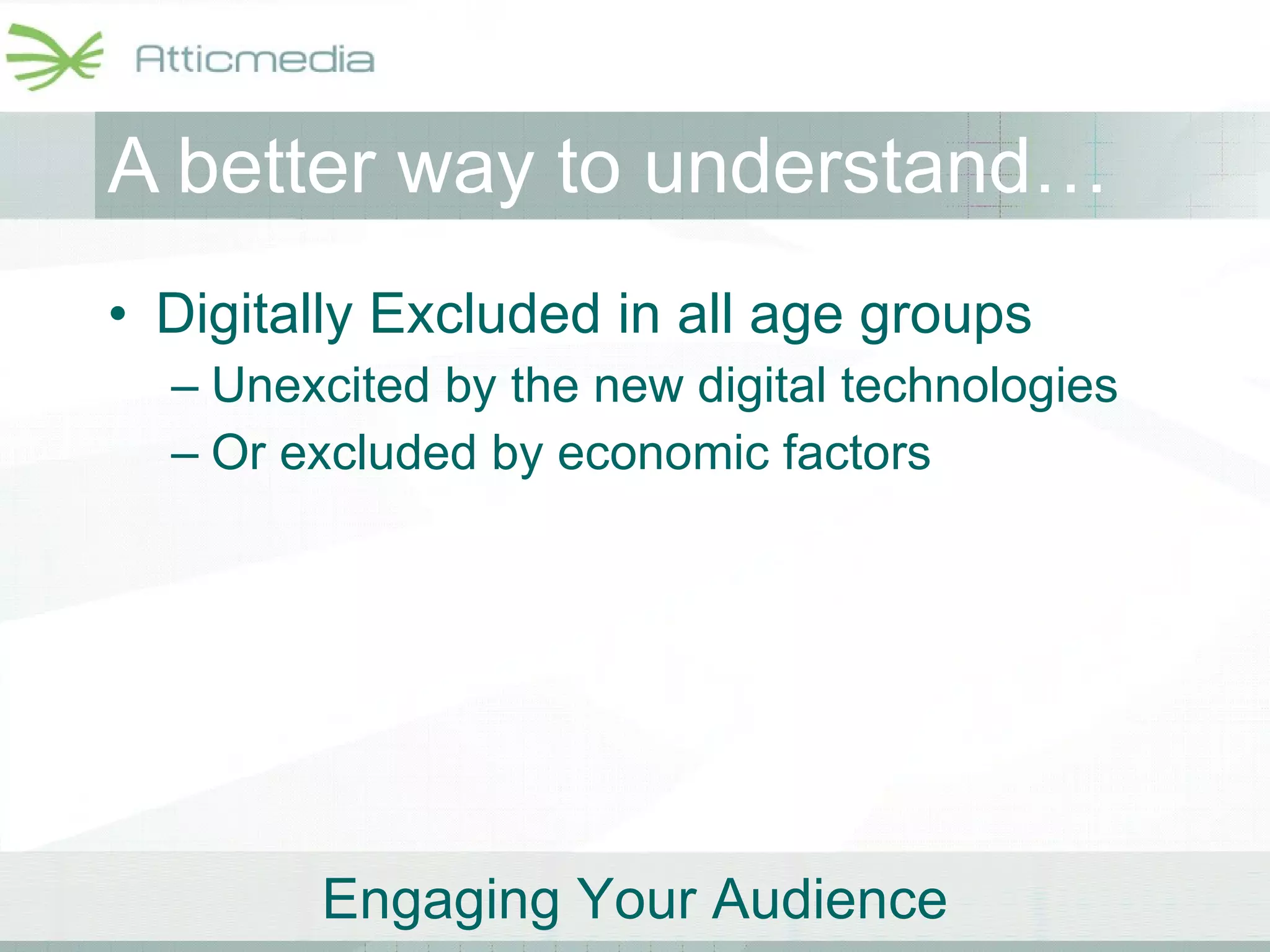
A better way to understand… Digitally Excluded in all age groups Unexcited by the new digital technologies Or excluded by economic factors
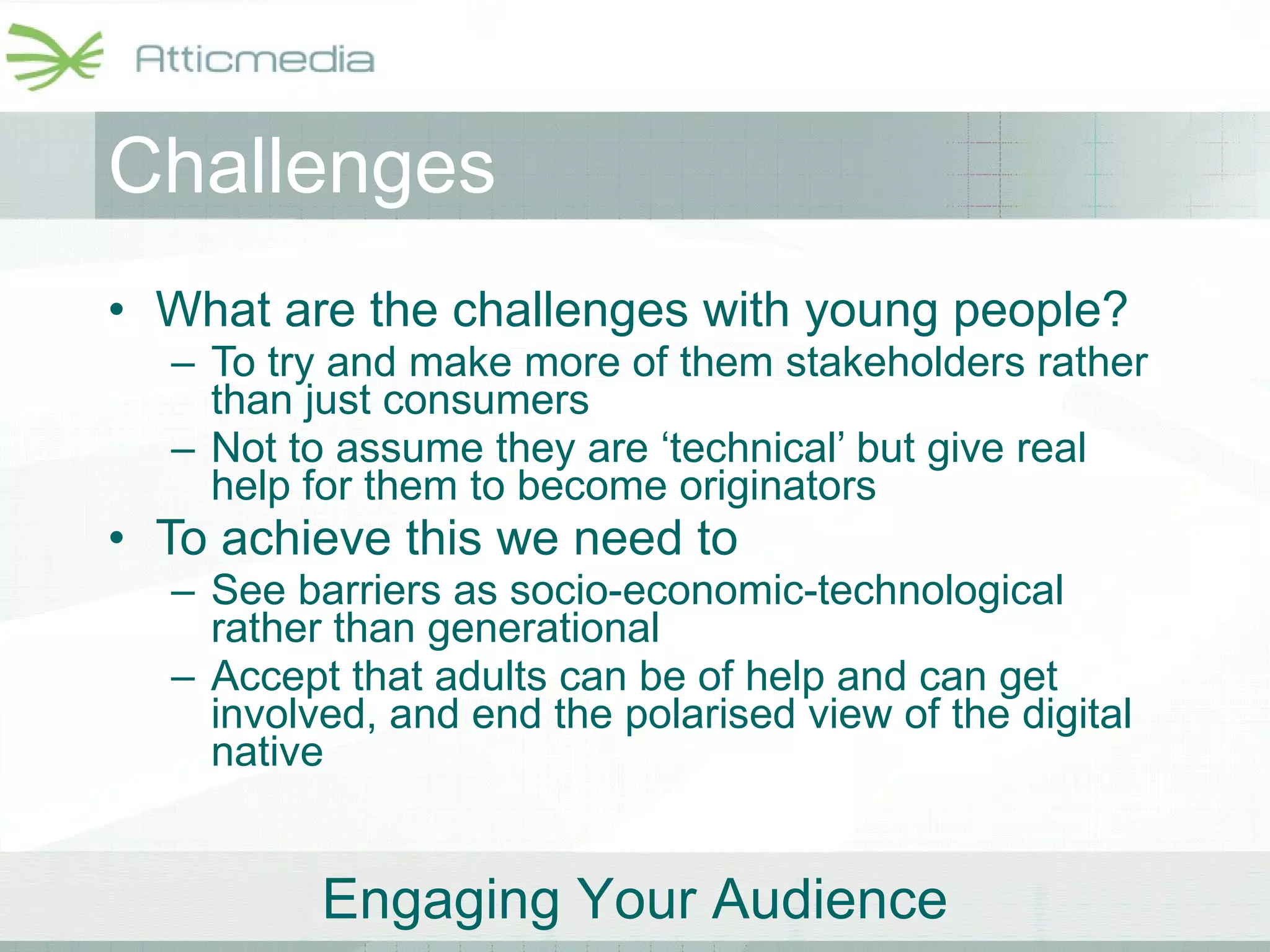
Challenges What are the challenges with young people? To try and make more of them stakeholders rather than just consumers Not to assume they are ‘technical’ but give real help for them to become originators To achieve this we need to  See barriers as socio-economic-technological rather than generational Accept that adults can be of help and can get involved, and end the polarised view of the digital native
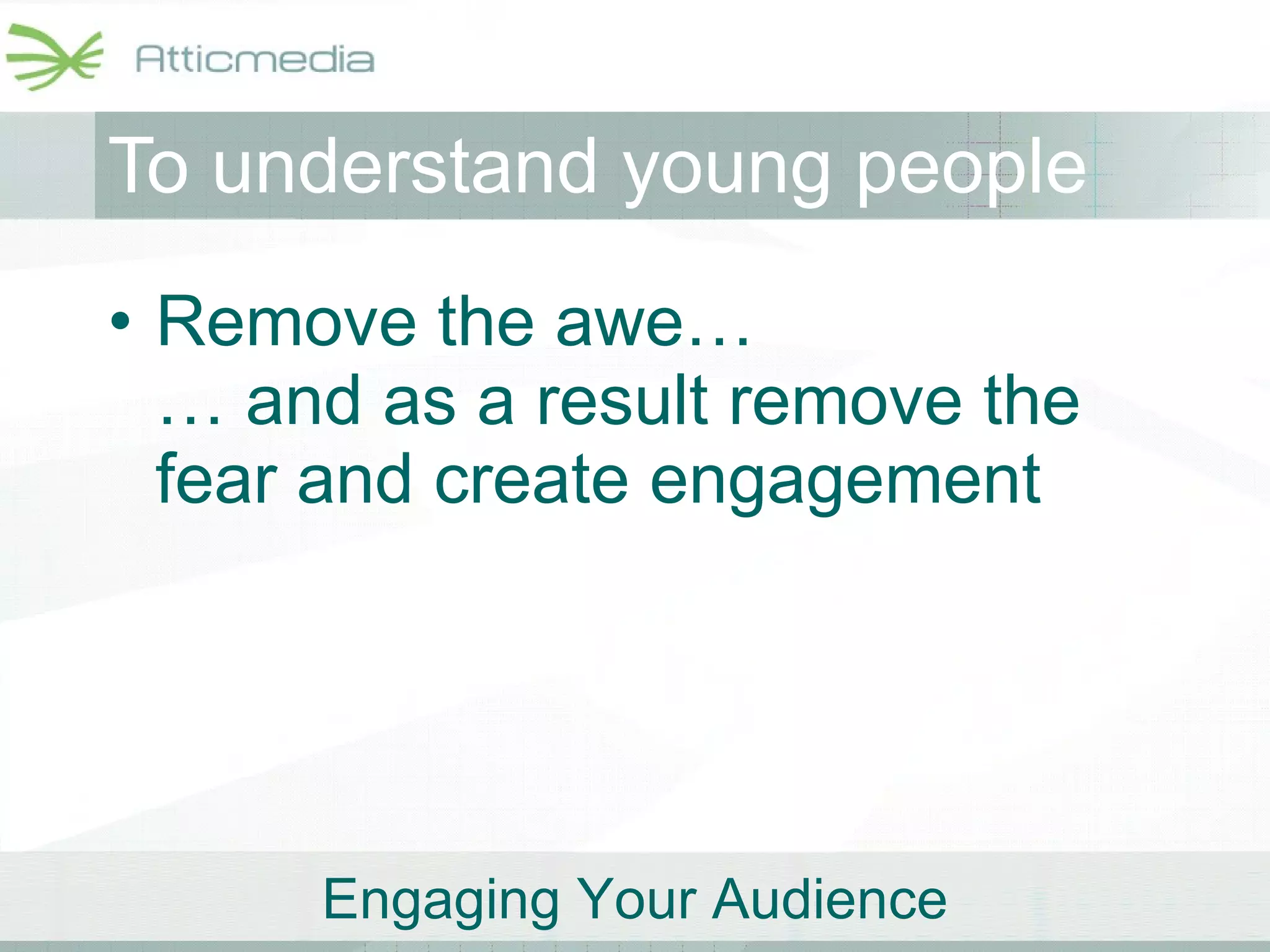
To understand young people Remove the awe… … and as a result remove the fear and create engagement

Fear And Awe Of The Digital Native Mark Weber

  • 1.
    Fear and Aweof the Digital Native Mark Weber, Atticmedia
  • 2.
  • 3.
    We live ina polarised world… Young people are… Digital Natives Experts in everything technical Multi-taskers, consuming media in ways unfathomable & alien to adults They are the gods of the new world, and we can do nothing but bow down to them
  • 4.
    “ tech-savvy youth”“ a generation for whom media means MySpace, Flickr, YouTube” “ Generational Divide” “ a different generation all together….” “ My son consumes TV, mobile, online all at the same time…” “ my 5 year old has already mastered text messaging…” “ The Digital Generation”
  • 5.
    “ The BiggestGeneration Gap Since the Dawn of Rock 'n' Roll” “ … in the past ten years, a new set of values has sneaked in to take its place, erecting another barrier between young and old. And as it did in the fifties, the older generation has responded with a disgusted, dismissive squawk.” Emily Nussbaum, New York Magazine http://nymag.com/news/features/27341/
  • 6.
    … but alsoYoung people are… Destroying their ability to communicate with language Threatening family life Cheats and plagiarists simply copying and pasting from Wikipedia Learning how to commit suicide and joining online cults Buying knives and other such things … Under constant online threat of evil, malicious and sophisticated adults
  • 7.
    “ Internet hasencroached on our role as a parent” “ Parents are left to fend off the dangers” “ networking websites ‘romanticising’ suicide” “ ignore copyright” “ Game obsession” “ Video games hurt brain development” (BBC) “ growing influence of the internet on education could damage children's ability to learn” (Guardian) “ Predators – children too naïve to know how to deal with them” “ lack basic numeracy & literacy” “ Unable to communicate in the real world” “ They are interested only in attention—and yet they have zero attention span,” “ They talk in illiterate instant messages” “ They have no sense of shame. They have no sense of privacy”
  • 8.
    “ The DumbestGeneration: How the Digital Age Stupefies Young Americans and Jeopardizes our Future ” Mark Bauerlein, Professor of English at Emory University Jeremy P. Tarcher/Penguin, 2008.
  • 9.
    A world of‘Them’ and ‘Us’ Digital Natives At home in a world unfathomable to the adult population At risk to dangers that we are helpless to prevent Digital Immigrants Us Struggling to handle a world permanently hostile to us
  • 10.
  • 11.
    Overall Usage… Source:NIELSEN ONLINE REPORTS TOPLINE U.S. DATA FOR JULY 2008 74:53:32 74 10.11 16,672 65+ 83:21:58 78 23.09 38,065 55+ 91:10:50 76 26.59 43,849 35 - 49 65:50:47 54 12.32 20,309 25 - 34 27:22:34 23 7.74 12,755 18 - 24 32:21:34 26 10.66 17,579 12 - 17 13:51:05 12 8.97 14,799 2 - 11 64:58:01 56 51.82 85,443 Female 71:04:10 61 48.18 79,447 Male Average PC Time Spent per Month Sessions per Month Composition (%) Unique Audience (000) Demographic
  • 12.
    Social Media Sites…Under 18s form just 16% of online communities Source: NEILSEN ONLINE, AUGUST 2007 (BASED ON HOME USE ONLY)
  • 13.
    Social Media Sites….0 4 8 12 Linked-In Plaxo Friendster Facebook Hi-5 MySpace million aged 18- million aged 18+ Source: ImpactWise / Rapleaf May 2008
  • 14.
    Blogs… Popular viewsclaim 95% of blogs are written by under 25s Source: Perseus' The Blogging Iceberg, quoted on http://tinyurl.com/69geq4 Yet, top Blogs in Technoratti – Arianna Huffington nationally syndicated columnist, author of ten books and co-founder and editor of the HuffingtonPost.com Michael Arrington, TechCrunch Mark Frauenfelder, editor at Wired from 1993-1998 50% with income over $75k, 25% over £100k 50% are 18-34 44% are parents Source: Technorati http://tinyurl.com/3sex4w
  • 15.
    For Digital Natives… Digital is banal “ If you ask Net Gen learners what technology they use, you will often get a blank stare. They don’t think in terms of technology; they think in terms of the activity the technology enables.” Diana Oblinger and James Oblinger, Educating the Net Generation 2005 “ The Internet itself is nothing more than a way of speeding up communication, along with most other everyday activities.” Kyle M., teen winner of the 2006 Global Kids Digital Media Essay Contest
  • 16.
    Conservative online interactionDigital Natives Sticks to friends from school Follow same pattern as everyday social life that hasn’t changed for 10,000’s of years Cliquey Bullying Status orientated Wouldn’t ‘dare’ post messages on a strangers page
  • 17.
    Same old stuff…Instant messenger, text, email, blogs … usage much the same as landline telephone, diaries, passed notes in classes in the past “ The ends are the same, the means have evolved” Questioning the Generational Divide: Technological Exoticism and Adult Constructions of Online Youth Identity, Susan C. Herring, Indiana University, School of Library and Information Science
  • 18.
    As always, limitedto what is cheap & available… “a majority of [UK] teens said that they would rather go out to a movie or do something with friends than stay home and consume media” Same old stuff… Source: Livingstone and Bovill, 2000
  • 19.
    Technical understanding? DigitalNatives Consumes Recycles But technical understanding of underlying media needed to originate? 1970’s generation: had to learn code to use a computer 1990’s generation: easy to use visual systems enable quick generation of content
  • 20.
    Technical understanding? ElizabethLosh , University of California “ What passes for 'media literacy' now is often nothing more than teaching kids to make prepackaged PowerPoint presentations.” YouTube took off when Flash and Server-side video conversion removed the need for technical understanding Blogging removed the need for HTML Mobile cameras removed the need for technical video training Source: Quoted in Chronicle Review, http://tinyurl.com/6k78x8
  • 21.
    Who’s driving theweb? Innovators Facebook: Mark Zuckerberg, aged 24 YouTube: Karim, 29, Chen 30, Hurley 31 Delicious: Joshua Schachter, aged 35 Google: Lawrence Page & Sergey Brin, 36 MySpace: Tom Anderson, aged 33-38 Bebo: Michael Birch, aged 38 Wikipedia: Jimmy Wales, aged 42 Microsoft: Bill Gates, aged 53
  • 22.
    Confusing consumption withorigination Wikipedia and YouTube Marked age separation between Viewers of content (mainly 18-24s) Content generators (45-54s and 35-44s respectively). Source: UCL CIBER briefing paper 'Information Behaviour of the researcher of the future' 11 Jan 2008
  • 23.
    ‘ Digital Native’a dangerous concept Generational division simplifies picture Assumes that ‘just because’ someone is young they have the necessary skill set to deal with modern economy Presumes a level playing field for the young, ignores economic and social problems & differences Places unwanted pressure on the young
  • 24.
    ‘ Digital Native’a dangerous concept Henry Jenkins, MIT "Talking about youth as digital natives implies that there is a world which these young people all share and a body of knowledge they have all mastered, rather than seeing the online world as unfamiliar and uncertain for all of us." Source: Quoted in Chronicle Review, http://tinyurl.com/6k78x8
  • 25.
    A 2007 surveyby Synovate Only 27% of UK teenagers could really be described as having the kind of deep interest in IT that the label implies Majority (57%) use relatively low level technology to support their basic communication or entertainment needs A substantial residuum of 20% who actively dislike technology and avoid using it where possible ‘ Digital Native’ a dangerous concept Source: UCL CIBER briefing paper 'Information Behaviour of the researcher of the future' 11 Jan 2008
  • 26.
    ‘ Digital Native’makes us feel better Young people are proficient consumers, and so must be proficient originators They are the future, and we want to believe that they are organically absorbing the potential we impose on them But this view stops us from seeing their real needs
  • 27.
    ‘ Digital Native’makes us feel better Parents increasingly fearful of allowing children and teens space 95% less than 10 years ago Tanya Byron DCSF conference, 2008 Glorifying new media counters this, makes us feel better about these limits
  • 28.
  • 29.
    We need toend the polarisation ‘ Digital Native’ is an adult driven dialogue that generates artificial categorisation and excuses our lack of engagement with the young To understand the new generation we need to stop defining issues in a generational form
  • 30.
    A better wayto understand… Digital Originators in all age groups Grasp the creative potential of digital technologies Actively involved in the world of digital production Economic stake holders in the new media world
  • 31.
    A better wayto understand… Digital Consumers in all age groups Digital media is everyday, for practical day-to-day purposes An undifferentiated aspect of their lives, reactive rather than creatively proactive Simply replicating human behaviours that are present in everyday social environments into an online space
  • 32.
    A better wayto understand… Digitally Excluded in all age groups Unexcited by the new digital technologies Or excluded by economic factors
  • 33.
    Challenges What arethe challenges with young people? To try and make more of them stakeholders rather than just consumers Not to assume they are ‘technical’ but give real help for them to become originators To achieve this we need to See barriers as socio-economic-technological rather than generational Accept that adults can be of help and can get involved, and end the polarised view of the digital native
  • 34.
    To understand youngpeople Remove the awe… … and as a result remove the fear and create engagement