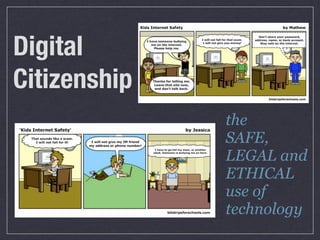
Digital
Citizenship
              the
              SAFE,
              LEGAL and
              ETHICAL
              use of
              technology
Spring, 2008
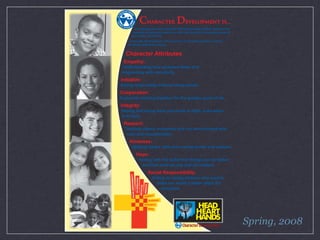
Character
 Attributes


   Digital
   Applications


     Fall, 2009
web 1.0             web 2.0
  (before 2005)              (since 2005)

passive             often, lower level
                    thinking
we searched
contained others’
content
we were consumers   active
we worked alone     we are searched
                    contains our content
                    we are creators
                    we collaborate,
                    connect and share
web 3.0
   (2010...)


                   HTTP://CONTACTDUBAI.COM/TAG/SEO-MARKETING


increasingly personalized, intuitive
the Semantic Web
“We are the Web”
HTTP://BLOG.HUBSPOT.COM/BLOG/TABID/6307/BID/6005/22-EDUCATIONAL-SOCIAL-MEDIA-DIAGRAMS.ASPX
The possibilities are limitless.

What are the implications for us, as educators,
            and for our students?
Implications
fast rate of change

mobile and cloud computing       http://bit.ly/dxIoEp


privacy

intellectual property

freedom of speech, wider audiences, concept
of ‘viral’

media multi-tasking

the PEOPLE hold the power, e.g. Tunisia, Egypt
everything you do
Your Digital                                            online is visible;
                                                        there is no such
 Footprint                                              thing as privacy

                                                        your Digital
                                                        Footprint stays with
                                                        you forever

                                                        what you do online
                                                        should reflect the
                                                        person you are and
                                                        the attributes you
http://library.wrdsb.ca/research/digital-citizenship/
                                                        believe in
What do our students need
from us?
to teach, encourage, reinforce and model good
Digital Citizenship

to demonstrate and utilize ways that technology
and Web 2.0 tools can be used in positive ways,
ie. class websites, blogs, wikis, joining global
networks, using Social Media tools such as
Twitter, TodaysMeet, etc.

to instruct them in good search
strategies, copyright, Creative
Commons, attribution
The Digital Compass is a tool
that can help with decision making
       by offering us choices.
Use the Digital Compass to
discuss these scenarios ...

Writing a comment about your teacher in a chat.

Posting a picture of a friend on your Facebook page.

Downloading music from the internet.

Using images from the internet on your website

Recording a conversation on your cellphone.
21st Century Digital Citizenship

being informed
making well-researched
decisions
                                    http://bit.ly/dnYVhf

taking control of your digital footprint
demonstrating ethical behaviour; showing
respect
Web Resources
http://teachers.wrdsb.ca/watts
http://www.newcommbiz.com/2011-is-not-about-social-media-prepare-for-
the-next-wave-of-disruption/

http://blog.learningtoday.com/blog/bid/36318/Web-3-0-Networked-Literacy-
and-Information-Fluency-ISTE10

http://socialnetworking.procon.org/

https://sites.google.com/site/digitalcitizenship20/

http://cybraryman.com/digitalfootprints.html

Digital Citizenship WLU